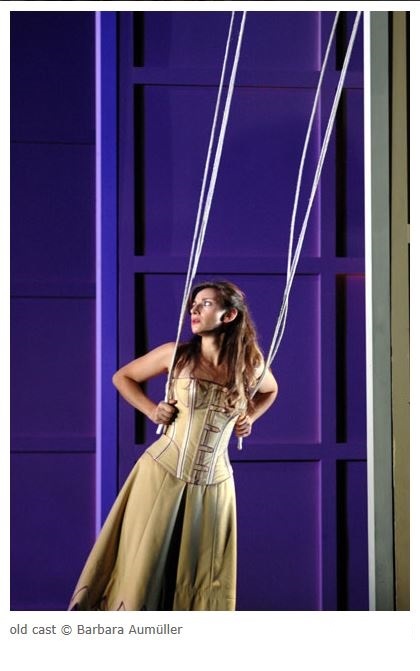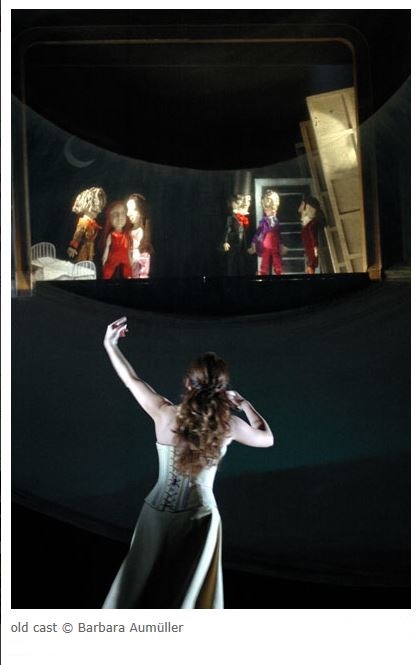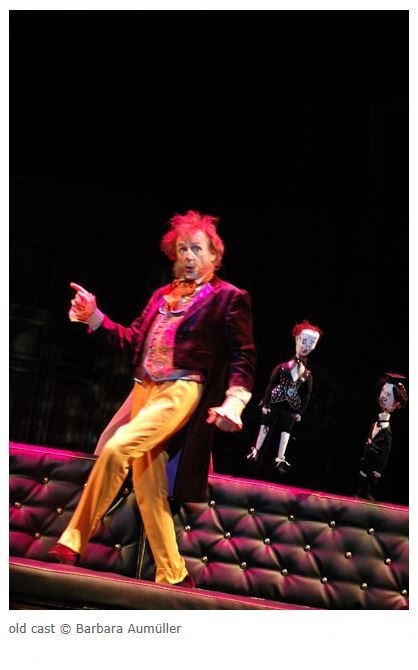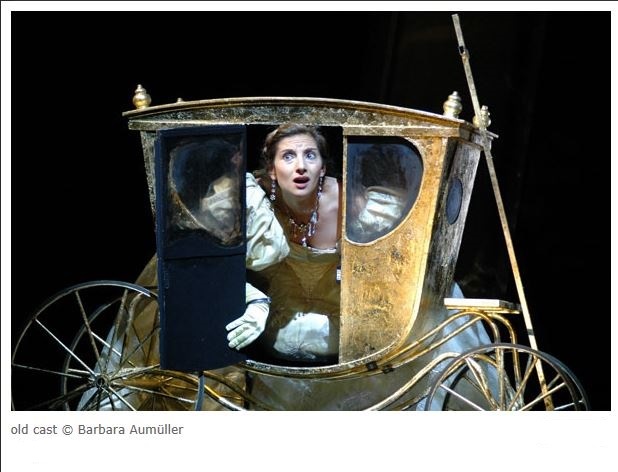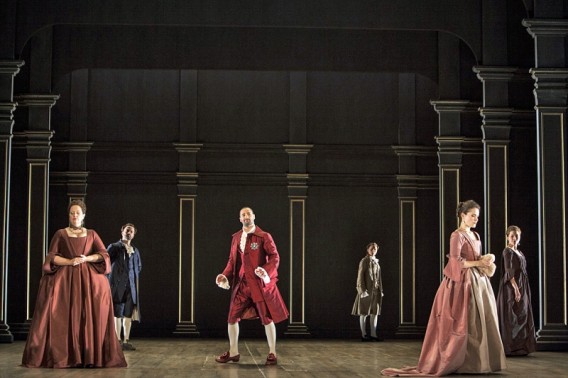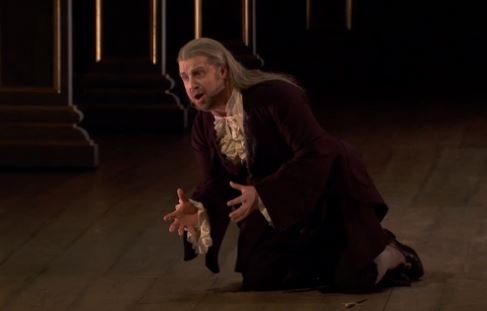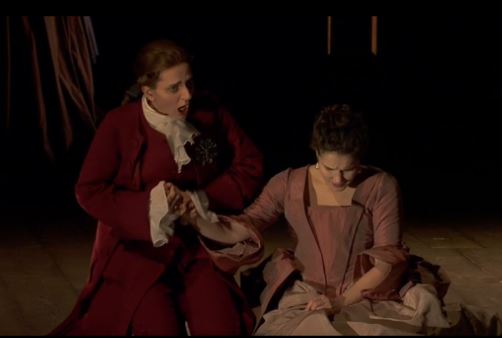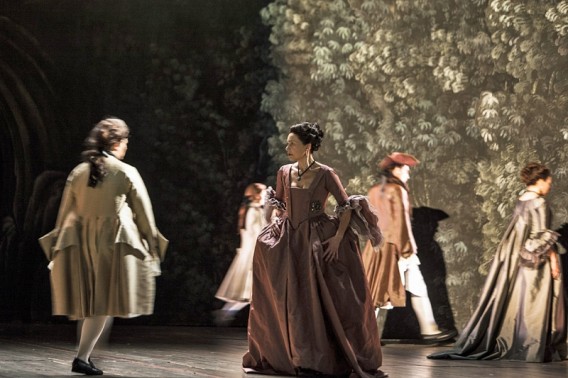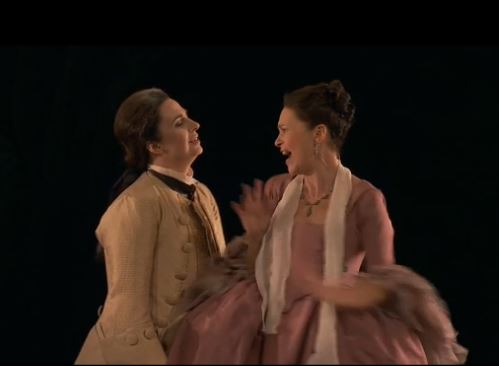

LE NOZZE DI FIGARO
Premiere April 11, 2015, 7 PM

Playful melodrama in two acts, libretto by FELICE ROMANI
Music by GAETANO DONIZETTI
Sunday 22nd, March 2015, at 20.00 turn A
Thursday 26th March 2015, at 20.00 turn B
Sunday 29th March 2015, at 15.30 turn D
Tuesday 31st March 2015, at 20.00 turn C
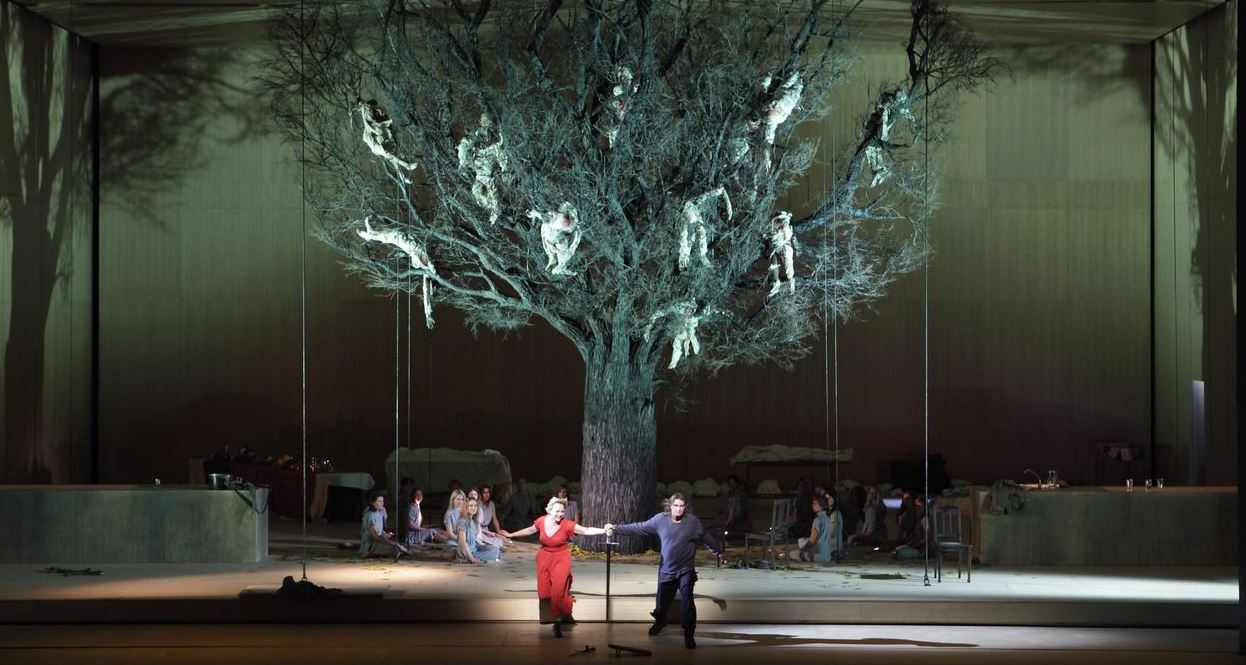
Open spaces and soft colours, a large tree, a hot air balloon, a painted backdrop: “Listen, listen”, Doctor Dulcamara’s Elisir d’Amore is returning to the Teatro Regio. Directed by Marcello Grigorov, Donizetti’s love potion returns to ensnare capricious hearts in the 1988 production created by Francesca Zambello with scenes and costumes by Nica Magnani. A framework of purity for the voices of Jessica Nuccio, Celso Albelo, and Roberto de Candia with the Orchestra Regionale dell’Emilia Romagna and the Chorus of the Teatro Regio in Parma directed by Francesco Cilluffo.
| Characters | Cast |
| Adina | JESSICA NUCCIO |
| Nemorino | CELSO ALBELO |
| Belcore | JULIAN KIM |
| Il dottor Dulcamara | ROBERTO DE CANDIA |
| Giannetta | ELEONORA CONTUCCI |
Conductor
FRANCESCO CILLUFFO
Direction
MARCELLO GRIGOROV
Scenes and costumes
NICA MAGNANI
Lights
ANDREA BORELLI
Chorus Master
MARTINO FAGGIANI
ORCHESTRA REGIONALE DELL’EMILIA ROMAGNA
CORO DEL TEATRO REGIO DI PARMA
Settings by Teatro Regio di Parma
Coproduction with
Fondazione Teatro Comunale di Modena
With overtitles

Premiered on October 16, 1948.
Sung in Russian.
Presented with three intervals.
Running time: 4 hours.
Libretto by Modest Mussorgsky,
based on Alexander Pushkin’s play of the same name
Version and orchestration by Nikolai Rimsky-Korsakov
Orchestration of “At St. Basil Cathedral” scene by Mikhail Ippolitov-Ivanov
1948 production
Music Director: Nikolai Golovanov
Stage Director: Leonid Baratov
Designer: Fyodor Fedorovsky
Choreographer: Leonid Lavrovsky
2011 revival
Conductors: Vassily Sinaisky, Pavel Sorokin
Director: Igor Ushakov
Designer of scenery revival: Alyona Pikalova
Designer of costumes revival: Elena Zaytseva
Choreography revival: Ekaterina Mironova
Lighting Designer: Sergei Shevchenko
Chorus Master: Valery Borisov
14/15 march 2015| Conductor | Alexander Polyanichko |
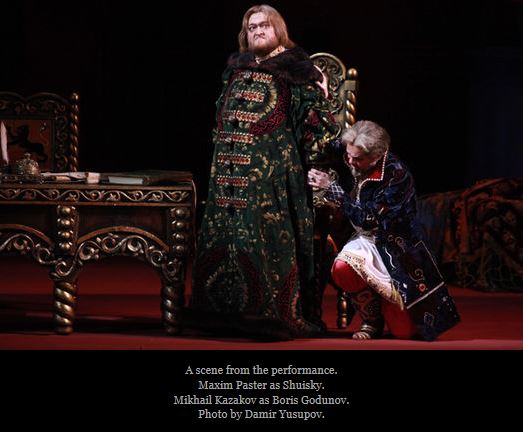
| Boris Godunov | Mikhail Kazakov |
| Xenia, his daughter | Oxana Gorchakovskaya |
| Fyodor, his son | Yulia Mazurova |
| Xenia’s Nurse | Evgenia Segenyuk |
| Prince Vasily Ivanovich Shuisky | Marat Gali |
| Andrei Shchelkalov, secretary to the Duma | Andrei Grigoriev |
| Pimen, hermit chronicler | Alexander Naumenko |
| Pretender, the false Dimitri, Grigory Otrepiev | Eduard Martynyuk |
| Marina Mnishek, daughter of the Sandomierz commander | Svetlana Shilova |
| Varlaam | Valery Gilmanov |
| Missail, a vagabond | Yuri Markelov |
| Innkeeper | Irina Rubtsova |
| Simpleton | Stanislav Mostovoy |
| Nikitich, police officer | Vladimir Krasov |
| Mityusha, a peasant | Pavel Tchervinsky |
| Court Boyar | Vadim Tikhonov |
| Boyar from Kromy | Vadim Tikhonov |
| Two Women | Oxana GorchakovskayaIrina Udalova |
SynopsisPrologue
Scene 1
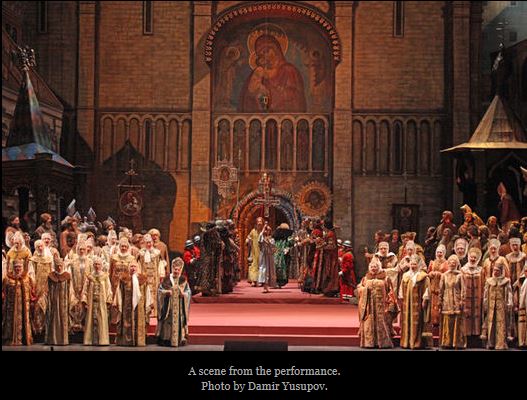
A crowd throngs by the high walls of the Novodevichy Monastery in Moscow. The boyar, Boris Godunov, has withdrawn to the monastery after the death of Tsar Fyodor, who did not leave an heir. That Boris will be elected to the throne is a foregone conclusion, but he makes a show of refusing the crown so that he is not suspected of wishing to seize power. At the order of a police officer, the people beg Godunov to accept election to the throne:
“Do not abandon us, Father,
Do not leave us helpness!”
But Shchelkalov, secretary of the Duma, announces that Boris is implacable.
Scene 2
Square in front of the Cathedral of the Assumption in the Kremlin. A majestic pealing of bells — Boris has given his consent and is being crowned. But Tsar Boris is not happy, he is weighed down by anxiety:
“My soul is heavy,
Some instinctive fear
With ominous foreboding
Rivets my heart…”
In the Kremlin the bells are pealing and the people break out again into acclamation.
Act I
Scene 1
Late at night. A cell in the Chudov Monastery. By the light of an icon-lamp, the wise monk Pimen is writing a truthful chronicle of the history of the Russian state. In his chronicle, Pimen reveals the secret of the murder, by Boris Godunov, of Tsarevitch Dimitri who had stood between him and the throne. Grigory, a young novice, sharing Pimen’s cell, wakes up. He listens to the holy man’s tale and a storm of anxieties, passions and vainglorious ambitions breaks into the peace of the night. The idea comes to Grigory of calling himself the Tsarevitch and of doing battle with Boris for the throne.
“Boris! Boris! All tremble before you,
No one dares to remind you
Of the fate of the hapless infant…
But meanwhile a hermit in a dark cell
Is writing a terrible denunciation against you.
And you shall not escape human judgment,
As you shall not escape the judgment of heaven!”
Scene 2
An inn near the Lithuanian frontier. Three vagabond monks, Varlaam, Missail and Grigory, have dropped in on the sprightly, merry mistress of the establishment. Varlaam, a drunkard and glutton, sings a song about the capture of Kazan. Grigory, questions the mistress of the inn on the best route to Lithuania. A police officer comes into the inn: on the Tsar’s orders he is searching for the runaway monk, Grigory Otrepiev. After an unsuccessful attempt to deflect the suspicion from himself, Grigory leaps through the window and makes good his escape.
Act II
Scene 3
The Tsar’s private apartment in the Kremlin. Tsarevitch Fyodor is looking at the “Book of the Big Drawing”, the first map of Russia. Ksenia, Boris’ daughter, is grieving before a portrait of her dead fiancй, the heir to the Danish throne. In an attempt to cheer her up, her old nurse tells her a funny story. Boris comes in and talks tenderly to his children, he is pleased to see his son gleaning wisdom from a book. But even here, with his children, Boris is tormented by anguish. Russia has been visited by a terrible famine. “People affected with the plague wander about like wild animals”,and the common people blame the Tsar for all their troubles: “in the squares they curse the name of Boris”. Something approaching a groan breaks out from deep down inside the Tsar:
“All around is darkness and impenetrable gloom,
O, for a fleeting glimpse of a ray of joy!..
Some secret anxiety,
One inconstantly expecting disaster!..”
The boyar, Shuisky, comes in, a cunning courtier and leader of a group of boyars with seditious intentions. He brings bad news: a pretender has raised his head in Lithuania, having taken the name of the Tsarevitch Dimitri. He has the support of the King of Poland, the Polish nobles and the Pope. Boris requires Shuisky to tell him the truth: is he certain that the babe who was killed in the town of Uglich was the Tsarevitch Dimitri? Shuisky, enjoying the Tsar’s torment, describes the deep wound on the Tsarevitch’s neck, and the angelic smile on his lips…
“It seemed, that in his cradle
He was peacefully sleeping…”
Shuisky departs, having aroused with new force the fears and agitation which grip Boris: the latter now thinks he sees an apparition of the murdered Dimitri.
Act III
Scene 4
A ball in the garden of Mnishek, the Governor of Sandomir. The Polish nobles are preparing to march on Moscow. They mean to place their protйgй on the Russian throne: Grigory, the runaway monk from the Chudov monastery, who has taken the name of the murdered Tsarevitch Dimitri. In this they will be helped by the ambitious plans of the Governor’s daughter, the beautiful Marina, who dreams of becoming the wife of the future king of Russia. The long-awaited (by the Pretender) rendezvous between Marina and Dimitri who is in love with her takes place. However, Marina’s abrupt and calculating speech, and her determination, which she makes no attempt to conceal, to sit on the Russian throne disconcert the Pretender for a brief moment. Realizing this, Marina wins him over by false protestations of her love for him. The Jesuit, Rangoni, celebrates his victory.
Scene 5
An early winter’s morning. A square in front of the Cathedral of St. Basil the Blessed in Moscow. A crowd of starving people are discussing the Pretender’s victories over the forces of Boris. A Simpleton comes running into the Square. Urchins surround him and take a kopek from him . The Tsar comes out of the Cathedral. “Bread, bread! Give the starving bread! Give us bread, father, for the sake of Christ!” cries the crowd. Goaded by the urchins, the Simpleton addresses the Tsar: “Order them to be killed, as you killed the little Tsarevitch”. Boris tells the boyars not to seize the Simpleton:
“Let him be! Pray for me, simple person…”
But the Simpleton replies:
“No, Boris! It can not be done!
How can one pray for a Tsar Herod?
Our Lady does not allow it…”
Act IV
Scene 6
A clearing in the forest near Kromy. Night-time. The peasants, who are in revolt, lead in a Kromy boyar whom they have taken prisoner. They make fun of the boyar, reminding him of all their grudges:
“You trained us the right way,
In storms and bad weather, and when roads were impassable,
You exploited us,
And whipped us with a slender lash…”
The arrival of the monks, Varlaam and Missail, who denounce the sins of Boris, the regicide, stirs up the crowd’s anger even more. They break out into a threatening song:
“A dashing young force is on the rampage,
The Cossack blood is all aflame!
A great subversive power has risen from the depths…”
Jesuit priests, the Pretender’s emissaries, appear. But the arrival of these foreigners arouses the crowd’s indignation. The peasants drag the Jesuits into the forest to be hanged.
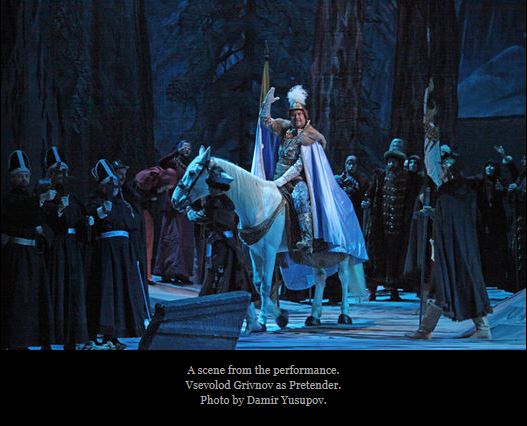
The Pretender, rides into the clearing, surrounded by troops, Polish gentry and Jesuits. He frees the Kromy boyar. By promising his favor and protection, the Pretender persuades the peasants to march on Moscow. The sky lights up with the glow of a fire. The alarm bell is rung. The Simpleton appears, looking round him in fear. His prophetic words of the new troubles that await the Russian people are spoken in anguish and pain:
“Flow, flow, bitter tears,
Cry, cry, Russian Orthodox soul!
Soon the enemy will come and darkness will fall,
Black, impenetrable darkness…”
Scene 7
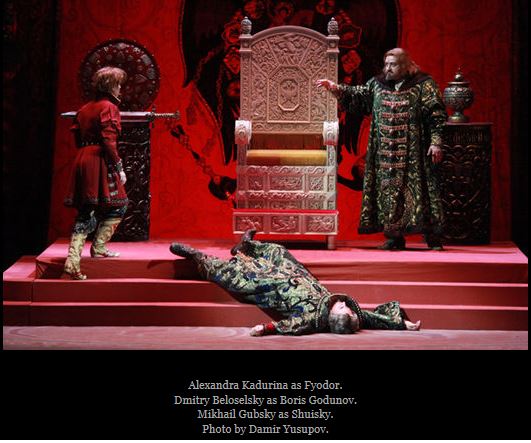
The Granovitaya Chamber, in the Kremlin. A session of the Duma is in progress. The boyars are discussing what punishment should be meted out to the Pretender should he be caught. Shuisky appears. He describes the scene in the Tsar’s private apartment, when Boris drove off the apparition of the murdered Tsarevitch Dimitri. At this point, Boris comes running in, shouting: “Away, away, child!” Catching sight of the boyars, he regains his self-control and asks them for advice and help. At this, Shuisky suggests to the Tsar that he listen to a holy man who has come to tell them of a great secret. Boris agrees. Pimen is brought in. Pimen’s tale of the miraculous cure of a sick man at the grave of the murdered Tsarevitch Dimitri, in Uglich, is more than Boris can take and he falls senseless to the floor. Regaining consciousness, the dying Tsar gives his son advice on how to protect his kingdom:
“Don not trust the slander of the seditious boyars,
Keep a vigilant watch over their secret dealings with Lithuania,
Punish treason without mercy, without charity punish it,
Listen carefully to what the people say –
for their judgement is not hypocritical…”
To the pealing of the funeral bell and the chanting of a choir of monks, the Tsar dies. The shocked Tsarevitch Fyodor, having paid his last respects to his father, rises to his feet…And immediately, Shuisky who, unseen, had crept ahead of him, blocks his way to the throne.
Commentary: Boris Godunov at the BolshoiEver since Fyodor Chaliapin’s triumphant appearance in the role at the Paris Opera, Boris Godunov is unqualifiedly considered by Russian and world audiences to be the chief personage of Russian opera and its leading potentate. For the whole world today Mussorgsky’s opera is a key work on the abstract nature of power in general, with no need for concrete historical associations or the literal reproduction of realia. Mussorgsky’s music, with its impetuous boldness, tangible back-to-the-soil solidity and incisive characterization, is of itself sufficient explanation for the tenacity of life of Boris Godunov. But for a longtime it was these very qualities which got in the way of the opera’s production, forcing the composer to compromise, rewrite the score, in an attempt to squeeze his epos into the canon of the usual historical drama. However, the Directorate of the Imperial Theatres rejected both his first and second revisions, passing but separate fragments of the work for performance. It was only Rimsky-Korsakov’s “smoothed down” version which enabled Boris Godunov to become a repertory work — but the whole of the opera’s following performance history is the story of a “return to sources”, of new editions of the score containing the latest musicological research, and, accordingly, the story of changing accents in the staging. However the placing of accents also depends on the personality of the interpreter of the main role. Thus, it is well known, that one of the initiators of the Moscow 1888 premiere of the opera was Pavel Khokhlov, who sang the role of Boris alternating with Bogomir Korsov: the intuitive psychological tension of the first-named was in contrast to the professional melodramatic training of the second-.
But the real triumph was, without doubt, the production with Chaliapin. A worthy foil to Chaliapin here was Leonid Sobinov in the part of The Pretender: the personal drama of the Tsar-infanticide was played out with a soul-chilling authenticity. In the 20’s and 30’s the emphasis was put on the people’s drama: given for the first time at the Bolshoi, was the scene by St. Basil’s Cathedral, with Ivan Kozlovsky as The Simpleton. Each age has produced its great Borises: Grigory and Alexander Pirogov, Alexander Ognivtsev, Ivan Petrov, Yevgeny Nesterenko, and Vladimir Matorin have excelled in this role at the Bolshoi and abroad. Boris Godunov at the Bolshoi Theatre attracted no less attention from the authorities than did Ivan Susanin. Morals and conscience, relations between the authorities and the people, the seething of emotion, love and ambition, atmospheric genre scenes — each age accentuated something of its own. However, regardless whether it is interpreted as a political parable or a miracle-play-drama, Boris Godunov remains one of the symbols of Russian music and Russian

A magical Mediterranean love story in which Adina enjoys teasing Nemorino until she finally does say “I do”. Omri Nitzan’s beloved, colorful and very genuine production returns to the stage after a long absence.
From the repertoire | Sung in Italian | Duration: Two hours and 45 minutes
Libretto: Felice Romani
| Conductor | Omer M. Wellber |
| Eithan Schmeisser | |
| Director | Omri Nitzan |
| Revival Director | Gadi Shechter |
| Choreography | Ophir Lavie |
| Set & Costume Designer | Ruth Dar |
| Lighting Revival | Eyal Levi |
Among the soloists
| Adina | Hila Baggio |
| Alla Vasilevitsky | |
| Nemorino | Stefan Pop |
| Alexey Dolgov | |
| Belcore | Andrei Bondarenko |
| Riccardo Novaro | |
| Dulcamara | Bruno de Simone |
| Vladimir Braun | |
| Gianetta | Efrat Ashkenazi |
| Anat Czarny | |
| Mrs. Dulcamara | Yael Levita |
| Photographer, Notary | Eyal Seri |
| Adina as an adolescent | Hadas Jacobi |
| Nemorino as an Adolescent | Ofir Lavie |
| Adina as a Child | Ori Manor |
| Tamar Armel | |
| Nemorino as a Child | Yonatan Glazer |
| Shahar Levi |
The Israeli Opera Chorus
Chorus Master: Ethan Schmeisser
The Opera Orchestra – The Israel Symphony Orchestra Rishon LeZion
English & Hebrew Surtitles
Translation: Israel Ouval
| Day | Date | Hour | Back Stage Tours | Opera Talkback |
| * WED | 11.3.15 | 20:00 | ||
| ** FRI | 13.3.15 | 13:00 | The performance is dedicated in loving memory of Dr. Israel (Rolly) Yovel | |
| SAT | 14.3.15 | 20:00 | ||
| SUN | 15.3.15 | 20:00 | 18:30 | After the show |
| MON | 16.3.15 | 20:00 | ||
| TUE | 17:3.15 | 20:00 | ||
| THU | 19.3.15 | 20:00 | 18:30 | After the show |
| FRI | 20.3.15 | 13:00 | ||
| SAT | 21.3.15 | 20:00 | ||
| SUN | 22.3.15 | 20:00 | 18:30 | After the show |
* PREMIÈRE
** Towards Opening – SAT 7.3.15, 11:00
*** A pre-performance lecture (in Hebrew) is held one hour before every performance. Free admission for tickets holders.
L’elisir d’amore
Two strangers intrude upon the serenity of the closed community of a pastoral village. They are the sergeant Belcore, a womanizing braggart soldier and Dulcamara, a charlatan doctor. They stir up emotions in the peaceful village in an ever-widening plot, and eventually succeed in bringing Nemorino and Adina together, helping them fulfill their love, while overcoming the emotional and social drawbacks which had characterized their relations twenty-four hours earlier.
ACT I
Scene i
The curtain rises revealing a pastoral landscape of a provincial village. Farmers are resting in the field, and in the background, Adina, a rich and capricious lass, is sitting under a tree, reading a book. Nemorino, one of the villagers, a simple and shy youth, looks at Adina yearningly, contemplating how he could make her fall in love with him. After all she is rich and learned while he is considered to be a good-for-nothing. Suddenly, Adina bursts out laughing and recounts to the villagers the legend of the miraculous love elixir which helped Tristan conquer Isolde’s heart. A military march heralds the approach of soldiers, led by Belcore, a sergeant full of his own importance and manly charm who immediately proposes to Adina. Stunned, Nemorino is amazed by this unexpected rival, and confesses his love to Adina, but she refuses him, explaining that she is simply unable to return anybody’s love.
Scene ii
The entire village is excited by the arrival of Dr. Dulcamara, a garrulous charlatan, traveling salesman offering various elixirs and especially an antidote for all ailments. Upon Nemorino‘s request, the “doctor” prepares a love potion for him, explaining that it takes effect only after 24 (ample time for Dulcamara to leave the village). Nemorino drinks the love potion, hours he potion, unaware that it is nothing but Bordeaux wine, and becomes tipsy, believing, in his naivete, that tomorrow all his sufferings will come to an end as Adina will be bound to return his love. Adina, surprised by Nemorino’s changed behavior, and wanting to aggravate him, agrees to marry Belcore in six days time. Nemorino ,who is certain that potion will work within twenty-four hours, causing Adina to love him forever, is not worried. But as Belcore suddenly receives an order to leave the village immediately, Adina decides to marry him on the spot. Her provocation has turned into a dangerous adventure. Nemorino’s despair is total and all the villagers ridicule the lovesick simpleton fool.
ACT II
Scene i
The villagers gather at Adina and Belcore’s wedding reception, all except Nemorino. But Adina’s revenge cannot be complete without his being there, and so she postpones the final signature of the nuptial agreement. Nemorino is searching for Dulcamara and when he finds him, pleads for an additional potion. Dulcamara indeed offers another potion which might help, but Nemorino does not have the money to pay for it. In his total despair and in order to get the necessary funds, he decides to join the army. Belcore willingly offers Nemorino the enlistment grant, believing that this is his opportunity to get rid of this ridiculous pestering rival. In his naivete, Nemorino believes that the additional potion will make Adina love him.
Scene ii
News spread through the village that Nemorino has inherited a fortune from his rich uncle has died. The ridiculed simpleton suddenly becomes a most sought after bachelor and believes that it is the result of the love potion. Adina is surprised when Dulcamara tells her that Nemorino has joined the army, and realizes that his love for her is strong and sincere. She if profoundly moved by the fact that he was actually willing to sacrifice his freedom for her and all her emotional barriers and shattered. She realizes that she truly loves Nemorino. Adina buys back Nemorino’s enlistment papers from Belcore and presents them to Nemorino, confessing her love for him. After all the trials and tribulations, Nemorino and Adina make peace with each other and with themselves. Dulcamara, who is about to leave the provincial village, informs everybody about Nemorino’s new fortune and takes advantage of the situation to market his new potion which he claims makes women love the men who love them. Belcore, confident of his male charm, leaves for another village searching for new love, while Nemorino and Adina hurry to the marriage canopy.
Conductor Nikša Bareza
Director Kurt Josef Schildknecht
March 2015
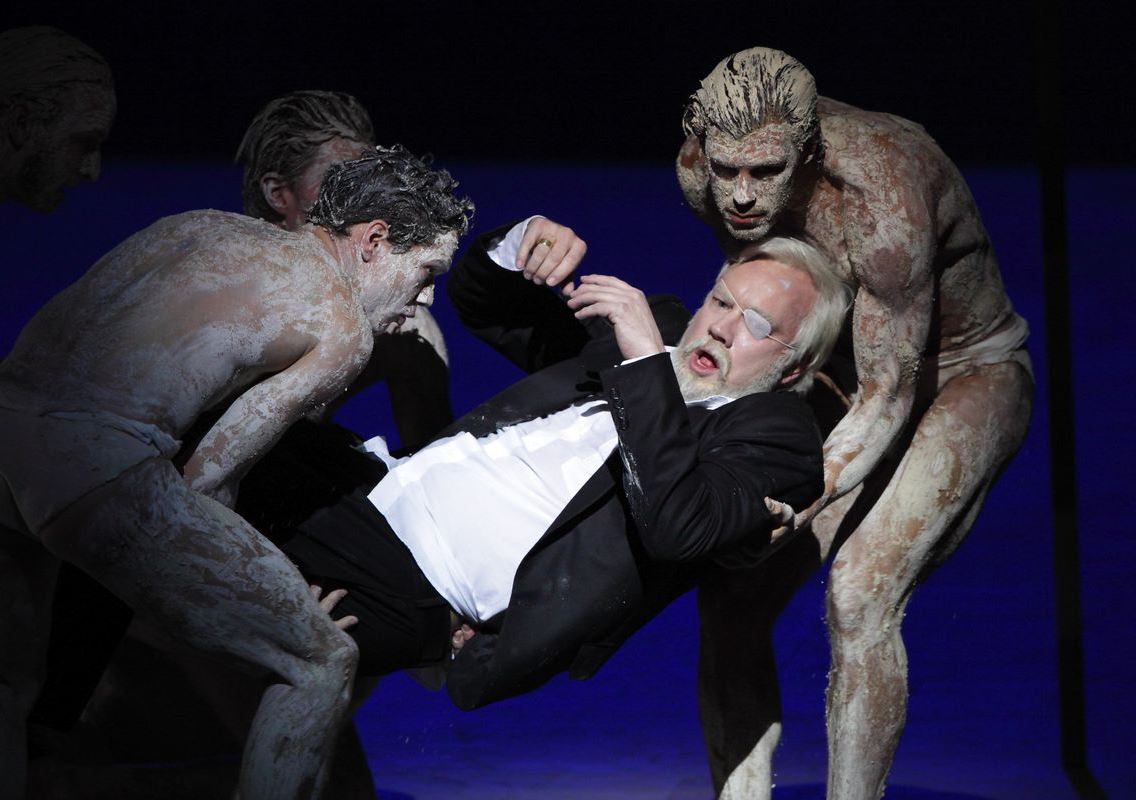
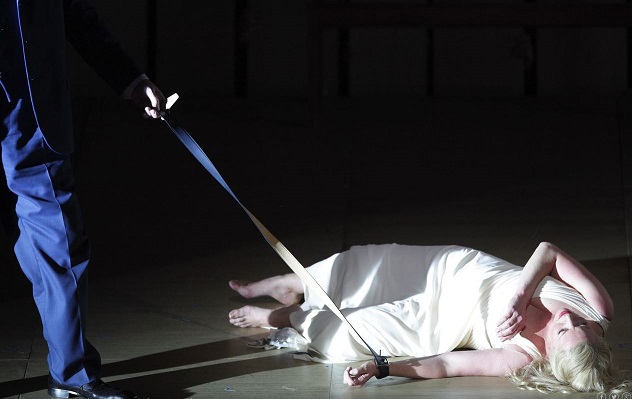
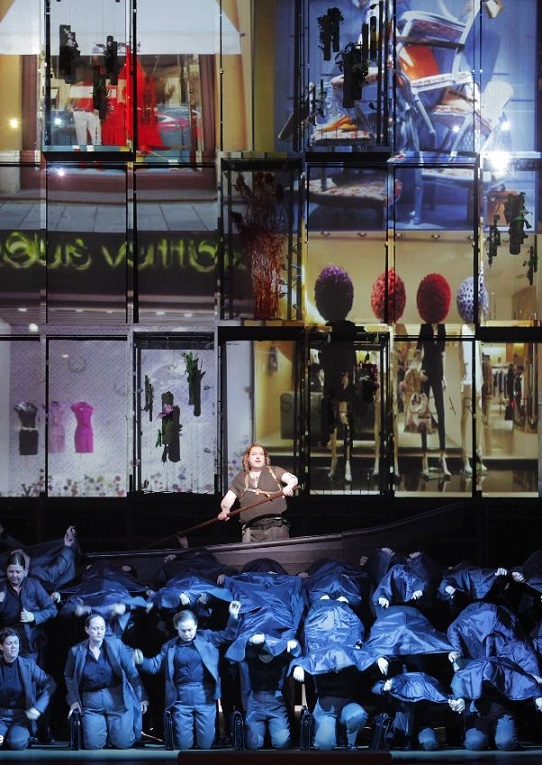
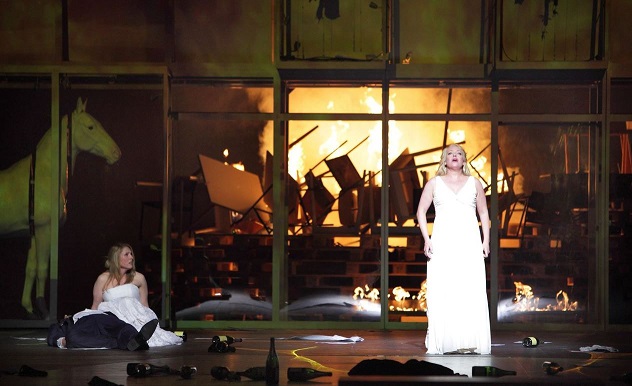
Wagner’s Lohengrin, partly a fairy-tale, partly a historical myth and partly a tragic love story, raises a serious issue: can absolute trust and unconditional love exist in a world in which the absolute does not exist and in which almost everything is pre-determined? This opera written after a mediaeval legend about Lohengrin, the knight of the Holy Grail, is considered to be one of the most beautiful works of German romanticism in which music, through a hypnotically unbroken flow of sounds, unites the soloists, choir and orchestra into a unique and unrepeatable artistic expression. After the demanding production of Parsifal, this is again a co-production of the CNT in Zagreb and the Mainfranken Theatre Würzburg. With the opening night of the equally challenging Lohengrin, we shall mark the Wagner Year.
The Finnish National Opera Presents:
Die Meistersinger von NürnbergYoung Walther finds himself compelled to win a singing competition, because the prize is the hand of Eva in marriage. Entrants need to be well versed in the ancient rules of the mastersingers to even be allowed to enter the competition, but Walther is inspired to sing of love in a new style. Die Meistersinger von Nürnberg is a grandiose opera by Wagner setting a good-humoured story about the encounter of old and new worlds.
In this opera, Wagner depicts young love and laughter instead of the epic canvases for which he is better known. For all its light-heartedness, the story is also a serious exploration of the tensions between freedom and strict rules in art. Harry Kupfer, who previously directed the impressive Parsifal, sets the Medieval tale in war-torn Germany in the modern era.
CAST
FaustOpéra Bastille – First performance on 2 March 2015 – 7:30PM
The emblematic French opera, one of its greatest successes and, at the same time, in a way, its memory. Gounod recalled having the book by Goethe by his side throughout his youth, even in the gardens of the Villa Medici where he was a “pensionnaire.” Twenty years later, Carvalho finally agreed to commission Gounod and he had good reason to: Faust brought prosperous times to the Théâtre-Lyrique and then to the Opéra. From there, the work became famous throughout the world and the Metropolitan in New York chose it for its inaugural opening evening on 22 October 1883, where the greatest singers made their mark. Jean de Reszké and Muratore as Faust, Faure – the creator –, Maurel, Delmas and Marcoux as Méphisto and, for Marguerite, Christine Nilsson, Patti, Melba, Farrar, Garden… Few works have been so loved and respected as this Faust… And indeed, the work, more faithful than we might imagine to Goethe, inspired in Gounod a youthful, turbulent lyricism, pleasures and unforgettable trepidation.
Piotr Beczala and Krassimira Stoyanova embody the legendary doomed lovers.
| Michel Plasson | Conductor | |
| Jean-Romain Vesperini | Stage director | |
| Johan Engels | Sets | |
| Cédric Tirado | Costumes | |
| François Thouret | Lighting | |
| Selin Dündar | Choreography | |
| José Luis Basso | Choruses master |
| Artist | Note | Rôle |
|---|---|---|
|
Piotr Beczala
|
Faust
|
|
|
Michael Fabiano
|
(25, 28 March)
|
Faust
|
|
Ildar Abdrazakov
|
Méphistophélès
|
|
|
Jean-François Lapointe
|
Valentin
|
|
|
Damien Pass
|
Wagner
|
|
|
Krassimira Stoyanova
|
Marguerite
|
|
|
Anaïk Morel
|
Siebel
|
|
|
Doris Lamprecht
|
Dame Marthe
|
27/02/2015 (19:00)
La traviata is an opera in three acts by Giuseppe Verdi set to an Italian libretto by Francesco Maria Piave. It is based on La dame aux Camélias, a play adapted from the novel by Alexandre Dumas, fils. The opera was originally entitled Violetta, after the main character. It was first performed on 6 March 1853 at the La Fenice opera house in Venice.
Guest artist
Conductor Salvatore Cicero
Characters
Violetta ValÃry, a courtesan
Alfredo Germont, a young bourgeois from a provincial family
Giorgio Germont, Alfredo’s father
Flora Bervoix, Violetta’s friend
Annina, Violetta’s maid
Gastone, Alfredo’s friend
Dottore Grenvil
Commissioner
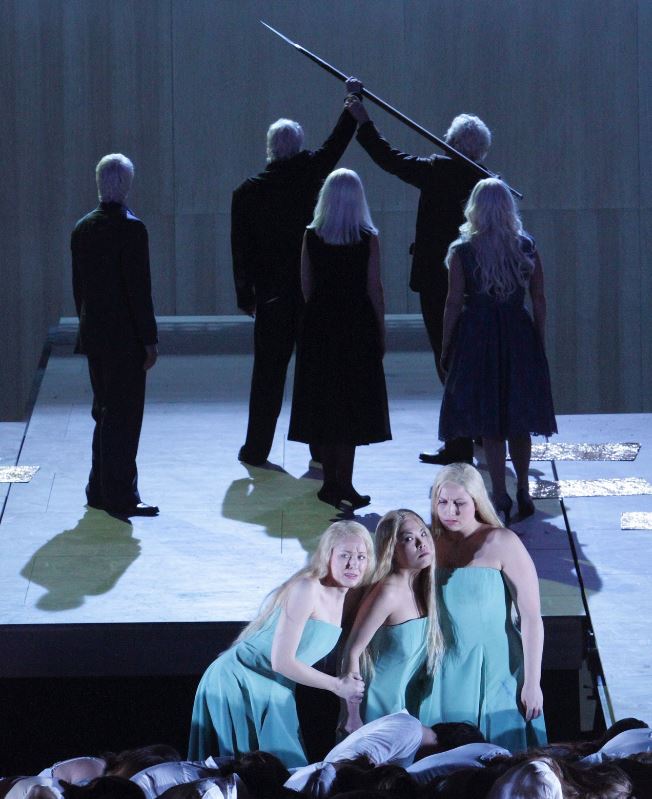
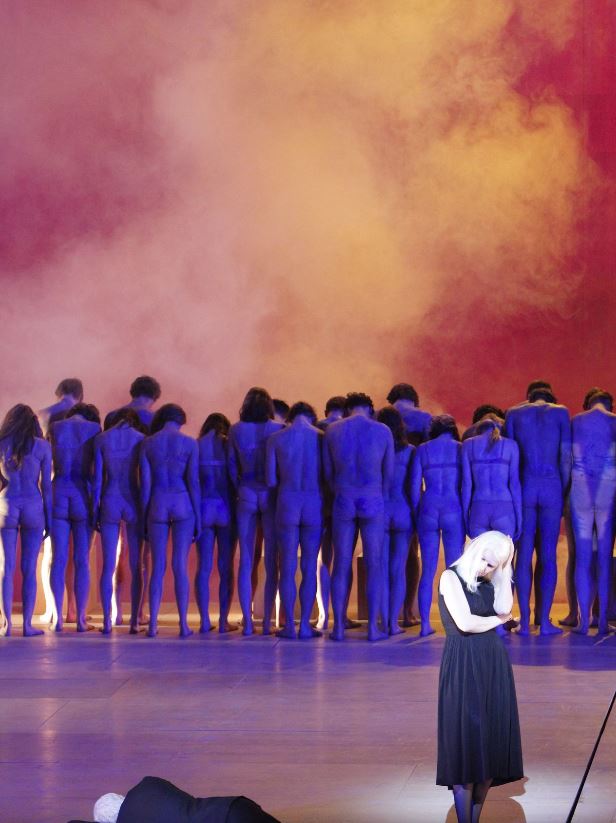
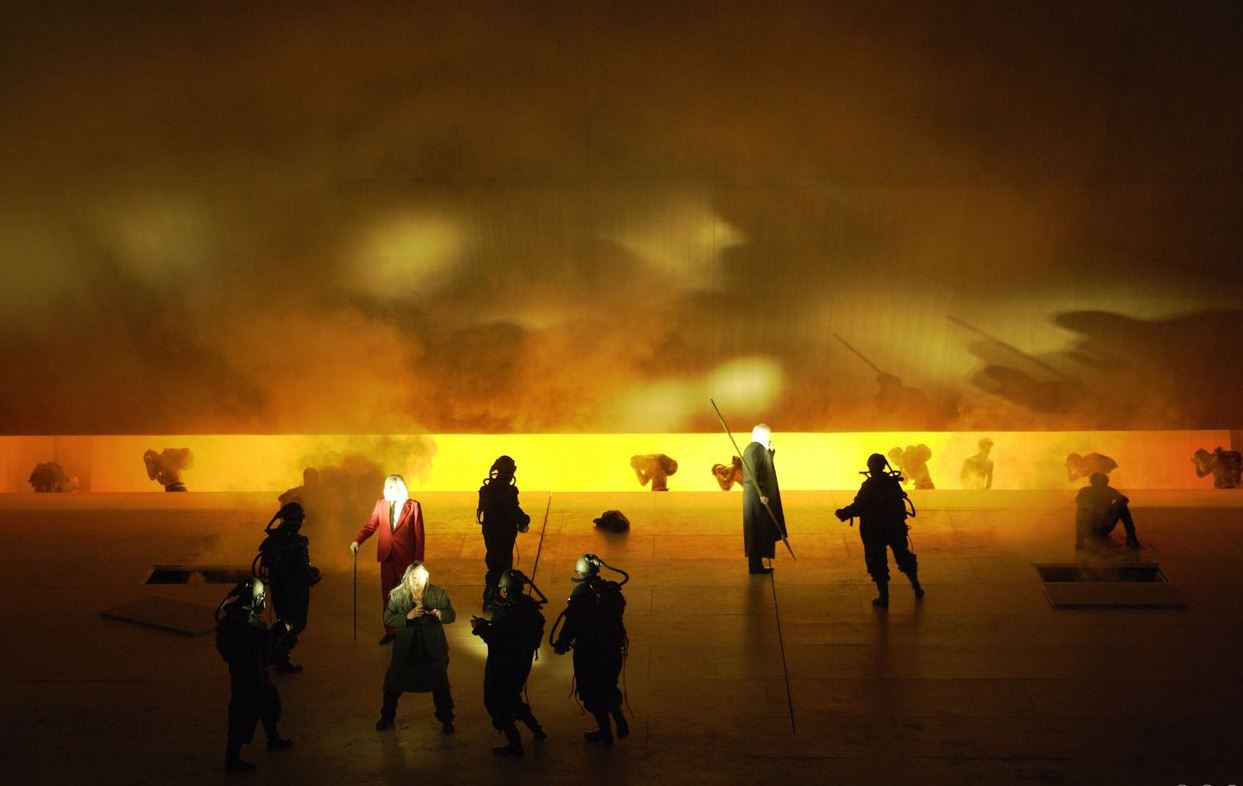
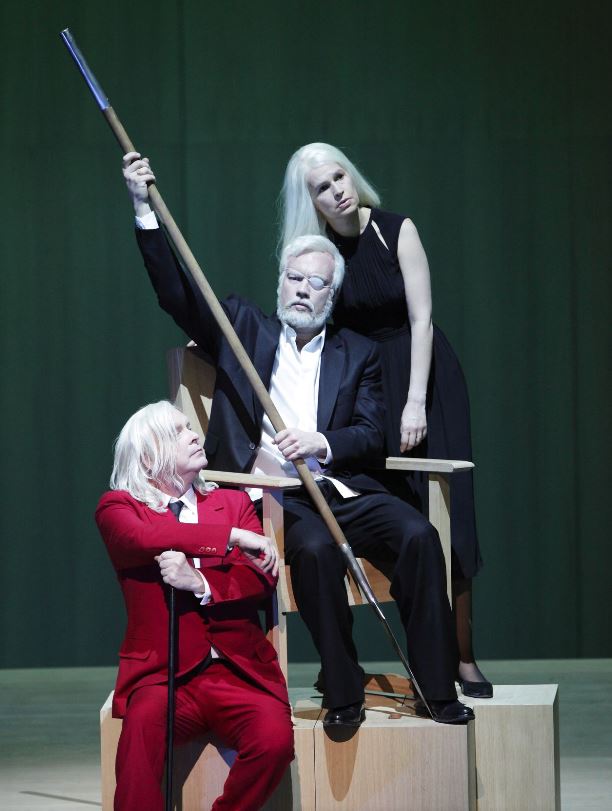
PARSIFALRichard Wagner 1813 – 1883
Opera in three acts
Libretto by the Composer
First performed July 26th 1882, Festspielhaus, Bayreuth
Sung in German with German surtitles
Performances
Sunday 15.03.2015
21.03.2015 |29.03.2015 |03.04.2015 |06.04.2015

——————————————————————————–
About the Piece
——————————————————————————–
Wagner’s opera is full of allegory. Amfortas, guardian of the Holy Grail, was seduced by Kundry and wounded by Klingsor when he entered his magic garden, where he also lost the Sacred Spear. Gurnemanz, the wisest of the brotherhood, thinks Parsifal, a simple young man, might be the one who will be able to close these wounds again, but years are to pass before this turns out to be the case, years before he returns, with the Sacred Spear, is annointed and the Holy Grail – “It shall be hidden no more” – is revealed. The most mysterious character in the work is Kundry, who was cursed to wander the earth forever for laughing at Jesus’ sufferings. She returns at the end of the opera and washes Parsifal’s feet. He baptises her and she sinks, lifeless, to the floor. It is extraordinary how this production holds you spellbound from start to finish.
Cast
Conductor
Bertrand de Billy
Director
Christof Nel
Revival rehearsed by
Orest Tichonov
Scenic Analysis
Martina Jochem
Stage Designer
Jens Kilian
Costume Designer
Ilse Welter
Lighting Designer
Olaf Winter
Dramaturge
Norbert Abels
Chorus Master
Tilman Michael
Parsifal
Frank van Aken
Gurnemanz
Franz-Josef Selig
Kundry
Claudia Mahnke
Amfortas
Johannes Martin Kränzle
Klingsor
Simon Bailey
Titurel
Magnús Baldvinsson
Blumenmädchen
Louise Alder
Karen Vuong
Judita Nagyová
Elizabeth Reiter
Jenny Carlstedt
Maria Pantiukhova *

Gralsritter
Hans-Jürgen Lazar
Gralsritter
Iurii Samoilov
Knappe
Elizabeth Reiter
Knappe
Jenny Carlstedt
Knappe
Michael Porter *
Knappe
Michael McCown
Oper Frankfurt’s Orchestra, Chorus and Extra Chorus
* Member of the Opera Studio
Tiziano Thomas Dossena, Author & Editor
Di Raffaele Pisani
A memoir by Cav. Gilda Battaglia Rorro Baldassari