Giovanni Paisiello’s Il Barbiere di Siviglia in Vienna

barbiere1

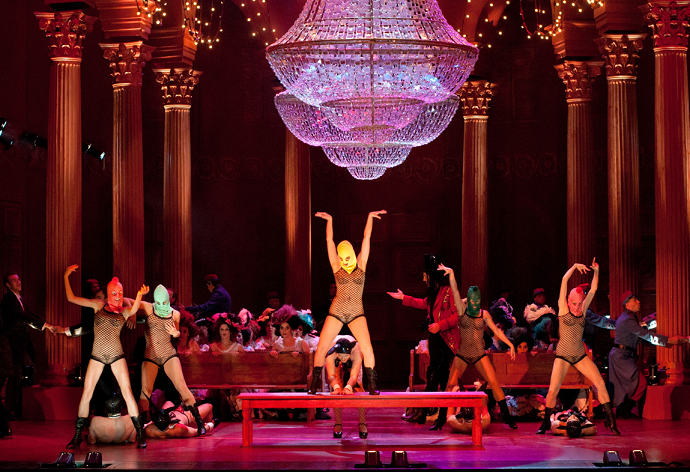
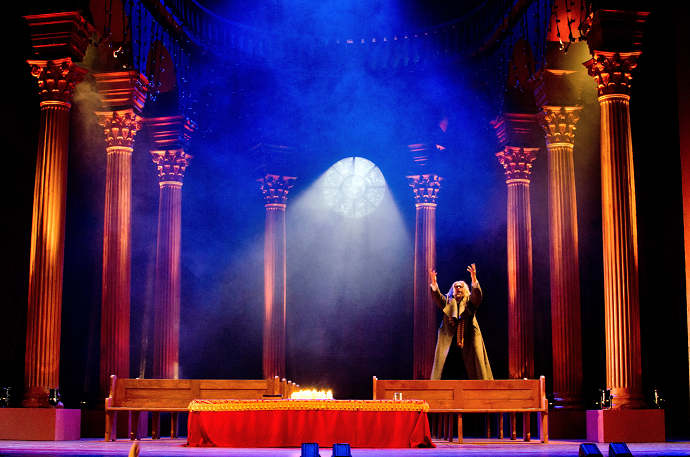
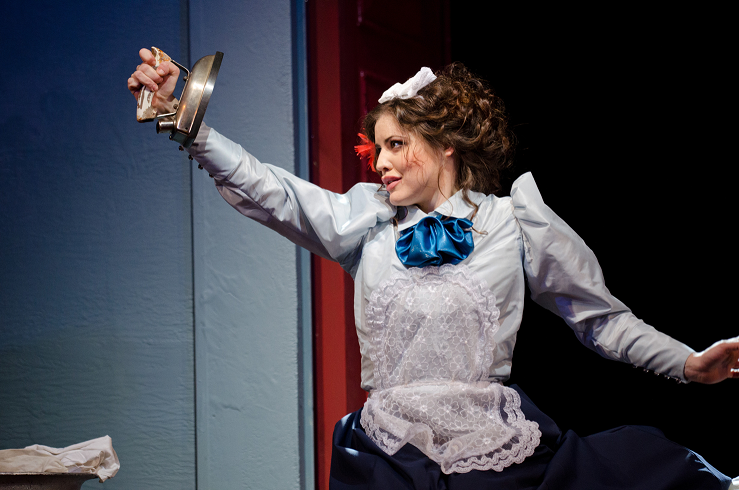
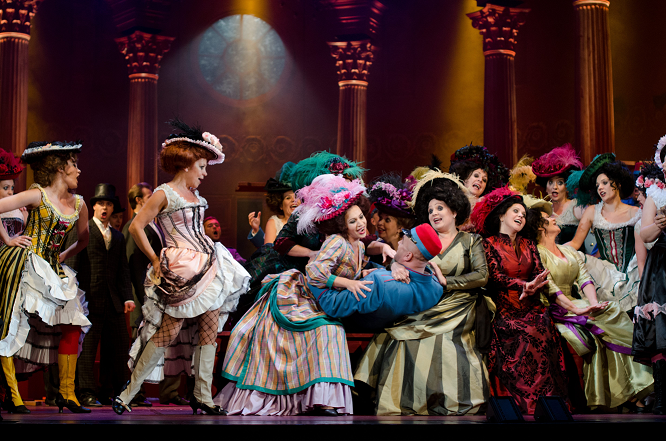
Il Barbiere di Siviglia

by Giovanni Paisiello

at the Theater an der Wien in Vienna

Monday February 16, 2015

Wednesday February 18, 2015

Friday February 20, 2015

Monday February 23, 2015

Wednesday February 25, 2015

Friday February 27, 2015

barbiere
SYNOPSIS

Pierre-Augustin Caron de Beaumarchais (1732-1799), watchmaker to the court, inventor, author, diplomat and adventurer, offered Le barbier de Séville to the Comédiens Italiens as an opera libretto in 1772. When it was rejected,
he rewrote it as a play which became a triumphant success at the Comédie-Française in 1775. Beaumarchais had so many ideas for the fate awaiting the characters surrounding Figaro, his jack of all trades, that he created an entire trilogy which precisely reflects the rapid developments of social structures in the last third of the 18th century. Giovanni Paisiello set the first play to music in 1782 as a commission for Catherine the Great in Saint Petersburg, and it soon became immensely popular all over Europe.

In Seville, Rosina is being kept from prying eyes in the house of her guardian Bartolo. Because the young lady is beautiful and wealthy, Bartolo intends to marry her. But Rosina has another admirer: a student by the name of Lindoro has secretly been courting her for some time, and she finds the young man considerably more attractive than her guardian. Lindoro is in fact the notorious womanizer Count Almaviva in disguise. This time, however, he is genuinely in love and wants to make Rosina his wife, even though she is a commoner. He secures the aid of Figaro who, as a physician, apothecary and barber, is free to enter Bartolo’s house. In the meantime, Bartolo has heard that the infamous Almaviva is in town and rightly guesses that he may have his ward in his sights. He tries to bring the date of his own wedding forward, but Figaro and Almaviva hatch counter-plots. In the end, Bartolo loses out: Count Almaviva abandons his disguise and makes Rosina his countess.

Posted in OPera | Tagged , , , , , | Leave a comment

Turandot at the Czech National Theatre in Prague

turandotnationaltheatreturandot1Libretto: Giuseppe Adami, Renato Simoni
Conductor: Enrico Dovico
Stage director: Václav Věžník
Sets: Ladislav Vychodil
Costumes: Josef Jelínek
Chorus master: Adolf Melichar
Choreography: Otto Šanda

State Opera Orchestra

State Opera Chorus

Premiere: September 15, 1995

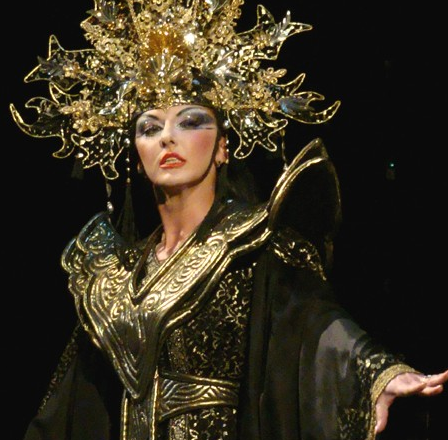
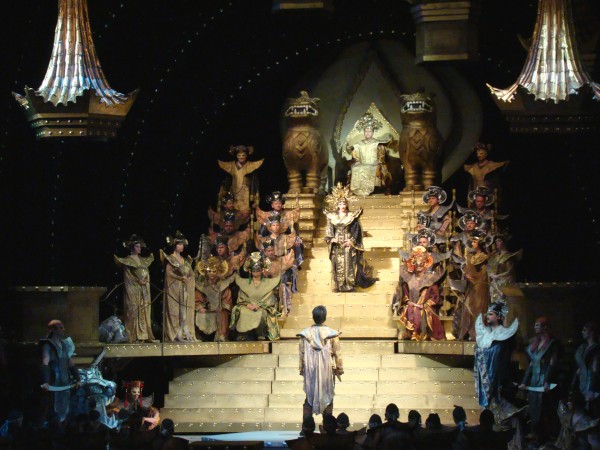
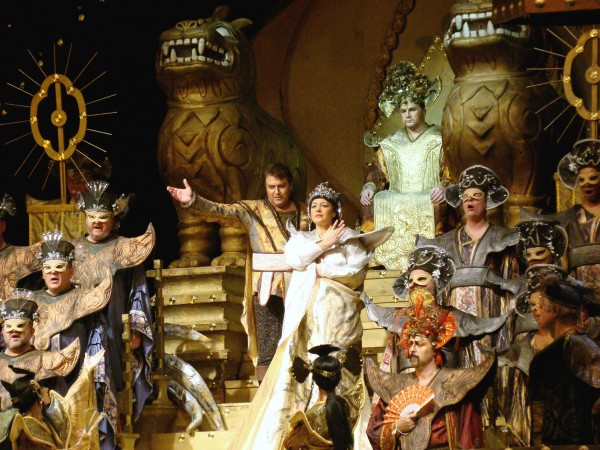
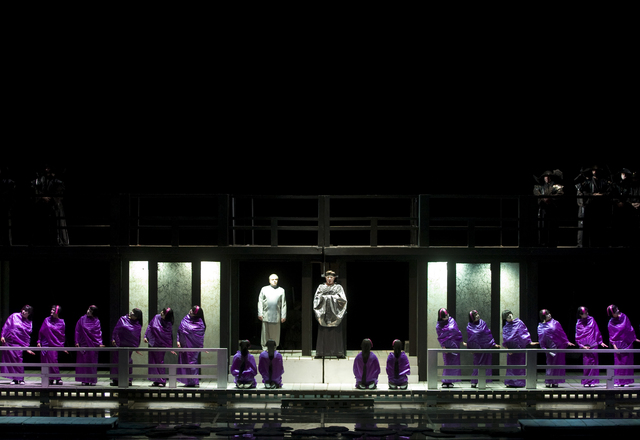
The Persian fairy-tale Turandot from the dervish Mokles’s 17th-century collection The One Thousand and One Nights has inspired numerous poets and composers. Giacomo Puccini worked on Giuseppe Adami and Renato Simoni’s libretto, based on Carlo Gozzi’s play, in the final years of his life, when he was fighting cancer of the larynx. Just as in the case of Madama Butterfly, he diligently strove to gain thorough knowledge of the culture and songs of an exotic, faraway land (in this case China). Puccini died before he managed to complete the opera: the task was undertaken by his friend and pupil Franco Alfano, who drew upon the 36 pages of sketches left by the composer. turandot-2

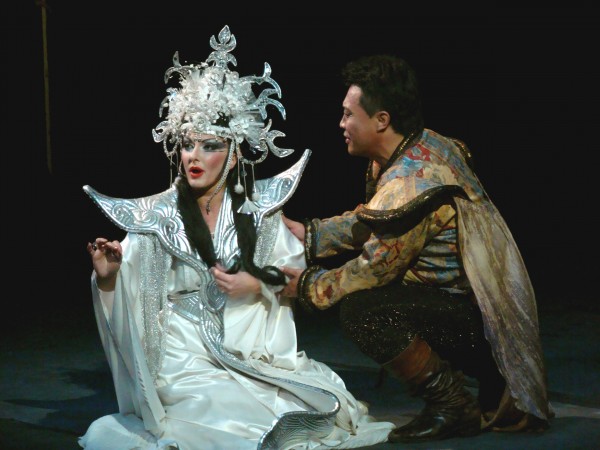
The opera was premiered on 25 April 1926 at Milan’s La Scala, conducted by Arturo Toscanini, who paid tribute to the late Puccini when in Act 3, after the words “Liu, poesia!”, he laid down his baton, turned to the audience and announced: “Here the opera ends, because at this point the maestro died”. Alfano’s finale was only included in the next performance. The cruel and beautiful Princess Turandot tests her wooers with riddles and when they fail they are duly executed. Only Prince Calaf succeeds, and his love ultimately overwhelms Turandot’s coldness.turandot-3

The opera is staged in Italian original version and Czech and English surtitles are used in the performance.

Photo: Dan Jäger

Duration of the performance: 2 hours and 40 minutes, 2 intermissions

PERFORMANCES

Sunday February 1, 2015

Thursday March 19, 2015

Wednesady April 8, 2015

turandot-5

CAST

Turandot Anda-Louise Bogza

Kalaf Michal Lehotský

Timur Oleg Korotkov

Liu Jitka Burgetová

Emperor Altoum Lubomír Havlák

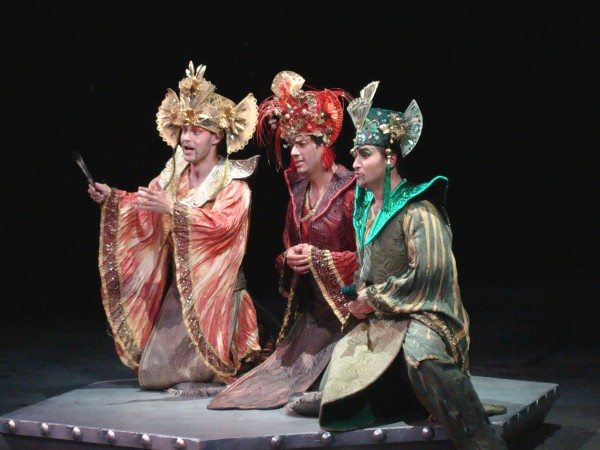
Ping Jiří Brückler

Pang Richard Samek

Pong Václav Sibera

Mandarin Roman Vocel

Prince of Persia Lubomír Havlák

turandot-8turandot-9 turandot-13


Posted in OPera | Leave a comment

MADAME BUTTERFLY at the Moniuszko Auditorium in Warsaw

polandlogoFri 7:00pm February 6, 2015

Moniuszko Auditorium

b1MADAME BUTTERFLY

Giacomo Puccini

Japanese tragedy in three acts
Libretto: Giuseppe Giacosa and Luigi Illica
World premiere: Regio Teatro alla Scala, Milan, 17/02/1904
Polish premiere: Teatr Wielki, Warsaw, 3/12/1908
Premiere of this production: 29/05/1999
Original language version with Polish surtitles
duration: 3 hrs 20 min., including: 2 intermissionsb2 b3

Artistic Team:

Conductor: Andriy Yurkevych, Piotr Staniszewski (26 March 2015)
Direction: Mariusz Treliński
Set Design: Boris Kudlička
Costumes: Magdalena Tesławska, Paweł Grabarczyk
Movement: Emil Wesołowski
Chorus Master: Bogdan Gola
Lights: Stanisław Zięba

Soloists, Chorus and Orchestra of Teatr Wielki – Polish National Opera
Photo: Krzysztof Bieliński
Poster for the production, designed by Andrzej Pągowski

b4 b5

Cast:

Madame Butterfly – Alketa Cela
Suzuki – Hanna Hipp
Kate – Aleksandra Orłowska-Jabłońska
Pinkerton – Jacek Laszczkowski
Sharpless – ***
Goro – Mateusz Zajdel
Yamadori – Krzysztof Szmyt
Bonzo – Mieczysław Milun
The Imperial Commissioner – Łukasz Motkowicz

b6 b7

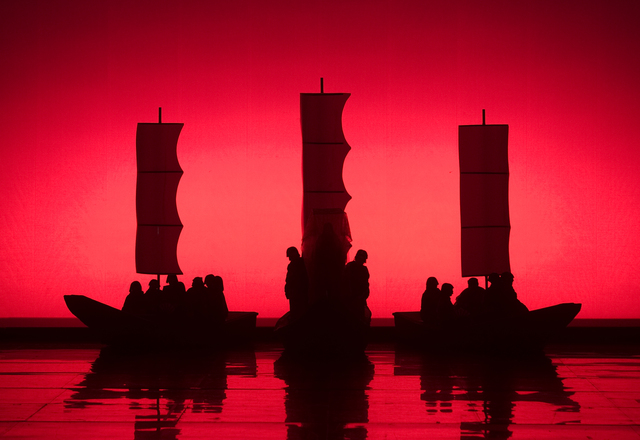
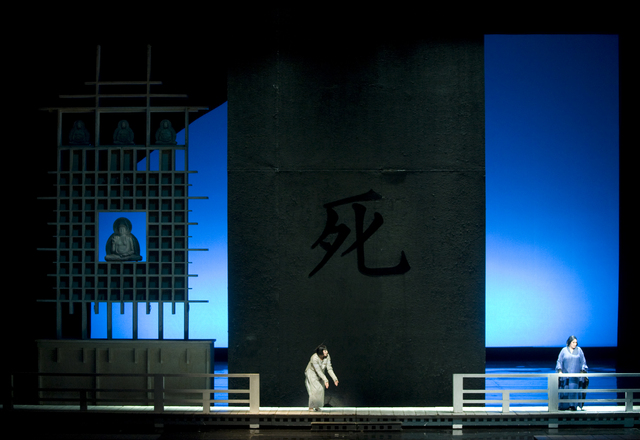
He’s rich, handsome, hungry for ever new erotic conquests; she’s beautiful, poor, trusting, madly in love. They are the protagonists of a story as old as the world, its schematic structure verging on banality. However, it is a plot excellent for uplifting repetition by opera composers, and many before Puccini did copy it. The Italian composer tossed the story into Japanese surroundings, highlighting them with references to traditional music from the Land of Cherry Blossoms, only to completely abandon the “made in Japan” poetics elsewhere. Mariusz Treliński did much the same in his (large stage) opera debut, which could actually explain the great mystery of its spectacular success in Poland, the United States, Russia, Israel, Italy, Spain and Oman. Giving up realistic details but not that special Japanese atmosphere, the director – supported by Boris Kudlička’s phenomenal stage design – very subtly invoked the convention of Kabuki theatre but also Robert Wilson’s theatre and, finally, his own experience with film. This cultural melange of different arts and inspirations has resulted in a show of historical importance that in a way splits the contemporary history of Polish opera productions into what came before and what came after the premiere of Butterfly by Treliński and Kudlička.

b8 b9

Posted in OPera | Tagged , , , , , | Leave a comment

“Tristan und Isolde” in Athens

logogreekoperaRichard Wagner

Tristan und Isolde

Conductor: Myron Michailidis
Director – sets – costumes: Yannis Kokkos

PREMIERE 23 JANUARY 2015
23, 27, 31 January 2015
4 February 2015

Megaron, the Athens Concert Hall – Alexandra Trianti Hall
New production
Performances begin at 18.30
tristan


Artistic collaborator, dramaturgy: Anne Blancard
Video scenography: Eric Duranteau
Lighting: Michael Bauer
Chorus master: Agathangelos Georgakatos


Tristan: Torsten Kerl
King Marke: Reinhard Hagen
Isolde: Ann Petersen
Kurwenal: Christopher Robertson
Melot: Charalambos Alexandropoulos
Brangäne: Katarina Dalayman
A shepherd: Nikos Stefanou
A steersman: Kostis Rasidakis
A sailor: Antonis (Αnthony) Koroneos


With the GNO Orchestra and Chorus

Maestro Michailidis

Maestro Michailidis

Wagner’s Tristan und Isolde, one of the greatest works of the world’s music literature, will be staged for the first time in Greece, in a full, indoor staging with local musicians and the Greek National Opera Orchestra and Chorus, conducted by GNO Artistic Director, Myron Michailidis.This pivotal romantic masterpiece is a major œuvre, full of bursting emotions, and the novelties in its harmonic structure changed the course of music.

Director Yannis Kokkos

Director Yannis Kokkos

Director Yannis Kokkos points out: “The opera Tristan und Isolde, an ode to the night during which Eros and Thanatos [death] embrace each other in order to tear down the limits of time and space, is also a drama of private moments. On stage, the Wagnerian heroes – who incarnate in secret the composer’s troubles with regard to love and to philosophical obsessions – experience the anguish of betrayal, infidelity and the hopelessness of an absolute love that strikes a blow to the world’s rational order. This intentional escape towards death is dominated by the pleasure of annihilation – a paramount idea of Romanticism. The images, lighting and gestures attempt to impart substance to one of the most wonderful pieces of music ever composed.”

Posted in OPera | Tagged , , | Leave a comment

Gounod’s Faust in Estonia

faustFaust

Opera by Charles Gounod

Premiere on September 20, 2012
Libretto by Jules Barbier’ and Michel Carré after Carré’s paly “Faust and Marguerite” and Johann Wolfgang von Goethe’s tragedy “Faust”
World premiere on March 19, 1859 (Théātre Lyrique)
Opera in two acts, approx. running time 2 h 55 min
Performed in French, subtitles in Estonian and English
On Feb 12, 14 & 26 2015 Mephistopheles sung by Priit Volmer (Bonn Opera), Marguerite sung by Marie Fajtová (Czech Republic).
T, 12 February 2015 / 19:00
S, 14 February 2015 / 19:00
T, 26 February 2015 / 19:00Faust_1

Staging team
Conductors: Vello Pähn, Jüri Alperten, Risto Joost
Stage Director: Dmitri Bertman (Helikon-Opera, Moscow)
Designer: Ene-Liis Semper (NO 99)
Choreographer: Edvald SmirnovFaust_2

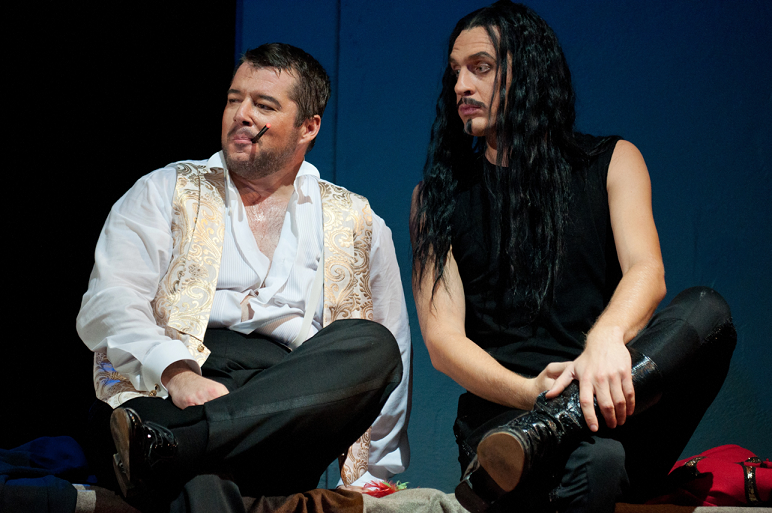
The classic story of the Faust legend is brought to life by Dmitri Bertman’s and Ene-Liis Semper’s fantastic vision in one of the most famous operas of all times. In 2007 the same team brought to stage Erkki-Sven Tüür’s award-winning opera “Wallenberg”. In Gounod’s opera Faust sells his soul to the devil Mephistopheles in exchange for youth, and is tempted by the innocent but fateful beauty of Marguerite. But there are no winners, when making a pact with the devil – within a moment Faust humiliates the man who adores Marguerite, kills her brother and drives her into madness. Gounod’s music is enticing throughout with memorable hits, such as Marguerite’s “Jewel Song” of the 3rd act and soldiers’ chorus of the 2nd act.faust_3
Barbier and Carré based their libretto on the first part of Goethe’s play, later adding scenes from the 2nd act. By the death of Gounod in 1893, “Faust” had been performed in Paris over a thousand times. The opera was so popular in the US that for decades in the 19th century, the New York opera season was opened with “Faust”.faust_4
New Estonian Ballet Capturing and Beautiful

25.09.2012 / Rahvusooper Estonia

It is a dramatic, sometimes violent performance, deeply tragical and very beautiful. Modigliani’s paintings play an important role and evocative lighting and use of smoke and mists heightens the sense of a dream world – though the sets and many of the scenes are very realistic.faust5

Faust Butchered by Bertman – but Survives

25.09.2012 / Rahvusooper Estonia

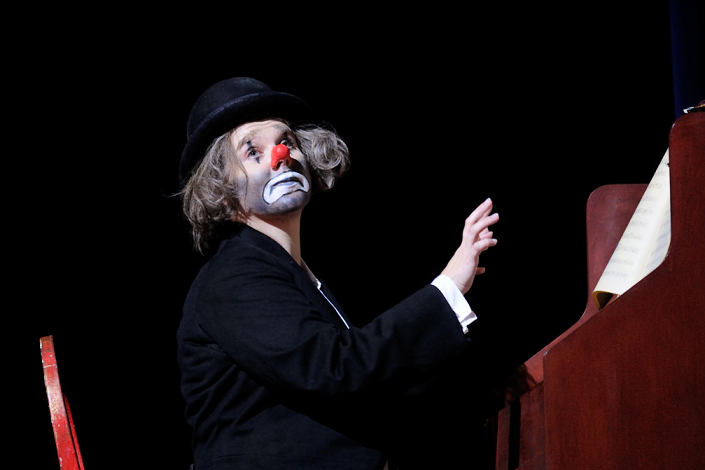
Musically the level is very high. The premiere was conducted by Vello Pähn, who from 1 August is the Artistic Director and Chief Conductor after Arvo Volmer. I have nothing but praise for his reading of this score, often criticised as being too sugary. Pähn managed to inject a dose of insulin to keep the sugar-balance on a healthy level.Faust_kloun

Posted in OPera | Tagged , , , , , | Leave a comment

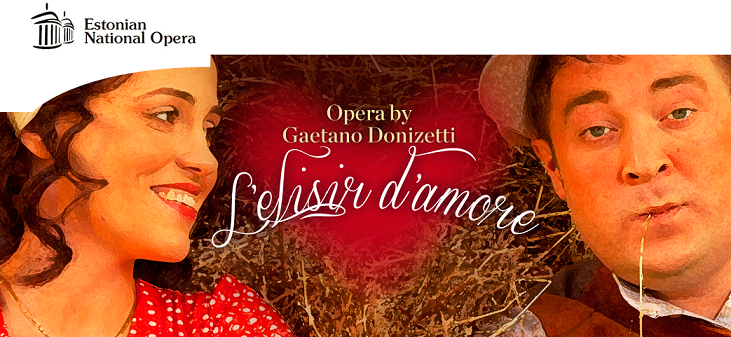
L’elisir d’amore in Estonia

elisirestoniatitle

L’elisir d’amore

Opera by Gaetano Donizetti in two acts

Libretto by Felice Romani after Eugène Scribe’s text for Daniel-François-Esprit Auber’s “Le Philtre”
World premiere on May 12, 1832 (Milano Teatro Cannobiana)
Premiere at the Estonian National Opera on May 15, 2014

PERFORMANCES DATES
T, 22 January 2015 / 19:00
S, 31 January 2015 / 19:00
S, 21 February 2015 / 19:00
S, 28 February 2015 / 19:00

caputoSung in Italian with subtitles in Estonian and English
Approx. running time 2,5 h
On Jan 22 & 31 and Feb 21 & 28 2015 Nemorino sung by Cataldo Caputo (Italy)

elisirE1

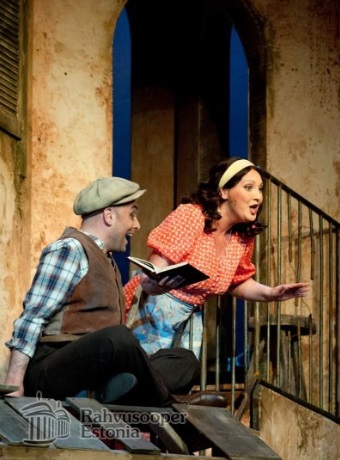
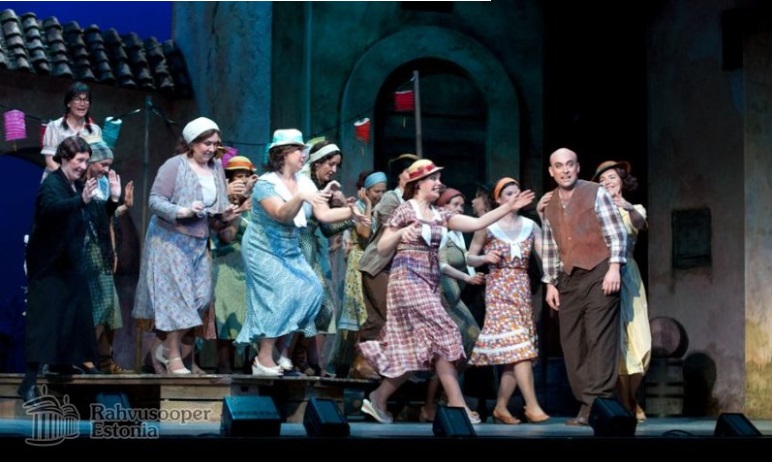
Written in a few weeks’ time, “L’elisir d’amore” has become one of the most frequently performed of all Gaetano Donizetti’s operas together with “Lucia di Lammermoor” (1835) and “Don Pasquale” (1843). It combines a touching love story and hilarious comedy with lightness, sparkling wit and beautiful music, including the well-loved tenor aria “Una furtiva lagrima”. Its premiere in Milan in 1832 was a triumph and secured Donizetti’s place as one of the leading Italian opera composers of his day. “L’elisir d’amore” relies on the traditions of the 18th century opera buffa and offers an ear-tickling delight for all lovers of 19th century Italian bel canto.elisirE2

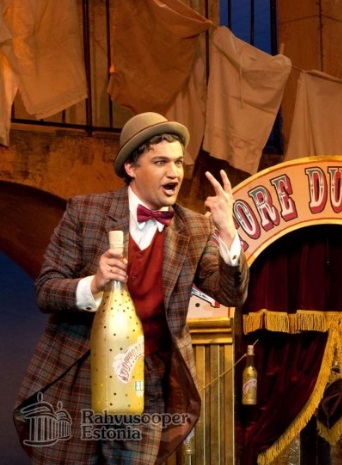
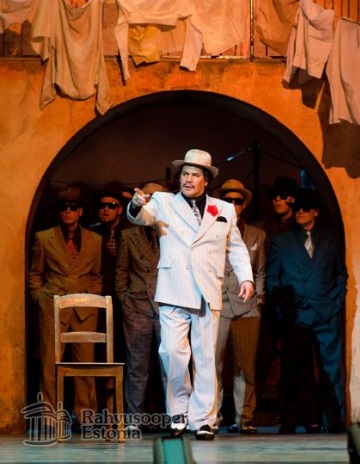
Young, naive Nemorino loves the rich and capricious Adina, who is indifferent to his affection. A travelling quack physician Dulcamara convinces Nemorino to spend the last of his money on an infallible love potion that is really a bottle of wine. Despite Nemorino’s efforts, Adina remains unmoved and enjoys the courting of Belcore, a mafia-leader. In desperation, Nemorino enlists with the troop in order to purchase a second bottle of the love potion. Deeply moved by Nemorino’s dedication to win her love, Adina finally admits to herself that she also has feelings for him and buys back his commission. What miracles a bottle of bordeaux can work!elisirE4

Georg Malvius has directed more that 60 plays, 70 musicals and 20 operas in Sweden, Finland, Norway, Denmark, Germany, England, Holland, Italy, Luxembourg Austria, Monaco, Hungary and elsewhere. In Estonia, Malvius has staged 14 musical and drama productions.

elisirE5elisirE3 elisirE9

Staging team

Conductors: Vello Pähn, Risto Joost, Lauri Sirp
Stage Director: Georg Malvius (Sweden)
Designer: Ellen Cairns (Scotland)
Lighting Designer: Palle Palmé (Sweden)
Choreographer: Adrienne Åbjörn (Sweden)

elisirE6Cast:

Nemorino: Cataldo Caputo (Italy), Oliver Kuusik, Andres Köster
Adina: Kadri Kipper, Kristel Pärtna
Belcore: Rauno Elp, Aare Saal, René Soom
Dulcamara: Pavlo Balakin, Rauno Elp
Giannetta: Janne Ševtšenko, Olga Zaitseva

elisirE11elisirE10elisirE12elisirE8

Posted in OPera | Tagged , , , , | Leave a comment

Carmen in Norway

logonorwayJanuary 23.–March 26

Carmen

Performed in French Texted in Norwegian and English
3 hours 1 intermission
carmen1Since the premiere in 1875, the character of Carmen in Bizet’s hitlist of an opera has captivated audiences all over the world. Carmen desires desire itself. She is a seducer, conqueror, rule-breaker and radical. A century before the hippie movement’s «make love, not war», in Habañera Carmen proclaims that it is the freedom to love that matters: what, whom and when she wants. Love is like a rebellious bird that no one can tame, she sings, or a gypsy’s child.
Catalan director Calixto Bieito attracted a lot of attention with last season’s The Tales of Hoffmann. His version of Carmen sets the action in Spain at the end of the 1970s, immediately after the Franco era. The production is still characterised by the captivating and physical musical drama that has always fascinated Carmen’s audiences. In a circle of light – bursting with energy – we confront the violent human desire for attention, power and satisfaction. The hard-hitting disappointment of rejection is laid bare for us, along with the difficult situation of girls and women faced with poverty and male chauvinism. And in the centre is the seductive figure of Carmen, her radicalism given a new, timeless relevance.
Carmen is a co-production with the English National Opera.
Premiere discussion one week before the performance / Mini-Carmen (singing games for children) / free introduction one hour before the performance

  • Music : Georges Bizet
  • Henri Meilhac and Ludovic Halévy : Libretto
  • Conductor : Fabien Gabel, Christian Vásquez
  • Direction : Calixto Bieito
  • Set design : Alfons Flores
  • Costumes : Mercè Paloma
  • Lighting design : Bruno Poet
  • Cast : The Opera Chorus, The Opera Orchestra

carmen2

CAST

carmenKatarina Bradic as Carmen

Playing the following days

1/23/2015
1/26/2015
1/29/2015
2/3/2015
2/28/2015
3/4/2015
3/9/2015


Tone_KummervoldTone Kummervold as Carmen

Playing the following days

1/24/2015
1/27/2015
1/30/2015
2/5/2015
2/21/2015
3/7/2015
3/26/2015


donJoseHenrik Engelsviken as Don Jose

Playing the following days

1/23/2015
1/26/2015
1/29/2015
2/3/2015
2/28/2015
3/4/2015
3/9/2015


daniel_johanssonDaniel Johansson as Don Jose

Playing the following days

1/24/2015
1/27/2015
1/30/2015
2/5/2015
2/21/2015
3/7/2015
3/26/2015

Ben_WagerBen Wager as Escamillo

Playing the following days

1/23/2015 * 1/26/2015
1/29/2015 * 2/3/2015
2/28/2015 * 3/4/2015
3/9/2015 * 3/7/2015
3/26/2015

YngveYngve Søberg as Escamillo

Playing the following days

1/24/2015
1/27/2015
1/30/2015
2/5/2015
2/21/2015

Maria_BochmanovaMaria Bochmanova as Micaëla

Playing the following days

1/23/2015
1/26/2015
1/29/2015
2/3/2015
2/28/2015
3/4/2015
3/9/2015

 
Natalia_Tanasiiciuc_foto_Anatol_LunguNatalia Tanasii as Micaëla

Playing the following days

1/24/2015
1/27/2015
1/30/2015
2/5/2015
2/21/2015
3/7/2015
3/26/2015


Other roles

  • Dancaïre
    • Svein Erik Sagbråten
    • Thor Inge Falch
  • Frasquita
    • Kari Ulfsnes Kleiven
    • Caroline Christensen
  • Mercédès
    • Maija Skille
    • Hege Høisæter
  • Moralès
    • Ole Jørgen Kristiansen
    • Aleksander Nohr
  • Remendado
    • Nils Harald Sødal
    • Petter Moen
  • Zuniga
    • Musa Ngqungwana
    • Ketil Hugaas
Posted in OPera | Leave a comment

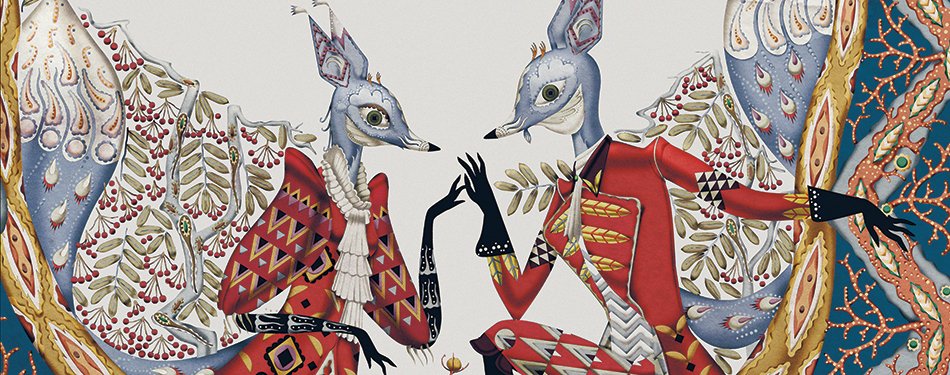
Les Joyeuses Commères de Windsor in Liege

nikolai

wallonieSeason : 2014-2015

Length : 3h30

Song language : German
Conductor :
Christian Zacharias
Director :
David Hermann
Choirmaster :
Marcel Seminara
Artist :
Franz Hawlata, Anneke Luyten, Werner Van Mechelen, Sabina Willeit, Laurent Kubla, Davide Giusti, Sophie Junker, Stefan Cifolelli, Patrick Delcour, Sébastien Dutrieux
Number of performances :
5
Dates :
Fri, 30/01/2015 to Sat, 07/02/2015

First time at the Opera.

About the cast

Considered one of the greatest German pianists today, Christian Zacharias also pursues an extraordinary career as a conductor.

This remarkable musical explorer will find his perfect match through this work which is infused with a more than seductive musical power and which dazzlingly pulls off a fusion of the German and Italian styles.

On the cast side, among others, we have Sabina Willeit (L’Equivoco Stravagante), Franz Hawlata (Fidelio), Werner Van Mechelen (Stradella) and, for the first time, the Belgian soprano Anneke Luyten, semi-finalist in the Reine Elisabeth award in 2011, who has just made her appearance at the Vlaamse Opera in Parsifal.

The story of Les Joyeuses Commères de Windsor

Sir John Falstaff leads a dissipated life.

Permanently penniless, he sends the same love letter to Frau Fluth and Frau Reich, two rich bourgeois women.

The latter, seeing through the ruse, are highly put out.

From that time on, their only amusement comes at the expense of the inept suitor.

Now thrown into the Thames with the dirty laundry, now expelled from the room with great sweeps of the broom while disguised as a woman, Falstaff becomes the laughing-stock of the village children when he walks through the woods in a ghost costume.


Libretto: Hermann Von Mosenthal
after the play by William Shakespeare
New production: Opéra Royal de Wallonie-Liège,
in coproduction with Opéra de Lausanne

Cast

Conductor: Christian Zacharias
Director: David Hermann*
Set designs: Rifail Ajdarpasic*
Costume designs: Ariane Isabell Unfried*
Lighting designs: Fabrice Kebour


Choirmaster: Marcel Seminara
Orchestra & Choirs: Opéra Royal de Wallonie-Liège


Sir John Falstaff: Franz Hawlata
Frau Fluth: Anneke Luyten*
Herr Fluth: Werner Van Mechelen
Frau Reich: Sabina Willeit
Herr Reich: Laurent Kubla
Fenton: Davide Giusti*
Jungfer Anna Reich: Sophie Junker
Junker Spärlich: Stefan Cifolelli
Dr. Caïus: Patrick Delcour
The therapist: Sébastien Dutrieux
1st citizen: Patrick Mignon

About the opera

In these Joyeuses Commères de Windsor by Nicolaï and Von Mosenthal, the number of characters is limited to the most important ones.Unlike Verdi who set the comedy by Shakespeare to music forty-five years later and turned Falstaff into the central character, Nicolaï lends very specific importance to the main female roles.Frau Fluth and Frau Reich are the string-pullers of all the pranks.For her part, Anna, Frau Reich’s daughter, knows full well how to take advantage of the situation in order to organise her wedding to Fenton.With Verdi, Falstaff possesses human grandeur and a certain philosophical wisdom.With Nicolaï, he is the typical flawed character…

Shakespeare wrote the Merry Wives of Windsor in less than two weeks in order to satisfy Elizabeth I who, having enjoyed the character of Falstaff in Henry IV, had expressed the desire to see him back on the stage

Posted in OPera | Tagged , , | Leave a comment

“The Cunning Little Vixen” in Finland

logofinlandThe Finnish National Opera Presents:

vixenThe Cunning Little Vixen

Leoš Janáček

A young vixen, or female fox, is captured by a forest ranger and obliged to learn to live among humans. The vixen finally escapes to freedom and the proper life of a fox, however short that may be. Featuring a cast of animal characters, this opera resembling a fairy tale is suitable for the whole family.

Leoš Janáček depicted tragic human characters in his works but also demonstrated a profound understanding of nature. The Cunning Little Vixen is an insightful study about the relationship between the restrictions of human life and the freedom of the animal kingdom.

A fantastically imaginative realisation of the colourful world of animals is presented in the opera set design début of internationally recognised designer Klaus Haapaniemi. The director and choreographer are Immo Karaman and Fabian Posca, who created the acclaimed production of Doctor Atomic.

Tickets for the spring season performances available from 6 Oct 2014.

Duration 2 h 10 min, 1 intermission
Performed in Finnish, surtitles in Finnish, Swedish and English.
Posted in OPera | Leave a comment

Die Fledermaus in Tokyo

mainmenuTokyoDie Fledermaus

Music by Johann STRAUSS II
Opera in 3 acts
Sung in German with Japanese surtitles
Opera Palace

January 29, February 1,4,8  2:00 PM
February 6,  7:00 PM

die fledermaus

Johann STRAUSS II, the “Waltz King”, composed this crowning work of the operetta genre, Die Fledermaus. The stage production is by Heinz ZEDNIK, a renowned tenor who also holds the title of Kammersänger. His stylish and elegant staging comes from his thorough familiarity with the Viennese temperament and deep understanding of this work.
Adrian ERÖD will sing as Eisenstein. He appeared in the same role at the NNTT in 2011. He will also appear in the title role in Don Giovanni this 2014/2015 season. The other singers are mostly from either the Vienna State Opera or the Vienna Volksoper, making for a cast thoroughly dyed in the Viennese way.

Staff

Alfred ESCHWÉConductor Alfred ESCHWÉ


Heinz ZEDNIKProduction Heinz ZEDNIK


Scenery & Costume Design Olaf ZOMBECK

Choreographer Maria Luise JASKA

Lighting Design TATSUTA Yuji

Cast

Adrian ERÖDGabriel von Eisenstein Adrian ERÖD


Alexandra REINPRECHTRosalinde Alexandra REINPRECHT


Horst LAMNEKFrank Horst LAMNEK


Manuela LEONHARTSBERGERPrinz Orlofsky Manuela LEONHARTSBERGER


MURAKAMI KotaAlfred MURAKAMI Kota


Klemens SANDERDr. Falke Klemens SANDER


Jennifer O'LOUGHLINAdele Jennifer O’LOUGHLIN


Dr. Blind OKUBO Mitsuya

Frosch Boris EDER

Ida WASHIO Mai

Chorus New National Theatre Chorus

Orchestra Tokyo Symphony Orchestra

Posted in OPera | Tagged , | Leave a comment