The contemporary opera “Mimi after Paris” in Zagreb

croatianLogo

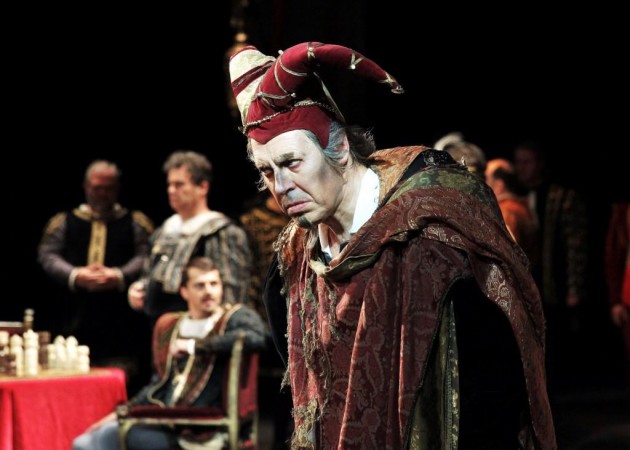
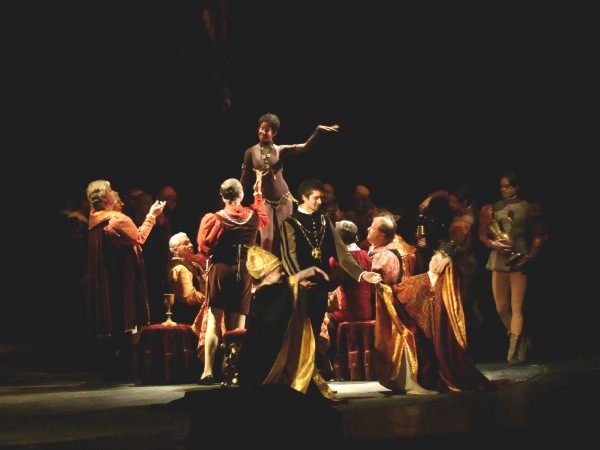
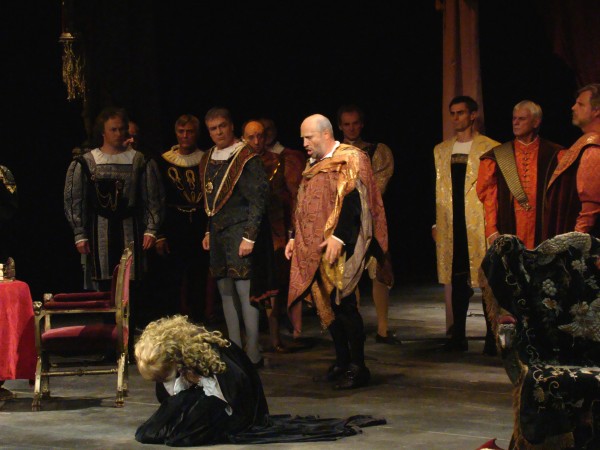
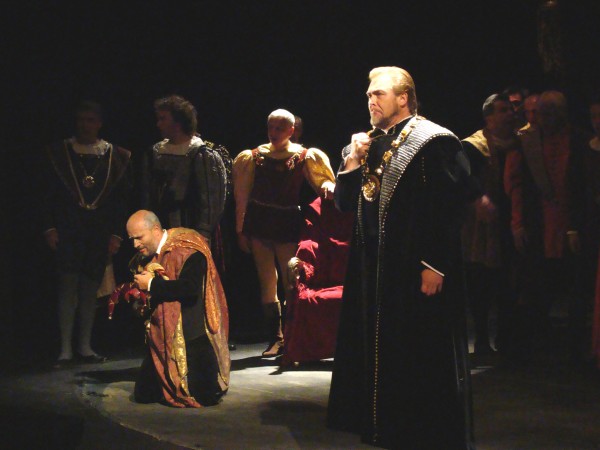
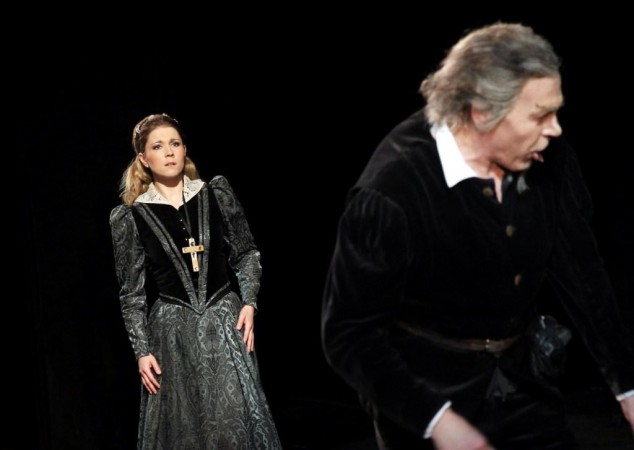
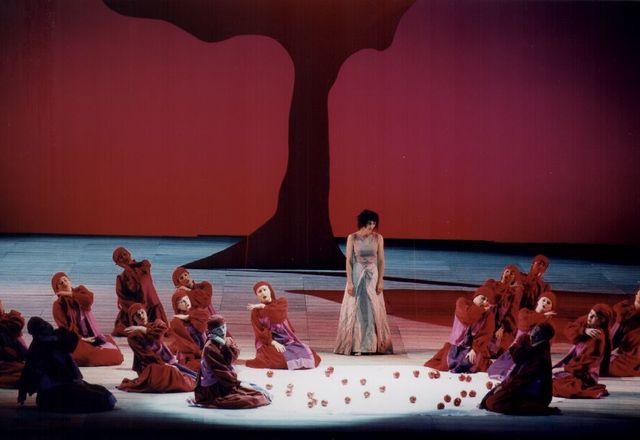
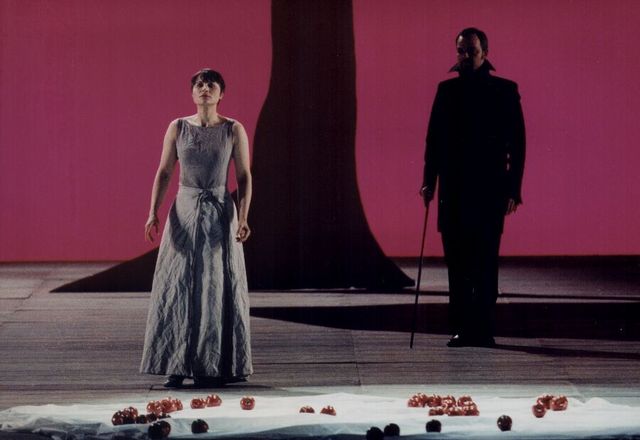
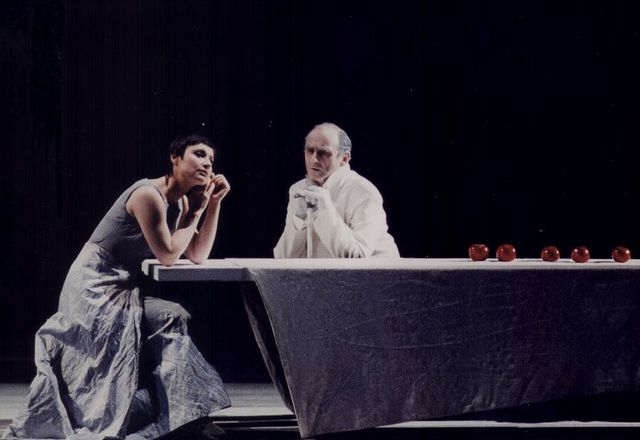
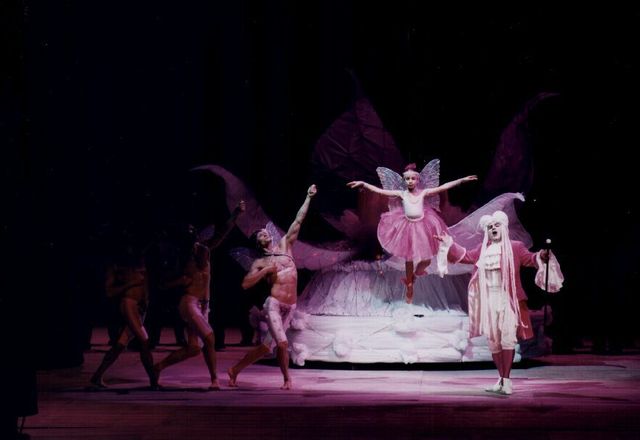
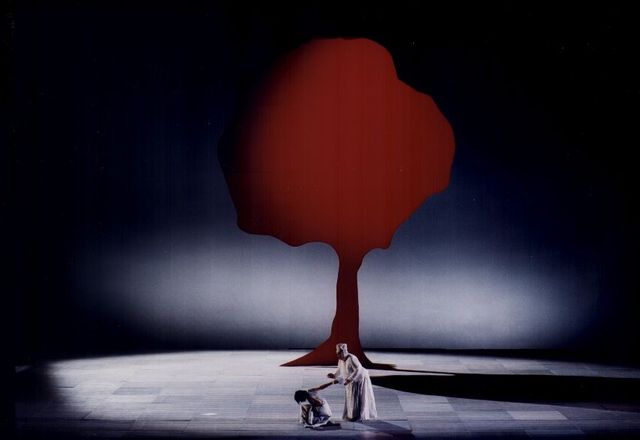
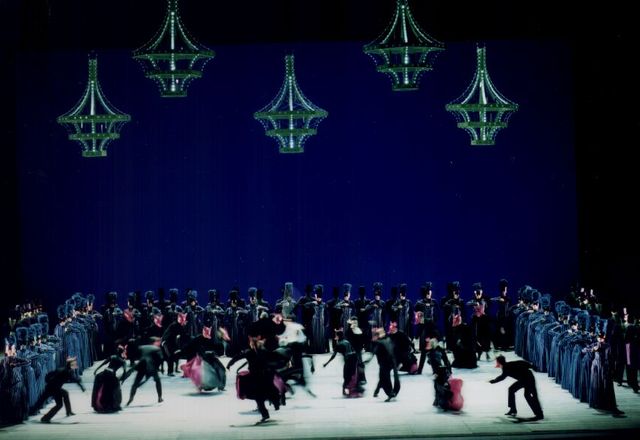
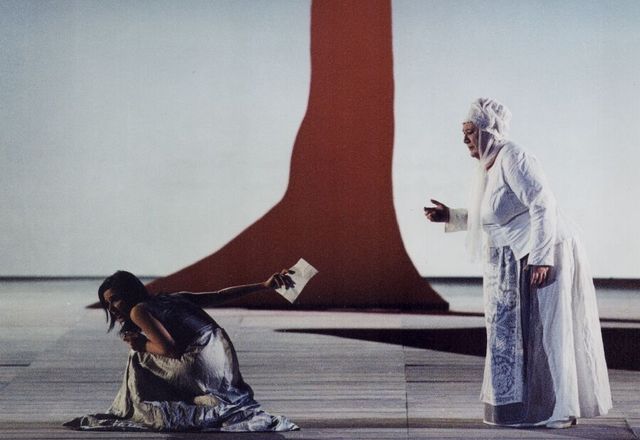
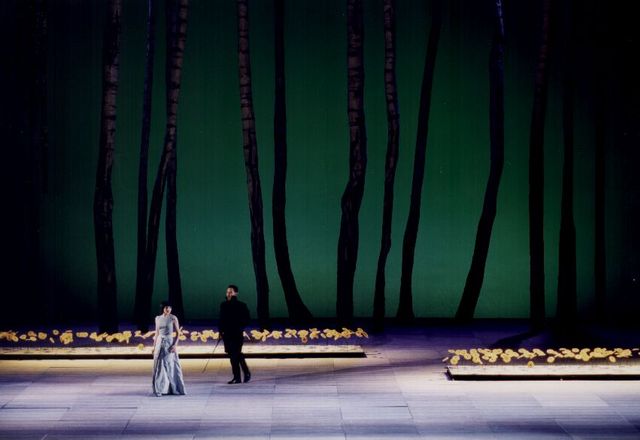
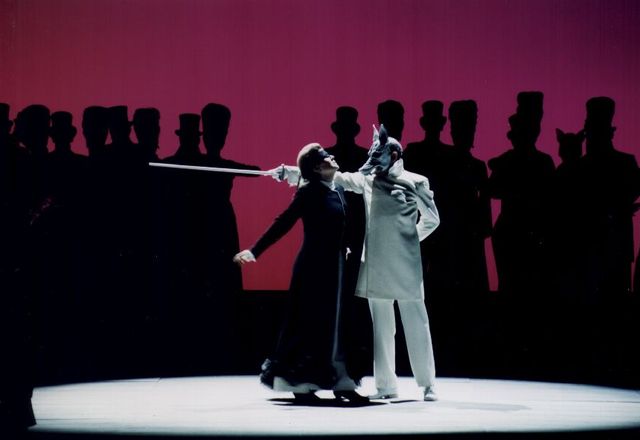
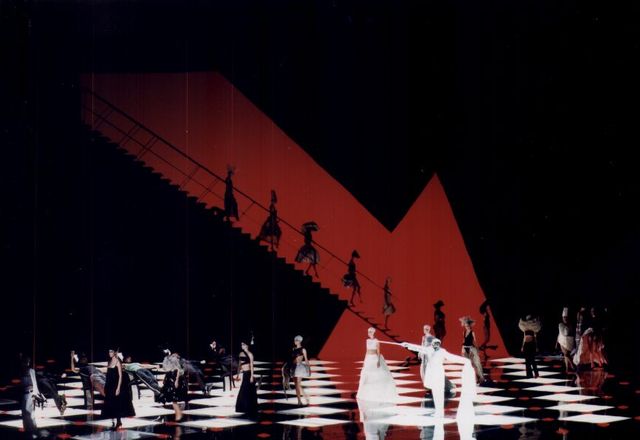
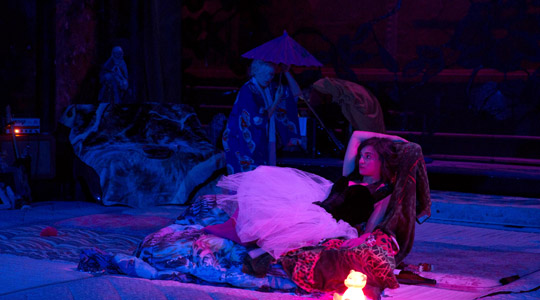
On Wednesday, January 7, 2015 the Zagreb opening night of the contemporary opera Mimi shall take place. This free adaptation of Giacomo Puccini’s La Bohème is a co-production of the Parisian theatre Bouffes du Nord and the Croatian National Theatre in Zagreb. The Parisian opening night was held on November 18, 2014. The authors are: composer Frédéric Verrières, librettist Bastien Gallet, stage director Guillame Vincent and conductor Jean Deroyer. The dramaturge is Marion Stoufflet, the set designer James Brandily, the costume designer Fanny Broust, the light designer Sébastien Michaud and Robin Meier / Ircam receives credit for his computerised design of music.

mimi-slide2

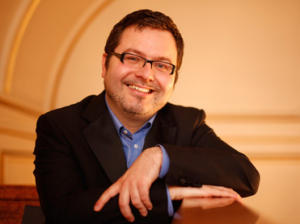
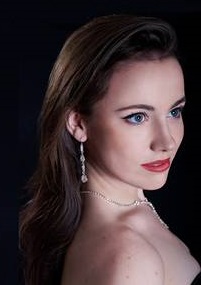
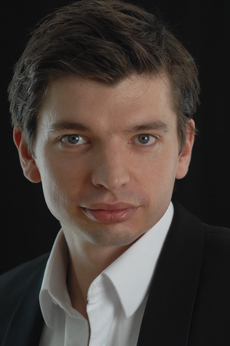
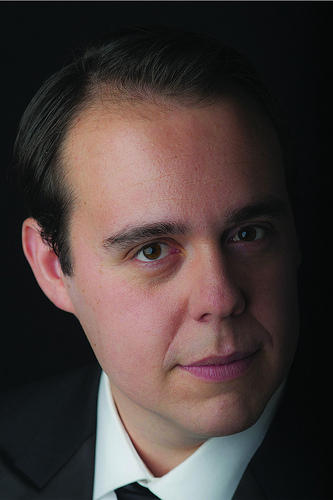
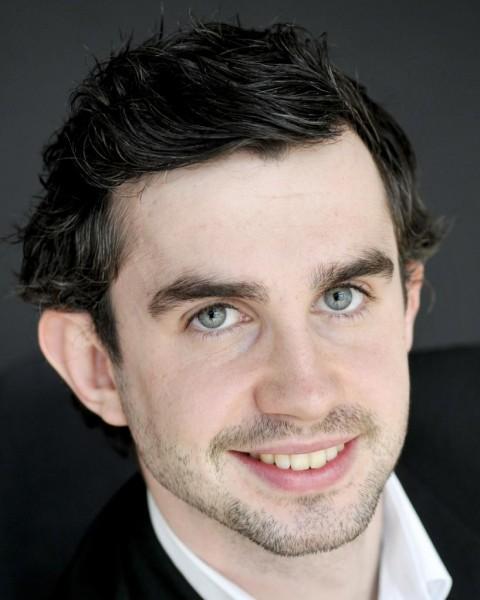
The performances held on January 7, 8 and 9, 2015 are casted with guest singers who are accompanied by musicians of the CNT Orchestra, ten in total, according to the music score. The following singers are in the main roles: Jeanne Cherhal (Alcindoro / Count Geschwitz), Judit Fa (Mimi 2), Christophe Gay (Marcelo, visual artist), Christian Helmer (Rodolfo, composer and musician), Camelia Jordana (Mimi 1), Marie-Eve Munger (Musette, Marcelo’s friend). In the planned performances of opera Mimi in the season 2015/16 soloists of the Zagreb Opera accompanied by the same musicians of the Orchestra shall interpret the main roles.

This is not a mere adaptation of Puccini’s great opera La Bohème. This is not about transferring the plot into the present time. It is about making sense; about the search for the right angle, the right distance, in short, it is about our emotions here and now and with which we approach the eternal secret of opera La Bohème. It is about telling a new story through which we are guided by Mimi, the main heroine of Puccini’s Boheme, far and foreign, but still close and known, dreamlike and real, duplicated and hallucinatory; a Mimi who loves, suffers, but also runs away and tears her love apart; a Mimi who is close to us and vulnerable like we are ourselves.

Posted in OPera | Tagged , , , | Leave a comment

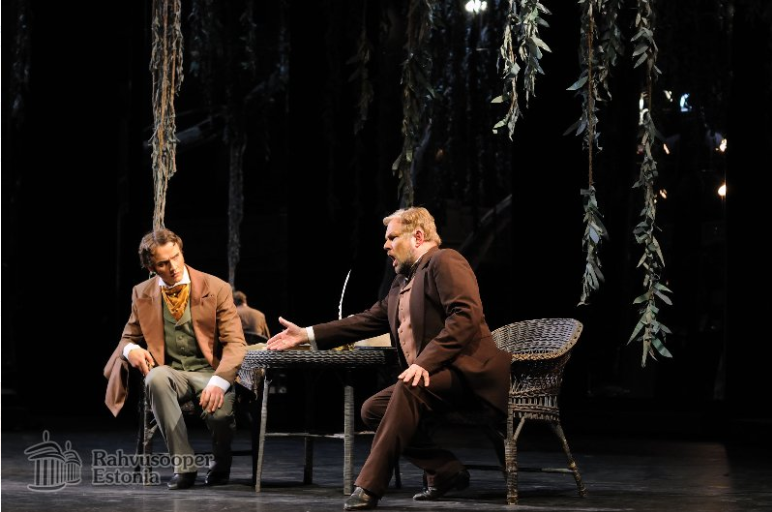
La Traviata in Estonia

traviataEstonia

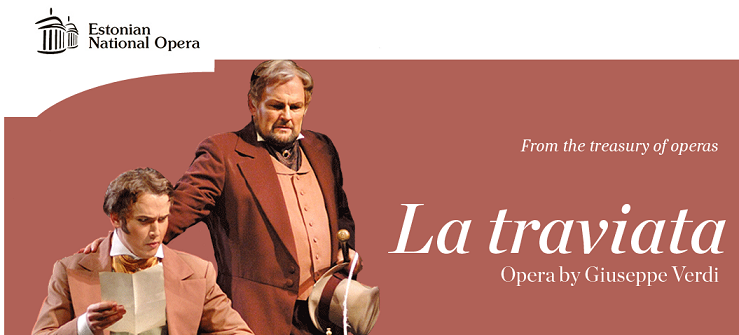
La traviata

An opera by Giuseppe Verdi

Libretto by Francesco Maria Piave, based on the play by Alexandre Dumas fils La dame aux camélias
T, 8 January 2015 / 19:00

S, 18 January 2015 / 17:00

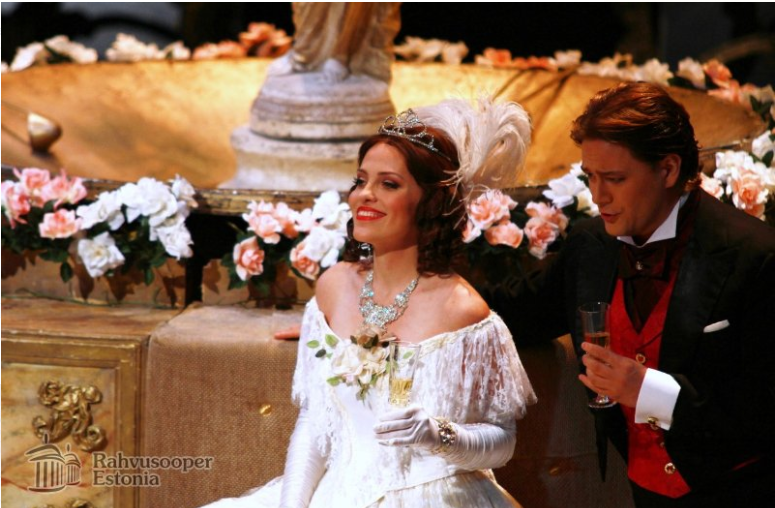
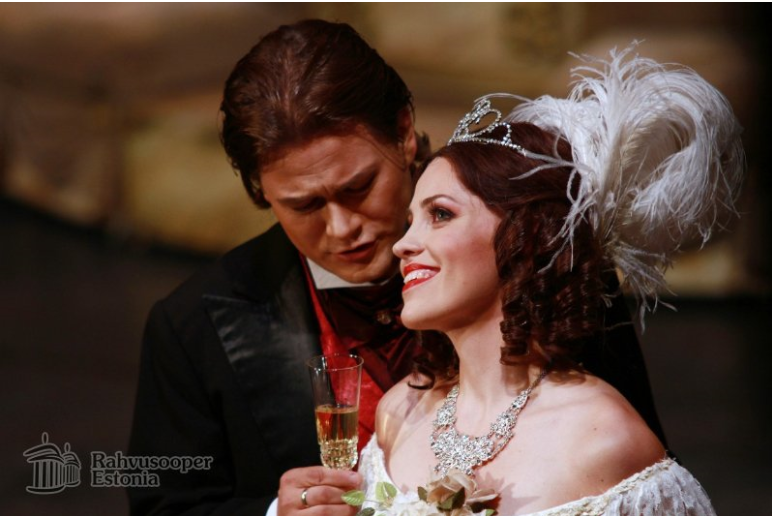
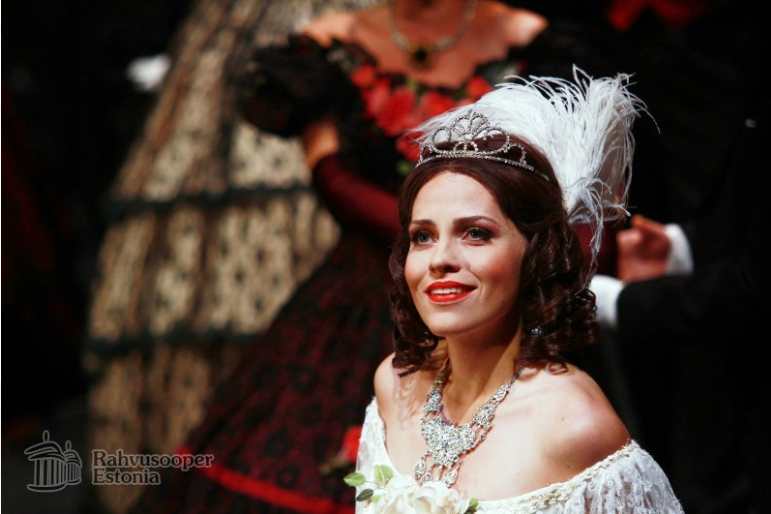
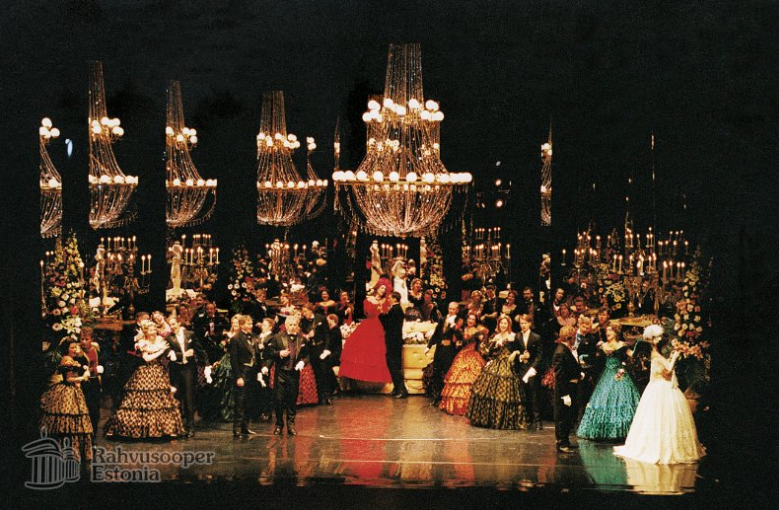
trEstonia1

The timeless opera classics La traviata has become one of the most beloved operas in the whole world. It is also one of the most frequently performed operas at the Estonian National Opera to which the audience has applauded in seven premieres within nearly a hundred years.trEstonia2

The play by Dumas fils was published in 1849 and staged in 1852. Giuseppe Verdi, who attended the premiere, was so fascinated by the play that he based his opera La traviata on it. La traviata premiered the next year. It is a moving love story haunted by the morality of society and Violetta’s past. Ephemeral happiness ends in tragedy.trEstonia3

Staging team

Conductors: Vello Pähn, Eri Klas, Arvo Volmer, Jüri Alperten, Risto Joost
Stage Director: Neeme Kuningas
Designer: Anna Kontek (Finland)
Lighting Designer: Esko Suhonen (Finland)

Sung in Italian with subtitles in Estonian and English
Approx. running time 3 h, two intermissions

trEstonia4

CAST

Violetta Kristel Pärtna

Alfredo Oliver Kuusik

Giorgio Germont Rauno Elp

Flora Triin Ella

Annina Juuli Lill

 Mart Madiste

 Väino Puura

 Mart Laur

trEstonia5

Posted in OPera | Tagged , , , , | Leave a comment

From the production of short theatrical plays to the design of sets, from painting to sculpture, and finally to the direction of operas… An exclusive interview with Director Eleonora Firenze.

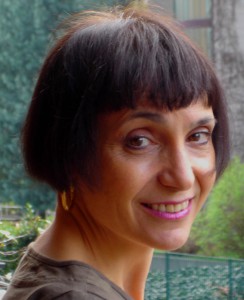
Eleonora-Firenze-244x300Eleonora Firenze, undisputed talent and boundless energy, returned to prominence in recent days with the official presentation made at Palazzo Marino, Sala Franco Brigida, City of Milan, on November 24, 2014 of the show she directed, Stazioni di Transito, which will performed at the Teatro Rosetum in Milan on 7th and 8th of February 2015.

rosetum-300x88
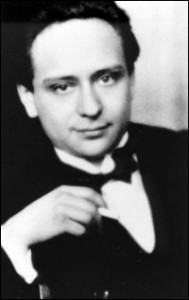
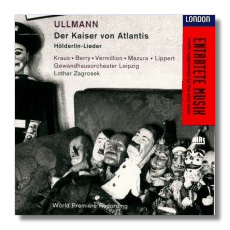
Consisting of two interesting works, as different in composition as in the historical period in which they were written, “Stazioni di Transito” is her idea and a challenge to the public, perhaps a little addicted, not to say it has become lazy, in a choice of operas in a very limited range. The Emperor of Atlantis by Viktor Ullmann is one of two works that make up this magnificent spectacle designed by the friendly Milanese director (Leccese by birth). Written in the concentration camp of Terezin with a libretto by Peter Kien, who was also detained there (both the composer and the librettist were sent to the gas chambers of Auschwitz with almost all other prisoners of the camp), this work has never been performed in Terezin. It was first performed in Amsterdam in 1975.
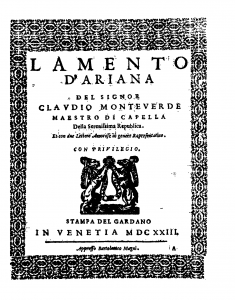
The other work, very well-known and represented, is one of the first operas in absolute: “The Lament of Arianna,” by the composer Claudio Monteverdi. Eleonora has kindly agreed to an interview before the premiere of the show.

scenaincortoEleonora, in 2008 you won the national competition for new authors “Scena in corto” with your stage show, Vita in “Gioco.” Would you tell us something about it?
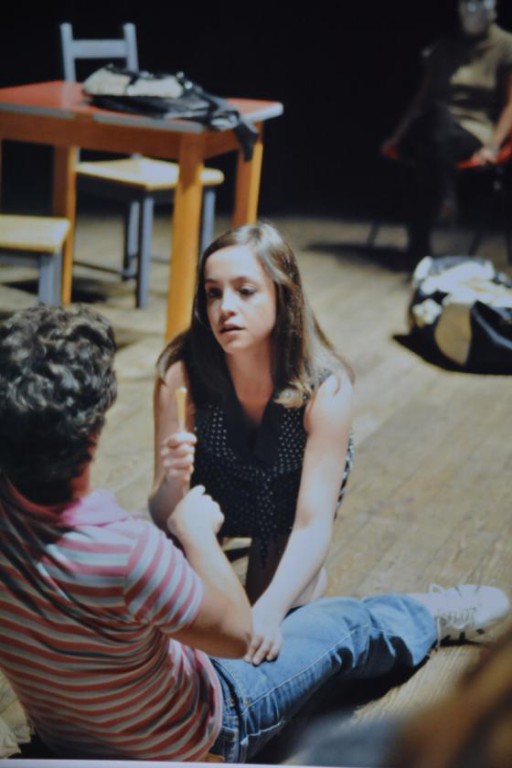
The experience of writing Vita in “Gioco” was born from the desire to try my hand in a form of expression that took into account some lessons of aesthetics that I was following in that period in college, especially the Aesthetics of the Ugly by Karl Rosenkranz. I wanted to be able to represent a dramatic situation in essence, coming to the sensitivity of the reader and the viewer, using a method based on the contrast; not on the drama, for example, but on its comical outlook, sentence by sentence, situation to situation, deliberately, to obtain a desired effect. I lived it in that period as an exercise and also as a game. It was March 2007; after a few months I made my daughter Martina Galletta, then a student of the School of Dramatic Arts Paolo Grassi in Milan, read the script and I got her positive judgment. This gave me courage to make the director Mina Mezzadri also read it. I was interviewing her at that time for a book I published later on. The original title of the play was Scherzo. Usually so severe and categorical in her judgments, she said: “you have named it Scherzo (Joke), but the things you say are very serious.” This made me happy. She added that the sense of the text came loud and clear and it had theatrical strength.

Martina Galletta and Valerio Napoli in Vita in "Gioco"

Martina Galletta and Valerio Napoli in Vita in “Gioco”

The coincidence would have it that, surfing the web, I came across an ad for a national competition for new authors organized by the Teatro Nuovo in Varese, “Scena in Corto,” with the sponsorship of various cultural and social associations in Lombardy, as well as the University of Insubria. I decided to send my text with the title Vita in “Gioco” (Life at “Play”). After a few months I got a call from the direction of the contest informing me of the selection of my work, along with that of other eight authors, for the production of a show to be staged at the Teatro Nuovo in Varese in May 2008.
I was very happy about that, but also worried by the need to create a company in a short time and give the start to the entire production process. I started with the cast, involving actresses (Martina Galletta, Elisa Langone, Giovanardi and Rosa Eleonora Sarti) and actors (Federico Valerio Manfredi and Naples) of the School of Dramatic Arts Paolo Grassi in Milan. I dealt directly with the ideation and recovery of all the scenic elements, albeit reduced to essentials, as well as the payment of all the members of the cast, though with a low budget. I asked the company I worked for to take a vacation in the most intensive rehearsal period, and used evenings and holidays for the initial rehearsals. Thanks to the Paolo Grassi School I could make use of their rehearsal rooms. Incidentally I also had available an assistant director of that School, now director of media at La Scala in Milan, Stefano Pintor.

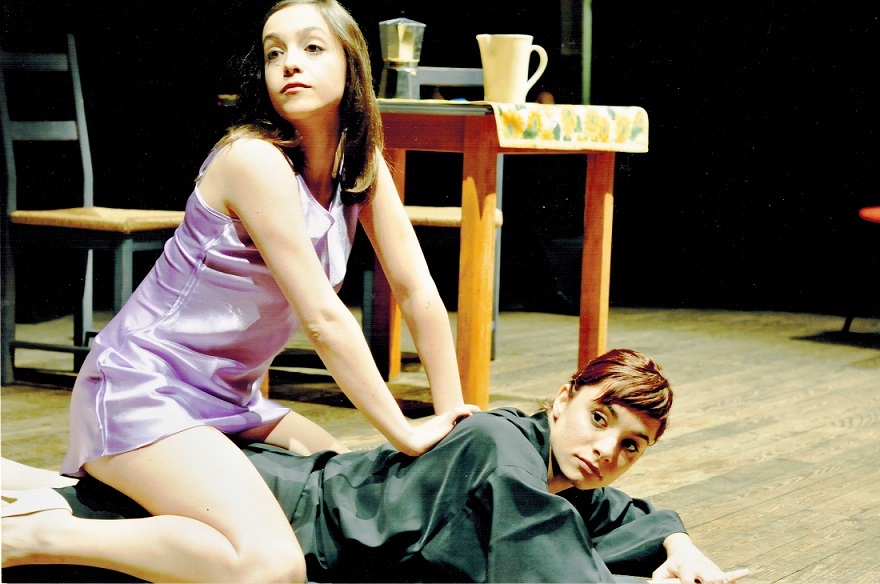
Vita in "Gioco". Martina Galletta and Elisa Langone

Vita in “Gioco”. Martina Galletta and Elisa Langone

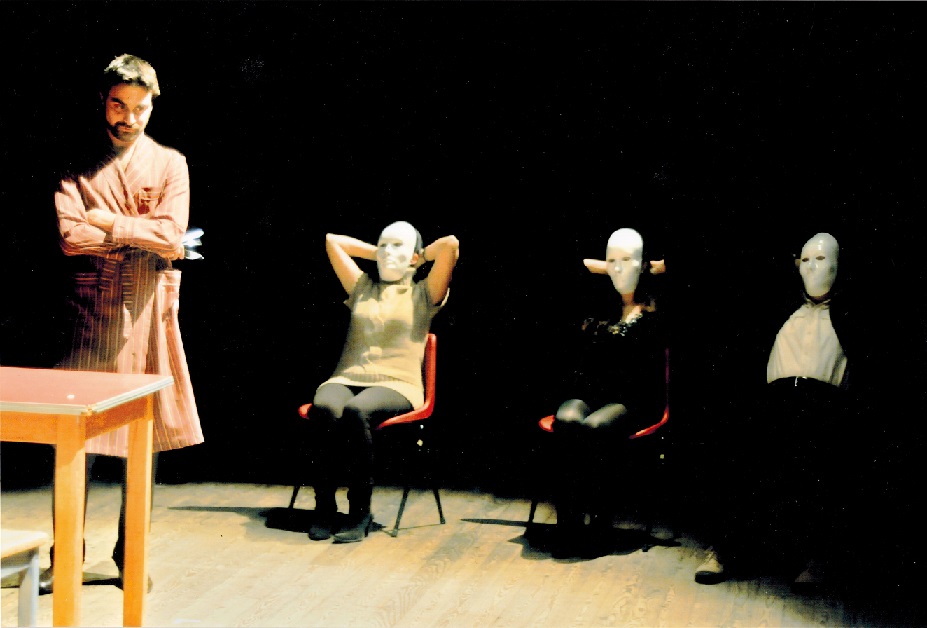
The play is divided into ten scenes and a closure in the form of dance, on the music of Strange I’ve seen your face before (Libertango) sung by Grace Jones. In the background, a pendulum beats time with its movement and its sound. On stage, the characters: father, mother and teenage daughter and her boyfriend; two prostitutes, their neighbors. To observe, on the stage, six figures with a neutral mask, like mannequins without expression that repeated mechanical gestures simultaneously. This is a representation which has the rhythm of camera frames on sequences of much characterized imagery. The goal is to return the path of change, both individual and in a relationship within a family, through the eyes of some different realities where the values have an illuminating depth and they are the harbinger of questions about the meaning of life and the quality of their relationships, but not only so. You also want to think about reality and image, of reality and fiction, of assets and liabilities in relation to the input and the oppression of the media dimension in our lives.

Vita in "Gioco." Federico Manfredi.

Vita in “Gioco.” Federico Manfredi and cother mambers of the cast.

This was the synopsis: “Different people that, in a few glimpses of daily life, lay bare their weaknesses and their desires. The smile is the medium that takes the audience on this family and social tour, but it is a bitter smile. A sort of grotesque reality, where there are the characters, with their history and their path to a change towards a new identity, but there is also an audience, on the stage, watching them. So viewers in the audience are seen in a strange mirror, where suddenly there is a new reality, the media, with which to compare and reflect. Meanwhile, time passes for those who want it to pass and stops for those who want to live it. ”
On this text I then made a special operation in 2011, turning it into an opera libretto in rhyme, with seven- and eleven-syllable. I asked a young English composer if he would compose music to make a small opera buffa in ten scenes of this text. The composer accepted; he is David William Jackson, and the work is called Silvia. It will be staged at the Teatro Rosetum of Milan in the next June 2015.

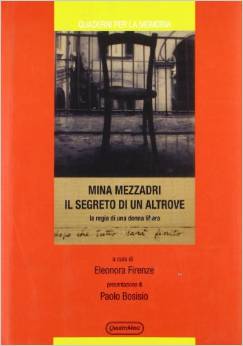
In 2009 you published the book Mina Mezzadri. The secret of an elsewhere – The directing of a free woman. Woman and director interesting and certainly at the forefront, Mezzadri has been the first director of the Italian theater. What made you decide to write this book and how was it received?
bookYes, Mina Mezzadri was our (Italian) first woman director. In those years, I had just graduated with a degree in Cultural Assets and I was reading a book discovered by chance while in search of news of Gordon Craig, a great set designer of the twentieth century: The first woman director. Edith Craig, between revolution of the scene and culture of women. This book, written by Roberta Gandolfi, spoke of Edith Craig, sister of Gordon, precisely, but less known and remembered. Gandolfi’s research emphasized the important changes introduced by Edith Craig in theater production in the early years of the twentieth century. I do not want to go into the merits, leaving the reader the pleasure of discovering this great forerunner of the capacity of women in a directing role as well as a creative one. My curiosity moved on to Italian reality in the world of filmmaking and I wanted to study the personality of our first woman director, Mina Mezzadri. I would have really liked to write about her and her work. I managed to miraculously find a contact to ask an appointment at her home in Brescia. It was a wonderful meeting where I asked Mina if she was available to the many meetings necessary to collect her experience and write a book. I prepared an initial set up of the chapters already with titles.
For a year and a half we met on weekends. I recorded the meetings. She gave me many addresses of her actors and collaborators, and many reviews, drawings, sketches and photographs of the scenes. Besides her, I met several of her actors, actresses and set designers, including Enrico Job, and her dearest friends, including Lina Wertmuller. To all, I asked to tell me about their experience with Mina; interviews that make up the third part of the book. The first section tells of the first phase of the life of Mina Mezzadri, the most personal and intimate. In the second, instead, I confront all her directions, with the story of her intentions, and an overview of the theater critique of various Italian and European newspapers.
Integral parts of the book are the four photographic sections, divided between references to personal life and professional life; photographs selected and digitized by me. The serious illness of Mina took her away in August 2008. She could only see the first draft of the first part of the book. She had no desire to talk about herself. The pain changed her, but the time spent with her, I remember it with much pleasure. Despite the opinions of many people who saw her as too radical, I became rather fond of her. When she trusted someone, she opened up and made herself amiable; it was impossible not to care for her.
The book was presented in the foyer of the Teatro Grande in Brescia and at the Castello Sforzesco in Milan, with the presence of important representatives of the world of culture, such as the professors of theater history Sisto Dalla Palma and Paolo Bosisio, of the community, such as the Councilor for Culture of the Municipality of Milan Massimiliano Finazzer Flory and the Honorable Sandro Fontana. There were also representatives of the Arts, such as Franco Sangermano, a gorgeous actor who worked with her on several important shows by Strindberg, and Renato Borsoni, actor and set designer from Brescia, her primary collaborator since the time of the Loggia. But to enjoy such a magical path, you have to read her story; it’s worth it. The book is on sale in bookstores, starting with Feltrinelli, or by order via Internet. It has garnered success and it is in major national libraries as well as in universities. I wanted to highlight the fact that Mina Mezzadri was the first female leader in the nascent Italian theatrical direction.

Mina Mezzadri

Mina Mezzadri

She was a director who had also as a fundamental characteristic the experimentation of new theatrical languages as well as a desire to re-read the classical and modern texts in light of the comparison with the contemporary, cutting down the conformism and challenging, with the never useless provocation, respectability, hypocrisy, preconceptions and stereotypes. Also a playwright, her plays have caused quite a stir. One for all: “Obedience is no longer a virtue” for which she was accused of insulting the Armed Forces and of incitement to conscientious objection. Her particular character, her personality never willing to compromise and never interested in the success for itself, have meant that Mina Mezzadri has not registered as much notoriety as other colleagues of hers and above all she has not occupied roles in the theater that she would have surely deserved and would have performed with equal competence. She was a free woman. One day, speaking of her students, she said to me: “I hope I do not ever see them integrate; hope to die first.”

From your resume, one can deduce that you are a person interested in various aspects of show business. You feel attracted equally to all these facets of the theater or do you prefer one in particular?
I am very attracted and intrigued by all forms of expression of man and life. Thus, since the theater often encloses many in a single event, be it prose or lyric, there I go with the desire to express myself and to see the work done and the artists. But I must say that every expression of art totally catches me, fascinates me and stimulates me in turn to an artistic production, even if purely at the amateur level. Of course I have to deal with my skills or lack of them in some fields, not allowing it to bring me down, though, because after all, a problem or a deficiency can also turn into an opportunity, especially when the desire is too strong to remain trapped by the chains of fear or of being judged by others. My attempts in the various disciplines are many. From the production of short plays, the conception of sets, from painting to sculpture, even more to the production of objects on the basis of the discovery of materials that stimulate my imagination.
A few months ago I made an object that could be considered contemporary art in wood and 22 karats gold  on a platform of an experimental material not yet on the market. I called it “Life”. I’d like to display it at the next show “Stazioni di Transito” in a small showcase of the theater; it’s not for sale.

In the course of your various studies (Eleonora Firenze has earned three degrees) you had the opportunity to meet many important directors. Who is the director who most impressed you and why?

Daniele Abbado

Daniele Abbado

The most significant director for me, in terms of depth of thought, coherence and ability to synthesize and staging was Mina Mezzadri. I followed some live rehearsals of major directors, such as Daniele Abbado at La Scala in Milan or Damiano Michieletto at La Fenice in Venice. I really appreciated the quality of their directing management, although it was very different between the two. Then I could also hear the experiences of Gianfranco De Bosio, a great director of Italian opera; he was one of my teachers, along with Quirino Principe, one of the most respected Italian musicologists. An important aspect for me is mainly to detect the differences and appreciate the similarities between the different directors. This allows me to get to the essence of directing management, while leaving open the possibility of expression.

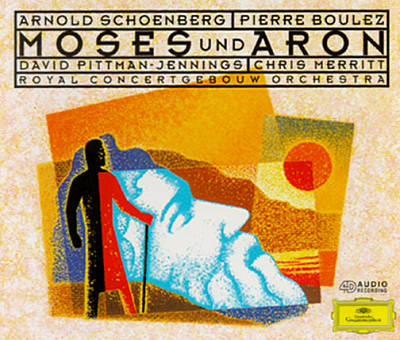
For your Master, you prepared a draft of direction and set design, with a full scale model of the scene, for Arnold Schoenberg’s opera Moses und Aron, which was then presented by your direction teacher, Maestro Gianfranco De Bosio, at the Accademia di Belle Arti Cignaroli in Verona. Have you pursued on other occasions this interest in the set design, or was it a purely learning experience?
mosesThe set design is closely linked to the idea of directing; it is often difficult to be able to split the roles. The director at the end borders on the role of designer, more often than vice versa, unless you are talking about very special set designers, the big ones, one for all my experience Enrico Job.
Even now that I’m working on directing operas, my main concern is to render with the scene what I mean, even before than with the actors. The agreement with a designer, if it happens at this stage, means that it is successful and very rewarding. Otherwise it means that, after deciding that scene to do, I need a designer to take care of the technical and operational parts. About my project for Moses und Aron, I am thoroughly convinced that I chose a very interesting scene; definitely not neutral, just to follow the teachings of Mina Mezzadri. I wonder if I will ever find some theater interested in producing it. My project, complete with all the directing and scenic description, including the lighting system, was for the theater in Berlin, although another site would be even better in my mind, but it’s a secret for now.

The coupling of an opera by Monteverdi (Il lamento di Arianna) with one by Viktor Ullmann (The Emperor of Atlantis) in your show “Transit Stations” (Stazioni di Transito) is very challenging for you and exciting for the audience. Would you talk a little about the reasons of this your choice?The show, which I gave the title “Transit Stations” includes these two works, very far apart chronologically and musically. My intention is to have a look on different themes, with a thread that is change, metamorphosis, the path of men in search of a landing, through the passions, the pain and the strength of life, but not detached from social changes and the musical communicative modality continually evolving, with a perennial search of the expression of their feelings. The path is built by countless transit stations, often painful, where we express our dismay and where we gather forces for a new path.
lamento-235x300My Arianna is Muslim and wears a headscarf. I imagined a scene occupied by a multitude of faces, mounted on metal rods; the works are by Giorgio Guidi. These are the men who leave their country to despair and facing the Mediterranean Sea to reach our own, with the hope of a better life. These faces increasingly lose their identity. These men leave their women, who remain for the most alone and widows. Those who manage to reach their men are in a different reality. Their landscapes are far away. The need to integrate conflicts with the one to remain attached to their origins and these veils do not know whether to stay on their heads or to fly away. Men who reach Italy do not find what they had hoped, but inhuman camps, labor camps where they are exploited and treated like animals, urban suburbs where they are isolated, delinquency that involves them, politicians who exploit the needs. So we are not so far away from the concentration camps as thought. Men grouped, isolated, not respected, without identity.

Viktor Ullmann

Viktor Ullmann

This is the link to The Emperor of Atlantis, the story of the revenge of Death of those who wanted to rob its place. It refuses to kill people, unless first dies the Emperor. A surreal story, very allusive to the context in which Terezin was written by Viktor Ullmann and Peter Kien, a young painter, poet and librettist. The tone is grotesque and the intention is to win with the music and the art upon the tragedy of the Holocaust.
The show ends with a brief revival of The Lament of Arianna, however, interpreted by a countertenor, instead of by a soprano. To represent again the changes, the loss, the search for a landing, this Arianna enter into a work of Davide Dall’Osso, a sculpture of a woman created with a blend of polycarbonate, then carved. Once again, the reference is to Ovid’s Metamorphoses, where passions have always had as a result a change, a transformation, but in an animal or a rock or a tree. As if to say that for everything there is a price to pay.atlantide1

For this show, you’ve also designed the costumes. Have taken a choice linked to an historical representation or to an artistic stylization?
I wanted to work primarily on contrasts. I imagined then a surreal scene where objects are deformed and wrapped, showing bumps and improbable colors alluding to an amusement park as to what regards the scenes in which there is the Emperor of Atlantis, to avenge and return to him the role that wanted to be of the artists of Terezin. The costumes, instead, are realistic, original military uniforms. The effect is that of a surreal situation, precisely, where the message passes through the interaction between the actors and the scenes themselves.

What difference did you find in directing these two works, so distant in time and in their conception? Any difficulties?
More than finding difficulty I found the pleasure to appreciate the differences and highlight them. The important thing for me is to highlight the progression, the changes, and the evolution of music and of individual and collective, social cases. These two operas allowed me to do just that.

Posted in Interview | Tagged , , , , , , , , , | Leave a comment

Bellini’s LA SONNAMBULA in Frankfurt

frankfurtlogoLA SONNAMBULA

Vincenzo Bellini 1801 – 1835


Melodrama in two acts
Libretto by Felice Romani after the libretto by Eugène Scribe for the ballet La Somnambule ou L’Arrivée d’un nouveau Seigneur (1827) by Jean-Pierre Aumer
First performed March 6th 1831, Teatro Carcano, Milan
Sung in Italian with German surtitles
First ever performances in Frankfurt

Duration: 2 hours 45 min. with one interval

sonnambula_01

Stefan Pop (Elvino), Brenda Rae (Amina) © Barbara Aumüller


PERFORMANCES
26.12.2014 |03.01.2015 |
08.01.2015 |11.01.2015 |
17.01.2015
Brenda Rae (Amina) © Barbara Aumüller

Brenda Rae (Amina) © Barbara Aumüller

Artistic Team
Conductor
Eun Sun Kim
Director
Tina Lanik
Stage Designer
Herbert Murauer
Costume Designer
Stefan Hageneier
Lighting Designer
Olaf Winter
Dramaturgy
Mareike Wink
Chorus Master
Tilman Michael
Brenda Rae (Amina) © Barbara Aumüller

Brenda Rae (Amina) © Barbara Aumüller

CAST

Amina
Brenda Rae
Elvino
Stefan Pop / Luciano Botelho
Rodolfo
Kihwan Sim
Lisa
Louise Alder / Nina Minasyan
Teresa
Fredrika Brillembourg
Alessio
Vuyani Mlinde
Ein Notar (a notary)
Simon Bode

Oper Frankfurt’s Orchestra and Chorus

Brenda Rae (Amina) © Barbara Aumüller

Brenda Rae (Amina) © Barbara Aumüller

Brenda Rae (Amina), Stefan Pop (Elvino) © Barbara Aumüller

Brenda Rae (Amina), Stefan Pop (Elvino) © Barbara Aumüller

About the work
The story of the beautiful sleepwalker Amina unfolds in seemingly endless, flowing arcs of melody. Bellini’s score rolls out like a loving carpet for bel canto. The ambiguousity in the music only becomes clear when interpreted precisely by the soloists, chorus and orchestra. This challenge is made clear by explicit instructions the composer wrote in the score. Uncertainty, reflected in the mixed genre of opera semi seria, and portrayal of the fragility of human existence corresponds to a heightened awareness of being alive prevalent at a time marked by radical political change and uncertainty. Changes were also underway in Italian music. After Rossini stopped composing Bellini and Donizetti were now Italy’s leading operatic composers. Bellini’s Il pirata (1827) was the foundation stone for Italian romantic opera. La Sonnambula was a great success when it first opened on March 6th 1831.

Brenda Rae (Amina) © Barbara Aumüller

Brenda Rae (Amina) © Barbara Aumüller

Brenda Rae (Amina) © Barbara Aumüller

Brenda Rae (Amina) © Barbara Aumüller


Synopsis

Everyone is thrilled about Elvino and Amina’s imminent wedding, except Lisa, Elvino’s former lover, who gives good hearted Alessio
Everyone is thrilled about Elvino and Amina’s imminent wedding, except Lisa, Elvino’s former lover, who gives good hearted Alessio’s attentions the cold shoulder. Amina’s step-mother Teresa guards the secret of her sleepwalking. Elvino arrives late – he had been praying at his mother’s grave for her blessing. The notary asks what they will bring to their marriage Elvino: „My farm, house, name, all I possess. Amina has „only her heart“ to give. He puts his mother’s ring on her finger, they are engaged. A stranger, Rodolfo, appears, making hints about the return of the dead Count’s lost son. He and Amina share a mutual fascination. Dusk: the villagers are uneasy and – egged on by Teresa, because this „explanation“ is useful – say that a ghost is seen every night. Rodolfo just laughs, and takes a room in Lisa’s hotel.

Stefan Pop (Elvino), Brenda Rae (Amina) © Barbara Aumüller

Stefan Pop (Elvino), Brenda Rae (Amina) © Barbara Aumüller

When Lisa checks to see if he needs anything, they start getting to know one another better. Amina appears, sleepwalking. Lisa flees Rodolfo’s embrace and room, forgetting her scarf. Amina talks of her beloved Elvino, treats Rodolfo tenderly before withdrawing again. The villagers, having heard that Rodolfo is the dead Count’s lost son, arrive. When Amina awakes she finds herself surrounded by them. Elvino breaks off their engagement. Teresa finds Lisa’s scarf.

INTERVAL

Brenda Rae (Amina) © Barbara Aumüller

Brenda Rae (Amina) © Barbara Aumüller

The villagers want the new Count to explain the situation. Amina cannot convince Elvino of her innocence. He pulls the ring from her finger. The story takes another unexpected turn: Elvino has decided to marry Lisa. On the way to church they meet Rodolfo, who vouches for Amina’s fidelity. He explains the phenomenon of sleepwalking. Nobody believes him. Teresa, the scarf as evidence, disproves what Lisa maintains, that she, unlike Amina, has never been alone at night in a strange man’s room. Lisa is now the outcast. Amina appears, sleepwalking, dangerously high above the ground. She speaks of her deep love for Elvino and pain she feels at the loss of his love. Elvino wants her back. The village rejoices.

Brenda Rae (Amina) and Ensemble © Barbara Aumüller

Brenda Rae (Amina) and Ensemble © Barbara Aumüller

Oper Frankfurt's Chorus © Barbara Aumüller

Oper Frankfurt’s Chorus © Barbara Aumüller

Kihwan Sim (Rodolfo), Brenda Rae (Amina) © Barbara Aumüller

Kihwan Sim (Rodolfo), Brenda Rae (Amina) © Barbara Aumüller

Posted in OPera | Tagged , , , | Leave a comment

L’Elisir d’Amore in Marseille

operamarseillelogo

L’Elisir d’Amore

Gaetano Donizetti

Saturday December 27th, 2014 > 8:00PM
Wednesday December 31st, 2014 > 8:00PM
Friday January 2nd, 2015 > 8:00PM
Sunday January 4th, 2015 > 2:30PM

Vice and virtue coexist happily throughout this bittersweet comedy, whose brilliant score reveals one of the most beautiful tenor arias ever written

DURATION : 2H30 (including intermission)

Elisir-d'amore

L’Elisir d’Amore
Opera in 2 acts
Libretto by Felice ROMANI
First performed in Milan, Teatro della Canobbiana, on May 12th, 1832
Last performed at Marseille Opera, on January 24th, 1999
Production Théâtre du Capitole

Artistic Team:
Conductor Roberto RIZZI BRIGNOLI
Director Arnaud BERNARD
Scenic Designer/Costume Designer William ORLANDI
Lighting Designer Patrick MÉEÜS

CAST
Adina Inva MULA
Giannetta Jennifer MICHEL

Nemorino Paolo FANALE
Belcore Armando NOGUERA
Dulcamara Paolo BORDOGNA
Dulcamara’s assistant Alessandro MOR

Marseille Opera Orchestra and Chorus

Posted in OPera | Tagged , , , , | Leave a comment

Monteverdi’s L’INCORONAZIONE DI POPPEA in Germany

frankfurtlogo

L’INCORONAZIONE DI POPPEA

(The Coronation of Poppea)
Claudio Monteverdi 1567 – 1643

Opera in three acts with a prologue
Libretto by Giovanni Francesco Busenello
First performed in 1642, in Venice
Sung in Italian with German surtitles

Duration: 3 1/2 hours incl. one interval

© Monika Rittershaus

© Monika Rittershaus

PERFORMANCES

25.12.2014 |
26.12.2014 |28.12.2014 |
31.12.2014 |01.01.2015 |
03.01.2015

Alfred Reiter (Seneca) © Monika Rittershaus

Alfred Reiter (Seneca) © Monika Rittershaus

ARTISTIC TEAM

Conductor
Simone Di Felice
Director
Ute M. Engelhardt
Stage Designer
Julia Müer
Costume Designer
Katharina Tasch
Lighting Designer
Joachim Klein
Video
Bibi Abel
Dramaturge
Zsolt Horpácsy

Gaëlle Arquez (Nerone), Naomi O'Connell (Poppea) © Monika Rittershaus

Gaëlle Arquez (Nerone), Naomi O’Connell (Poppea) © Monika Rittershaus

Alfred Reiter (Seneca) © Monika Rittershaus

Alfred Reiter (Seneca) © Monika Rittershaus


CAST

Nerone
Gaëlle Arquez
Ottavia
Claudia Mahnke
Poppea
Naomi O’Connell
Ottone
William Towers
Seneca
Alfred Reiter
Arnalta
Hans-Jürgen Lazar
Valletto, Amore
Elizabeth Reiter
Damigella, Fortuna
Nora Friedrichs *
Drusilla
Anna Ryberg
Nutrice
Martin Wölfel
Virtù / Pallade
Jessica Strong*
Liberto / Lucano / Littore
Francisco Brito
Mercurio / Famigliare 3 / Tribune
Iurii Samoilov
Soldat 1 / Console
Aljoscha Lennert
Soldat 2 / Famigliare 2
Julian Habermann

Oper Frankfurt’s Orchestra

Hans-Jürgen Lazar (Arnalta), Naomi O'Connell (Poppea) © Monika Rittershaus

Hans-Jürgen Lazar (Arnalta), Naomi O’Connell (Poppea) © Monika Rittershaus


About the work

Nero ruled half the world from his throne in Rome. The only one more powerful than the tyrant was Amor, God of Love, who sets in motion a terrible game of desire and jealousy to prove it. 74 year old Claudio Monteverdi was not at all coy when it came to depicting the characters and intrigue in a story set in ancient Rome, creating a spectacle full of twists and turns. In one of the first works to be performed in a public opera house and not at court, Monteverdi decided to move away from the more usual mythical themes and focussed instead on the young tyrant Nero: the Roman Emperor, married to Ottavia, has fallen hopelessly and passionately in love with Poppea, General Ottone’s unscrupulous wife. Seneca tries to make him see sense – but Nero would rather drive his old teacher to commit suicide than forget about Poppea.

Naomi O'Connell (Poppea), William Towers (Ottone) © Monika Rittershaus

Naomi O’Connell (Poppea), William Towers (Ottone) © Monika Rittershaus

Claudia Mahnke (Ottavia) © Monika Rittershaus

Claudia Mahnke (Ottavia) © Monika Rittershaus

When Ottavia and Ottone are caught trying to kill Poppea in her sleep all obstacles are scattered to the wind: Nero sends his wife and general into exile and crowns Poppea Empress of Rome. So… »goodness« is not victorious: the inconsiderate win, people prepared to let nothing get in the way of their passions and goals. The work is full of amusing scenes which have nothing to do with main story at all but, apparently, give us an idea of what made Venetians laugh in those days.

Martin Wölfel (Nutrice/Famigliare 3), Claudia Mahnke (Ottavia) © Monika Rittershaus

Martin Wölfel (Nutrice/Famigliare 3), Claudia Mahnke (Ottavia) © Monika Rittershaus

A young pair of lovers, two nurses and Fortuna and Virtù complete the picture: in the prologue the goddesses of pleasure and virtue argue about which of them will best be able to steer the course of events. But, in the end, it is Amor, the laughing third, who boasted that he »could change the entire world on a whim«, who wins.

Gaëlle Arquez (Nerone) , Nora Friedrichs (Damigella) © Monika Rittershaus

Gaëlle Arquez (Nerone) , Nora Friedrichs (Damigella) © Monika Rittershaus

Ensemble © Monika Rittershaus

Ensemble © Monika Rittershaus

Gaëlle Arquez (Nerone) und Francisco Brito (Lucano), Ensemble © Monika Rittershaus

Gaëlle Arquez (Nerone) und Francisco Brito (Lucano), Ensemble © Monika Rittershaus

Naomi O'Connell (Poppea), Gaëlle Arquez (Nerone) © Monika Rittershaus

Naomi O’Connell (Poppea), Gaëlle Arquez (Nerone) © Monika Rittershaus

Posted in OPera | Tagged , , , , | Leave a comment

“HÄNSEL UND GRETEL” in Frankfurt

frankfurtlogo


HÄNSEL UND GRETEL

Engelbert Humperdinck 1854 – 1921

Opera in three Scenes
Libretto by Adelheid Wette after the fairy tale of the same name (1810) by Jacob and Wilhelm Grimm
First performed December 23rd 1893 at the Hoftheater in Weimar
Sung in German with German surtitles
Duration: 2 hours 15 min. with one interval

Performances

25.12.2014 |28.12.2014 |
28.12.2014 |02.01.2015

Louise Alder (Gretel), Katharina Magiera (Hänsel) © Monika Rittershaus

Louise Alder (Gretel), Katharina Magiera (Hänsel) © Monika Rittershaus

About the work
Is it really only a dark, bitterly cold wood in which the broom-maker’s children get lost and fall into the clutches of a demonic power? Or does the wandering path lead inwards, to the maze of the soul, to the heart of early and late romanticism? There where Weber’s wolf’s glen and Caspar David Friedrich’s ice floes are to be found? Something definitely happens in the wood and the children who emerge from it are not quite the same as they were when they entered it.

Peter Marsh (Witch) © Monika Rittershaus

Peter Marsh (Witch) © Monika Rittershaus

The brothers Grimm and Engelbert Humperdinck, who composed the work in Frankfurt at a time of booming economy, lived at the time of the industrial revolution, a time of unscrupulous exploitation, especially of the young. Child labour – Dicken’s starving orphans and workhouse boys – was common. These children’s psychological and social problems are mirrored in the tale of the abandoned siblings. There is a deeply moving chorale at the end of the opera that proclaims the brightness of day and freedom – dissolving the darkness, and fear, of slavery.

frankfurt3

Artistic Team

Conductor
Sebastian Weigle / Björn Huestege / Nikolai Petersen / Hartmut Keil / Karsten Januschke
Director
Keith Warner
Stage Designer
Jason Southgate
Costume Designer
Julia Müer
Lighting Designer
John Bishop
Children’s Chorus Master
Markus Ehmann
Dramaturge
Norbert Abels

frankfurt4

Cast

Peter, Besenbinder
Alejandro Marco-Buhrmester / Simon Bailey
Gertrud, his wife
Heidi Melton / Barbara Zechmeister / Hedwig Fassbender
Hänsel
Katharina Magiera / Judita Nagyová
Gretel
Louise Alder / Karen Vuong / Juanita Lascarro
Die Knusperhexe (Witch)
Peter Marsh / Michael McCown
Sandmännchen (Sandman)
Elizabeth Reiter / Katharina Ruckgaber*
Taumännchen (Dew Fairy)
Nora Friedrichs * / Kateryna Kasper

Oper Frankfurt’s Orchestra and Children’s Chorus

frankfurt5

Synopsis
Act 1 Hänsel and Gretel are on their own at home. They are supposed to be working. They are getting hungry, waiting for their mother to make some rice pudding for them with milk from the jug, so start to dance and play to pass the time. Their mother comes home. Her disobedient children make her so cross that she smashes the milk jug and sends them off to collect berries in the woods. Their father comes home after selling some brooms, with lots to eat. He reproaches his wife when he hears that the children are in the woods. They set off to find them.

Katharina Magiera (Hänsel) Louise Alder (Gretel), Elizabeth Reiter (Sandman, centre), © Monika Rittershaus

Katharina Magiera (Hänsel) Louise Alder (Gretel), Elizabeth Reiter (Sandman, centre), © Monika Rittershaus

Act 2 Evening in the wood. Hänsel and Gretel play and gobble up all the berries they collected. They get frightened when it starts to get dark and they realise they are lost. The Sandman appears and sends them to sleep. The children see angels in a dream. Dawn arrives with the Dew Fairy.

Heidi Melton (Mother), Louise Alder (Gretel) © Monika Rittershaus

Heidi Melton (Mother), Louise Alder (Gretel) © Monika Rittershaus

Act 3 Hänsel and Gretel find the witch’s house. They begin to eat bits of it. The witch appears, pretending to be friendly; the children don’t trust her and are put under a spell. Hänsel is locked up and Gretel must work for the witch. When the witch tells her to check on the oven Gretel pretends to be so stupid that the witch has to show her how to do it – and Gretel pushes her in. The spell over the other lost children is broken. Their parents find them and everyone rejoices.

Louise Alder (Gretel), Katharina Magiera (Hänsel) Peter Marsh (Witch, upstairs) © Monika Rittershaus

Louise Alder (Gretel), Katharina Magiera (Hänsel) Peter Marsh (Witch, upstairs) © Monika Rittershaus

frankfurt9

Peter Marsh (Witch) © Monika Rittershaus

Peter Marsh (Witch) © Monika Rittershaus

Louise Alder (Gretel), Katharina Magiera (Hänsel) © Monika Rittershaus

Louise Alder (Gretel), Katharina Magiera (Hänsel) © Monika Rittershaus

frankfurt12

frankfurt13

Posted in OPera | Tagged , , , , | Leave a comment

La Traviata in Berlin

deutsche

PRESENTS:

traviata1La Traviata

Giuseppe Verdi (1813 – 1901)

Melodramma in 3 acts;
Libretto by Francesco Maria Piave based on the novelle La dame aux camélias by Alexandre Dumas fils;
First performed on 6. March, 1853 in Venice;
Premiered at the Deutsche Oper Berlin on 20. November, 1999

In Italian with German and English surtitles

Photo credits: La Traviata © Marcus Lieberenz

traviata2

Cast

Conductor Ivan Repusic
Director Götz Friedrich
Stage-design Frank Philipp Schlößmann
Costume-design Klaus Bruns
Lighting Ulrich Niepel
Choir Conductor Thomas Richter
Choreographer Klaus Beelitz
Violetta Valéry Aleksandra Kurzak
Patrizia Ciofi (01.07.2015 | 04.07.2015)
Marina Rebeka (09.04.2015 | 12.04.2015)
Alfredo Germont Murat Karahan
Gianluca Terranova (01.07.2015 | 04.07.2015)
Yosep Kang (09.04.2015 | 12.04.2015)
Giorgio Germont Artur Rucinski
Leo Nucci (01.07.2015 | 04.07.2015)
Jean-François Lapointe (09.04.2015 | 12.04.2015)
Flora Bervoix Christina Sidak
Jana Kurucová (01.07.2015 | 04.07.2015)
Annina Siobhan Stagg
Elbenita Kajtazi (01.07.2015 | 04.07.2015)
Gaston Gideon Poppe
Álvaro Zambrano (01.07.2015 | 04.07.2015)
Baron Douphol Stephen Bronk
Marquis D’Obigny John Chest
Carlton Ford (09.04.2015 | 12.04.2015 | 01.07.2015 | 04.07.2015)
Doktor Grenvil Andrew Harris
Giuseppe Matthew Newlin
Sunnyboy Dladla (01.07.2015 | 04.07.2015)
A messenger Thomas Lehman
A servant Holger Gerberding
Chorus Chor der Deutschen Oper Berlin
Orchestra Orchester der Deutschen Oper Berlin

traviata4Information

Violetta Valery is kept in luxury by her admirer Baron Douphol. Seemingly recovered from a serious illness, she hosts a glittering party at which she meets and falls in love with Alfredo Germont. The world in which Violetta lives cannot countenance such a love affair and so she abandons her old existence and seeks happiness with Alfredo in the countryside. Soon, however, Alfredo’s father Giorgio beseeches Violetta to end the relationship, fearing that Violetta’s dubious reputation will jeopardise the wedding of Alfredo’s younger sister. In despair, Violetta concedes and writes a farewell letter to Alfredo. At a ball given by her friend Flora Alfredo and Violetta clash: Violetta has taken it upon herself to convince Alfredo that she is in love with Baron Douphol. Alfredo has won a large sum of money at the gambling tables. Overcome by jealousy, he hurls his winnings at Violetta’s feet, publicly declaring this to be the “fee” for her “favours”. One month later, with Paris in the grip of carnival fever, Violetta is at death’s door, having suffered a relapse. Now that his father has revealed the true reasons for her actions, Alfredo hurries back. Violetta forgives Alfredo for his conduct, releases him and dies.

traviata5La Traviata was Verdi’s only opera to be set among the Parisian middle classes of the day. It is based on the acclaimed novel The Lady of the Camellias by Alexandre Dumas fils, which is a critical portrayal of the Parisian demi-monde and charts the story of Marie Duplessis, a noble courtesan who died from consumption in 1847 at the age of 23. While Dumas paid considerable attention to social networks and relationships, Verdi and his librettist Francesco Maria Piave focused entirely on the conflict between Violetta, Alfredo and his father Giorgio. Their drama concerns itself only with internal conflicts and focuses on the three phases in the fortunes of Violetta Valery – love, renunciation and death.

traviata7By presenting Violetta’s tribulations in the form of a retrospective narrative Götz Friedrich has given his tragedy the atmosphere of a requiem. No sooner has the opera begun than we see the protagonist on her deathbed, surrounded by the dark vastness of the stage, which resembles a gigantic tomb. As the ball begins Violetta, now in ballroom attire, rises from the bed, which has become a divan. Suddenly the doors burst open and in pours the frolicking Parisian crowd, intent on its frivolous entertainment. The flashback begins. Shunning sentimentality and trivial frankness, Friedrich’s production reaches deep into the characters, laying bare the inner drama and bringing the gloom and fatalism of the piece to the fore.

Kindly supported by Krone Management and Technologies and by Klaus Krone

traviata8

traviata9traviata10traviata11

Posted in OPera | Tagged , , , | Leave a comment

RIGOLETTO in Latvia

latvialogoGiuseppe Verdi

RIGOLETTO

03:00 The Main Hall
Premiere: 2014-09-18
Performance: January 9, 2015, 7 PM
RIGOLETO-Janaitis-2450

Music Director and Conductor: Martins Ozolins
Conductor: Normunds Vaicis
Stage Director: Margo Zālīte
Set Designer: Aída-Leonor Guardia
Costume Designer: Liene Dobraja
Dramaturge: Johanna Mangold
Light Designer: Stefan Bolliger
Choreographer: Dace Kravale
Rigoletto2
CAST
Duke of Mantua: Rame Lahaj, Raimonds Bramanis
Countess Ceprano: Dana Bramane, Laura Grecka
Rigoletto3

The cynical jester of the dissolute hedonist duke has a secret – his beloved daughter Gilda. The duke, for whom sanctity does not exist, seduces young maiden. Deeply hurt, her father’s revenge turns back on himself… OperaRigoletto by Giuseppe Verdi earned resounding success already in its Venice premiere in 1851 and love of the public has only increased ever since, elevating this masterpiece into the ranks of the most recognized operas of the world.

This staging of Rigoletto in Latvian National Opera will present opera director Margo Zālīte, master’s program graduate from Hanns Eisler School of Music Berlin, to our opera audiences.  Rigoletto4

SYNOPSIS

Act 1

A lavish celebration in the castle of the Duke. The Duke, a carefree man of pleasure, tells of a new beauty he has seen in the church. Her name is unknown, but he has learned that she is visited by a stranger every night at her home. Duke is determined to see her again and seduce her, but then he notices Countess Ceprano with her husband among the arrivals. Before Count’s eyes, the Duke invites her to follow him to his private chambers. Having observed this scene, Rigoletto derides the cuckolded Count and exposes him in public. Count swears to revenge his honour.  Meanwhile, Marullo reveals to the guests that Rigoletto has a secret mistress.Rigoletto5
The ball turns increasingly bacchanal. At its climax, Count Monterone arrives and accuses the Duke for defamation of his daughter. Rigoletto reviles humiliated father, who, in turn, curses the Duke and Rigoletto alike. The party is over.

A dark little street. Rigoletto is tormented by the curse of Monterone. The contract killer Sparafucile approaches, and offers his services. At first, Rigoletto refuses his offer, but then he realizes how alike the two of them are – assassin’s weapon is his sharp sword, while his is his biting tongue.Rigoletto6

Rigoletto has his daughter Gilda waiting for him at home. She asks her father to reveal the mystery of his name and family, but Rigoletto is evasive.

Gilda turns to her governess Giovanna and confesses that she has met an attractive man in the church and fallen in love with him. Suddenly, the disguised Duke appears and opens his feelings to Gilda. Alone again, Gilda falls into reverie over her newly found love.

Meanwhile, courtiers prepare to kidnap the mistress of Rigoletto. When Rigoletto arrives, they claim their intentions to abduct the Countess Ceprano, who lives nearby. Rigoletto is ready to join in the act and allows to be blindfolded for that by the courtiers. It is too late when he realizes that he has been misled. Gilda has already been taken kidnapped. Rigoletto7

Act II

In one of the castle halls, Duke deplores disappearance of his beloved Gilda. Marullo arrives to confirm the abduction of Rigoletto’smistress and the fact that she is now in the castle.

Rigoletto arrives. Courtiers observe him gleefully, but Rigoletto preserves the façade of calm. Then he collapses and reclaims his daughter.Rigoletto8

Gilda arrives and tells in distress that she has been seduced by the Duke. Rigoletto drives away the courtiers to be able to remain alone with his daughter. Now, Gilda tells her father the history of fer and Duke. Monterone, who has fallen out of grace, crosses the hall to be taken to jail. Rigoletto swears his revenge – he will make the Duke pay by death for daughter’s dishonour.

Act III

A dilapidated night-shelter in a godforsaken place – it is home of Sparafucile and his sister Maddalena who helps her brother in committing murder and robbery. The Duke appears and flippantly demands Maddalena and wine. Intoxicated, he teases inconstancy of women in a song. Rigoletto and Gilda observe this scene from outside. Gilda realizes that Duke is an unfaithful man, but cannot stop loving him.Rigoletto9

Sparafucile demands a half of his fee for the intended assassination of the Duke, and they shake hands about the condition, that the dead body will be received in a bag. Rigoletto orders Gilda to dress herself as a man and go to Verona and wait for him there.

Duke goes to sleep. Maddalena, consumed by a sudden passion for Duke, implores her brother to spare him. Sparafucile resists. Then, Maddalena suggests they should kill the next arrival to knock at their door. Having ignored her father’s orders, Gilda over-hears their conversation in secret. Her desire is to save the Duke and she takes decision to die instead of him.Rigoletto10

Rigoletto returns and receives a dead body wrapped in a bag. Rejoicing in the success of his plot, he sinks to the ground, but, next, count’s singing begins to be heard. Full of darkest premonitions, Rigoletto opens the bag to find his daughter dying. The curse of Monterone has been fulfilled.

Posted in OPera | Leave a comment

“Hänsel und Gretel” in Croatia

croatianLogoEngelbert Humperdinck

Hänsel und Gretel

gretel1

From Thursday, December 4, 2014, one of the best works of the German composer Engelbert Humperdinck, opera Hansel and Gretel, is back on the repertoire. The librettist is Adelheid Wette after the famous story of the Grimm brothers. The stage director is Ivan Leo Lemo and the conductor is Sasa Britvic.gretel2

The music score is filled with lovely music and folk-like melodies. In history it held a significant role because it introduced, according to Josip Andreis aspirit of true, unfixed simple art, equally distanced from the Wagnerian symbolism and the brutality of the bloody Veristic jealousy into the German music of the late 19th century.gretel3

Humperdinck’s music draws on children’s songs and popular melodies of unknown origin, which incites childhood memories in listeners and spectators. Due to an exceptionally popular story and the freshness of the music expression, spontaneity and technical skilfulness, this work marked a turning point in German music opus and permanently holds a place in the world opera repertoire. The Zagreb audience had the opportunity to see the story of two siblings Hansel and Gretel, that are attracted to a house made of candy and are then imprisoned by an evil witch who wishes to eat them only two years after the opening night. Its last production, the fourth staging at the CNT Opera was in 2013, with Sasa Britvic as conductor and Ivan Leo Lemo as stage director. Respecting the fairytale-like literary model, this performance at first glance is attractive for its playfulness and colourfulness of the spectacle, but also presents the biggest omnipresent problems of the modern capitalist society.

gretel4Hansel and Gretel are very poor gypsy children who live on the outskirts of a metropolis, by a dump. Piles of garbage that are produced by certain people and the neediness of others in everything, in a discrete manner suggest the social class and racial awareness of the performance. While children in a neglected forest contaminated by garbage try to find food, they come upon a witch’s Disneyland in which resides a dressed-up witch who turns children into honey cookies in order to eat them or use them as building material. Even though it is very real in its critique of terms like capitalism, consumerism, manipulations, illusions, lies and luxury, this performance does not cease to be entertaining, funny and fairytale–like and is fun for all age groups. Ivanka Boljkovac, Helena Lucić Šego and Marija Kuhar Šoša with their impressive interpretations, connecting the musical and the stage aspect of the performance, in great part contributed to the exceptional success of this performance. The performance is in the Croatian language which additionally enables an easier following of the story.

gretel5

In 1881, the twenty-year old Engelbert Humperdinck became an associate of Richard Wagner in Bayreuth. The last two years of maestro’s life and the intensive cooperation on Parsifal left an inerasable trace on the artistic credo and style of the young composer. Ten years later, he completed his masterpiece opera Hänsel and Gretel inspired by the fairy-tale of the Grimm brothers. Humperdinck has kept Wagner’s compositional style and leitmotif. However, the fairy-tale opera (Märchenoper) reaches out for children’s songs and popular melodies whose origins are not known and seem to be lost through a haze of time. The result is fascinating music, as deep as a lake filled with German legends, but at the same time unusually close, because it calls out for childhood memories after which we have wondered off into the woods and fallen into the witch’s candy and gingerbread house.

gretel6 gretel7
nngretel9 gretel8gretel12 gretel10gretel11

Posted in OPera | Tagged , , , | Leave a comment