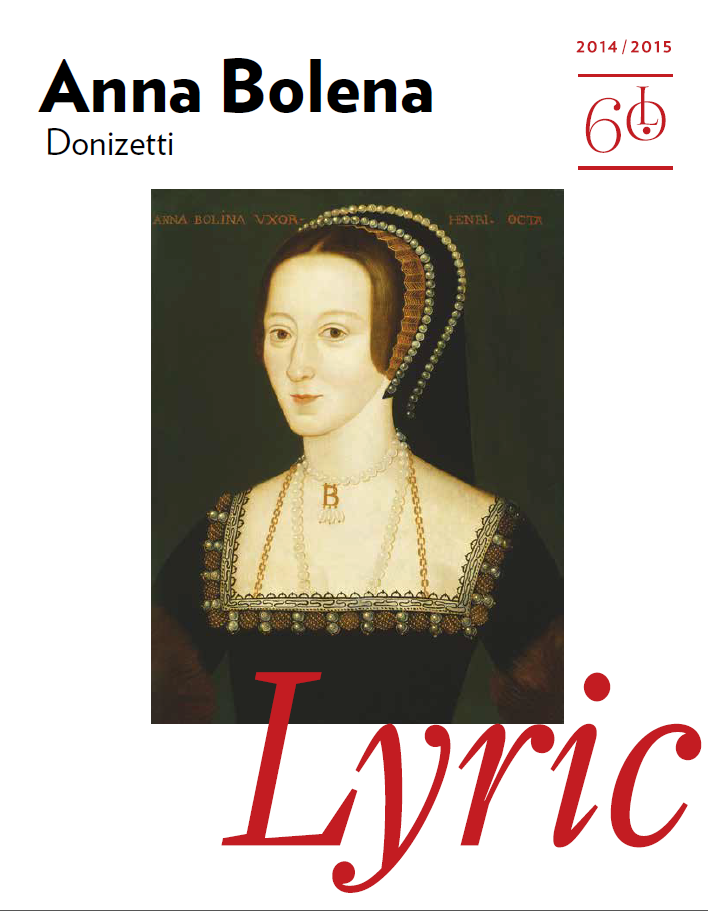
Anna Bolena at the Lyric Opera of Chicago

bolena

lyricDecember 6, 2014-January 16, 2015

New Production
by Gaetano Donizetti
In Italian with projected English texts
Approximate running time: 3hrs, 18 min

Doomed queen…tour-de-force drama!

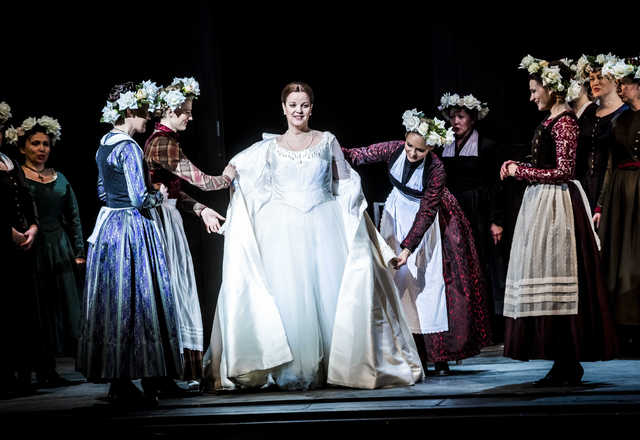
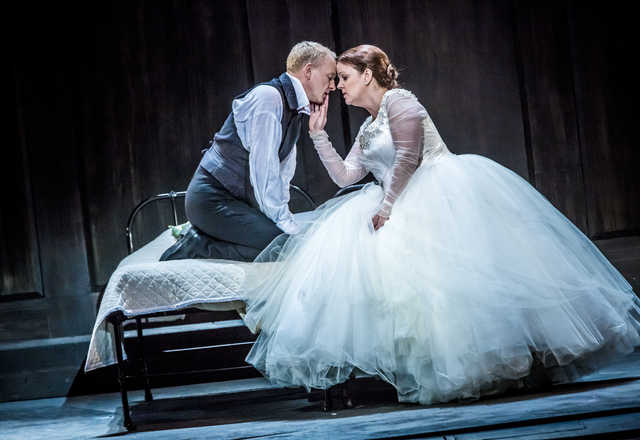
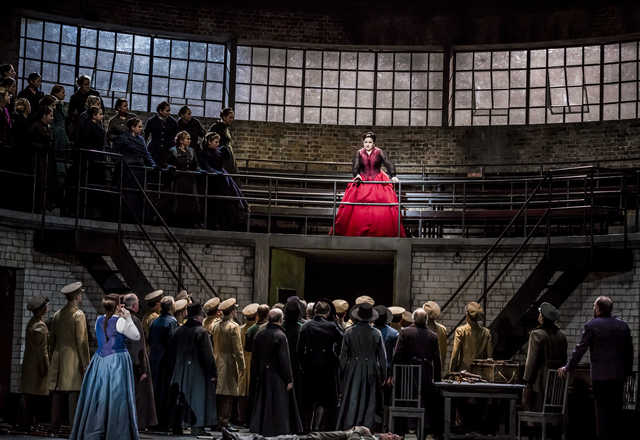
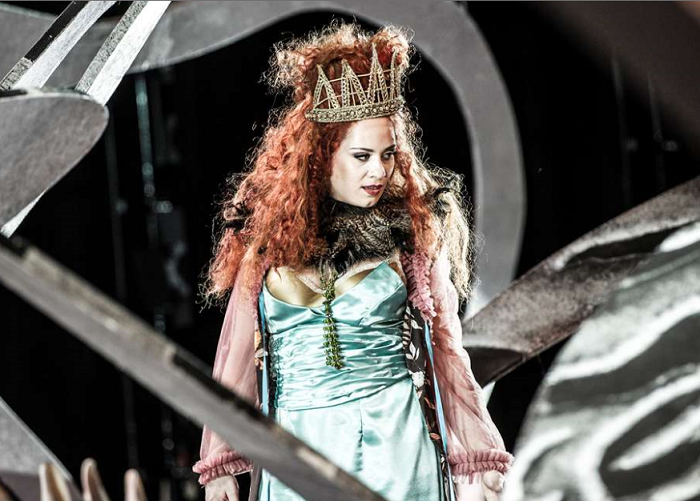
Anne Boleyn may be Queen of England, but she doesn’t stand a chance. Henry VIII wants her gone — with Jane Seymour taking her place on the throne and in his bed. And Henry’s minions do the dirty work, finding “proof” of Anne’s infidelities.

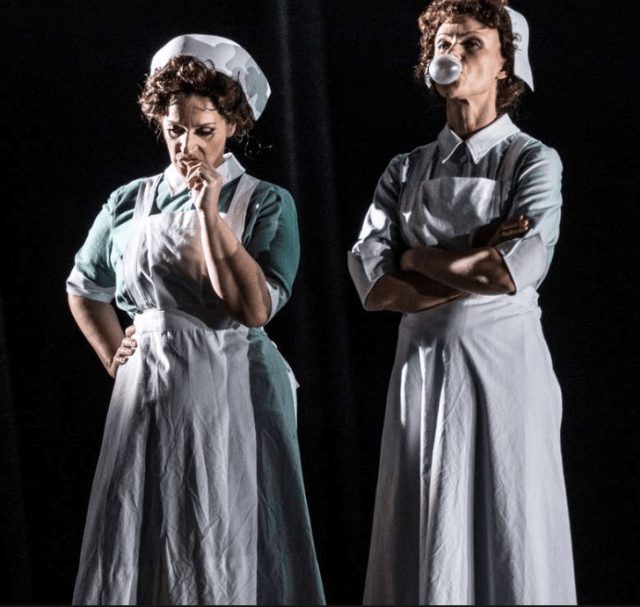
Donizetti exploits all of the glories of the human voice in this bel canto gem and trailblazes with a theatricality that hadn’t been seen in opera before. Listen to vocal fireworks and watch one of opera’s most gripping confrontations: the Queen rages when she finally discovers that Jane is her arch rival, and Jane is haunted by guilt — desperate to marry the King, yet knowing that she’s the reason he’ll send Anne to the scaffold.

Maria Callas and Joan Sutherland made this opera famous—and today Sondra Radvanovsky makes it her own.

Lyric Opera coproduction generously made possible by The Monument Trust (UK) and the Donna Van Eekeren Foundation.

Coproduction of Lyric Opera of Chicago and Minnesota Operabolena1

cast2

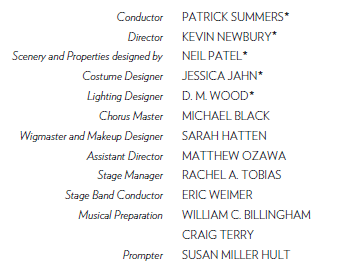
CAST

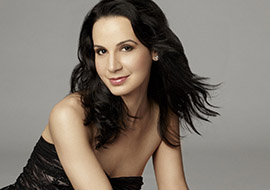
Radvanovsky_Bolena270Anne Boleyn Sondra Radvanovsky

“Dazzling Sondra Radvanovsky tears into the taxing role of the Queen…sending an electric current through the music and effectively conveying Anne’s pride and vulnerability.” Baltimore Sun – See more at:


Barton_Bolena270(2)Jane Seymour Jamie Barton

Dmitri Hvorostovsky won the hugely prestigious BBC Cardiff Singer of the World competition…and so did Jamie Barton. “With her plush, impassioned voice, she’s on opera’s fast track!” Chicago Tribune


Relyea_Bolena270Henry VIII John Relyea

King Henry must be menacing, manipulative, and suave. John Relyea’s “magnificent black velvet cloak of a voice wraps itself around everything in sight.” The Times, London


Hymel_Bolena270Percy Bryan Hymel

This dashing young tenor takes on the role of Percy in his Lyric debut! “Bryan Hymel has the best high notes in the business.” Philadelphia Inquirer


Kelley-OConnor-270x190Smeton Kelley O’Connor

Kelley O’Connor has “dark, lustrous vocal tone and an arresting command of melodic phrase. Her moments in the spotlight left a listener wanting more.” San Francisco Chronicle


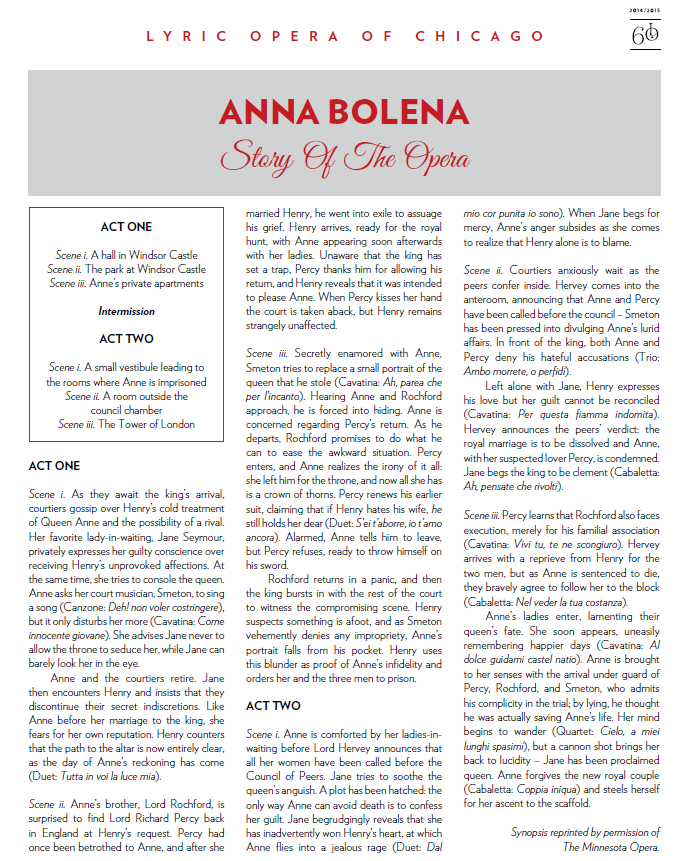
synopsisBolena

bolena2

Posted in OPera | Tagged , , , , , | Leave a comment

The Dialogues of the Carmelites in Stockolm

logooperanThe Dialogues of the Carmelites

Monday, December 15 19:00

Freedom, equality, sisterhood!

dialogue

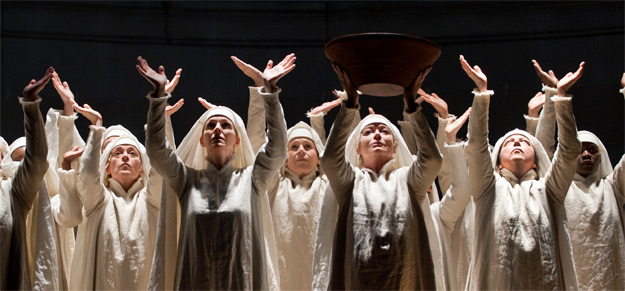
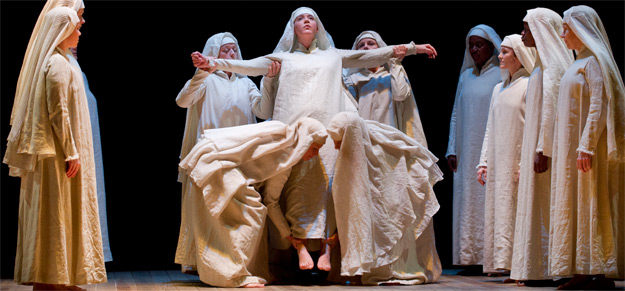
The opera is based on actual events during the French Revolution when the sixteen nuns in a convent was sentenced to death because they continued to practice their religion despite the current ban. Spirituality and materialism are here set against one another – and everyone must suddenly choose a side. Director Johanna Garpe takes on Francis Poulenc’s opera from 1957 and challenges the watchwords of liberty, equality head on. How is our standing in Europe today in relation to these words? Where do we stand in relation to the words in Europe today? Am I prepared to defend everyone’s right to freedom if I do not actually support those in question? Or even think about them?

Karmelitsystrarna_fst2

Music Francis Poulenc
Text Georges Bernanos / Emmet Lavery
Conductor Thomas Søndergård
Director Johanna Garpe
Set Design Per A Jonsson
costumes and masks Nina Sandström
Lighting Thorsten Dahn
Dramaturg Katarina Aronsson
Choreographer Hakan MayerKarmelitsystrarna_fst3

CAST
Marquis de la Force Fredrik Zetterström

Blanche de la Force Elin Rombo

Chevalier de la Force Jonas Degerfeldt

Mme de Crossy, old prioress Marianne Eklöf

Mme Lidoine, new prioress Lena Nordin

Mother Marie Susann Végh

Sister Constance Marianne Hellgren Staykov

Susanna SternMother Jeanne Agneta Lundgren

Karmelitsystrarna_fst5

Confessor Klas Hedlund

The jailer John Erik Eleby

The officer Kristian FlorFirst

Commissioner Magnus Kyhle Andre

Commissioner Lennart Forsé Thierry

butler Jan Sörberg Javelinot

doctors Mikael Magnell Johan Lilja

A servant Madeleine Barringer

Conductor Thomas Søndergård

The Royal Opera Chorus
Royal Opera OrchestraKarmelitsystrarna_fst4

Press Quotes

“Made with great feeling in every moment and get the music to shimmer” DN

“Brilliant vocal efforts” SvD

“Garpes personal trainer is phenomenal” SR Kulturnytt

Karmelitsystrarna_fst6

Royal Opera
PO Box 160 94
103 22 STOCKHOLM

Karmelitsystrarna_fst7

Posted in OPera | Tagged , , , , | Leave a comment

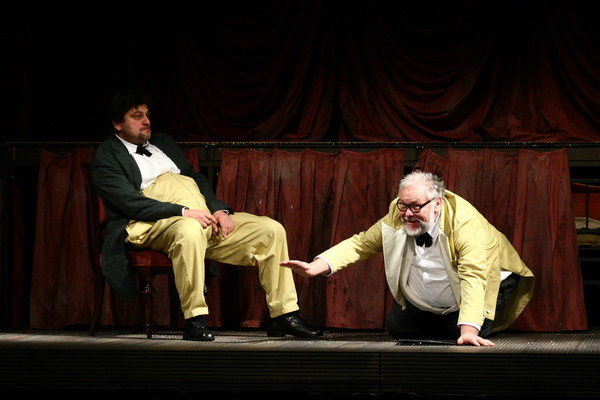
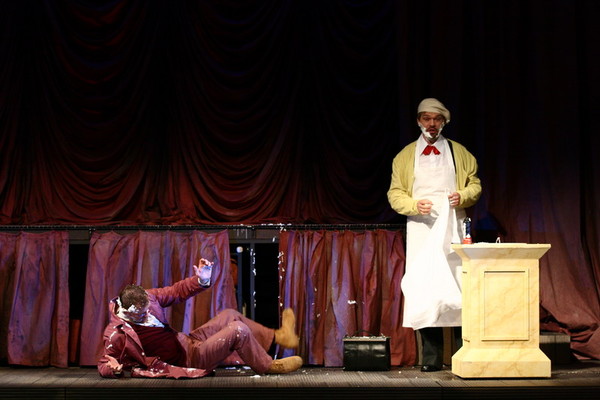
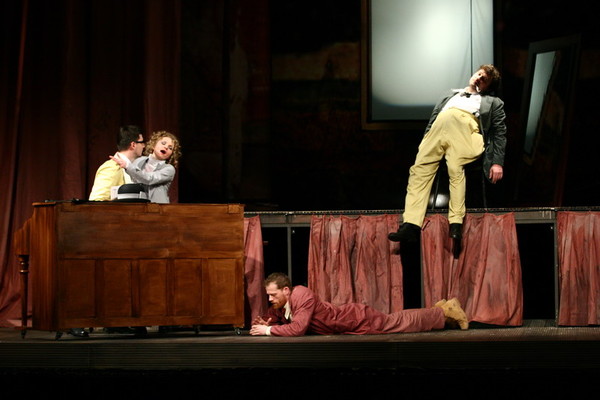
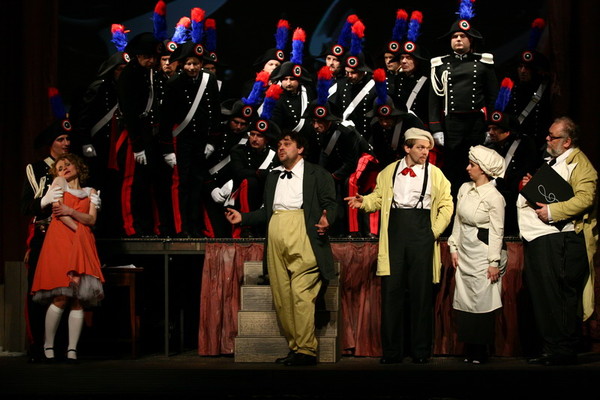
Il barbiere di Siviglia in Slovakia

logo-sndGioacchino Rossini

Il barbiere di Siviglia

Comic opera in two acts in the Italian language

Author of photos: Anton Sládek, 2013

barbiere1

Thursday 18. December 2014 – 19:00

Thursday 5. March 2015 – 19:00
Friday 27. March 2015 – 19:00
Thursday 16. April 2015 – 19:00
Wednesday 6. May 2015 – 19:00

Premières: 8 and 9 February 2013 Historical Building

barbiere2

Conductors: Rastislav Štúr
Directed by: Roman Polák
Set : Pavel Borák
Costumes : Peter Čanecký
Choreography : Stanislava Vlčeková
Chorusmaster: Pavol Procházka

barbiere3

Almaviva: Juraj Hollý
Bartolo: Jozef Benci
Rosina: Štěpánka Pučálková
Figaro: Pavol Remenár
Basilio: Peter Mikuláš
Berta: Katarína Flórová
Fiorello: František Ďuriač
Captain: Ivan Ožvát
Ambrogio: Roman Krško
Inspizient: Ivan Martinka
Souffleuse: Lucia Korená

Gioachino Rossini as a well-known gourmand used to exaggerate a bit when claiming: “The mouth is a much more sensitive organ that the ear.” He exaggerated as usual and he laughed. In spite of his mastery as a cook, and we would not allow us to hesitate about it, our opera stage is interested first of all in his composition mastery. The composer has been ‘mixing’ Italian bel canto with his extraordinary invention and the special sense of humour in his own original way.

Running time: 2 hrs 45 mins one interval

barbiere5

Synopsis

Place: Seville, SpainTime: 18th century

Act 1

The square in front of Bartolo’s house

In a public square outside Bartolo’s house a band of musicians and a poor student named Lindoro are serenading, to no avail, the window of Rosina (“Ecco, ridente in cielo”; “There, laughing in the sky”). Lindoro, who is really the young Count Almaviva in disguise, hopes to make the beautiful Rosina love him for himself—not his money. Almaviva pays off the musicians who then depart, leaving him to brood alone. Rosina is the young ward of the grumpy, elderly Bartolo and she is allowed very little freedom because Bartolo plans to marry her, and her not inconsiderable dowry, himself – once she is of age.

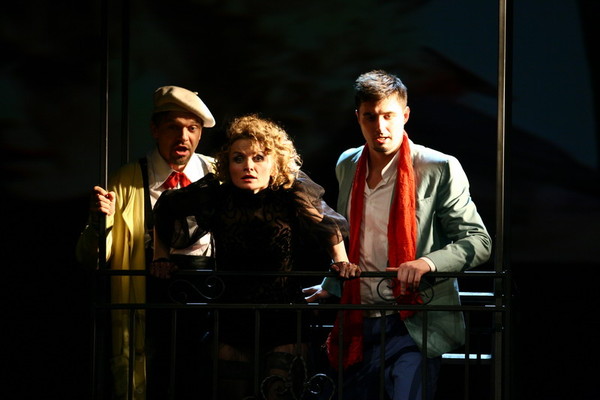
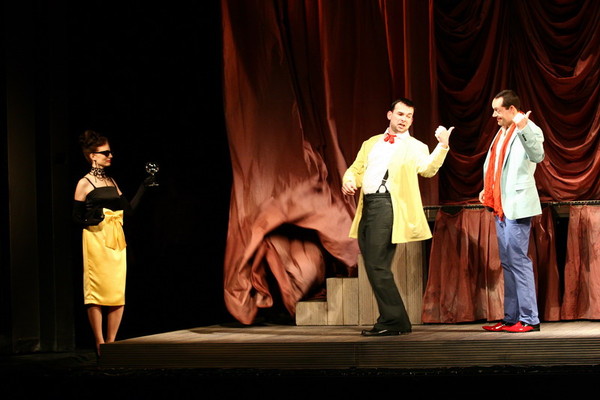
Figaro approaches singing (Aria: “Largo al factotum della città”; “Make way for the factotum of the city”). Since Figaro used to be a servant of the Count, the Count asks him for assistance in helping him meet Rosina, offering him money should he be successful in arranging this. (Duet: “All’idea di quel metallo”; “At the idea of that metal”). Figaro advises the Count to disguise himself as a drunken soldier, ordered to be billeted with Bartolo, so as to gain entrance to the house. For this suggestion, Figaro is richly rewarded. barbiere7

A room in Bartolo’s house with four doors

The scene begins with Rosina’s cavatina, “Una voce poco fa” (“A voice a little while ago”).
Knowing the Count only as Lindoro, Rosina writes to him. As she is leaving the room, Bartolo and Basilio enter. Bartolo is suspicious of the Count, and Basilio advises that he be put out of the way by creating false rumours about him (this aria, “La calunnia è un venticello” – “Calumny is a little breeze” – is almost always sung a tone lower than the original D major).

When the two have gone, Rosina and Figaro enter. The latter asks Rosina to write a few encouraging words to Lindoro, which she has actually already written. (Duet: “Dunque io son…tu non m’inganni?”; “Then I’m the one…you’re not fooling me?”). Although surprised by Bartolo, Rosina manages to fool him, but he remains suspicious. (Aria: “A un dottor della mia sorte”; “To a doctor of my class”).

As Berta, the Bartolo housekeeper, attempts to leave the house, she is met by the Count disguised as an intoxicated soldier. In fear of the drunken man, she rushes to Bartolo for protection and he tries to remove the supposed soldier, but does not succeed. The Count manages to have a quick word with Rosina, whispering that he is Lindoro and passing her a letter. The watching Bartolo is suspicious and demands to know what is in the piece of paper in Rosina’s hands, but she fools him by handing over her laundry list. Bartolo and the Count start arguing and, when Basilio, Figaro and Berta appear, the noise attracts the attention of the Officer of the Watch and his men. Bartolo believes that the Count has been arrested, but Almaviva only has to whisper his name to the officer and is released right away. Bartolo and Basilio are astounded, and Rosina makes sport of them. (Finale: “Fredda ed immobile, come una statua”; “Cold and still, just like a statue”).

barbiere8

Act 2

A room in Bartolo’s house with a piano

Almaviva again appears at the doctor’s house, this time disguised as a singing tutor and pretending to act as substitute for the supposedly ailing Basilio, Rosina’s regular singing teacher. Initially, Bartolo is suspicious, but does allow Almaviva to enter when the Count gives him Rosina’s letter. He describes his plan to discredit Lindoro whom he believes to be one of the Count’s servants, intent on pursuing women for his master. Figaro arrives to shave Bartolo. Bartolo demurs, but Figaro makes such a scene he agrees, but in order not to leave the supposed music master alone with Rosina, the doctor has Figaro shave him right there in the music room. When Basilio suddenly appears, he is bribed by a full purse from Almaviva and persuaded to leave again, with much discussion of how ill he looks. (Quintet: “Don Basilio! – Cosa veggo!”; “Don Basilio! – What do I see?”). Figaro begins to shave Bartolo, but Bartolo overhears the lovers conspiring. He drives everybody away.barbiere9

The scene returns to the location of act 1 with a grill looking out onto the square. Bartolo orders Basilio to have the notary ready to marry him to Rosina that evening. He also explains his plot to come between the lovers. Basilio leaves and Rosina arrives. Bartolo shows Rosina the letter she wrote to “Lindoro”, and persuades her that this is evidence that Lindoro is merely a flunky of Almaviva. Rosina believes him and agrees to marry him.barbiere10

The stage remains empty while the music creates a thunder storm to indicate the passage of time. The Count and Figaro climb up a ladder to the balcony and enter the room through a window. Rosina shows Almaviva the letter and expresses her feelings of betrayal and heartbreak. Almaviva reveals his identity and the two reconcile. While Almaviva and Rosina are enraptured by one another, Figaro keeps urging them to leave. Two people are heard approaching the front door, and attempting to leave by way of the ladder, they realize it has been removed. The two are Basilio and the notary and Basilio is given the choice of accepting a bribe and being a witness or receiving two bullets in the head (an easy choice, he says). He and Figaro witness the signatures to a marriage contract between the Count and Rosina. Bartolo barges in, but is too late. The befuddled Bartolo (who was the one who had removed the ladder) is pacified by being allowed to retain Rosina’s dowry.

Posted in OPera | Tagged , , , , | Leave a comment

Wagner’s Lohengrin in Poland

polandlogoFri   6:00pm December 19, 2014
Moniuszko Auditorium

LOHENGRIN

RICHARD WAGNER

lohengrin1

RTEmagicC_Lohengrin-small_jpgRomantic opera in three acts
Libretto: composer
In the original German
World premiere: Weimar, Großherzogliches Hoftheater, 28/08/1850
Polish premiere: Lviv Opera, 21/04/1877
Warsaw premiere: Teatr Wielki, 19/07/1879
Premiere: 11/04/2014

Duration: ca. 4 hrs 20 min. (including 2 intermissions)

Conductor: Stefan Soltesz
Director, Set and Costume Designer: Antony McDonald
Associate Director: Helen Cooper
Choreography: Lizie Saunderson, Philippe Giraudeau
Chorus Master: Bogdan Gola
Lighting Director: Lucy Carter
Associate Lighting Designer: Neill Brinkworth

lohengrin2

Cast:

Heinrich der Vogler: Bjarni Thor Kristinsson
Lohengrin: Peter Wedd
Elsa von Brabant: Mary Mills
Herzog Gottfried: wordless role
Friedrich of Telramund: Thomas Hall
Ortrud: Anna Lubańska
The King’s Herald: Dariusz Machej
Four Noblemen of Brabant: Mateusz Zajdel, Łukasz Rosiak, Damian Wilma, Robert Dymowski
Four Pages: Bożena Bujnicka, Joanna Dubiela, Marta Motkowicz, Wanda Franek

Chorus and Orchestra of Teatr Wielki – Polish National Orchestra

Co-production: Welsh National Opera, Cardiff

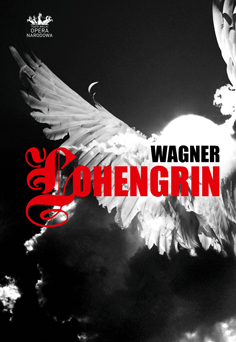
Poster for the production designed by Adam Żebrowski
Photo: Krzysztof Bieliński

lohengrin3

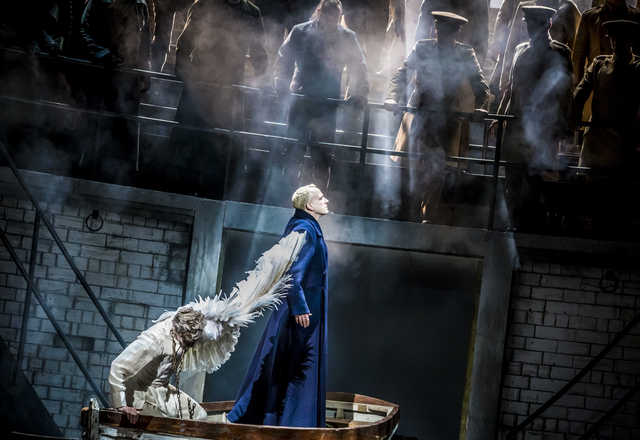
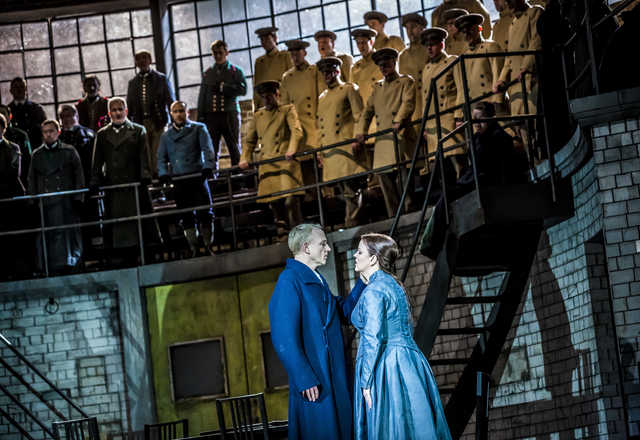
Lohengrin was first staged in 1850, the same year that Wagner published his notorious article Judaism in Music. The masterpiece being in such unfortunate proximity to a piece of hack writing by a declared anti-Semite has made people wary of this romantic opera. Take the famous scene from The Great Dictator in which Chaplin, made up to resemble Hitler, bounces an inflatable globe around his office with the wonderful prelude to Act 1 of Wagner’s piece playing in the background… Lohengrin directed by Antony McDonald brings no spectacular surprises; the only – moderate – extravagance is that the setting has been moved from the Middle Ages to Victorian England, but it will still beguile you with its subtle images and the characters’ truly Shakespearian complexity. Nobody here is only black or only white – the English director has scrapped all cardboard characters. McDonald’s production is made for those who are starting to discover the world of Wagnerian phantasms as well as those who know it inside out but are looking for new refreshing meanings.

lohengrin4

Synopsis

Place: Antwerp, on the Scheldt.

Time: 10th century

Act 1

King Henry the Fowler has arrived in Brabant where he has assembled the German tribes in order to expel the marauding Hungarians from his dominions. He also needs to settle a dispute involving the disappearance of the child-Duke Gottfried of Brabant. The Duke’s guardian, Count Friedrich von Telramund, has accused the Duke’s sister, Elsa, of murdering her brother in order to become the Duchess of Brabant. He calls upon the King to punish Elsa and to make him, Telramund, the new Duke of Brabant, since he is the next of kin to the late Duke.

The King calls for Elsa to answer Telramund’s accusation. She enters, surrounded by her attendants. She does not answer to the King’s inquiries, only lamenting her brother’s fate. The King declares that he cannot resolve the matter and defers it to God’s judgment through ordeal by combat. Telramund, a strong and seasoned warrior, agrees enthusiastically. When the King asks Elsa who shall be her champion, Elsa describes a knight she has beheld in her dreams (Narrative: “Alone in dark days”).

Twice the Herald sounds the horn in summons, without response. Elsa sinks to her knees and prays to God. A boat drawn by a swan appears on the river and in it stands a knight in shining armour. He disembarks, dismisses the swan, respectfully greets the king, and asks Elsa if she will have him as her champion. Elsa kneels in front of him and places her honour in his keeping. He asks but one thing in return for his service: she is never to ask him his name or where he has come from. Elsa agrees to this.

Telramund’s people advise him to withdraw because he cannot prevail against the Knight’s powers, but he proudly refuses and the combat area is prepared. The company prays to God (“Herr und Gott”) for victory for the one whose cause is just. Ortrud does not join the prayer, but privately expresses confidence that Telramund will win. The combat commences. The unknown knight defeats Telramund but spares his life. Taking Elsa by the hand, he declares her innocent and asks for her hand in marriage. The crowd exits, cheering and celebrating.lohengrin5

Act 2

Night in the courtyard outside the cathedral

Telramund and Ortrud, banished, listen unhappily to the distant party-music. Ortrud reveals that she is a pagan witch (daughter of Radbod Duke of Frisia), and tries to revive Telramund’s courage, assuring him that her people (and he) are destined to rule the kingdom again. She plots to induce Elsa to violate the mysterious knight’s only condition.

When Elsa appears on the balcony in the twilight before dawn she hears Ortrud lamenting and pities her. While Elsa descends to open the castle door, Ortrud prays to her pagan gods, Wodan and Freia, for malice, guile, and cunning, in order to deceive Elsa and restore pagan rule to the region. When Elsa appears, Ortrud warns her that since she knows nothing about her rescuer, he could leave her any time, as suddenly as he came, but Elsa is sure of the virtues of her rescuer.

The sun rises and the people assemble. The Herald announces that Telramund is now outlawed, and that anyone who follows Telramund is an outlaw by the law of the land. In addition, he announces that the King has offered to make the unnamed knight the Duke of Brabant; however, the Knight has declined the title, and prefers to be known only as “Protector of Brabant”. The Herald further announces that the Knight will lead the people to glorious new conquests, and will celebrate the marriage of him and Elsa. Behind the crowd, four noblemen quietly express misgivings to each other because the Protector of Brabant has rescinded their privileges and is calling them to arms. Telramund appears, and, concealing himself from the crowd, draws these four knights aside and assures them that he will regain his position and stop the Knight, by accusing him of sorcery.

As Elsa and her attendants are about to enter the church, Ortrud, as part of her retinue, challenges Elsa to tell who her husband is, and to explain why anyone should follow him. The ensuing exchange is interrupted by the entrance of the King with the Knight. Elsa tells both of them that Ortrud was interrupting the ceremony. The Knight tells Ortrud to go back into the crowd, then takes Elsa to the wedding. The King leads at the front of the couple. When they are about to go inside the church (once more), Telramund enters. He pleads to the king that his defeat in combat was invalid because the Knight did not give his name (trial by combat traditionally being open only to established citizens), then accuses the Knight of sorcery. The Knight refuses to reveal his identity and claims that only one person in the world has the right to know his origin – his beloved Elsa and no other person. Elsa, though visibly shaken and uncertain, assures him of her confidence. King Henry refuses Telramund’s questioning of the Knight, and the nobles of Brabant and Saxony praise and give respect to the Knight. Elsa, not seeing her beloved, falls back to the crowd where Ortrud and Telramund take her and try to intimidate her, but the Knight forces both to leave the ceremony. The Knight consoles Elsa. Finally, the King, the Knight and Elsa, together with the men and women around, go forward. Elsa takes one last look at the banished Ortrud, then they enter the church.

Act 3

Scene 1: The bridal chamber

Elsa and her new husband are ushered in with the well-known bridal chorus, and the couple express their love for each other. Ortrud’s words, however, are impressed upon Elsa, she laments that her name sounds so sweet in her husband’s lips but she cannot utter his name, afterwards she asks him to confide on her his name to keep it secret, when no one is around, but at all instances he refuses, finally, despite his warnings, she asks her husband the fatal questions. Before the Knight can answer, Telramund and his four recruits rush into the room in order to attack him. The knight defeats and kills Telramund. Then, he sorrowfully turns to Elsa and asks her to follow him to the king, to whom he will now reveal his mystery.

Scene 2: On the banks of the Scheldt (as in Act 1)

The troops arrive equipped for war. Telramund’s corpse is brought in, Elsa comes forward, then the Knight. He tells the King that Elsa has broken her promise and he discloses his identity by telling the story of the Holy Grail, on Monsalvat, and reveals himself as Lohengrin, Knight of the Holy Grail and son of King Parsifal sent to protect an unjustly accused woman. The rules of the Holy Grail determine that Knights of the Grail must remain anonymous, retiring from all human sight if their identity is revealed; so the time for his return has come.

As he sadly bids farewell to his beloved bride, the swan reappears. Lohengrin tells Elsa that if she had maintained her oath, she could have recovered her lost brother, and gives her his sword, horn and ring, for he is to become the future leader of Brabant. Then, when Lohengrin tries to get in the boat, Ortrud appears. She tells Elsa that the swan who drove Lohengrin to the bank was actually Gottfried, Elsa’s brother, on whom she put a curse by transforming him into a swan. The people consider Ortrud guilty of witchcraft. Lohengrin prays and the swan turns into another form, a young Gottfried. He elects him as the Duke of Brabant. Ortrud sinks as she sees Gottfried and her plans thwarted.

A dove descends from heaven and, taking the place of the swan at the head of the boat, leads Lohengrin to the castle of the Holy Grail. Elsa is stricken with grief and falls to the ground dead

Posted in OPera | Tagged , | Leave a comment

La Traviata at the Bolshoi

Bolschoi

La Traviata

Opera in two acts

Premiered on October 7, 2012.

Sung in Italian with Russian surtitles.

Running time: 2 hours 40 minutes.
Presented with one interval.

Libretto by Francesco Maria Piave based on the novel La dame aux Camélias by Alexandre Dumas, fils

traviata

Music Director: Laurent Campellone
Stage Director: Francesca Zambello
Associated Director: Julia Pevzner
Set Designer: Peter John Davison
Costume Designer: Tanya McCallin
Lighting Designer: Mark McCullough
Chorus Master: Valery Borisov
Choreographer: Ekaterina Mironova

traviata1

Conductor Pavel Klinichev
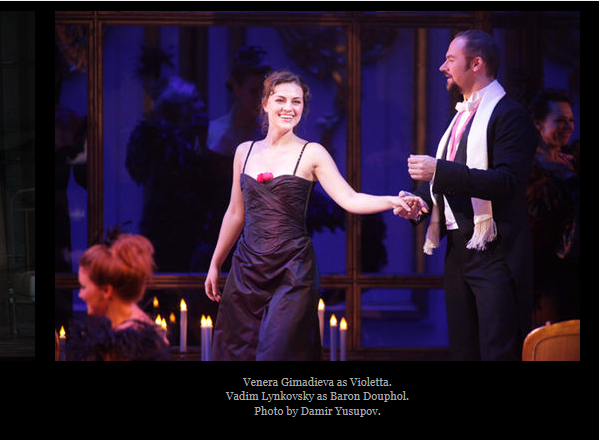
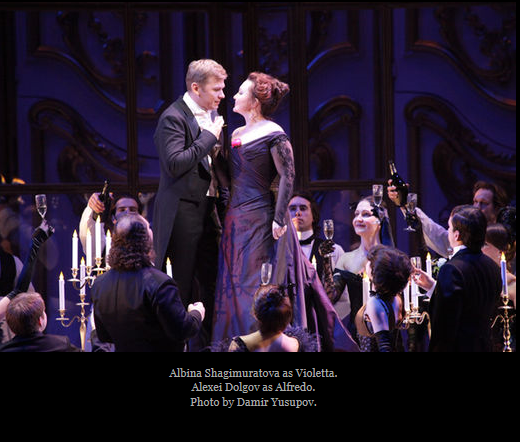
Violetta Valéry Dinara Alieva

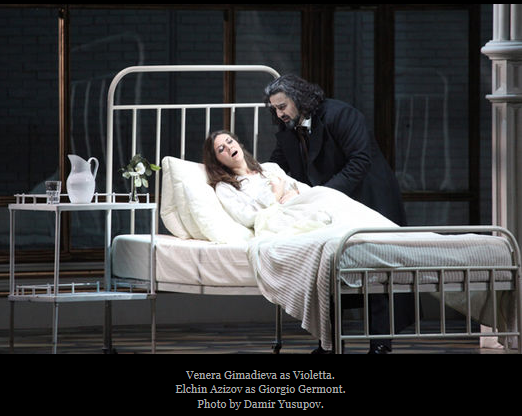
Venera Gimadieva

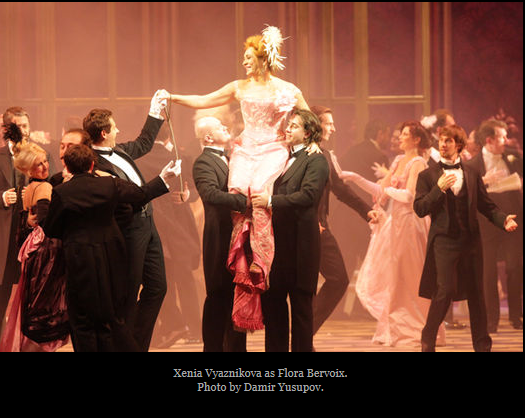
Flora Bervoix Elena Novak

Irina Dolzhenko

Annina Oxana Gorchakovskaya

Irina Udalova

Alfredo Germont Oleg Dolgov

Aquiles Machado

Giorgio Germont, Alfredo’s father Vasily Ladyuk

Igor Golovatenko

Gastone, viscomte De Letorières Sergei Radchenko

Marat Gali

Baron Douphol Alexei Pashiev

Vadim Lynkovsky

Marquis D’obigny Nikolai Kazansky
Doctor Grenvil Oleg Tsybulko

Daniil Chesnokov

Giuseppe, Violetta’s servant Vadim Tikhonov

Yuri Markelov

traviata2

Synopsis

Part One
Alfredo Germont arrives at a party at the home of Violetta Valéry, a renowned courtesan. She is surprised to learn of his devotion to her, and of his concern during her recent illness. Alfredo leads a toast to love; Violetta responds with a toast to pleasure and excitement. Feeling faint, she excuses herself to rest. Alfredo follows and begs her to allow him to love and care for her. She tells him she is not interested in such heroic commitment, but invites him to return the next day. Alone, she wonders if she is capable of experiencing love. Dismissing the idea as nonsense, she determines to live for freedom and pleasure alone. traviata3

Violetta flees her extravagant life in Paris to be with Alfredo. After learning that she plans to sell her belongings to maintain their country retreat, Alfredo goes to Paris to pay their debts. While he is away, Giorgio Germont visits Violetta. He tells her that Alfredo, his son, intends to give her all his possessions. She tells the elder Germont that she would never accept and reveals that she is making sacrifices to maintain their life together. Although impressed by her nobility, Germont begs her to leave his son, as her association with the family will ruin his daughter’s future prospects. Violetta finally agrees, asking only that, after her death, Germont tell his daughter the truth. Later, when Alfredo receives a letter from Violetta, claiming she no longer loves him, he is devastated. traviata4

Part Two
Violetta attends a party with her new protector, Baron Douphol. The men gamble, and Alfredo is the winner. Violetta pulls Alfredo aside and begs him to leave; he refuses and threatens to duel with the Baron. Unable to break her promise to the elder Germont, Violetta insists that she loves the Baron. Furious and hurt, Alfredo calls the guests together and publicly insults Violetta. traviata5

Now on her deathbed and tended by Annina, Violetta re-reads a letter from Giorgio Germont. According to the letter, Alfredo went abroad after dueling with the Baron; his father wrote to him there, explaining Violetta’s sacrifice. Alfredo arrives, asking forgiveness and pledging eternal love. Violetta expresses hope for their future together, but she is very weak. Alfredo sends Annina for the Doctor. He arrives with Giorgio Germont, who reproaches himself for his earlier behavior toward Violetta. He asks forgiveness and pledges to accept her as a daughter, but he is too late.

traviata6

The story of Violetta, told by herself…

The project has been brought to life by the international team, a world renowned Francesca Zambello is the director. It is already the third production for her at the Bolshoi Theater. (In 2002 she staged Turandot by G. Puccini, and in 2004 — for the first time at the Bolshoi — The Fiery Angel by S. Prokofiev).traviata7

Francesca Zambello:

“La Traviata — surely is one of the greatest operas ever written, and one of the most important works from the so-called” middle period “in the works of Verdi. For the first time ever the composer based his opera on a modern, popular, book which shocked the society, and not a myth, or, say, a play by Shakespeare. It was a real revolution, a real shock to the public: the opera, which tells about real people, living in the present, with real problems, the opera telling the story about love between an experienced woman and a very young man who, in addition, came from different social strata, about an incurable disease. And, please, note that La Traviata does not belong to those works where love overcomes all obstacles.traviata8

Today we no longer think about it. La Traviata is not perceived by us as a revolutionary product, but it seems to me that even now it is still very important to find in the characters that force and ‘intensity’ of emotions that shocked people.

For me and for all the staging team it is a huge honor to work on La Traviata at the Bolshoi Theatre. This opera has not been on a stage for rather a long time. And for us it is a chance to tell a story which seems to be well-known to everybody, but which nobody really knows. In this performance we will at the story via the perception of Violetta herself — a mysterious and beautiful woman, whom everyone loved and idealized, but — no one knew”.

Posted in OPera | Tagged , , | Leave a comment

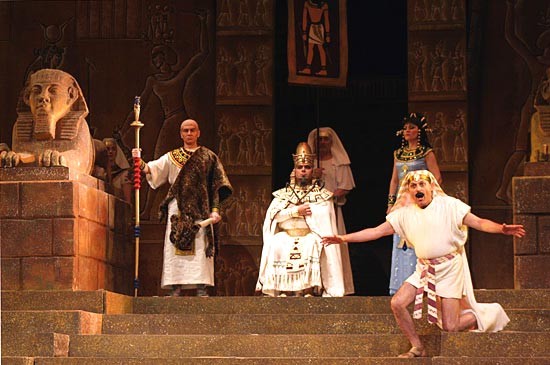
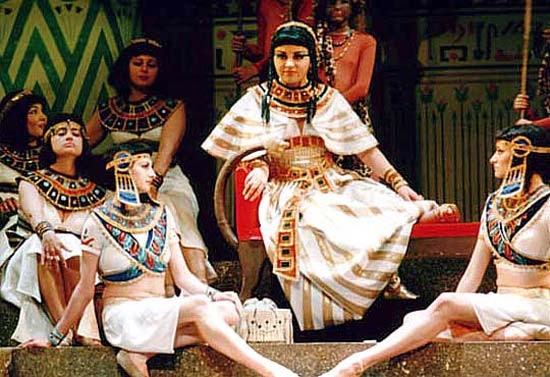
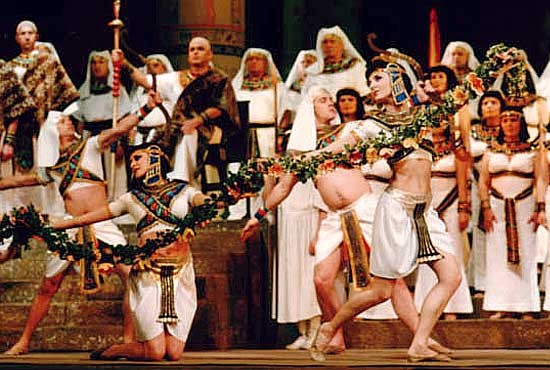
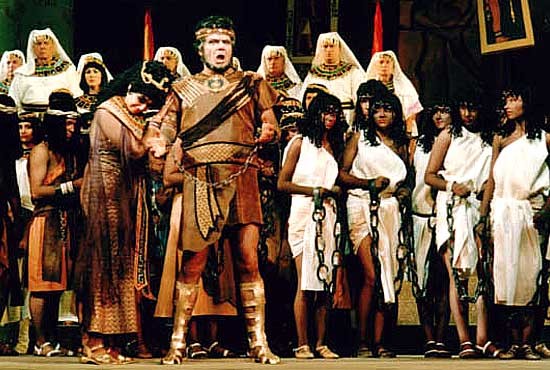
AIDA in Moldova

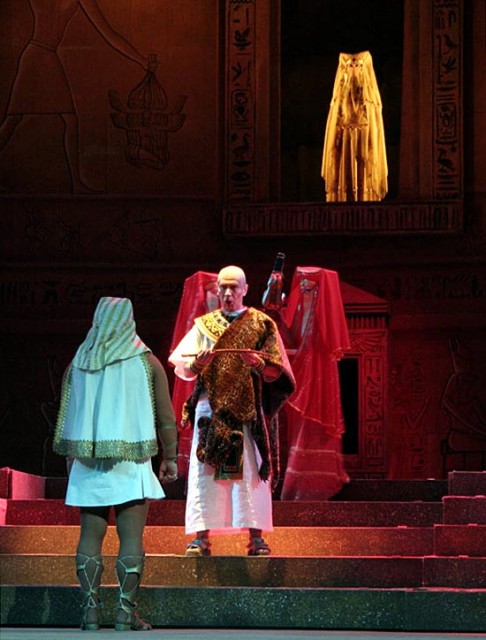
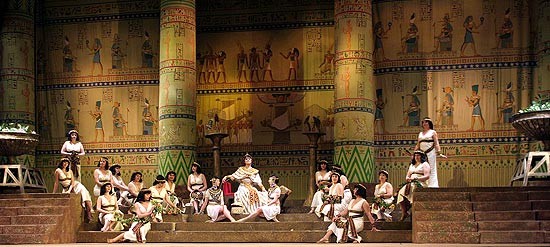
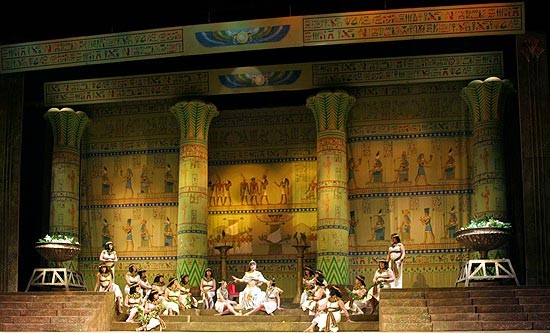
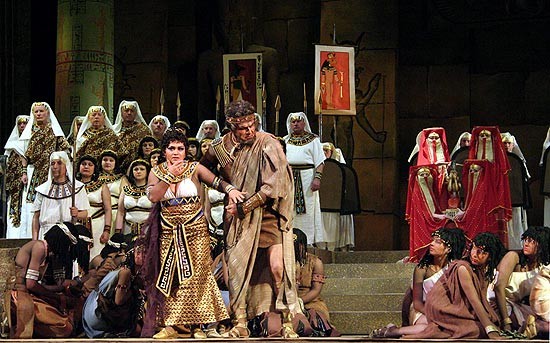
aida1moldova

Original name: Aida
Libretto: Antonio Ghislanzoni
After the original drafts by Camille Du Locle and Mariette Bey

Stage Director: Mihai Timofti Maestru in Artă
Set designer: Felix Bessonov Om Emerit
Costume designer: Nina Babuţac
Choreography: Mihail Caftanat Artist al Poporului
Music Director: Nicolae Dohotaru Maestru în Artă
Chief Choirmaster: Ion Bratescu

World premiere: 24 December 1871, at the Opera Theatre from Cairo
Premiere in Chisinau: 18 March, 1966, At Moldavian State Theatre of Opera and Ballet „A.S.Pushkin”
The premiere of the last version: 25 june 2005, at the National Theatre of Opera and Ballet.

——————————————————————————–

The protagonists

Aida, Radames, Amneris, Ramfis, Amonasro, The king of Egypt, Priestess, Messenger, Conductor

„In theatre exists some moments when the poet and the composer, must have suficiently tact for writing somthing else than lyrics and music”.

Giuseppe Verdi
——————————————————————————–

History of the creation

„In1868, the Egyptian government proposed Verdi to write an opera for opening party of a new theatre in Cairo. The composer rejected the unexpected order. In 1870, the negotiations was resumed with help of french librettist Camille du Locle that send Verdi scenario of Aida. Verdi was passionate with this subject based on an old egyptian legend,so he consent to write the opera and after that he began to draw the detailed plan of Aida toghether with du Locle being charged with writing prose libretto in french language.Antonio Ghislanzoni based on that libretto wrote lyrics in italian language.On the one hand the principal meaning of Aida’s dramaturgy consists of tragic conflict between aspiration to freedom, happiness and on the other hand nefarious force of oppression, violence. This is one from the principal topics that pass through the entire creation of Verdi”

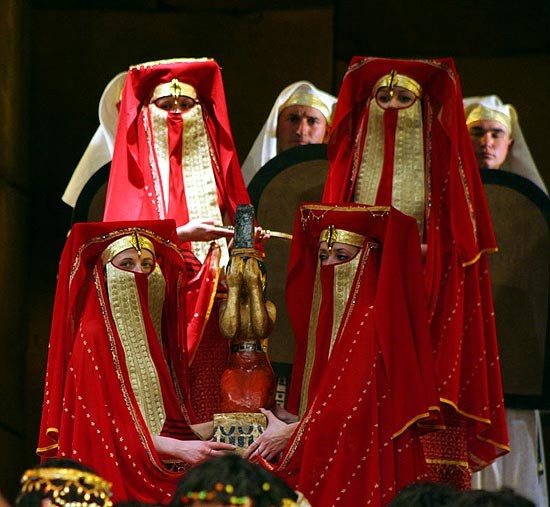
SYNOPSIS The action takes place in Memphis and Teba in time of pharaoh’s reign.

ACT ONE

A room in the Royal Palace in Memphis.

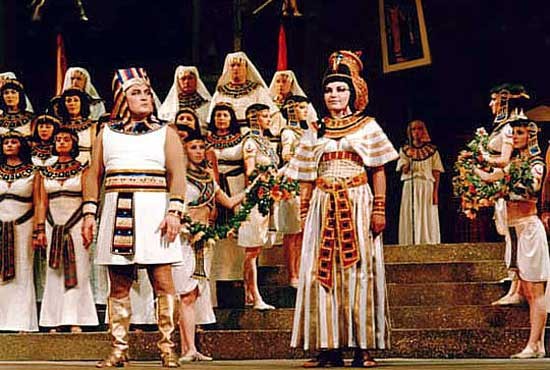
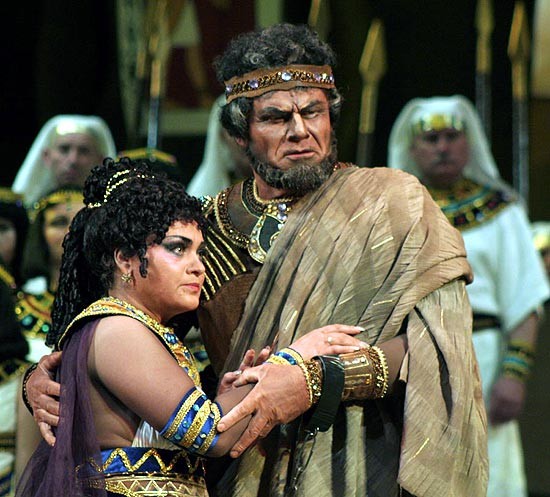
aida2Radames, the Captain of the Guards, learns from Ramfis, the head of the High Priests, that the Ethiopians are threatening war and that the Goddess Isis has already decided on the name of the Egyptian supreme commander who will lead the Egyptian army in confronting the enemy. Radames is overjoyed at the news and hopes he will be chosen. He imagines a glorious victory where he is able to return triumphantly to free his beloved Aida, slave of Amneris, the Egyptian King’s daughter. Amneris appears and he tells her of his hopes, with no mention of his feelings for Aida, although Amneris has her suspicions. Shortly after, Aida herself approaches and Amneris sees in her eyes the love she bears for Radames. She swears vengeance because she too is in love with the young captain of the guards. In the meantime the King enters preceded by his guards and followed by priests led by Ramfis. A messenger enters bearing the news that the Ethiopians have invaded Egypt and are marching against Thebes, led by the mighty warrior Amonasro. The King announces that Isis has appointed Radames supreme commander. The crowd cries out in homage to him, while Amneris punctuates the choral song with a languorous appeal for her warrior to return in victory. Only Aida is sad since the victory of Radames, whom she loves, must mean the defeat of her father, the King of Ethiopia, who has taken up arms to free her from slavery. In this moment of distress, she calls upon the gods to have pity on her.

Inside the temple of Vulcan in Memphis.

aida3The priests and priestesses sing a hymn to the gods. Radames enters dressed for battle, receives the sacred sword and is consecrated to Ftha to protect him in war and to direct him towards victory.

ACT TWO

A room in Amneris’ private apartments.

aida4The King’s daughter is surrounded by her slaves who are dressing her for the triumphal Egypitan festivities, while young Moorish slaves perform a dance. When Aida appears, Amneris hides her true feelings and sympathizes with her for the fate of her people, defeated in the battle. Then, to discover whether Aida is, in fact, in love with Radames, she tells her that he has been killed in the battle. Aida is stricken with grief; Amneris confirms her suspicions and filled with rage, reveals the truth. Radames is alive and she, Amneris, loves him too. At first Aida proudly declares her love, but then begs in vain for pity. Amneris threatens her, reminding her that she is only a slave and cannot hope to compete with a daughter of the Pharaohs. At this point, Aida is about to reveal her royal identity but decides against it.aida5

At the city walls in Thebes

The population celebrates the victory, whiles the King and Amneris, together with Aida and other slaves, the ministers and priests, are waiting Radames to celebrate his triumph. A column of soldiers and prisoners arrives, with Radames at its head. The King welcomes him and asks him what he would like as a reward. Radames has the prisoners brought before the King. Among them Aida recognizes her father Amonasro and succeeds in speaking to him briefly. He commands her not to betray him, and, without revealing his true identity, both Aida and her father beg for his mercy. Radames also pleads that all the prisoners be freed, but the high priest objects and proposes that at least Aida and her father be held in Egypt, as a guarantee of peace. The king approves this suggestion and announces that he intends to reward Radames by bestowing the hand of Amneris upon him. While the crowd cheers, Radames and Aida secretly express their sorrow.aida6

ACT THREE

Night on the banks of the Nile.

At the temple of Isis Ramfis leads Amneris to the temple to receive the goddess’ blessing on the eve of her wedding. Concealed nearby, Aida awaits Radames for their secret encounter, but while she is waiting Amonasro appears. He has discovered the emotions Aida and Radames feel for each other. He reminds Aida of the beauties of her native land, and the cruelty of their enemies and urges her to persuade Radames to reveal the route the Egyptian forces will use to invade Ethiopia. Aida is horrified at his suggestion. Then Radames approaches and Amonasro conceals himself. Aida proposes to Radames that they flee from Egypt, following some secret route unguarded by the Egyptian forces. Radames agrees and then Aida questions him on the route his army will take into Ethiopia. Radames mentions the gorges of Napata and at that moment Amonasro reappears and reveals his true identity. Radames is horror-stricken; for he realizes that he has revealed a military secret and is dishonoured. At this point Amneris arrives from the temple and cries out at the betrayal. Amonasro seeks to kill her but Radames prevents him, and surrendering his sword to Ramfis, allows him to be taken prisoner. Amonasro escapes with Aida.aida7 aida8

ACT FOUR

A room in the King’s Palace.

Amneris is torn between rage, sorrow and love. She wants to save Radames and has him brought before her. She asks him to plead not guilty before the High Priests to his conviction of being a traitor. In this way she can help him. He refuses. To convince him, Amneris has him believe that Aida is dead along with her father Amonasro. This does not dissuade him as now life holds nothing more for him. Finally, Amneris reveals that Aida is, in fact, still alive. This revelation precipitates rejoicing by Radames that he can now die to protect his beloved. However, Amneris declares that she will implore the King to pardon him if only he will renounce his love for Aida. He repeatedly refuses. He is consequently taken back to the dungeon and sentenced to be buried alive under the altar in the temple of Vulcan. Amneris bitterly deplores the cruelty of the priests and their punishment.

aida9

In the Temple of Vulcan in Radames’ tomb.

Radames is ready to die and prays that Aida will be able to find happiness one day: but Aida is concealed in the chamber and comes forward to embrace him. Radames laments Aida’s harsh fate, and vainly tries to dislodge the stone that seals the tomb. But Aida consoles him with the certainty that the ”angel of death” will unite them forever and appears to be already speeding to a celestial haven. While the two lovers bid farewell to the Earth, Amneris clothed in mourning robes, prostrates herself on the stone covering the entrance to the vault and beseeches the gods to grant peace to the man buried below.

aida10aida11aida12aida13aida14

Posted in OPera | Tagged , , | Leave a comment

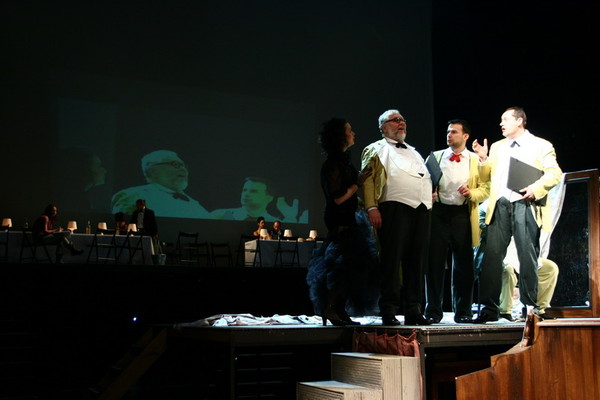
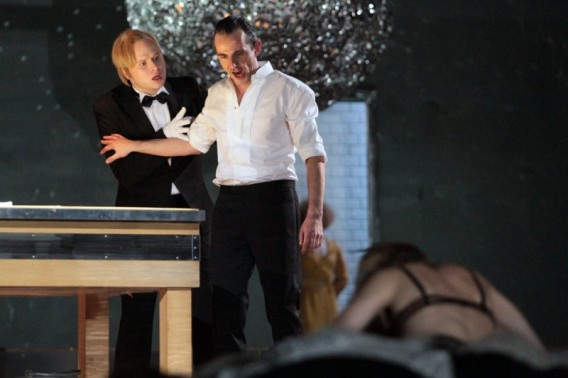
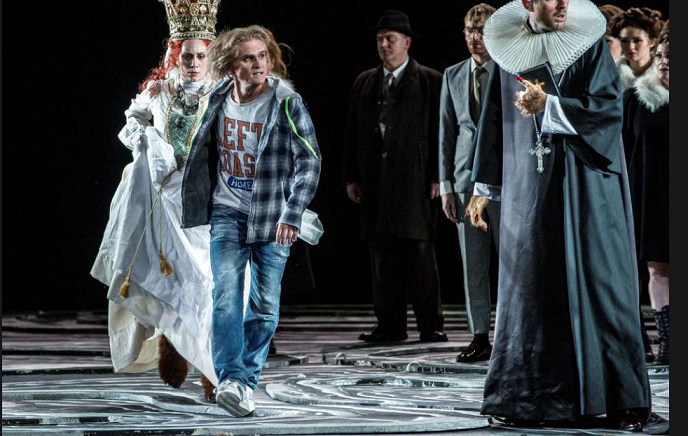
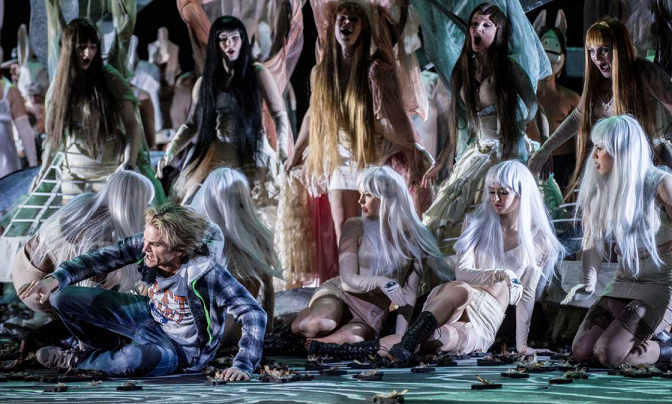
Don Giovanni in Belgium


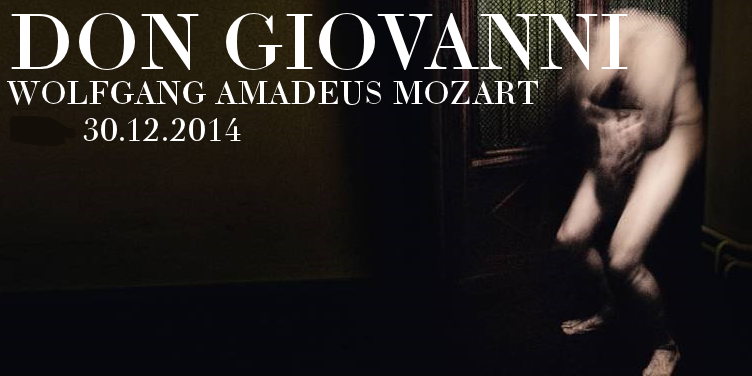
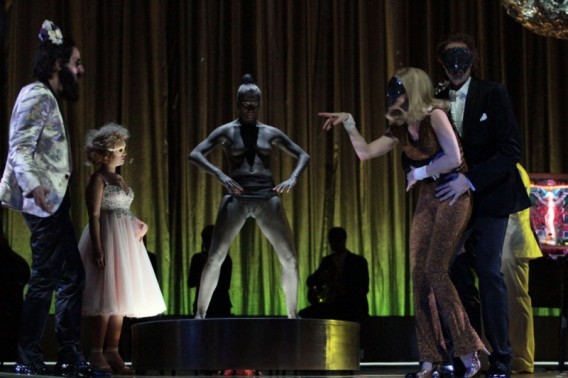
logolamonnaiedongiovanni‘As the hero of the opera, Don Giovanni is the denominator of the piece, he gives it its name as the hero usually does, but he does more than this : he is the common denominator. Compared to his existence, all others are merely derivative.’ So wrote the Danish philosopher Kierkegaard, who, like many others, was fascinated by Mozart’s 1787 opera. ‘It is this absolute centrality that makes this work exercise the power of illusion more than any other.’ Does this work, the second joint venture by Mozart and the librettist Da Ponte, need any further introduction ? This ‘dramma giocoso’ can hardly be categorised : opera seria, opera buffa ? – Don Giovanni is universal, enigmatic, superhuman, mythical. After Così fan tutte and La Clemenza di Tito, Ludovic Morlot will conduct his third opera by Mozart at La Monnaie. For those who are familiar with Warlikovski’s approach, it will come as no surprise that Don Giovanni will be presented as a dark, desperate character.

New productionProduction La Monnaie / De Munt
With the support of Electrabel

All images from the reharsal of Don Giovanni © Hofmann / La Monnaie – De Munt

IMG_5196_c_Hofmann

Don Giovanni

Music direction ¦ Ludovic Morlot
Director ¦ Krzysztof Warlikowski
Set design & costumes ¦ Malgorzata Szczesniak
Lighting ¦ Felice Ross
Dramaturgy ¦ Christian Longchamp
Choreography ¦ Claude Bardouil
Video ¦ Denis Guéguin
Chorus direction ¦ Martino Faggiani
Don Giovanni ¦ Jean-Sébastien Bou
Il Commendatore ¦ Sir Willard White
Donna Anna ¦ Barbara Hannigan
Don Ottavio ¦ Topi Lehtipuu
Donna Elvira ¦ Rinat Shaham
Leporello ¦ Andreas Wolf
Masetto ¦ Jean-Luc Ballestra
Zerlina ¦ Julie Mathevet
Orchestra & chorus ¦ La Monnaie Symphony Orchestra & Chorus
02, 04, 07, 09, 11, 14, 16, 18, 20, 23, 26, 28 & 30 December

IMG_5236_c_Hofmann

IMG_5255_c_Hofmann

Surtitles in French / Dutch

Approximate running time: 3 hours 45′ (including 1 interval)

Attention: this production contains scenes and images with explicit sexual content which we do not advise for children and youngsters under 16.

Pre-performance talks half an hour before the start of the performances by Rebecca Marcy (in French) and by Gert Haelterman (in Dutch).

Venue
La Monnaie, Grande Salle

IMG_5273_c_Hofmann IMG_5290_c_Hofmann IMG_5306_c_Hofmann IMG_5326_c_Hofmann

IMG_5347_c_Hofmann

Posted in OPera | Tagged , , , | Leave a comment

Peer Gynt (in Norwegian) in Oslo

logonorwayNovember 29.–January 17

Peer Gynt

Performed in Norwegian / Texted in Norwegian and English


  • Music and libretto : Jüri Reinvere
  • Conductor : John Helmer Fiore
  • Direction : Sigrid Strøm Reibo
  • Set design and costumes : Katrin Nottrodt
  • Choreography : Oleg Glushkov
  • Lighting design : Rainer Casper
  • Cast : The Children’s Chorus, The Opera Chorus, The Opera Orchestra
  • Translation from German: Tor Tveite

3 hours / 1 intermission

Photographs credit: Erik Berg

«Who are you?» That is the question Peer Gynt asks the Bøyg, the Mountain King and the Sphinx, receiving only the answer, «Myself». But who is that, and who is Peer Gynt? What does it mean to be Norwegian in 2014, 200 years after we gained our first written constitution? What or where is the core, the seed? Is there one at all?
Few works have so embodied what it means to be Norwegian as Ibsen’s Peer Gynt. Not only is it a key work in the Norwegian literary canon, it is also one of Ibsen’s most frequently performed plays on the international theatrical scene. Grieg’s setting of Ibsen’s text is still Norway’s best known dramatic music. But what does this legacy mean for us today?
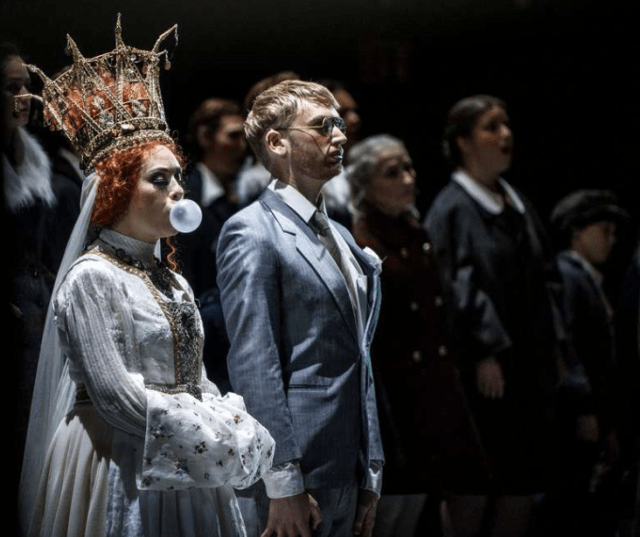
Photo credit: Erik Berg

Estonian composer Jüri Reinvere explores this question in a completely new Peer Gynt. This is not an operatic version of Ibsen’s dramatic verse play, but a new interpretation, with Reinvere providing both the music and libretto. In his Peer Gynt, Ibsen’s characters have different encounters and travel to new places. The famous verse play meets elements from other Ibsen pieces – as well as lines from the Edda and Shakespeare’s Hamlet.
This work is a commentary on the position of the Peer Gynt phenomenon as a national and international Norwegian symbol. It is the story of the search for an identity that constantly escapes us. Our past and our memories, on the other hand, we carry with us whether we want to or not. The story of the evasive Peer Gynt shows that we have to face them in order to better understand ourselves. With Reinvere’s work, staged by young Norwegian director Sigrid Strøm Reibo, we confront the Peer Gynt legacy in Norway today.
Premiere discussion one week before the premiere / Fiore Lecture Show / free introduction one hour before the performance
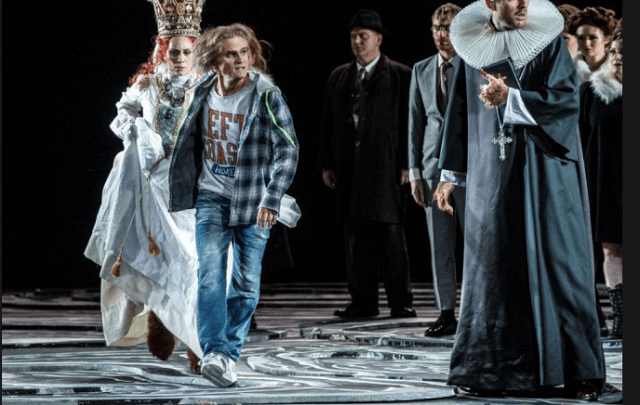
peer4

CAST

peerGyntNils Harald Sødal as Peer Gynt
TENOR

Following a busy freelance career, Nils Harald Sødal joined the Norwegian National Opera ensemble in 2012. Sødal has appeared on many European opera stages and has received complimentary critiques in international publications such as Opernwelt and Opernglas.
His 2012 debut at the world famous Semperoper in Dresden was received with enthusiasm, and when the Norwegian National Opera performed Peter Grimes at the Savonlinna Opera Festival that same year, Sødal impressed the Finnish press in the title role:
«From start to finish he convinces and gives us an insight into Peter Grimes’ inner life and conflicts.»
His major roles with the Norwegian National Opera include the title roles in Peter Grimesand Robin Hood, Rosillon in The Merry Widow, Alfred and Eisenstein in Die Fledermaus, Alfredo in La traviata, Don José in Carmen, David in The Fourth Watch of the Night, and Godpa in the new opera Khairos. This season, Sødal gives us an insight into the inner life and conflicts of Erik in The Flying Dutchman. As well as being an opera singer, Sødal is also a critically acclaimed author.

Operasolist-Marita-Solberg01Marita Sølberg as Unge Solveig
SOPRANO

«Norwegian soprano Marita Sølberg is an unforgettable Mimì of the highest international standard.» This was how Opera Now’s critic described her debut in the role in Stefan Herheim’s La Bohème, for which she also received the Critics’ Award. In spring 2014 she made her debut in the role of Donna Elvira in Don Giovanni, and returned to the stage as Mimì in La Bohème.
A former winner of the Queen Sonja International Music Competition, Sølberg worked with the Opera in Stuttgart for two years before becoming a soloist with the Norwegian National Opera in 2008. Sølberg has starred in roles like Pamina in The Magic Flute, Giulietta in a concert production of I Capuleti e i Montecchi, Kathrine Sigismund in The Fourth Watch of the Night, Female Chorus in The Rape of Lucretia and Nedda in Pagliacci.
In autumn 2013 she sang the Countess in The Marriage of Figaro, a reprisal of her role in the autumn 2010 production, which she also performed for the first time last year at La Fenice in Venice. She has also sung at major opera festivals in Salzburg and Glyndebourne, and has toured in many countries as Solveig in Peer Gynt. This fall she will sing a whole new Solveig in Jüri Reinvere’s Peer Gynt. In addition, she will perform Antonia in The Tales of Hoffmann.

IngeIngebjørg Kosmo as Mor Åse/Gamle Solveig
Mezzo Soprano

From the fiery title role in Bizet’s Carmen to the careful Suzuki in Puccini’s Madama Butterfly, from children’s songs to the Berlin Philharmonic – Ingebjørg Kosmo’s range is extensive.
The Norwegian National Opera has been pleased to have Kosmo as a soloist since 1997. Her long, rich history with the ensemble includes roles as Octavian in Der Rosenkavalier, the Composer in Ariadne auf Naxos, Idamante in Idomeneo, Donna Elvira in Don Giovanni, Dorabella in Così fan tutte, Sylva Varescu in Die Csárdásfürstin, Gudrun Skjeggesdatter in Søderlind’s Olav Tryggvason, Charlotte in Werther, Sextus in Julius Cæsar, Eboli in Don Carlo and Ellida in Søderlind’s opera The Lady from the Sea. With her solid experience, in 2013 she played the roles of Marcellina in The Marriage of Figaro and Bianca in The Rape of Lucretia. This season, she plays Antonia’s mother in The Tales of Hoffmann, Mor Åse/Gamle Solveig in Peer Gynt and Suzuki in Madama Butterfly.
Kosmo is a sought-after concert singer, and has performed as guest soloist in prestigious settings such as the Salzburg festivals and with the Berlin Philharmonic Orchestra. Her lyrical mezzo gives voice to Anitra in the recording of Peer Gynt with Bergen Philharmonic Orchestra. She also performs in Tveitt’s The Turtle with Stavanger Symphony Orchestra.
In 2013 she released a CD of children’s songs, Mamma synger – Sanger som går i arv, together with three fellow singers. A new solo release is coming in 2014.

IngridKari Ulfsnes Kleiven as Ingrid/Den grønnkledde/Anitra

SOPRANO

Kari Ulfsnes Kleiven comes from Melhus in the Sør-Trøndelag area of Norway, and is a soloist with the Norwegian National Opera starting in the 2014/2015 season, when she performed Barbarina in The Marriage of Figaro and Amor in Orfeo ed Euridice.

Ulfsnes Kleiven is trained at the Norwegian Academy of Music and the National Academy of Operatic Art in Oslo. During her studies, she sang the roles of Despina in Così fan tutte, Adele in Die Fledermaus, Serpetta in La finta giardiniera, Erisbe in L’Ormindo and Sister Genovieffa in Suor Angelica. She has received various scholarships, including scholarships from the Ruud-Wallenberg Fund.

DavidHansenDavid Hansen as Bøygen/Cheshirekatten/
Knappestøperen


thor_inge_falchThor Inge Falch as Smed/Herr Trumpetstråle/Huhu
TENOR

This spring Thor Inge Falch had great success with Eli Kristin Hanssveen, Hege Schøyen og Øivind Blunck in Hege og Øivind går til Operaen. Last autumn he the audience and the press as Piet The Pot in Le Grand Macabre. Aftenposten described the way he brought mortal fear to life: «with lots of vibrato and a tone that switches between warm and cold.»
Originally from Ballangen in the Nordland area of Norway, Falch has been a soloist with the Norwegian National Opera since 2007. His roles here include Eisenstein and Alfred in Die Fledermaus, Count Boni in Die Csárdásfürstin, Canio in Pagliacci, Robert Boles in Peter Grimes, Jon Bisp in Olav Trygvason, Passepartout in the premiere of Around the World in 80 Days, Prince John in Robin Hood and Herod in Salome.
Falch has also sung the title role in the opera Life with an Idiot at Malmö Opera and the Royal Danish Opera in Copenhagen, as well as the title role in Kejsar Jones at Göteborg Opera and at Ultima Contemporary Music Festival in Oslo. He has sung Cavaradossi in Tosca at Oscarsborg Fortress, and Calàf in Turandot and Manrico in Il Trovatore at Fredriksten Fortress.
Thor Inge Falch trained at Østlandet Music Conservatory, the National Academy of Operatic Art in Oslo and with Professor André Orlowitz in Copenhagen.

WeisserJohannes Weisser as Prest/Slakter/Hussein
TENOR

Johannes Weisser was born in 1980 in Norway. He studied at the Music Conservatory in Copenhagen and at the Royal Danish Academy of Opera in Copenhagen with Susanna Eken.
In the spring of 2004, at the age of 23, he made his debut at the Norwegian National Opera as well as at the Komische Oper Berlin, in both houses as Masetto in Don Giovanni. Since then he has established himself as one of the most exciting Scandinavian singers of his generation.
Engagements have brought him to Salzburg Festival, Staatsoper Berlin, Theater an der Wien, Théâtre de La Monnaie in Brussels, Théâtre des Champs-Elysées, Opéra national du Rhin Strasbourg, Opéra de Dijon, Opera Bilbao, Megaron Athens, Festspielhaus Baden-Baden, Komische Oper Berlin, Norwegian National Opera, Royal Danish Opera, Edinburgh International Festival, Innsbrucker Festwochen der alten Musik and Flanders Festival Bruges with roles such as the title role and Leporello in Don Giovanni, Guglielmo in Così fan tutte, Papageno in Die Zauberflöte, Schaunard in La Bohème, Malatesta in Don Pasquale, Mr. Flint in Billy Bud, Agamemnon in Gluck’s Iphigénie en Aulide, Giove in Cavalli’s La Calisto, Ramiro in Ravel’s L’heure espagnole, Plutone and Pastore 4 in Monteverdi’s L’Orfeo, King Theseus in Britten’s A Midsummer Night’s Dream, Valens in Handel’s Theodora and Achilla in Giulio Cesare.
Johannes Weisser is a much sought after concert, oratorio and singer and he regularly appears in concert venues and festivals throughout Europe. He has a considerable repertoire that spans music from the early 17th Century works of Monteverdi up to 20th Century works of Weill and Britten. He is an exceptionally communicative “Lied”-singer. His concerts have attracted much attention and have been highly praised, notably the concerts with the pianist Leif Ove Andsnes.
He has worked with conductors such as Rinaldo Alessandrini, Alfredo Bernardini, Fabio Biondi, Francesco Corti, Alan Curtis, Ottavio Dantone, Thomas Dausgaard, Stéphane Denève, Laurence Equilbey, Olari Elts, Adam Fischer, Patrick Fournillier, Eivind Gullberg Jensen, Philippe Herreweghe, J. David Jackson, René Jacobs, Tõnu Kaljuste, Fredrik Malmbrg, Michael McCarty, Juanjo Mena, Ingo Metzmacher, Marc Minkowski, Lars Ulrik Mortensen, Andris Nelsons, Andrew Parrott, Kirill Petrenko, Vasily Petrenko, George Petrou, Trevor Pinnock, Daniel Reuss, Christophe Rousset, Kwame Ryan, Andreas Spering, Christoph Spering, and Lothar Zagrosek.
Engagements in 2011 included Garzia in Attilio Ariosti’s La Fede nei tradimenti in Vienna, Siena and Montpellier, Arsitobolo in Handel’s Berenice at Theater an der Wien, Agamemnon in Gluck’s Iphigénie en Aulide in Athens, Achilla in Giulio Cesare at Theater an der Wien as well as at Théâtre des Champs-Elysées, Paris, Ramiro in Ravel’s L’heure espagnole with Birmingham Symphony Orchestra, Haydn’s Die Schöpfung in Verona, arias by Mozart with the Norwegian Chamber Orchestra, Bach’s St Matthew Passion with Oslo Philharmonic Orchestra, Mahler’s Kindertotenlieder in Hasselt (Belgium), Bach’s Mass in B minor in Leipzig and Zürich, Bach’s Actus Tragicus in Tromsoe and Handel’s Messiah in Oslo as well as in Trondheim.
Johannes has recorded the title role in Don Giovanni, Telemann’s Brockes Passion, Haydn’s Die Schöpfung and Bach’s St Matthew Passion – all with René Jacobs, Haydn’s Applausus with Andreas Spering, Achilla in Giulio Cesare and Licaone in Handel’s Giove in Argo with Alan Curtis, David in Staale Kleiberg’s David and Bathsheba and a highly acclaimed CD with songs by Grieg.
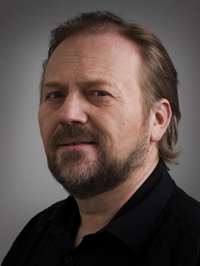
ketil_hugaasKetil Hugaas as Dovregubben/Eberkopf/
Begriffenfeldt/Kirkegårdsvakt
BASS

Opera singer, composer and musical arranger. Ketil Hugaas has great musical range and drive. He has been part of the soloists ensemble at the Norwegian National Opera since 2008, starring in the title role in Don Pasquale, as Sarastro in The Magic Flute, Dr. Bartolo in The Barber of Seville, Ol-Kanelesa in The Fourth Watch of the Night, Atlantis in Khairos and Schigolch in Lulu. The latter performance led to a guest engagement at the Semperoper in Dresden, where he reprised the role. He did a critically acclaimed Nekrotzar in Le Grand Macabre at the Norwegian Opera & Ballet in 2013 – a role he also gave at The Royal Danish Theatre the spring 2014.
Between 2000 and 2008 he was a soloist with the Royal Swedish Opera in Stockholm, and sang leading bass rolls in Don Giovanni, Lohengrin, Tannhäuser, Das Rheingold, Die Walküre, Boris Godunov and Wozzeck.
Ketil Hugaas has written two musical plays about his home town of Sulitjelma in Nordland. He has been the organizer of the Soloists Christmas Concert here at the Oslo Opera House, and the CD Mamma synger. He also has extensive experience as a concert singer, with a repertoire including classical and contemporary music and jazz.
In the 2013/2014 season he made his debut in the role of Nekrotzar in Le Grand Macabre; in spring 2014 he can be seen as Daland in The Flying Dutchman.
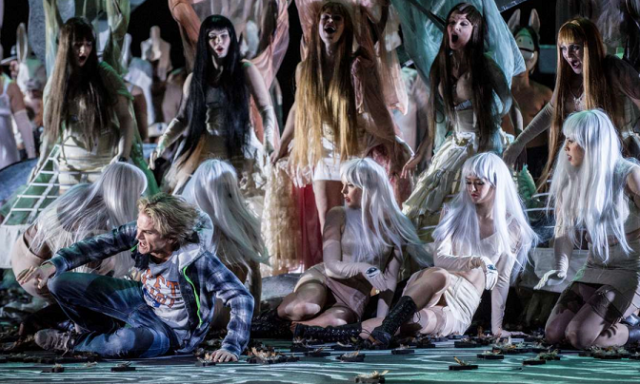
peer6SYNOPSIS

Act I

Scene 1: The wedding
Peer Gynt arrives uninvited at the wedding of Ingrid and Mads Moen. His mother, Åse, accompanies him, and wants them to leave as soon as possible. Peer wants to find out whether Ingrid still has feelings for him, but when she tells him that she is still bleeding after undergoing an abortion, Peer loses interest. Solveig arrives with her sister and their father. Peer and Solveig seem to hit it off, and Solveig tells him about herself. The conversation is interrupted by Solveig’s father, who has found out that she is chatting with Peer Gynt; the troublemaker. Afterwards, Peer tries to pick up where they left off, but Solveig is reluctant. Some girls start flirting with Peer, and upset by Solveig’s rejection, he demonstratively joins their game. But the girls bully and humiliate Peer in front of the entire wedding party. To take his revenge, Peer runs away from the wedding with the bride, a willing Ingrid.peer7
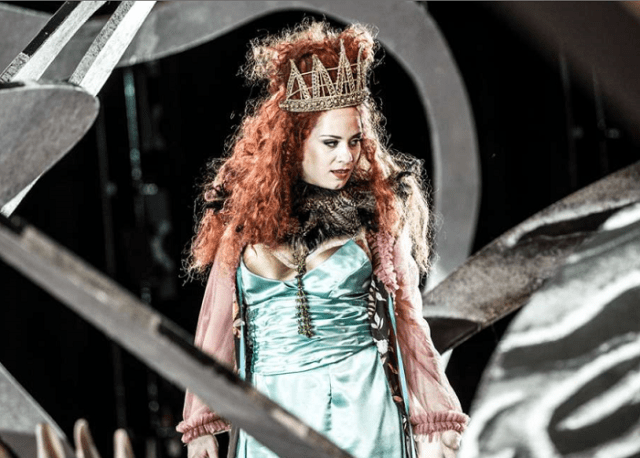
Scene 2: The Enchanted Forest
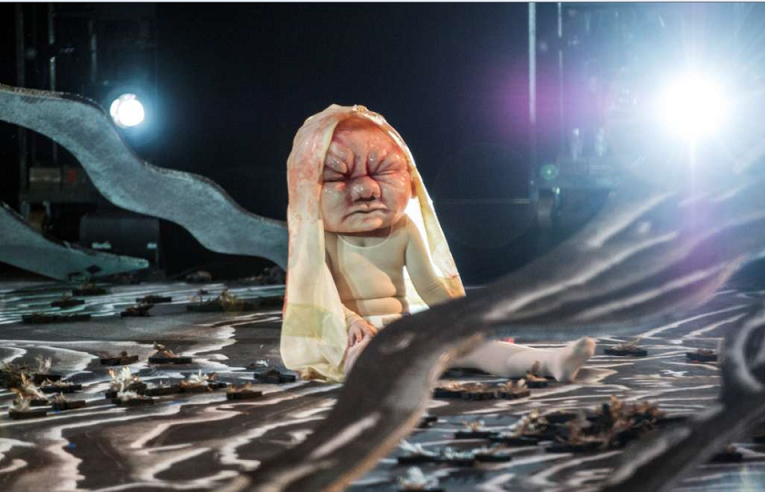
Ingrid and Peer are in the forest. Peer wants Ingrid there and then, but she would rather they return and prepare for marriage. Peer has no plans to be tied down and pushes her away. In the meantime strange beings have started to gather around them. Only Peer can see them, and Ingrid runs away, disappointed. The beings come closer and closer, it rains nightingales and suddenly the Green-Clad Woman is facing Peer. When he asks her who she is, she responds: “I’m your wife”. The Green-Clad Woman and her fairies tease and play with Peer. Suddenly the Green-Clad Woman is pregnant with Peer’s child. While the flirt of the fairies with Peer becomes more and more aggressive, the Green-Clad Woman goes into the forest to give birth. Peer attempts to escape, but is prevented by the Old Man of Dovre, who arrives with Peer’s new-born baby in his arms.
Peer tries to understand what is happening to him, saying that life is too short to be tied down, and that everyone has a skeleton or two in the closet. His ambitions conquer his sense of responsibility, his plan is clear: He decides to leave and follow his dream to become an Emperor.
Åse and Solveig are looking for Peer in the forest, but he does not dare show himself. As they disappear, the Old Man of Dovre and the Green-Clad Woman are waiting for him with the child. They want Peer to pledge allegiance to the Enchanted Forest, and surrender to lies, deceit and lust. Peer is interested, but balks when they ask him to pledge. He flees. Escaping from the Old Man of Dovre, he encounters the Boyg, who insists that Peer must make a choice; go home to the village and to Solveig. Peer resists, choosing freedom.peer8

Scene 3: A cabin in the forest
Peer goes to his mother’s to collect his things and prepare his journey into the world. At home he finds Åse on her deathbed. He tells her one last fairy tale and then says his goodbyes. Solveig arrives; she has left her family to be with him. For a moment Peer feels that everything is right, everything is as it should be. But his peace of mind is shattered when the Green-Clad Woman, with the child in tow, breaks upon the scene. Peer’s fear returns and he leaves them both.

Act II

Scene 1: Morocco
Peer has made his fortune and is now well of, with an entourage of sycophantic friends. In a discussion about what happiness is von Eberkopf tells a story about a slaughterhouse in Rome which is for sale. This abattoir holds all humanity’s dreams. Whoever has control of the slaughterhouse in Rome will thus own them and have power over everyone on earth. The hitch is that on arrival in the slaughterhouse people are shown their innermost desires and after seeing them most people immediately wish to die, which the slaughterhouse can help them with.
Peer is very interested in this story, but hides this from his friends. Anitra and her retinue arrive, joking that Peer should buy the abattoir and become the new Messiah. Peer replies that he would hardly want to be a Messiah. He is disappointed in mankind and even more in God, whom he feels is absent. He sees the world as a meaningless desert and people are hopeless fools because they need something to believe in to live.
To lift him out of these thoughts, Peer asks Anitra to sing for them. While she is singing, a gang of robbers enters. They steal Peer’s suitcase with all his money. It appears that Peer’s “friends” are behind the plot. With the rest of his valuables Peer decides to take Anitra with him to Rome to buy the slaughterhouse that would give him power over all mankind.peer11

Scene 2: Rome – in a slaughterhouse
In the slaughterhouse Anitra is appalled that Peer wants to own such a place. Peer, on the other hand, loves it; this is where weak people come to die. Anitra is frightened by the change in Peer and she flees from him. Peer is furious, all his hate against people pours out of him, and he is shown his dream, his innermost desire: to kill everybody and everything around him! Amid all the victims he suddenly sees Solveig. Peer is reminded of his human compassion and stops shooting. He collapses.

Scene 3: Cairo – in a madhouse
Peer wakes up in a vacuum. He cannot discern between truth and dream. He does not understand who he is or how he became what he is. In this state Peer learns that “To be yourself is to sacrifice your self”. But how do you do that? Peer leaves the madhouse as confused as he was, and a Cheshire cat approaches him. This creature, able to look right through him, tells him that he is suffering and needs to go home. Peer obeys, and sets course for home.peer13
Scene 4: Homecoming
After arriving home, Peer comes upon a nocturnal funeral. Talking with a groundskeeper, Peer desperately wants to know how to live without regret. The groundskeeper tells him this is done by being true to oneself and by seizing what is true in the moment. The groundskeeper then tells a story about someone who was so busy living and experiencing everything in life for himself that he travelled through life without ever understanding what or who he lived for. He did not live truly because he only lived for himself.
Peer figures out that this story is about him; his entire life has been meaningless, he has been selfish. Some of the mourners recognize him and old acquaintances come up to him to say hello. Peer sees that these simple people who he has despised all his life have had meaningful lives; they have lived loving each other.
Suddenly Young Solveig is there, as in a mirage. She has always been waiting for him. He has made her life meaningful. In her love he has been whole. Peer asks forgiveness, and Solveig forgives him, saying that now everything is the way it should be.
When they come to the cabin, Old Solveig meets them in the doorway. Young Solveig’s forgiveness could only have occurred in the past, it turns out. Peer came home too late. Old Solveig has forgiven him a long time ago and has lived her life sharing love with everyone around her. No one has the right to demand forgiveness from another person, forgiveness starts with oneself, she insists. For Young Solveig it hurts to discover Peer’s cheating, but her older self comforts her and encourages her; she will have a meaningful life. The happiness she felt in the infatuation of her youth will be valuable through all her life.
Peer understands that his cheating has been difficult for Solveig. He understands that the great forgiveness he is longing for will be an arduous task he must assume responsibility for himself. Young Solveig leaves the old couple, who are left mourning over a lost life together.

Posted in OPera | Tagged , , , | Leave a comment

The Orchestra Regionale Emilia Romagna MEETS THE YOUNG TALENTS

Lorer-incontra-i-giovani-talenti

YOUNG TALENTS COME INTO THE ORCHESTRA IN ITALY

The best students, singers, conductors and soloists of the Parma Conservatory “A. Boito” become the stars of an exclusive concert for young talents with the Orchestra Regionale Emilia Romagna. A series of events organized thanks to the collaboration between the two institutions. Thus, musical training development is integrated with the professionalization stage of the activity and with the orchestra. A constant dialogue between the worlds of education whose aim is to bring young artists closer to their future profession.

orer-incontra-i-giovani-talenti-2

logoEDU

Posted in Article, Music | Tagged , | Leave a comment

Little Conductors, Experimental didactic workshop about orchestra leaders

logoEDULittle conductors

Experimental didactic workshop about orchestra leaders

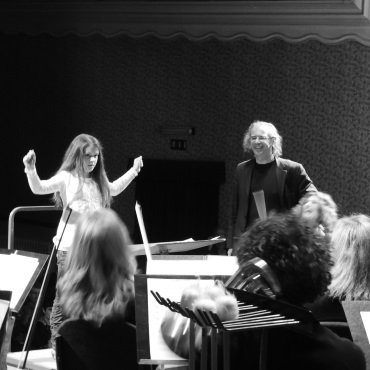
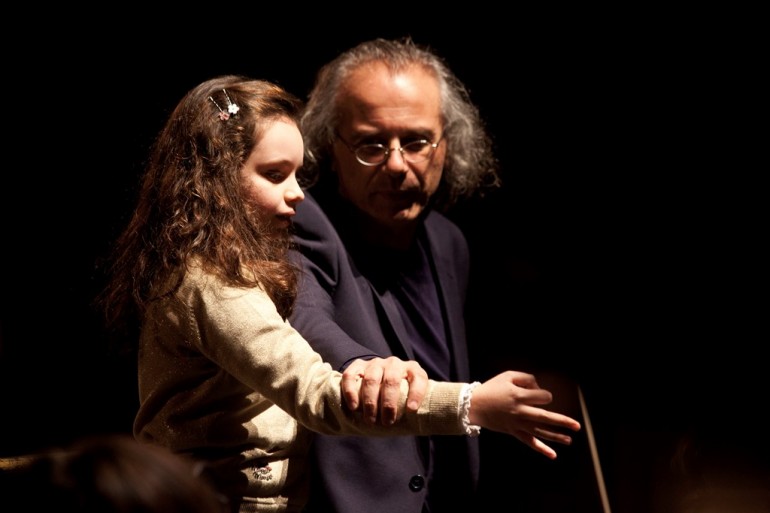
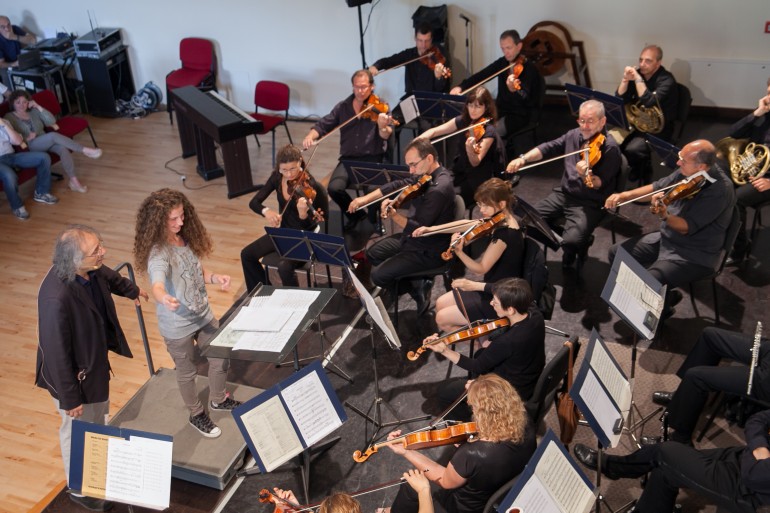
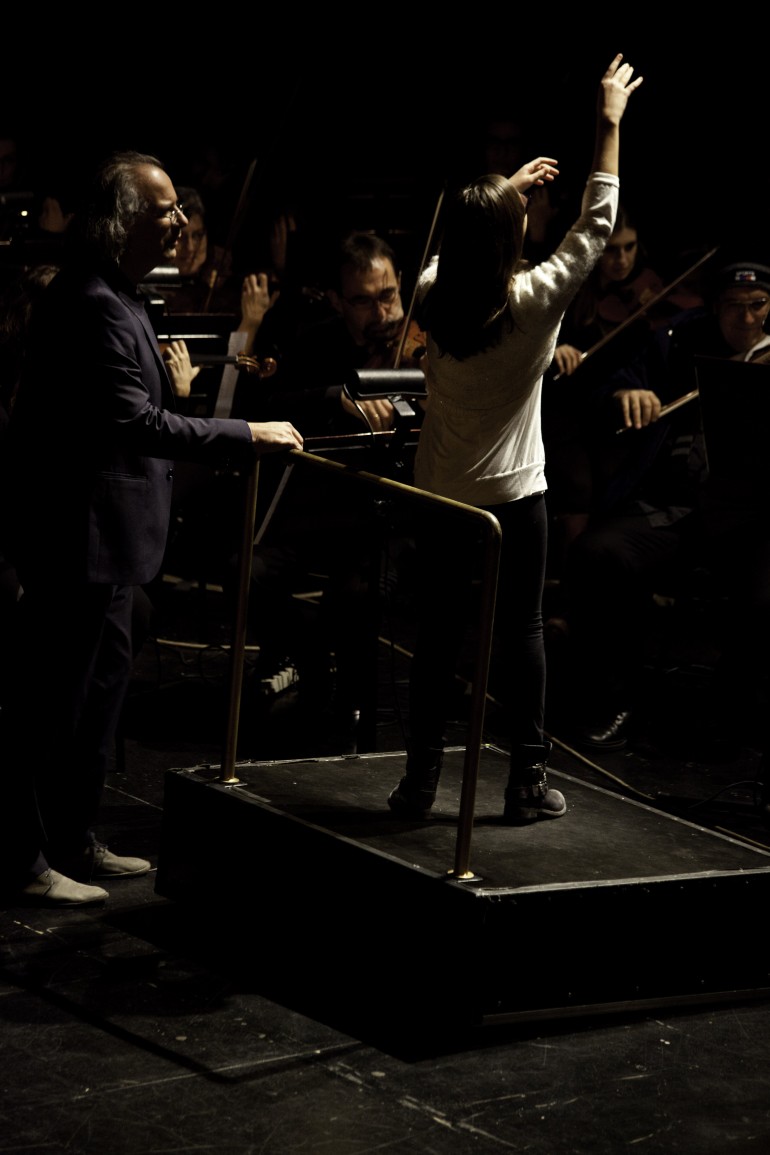
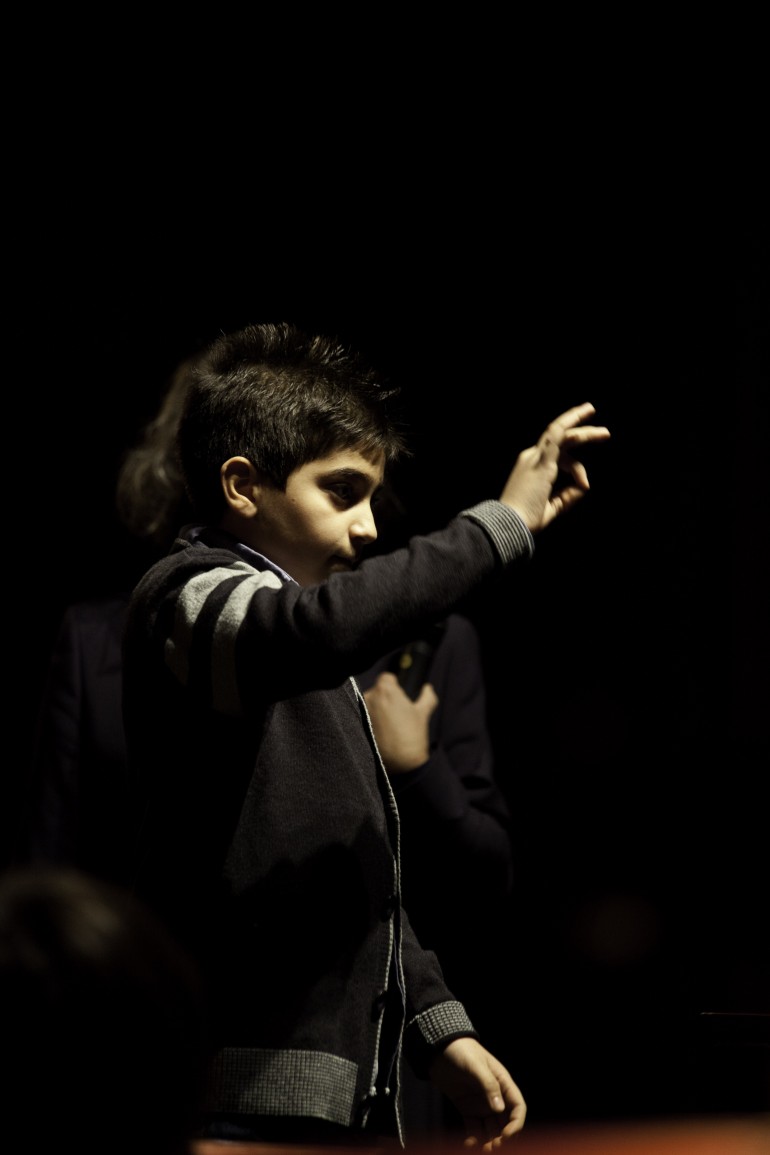
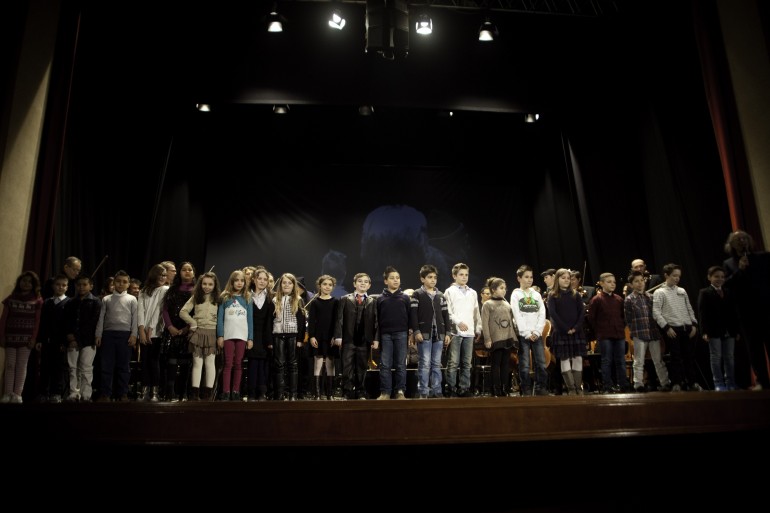
Ten young aspiring conductors and a philharmonic orchestra with 50 elements at their disposal. This is the first didactic workshop that turns children into real orchestra leaders. An experience never felt before and a unique occasion to discover that growing is also learning how to communicate with the others. Little conductors – communicating through the sound – is a didactic workshop inspired by Arturo Toscanini, one of the greatest orchestra leaders of all time.??????????

Do you know how Toscanini was so good? Definitely for his prodigious mind and his courage , but even more for his skill to communicate through music. Toscanini like any other knew how to convey the true emotions of each composers in the music performed by an orchestra. Through the power of gesture, thought and motion imparted with a simple wand, he makes people relive the genius of Giuseppe Verdi, Wagner and many others.

eduToscanini Educational has created a didactic workshop that turns children and young people into little conductors, helping them to experiment and develop their communication, expression, interpretation and leadership skills. 10 students, 10 meetings with the leader of a real Philharmonic orchestra. Three steps to overcome: the aware leader, communicating with gestures, the gesture becomes sound. These are the ingredients of a unique teaching experience.

“Nobody knows what is the maximum that can be achieved.” Arturo Toscanini

Project by Alessandro Nidipiccoli1piccoli5piccoli4piccoli3piccoli2

Posted in Lectures, Music | Tagged , , , | Leave a comment