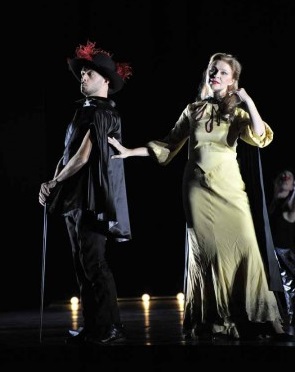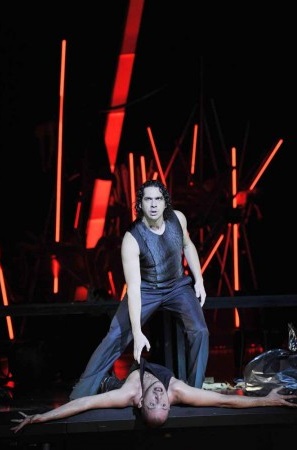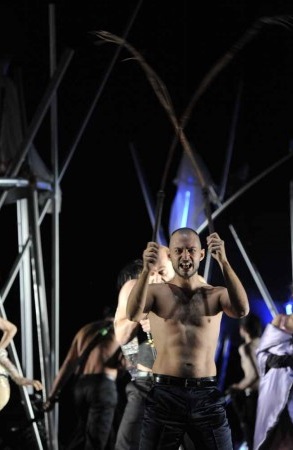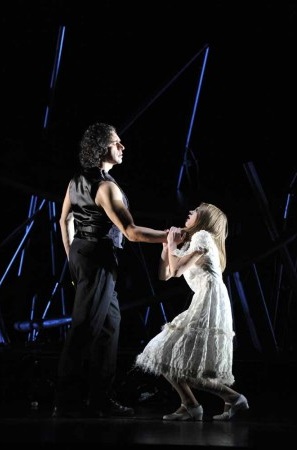
DON GIOVANNI IN BERLIN

DEUTSCHE OPER BERLIN PRESENTS
dongiovanni25Don Giovanni

Il dissoluto Punito ossia il Don Giovanni
Dramma giocoso in two acts

Wolfgang Amadeus Mozart (1756 – 1791)

Libretto by Lorenzo Da Ponte

First performed on 29. October, 1787 at Prague; Premiered at the Deutsche Oper Berlin on 16. October, 2010
In Italian language with German surtitles

Thu 20. March 2014 19:00h
Sat 29. March 2014 19:00h
Fri  4. April 2014 19:00h
Tue 27. May 2014 19:00h
Fri 30. May 2014 19:00h
Sun  8. June 2014 19:00h

3 hrs 30 mins / 1 interval

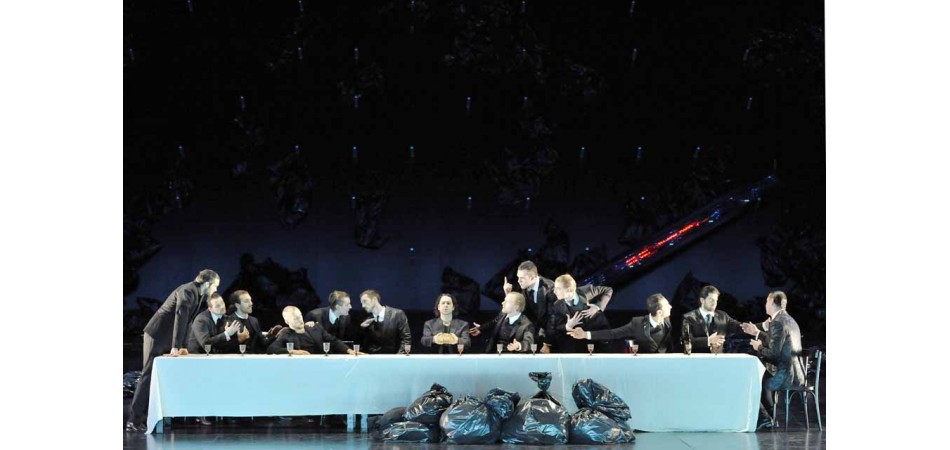
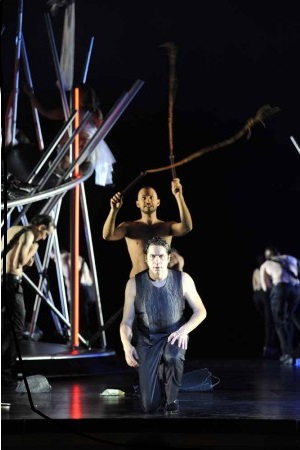
Photographs of Don Giovanni © 2010, Marcus Lieberenz
dongiovanni1
dongiovanni3dongiovanni5
dongiovanni11
dongiovanni12dongiovanni13
dongiovanni18
dongiovanni19dongiovanni20
dongiovanni23
dongiovanni24dongiovanni27

Cast

Conductor Friedemann Layer
Director Roland Schwab
Stage design Piero Vinciguerra
Costumedesign Renée Listerdal
Choir Conductor Thomas Richter
Choreographer Silke Sense
Don Giovanni Adam Plachetka
Donna Anna Burcu Uyar
Don Ottavio Joel Prieto
Commendatore Albert Pesendorfer
Donna Elvira Jana Kurucová
Leporello Matthew Rose
Masetto Seth Carico
Zerlina Martina Welschenbach
Chorus Chor der Deutschen Oper Berlin
Orchestra Orchester der Deutschen Oper Berlin

Information

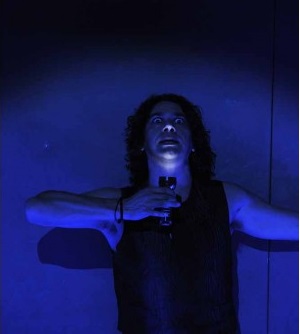
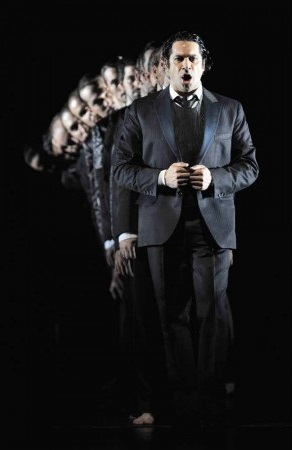
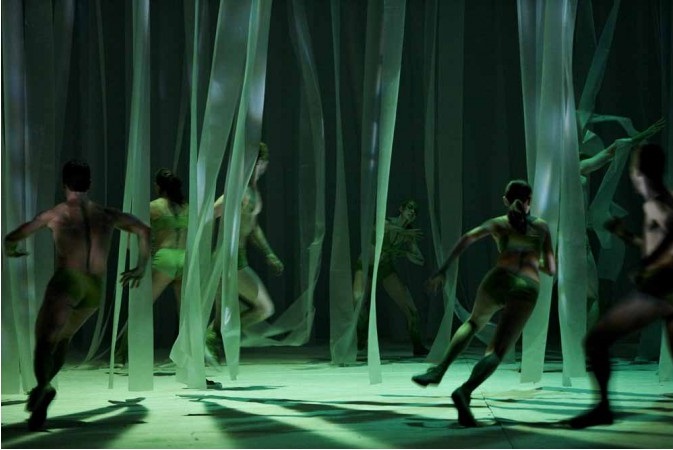
“Where have you gotten the deranged rights to which you’ve dedicated your life?”, asks George Sand of the legendary figure. He casually confides in Gottfried Benn: “I once had the dream that a young birch tree gave me the gift of a son.” No other fictional character of modern times has had more public attention than Don Juan, that “seducer of Seville”, who emerged in 1613 from the pen of a Spanish monk. Only seven years younger than his compatriot Don Quixote, since that time he has made his way through dramas, epics, novels and operas, and eerily wandered over cinema screens and plasma monitors. Against the backdrop of different moral attitudes he brags – monuments and icons – of his famous tricks, pitted against death which he casts as a stone shadow. “Mine will be hell!”, Lord Byron heard him say.

On 29 October 1787, conducted by the composer, the overture to a dramma giocoso about the race with death of DON GIOVANNI begins with a piercing chord in the Graf Nostitz National Theatre in Prague. In retrospect, in the history of music theatre, this moment can be likened to the big bang. In order to set the mood for placing himself in the role of the unbridled libertine and blasphemer, the librettist Lorenzo da Ponte had to repeatedly flirt with the daughter of his landlady. Mozart himself, who had achieved success with his FIGARO one year before, composes under enormous pressure of time for a fee of 1000 guilders. The overture is completed only by 7 p.m. on the evening of the first performance. Søren Kierkegaard sees a “bolt of lightning” that “makes its own way from the darkness of the storm cloud, more unsettled than this and yet just as steady in time. Hear the emotion of unbridled desire, hear the rustle of love, hear the murmur of temptation, hear the turmoil of seduction, hear the moment of stillness – hear, hear, hear Mozart’s DON GIOVANNI!”

The descent into hell to which the archetype of moral abjection was condemned until now is seen in terms of his soul. For his demise, the entire metaphysics of the west is called into play. But this not only confirms the indignation of the persons wronged, it also elicits dismay. At the threshold of the French revolution, the freedom that the libertine extols against the decree of humility characterises him as the very prototype of anarchy. His unbridled manner, peeled from a life designed from hormonal dictates, reflects the compulsive longings and self-realisation fantasies of generations to follow.

The 19th century will reveal his close relation to the figure of Faust, melancholically leaving him to the realm of psychoanalysis. Julia Kristeva finds in him the “son of a mother who becomes a dreamer with her husband and passes this on to her child that he may conquer all women as no one ever before”. Albert Camus finds it improbable that he could experience sadness. As with the “laughing, the victorious impudence, the erratic”, the profoundly mundane that the French philosopher diagnoses in him, can in fact be deceiving! – The restless figure ponders with D. H. Lawrence: “Where is there peace for me? The mystery must fall in love with me …”

What drives the seducer through the bedrooms of the centuries? What haunts the hunter? Who is this man really, who always means only?
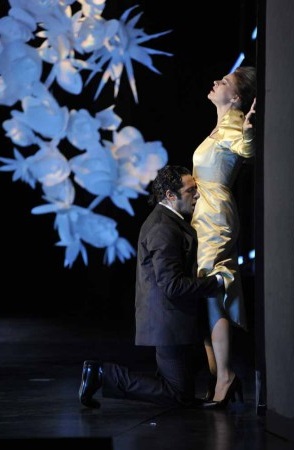
dongiovanni2 dongiovanni4 dongiovanni6 dongiovanni7 dongiovanni8 dongiovanni10 dongiovanni14 dongiovanni15 dongiovanni16 dongiovanni17 dongiovanni22 dongiovanni26* * *
Part One – The impotence of freedom
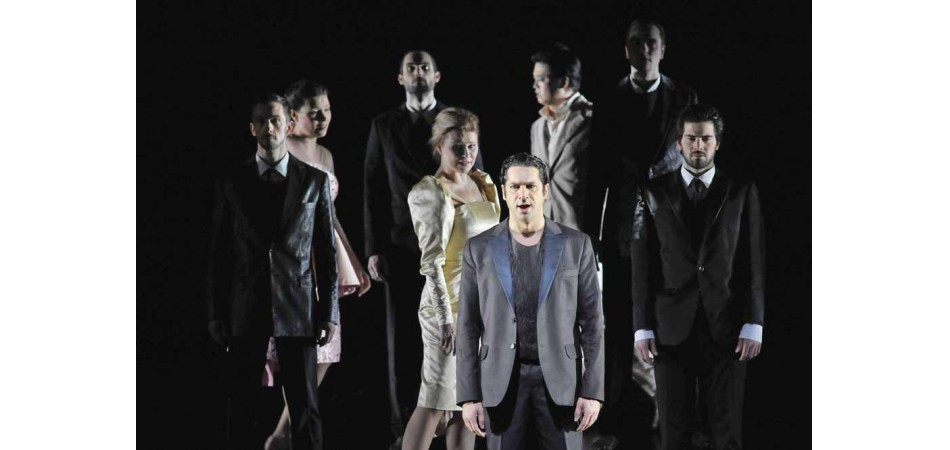
Coming out of the darkness – Don Giovanni. Now that he’s getting on in years, the “seducer of all seducers” has acquired so many faces! But who is he really?

7. The Donna Anna Syndrome
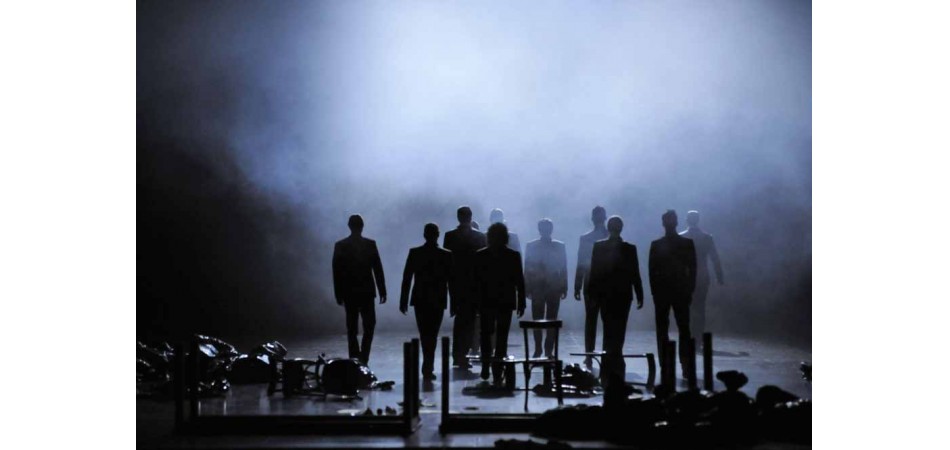
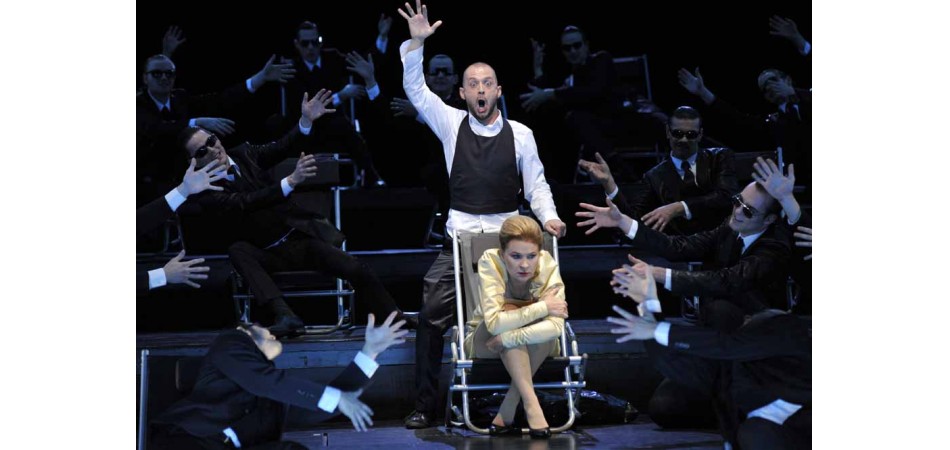
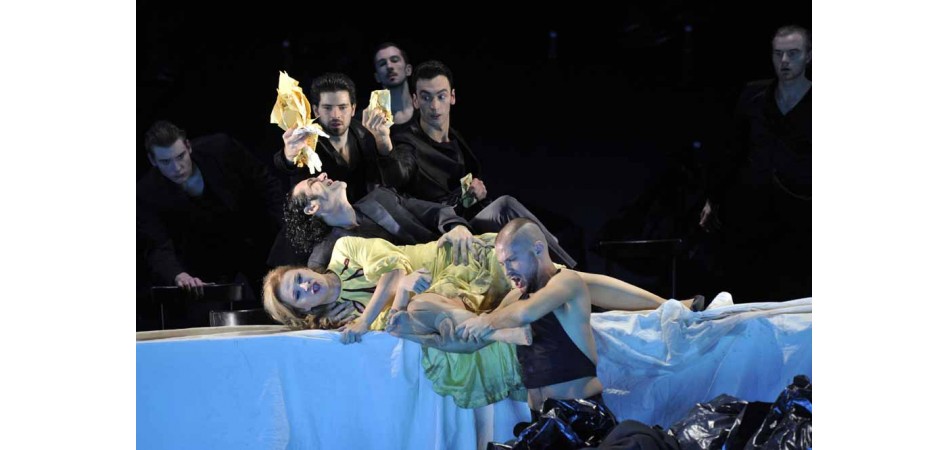
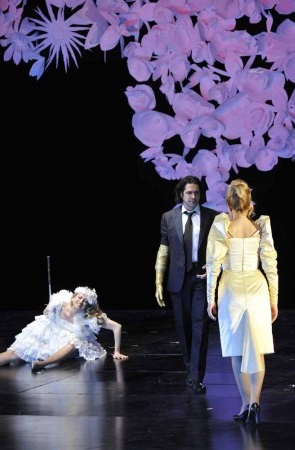
As the story goes: Don Giovanni murders the father of his lover, Donna Anna. Like so many times before! He leaves an enigmatic card beside the corpse. The countdown begins … Donna Anna conceals her affair with Don Giovanni from Don Ottavio, her groom. Seeing her father’s corpse, she swears vengeance. From now on revenge is the mantra of her troubled conscience.

dongiovanni226. The Donna Elvira Complex
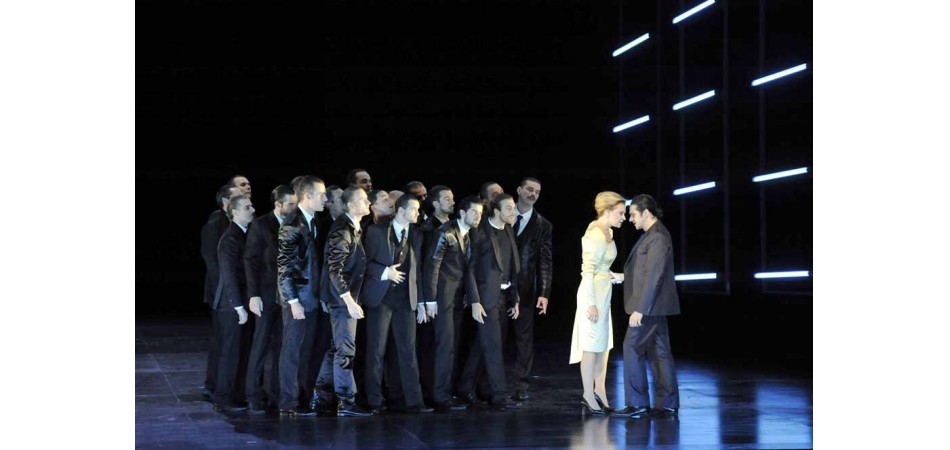
As the libretto intended it: Donna Elvira, a “discarded” lover, confronts Don Giovanni. Leporello, his servant, points out the insignificance of her own personal suffering in comparison with the countless broken hearts Don Giovanni has left in his wake. A mysterious card is also intended for Donna Elvira …

5. The Zerlina Situation
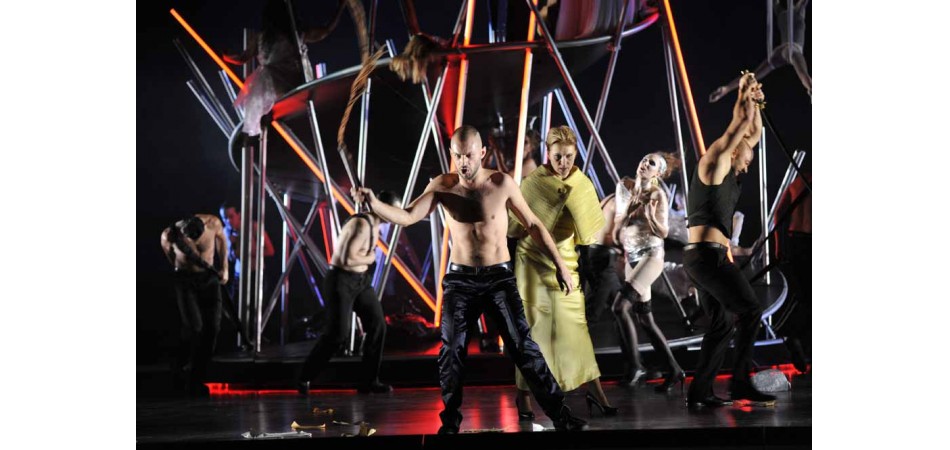
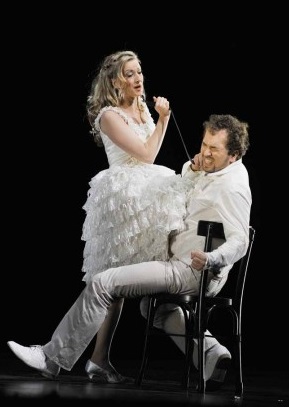
As the dramaturgy would have it: Zerlina and Masetto marry. Don Giovanni seduces the bride – his image leaves him no choice – right under the nose of Donna Elvira and the groom. And then he deals out another of his strange cards … Donna Anna and Don Ottavio find allies in Donna Elvira and Masetto for their revenge on Don Giovanni. Zerlina will be their decoy. Freedom has a party. The avengers gain entry and set upon Don Giovanni. He willingly lays his head beneath the sword raised by Don Ottavio. It’s all over now! He has long awaited this moment. Yet hope is a joke with no punch-line. Chaos, his loyal companion through the centuries, takes hold of him.

Part Two – The last temptation

dongiovanni164. Innocentia
The morning after. A girl. Dead people are heavier than broken hearts. There are still three cards left …

3. The Comedians’ Hour
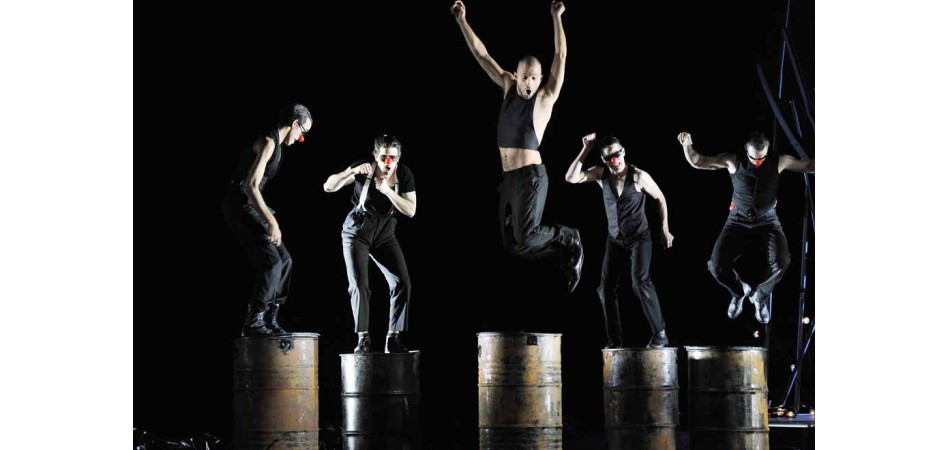
As the dramma giocoso needs it: Disguised as Don Giovanni, Leporello is supposed to distract Donna Elvira. The comedy of errors takes its course. Don Giovanni lures Masetto into a trap. – There are two cards left … Leporello’s cover is blown. He barely escapes the avengers.

2. Master of Horror
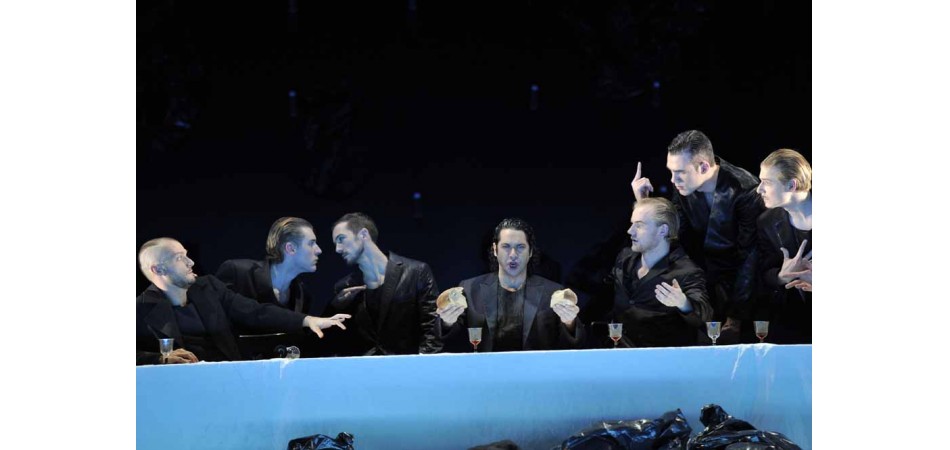
At the graveyard. The voice of the dead commander. Don Giovanni invites the dead man to join him for supper. The last one, he hopes. The course is set for the Last Judgement … On the ruins of their relationship Donna Anna, grimly holding on to her life lie, and Don Ottavio, an unspoken suspicion inside him, resign themselves to the gentle horrors their cold marriage holds in store for them. Don Giovanni still has one card to play. – The last trump …

dongiovanni151. The Don Giovanni Principle
Don Giovanni awaits his true judge. Donna Elvira beseeches him to let go of his plan, but to no avail. Too much has been said, made up, written about him. After all the centuries of interpretation, there’s no room to move. On the track of interpretations, Don Giovanni is well on the way to meeting his fate. Before long, the tribunal calls him to the dock. Heaven and hell crank up the engine of doom. The last card has been drawn. But who is it for? The countdown is over. – And once again nothing’s happened. True hell is repetition. Heading into the darkness, towards the next interpretation – Don Giovanni …

dongiovanni14  dongiovanni4  dongiovanni10 dongiovanni8 dongiovanni7 dongiovanni4 dongiovanni2 dongiovanni6 dongiovanni17

Posted in OPera | Tagged , , , , , | Leave a comment

The Trojans in Berlin, with Roberto Alagna as Énée

Deutsche Oper Berlin Presents

trojans13The Trojans

Les Troyens

Hector Berlioz (1803 – 1869)

Grand opera in five acts (two parts); Libretto by Hector Berlioz after Virgil; Premieres: 3rd, 4th and 5th acts (LES TROYENS A CARTHAGE): Paris, 4. November, 1863; 1st and 2nd acts (LA PRISE DE TROIE): Paris, 7. December, 1879; First complete performance (consecutive days): Karlsruhe, 6. and 7. December, 1890; First complete performance on a single evening: Stuttgart, 18. May, 1913; First complete full-length performance: Glasgow, 3. May, 1969; Premiere at Deutsche Oper Berlin: 5. December, 2010

In French language with German surtitles

Sun 30. March 2014 16:00h
Wed  2. April 2014 17:00h
Sun  6. April 2014 16:00h  last performance this season

Photographs Die Trojaner © bollemedia / DOB
trojans7 trojans10 trojans8

Cast

Conductor Paul Daniel
Director David Pountney
Stage design Johan Engels
Costume design Marie-Jeanne Lecca
Chorus master William Spaulding
Light design Davy Cunningham
Choreographer Renato Zanella
Énée Roberto Alagna
Chorèbe Markus Brück
Panthée Seth Carico
Narbal Tobias Kehrer
Iopas Joel Prieto
Ascagne Siobhan Stagg
Cassandre Ildiko Komlosi
Didon Béatrice Uria-Monzon
Anna Ronnita Miller
Priam Lenus Carlson
Greec military leader Marko Mimica
Hector’s shadow Andrew Harris
Hylas Alvaro Zambrano
A soldier Noel Bouley
Hélénus Clemens Bieber
Two Trojan soldiers Markus Brück
Lenus Carlson
Mercure Andrew Harris
Hécube Fionnuala McCarthy
Andromache Etoile Chaville
Chorus Chor der Deutschen Oper Berlin
Orchestra Orchester der Deutschen Oper Berlin
Dance Opernballett der Deutschen Oper Berlin

trojans12 trojans11 trojans9 trojans5

Information

“I love the Ancients, regardless of their merits and deficits, because they are not like modern people, because they are new” explained Hector Berlioz, writing in September 1850 in Le journal des débats. A present-day sceptic, he was enthralled by ancient history from an early age and developed his own contemporary perspective on these tales of antiquity, seeing them as a constantly repeated round of victories and defeats.

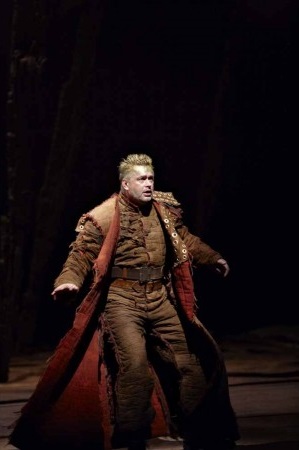
In his double opera THE TROJANS, a huge, sweeping panorama, he weaves a web of individual destinies while creating overarching perspectives and ageless formats. Berlioz presents the horror of war, harnesses insight and helplessness as the twin drivers of a cruel epic, tells of love and renunciation, of guileless guilt and inexorable fate.

Shrieks of Trojan joy open this work that is so difficult to categorise, but appearances deceive. Cassandra warns in vain of the »gift of the gods«. She foresees catastrophe for Troy, a disaster linked to the wooden horse, but is powerless to prevent it. The spirit of Hector urges Aeneas to abandon Troy, overrun by the Greeks, and found a new nation in a distant land. While he and his men flee the burning city the women, on the instigation of Cassandra, commit suicide.

The “ownfall of Troy” is followed by the second part of the story, an episode of transition that looks to the future: “The Trojans in Carthage”. The surviving male Trojans lands in Carthage, where they give military assistance to the Carthaginians and thwart the attack of King Iarbas. This alliance is reflected on a personal level, too. Dido and Aeneas discover their love for each other, but their happiness is short-lived. The ghosts of the dead Trojans appeal to Aeneas to sally forth again and fulfil his mission as set out by Hector. When Dido realises that she cannot persuade her beloved Aeneas to stay, she climbs onto the pyre and kills herself. Before she dies she proclaims her vision of the future, conjuring up a never-ending bloodbath between Carthage and the descendants of Aeneas.

This work, created between 1856 and 1858 and erratic in its refusal to submit to the artistic parameters of its time, draws heavily on Virgil and Shakespeare. It is not the intention of this retrospective work to reproduce what has gone before but rather to point up new facets and cause the tales and forms of an earlier age to bear fruit in the present day. Although baroque and bel canto opera have left their mark on this work, Berlioz considers the conflict between gods – counterpointing the struggles of the mortals – to be irrelevant to his times and decidedly baroque in character and consequently leaves it out of THE TROJANS. Berlioz throws his lot in with conservative musical credos such as consonance, melody and closed form, yet he also clashes with convention by employing unusual rhythms and tonality. Despite its echoes of grand opéra, the work does not belong to the genre. The music is ever changing and developing; one hardly ever sees the repetition that one encounters in grand opéra. Here, too, Berlioz anticipates modern compositional principles. THE TROJANS insist on autonomy that, while it is open to a plethora of ideas, seeks enlightenment and form precisely through wrestling with these ideas. It is precisely these characteristics that equip them for the present.

* * *

“I sing of warriors’ deeds, of heroes and of him who, fleeing overland from the shores of Troy, arrived by divine intervention at Lavinium, on the coast of Italy. On land and on the high seas he was subjected to severe tests of his endurance by the Olympian powers and the unconciliatory wrath of a raging Juno. He also suffered much in wars before he was able to found his cities and bring his gods to Latium – whence the Latin people, our Albanian ancestors and the topless towers of Rome!
Muse, tell me why, for what outrage and for what insult, the Queen of the gods caused an eminently respectful man like Aeneas to endure so many reverses and to assert himself in the face of such hardship. Do the gods really have so much spite in their breasts? There was an ancient city, populated by settlers from Tyre, by the name of Carthage, a place beyond Italy, far from the mouth of the Tiber, rich in treasure and a serious threat to others, as evinced in its willingness to go to war. Juno is said to have rated this city higher than any other on earth, preferring it even to Samos. It was here that she had her weaponry, her chariots, and it was this city that the goddess always wanted to see in a position of dominance over nations, if fate would have this. In any event it was her aim to have a new dynasty of Trojan stock spring up, a dynasty that would one day raze the fortresses of Tyre. To the detriment of Libya, a nation would then appear, holding sway over all others and uncowed in war. So the Fates had determined.” (Virgil: Aeneis.)

Kindly supported by Förderkreis der Deutschen Oper Berlin e. V. [Patrons and Friends]

trojans6 trojans4 trojans3 trojans2

Posted in OPera | Tagged , , , , , | Leave a comment

Paul Hindemith’s “The Long Christmas Dinner” in Estonia

logoestonia  “The Long Christmas Dinner”

Paul Hindemith’s opera in one act based on the play of the same name by Thornton Wilder

Libretto by Thornton Wilder, translated by Arne Mikk

World premiere on December 17, 1961 at Nationaltheater Mannheim

Premiere on April 12, 2014 in the Chamber Hall of the Estonian National Opera

  • Saturday, April 12, 2014 / 19:00
  • Saturday, April 19, 2014 / 19:00
  • Saturday, April 27, 2014 / 19:00longxmasdinner

“The Long Christmas Dinner” depicts 90 years in the history of the Bayard family over Christmas dinner table. The story has a serious overtone, but is lightened by touches of humour and retells about the life of different generations: their demise, growth and choices, creating a colourful summary of human nature. Paul Hindemith (1895–1963) was one of the most outstanding representatives of German neo-classicism and one of the most varied 20th century composers. His stirring music and moving arias transport the audience into a world of memory. “Long Christmas Dinner” celebrates the seemingly small and insignificant details of life that ultimately matter the most.

Staging team

  • Conductors: Vello Pähn, Mihhail Gerts
  • Stage Director: Arne Mikk
  • Designer: Kristi Soe
  • Lighting Designer: Rasmus Rembel
Posted in Music, OPera | Tagged , , | Leave a comment

Donizetti’s “La Fille du régiment” at the Royal Opera House

logoRoyalHouseLa Fille du régiment

The Royal Opera

3–18 March 2014

Main Stage

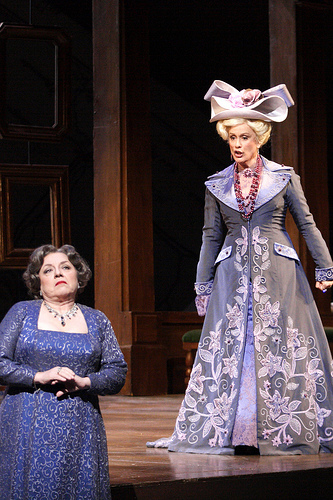
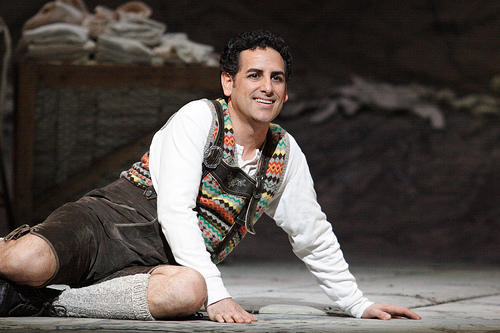
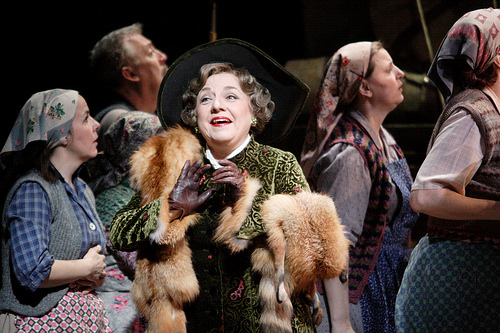
Donizetti’s entertaining opera marches onto the stage in Laurent Pelly’s production, full of irrepressible humour and catchy melodies.

fille9

Background

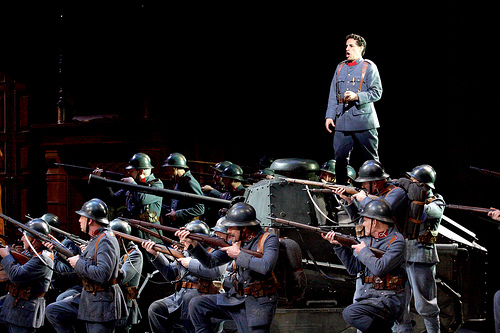
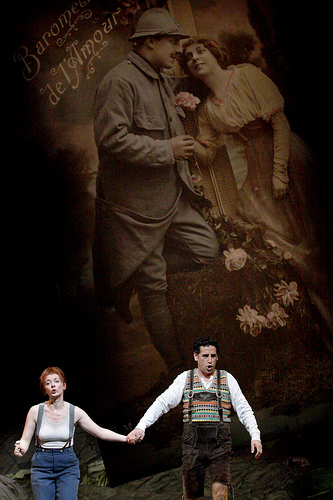
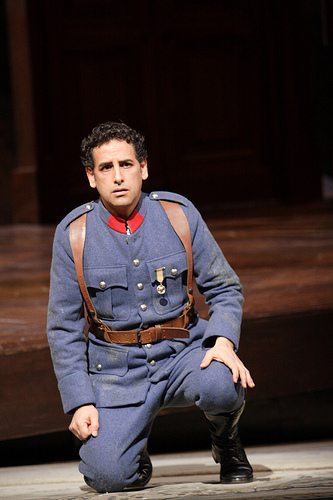
La Fille du régiment had its premiere at the Opéra-Comique in Paris in 1840. Its combination of comedy, genuine feeling and patriotic sentiment soon made it a national institution, and it was regularly revived on Bastille Day in France. The opera had a long absence from Covent Garden, but in 1966 Joan Sutherland reintroduced it to London. She played the irrepressible heroine, Marie, with Luciano Pavarotti as her lover, Tonio. La Fille returned to the Royal Opera House in 2007 in Laurent Pelly’s delightful production, which has since toured the world.

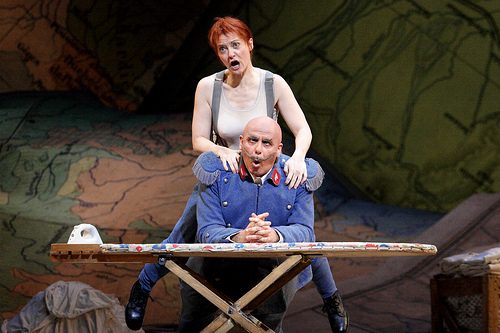
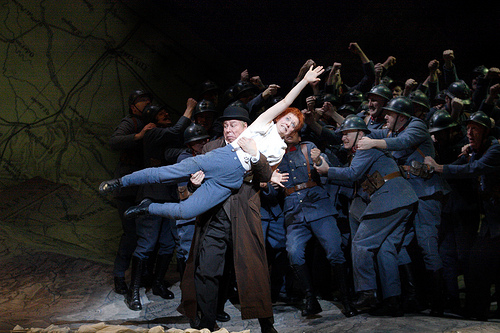
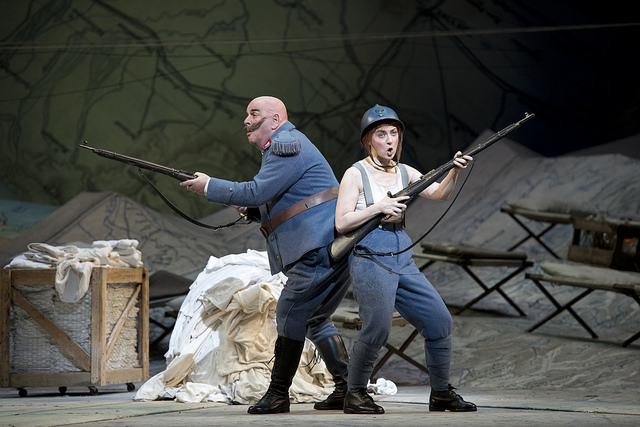
Pelly’s production fizzes with exuberant humour. It features wonderfully inventive sets: large maps evoke the mountains of Tyrol, the regiment’s camp drowns in laundry and an armoured tank bursts into a drawing room. Gaetano Donizetti’s score weaves robust, military melodies with moments of pathos. Musical highlights include the bravura tenor aria ‘Pour mon âme’, with its vertical leaps to a succession of high Cs, and the delightful duet ‘Quoi? vous m’aimez!’ in which Tonio expresses his love for Marie.

fille1 fille5 fille6 fille10

Thanks to:

Generous support from Judith Portrait

A co-production with The Vienna State Opera and the Metropolitan Opera, New York

Running time:

About 2 hours 45 minutes | Including one interval. Act One will last for about 1 hour and 20 minutes followed by a 30 minute interval. Act Two will last for approximately 55 minutes.

Credits

Director
Laurent Pelly
Dialogue
Agathe Mélinand
Set designs
Chantal Thomas
Costume designs
Laurent Pelly
Lighting design
Joël Adam
Choreography
Laura Scozzi

fille2 fille3 fille4 fille7 fille8 fille9

Border Control: La Fille du régiment’s influence on Italian opera

A look at the surprising influence Donizetti’s charming opéra comique had on 19th-century Italian opera.

By Francisco Izzo (Music scholar and author.)

fille11

Alan Opie and Patrizia Ciofi in La Fille du régiment, The Royal Opera © ROH/Bill Cooper, 2012

The autumn of 1840 was a difficult season for opera buffa at La Scala, Milan. On 5 September, the audience booed the young Giuseppe Verdi’s Un giorno di regno off the stage. The opera was one of the composer’s only two comedies – the other being Falstaff. Less than a month later, on 3 October, Gaetano Donizetti’s La Fille du régiment received its Italian premiere as La figlia del reggimento, largely with the same cast as Un giorno di regno. Donizetti’s piece fared better than Verdi’s, but its initial reception in Milan was not enthusiastic – hardly comparable to the French original, which had taken Paris by storm.

A review by the prominent critic Pietro Cominazzi published in the music journal Il Figaro a few days after the premiere explained the disappointing reception:

You must imagine what kind of welcome this little foreign farce, succinct, mindless, could have received, repeating continuously the boldest and most lowbrow songs of the barracks!”

The Italian version of La Fille du régiment, however, went on to be staged widely during the 1840s and beyond. La figlia del reggimento easily outpaced the original French version for much of the 20th century, prevailing not only in Italy but also internationally. Prima donnas from Lina Pagliughi to Maria Callas and Edita Gruberová have performed and recorded selections in Italian. In fact it was only following Joan Sutherland and Luciano Pavarotti’s legendary 1967 recording that the original French version became the favourite of today’s audiences, produced regularly on the world’s leading opera stages.

La figlia del reggimento rapidly became assimilated into the Italian opera buffa repertory. This was made possible not only by the nationality of its composer, but also by ways in which it connected to dramatic themes and comedic stereotypes of 19th-century Italian opera. One of those themes is the presence of military characters. In that period the theme resonated not only with the timeless comic trope of the miles gloriosus but also with current historical circumstances; since the Napoleonic wars, foreign troops had become a regular presence in Italy, one that the locals often perceived with resentment and that served as a powerful visual and auditory reminder that no military and political autonomy existed in most Italian states.

Despite the initial reaction of the audience at La Scala and Cominazzi’s contempt for this ‘little foreign farce’, there are important connections between La Fille du régiment and the culture of 19th-century Italian opera. La figlia del reggimento probably struck a familiar chord because of the presence of deeply heartfelt moments, especially in the splendid Act II aria for the protagonist, ‘Par le rang et par l’opulence’, where the soprano fulfills the task of making many in the audience shed a few tears in the middle of a lighthearted comedy – the female equivalent of L’elisir d’amore‘s gorgeous ‘Una furtiva lagrima’. In an age when Italian opera buffa, thanks also to Donizetti himself, had become prone to sentimental effusiveness, the audience probably expected nothing less.

This is an extract from Francesco Izzo’s article ‘Border Control’, which can be read in full in the red programme book, available in the theatre at performance times and from the ROH Shop.

Posted in OPera | Tagged , , , , | Leave a comment

George Frideric Handel’s HERCULES in Toronto

Canadian Opera Company 

PRESENTS:

HERCULES

George Frideric Handel

Peter Sellars returns to direct a dream cast in his acclaimed production of Handel’s timeless and poignant tragedy.

Alice Coote as Dejanira, Eric Owens as Hercules, Lucy Crowe as Iole, Marckarthur Johnson as a soldier and Richard Croft as Hyllus in the Canadian Opera Company/Lyric Opera of Chicago (LOC) co-production of Hercules, 2011, LOC. Photo: Dan Rest

The ancient Greek tragedian Sophocles was also a war general who knew first-hand the devastating psychological traumas that imperilled returning veterans. With Hercules – Handel’s take on Sophocles’ play – Sellars creates a healing work in which the untold horrors of war and the unspoken complications of reunion find their voice.

APRIL 5 to 30, 2014


On stage at the Four Seasons Centre, 145 Queen St. W., Toronto.
Performance time is approximately three hours, 15 minutes including one intermission.
Sung in English with English SURTITLES™.

Cast 

Hercules: Eric Owens

Dejanira: Alice Coote

Hyllus: Richard Croft

Lichas: David Daniels

Iole: Lucy Crowe

Creative Team

Conductor: Harry Bicket

Director: Peter Sellars

Set Designer: George Tsypin

Costume Designer: Dunya Ramicova

Lighting Designer: James F. Ingalls

Chorus Master: Sandra Horst

With the COC Orchestra and Chorus


Lucy Crowe as Iole and Eric Owens as Hercules  in the Canadian Opera Company/Lyric Opera of Chicago co-production of Hercules. Photo: Dan Rest © 2011 (Lyric Opera of Chicago)


SYNOPSIS

Act I

In Hercules’ palace, Dejanira waits for news of her husband Hercules, the world’s strongest man, who has been away at war. Dejanira fears he will never return. Their son Hyllus reports the priests have prophesized his father’s imminent death, with a vision of Hercules’ corpse surrounded by flames. Hyllus swears to travel to the ends of the earth to find his father. At that moment, the herald Lichas announces Hercules is alive, having conquered Oechalia, and is on his way home. He brings with him prisoners, including the lovely princess Iole as a war trophy. Iole and her virgin attendants are led in, mourning their loss of liberty. Iole bewails the death of her father at Hercules’ hands, which contrasts sharply with the jubilant celebration of the hero.


Act II

Back in the palace, Dejanira admits she is threatened by Iole, fearing that sorrow makes beautiful women irresistible. With little evidence, she believes Hercules has betrayed her with Iole. Iole denies it. Hyllus – who has fallen in love with the captive princess – tries to convince Iole to return his feelings, but she refuses his advances, saying she cannot love the son of the man who killed her father and destroyed her homeland.

Meanwhile, Dejanira confronts Hercules, chastising him for trading the glory of victory for the shame of infidelity. Hercules denies any wrongdoing, but this does little to allay Dejanira’s suspicions. Suddenly, Dejanira remembers a vest given to her years before by the centaur Nessus, after he suffered a fatal poison arrow fired by Hercules. The blood-soaked garment is said to “revive the expiring flame of love.” With hope of rekindling their passion, Dejanira gives the vest to Lichas and asks him to deliver the peace offering to her husband. Iole enters, and Dejanira apologizes for her earlier jealousy. Iole expresses happiness for the royal couple’s love and “sorrow at her own predicament,” and Dejanira promises to do what she can to secure the princess’s release.


Act III

A violent and intense overture makes it clear that all is not well. Lichas tells the Trachinians of the terrible events he has just witnessed – the coat has fatally burnt Hercules’s flesh. His death is inevitable. Railing against Dejanira for causing his demise, Hercules asks Hyllus to burn his body on a funeral pyre atop Mount Oeta. At the palace, Dejanira’s realization that she has unwittingly carried out Nessus’s revenge torments her, and she teeters on the brink of insanity. Iole pities the woes of the couple, as she decides that she is the guilty cause. A priest then tells Dejanira that an eagle has transported Hercules’ spirit to Olympus, to join the gods for eternity. The priest also announces that the gods have declared Iole and Hyllus destined for each other. The two pledge their love, and the priest and chorus praise Hercules for bringing peace and liberty to all.

George Frideric Handel

George Frideric Handel, born in Halle, Prussia, on Feb. 23, 1685, was discouraged by his parents from studying music as a boy. Luckily, his father’s employer the Duke of Saxe-Weissenfels heard young Handel playing the organ and persuaded his parents to let him have a musical education. In 1702 Handel became the organist at the Calvinist Cathedral of Halle. It is believed that he visited Berlin at that time, where he met Giovanni Bononcini and Attilio Ariosti and developed an interest in composing operas.

In 1703 Handel went to the opera house in Hamburg as second violinist. The resident composer Reinhard Keiser had to leave town quickly owing to large debts. He left an opera unproduced and when Handel was asked to set the same libretto to new music, he had his first production in 1704 of Almira, which was highly successful.

Ferdinando de’ Medici encouraged Handel to travel to Florence to familiarize himself with the Italian style. There he composed operas and church music (including the oratorio La resurrezione) and had his music performed in Florence, Naples, Rome and Venice, all the while perfecting his ability to set Italian words to music. His opera Agrippina opened the 1709 carnival and was a huge success.

In 1710 he took the position of Kapellmeister to the elector of Hanover (and future King George II of England). Handel traveled to England in 1710, a time when London audiences were clamouring for Italian opera. Until then, the productions that had been mounted were adaptations of Italian operas, many of these versions arranged by Nicola Haym. Handel was to present the first real Italian opera written for London and performed by Italians (the castrati were especially favoured by audiences): Rinaldo premiered in 1711 and was a sensation.

In 1713 Handel was released from his employment in Hanover, possibly because he had expressed a desire to settle in London. He composed more operas to mixed success but was also writing church music as well, including Te Deum (1713) and Jubilate (1714), the latter of which had its first performance for the new king, the former elector of Hanover. For his music for the church and the court, Handel was awarded a pension. 1717 saw the premiere of his Water Music. That same year he took a position with the Earl of Carnarvon (soon to be Duke of Chandos) in London where he wrote 11 anthems and two dramatic works, Acis and Galatea and Esther.

In 1719 Handel was appointed the musical director of the newly founded Royal Academy of Music, for which he wrote a dazzling series of operas: Rodelinda, Giulio Cesare, Giulio Ottone, and Admeto, ending when the Academy closed in 1728 due to lack of funds. In 1723 Handel took British naturalization. Beginning in 1729 he launched a series of opera seasons at the King’s Theatre. Works included Acis and Galatea, Orlando, Ariodante and Alcina. In 1741 Messiah was premiered in Dublin and Handel stopped composing operas. From then, his work was taken up with oratorios, (including Semele, Samson, Belshazar and Judas Maccabaeus), orchestral works (including the Concerto grosso, Op. 6, 1740) and revivals of his many operas. When Handel died in London on April 14, 1759, he was buried in Westminster Abbey.

He was, and is still acclaimed as, a supreme artist of the Baroque era. His powerful, beautiful and vividly dramatic music is shown in all his works, including the English oratorio, a genre he created.


Posted in Music, OPera | Tagged , , , , , , , , , | 1 Comment

“A View from the Bridge” in Detroit

DETROIT OPERA HOUSE Presents:

viewBridge551

A View from the Bridge

Opera in two acts

Music: William Bolcom
Libretto: Arnold Weinstein and Arthur Miller
Premiere: Chicago, 1999

Running time: about 2.5 hours
Sung in English

Eddie Carbone is an Italian American longshoreman in the Red Hook section of Brooklyn in the 1950s. When Rodolfo immigrates to America and falls in love with Eddie’s niece, Eddie is unable to come to terms, which leads to tragedy. Libretto by Arnold Weinstein and Arthur Miller, based on Miller’s play of the same name. Music by Grammy and Pulitzer winner William Bolcom. Not to be missed!

Sat Apr 5, 2014 730p

Wed Apr 9, 2014 730p

Fri Apr 11, 2014 730p

Sat Apr 12, 2014 730p

Sun Apr 13, 2014 230p

kimJosephson200b.jpgKIM JOSEPHSON
Baritone
Role: Eddie
kiriDeonarine200b.jpgKIRI DEONARINE
Soprano
Role: Catherine
ericMargiore200.jpgERIC MARGIORE
Tenor
Role: Rodolfo
Dates: November 16, 20, 23
 jonathonLasch200.jpg

JONATHAN LASCH
Baritone
Role: Marco


Act I

In Red Hook, Brooklyn, in the 1950’s, the lawyer Alfieri leads a chorus of neighborhood people in telling the story of dockworker Eddie Carbone.

Eddie has arranged for two of his wife Beatrice’s cousins from Italy to come to America illegally, as “submarines”, and work on the docks. Beatrice’s niece Catherine lives with them; Eddie is overprotective, complaining about her clothes, and only reluctantly agrees to let her take a job as a stenographer.

The submarines arrive, Marco and Rodolpho. Marco has a wife and children in Italy, but Rodolpho is single, attractive, and “practically blond”; Catherine is immediately attracted to him. Rodolpho tells of his plans to return to Italy with enough money to buy a motorcycle to deliver messages on, and explains that he once got a job singing in a restaurant. When he starts to sing, Eddie warns him to keep a low profile, but Catherine is clearly impressed.

As the weeks pass, Catherine and Rodolpho are spending more time together, and Eddie complains to Beatrice that Rodolpho only wants to marry her so he can be a citizen. But Beatrice has a different problem; Eddie has been neglecting her for months. Eddie confronts Catherine when she gets home, but Beatrice comforts her, warning her that Eddie’s attitude may be jealousy.

Eddie goes to Alfieri to see if the law can help him stop the marriage, claiming that he thinks Rodolpho is gay. But Alfieri warns Eddie that he has to let Catherine go, telling him that the only way to stop the wedding would be to report Rodolpho to Immigration, which the neighborhood would see as a betrayal.

Instead, Eddie taunts Rodolpho with his effeminate ways, and under the pretense of teaching him to box, knocks him down. Marco, annoyed with Eddie, challenges him to a contest of strength and wins, as Rodolpho dances with Catherine.

Act II

While Beatrice is Christmas shopping and Eddie and Marco are at work, Catherine and Rodolpho are left alone in the apartment. Rodolpho reassures her that he loves her, but refuses to return to Italy with her to starve. He tells her she has to leave Eddie’s house.

When Eddie returns, drunk, and sees the two of them coming out of the bedroom, he tries to throw Rodolpho out. When Catherine tries to stop him, he grabs her and kisses her passionately; when Rodolpho intervenes, Eddie kisses him as well, claiming that “he likes it.”

Later, Eddie tells the lawyer that he’s sure now that Rodolpho is gay. Alfieri warns Eddie of what will happen if he turns the submarines in to Immigration, but he still makes the phone call. When he learns that two more submarines have arrived, he tries to get them all out, but Immigration arrives before any of them can escape. As he is taken away, Marco spits in Eddie’s face, accusing him in front of the crowd. Eddie claims to be innocent, but his neighbors turn away and refuse to speak to him.

In prison, Marco is angry that the law has no punishment for Eddie, who is sending him back to poverty and dooming his children to die of hunger.

Beatrice tries to convince Eddie to come to Catherine and Rodolpho’s wedding, but he refuses, until Marco apologizes for accusing him. Rodolpho tells Eddie that Marco is out of prison and looking for Eddie, but Eddie refuses to leave. Beatrice tries to tell Eddie that what he wants is not Marco’s apology but Catherine, but it is too late; Marco has arrived. The two men fight, and when Eddie pulls a knife, Marco forces it back into Eddie’s chest. As he dies in Beatrice’s arms, Alfieri and the chorus reflect on the uselessness and inevitability of Eddie’s downfall.

Posted in Music, OPera | Tagged , , , , , , , , | Leave a comment

LA BOHEME in Manitoba

Manitoba Opera 35th Anniversary Season

PRESENTS:


La BoehemeSaturday, April 5, 8pm
Tuesday, April 8, 7pm
Friday, April 11, 8pm

Music by Giacomo Puccini
Libretto by Giuseppe Giacosa and Luigi Illica
Sung in Italian with projected English translations.

They’re young, in love, and in Paris

Embrace one of the most romantic operas of all time, a coming-of-age story about love and loss set in the Latin Quarter of Paris in the 1830s.

In a cold artists’ attic on Christmas Eve, a bohemian poet falls in love with a shy seamstress. When Mimi takes ill, Rodolfo leaves her in the hope that she’ll find a wealthy suitor who can afford to heal her.

But before spring can come to Paris, they learn that love is stronger than any medicine.

Puccini combines this heartbreaking story with soaring melodies to create his greatest opera.

La Bohème

Music by Giacomo Puccini
Libretto by Giuseppe Giacosa and Luigi Illica, based on the novel Scènes de la Vie de Bohème
by Henri Murger
First performance: Teatro Reggio, Turin, February 1, 1896

ACT I.
Paris, Christmas Eve, c. 1830. In their Latin Quarter garret, the painter Marcello and poet Rodolfo try to keep warm by burning pages from Rodolfo’s latest drama. They are joined by their comrades — Colline, a young philosopher, and Schaunard, a musician who has landed a job and brings food, fuel and funds. But while they celebrate their unexpected fortune, the landlord, Benoit, arrives to collect the rent. Plying the older man with wine, they urge him to tell of his flirtations, then throw him out in mock indignation. As the friends depart for a celebration at the nearby Café Momus, Rodolfo promises to join them soon, staying behind to finish writing an article. There is another knock: a neighbor, Mimì, says her candle has gone out on the drafty stairs. Offering her wine when she feels faint, Rodolfo relights her candle and helps her to the door. Mimì realizes she has dropped her key, and as the two search for it, both candles are blown out. In the moonlight the poet takes the girl’s shivering hand, telling her his dreams. She then recounts her solitary life, embroidering flowers and waiting for spring. Drawn to each other, Mimì and Rodolfo leave for the café.

ACT II.
Amid shouts of street hawkers, Rodolfo buys Mimì a bonnet near the Café Momus before introducing her to his friends. They all sit down and order supper. A toy vendor, Parpignol, passes by, besieged by children. Marcello’s former lover, Musetta, enters ostentatiously on the arm of the elderly, wealthy Alcindoro. Trying to regain the painter’s attention, she sings a waltz about her popularity. Complaining that her shoe pinches, Musetta sends Alcindoro to fetch a new pair, then falls into Marcello’s arms. Joining a group of marching soldiers, the Bohemians leave Alcindoro to face the bill when he returns.

ACT III.
At dawn on the snowy outskirts of Paris, a Customs Officer admits farm women to the city. Musetta and revelers are heard inside a tavern. Soon Mimì walks by, searching for the place where the reunited Marcello and Musetta now live. When the painter emerges, she pours out her distress over Rodolfo’s incessant jealousy. It is best they part, she says. Rodolfo, who has been asleep in the tavern, is heard, and Mimì hides; Marcello thinks she has left. The poet tells Marcello he wants to separate from his fickle sweetheart. Pressed further, he breaks down, saying Mimì is dying; her ill health can only worsen in the poverty they share. Overcome, Mimì stumbles forward to bid her lover farewell as Marcello runs back into the tavern to investigate Musetta’s raucous laughter. While Mimì and Rodolfo recall their happiness, Musetta quarrels with Marcello. The painter and his mistress part in fury, but Mimì and Rodolfo decide to stay together until spring.

ACT IV.
Some months later, Rodolfo and Marcello lament their loneliness in the garret. Colline and Schaunard bring a meager meal. The four stage a dance, which turns into a mock fight. The merrymaking is ended when Musetta bursts in, saying Mimì is downstairs, too weak to climb up. As Rodolfo runs to her, Musetta tells how Mimì has begged to be taken to her lover to die. While Mimì is made comfortable, Marcello goes with Musetta to sell her earrings for medicine, and Colline leaves to pawn his cherished overcoat. Alone, Mimì and Rodolfo recall their first days together, but she is seized with coughing. When the others return, Musetta gives Mimì a muff to warm her hands and prays for her life. Mimì dies quietly, and when Schaunard discovers she is dead, Rodolfo runs to her side, calling her name.

The Artists

 
Eric Fennell

Rodolfo
Eric Fennell
“…an achingly beautiful voice…”
– Opera News

Danielle Pastin

Mimi
Danielle Pastin
“…a lovely demeanor and irresistable creamy timbre.”
– Opera News

Keith Phares

Marcello
Keith Phares
“…vocally superb and dramatically excellent.”
– Seattle Times

Lara Ciekiewicz

Musetta
Lara Ciekiewicz
“Stellar performance…a brilliant Musetta.”
– Montreal Gazette

Brian Deedrick

Director
Brian Deedrick

Daniel Lipton

Conductor
Daniel Lipton

Posted in Music, OPera | Tagged , , , , , , , , | Leave a comment

“DON QUIXOTE” at the San Diego Opera

San Diego Opera

PRESENTS

 Don Quixote

DON QUIXOTE

by Jules Massenet

In the magical world of Don Quixote’s Spain, the eccentric knight pursues his impossible dream of capturing the heart of Dulcinea, his idealized woman, who sends him on a quest to recover her stolen necklace. With his loyal sidekick Sancho, he tilts at giant windmills, confronts bandits, and is nearly killed, but achieves his goal. However, when he returns with the prize, he is mocked, scorned and rejected. In one of the most emotional scenes in opera, the delirious Quixote dies believing he hears Dulcinea’s voice calling to him from a distant star.

Pulsating with Spanish rhythms, dances and color, Don Quixote welcomes the return of the brilliant Ferruccio Furlanetto, who has conquered opera houses from New York to Moscow, Vienna to Paris and Madrid to Budapest. The great Italian bass is reunited with Eduardo Chama as Sancho Panza, a role he has sung to acclaim in Madrid, Palermo and Buenos Aires. Singing the seductive Dulcinea for the first time is the beautiful Anke Vondung, praised here as Octavian in Der Rosenkavalier, coming fresh from performances at Dresden Opera, Palermo, Munich and Hamburg. Karen Keltner, a specialist in French repertoire, conducts the opera once more and Keturah Stickann directs this emotional and moving production.

The running time is approximately 2 hours and 16 minutes including one intermission.
Sung in French with English translations displayed above the stage.

DON QUIXOTE (Don Quichotte)

ACT I – A square in front of Dulcinea’s house

A festival is being celebrated, as four hopeful admirers of Dulcinea serenade her. She explains philosophically that being adored is not enough. She withdraws as the crowd acclaims the arrival of the eccentric Knight and his squire, Sancho. Don Quixote is riding on his horse Rosinante, and Sancho is on a donkey. Delighted by the attention of the crowd, Quixote tells a reluctant Sancho to throw them money. After the crowd disperses, Quixote himself serenades Dulcinea, but is interrupted by Juan, a jealous admirer of Dulcinea. A sword fight follows, interrupted by Dulcinea herself. She is charmed by Quixote’s antique attentions. The old man offers her his devotion and a castle. She suggests instead that he might retrieve a pearl necklace of hers stolen by Ténébrun, a bandit chief. He undertakes to do so as, to his surprise, Dulcinea rejoins her men friends. Recovering his composure, and convinced she loves him, Quixote stands guard outside her window.

ACT II – In the countryside

On a misty morning, Don Quixote and Sancho enter, the Knight composing a love poem. Sancho delivers a grand tirade against their expedition, against Dulcinea and against women in general. As the mists disperse, Quixote sees windmills which he mistakes for giants. To Sancho’s horror, Quixote attacks them, crying out the name of Dulcinea.

ACT III – In the mountains

Don Quixote and Sancho are searching for the bandits, who, Quixote is convinced, are nearby. Sancho goes to sleep while Quixote stands guard. The bandits suddenly appear and after a brief fight take the knight prisoner. Sancho escapes. Surprised by the defiance of the old man, the bandits give him a beating and intend to kill him, however Quixote’s reply moves Ténébrun, the bandit chief, to mercy. Quixote explains his mission and the necklace is returned to him. The bandits ask for the blessing of the noble knight before he leaves.

ACT IV – A garden

A party is in progress, but Dulcinea is melancholy. Rousing herself, she snatches a guitar and sings and leaves. Sancho and Don Quixote arrive. While waiting for Dulcinea, Sancho asks for his reward to which Quixote responds with vague promises of an island, a castle and riches. Dulcinea and her party greet the Knight who returns the necklace to universal acclaim. However when he asks Dulcinea to marry him, Quixote is greeted with laughter. Taking pity, Dulcinea tells the others to leave, apologizes and explains that her destiny and her way of life are different from his. She kisses him on the forehead and leaves. When partygoers make fun of the old man, Sancho vigorously reproaches them, and takes his master away.

ACT V – A mountain pass

On a clear starry night, Don Quixote is dying. He remembers having promised Sancho an island as his reward, and offers him an isle of dreams. As he dies, Quixote sees a star shining brightly above, and believes he hears the voice of Dulcinea beckoning to him.

THE CAST

Please click an artist’s name to read more.

San Diego Opera’s performances take place at the Civic Theatre, at the intersection of Third Avenue and B Street in downtown San Diego.

Posted in Music, OPera | Tagged , , , , , , , | Leave a comment

New Orleans Opera presents “La bohème”

nooa-logo1

 presents:

Puccini’s La bohème

April 4, 2014 – 8:00 PM
April 6, 2014 – 2:30 PM
Mahalia Jackson Theater for the Performing Arts

BohemeWebBlock-300x210

 UNDERSTAND EVERY WORD Sung in Italian with English texts projected above the stage.

Starving artists in love in Paris— what can go wrong?

The tragic love story of Mimì and Rodolfo, set to Puccini’s immortal music, never loses its power to move audiences. Don’t miss this quintessential tale of love and loss set in Bohemian 19th-century France and fully captured by the lyrical sumptuousness of one of opera’s most melodic and beautiful scores.

FALL IN LOVE AGAIN!

Listen below to learn more about La bohème.

La bohème Synopsis

ACT I. In their Latin Quarter garret, the near-destitute artist Marcello and poet Rodolfo try to keep warm on Christmas Eve by feeding the stove with pages from Rodolfo’s latest drama. They are soon joined by their roommates—Colline, a young philosopher, and Schaunard, a musician, who brings food, fuel, and funds he has collected from an eccentric student. While they celebrate their unexpected fortune, the landlord, Benoit, comes to collect the rent. Plying the older man with wine, they urge him to tell of his flirtations, then throw him out in mock indignation at his infidelity to his wife. As his friends depart to celebrate at the Café Momus, Rodolfo promises to join them later, remaining behind to try to write. There is another knock at the door; the visitor is a pretty neighbor, Mimì, whose candle has gone out on the drafty stairway. No sooner does she enter than the girl feels faint; after reviving her with a sip of wine, Rodolfo helps her to the door and relights her candle. Mimì realizes she lost her key when she fainted, and, as the two search for it, both candles are blown out. In the darkness, Rodolfo finds the key and slips it into his pocket. In the moonlight the poet takes the girl’s shivering hand, telling her his dreams (“Che gelida manina”). She then recounts her life alone in a lofty garret, embroidering flowers and waiting for the spring (“Mi chiamano Mimì”). Rodolfo’s friends are heard outside, urging him to join them; he calls back that he is not alone and will be along shortly. Expressing their joy in finding each other (“O soave fanciulla”), Mimì and Rodolfo embrace and slowly leave, arm in arm, for the café.

ACT II. Amid the shouts of street hawkers, Rodolfo buys Mimì a bonnet near the Café Momus and then introduces her to his friends; they all sit down and order supper. The toy vendor Parpignol passes by, besieged by eager children. Marcello’s former sweetheart, Musetta, makes a noisy entrance on the arm of the elderly but wealthy Alcindoro. The ensuing tumult reaches its peak when, trying to regain Marcello’s attention, she sings a waltz about her popularity (“Quando me’n vo’”). She complains that her shoe pinches, sending Alcindoro off to fetch a new pair. The moment he is gone, she falls into Marcello’s arms and tells the waiter to charge everything to Alcindoro. Soldiers march by the café, and as the bohemians fall in behind, Alcindoro rushes back with Musetta’s shoes.

ACT III. At dawn on the snowy outskirts of Paris, a customs official admits farm women to the city. Merrymakers are heard within a tavern. Soon Mimì wanders in, searching for the place where Marcello and Musetta now live. When the painter emerges, she tells him of her distress over Rodolfo’s incessant jealousy (“O buon Marcello, aiuto!”). She says she believes it is best that they part. Rodolfo, who has been asleep in the tavern, wakes and comes outside. Mimì hides nearby, though Marcello thinks she has gone. The poet first tells Marcello that he wants to separate from his sweetheart, citing her fickleness; pressed for the real reason, he breaks down, saying that her coughing can only grow worse in the poverty they share. Overcome with tears, Mimì stumbles forward to bid her lover farewell (“Donde lieta uscì”) as Marcello runs back into the tavern hearing Musetta’s laughter. While Mimì and Rodolfo recall past happiness, Musetta dashes out of the inn, quarreling with Marcello, who has caught her flirting (“Addio dolce svegliare”). The painter and his mistress part, hurling insults at each other, but Mimì and Rodolfo decide to remain together until spring.

ACT IV. Now separated from their girlfriends, Rodolfo and Marcello lament their loneliness in their garret (“O Mimì, tu più non torni”). Colline and Schaunard bring a meager meal; to lighten their spirits the four stage a dance, which turns into a mock duel. At the height of the hilarity Musetta bursts in to tell them that Mimì is outside, too weak to come upstairs. As Rodolfo runs to her aid, Musetta relates how Mimì begged to be taken to her lover to die. The poor girl is made as comfortable as possible, while Musetta asks Marcello to sell her earrings for medicine and Colline goes off to pawn his overcoat, which for so long has kept him warm (“Vecchia zimarra”). Left alone (“Sono andati?”), Mimì and Rodolfo wistfully recall their meeting and their first happy days, but she is seized with violent coughing. When the others return, Musetta gives Mimì a muff to warm her hands and prays for her life. As she peacefully drifts into unconsciousness, Rodolfo closes the curtain to soften the light. Schaunard discovers that Mimì is dead, and when Rodolfo at last realizes it, he throws himself despairingly on her body, repeatedly calling her name.

Posted in OPera | Tagged , , , , , , , , | Leave a comment

CALGARY OPERA Presents “Madame Butterfly”

CALGARY OPERA Presents:

“Madame Butterfly”

Giacomo Puccini

New Production

butterflyCalgary

It’s the beginning of the 20th century, and the young geisha Cio-cio-san has just married an American Navy Officer, Lieutenant Pinkerton. They have scarcely celebrated their wedding night when Pinkerton must return to America. Though three long years pass, Cio-cio refuses to remarry, lovingly raising Pinkerton’s son and awaiting his return. One of the most popular operas of all time, Puccini’s luscious and poignant music does not disappoint.

performances

 Sat / apr 05 : 8:00PM

Wed / apr 09 : 7:30PM

Fri / apr 11 : 8:00PM

<:section id=where>

Where

Southern Alberta Jubilee Auditorium
1415 14th Ave. NW

Posted in Music, OPera | Tagged , , , , , , , | Leave a comment