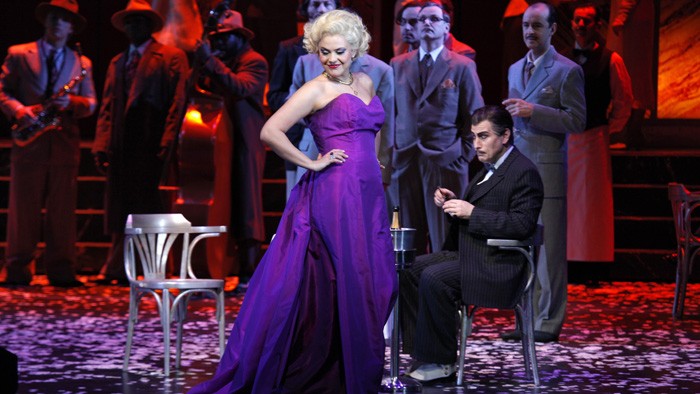
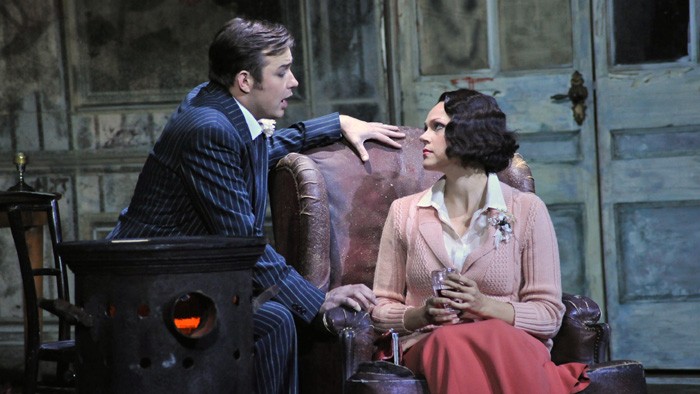
La Bohème in Berlin

The Berlin Staatsoper at Schiller Theater Presents:

La Bohème

Opera by Giacomo Puccini

The encounter of the penniless poet and journalist Rodolfo with the tubercular Mimí develops into a tragically ending love story, contrasted by the picturesque and detailed description of the Parisian subculture with its boisterous lust for parties …

The encounter of the penniless poet and journalist Rodolfo with the tubercular Mimí develops into a tragically ending love story, contrasted by the picturesque and detailed description of the Parisian subculture with its boisterous lust for parties, extravagance and promiscuous lifestyle. Especially in the framing love story Puccini’s haunting music unfolds its touching moments.

bohemeberlin6

 ACT I
Christmas Eve in a garret in ParisRodolfo, a poet, and Marcello, a painter, are finding it difficult to work. It is cold in their garret. Rodolfo generously sacrifices his latest play to make a short-lived fire in the stove.
Their friend Colline, a philosopher, joins them. He has just made a futile attempt to pawn his books on Christmas Eve. Schaunard, a musician, arrives shortly thereafter. To everyone’s surprise, he brings food, wine, wood, and money earned from an odd engagement: an eccentric Englishman had paid him to play a parrot to death. The money is still lying on the table when Benoît, the landlord, drops by unexpectedly to collect the overdue rent. The four artists get him drunk and manage to send him away empty-handed.
They decide to spend Christmas Eve at Café Momus. Rodolfo remains behind in order to finish writing a newspaper article. There is a knock at the door: Mimì, a neighbor, asks for a light for her candle, which has gone out. She loses her key, which the two of them seek in the dark. Rodolfo makes sure that they do not find it too quickly.
They draw closer to one another and fall in love. When Rodolfo’s friends call to him from below, the new couple goes with them to Café Momus.ACT II
Café Momus

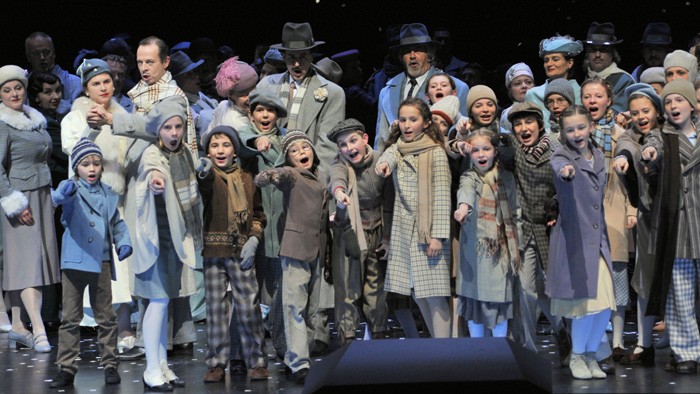
A lively Christmas crowd fills the Latin Quarter. Street vendors hawk their wares; children crowd around Parpignol, who sells toys.
The four Bohemians spend their money; Rodolfo buys a bonnet for Mimì. Finally, the group meets for dinner at Café Momus, where Musetta, Marcello’s former mistress, also turns up with a new, wealthy admirer, Alcindoro. Marcello is jealous. Musetta provokes him and then sends Alcindoro away on an errand so that she can return to Marcello. The two couples, Colline, and Schaunard depart in high spirits. When Alcindoro returns, he will have to pay the bill for the entire party.

ACT III
A February morning on the outskirts of the city

Marcello is working as a »bar painter« in a tavern on the outskirts of the city, where Musetta performs as a singer. Mimì wants to speak to him about Rodolfo’s unfounded jealousy. Marcello advises her to leave him. When Rodolfo arrives, Mimì hides and overhears the real reason for Rodolfo’s behavior: he feels unable to provide for Mimì, who is seriously ill. Mimì emerges from her hiding place. She and Rodolfo now decide to stay together until the end of the winter. After a scene of violent jealousy, Musetta leaves Marcello.

ACT IV
In the garret, six months later

Marcello and Rodolfo are unable to work. Although neither wants to admit it to the other, their thoughts are with Musetta and Mimì, whom they have not seen for a long time. This time Colline and Schaunard arrive with just a meager dinner. The four friends attempt to make the best of the situation by making jokes.
Musetta arrives with Mimì, who is dying and wants to see Rodolfo one more time. Musetta pawns her earrings and Colline his beloved coat so that they can buy medicine, obtain a doctor, and fulfill a last wish for the dying girl. Left alone, Rodolfo and Mimì reminisce about their first meeting. The friends return, and Mimì dies. Rodolfo is the last to realize it.


16. Jan 2014 | 19:30 H

Family Performance

Staatsoper im Schiller Theater

19. Jan 2014 | 18:00 H

For the last time this season

Staatsoper im Schiller Theater


Kinderchor der Staatsoper Unter den Linden
Staatskapelle Berlin
Staatsopernchor

Sung in Italian with German surtitles

2:20 h | including 1 interval

bohemeberlin12  bohemeberlin2 bohemeberlin3 bohemeberlin4 bohemeberlin5 bohemeberlin7 bohemeberlin8 bohemeberlin9 bohemeberlin10 bohemeberlin11

Posted in Music, OPera | Tagged , , , , , , , , | Leave a comment

“I due Foscari” in Vienna

Theater an der Wien (The New Opera House) Presents:

Foscari

I due Foscari

Tragedica lirica in three acts

Music by
Giuseppe Verdi

Libretto by Francesco Maria Piave based on the historical tragedy “The two foscari” (1822) by Lord Byron

Performance dates:

January 15, 18, 20, 23, 25, 27, 2014

cast

actor

role

Conductor James Conlon
Director Thaddeus Strassberger
Stage design Kevin Knight
Costume design Mattie Ullrich
Light design Bruno Poet
Francesco Foscari Plácido Domingo | Louis Otey (25.1.)
Jacopo Foscari Arturo Chacón-Cruz
Lucrezia Contarini Davinia Rodriguez
Jacopo Loredano Roberto Tagliavini
Barbarigo Andrew Owens
Pisana Gaia Petrone
Fante del Consiglio die Dieci Ioan Hotea
Servo del Doge Marcel Krokovay
Orchestra ORF Radio-Symphonieorchester Wien
Chorus Arnold Schoenberg Choir

SYNOPSIS

In 1844 Giuseppe Verdi had the task of writing his first opera for the Teatro La Fenice in Venice. The material he suggested for it was the drama The Two Foscari by Lord Byron which presents not the carnival atmosphere of the city of Venice with all its romantic amorous adventures, but focuses instead on the strict political laws and hierarchies of the Serenissima. However, it depicts the famous Council of Ten as gullible and the aristocracy as vindictive and scheming, for which reasons the suggestion was rejected by the censor. In its place, Verdi composed the opera Ernani for Venice; he was able to present I due Foscari on 4 November 1844 at the Teatro Argentino in Rome.

The Venetian doge Francesco Foscari is forced to send his son Jacopo into exile because he has been accused of murder. However, the accusation is in fact a plot hatched by his enemy Loredano. Foscari is torn between his love for his son and his duty as a doge. Lucrezia, Jacopo’s wife, is convinced of her husband’s innocence and intends to accompany him into exile, but she is not permitted to do so. Jacopo is already on board the galley that will take him to Crete when a letter reaches Francesco that proves his innocence. But it is too late: Jacopo has died on the galley. Francesco now has no choice but to abdicate as doge. This disgrace and the loss of his son break his heart and he dies.

Byron’s drama is a play for a studio theatre, and as such unsuitable for adaptation as grand opera. Verdi therefore instructed his librettist Francesco Maria Piave to add some exciting scenes: “Rack your brains and invent something to cause a bit of a stir.” Despite large-scale choral scenes and outbreaks of fierce emotion, the work retains its intimate character. It is precisely for this reason that I due Foscari enabled Verdi to revitalise his style, his characterisation becoming sharper and more compact. Verdi used themes here that are connected to the characters and give the work, with its transparent orchestration, artistic structure. By doing so, he offers an alternative to Richard Wagner’s concurrently developed leitmotif technique, although this has gone largely unnoticed by music historians.

Posted in Music, OPera | Tagged , , , , , , , , , | Leave a comment

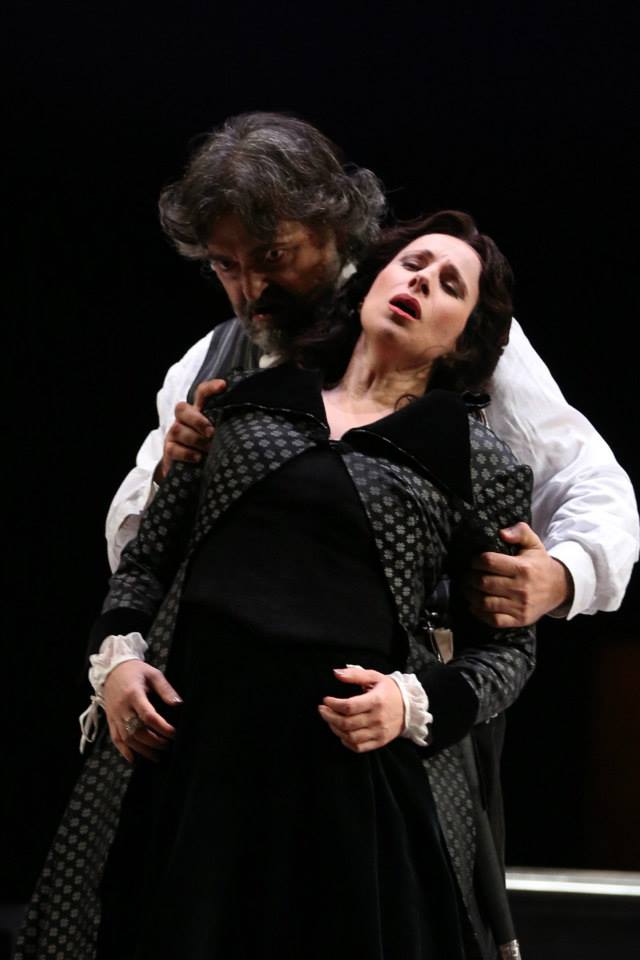
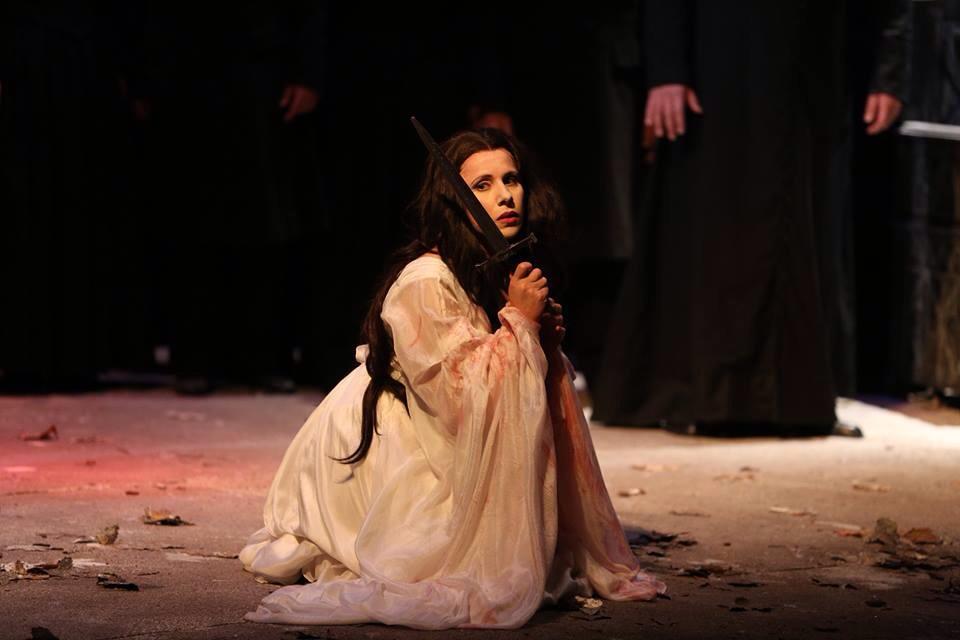
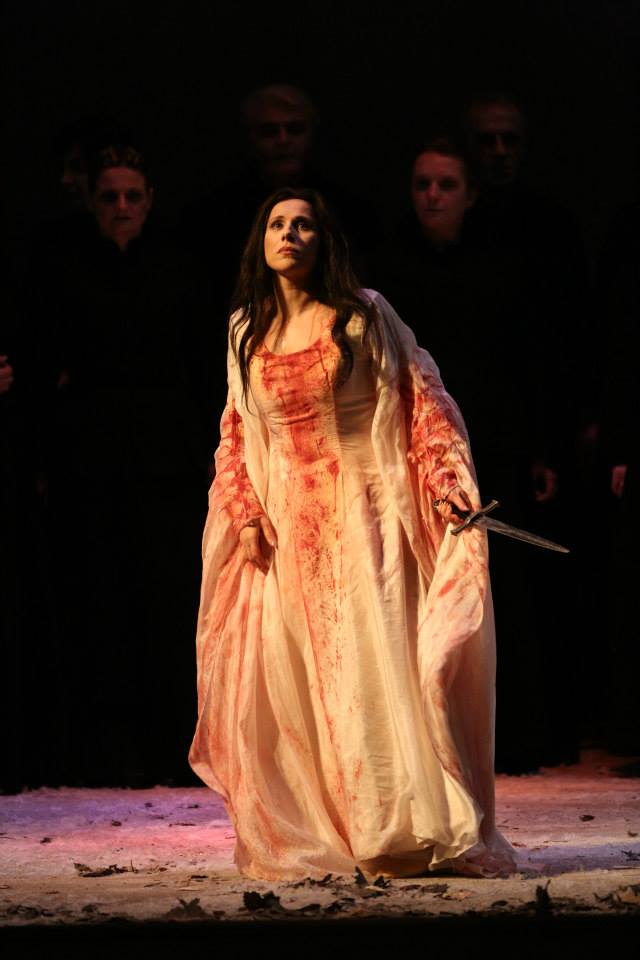
Lucia di Lammermoor al Teatro Massimo Bellini di Catania

Lucia di Lammermoor al Teatro Massimo Bellini di Catania

Written By: Natalia Di Bartolo for L’Idea Magazine (www.lideamagazine.com)

Lucia di Lammermoor al Teatro Massimo Bellini di Catania

Lucia di Lammermoor, capolavoro donizettiano, non ha bisogno di presentazioni…
L’intera opera è un susseguirsi di meraviglie sonore e vocali: metterla in scena è decisamente un atto di coraggio.
A maggior ragione a Catania, in questo momento di gravi difficoltà per il Teatro Massimo Bellini ed i suoi dipendenti: un nuovo allestimento scenico dell’ E.A.R., una prova del fuoco per ciascuno degli artefici.

Funerali simbolici al teatro catanese sul parterre, a platea gremita, in una composta e significativa manifestazione del coro; di rimando, applausi scroscianti di un pubblico che s’immedesima ed immagina anche come possa essere triste il proprio futuro senza la stagione lirica dello splendido teatro catanese. Auspici di positiva risoluzione da parte di tutti, nonché firma di documento di protesta.

Attesa, quindi, fra gli spettatori, sensibilizzati dal grido dei manifestanti: “Il teatro non deve morire!” e dalla dichiarazione accorata del regista Guglielmo Ferro: “Il Teatro è nostro”, da difendere quale “baluardo della nostra civiltà”..

Andata in scena, dunque, questa sofferta Lucia, il 3 dicembre, preceduta  qualche giorno prima dalla colta ed interessante presentazione dell’Opera da parte del musicologo Giuseppe Montemagno, alla presenza degli interpreti e del Direttore, nel foyer del teatro.

Interessante e ben coordinata la regia del Ferro, che vedeva un assoluto rarefarsi degli orpelli ottocenteschi, con azione e personaggi volutamente riportati alla crudezza tempestosa del primo romanticismo. Suggestive le scene, dotate di proiezioni in obliquo e gli effetti di Stefano Pace, che hanno contribuito a conferire alla produzione quell’amosfera romantica puramente scottiana scelta dal regista come chiave di lettura anche filologica, che al romanzo del grande scrittore inglese, a cui è ispirato il libretto di Salvatore Cammarano, intendeva proprio rifarsi. Il tutto ben supportato dalle luci di Bruno Ciulli e dai costumi di Françoise Raybaud, severi ed adatti al clima di “Sturm und Drang” evocato dalla messa in scena.

Alla guida dell’orchestra del Teatro Massimo Bellini, che ha dimostrato come sempre doti di altissimo livello, il Maestro concertatore e direttore Emmanuel Plasson, che ha portato una ventata di classe d’oltralpe alla Lucia in italiano, avendola già diretta anche nella versione in francese. Doti di leggerezza e di stile che ricordano la bacchetta dell’illustre padre Michel     e che fanno di lui un giovane direttore già assolutamente autorevole ed esperto, con un gusto spiccato per L’Opéra Français ed un bagaglio da questa proveniente che si misura anche, però, con doti di ottima resa sonora dell’Opera del repertorio italiano, nella completa padronanza della guida della compagine orchestrale.

Nella parte di Lucia, il soprano Rosanna Savoia ha dato voce dolente e sentita ad un personaggio che necessita d’introspezione e, contemporanenamente di assoluta padronanza vocale e scenica, data la presenza di momenti di improba difficoltà…fra tutte, la celeberrima scena della pazzia, in duetto col flauto solista. Vocalmente gradevole e interpretativamente delicata, la Savoia ha dato vita ad una Lucia volutamente un po’ smarrita fin dall’inizio dell’Opera, dotata di di corretta esecuzione e presenza scenica.

Il tenore Alessandro Liberatore, nei panni di Edgardo, sia pure colpito da un’improvvisa indisposizione che ne ha compromesso la resa vocale, ha portato a termine ugualmente la recita.

Debutto nella parte di Enrico per il l’ottimo Piero Terranova, baritono dagli accenti morbidi, ma anche robusti ed imperiosi, che ha sottolineato con adeguata interpretazione il carattere del fratello di Lucia, imponendosi per qualità vocale e resa sonora.

Sentito il Raimondo di Francesco Palmieri; corretti e gradevoli anche Loredana Rita Amegna, Alisa, Giuseppe Costanzo, Lord Arturo, e Salvatore D’Agata, Normanno.

Da sottolineare la prestazione del coro del Teatro Massimo Bellini, sotto la guida di Tiziana Carlini: consueta professionalità di belle voci.

Rimarchevole,  nel secondo cast, la presenza di  Emanuele D’Aguanno nei panni di Edgardo, che, debuttando nel ruolo, ha dato voce, nella serata del 7 dicembre, sotto l’autorevole direzione del M° Leonardo Catalanotto, ad un eroe romantico giovane ed espressivo, pieno d’impeto e di passione, con una linea di canto ed un legato davvero notevoli e mille promesse vocali per il futuro, che auspichiamo lo portino verso traguardi di tutto rispetto, magari volgendosi anche al repertorio francese per il quale appare già tecnicamente portato.

Pubblico plaudente e soddisfatto, che auspica e attende adesso positive notizie per il proprio amatissimo teatro e la ventura stagione Lirica 2014-2015.

1455994_10202096562289711_1850803807_n

996660_10151825915254639_370082307_n

944835_10202096575890051_1716878970_n

Posted in Music, OPera | Tagged , , , , , , , , | Leave a comment

“La del manojo de rosas” in Madrid

Teatro de la Zarzuela

PRESENTS:

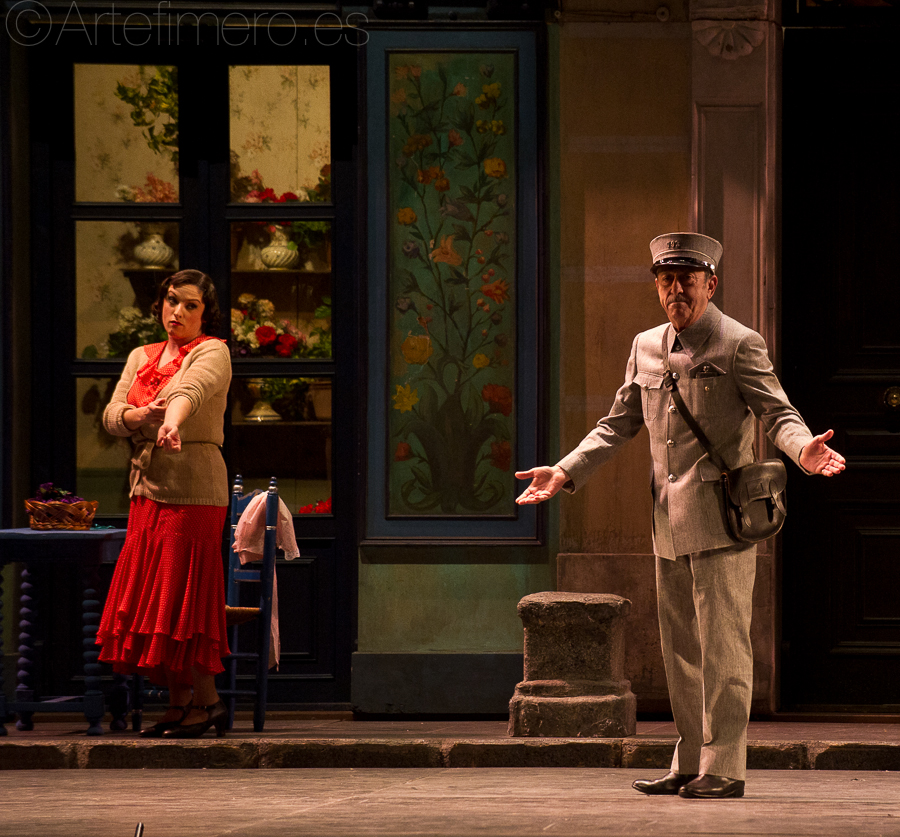
La del manojo de rosas

La del manojo de rosas

Zarzuela in two acts and six scenes

Approximate duration: 2 hours and 20 minutes

Zarzuela in two acts and six scenes by Anselmo Cuadrado Carreño and Francisco Ramos de Castro
Music by PABLO SOROZÁBAL
Worldpremiered at Teatro Fuencarral, Madrid, on November 13, 1934
Production of Teatro de la Zarzuela (1990)

A REVIVAL of one of the greatest successes of Pablo Sorozábal and the Teatro de la Zarzuela in the last decades. A love story where the sainete becomes critical proposal from the moment in which the protagonist refuses to use marriage as a way to social advancement. All this in a Republican Madrid in which its inhabitants seem so willing to shake the myths of casticismo as to dance the rhythms arrived from the other side of Atlantic. With this title, the stage director, Emilio Sagi, has made one of the best work of his long and successful career.

Synopsis

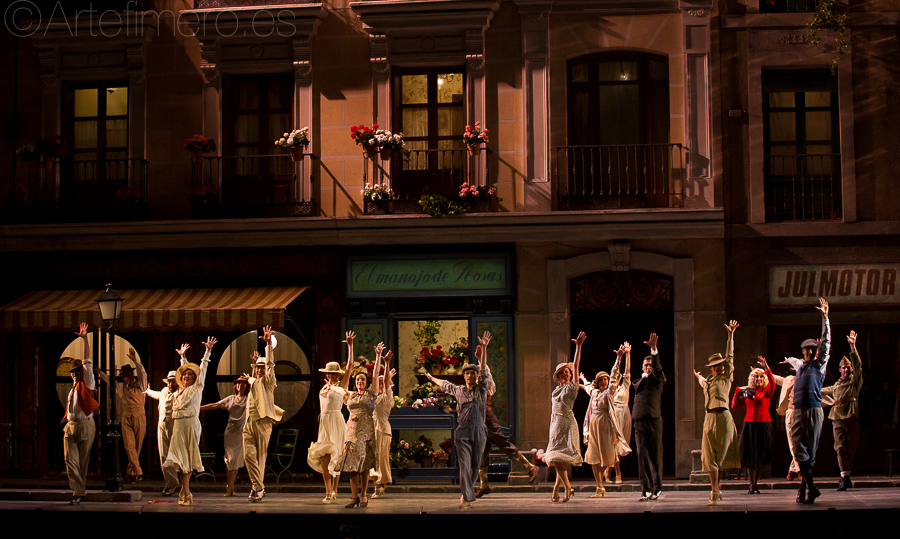
The action takes place in a neighbourhood square in Madrid in 1934, with a garage, a bar and a flower shop called «La del Manojo de Rosas» (The Girl with the Bouquet of Roses). There live JOAQUÍN, the head mechanic at the garage with his apprentice, CAPÓ. Also DON DANIEL, the flower shop owner with ASCENSIÓN, the florist and Don Daniel’s daughter that is a pretty young woman who, although she has received a polished education, is very proud of her working class roots and is not interested in amorous affairs with anyone other than her own class; and the barman ESPASA. Don Daniel wants her to accept the proposal of RICARDO, a dashing young aviator, but Ascensión is in love with Joaquín, the mecanic. Alongside the conflictive love triangle, we have another between CLARITA, a coquettish, «super-cultured» manicurist, Capó and Espasa.

Dates & Times

December 18, 19, 20, 21, 26, 27, 28 and 29, 2013
January 3, 4, 5, 8, 9, 10, 11 and 12, 2014
8 PM (Sundays, at 6 PM)

Audience days
December 26 and January 8
Subscription performances
December 18, 19, 20 and 21; January 10, 11 and 12

Artistic Team

Music director:
Miguel Ángel Gómez Martínez
Stage director:
Emilio Sagi
Sets:
Gerardo Trotti
Costumes:
Alfonso Barajas
Lights:
Eduardo Bravo
Choreography:
Goyo Montero

Cast

ASCENSIÓN: Carmen Romeu (December 18, 19, 20, 21, 26, 28 and 29; January 4, 10, 11 and 12), Belén López (December 27; January 3, 5, 8 and 9) –

CLARITA: Ruth Iniesta (December 18, 19, 20, 21, 26, 28 and 29; January 4, 10, 11 and 12), Inés Ballesteros (December 27; January 3, 5, 8 and 9) –

DOÑA MARIANA: Pilar de la Torriente – ESPASA: Luis Varela

JOAQUÍN: José Julián Frontal (December 18, 19, 20, 21, 26, 28 and 29; January 4, 10, 11 and 12), David Lagares (December 27; January 3, 5, 8 and 9) –

RICARDO: Ricardo Bernal (December 18, 19, 20, 21, 26, 28 and 29; January 4, 10, 11 and 12), Héctor García (December 27; January 3, 5, 8 and 9) –

CAPÓ: Carlos Crooke (December 18, 19, 20, 21, 26, 28 and 29; January 4, 10, 11 and 12), Juan Manuel Padrón (December 27; January 3, 5, 8 and 9) –

DON DANIEL: Ricardo Muñiz – DON PEDRO: César Sánchez

UN INGLÉS: Javier Crespo – PARROQUIANO 1.º: Daniel Huerta*

PARROQUIANO 2.º: Juan Ignacio Artiles*

EL DEL MANTECAO: Javier Alonso*

UN CAMARERO: José Carlos Quirós

* Members of the Coro Titular del Teatro de la Zarzuela

ACTORS-DANCERS

Primitivo Daza, Cristian Sandoval, Antonio Martínez, Fermín Calvo, Luis Romero, David Bernardo, José Carlos Quirós, David Martín, Eduardo Carranza, Diniz Sánchez, María José López, Cristina Arias, Mar Moreira, Silvia Martín, Rosa Zaragoza, Victoria Torres, Macu Sanz, Encarna Piedrabuena, Gloria Vega, Celia Bermejo.

Orquesta de la Comunidad de Madrid
Resident orchestra of Teatro de La Zarzuela
Coro del Teatro de La Zarzuela
Director:
Antonio Fauró
Click to enlarge image _FMI6816.jpg
_FMI6820.jpg
zarzuela3zarzuela4  zarzuela5 zarzuela6 zarzuela7 zarzuela8 zarzuela9 zarzuela10 zarzuela11 zarzuela1 zarzuela2 
Teatro de la Zarzuela, Jovellanos, 4 – 28014 Madrid, España
Posted in Music, OPera | Tagged , , , , , , , , , | 1 Comment

The End of Italian Opera: Will They Wait for the Fat Lady to Sing? (Newsweek)

The End of Italian Opera: Will They Wait for the Fat Lady to Sing?

By  / December 26 2013 11:22 AM, Newsweek.com
Opera

The opera houses that launched Verdi, Puccini and Rossini are going bust. Is there a future for an expensive art form in the age of austerity?   BO’Kane/Alamy

Last month, staff at Catania’s opera house staged a funeral in suitably operatic fashion, carrying a coffin through the center of the packed auditorium. The performance wasn’t a dramatic staging idea: it was a funeral for the opera house itself.

That’s because this stunning house, where opera has been performed since the late 1800s, is in deep financial trouble. The Teatro Massimo Bellini – named after the Sicilian city’s most famous son, the bel canto opera composer Vincenzo Bellini – can’t afford to pay visiting artists or even its own musicians.

At a recent international opera competition, the orchestra went on strike between the semifinals and the finals, reportedly because its members hadn’t been paid for months.

And the Catania Opera is not alone. Florence’s Teatro del Maggio Musicale is seriously in the red, as are the opera houses in Rome, Bologna, Genoa, Parma, and Cagliari. In fact, reports Enrico Votio Del Refettiero, the influential writer who covers opera on the Luigi Boschi blog, only three Italian opera houses are currently able to pay their bills within two months: Milan’s La Scala in Milan, Venice’s La Fenice, and Turin’s Teatro Regio.

“Our opera house system is already shutting down,” he said. “It’s gone, finished.”

There’s a simple reason behind the desperate financial plight of Italy’s opera houses: Italy’s economic crisis has forced the government to slash arts funding.

It used to be said that the opera isn’t over until the fat lady sings. But will Italy’s government wait that long?

In 2011, the latest year statistics are available, Italy spent 0.6 percent of GDP on recreation, culture, and religion, down from 0.9 percent in 2009. Germany spent 0.8 percent, Britain 0.4 percent, and France 1.4 percent, according to the EU’s statistical bureau, Eurostat.

Unlike American opera companies, which raise money from companies and individuals, Italian opera houses have always been supported by the state. Making their embarrassment worse, the temples to this peculiarly Italian art — the standard opera repertory is Italian, Italy gave birth to Giuseppe Verdi,  Giacomo Puccini, Vincenzo Bellini, Gioachino Rossini, and Gaetano Donizetti, whose works provide the backbone of opera worldwide, and composers like Wolfgang Amadeus Mozart wrote most of their operas in Italian — can’t even borrow to keep themselves open.

“They’ve been in financial trouble for a long time, but in the past they could simply go to the bank and get loans because the government would back it,” explained Del Refettiero. “Now the banks’ supply of money has stopped.”

That has left opera managers unable to pay singers and musicians. Moreover, they haven’t got enough resources to plan future seasons, a lethal handicap in an industry where the talent is booked three to five years in advance. At the Cagliari opera house, performances are now announced just one month before they are staged. It’s hardly a way to build an audience.

And for the past couple of years, managers have taken more drastic measures still, cutting the numbers of performances and reducing salaries. Even so, several houses, including the Florence opera, now face the prospect of having to close. According to the international database Operabase.com, at 19.2 opera performances per million citizens, Italy now ranks 20th in the world, below poor countries like Bulgaria and Croatia. Austria tops the list with 149.8 performances per million.

“The crisis [in opera] is very serious,” acknowledged Salvatore Nastasi, state secretary at the Culture Ministry in charge of opera funding. “You have to consider that in the past 20 years our opera houses have accumulated debts of $411 million (€300 million). But, he argued, Italian companies “are still world-class and that’s why the government continues to fund them.”

It is extraordinary to think that opera lies in ruins in Italy, the country of its birth. Jacopo Peri, the 16th-century Roman composer who invented opera with his musical tale of the beautiful Daphne, would hardly recognize his country today, where managers squabble with labor unions while the very top singers stay away for fear of not being paid.

Neither would Claudio Monteverdi, the composer and priest who popularized opera with his masterpiece L’Orfeo in 1607 — a work that is still performed today. And Italy’s masters of the genre – Verdi, Rossini, Puccini and the rest – would be shocked to find the bailiffs banging on Italian opera’s door. According to Operabase.com, six of the world’s 10 most performed operas are by Italian composers, but no Italian city ranks among the world’s Top 20 as measured by number of performances.

“Italy is the only country that won’t make itself available to the Met’s live HD broadcasts,” Peter Gelb, the Metropolitan Opera’s General Manager, told Newsweek. “The movie theaters there tell us there’s no market for it and we have to assume they’re right.”

With no international stars and no audience for opera even when relayed from the Met in a cozy cinema, a line from Violetta in Verdi’s La Traviata, the world’s most-performed opera, comes to mind: ”Folly! Folly! All this is vain delirium!”

This is the worst crisis in the history of Italian opera, said Carlo Fuortes, commissioner of Bari’s Teatro Petruzzelli, who’s just been appointed superintendent of Rome’s Teatro dell’Opera, the major opera house in the capital that gave the world premiere of, among other operas, Pietro Masgani’s Cavalleria Rusticana. Fuortes’s tricky task is to save the venerable institution from bankruptcy.

“One has to remember that the economy of an opera house has been difficult from the very beginning,” he said. “It’s a very expensive genre, and in the first half of the 19th century, when Verdi, Rossini, Bellini, and Donizetti were flourishing, being the manager of an opera house was one of the riskiest things you could do. The managers often fled without paying the singers and musicians, and sometimes they committed suicide. Some even took to gambling to balance the books.”

Suicide may be a tad too radical for today’s managers, but those who preside over Italy’s shrinking opera houses could benefit from more accountability. Though government cuts have delivered a serious blow, many have been too profligate in the past. And by playing it safe with staid productions they’ve failed to grow their audiences.

Other European and North American rivals, by contrast, have branched out with multimedia initiatives, innovative productions, and social events for audiences. “Opera is a long-form art form and for most of us it’s usually in foreign languages,” noted Gelb. “It’s the opposite of tweeting. You have to create productions that are so dazzling that people want to come. And you have to insert yourself into the public discussion and be part of the cultural fabric of the city, for example by collaborating with museums.”

Del Refettiero agrees. Incompetence, not money, is at the root of Italy’s operatic problems. “We spend less on culture than other [European Union] countries, but the main issue is that the money is poorly managed. Italy has kept appointing idiots as intendants [managers], and they’ve been going from opera house to opera house, losing money everywhere, just like prostitutes, who move to a new city before their customers get bored.”

Italian opera houses certainly have large permanent overheads. While cash-strapped houses elsewhere offer their musicians long-term freelance contracts, most Italian houses have them on payroll. In other words: musicians are paid however few the number of performances.

Musicians at smaller opera houses are being laid off or simply not getting paid and they face a frightening future. “We haven’t played since May 2013,” said Rosaria Mastrosimone, a violist at the Teatro Vittorio Emanuele in Messina. “It’s a terrible situation. I take as much freelance work as I can find, but some of my colleagues have had to take jobs in supermarkets and others aren’t working at all.”

The key question, however, is whether the descendants of the boisterous crowds that gathered to enjoy Verdi and Puccini 100 years ago still value this amalgam of high melodrama and classical music. Has Italy ceased to be not just a top opera-producing country but also an opera-loving one?

Luisa Ciaramella, a 25-year-old student from Caserta near Naples, thinks so. “Young people are not very interested in this crisis,” she said, and opera’s looming collapse has generated little furore outside of the avid followers of opera. Imagine the outcry if Italy’s restaurants or its fashion houses faced collective collapse.

But if one member of Italy’s trinity of food, fashion and opera vanishes, the other two also suddenly seem very pedestrian. “Italy is synonymous with beauty, but unfortunately we Italians don’t manage to understand that,” said Simone Piazzola, a 28-year-old Italian baritone who’s enjoying a blossoming career at home and abroad.

Massimo Biscardi, a veteran artistic director of Italian opera companies who now serves as artistic consultant to Claudio Abbado’s Orchestra Mozart, calls Italy’s opera crisis an extension of the country’s moral crisis “where we don’t recognize the necessity of culture in life or in society.” Indeed, while silly TV shows attract far larger audiences than opera in any country, their success in Italy — whose television is brim full of glossy quiz shows hosted by scantily clad bimbos — seems more tragic than anywhere else: a country once steeped in Verdi appears to have fallen into the abyss.

Future historians may well conclude that ousted prime minister Silvio Berlusconi’s real contribution to the fall of Italian opera took place not through his policies but through the tacky programs of his near-monopoly populist media empire, Mediaset.

“If the sacrifices continue, in 10 years we won’t see any Italian artists on our opera stages, and the conservatories in this country will have only teachers and no students,” said Biscardi, which would be a loss to the rest of the world’s opera houses.

Yet some ingenious managers are bucking the trend. Fuortes managed to transform Bari’s crisis-plagued opera house that was even set on fire 22 years ago (locals suspect the Mafia) and put it back on its feet. In the past 18 months he has appointed a young new conductor and dramatically cut the number of musicians and technical staff.

Today the Petruzzelli employs only 180 staff, far fewer than other houses. Even so, ticket sales are up by half compared to 2011. Crucially, Fuortes has  balanced the budget. A new law, designed to make such restructuring easier, allows opera managers to dismiss up to half of their staff.

The steadiness of Italian opera’s audience figures is also an encouraging sign. Between 2010 and 2011, the latest year available, attendance only dropped by 1.1 percent, to 2.04 million, according to the country’s statistical agency, ISTAT. In the same period, visits to the movie theater dropped by seven percent. Salvatore Nastasi assured Newsweek that, in his opinion, no Italian opera house will have to close.

In Turin, the respected conductor Gianandrea Noseda has also performed a remarkable turnaround. When he arrived as music director six years ago, the Teatro Regio was just another second-tier opera house finding it hard to pay its bills. “Of course I’d have preferred to have an easier environment,” he said. “But I’ve always thought of myself as a pioneer in a small way.”

Not that small. Together with the house’s manager, the energetic Noseda has cut salaries and altered contracts while raising musical standards. Using his international contacts he has taken this lesser-known orchestra on tours and he has cajoled international stars into performing in this unprepossessing venue set amid car plants in the north of Italy.

Of course, the international stars still have to get paid. The answer, said Noseda, is to use government money more prudently while securing more private funding. “It’s a very American approach, but we’ll never be like the U.S., where government money only covers something like 2 to 3 percent of an opera company’s budget,” he said. “But if we have 50-50, we’ll definitely turn the corner.”

Enlisting the second member of Italy’s trinity, Noseda has teamed up with the the Turin-based restaurant chain EATaly, which serves upscale food during intermissions. “Italians are creative, so let’s not stop being creative,” he said. “We have to show the seductive side of opera, intrigue people, tell them that opera is sexy.”

If Italy manages to serve food, music and seduction in equal parts, there is surely a future yet for opera in Italy.

Posted in Article | Tagged , , , , , , , | 2 Comments

THE MAGIC FLUTE in Berlin

December 28, 2013

The STAATSOPER of Berlin Presents:

DIE ZAUBERFLÖTE (THE MAGIC FLUTE)

magicfluteberlin9

Opera by Wolfgang Amadeus Mozart

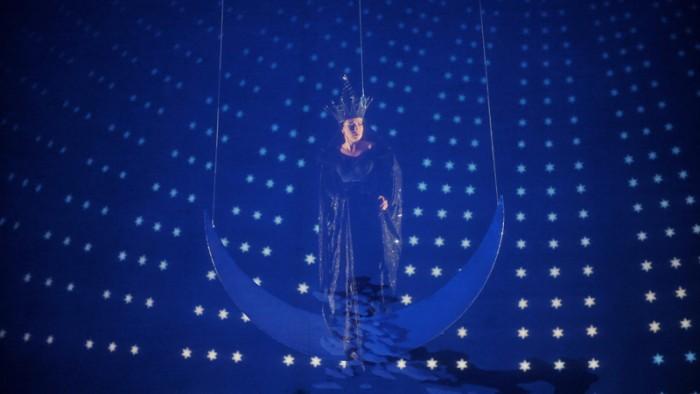
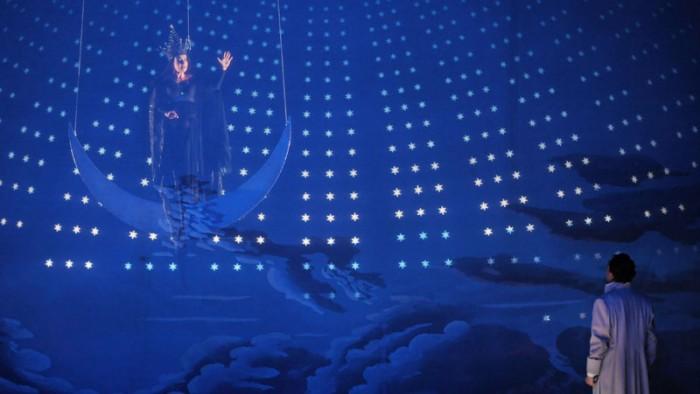
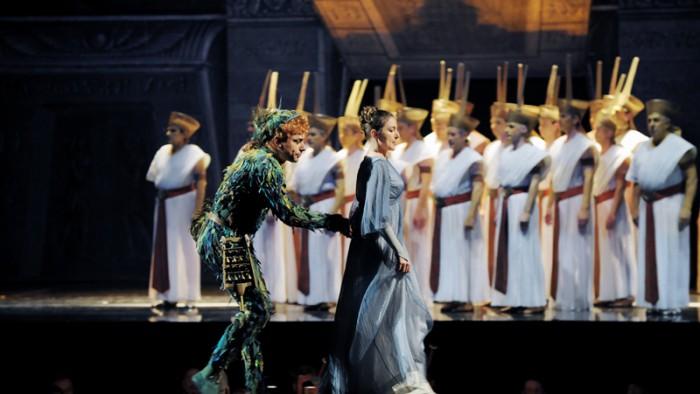
Karl Friedrich Schinkel’s fascinating stage for the appearance of the Queen of the Night with star dome and narrow crescent has become famous. The designs by the architectural genius for the »The Magic Flute« from the year 1816 are the basis of the staging by August Everding.

Karl Friedrich Schinkel’s fascinating stage for the appearance of the Queen of the Night with star dome and narrow crescent has become famous. The designs by the architectural genius for the »The Magic Flute« from the year 1816 are the basis of the staging by August Everding.


magicfluteberlin13 magicfluteberlin magicfluteberlin1 magicfluteberlin2 magicfluteberlin3 magicfluteberlin4 magicfluteberlin5 magicfluteberlin6 magicfluteberlin7 magicfluteberlin8 magicfluteberlin9 magicfluteberlin10 magicfluteberlin11 magicfluteberlin12

  • SYNOPSIS
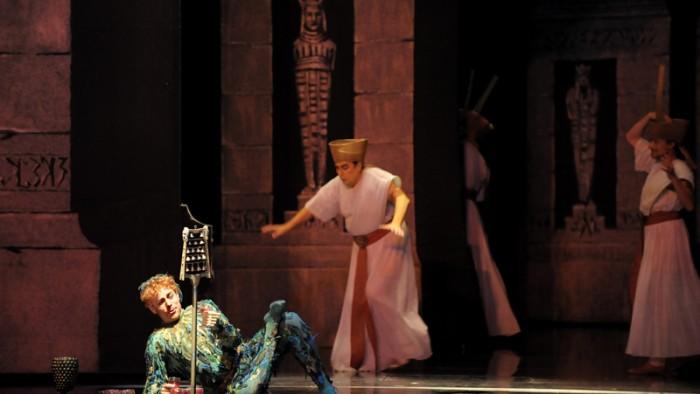
    In a mythical past, a king and queen ruled together over a kingdom of day and night. Their daughter was called Pamina. When the king died, he gave his power – symbolized by the mighty circle of the sun – not to the queen, but to the Brotherhood headed by Sarastro, thereby dividing the realm of light and shadow in two. After the king’s death, however, his wife attempted to win back the power she had lost as the Queen of the Night. In order to remove Pamina from her mother’s negative influence, Sarastro has had her kidnapped.ACT I
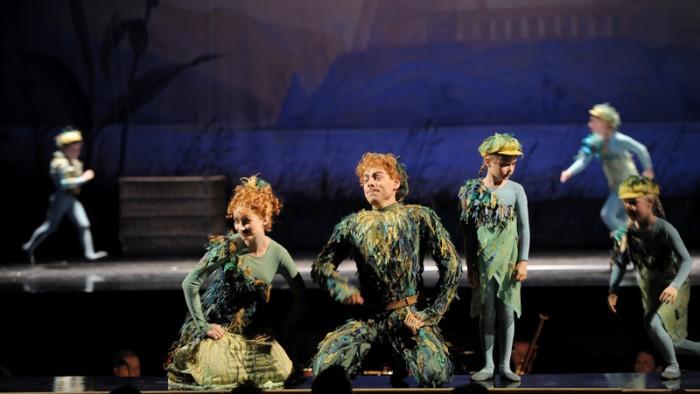
    While hunting, the young prince Tamino is lured into the realm controlled by the Queen of the Night and threatened by a monster. Fearing for his life, he loses consciousness. The Three Ladies who attend the Queen of the Night quarrel over the unconscious young man. When the prince awakes, the bird catcher Papageno tells him where he is. On the queen’s orders, the Three Ladies give Tamino a portrait of the princess Pamina, and he falls instantly and deeply in love. The queen attempts to use this love to recover Pamina and, with her, the powerful circle of the sun from Sarastro. Tamino is determined to free Pamina from Sarastro. Papageno is told to accompany him, and both are equipped with magic instruments, a flute and a set of bells. Three Boys are to guide them as good spirits.In the meantime, Pamina attempts to flee Sarastro’s control in order to escape the cruel slave overseer Monostatos. Papageno, however, finds her and tells her that Tamino loves her, and they flee together. When Tamino meets the Speaker of the Brotherhood at the gates of the temple, he begins to doubt what he has heard of Sarastro’s evil intentions. In his uncertainty, he turns to the invisible higher powers and, for the first time, discovers his flute’s magic powers. Pamina and Papageno’s attempt to flee is thwarted by the arrival of Sarastro, but Pamina decides to tell Sarastro the truth. She and Tamino meet. Sarastro has Tamino and Papageno brought to the Temple of Wisdom. As a woman, Pamina cannot accompany them.

    ACT II
    Sarastro asks the members of the Order to let Tamino face the trials that will initiate him into the Brotherhood and, at the same time, announces that he intends for Pamina and Tamino to wed. As their first trial, Tamino and Papageno are forbidden to speak, an utter impossibility for Papageno. The Queen of the Night sees that her plans are being foiled by Sarastro. She forces her way into the temple and calls on Pamina to kill Sarastro. Sarastro, however, uses humanity and forgiveness to fight the queen’s desire for vengeance. The Three Boys return to Tamino and Papageno the magic instruments that were taken from them before their admission to the temple. Pamina cannot understand Tamino’s silence and doubts his love. She decides to kill herself and is stopped by the Three Boys at the last moment. In the end, the two lovers pass the final, decisive test in the temple of fire and water together. In the meantime, Papageno, too, decides to kill himself because the Papagena he had found at last has been taken from him. Here, too, the Three Boys arrive to save him. Monostatos allies himself with the Queen of the Night, but their attack is thwarted and the sun banishes the darkness. Together with the Queen of the Night, Sarastro is able to turn over the mighty circle of the sun to the new king and queen, Tamino and Pamina.

Performance dates:

28. Dec 2013 | 15:00 H
Family Performance
Staatsoper im Schiller Theater

28. Dec 2013 | 19:00 H
Staatsoper im Schiller Theater
09. Jan 2014 | 19:00 H
Staatsoper im Schiller Theater

11. Jan 2014 | 19:00 H
Staatsoper im Schiller Theater

08. Mar 2014 | 19:00 H
For the last time this season
Staatsoper im Schiller Theater

Posted in Music, OPera | Tagged , , , , , , , | 1 Comment

“Eugene Onegin” in Munich

Bayerische Staatsoper

PRESENTS:

Eugene Onegin

Eugen Onegin: Simon Keenlyside (Onegin), Ekaterina Scherbachenko (Tatjana) Eugen Onegin: Simon Keenlyside (Onegin), Ain Anger (Saretzki), Pavol Breslik (Lenski) Eugen Onegin: Ekaterina Scherbachenko (Tatjana), Ain Anger (Fürst Gremin)

Peter I. Tschaikowsky

Libretto by Peter I. Tchaikovsky and Konstantin Shilovsky after Alexander Pushkin’s verse novel

The story of a cosmopolitan, educated, yet excessively arrogant outsider. He antagonizes the women who love and desire him, just as he does his friend, whom he ultimately kills in a duel. Is it Onegin’s longing to see himself always reflected in others? Is it his inability to adjust socially? The answer for him and the people with whom he comes into contact is bitter. Its name: solitude. Tchaikovsky’s “Lyrical Scenes” subtitled Eugene Onegin ranks among the greatest, most beautiful and most frequently performed Russian operas.

In Russian with German surtitles

Nationaltheater

Performances:
Saturday, 4 January 2014, 7.00 p.m.
Tuesday, 7 January 2014, 7.00 p.m.
Friday, 10 January 2014, 7.00 p.m.

FIRST TABLEAU

An evening in the country, (almost) like any other

Everyone is gathered together. The sisters Tatiana and Olga are singing a duet; their widowed mother, Larina, and Filipievna are listening to them. The girls‘ song awakens memories of their own youth. A neighbour starts singing a different song which they all know and join in. Larina finds this all a little bit too much melancholy for one evening and demands some cheerful music and the mood lightens.

Tatiana is dreaming and Olga rudely brings her back to reality. Larina and Filipievna are worried about Tatiana, who suddenly seems to them to be very pale. Tatiana sets everybody’s mind at rest; she has merely been very absorbed in a novel she is reading.
Larina sympathetically declares reading to be a fleeting phenomenon of youth.

An unexpected visits causes excitement. Vladimir Lenski, who has been engaged to Olga for a long time, drops by, bringing with him a friend – Eugene Onegin. This young man from the city is visiting his friend, and everyone is greatly impressed by him. Tatiana believes this to a meeting destined to happen and falls head over heels in love.
The older folk leave the young people to their own devices. Lenski is completely lost in his admiration of Olga and Onegin tries to get into conversation with Tatiana.
They are called in for a meal.

SECOND TABLEAU
A sleepless night, confessions I

Tatiana is still awake. Filipievna also makes no move to retire and starts to chat about the past. Tatiana wants to hear a story about love. Filipievna’s stories are sad: she married a man chosen for her by her parents. Filipievna is worried about Tatiana, who seems ill and feverish. Tatiana admits that she is in love but does not talk about it and swears Filipievna to secrecy.
Filipievna finally goes to bed, leaving Tatiana dizzy with the violence of her emotions. She tries to put a name to them and formulates an incredible, and fateful, declaration of love.
Day breaks. Tatiana hands Filipievna a letter, which she is to take safely and discreetly to Onegin.

THIRD TABLEAU
Late afternoon, destroyed hopes

Tatiana waits impatiently for Onegin’s reaction to her letter. He arrives in person and Tatiana is in a state of considerable emotion, feelings of both joy and shame. Onegin thanks her for her frank letter and calmly, collectedly and with great understanding explains to her that he cannot return her feelings. Love and marriage are not for him. Finally he advises her to keep her feelings under better control so that she will not be taken advantage of by the first man to come along. Tatiana is silently humiliated.

FOURTH TABLEAU
Evening, an unsuccessful ball

The house is full of guests for a ball in honour of Tatiana’s birthday. Onegin is also present, having been persuaded to come by Lenski. He congratulates Tatiana and dances with her, which gives rise to gossip. People still think they make an ideal couple. Onegin senses that they are the focus of attention and that people are talking about them and so he steals Olga from Lenski and dances with her. Tatiana feels out of place at her own ball; Lenski is jealous and showers reproaches on Olga.
One or two people perform, to the amusement of the guests, but fail to make either Tatiana or Lenski feel more cheerful.
Onegin approaches Lenski but is rebuffed. He wants to have a frank discussion with Lenski but the whole thing develops into a quarrel, while the guests listen. Lenski insults Onegin in front of them all, declares their friendship to be over and challenges him to a duel.

FIFTH TABLEAU
Before dawn, no dream or the lost opportunity

Lenski is waiting impatiently for Onegin to arrive to fight the duel. He takes farewell of life and all that he has loved.
A short while later the two friends are facing each other as rivals. Both are shocked by the distance that is now between them, but neither of them can manage a gesture of reconciliation which would end the duel.
The second, Saretzky, urges them to hurry. The rules are quickly explained.
Onegin takes aim and fires, fatally wounding his friend.

SIXTH TABLEAU
An evening years later, the reunion

Memories of Lenski haunt Onegin; he is tortured by feelings of guilt. Frustrated with his life, he returns from years of aimless travel abroad.
He meets Tatiana again unexpectedly, in the capital. She is now married to Gremin, a respected member of society.
Gremin tells Onegin how happy his marriage is and raves about his charming wife. He introduces them to each other and they admit that they have met before – in a different time.
Onegin feels drawn to Tatiana. He wants to begin a new life with this woman.

SEVENTH TABLEAU
A short while later, confessions II

Tatiana is waiting for Onegin, who has asked her to meet him for a private chat. Her passion for him has not diminished with the years, but she doubts the sincerity of his feelings. Onegin is full of remorse, begs her forgiveness, throws himself at her feet. Tatiana confesses her love for him a second time. He urges her to leave her husband, but Tatiana tears herself away from him and flees to the safety of her life with Gremin.
Onegin is left alone.

© Bavarian State Opera

Conductor

Kirill Petrenko. © Wilfried Hösl
Kirill Petrenko
Kirill Petrenko was born in Omsk in 1972 and studied piano there at the Music Academy. At the age of eleven, he made his first public appearance as a pianist with the city’s symphony orchestra. In 1990, the family (his father was a violinist, his mother a musicologist) moved to the Austrian state of Vorarlberg, where his father obtained a job as an orchestral musician and music teacher. Petrenko initially continued his studies in Feldkirch and then studied conducting at the University of Music in Vienna, from which he graduated in June 1997. His first engagement, from autumn 1997, was as Assistant and rehearsal accompanist at the Volksoper in Vienna.From 1999 to 2002, Kirill Petrenko served as General Music Director at the theatre in Meiningen, where he attracted international attention for the first time in 2001 with the Ring des Nibelungen in the production directed by Christine Mielitz and designed by Alfred Hrdlicka.

From 2002 to 2007, Kirill Petrenko was General Music Director at the Komische Oper in Berlin. The most important new productions, which Petrenko decisively influenced here included interpretations in collaboration with directors such as Peter Konwitschny, Calixto Bieito, Willi Decker or Andreas Homoki.

In parallel with his positions in Meiningen and Berlin, his international career also took off very quickly. Major débuts included the Maggio Musicale Fiorentino in 2000; the Vienna State Opera and the Semperoper in Dresden in 2001; the Gran Teatre de Liceu, Opéra National de Paris, Royal Opera House Covent Garden, Bavarian State Opera and Metropolitan Opera New York in 2003; the Frankfurt opera in 2005. From 2006 to 2008, he collaborated with Peter Stein on P.I. Tchaikovsky’s cycle of Pushkin operas in Lyon, which was then performed in its entirety in spring 2010.
Since leaving the Komische Oper in July 2007, Kirill Petrenko has worked as a guest conductor. In 2009, among other works, he conducted the new production of Leoš Janáček’s Jenůfa directed by Barbara Frey at the Bavarian State Opera and Hans Pfizner’s Palestrina directed by Harry Kupfer in Frankfurt. In 2011, Kirill Petrenko conducted the new production of Tosca in collaboration with Andreas Kriegenburg, again in Frankfurt, along with Wagner’s Tristan und Isolde (in collaboration with Willy Decker) in Lyon and at the Ruhr Triennale.

The most important orchestras that Kirill Petrenko has conducted to date include the Berlin Philharmonic, the Dresden Staatskapelle, the Bavarian Radio Symphony Orchestra, the Bavarian State Orchestra, the Orchestra of WDR Cologne, the Hamburg Philharmonic and the Hamburg NDR Symphony Orchestra, the Frankfurt Museum Orchestra, the Amsterdam Concertgebouw Orchestra, the Vienna Radio Symphony Orchestra, the Vienna Symphony Orchestra, the Cleveland Orchestra, the Chicago Symphony Orchestra, the London Philharmonic Orchestra, the Oslo Philharmonic Orchestra, the Orchestra Santa Cecilia, the Orchestra RAI Torino and the Israel Philharmonic Orchestra. In addition, Kirill Petrenko has conducted concerts at the Salzburg and Bregenz Festivals.

Summer 2013 will see a new production of Richard Wagner’s Der Ring des Nibelungen at the Bayreuth Festival.

From 1 September 2013, Kirill Petrenko will assume the post of General Music Director at the Bavarian State Opera. New productions in the 2012/13 season: Richard Strauss’s Die Frau ohne Schatten, Wolfgang Amadeus Mozart’s La clemenza di Tito and Bernd Alois Zimmermann’s Die Soldaten.

<!–

–>


<!–

–>


Set and Costumes

Malgorzata Szczesniak
<!–

–>


Lighting

Felice Ross
<!–

–>


Choreography

Saar Magal
Saar Magal
Saar Magal studied dance at the Telma Yalin Art High School in Tel Aviv and at the Laban Centre for Movement and Dance in London. She won first prize at the choreography competition “On the Way to London”. After completing her education, she worked, among others, with the Batsheva Dance Company and the Koldmana Dance Company in Tel Aviv, at the National Theatre Habimah and at the Laban Centre for Movement and Dance in London. Initial collaboration with the producer Krzysztof Warlikowski in 1997 was followed by numerous subsequent projects and, among other works, they jointly staged Hamlet in Tel Aviv, Parsifal at the Opéra National de Paris, Medée at Théâtre de la Monnaie in Brussels as well as additional productions in Warsaw and Stuttgart. Besides her artistic work, she teaches dance, improvisation and choreography at various dancing schools in Israel. At the Bavarian State Opera, she developed the choreography for Warlikowski’s staging of Eugene Onegin.
<!–

–>


Dramaturgy

<!–

–>


Dramaturgy

Peter Heilker
<!–

–>


<!–

–>


<!–

–>


<!–

–>


<!–

–>


Filipjewna

Larissa Diadkova
<!–

–>


Eugen Onegin

Artur Rucinski
<!–

–>


<!–

–>


Fürst Gremin / Saretzki

Rafal Siwek (© Wojtek Wieteska)
<!–

–>


Ein Hauptmann

Leonard Bernad
<!–

–>


Posted in Music, OPera | Tagged , , , , , , , , | Leave a comment

Wagner’s “Der fliegende Hollander” in Copenhagen

logoDenmark

The Royal Danish Theater Presents:


The Royal Danish Theatre’s Wagner singers are highly sought-after in the opera houses of the world.

Now you can experience several of them in Wagner’s early ghost opera Der Fliegende Holländer, including the internationally renowned Danish baritone Johan Reuter in the title role as the Dutchman and Wagner soprano Iréne Theorin, who is back at the Royal Danish Theatre to perform the role of Senta.

Der Fliegende Holländer is the story of Senta, who as a child is told the tale of the Flying Dutchman’s tragic destiny. As an adult she is obsessed with the love-hungry ghost captain, and her longing becomes so strong that he steps into her reality – with disastrous consequences. 
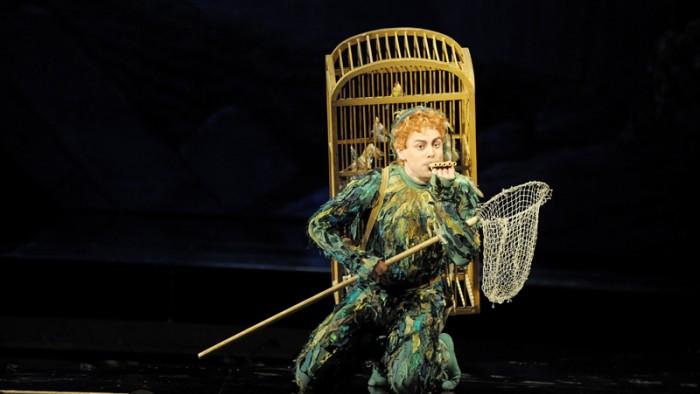
The stage direction for Der Fliegende Holländer was crafted by the famed English actor and director Jonathan Kent, who brings focus to the little girl’s obsession in a colourful universe filled with pirate ships and adventures, in which fantasy and reality meld together as one.

Der Fliegende Holländer is conducted by the Royal Danish Theatre’s principal conductor Michael Boder, and the plentiful choral parts provide a rich opportunity to experience the Royal Danish Opera Chorus hit their choral stride with their own unique Wagner sound.

Der Fliegende Holländer is performed in German with Danish supertitles.

Co-production with English National Opera. Nykredit is the exclusive production sponsor for Der Fliegende Holländer. The Danish Research Foundation is the principal sponsor of the Royal Danish Opera.

Stage: Operaen Store Scene
Title: Der Fliegende Holländer
Artform: Opera
Performance period: 26. Jan. – 28. Feb. 2014
Duration: 2 hours 15 minutes. No interval.
Price: 895kr – 125kr
Dates: 26/01, 28/01, 30/01, 02/02, 04/02, 08/02, 18/02, 21/02, 25/02, 28/02

Conductor: Michael Boder | Stage direction: Jonathan Kent | Set and costume design: Paul Brown | Lighting design: Mark Henderson | Choreography: Denni Sayers | The Royal Danish Opera Chorus | The Royal Danish Orchestra

Cast


To top


  • Read more … Performances:
    Cavalleria Rusticana & Bajadser
    Der Fliegende Holländer
    Johan Reuter
    Der Holländer
  • Read more … Performances:
    Macbeth
    Otello
    Der Fliegende Holländer
    John Lundgren
    Der Holländer
  • Read more … Performances:
    Otello
    Der Fliegende Holländer
    Ann Petersen
    Senta
  • Read more … Performances:
    Der Fliegende Holländer
    Iréne Theorin
    Senta
  • Read more … Performances:
    Der Fliegende Holländer
    Manuala Uhl
    Senta
  • Read more … Performances:
    Der Fliegende Holländer
    Clive Bayley
    Daland
  • Read more … Performances:
    Rusalka
    Der Fliegende Holländer
    Gregory Frank
    Daland
  • Read more … Performances:
    Otello
    Cavalleria Rusticana & Bajadser
    Der Fliegende Holländer
    Madama Butterfly – A Chamber Opera | On Tour
    Niels Jørgen Riis
    Erik
  • Read more … Performances:
    Rusalka
    Der Fliegende Holländer
    Johnny van Hal
    Erik
  • Read more … Performances:
    Otello
    Cavalleria Rusticana & Bajadser
    Der Fliegende Holländer
    Le Grand Macabre
    Gert Henning-Jensen
    Der Steuermann
  • Read more … Performances:
    Macbeth
    Otello
    Cavalleria Rusticana & Bajadser
    Der Fliegende Holländer
    Michael Kristensen
    Der Steuermann
  • Read more … Performances:
    Rusalka
    Der Fliegende Holländer
    Ulla Kudsk Jensen
    Mary
 
     
Johan Reuter Der Holländer
John Lundgren Der Holländer
Ann Petersen Senta
Iréne Theorin Senta
Manuala Uhl Senta
Clive Bayley Daland
Gregory Frank Daland
Niels Jørgen Riis Erik
Johnny van Hal Erik
Gert Henning-Jensen Der Steuermann
Michael Kristensen Der Steuermann
Ulla Kudsk Jensen Mary
Cast and conductor dates
 

<!–


–>

Holländer:Johan Reuter 
26/1, 28/1, 30/1, 2/2, 4/2, 8/2 

John Lundgren 
18/2, 21/2, 25/2, 28/2

Daland:
Clive Bayley 
26/1, 28/1, 30/1, 2/2, 4/2, 8/2 

Gregory Frank 
18/2, 21/2, 25/2, 28/2 

Senta:
Ann Petersen 
26/1, 30/1, 8/2, 18/2, 21/2, 

Iréne Theorin 
28/1, 2/2, 4/2 

Manuela Uhl
25/2, 28/2 

Erik:
Niels Jørgen Riis 
26/1, 28/1, 30/1, 2/2, 4/2, 

Johnny van Hal
8/2, 18/2, 21/2, 25/2, 28/2 

Mary:
Ulla Kudsk Jensen 
26/1, 28/1, 30/1, 2/2, 4/2, 8/2, 18/2, 21/2, 25/2, 28/2 

Steuermann:
Gert Henning-Jensen
26/1, 30/1, 4/2, 8/2, 18/2 

Michael Kristensen 
28/1, 2/2, 21/2, 25/2, 28/2 

Conductor:
Michael Boder
26/1, 28/1, 30/1, 2/2, 4/2, 8/2

Joana Mallwitz
18/2, 21/2, 25/2, 28/2

Posted in Music, OPera | Tagged , , , , , | Leave a comment

Macbeth in Minnesota

Macbeth-Minnesota

MINNESOTA OPERA PRESENTS:

Macbeth

Music by Giuseppe Verdi
Libretto by Francesco Maria Piave and Andrea Maffei
after the tragedy by William Shakespeare (1606)

Performances

  • Sat. 1/25/14 at 7:30pm
  • Tue. 1/28/14 at 7:30pm
  • Thu. 1/30/14 at 7:30pm
  • Sat. 2/1/14 at 8:00pm
  • Sun. 2/2/14 at 2pm

Power corrupts.

Verdi’s dark-hued Macbeth examines the corrosive consequences of tyranny. At the urging of his scheming wife, Macbeth murders the king to claim the crown. His desperate and deadly reign of terror devastates his country and hastens his doom in this masterwork based upon Shakespeare’s classic thriller.

Sung in Italian with English translations projected above the stage.

Synopsis

Act IScene one – A forest  Returning from battle Macbeth and Banquo happen upon a coven of witches that makes three rather unsettling predictions: they promise Macbeth his noble rank shall rise from Thane of Glamis to Thane of Cawdor, and then he shall be king; to Banquo they foretell that kings shall number among his descendants. The witches vanish, leaving the bewildered Macbeth and Banquo to consider what they’ve witnessed. Messengers inform them of the treasonous Thane of Cawdor’s recent execution – Macbeth has been named his successor. Already dark thoughts of ambition begin to cloud his judgment.Scene two – A hall in the castle  Lady Macbeth reads a letter from her husband detailing his unusual experiences and the swift fulfillment of the first prophesy. She draws the conclusion that their next step must be to usurp the throne. A servant informs his mistress that King Duncan plans to spend the night as their guest.

Late into the night, the Macbeths hash out their deadly scheme. After his wife gives the signal that all have retired to bed, Macbeth murders the sleeping Duncan. His remorse is pronounced, but Lady Macbeth holds strong, returning to the scene of the crime and planting the bloodstained dagger among the king’s sleeping bodyguards to implicate them. As dawn breaks Macduff and Banquo discover the king has been assassinated.

Act II

Scene one – A room in the castle  Duncan’s son, Malcolm, has fled Scotland. As a result he is now suspected of the regicide. Macbeth, now crowned king, is still unsettled by the witches’ third prediction – that Banquo’s children shall one day rule. He and his wife concur more blood must flow.

Scene two – The castle park.  Assassins descend on Banquo and his young son, Fleance. Banquo is killed, but Fleance manages to escape.

Scene three – A magnificent banquet hall  A celebration is held in Macbeth’s honor, and Lady Macbeth leads the toast. An assassin quietly confirms that Banquo has been killed, but Fleance remains at large. To his guests, Macbeth notes Banquo’s absence and makes the noble gesture to seat himself at his place. He is visibly horrified to find Banquo’s ghost already seated there. The guests are shocked by the strange behavior, and Lady Macbeth demands he control himself. To divert everyone’s attention she strikes up the drinking song again, but the ghost returns, and Macbeth loses his composure. Macduff grows suspicious.

Act III

A dark cave  Regrouped for the sabbath, the witches prepare an unearthly brew. Specters and demons dance as Hecate, goddess of the night and of sorcery, materializes. Macbeth returns in search of more answers. The powers of darkness yield an apparition warning him to beware Macduff. The second spirit, a child, advises him not to fear any man born of a woman. A final apparition assures him not to worry until Birnam Wood moves against him. Macbeth is reassured but insists on knowing the fate of Banquo’s son. The witches refuse to answer, but Banquo’s progeny is displayed in a parade of specters, followed by the reappearance of Banquo’s ghost. The witches and spirits vanish as Macbeth faints.

Macbeth confides the strange happenings to his wife. Recognizing Macduff as the most serious threat, they agree Lady Macduff and her children must die.

Act IV

Scene one – A deserted place on the Scottish border  A chorus of Scottish refugees bewail the plight of their oppressed country under Macbeth’s tyrannous rule. Macduff agonizes over the slaughter of his wife and children. Malcolm arrives with English soldiers. He instructs the army to camouflage themselves with branches from the forest.

Scene two – A room in the castle  The queen’s lady-in-waiting confers with a doctor. Together they observe the strange nocturnal activities of Lady Macbeth. She enters as if in a trance, and while trying to wash imagined blood from her hands, she exposes the hideous details of her crime.

Scene three – A room in the castle  Macbeth has been informed of the uprising against him. In light of the witches’ promises, he is certain the battle will be won. He receives news of his wife’s suicide but is barely moved. Yet his confidence is shaken by reports of Birnam Wood advancing on the castle.

Macduff confronts Macbeth. The king’s belief in the final prophecy is crushed when Macduff reveals that he was not born of a woman the usual way but “… from his mother’s womb untimely ripped.” Malcolm enters with soldiers and women of the castle. Macduff informs them that Macbeth has been slain. All hail Malcolm as their new king.

Approximate run time is 2 hours 48 minutes, including one intermission.

Approximate run time is 2 hours 48 minutes, including one intermission.

<:section>

ah-macbeth-minnesota

Giuseppe Verdi

<:section>


<:section> 

 Giuseppe Verdi

b Le Roncole, October 9 or 10, 1813; Milan, January 27, 1901

Giuseppe Verdi was born in Le Roncole, a small village in the Duchy of Parma. Contrary to the composer’s claim that he was of illiterate peasants, Carlo and Luigia Verdi both came from families of landowners and traders – together they ran a tavern and grocery store. As a youth Verdi’s natural fascination with music was enhanced by his father’s purchase of an old spinet piano. By the age of nine he was substituting as organist at the town church, a position he would later assume and hold for a number of years. Carlo Verdi’s contact with Antonio Barezzi, a wealthy merchant and music enthusiast from nearby Busseto, led to Giuseppe’s move to the larger town and to a more formalized music education. Lodging in his benefactor’s home, Verdi gave singing and piano lessons to Barezzi’s daughter, Margherita, who later became the composer’s first wife.

Encouraged by his benefactor, Verdi applied to the Milan Conservatory, his tuition to be funded in part by a scholarship for poor children and the balance to be paid by Barezzi. The Conservatory rejected his application because of his age and uneven piano technique, but Verdi remained in Milan under the tutorship of Vincenzo Livigna, a maestro concertatore at La Scala. After making a few useful contacts in Milan, writing a number of small compositions and some last-minute conducting substitutions, Verdi was offered a contract by La Scala for an opera, Rocester. It was never performed, nor does the score appear to exist. It is commonly believed that much of the music was incorporated into his first staged opera, Oberto. The score also may have been destroyed with the composer’s other juvenilia as Verdi had requested in his will.

Oberto achieved modest success and Verdi was offered another commission from La Scala for a comedy. Unfortunately, by this time the composer had suffered great personal loss – in the space of two years his wife and two small children had all died. Verdi asked to be released from his contract, but La Scala’s impresario, Bartolomeo Merelli (probably with good intentions) insisted that he complete the score. Written under a dark cloud, Il regno di giorno failed in the theater, and Verdi withdrew from any further engagements. It was due to a chance meeting with Merelli (with a new libretto in tow) that led to his return to the stage. Nabucco was a huge success and catapulted Verdi’s career forward.

Italian theaters at this time were in constant need of new works. As a result, competent composers were in demand and expected to compose at an astonishing rate. Both Rossini and Donizetti had set the standard and Verdi was required to adapt to their pace. These became his “anni di galera” (years as a “galley slave”) – between 1842 and 1853 he composed eleven new operas, often while experiencing regular bouts of ill-health. His style progressed from treating grandiose historical subjects (as was the custom of the day) to those involving more intimate, personal relationships. This transition is crowned by three of his most popular works: Rigoletto, Il trovatore and La traviata.

Toward the end of the 1840s Verdi considered an early retirement, as his predecessor Rossini had done. He purchased land near Busseto once belonging to his ancestors and soon began to convert the farmhouse into a villa (Sant’Agata) for himself and his new companion, Giuseppina Strepponi, a retired soprano who had championed his early works (including Nabucco, for which she had sung the leading female role). Verdi had renewed their friendship a few years before; when Verdi and Strepponi were in Paris they openly lived together as a couple. After their return to Italy, however, this arrangement scandalized the denizens of Busseto, necessitating a move to the country.

As Verdi became more interested in farming and less involved in the frustrating politics of the theater, his pace slowed – only six new works were composed over the next 18 years. His style began to change as well, from the traditional “numbers opera” to a more free-flowing, dramatically truthful style. Some of his greatest pieces belong to this era (Simon Boccanegra, Un ballo in maschera, La forza del destino, Don Carlos), which concluded with what most thought was his swan song, the spectacular grand opera Aida.

Following Aida, Verdi firmly stated he had retired for good. He was now devoted to Sant’Agata, and to revising and remounting several earlier works, pausing briefly to write a powerful Requiem (1874) to commemorate the passing of Italian poet and patriot Alessandro Manzoni. Coaxed out of his retreat by a lifelong love of Shakespeare, the septuagenarian composer produced Otello and Falstaff to great acclaim.

Verdi’s final years were focused on two philanthropic projects, a hospital in the neighboring town of Villanova, and a rest home for aged and indigent musicians in Milan, the Casa di Riposo. Giuseppina (who Verdi had legally married in 1859) died in 1897, and Verdi’s own passing several years later was an occasion of national mourning. One month after a small private funeral at the municipal cemetery, his remains were transferred to Milan and interred at the Casa di Riposo. Two hundred thousand people lined the streets as the “Va, pensiero” chorus from Nabucco was sung by an eight-hundred-person choir led by conductor Arturo Toscanini.

Cast & Creative Team

<:section>

Creative Team

Conductor Michael Christie
Stage Director Joel Ivany
Senic Coordinator Camellia Koo
Costume Designer Camellia Koo
Lighting Designer Jason Hand
Projections/Video Sean Niewenhuis

The Cast

Macbeth, general in the Scottish army Greer Grimsley
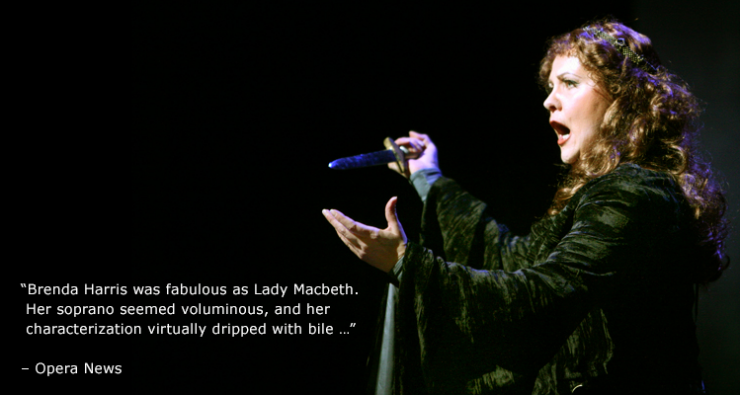
Lady Macbeth, his wife Brenda Harris
Macduff, Lord of Fife Harold Meers
Banquo, general in the Scottish army Alfred Walker
Malcolm, son to King Duncan John Robert Lindsey
Lady-in-waiting to Lady Macbeth Shannon Prickett
A doctor Christian Zaremba
Three apparitions Christie Hageman, Rebecca Krynski, tba
A herald Matthew Opitz
 
Posted in Music, OPera | Tagged , , , , , , , , | 1 Comment

“La Traviata” in Utah

UTAH OPERA PRESENTS:

CAPITOL THEATRE

JAN 18, 20, 22 & 24 (7:30 PM)
JAN 26, 2014 (2 PM)

Verdi is arguably opera’s most successful composer and La Traviata is one of his greatest hits. This is the story of Violetta, a Parisian courtesan who must battle the twin demons of consumption and a broken heart. Hers is the ultimate operatic life, one filled with grand parties, grander sacrifices, and some of Verdi’s most memorable music.

This return of Utah Opera’s lavish production, last seen in 2006, will transport you to Paris with lush costumes and grand sets. La Traviata is filled with memorable characters and some of the most familiar music in opera, including the drinking song “Libiamo.” Celebrate Utah Opera’s return to the newly remodeled Capitol Theatre and experience Verdi’s La Traviata.

CASTVioletta: Sara Gartland
Alfredo: Cody Austin
Germont: James Westman
Gastone: Tyson Miller
Baron Douphol: Shea Owens
Flora: Abigail Levis
Annina: Amy Owens
Marquis d’Obigny: Tyler Oliphant
Dr. Grenvil: Kevin Nakatani
Giuseppe: Chad Millar
Conductor: Robert Tweten
Director: Jose Maria Condemi

La Traviata Synopsis

ACT I. In her Paris salon, the courtesan Violetta Valéry greets party guests, including Flora Bervoix, the Marquis d’Obigny, Baron Douphol, and Gastone, who introduces a new admirer, Alfredo Germont. This young man, having adored Violetta from afar, joins her in a drinking song (Brindisi: “Libiamo”). An orchestra is heard in the next room, but as guests move there to dance, Violetta suffers a fainting spell, sends the guests on ahead, and goes to her parlor to recover. Alfredo comes in, and since they are alone, confesses his love (“Un dì felice”). At first Violetta protests that love means nothing to her. Something about the young man’s sincerity touches her, however, and she promises to meet him the next day. After the guests have gone, Violetta wonders if Alfredo could actually be the man she could love (“Ah, fors’è lui”). But she decides she wants freedom (“Sempre libera”), though Alfredo’s voice, heard outside, argues in favor of romance.

ACT II. Some months later Alfredo and Violetta are living in a country house near Paris, where he praises their contentment (“De’ miei bollenti spiriti”). But when the maid, Annina, reveals that Violetta has pawned her jewels to keep the house, Alfredo leaves for the city to settle matters at his own cost. Violetta comes looking for him and finds an invitation from Flora to a party that night. Violetta has no intention of going back to her old life, but trouble intrudes with the appearance of Alfredo’s father. Though impressed by Violetta’s ladylike manners, he demands she renounce his son: the scandal of Alfredo’s affair with her has threatened his daughter’s engagement (“Pura siccome un angelo”). Violetta says she cannot, but Germont eventually convinces her (“Dite alla giovine”). Alone, the desolate woman sends a message of acceptance to Flora and begins a farewell note to Alfredo. He enters suddenly, surprising her, and she can barely control herself as she reminds him of how deeply she loves him (“Amami, Alfredo”) before rushing out. Now a servant hands Alfredo her farewell note as Germont returns to console his son with reminders of family life in Provence (“Di Provenza”). But Alfredo, seeing Flora’s invitation, suspects Violetta has thrown him over for another lover. Furious, he determines to confront her at the party. At her soirée that evening, Flora learns from the Marquis that Violetta and Alfredo have parted, then clears the floor for hired entertainers – a band of fortune-telling Gypsies and some matadors who sing of Piquillo and his coy sweetheart (“E Piquillo un bel gagliardo”). Soon Alfredo strides in, making bitter comments about love and gambling recklessly at cards. Violetta has arrived with Baron Douphol, who challenges Alfredo to a game and loses a small fortune to him. Everyone goes in to supper, but Violetta has asked Alfredo to see her. Fearful of the Baron’s anger, she wants Alfredo to leave, but he misunderstands her apprehension and demands that she admit she loves Douphol. Crushed, she pretends she does. Now Alfredo calls in the others, denounces his former love and hurls his winnings at her feet (“Questa donna conoscete?”). Germont enters in time to see this and denounces his son’s behavior. The guests rebuke Alfredo and Douphol challenges him to a duel.

ACT III. In Violetta’s bedroom six months later, Dr. Grenvil tells Annina her mistress has not long to live: tuberculosis has claimed her. Alone, Violetta rereads a letter from Germont saying the Baron was only wounded in his duel with Alfredo, who knows all and is on his way to beg her pardon. But Violetta senses it is too late (“Addio del passato”). Paris is celebrating Mardi Gras and, after revelers pass outside, Annina rushes in to announce Alfredo. The lovers ecstatically plan to leave Paris forever (“Parigi, o cara”). Germont enters with the doctor before Violetta is seized with a last resurgence of strength. Feeling life return, she staggers and falls dead at her lover’s feet.

NOTES ON LA TRAVIAT: NOBLE HEART

In his 19th opera, La Traviata, Giuseppe Verdi wanted to strike to the core with his criticism of society’s blind devotion to rules of propriety. First, he selected a plot that asserted that a noble heart should be more highly valued than a spotless reputation. The story is set in 19th-century Paris’ “demi-monde,” where courtesans presided with their parties and gambling and available sexuality. As a novel and as a play, it had already shocked people to attention and then challenged them to see beyond snap judgments.

The story came from a play, La Dame aux Camélias (The Lady of the Camellias, or Camille), written by Alexandre Dumas, the son of the Dumas who wrote The Three Musketeers and other 19th-century thrillers. The 1852 play was based on Dumas’ own 1848 novel of the same name, which had, in turn, been based on his own personal experiences with a famous Parisian courtesan, Marie Duplessis. They had had a one-year love affair when they were both 20, and then Dumas had left her. He returned to Paris three years later, just after Marie’s death from tuberculosis.

Dumas’ detailed descriptions in novel and drama of the “demi-monde” created a scandal; people in upright society knew that this world existed but tried to ignore it. The scandal, of course, helped sell his books, but it also delayed the story’s progress to the stage. When the play finally appeared in theatres in 1852, people came in droves to see it. Actresses soon vied to play the courtesan, including Sarah Bernhardt, Lillian Gish, and then Greta Garbo in the 1936 film Camille. Still later, Julia Roberts took up a similar role in 1990’s Pretty Woman, which confesses its debt to this story when the film’s central characters attend an opera performance of …La Traviata.

Verdi’s personal history with the cruelty with which social norms are often upheld probably played into his attraction to the story when he saw the play in 1852. In 1851, he had moved back to his hometown of Busseto, Italy, with Giuseppina Strepponi, a soprano and singing teacher he had known since 1841 and with whom he had been living with since at least 1847. The unmarried Strepponi, who had earlier also given birth to three children out of wedlock, suffered from the scorn of the Busseto villagers.

Verdi would have been drawn to the story anyway, though, because he was a compassionate man. In opera after opera, he pleaded through music and story for people to show compassion for others who don’t fit easily in society, like the hunchback Rigoletto, the slave Aida, the courtesan Violetta. He practiced compassion outside the theatre too: he built a hospital near his estate, and he founded and set up an endowment for Casa di Riposo, a home for impoverished retired musicians.

In addition to selecting a story that would pull people’s heartstrings, Verdi attempted to shock his audience members into attention in a way theretofore unheard of. He wanted to set the opera whose story had occurred in contemporary times in contemporary rooms and costumes. This just hadn’t been done before, and the censors in Venice, where the premiere would take place, felt it would be both disappointing and uncomfortable for theatre-goers not to be transported to someplace grand and far away during their evening’s entertainment. So Verdi and Piave transposed the story’s action to that distant country the past, and set the opera in 1700.

We experience a different but equivalent distancing in 21st century productions. Utah Opera’s production will be set in the late 19th century, but we hope you will not feel so comfortably distant that you don’t feel the timelessness of Verdi’s urging for human empathy.

Verdi’s third and most sure-fire weapon in his campaign to win us over to the character scorned by higher society yet loveable for her good, self-sacrificing heart is the noble, gentle music he wrote for her. Verdi charts the development of Violetta’s character through the shifting styles of music she sings in each act, but always with a running thread of her dignity. In Act I, when she claims to her future lover Alfredo that she lives for pleasure alone, her music is filled with skips and ornaments and light touches, but as she listens to the sincere devotion in his aria of love, she takes on his harmony; then the melody of his invitation to a less light-hearted way of living haunts her until it is also hers, and she too accepts the burden and the delight of love (croce e delizia al cor).

Her character is put to the test in Act II, in a scene Dumas added when he transferred his story from novel to dramatic form: Alfredo’s father requests that Violetta leave Alfredo for his own and his family’s reputation, and he further asks her to lie to Alfredo about why she’s leaving so that he won’t follow her. It’s clear from the beginning of the scene that Violetta is a more considerate and dignified person than the “cultured” father, and even he is forced to acknowledge her noble spirit as he sees her develop the determination to sacrifice her own happiness for what she is convinced are the best interests of her beloved. Verdi gives her weighty, dramatic music to express her agony and devotion. Her outburst to Alfredo as she runs away from him at the end of the scene is a good example—it is she who finally gives words to the yearning melody introduced by the violins near the beginning of the Act I Prelude, “Amami, Alfredo, quant’ io t’amo.” [love me Alfredo, as I love you].

Verdi gives Violetta equally noble music in Act III, which takes place several months later, when her body has finally succumbed to the tuberculosis from which she has suffered throughout the story. This music is weaker, gentler still, appropriate to her frail state. One of the most poignant moments in the opera occurs when she is alone on stage rereading a letter from Alfredo’s father in which the old man repents what he did to her and his son. She is so weak she can’t even sing but only speak the words, while a solo oboe plays beneath to underline her frailty, loneliness and hopelessness, since it truly seems too late.

No wonder this role scares sopranos—Violetta has to have a different voice for each act. Perhaps some of our empathy and admiration for Violetta by the end of the opera comes from our related feelings for the soprano who can perform this demanding role.

In many ways, the story of La Traviata is difficult to relate to: not only is the opera usually set at least a century in the past, but in it a woman suffers and dies from tuberculosis, which most of us have difficulty even recognizing as a modern illness. Moreover, the woman is a courtesan, a social class Americans can hardly understand. But Verdi’s music takes us on an important human journey reminding us that a noble heart is the best trait for any human being at any time, in any place. A person who loves deeply, who can sacrifice her own desires for the good of others, is an admirable human being, no matter what “monde” she lives in. To have the musical genius of Verdi underlining such a theme drives it straight to our hearts.

Paula Fowler is Utah Symphony & Opera’s
Director of Education and Community Outreach


Posted in Music, OPera | Tagged , , , , , , , , | Leave a comment