“Eugene Onegin” in Munich

Bayerische Staatsoper

PRESENTS:

Eugene Onegin

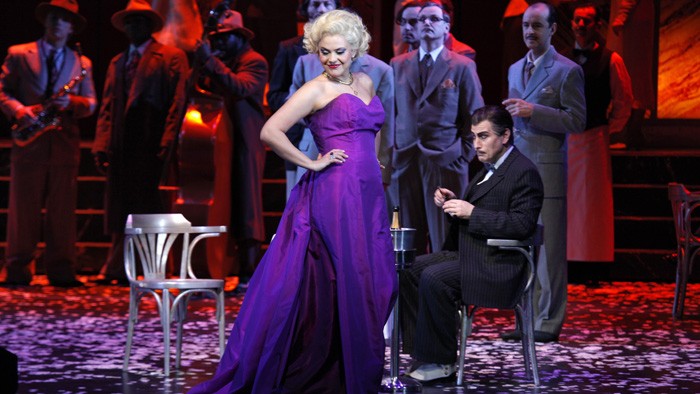
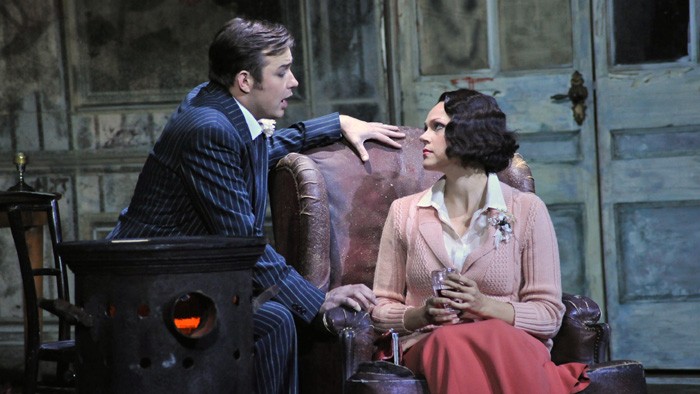
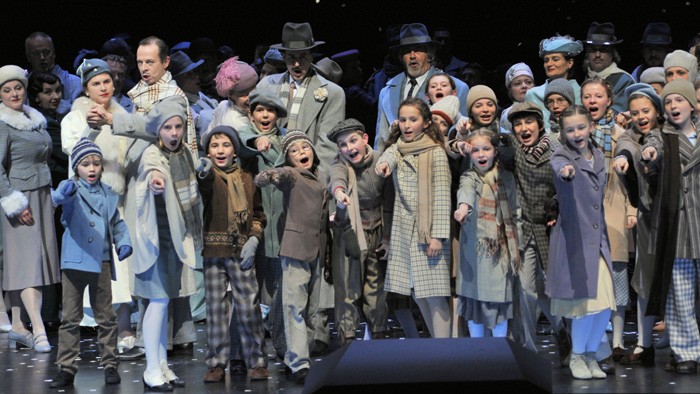
Eugen Onegin: Simon Keenlyside (Onegin), Ekaterina Scherbachenko (Tatjana) Eugen Onegin: Simon Keenlyside (Onegin), Ain Anger (Saretzki), Pavol Breslik (Lenski) Eugen Onegin: Ekaterina Scherbachenko (Tatjana), Ain Anger (Fürst Gremin)

Peter I. Tschaikowsky

Libretto by Peter I. Tchaikovsky and Konstantin Shilovsky after Alexander Pushkin’s verse novel

The story of a cosmopolitan, educated, yet excessively arrogant outsider. He antagonizes the women who love and desire him, just as he does his friend, whom he ultimately kills in a duel. Is it Onegin’s longing to see himself always reflected in others? Is it his inability to adjust socially? The answer for him and the people with whom he comes into contact is bitter. Its name: solitude. Tchaikovsky’s “Lyrical Scenes” subtitled Eugene Onegin ranks among the greatest, most beautiful and most frequently performed Russian operas.

In Russian with German surtitles

Nationaltheater

Performances:
Saturday, 4 January 2014, 7.00 p.m.
Tuesday, 7 January 2014, 7.00 p.m.
Friday, 10 January 2014, 7.00 p.m.

FIRST TABLEAU

An evening in the country, (almost) like any other

Everyone is gathered together. The sisters Tatiana and Olga are singing a duet; their widowed mother, Larina, and Filipievna are listening to them. The girls‘ song awakens memories of their own youth. A neighbour starts singing a different song which they all know and join in. Larina finds this all a little bit too much melancholy for one evening and demands some cheerful music and the mood lightens.

Tatiana is dreaming and Olga rudely brings her back to reality. Larina and Filipievna are worried about Tatiana, who suddenly seems to them to be very pale. Tatiana sets everybody’s mind at rest; she has merely been very absorbed in a novel she is reading.
Larina sympathetically declares reading to be a fleeting phenomenon of youth.

An unexpected visits causes excitement. Vladimir Lenski, who has been engaged to Olga for a long time, drops by, bringing with him a friend – Eugene Onegin. This young man from the city is visiting his friend, and everyone is greatly impressed by him. Tatiana believes this to a meeting destined to happen and falls head over heels in love.
The older folk leave the young people to their own devices. Lenski is completely lost in his admiration of Olga and Onegin tries to get into conversation with Tatiana.
They are called in for a meal.

SECOND TABLEAU
A sleepless night, confessions I

Tatiana is still awake. Filipievna also makes no move to retire and starts to chat about the past. Tatiana wants to hear a story about love. Filipievna’s stories are sad: she married a man chosen for her by her parents. Filipievna is worried about Tatiana, who seems ill and feverish. Tatiana admits that she is in love but does not talk about it and swears Filipievna to secrecy.
Filipievna finally goes to bed, leaving Tatiana dizzy with the violence of her emotions. She tries to put a name to them and formulates an incredible, and fateful, declaration of love.
Day breaks. Tatiana hands Filipievna a letter, which she is to take safely and discreetly to Onegin.

THIRD TABLEAU
Late afternoon, destroyed hopes

Tatiana waits impatiently for Onegin’s reaction to her letter. He arrives in person and Tatiana is in a state of considerable emotion, feelings of both joy and shame. Onegin thanks her for her frank letter and calmly, collectedly and with great understanding explains to her that he cannot return her feelings. Love and marriage are not for him. Finally he advises her to keep her feelings under better control so that she will not be taken advantage of by the first man to come along. Tatiana is silently humiliated.

FOURTH TABLEAU
Evening, an unsuccessful ball

The house is full of guests for a ball in honour of Tatiana’s birthday. Onegin is also present, having been persuaded to come by Lenski. He congratulates Tatiana and dances with her, which gives rise to gossip. People still think they make an ideal couple. Onegin senses that they are the focus of attention and that people are talking about them and so he steals Olga from Lenski and dances with her. Tatiana feels out of place at her own ball; Lenski is jealous and showers reproaches on Olga.
One or two people perform, to the amusement of the guests, but fail to make either Tatiana or Lenski feel more cheerful.
Onegin approaches Lenski but is rebuffed. He wants to have a frank discussion with Lenski but the whole thing develops into a quarrel, while the guests listen. Lenski insults Onegin in front of them all, declares their friendship to be over and challenges him to a duel.

FIFTH TABLEAU
Before dawn, no dream or the lost opportunity

Lenski is waiting impatiently for Onegin to arrive to fight the duel. He takes farewell of life and all that he has loved.
A short while later the two friends are facing each other as rivals. Both are shocked by the distance that is now between them, but neither of them can manage a gesture of reconciliation which would end the duel.
The second, Saretzky, urges them to hurry. The rules are quickly explained.
Onegin takes aim and fires, fatally wounding his friend.

SIXTH TABLEAU
An evening years later, the reunion

Memories of Lenski haunt Onegin; he is tortured by feelings of guilt. Frustrated with his life, he returns from years of aimless travel abroad.
He meets Tatiana again unexpectedly, in the capital. She is now married to Gremin, a respected member of society.
Gremin tells Onegin how happy his marriage is and raves about his charming wife. He introduces them to each other and they admit that they have met before – in a different time.
Onegin feels drawn to Tatiana. He wants to begin a new life with this woman.

SEVENTH TABLEAU
A short while later, confessions II

Tatiana is waiting for Onegin, who has asked her to meet him for a private chat. Her passion for him has not diminished with the years, but she doubts the sincerity of his feelings. Onegin is full of remorse, begs her forgiveness, throws himself at her feet. Tatiana confesses her love for him a second time. He urges her to leave her husband, but Tatiana tears herself away from him and flees to the safety of her life with Gremin.
Onegin is left alone.

© Bavarian State Opera

Conductor

Kirill Petrenko. © Wilfried Hösl
Kirill Petrenko
Kirill Petrenko was born in Omsk in 1972 and studied piano there at the Music Academy. At the age of eleven, he made his first public appearance as a pianist with the city’s symphony orchestra. In 1990, the family (his father was a violinist, his mother a musicologist) moved to the Austrian state of Vorarlberg, where his father obtained a job as an orchestral musician and music teacher. Petrenko initially continued his studies in Feldkirch and then studied conducting at the University of Music in Vienna, from which he graduated in June 1997. His first engagement, from autumn 1997, was as Assistant and rehearsal accompanist at the Volksoper in Vienna.From 1999 to 2002, Kirill Petrenko served as General Music Director at the theatre in Meiningen, where he attracted international attention for the first time in 2001 with the Ring des Nibelungen in the production directed by Christine Mielitz and designed by Alfred Hrdlicka.

From 2002 to 2007, Kirill Petrenko was General Music Director at the Komische Oper in Berlin. The most important new productions, which Petrenko decisively influenced here included interpretations in collaboration with directors such as Peter Konwitschny, Calixto Bieito, Willi Decker or Andreas Homoki.

In parallel with his positions in Meiningen and Berlin, his international career also took off very quickly. Major débuts included the Maggio Musicale Fiorentino in 2000; the Vienna State Opera and the Semperoper in Dresden in 2001; the Gran Teatre de Liceu, Opéra National de Paris, Royal Opera House Covent Garden, Bavarian State Opera and Metropolitan Opera New York in 2003; the Frankfurt opera in 2005. From 2006 to 2008, he collaborated with Peter Stein on P.I. Tchaikovsky’s cycle of Pushkin operas in Lyon, which was then performed in its entirety in spring 2010.
Since leaving the Komische Oper in July 2007, Kirill Petrenko has worked as a guest conductor. In 2009, among other works, he conducted the new production of Leoš Janáček’s Jenůfa directed by Barbara Frey at the Bavarian State Opera and Hans Pfizner’s Palestrina directed by Harry Kupfer in Frankfurt. In 2011, Kirill Petrenko conducted the new production of Tosca in collaboration with Andreas Kriegenburg, again in Frankfurt, along with Wagner’s Tristan und Isolde (in collaboration with Willy Decker) in Lyon and at the Ruhr Triennale.

The most important orchestras that Kirill Petrenko has conducted to date include the Berlin Philharmonic, the Dresden Staatskapelle, the Bavarian Radio Symphony Orchestra, the Bavarian State Orchestra, the Orchestra of WDR Cologne, the Hamburg Philharmonic and the Hamburg NDR Symphony Orchestra, the Frankfurt Museum Orchestra, the Amsterdam Concertgebouw Orchestra, the Vienna Radio Symphony Orchestra, the Vienna Symphony Orchestra, the Cleveland Orchestra, the Chicago Symphony Orchestra, the London Philharmonic Orchestra, the Oslo Philharmonic Orchestra, the Orchestra Santa Cecilia, the Orchestra RAI Torino and the Israel Philharmonic Orchestra. In addition, Kirill Petrenko has conducted concerts at the Salzburg and Bregenz Festivals.

Summer 2013 will see a new production of Richard Wagner’s Der Ring des Nibelungen at the Bayreuth Festival.

From 1 September 2013, Kirill Petrenko will assume the post of General Music Director at the Bavarian State Opera. New productions in the 2012/13 season: Richard Strauss’s Die Frau ohne Schatten, Wolfgang Amadeus Mozart’s La clemenza di Tito and Bernd Alois Zimmermann’s Die Soldaten.

<!–

–>


<!–

–>


Set and Costumes

Malgorzata Szczesniak
<!–

–>


Lighting

Felice Ross
<!–

–>


Choreography

Saar Magal
Saar Magal
Saar Magal studied dance at the Telma Yalin Art High School in Tel Aviv and at the Laban Centre for Movement and Dance in London. She won first prize at the choreography competition “On the Way to London”. After completing her education, she worked, among others, with the Batsheva Dance Company and the Koldmana Dance Company in Tel Aviv, at the National Theatre Habimah and at the Laban Centre for Movement and Dance in London. Initial collaboration with the producer Krzysztof Warlikowski in 1997 was followed by numerous subsequent projects and, among other works, they jointly staged Hamlet in Tel Aviv, Parsifal at the Opéra National de Paris, Medée at Théâtre de la Monnaie in Brussels as well as additional productions in Warsaw and Stuttgart. Besides her artistic work, she teaches dance, improvisation and choreography at various dancing schools in Israel. At the Bavarian State Opera, she developed the choreography for Warlikowski’s staging of Eugene Onegin.
<!–

–>


Dramaturgy

<!–

–>


Dramaturgy

Peter Heilker
<!–

–>


<!–

–>


<!–

–>


<!–

–>


<!–

–>


Filipjewna

Larissa Diadkova
<!–

–>


Eugen Onegin

Artur Rucinski
<!–

–>


<!–

–>


Fürst Gremin / Saretzki

Rafal Siwek (© Wojtek Wieteska)
<!–

–>


Ein Hauptmann

Leonard Bernad
<!–

–>


Posted in Music, OPera | Tagged , , , , , , , , | Leave a comment

Wagner’s “Der fliegende Hollander” in Copenhagen

logoDenmark

The Royal Danish Theater Presents:


The Royal Danish Theatre’s Wagner singers are highly sought-after in the opera houses of the world.

Now you can experience several of them in Wagner’s early ghost opera Der Fliegende Holländer, including the internationally renowned Danish baritone Johan Reuter in the title role as the Dutchman and Wagner soprano Iréne Theorin, who is back at the Royal Danish Theatre to perform the role of Senta.

Der Fliegende Holländer is the story of Senta, who as a child is told the tale of the Flying Dutchman’s tragic destiny. As an adult she is obsessed with the love-hungry ghost captain, and her longing becomes so strong that he steps into her reality – with disastrous consequences. 
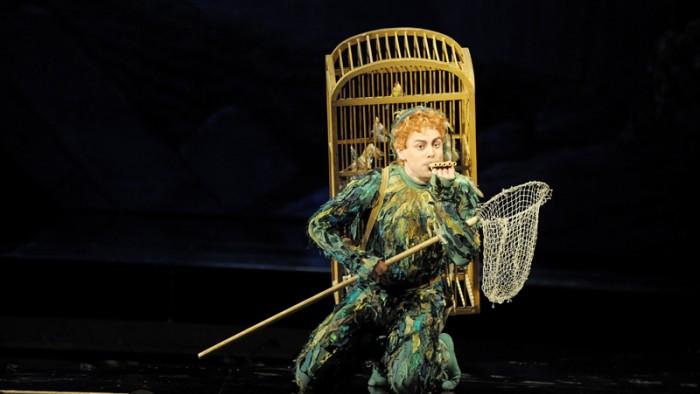
The stage direction for Der Fliegende Holländer was crafted by the famed English actor and director Jonathan Kent, who brings focus to the little girl’s obsession in a colourful universe filled with pirate ships and adventures, in which fantasy and reality meld together as one.

Der Fliegende Holländer is conducted by the Royal Danish Theatre’s principal conductor Michael Boder, and the plentiful choral parts provide a rich opportunity to experience the Royal Danish Opera Chorus hit their choral stride with their own unique Wagner sound.

Der Fliegende Holländer is performed in German with Danish supertitles.

Co-production with English National Opera. Nykredit is the exclusive production sponsor for Der Fliegende Holländer. The Danish Research Foundation is the principal sponsor of the Royal Danish Opera.

Stage: Operaen Store Scene
Title: Der Fliegende Holländer
Artform: Opera
Performance period: 26. Jan. – 28. Feb. 2014
Duration: 2 hours 15 minutes. No interval.
Price: 895kr – 125kr
Dates: 26/01, 28/01, 30/01, 02/02, 04/02, 08/02, 18/02, 21/02, 25/02, 28/02

Conductor: Michael Boder | Stage direction: Jonathan Kent | Set and costume design: Paul Brown | Lighting design: Mark Henderson | Choreography: Denni Sayers | The Royal Danish Opera Chorus | The Royal Danish Orchestra

Cast


To top


  • Read more … Performances:
    Cavalleria Rusticana & Bajadser
    Der Fliegende Holländer
    Johan Reuter
    Der Holländer
  • Read more … Performances:
    Macbeth
    Otello
    Der Fliegende Holländer
    John Lundgren
    Der Holländer
  • Read more … Performances:
    Otello
    Der Fliegende Holländer
    Ann Petersen
    Senta
  • Read more … Performances:
    Der Fliegende Holländer
    Iréne Theorin
    Senta
  • Read more … Performances:
    Der Fliegende Holländer
    Manuala Uhl
    Senta
  • Read more … Performances:
    Der Fliegende Holländer
    Clive Bayley
    Daland
  • Read more … Performances:
    Rusalka
    Der Fliegende Holländer
    Gregory Frank
    Daland
  • Read more … Performances:
    Otello
    Cavalleria Rusticana & Bajadser
    Der Fliegende Holländer
    Madama Butterfly – A Chamber Opera | On Tour
    Niels Jørgen Riis
    Erik
  • Read more … Performances:
    Rusalka
    Der Fliegende Holländer
    Johnny van Hal
    Erik
  • Read more … Performances:
    Otello
    Cavalleria Rusticana & Bajadser
    Der Fliegende Holländer
    Le Grand Macabre
    Gert Henning-Jensen
    Der Steuermann
  • Read more … Performances:
    Macbeth
    Otello
    Cavalleria Rusticana & Bajadser
    Der Fliegende Holländer
    Michael Kristensen
    Der Steuermann
  • Read more … Performances:
    Rusalka
    Der Fliegende Holländer
    Ulla Kudsk Jensen
    Mary
 
     
Johan Reuter Der Holländer
John Lundgren Der Holländer
Ann Petersen Senta
Iréne Theorin Senta
Manuala Uhl Senta
Clive Bayley Daland
Gregory Frank Daland
Niels Jørgen Riis Erik
Johnny van Hal Erik
Gert Henning-Jensen Der Steuermann
Michael Kristensen Der Steuermann
Ulla Kudsk Jensen Mary
Cast and conductor dates
 

<!–


–>

Holländer:Johan Reuter 
26/1, 28/1, 30/1, 2/2, 4/2, 8/2 

John Lundgren 
18/2, 21/2, 25/2, 28/2

Daland:
Clive Bayley 
26/1, 28/1, 30/1, 2/2, 4/2, 8/2 

Gregory Frank 
18/2, 21/2, 25/2, 28/2 

Senta:
Ann Petersen 
26/1, 30/1, 8/2, 18/2, 21/2, 

Iréne Theorin 
28/1, 2/2, 4/2 

Manuela Uhl
25/2, 28/2 

Erik:
Niels Jørgen Riis 
26/1, 28/1, 30/1, 2/2, 4/2, 

Johnny van Hal
8/2, 18/2, 21/2, 25/2, 28/2 

Mary:
Ulla Kudsk Jensen 
26/1, 28/1, 30/1, 2/2, 4/2, 8/2, 18/2, 21/2, 25/2, 28/2 

Steuermann:
Gert Henning-Jensen
26/1, 30/1, 4/2, 8/2, 18/2 

Michael Kristensen 
28/1, 2/2, 21/2, 25/2, 28/2 

Conductor:
Michael Boder
26/1, 28/1, 30/1, 2/2, 4/2, 8/2

Joana Mallwitz
18/2, 21/2, 25/2, 28/2

Posted in Music, OPera | Tagged , , , , , | Leave a comment

Macbeth in Minnesota

Macbeth-Minnesota

MINNESOTA OPERA PRESENTS:

Macbeth

Music by Giuseppe Verdi
Libretto by Francesco Maria Piave and Andrea Maffei
after the tragedy by William Shakespeare (1606)

Performances

  • Sat. 1/25/14 at 7:30pm
  • Tue. 1/28/14 at 7:30pm
  • Thu. 1/30/14 at 7:30pm
  • Sat. 2/1/14 at 8:00pm
  • Sun. 2/2/14 at 2pm

Power corrupts.

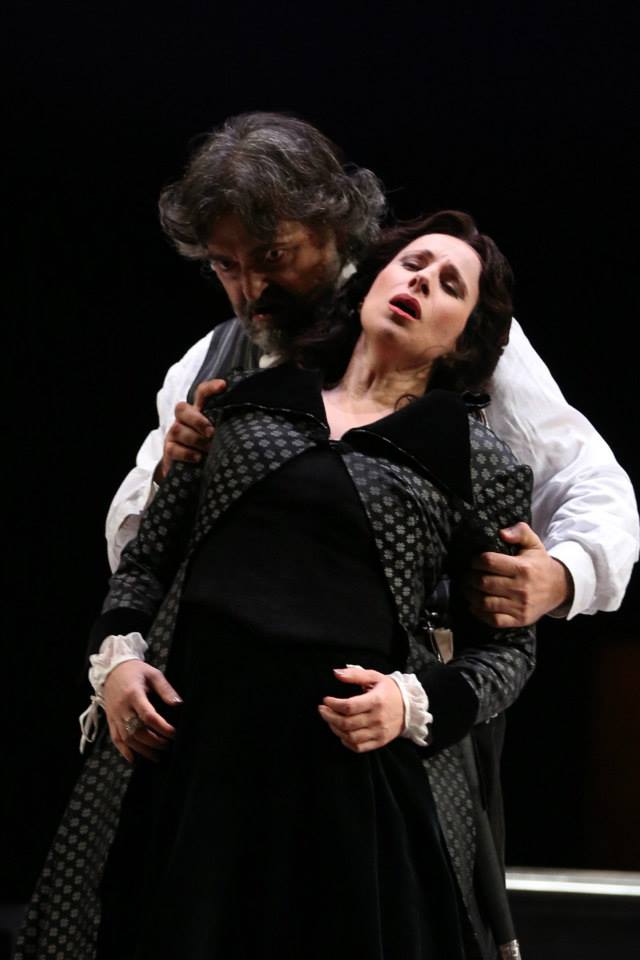
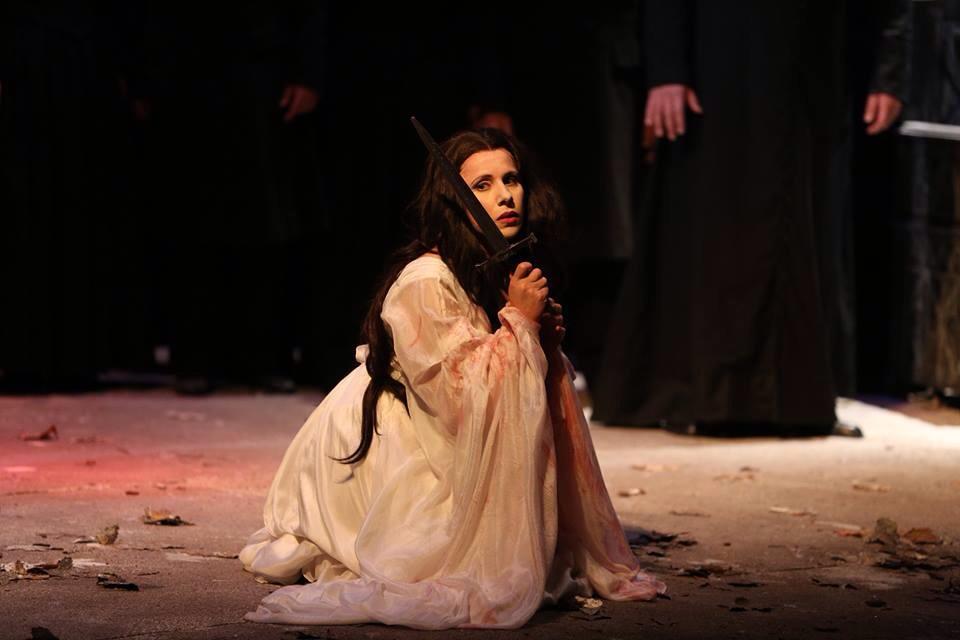
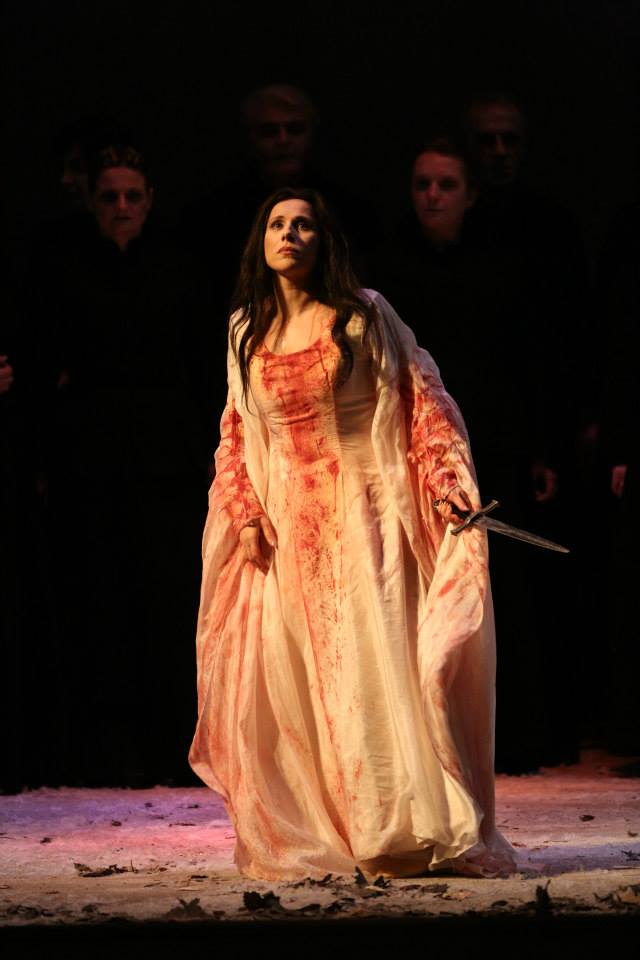
Verdi’s dark-hued Macbeth examines the corrosive consequences of tyranny. At the urging of his scheming wife, Macbeth murders the king to claim the crown. His desperate and deadly reign of terror devastates his country and hastens his doom in this masterwork based upon Shakespeare’s classic thriller.

Sung in Italian with English translations projected above the stage.

Synopsis

Act IScene one – A forest  Returning from battle Macbeth and Banquo happen upon a coven of witches that makes three rather unsettling predictions: they promise Macbeth his noble rank shall rise from Thane of Glamis to Thane of Cawdor, and then he shall be king; to Banquo they foretell that kings shall number among his descendants. The witches vanish, leaving the bewildered Macbeth and Banquo to consider what they’ve witnessed. Messengers inform them of the treasonous Thane of Cawdor’s recent execution – Macbeth has been named his successor. Already dark thoughts of ambition begin to cloud his judgment.Scene two – A hall in the castle  Lady Macbeth reads a letter from her husband detailing his unusual experiences and the swift fulfillment of the first prophesy. She draws the conclusion that their next step must be to usurp the throne. A servant informs his mistress that King Duncan plans to spend the night as their guest.

Late into the night, the Macbeths hash out their deadly scheme. After his wife gives the signal that all have retired to bed, Macbeth murders the sleeping Duncan. His remorse is pronounced, but Lady Macbeth holds strong, returning to the scene of the crime and planting the bloodstained dagger among the king’s sleeping bodyguards to implicate them. As dawn breaks Macduff and Banquo discover the king has been assassinated.

Act II

Scene one – A room in the castle  Duncan’s son, Malcolm, has fled Scotland. As a result he is now suspected of the regicide. Macbeth, now crowned king, is still unsettled by the witches’ third prediction – that Banquo’s children shall one day rule. He and his wife concur more blood must flow.

Scene two – The castle park.  Assassins descend on Banquo and his young son, Fleance. Banquo is killed, but Fleance manages to escape.

Scene three – A magnificent banquet hall  A celebration is held in Macbeth’s honor, and Lady Macbeth leads the toast. An assassin quietly confirms that Banquo has been killed, but Fleance remains at large. To his guests, Macbeth notes Banquo’s absence and makes the noble gesture to seat himself at his place. He is visibly horrified to find Banquo’s ghost already seated there. The guests are shocked by the strange behavior, and Lady Macbeth demands he control himself. To divert everyone’s attention she strikes up the drinking song again, but the ghost returns, and Macbeth loses his composure. Macduff grows suspicious.

Act III

A dark cave  Regrouped for the sabbath, the witches prepare an unearthly brew. Specters and demons dance as Hecate, goddess of the night and of sorcery, materializes. Macbeth returns in search of more answers. The powers of darkness yield an apparition warning him to beware Macduff. The second spirit, a child, advises him not to fear any man born of a woman. A final apparition assures him not to worry until Birnam Wood moves against him. Macbeth is reassured but insists on knowing the fate of Banquo’s son. The witches refuse to answer, but Banquo’s progeny is displayed in a parade of specters, followed by the reappearance of Banquo’s ghost. The witches and spirits vanish as Macbeth faints.

Macbeth confides the strange happenings to his wife. Recognizing Macduff as the most serious threat, they agree Lady Macduff and her children must die.

Act IV

Scene one – A deserted place on the Scottish border  A chorus of Scottish refugees bewail the plight of their oppressed country under Macbeth’s tyrannous rule. Macduff agonizes over the slaughter of his wife and children. Malcolm arrives with English soldiers. He instructs the army to camouflage themselves with branches from the forest.

Scene two – A room in the castle  The queen’s lady-in-waiting confers with a doctor. Together they observe the strange nocturnal activities of Lady Macbeth. She enters as if in a trance, and while trying to wash imagined blood from her hands, she exposes the hideous details of her crime.

Scene three – A room in the castle  Macbeth has been informed of the uprising against him. In light of the witches’ promises, he is certain the battle will be won. He receives news of his wife’s suicide but is barely moved. Yet his confidence is shaken by reports of Birnam Wood advancing on the castle.

Macduff confronts Macbeth. The king’s belief in the final prophecy is crushed when Macduff reveals that he was not born of a woman the usual way but “… from his mother’s womb untimely ripped.” Malcolm enters with soldiers and women of the castle. Macduff informs them that Macbeth has been slain. All hail Malcolm as their new king.

Approximate run time is 2 hours 48 minutes, including one intermission.

Approximate run time is 2 hours 48 minutes, including one intermission.

<:section>

ah-macbeth-minnesota

Giuseppe Verdi

<:section>


<:section> 

 Giuseppe Verdi

b Le Roncole, October 9 or 10, 1813; Milan, January 27, 1901

Giuseppe Verdi was born in Le Roncole, a small village in the Duchy of Parma. Contrary to the composer’s claim that he was of illiterate peasants, Carlo and Luigia Verdi both came from families of landowners and traders – together they ran a tavern and grocery store. As a youth Verdi’s natural fascination with music was enhanced by his father’s purchase of an old spinet piano. By the age of nine he was substituting as organist at the town church, a position he would later assume and hold for a number of years. Carlo Verdi’s contact with Antonio Barezzi, a wealthy merchant and music enthusiast from nearby Busseto, led to Giuseppe’s move to the larger town and to a more formalized music education. Lodging in his benefactor’s home, Verdi gave singing and piano lessons to Barezzi’s daughter, Margherita, who later became the composer’s first wife.

Encouraged by his benefactor, Verdi applied to the Milan Conservatory, his tuition to be funded in part by a scholarship for poor children and the balance to be paid by Barezzi. The Conservatory rejected his application because of his age and uneven piano technique, but Verdi remained in Milan under the tutorship of Vincenzo Livigna, a maestro concertatore at La Scala. After making a few useful contacts in Milan, writing a number of small compositions and some last-minute conducting substitutions, Verdi was offered a contract by La Scala for an opera, Rocester. It was never performed, nor does the score appear to exist. It is commonly believed that much of the music was incorporated into his first staged opera, Oberto. The score also may have been destroyed with the composer’s other juvenilia as Verdi had requested in his will.

Oberto achieved modest success and Verdi was offered another commission from La Scala for a comedy. Unfortunately, by this time the composer had suffered great personal loss – in the space of two years his wife and two small children had all died. Verdi asked to be released from his contract, but La Scala’s impresario, Bartolomeo Merelli (probably with good intentions) insisted that he complete the score. Written under a dark cloud, Il regno di giorno failed in the theater, and Verdi withdrew from any further engagements. It was due to a chance meeting with Merelli (with a new libretto in tow) that led to his return to the stage. Nabucco was a huge success and catapulted Verdi’s career forward.

Italian theaters at this time were in constant need of new works. As a result, competent composers were in demand and expected to compose at an astonishing rate. Both Rossini and Donizetti had set the standard and Verdi was required to adapt to their pace. These became his “anni di galera” (years as a “galley slave”) – between 1842 and 1853 he composed eleven new operas, often while experiencing regular bouts of ill-health. His style progressed from treating grandiose historical subjects (as was the custom of the day) to those involving more intimate, personal relationships. This transition is crowned by three of his most popular works: Rigoletto, Il trovatore and La traviata.

Toward the end of the 1840s Verdi considered an early retirement, as his predecessor Rossini had done. He purchased land near Busseto once belonging to his ancestors and soon began to convert the farmhouse into a villa (Sant’Agata) for himself and his new companion, Giuseppina Strepponi, a retired soprano who had championed his early works (including Nabucco, for which she had sung the leading female role). Verdi had renewed their friendship a few years before; when Verdi and Strepponi were in Paris they openly lived together as a couple. After their return to Italy, however, this arrangement scandalized the denizens of Busseto, necessitating a move to the country.

As Verdi became more interested in farming and less involved in the frustrating politics of the theater, his pace slowed – only six new works were composed over the next 18 years. His style began to change as well, from the traditional “numbers opera” to a more free-flowing, dramatically truthful style. Some of his greatest pieces belong to this era (Simon Boccanegra, Un ballo in maschera, La forza del destino, Don Carlos), which concluded with what most thought was his swan song, the spectacular grand opera Aida.

Following Aida, Verdi firmly stated he had retired for good. He was now devoted to Sant’Agata, and to revising and remounting several earlier works, pausing briefly to write a powerful Requiem (1874) to commemorate the passing of Italian poet and patriot Alessandro Manzoni. Coaxed out of his retreat by a lifelong love of Shakespeare, the septuagenarian composer produced Otello and Falstaff to great acclaim.

Verdi’s final years were focused on two philanthropic projects, a hospital in the neighboring town of Villanova, and a rest home for aged and indigent musicians in Milan, the Casa di Riposo. Giuseppina (who Verdi had legally married in 1859) died in 1897, and Verdi’s own passing several years later was an occasion of national mourning. One month after a small private funeral at the municipal cemetery, his remains were transferred to Milan and interred at the Casa di Riposo. Two hundred thousand people lined the streets as the “Va, pensiero” chorus from Nabucco was sung by an eight-hundred-person choir led by conductor Arturo Toscanini.

Cast & Creative Team

<:section>

Creative Team

Conductor Michael Christie
Stage Director Joel Ivany
Senic Coordinator Camellia Koo
Costume Designer Camellia Koo
Lighting Designer Jason Hand
Projections/Video Sean Niewenhuis

The Cast

Macbeth, general in the Scottish army Greer Grimsley
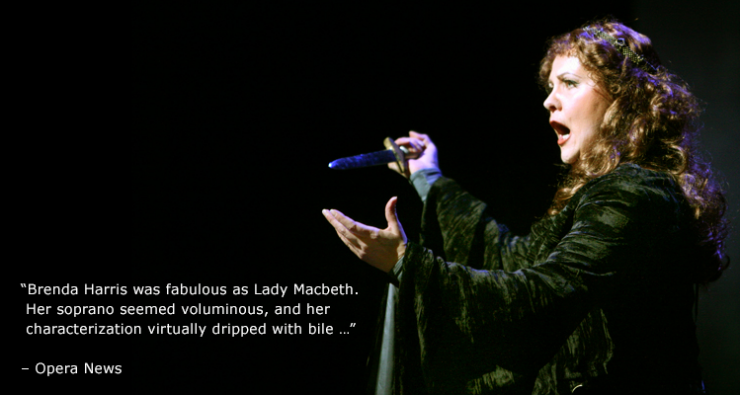
Lady Macbeth, his wife Brenda Harris
Macduff, Lord of Fife Harold Meers
Banquo, general in the Scottish army Alfred Walker
Malcolm, son to King Duncan John Robert Lindsey
Lady-in-waiting to Lady Macbeth Shannon Prickett
A doctor Christian Zaremba
Three apparitions Christie Hageman, Rebecca Krynski, tba
A herald Matthew Opitz
 
Posted in Music, OPera | Tagged , , , , , , , , | 1 Comment

“La Traviata” in Utah

UTAH OPERA PRESENTS:

CAPITOL THEATRE

JAN 18, 20, 22 & 24 (7:30 PM)
JAN 26, 2014 (2 PM)

Verdi is arguably opera’s most successful composer and La Traviata is one of his greatest hits. This is the story of Violetta, a Parisian courtesan who must battle the twin demons of consumption and a broken heart. Hers is the ultimate operatic life, one filled with grand parties, grander sacrifices, and some of Verdi’s most memorable music.

This return of Utah Opera’s lavish production, last seen in 2006, will transport you to Paris with lush costumes and grand sets. La Traviata is filled with memorable characters and some of the most familiar music in opera, including the drinking song “Libiamo.” Celebrate Utah Opera’s return to the newly remodeled Capitol Theatre and experience Verdi’s La Traviata.

CASTVioletta: Sara Gartland
Alfredo: Cody Austin
Germont: James Westman
Gastone: Tyson Miller
Baron Douphol: Shea Owens
Flora: Abigail Levis
Annina: Amy Owens
Marquis d’Obigny: Tyler Oliphant
Dr. Grenvil: Kevin Nakatani
Giuseppe: Chad Millar
Conductor: Robert Tweten
Director: Jose Maria Condemi

La Traviata Synopsis

ACT I. In her Paris salon, the courtesan Violetta Valéry greets party guests, including Flora Bervoix, the Marquis d’Obigny, Baron Douphol, and Gastone, who introduces a new admirer, Alfredo Germont. This young man, having adored Violetta from afar, joins her in a drinking song (Brindisi: “Libiamo”). An orchestra is heard in the next room, but as guests move there to dance, Violetta suffers a fainting spell, sends the guests on ahead, and goes to her parlor to recover. Alfredo comes in, and since they are alone, confesses his love (“Un dì felice”). At first Violetta protests that love means nothing to her. Something about the young man’s sincerity touches her, however, and she promises to meet him the next day. After the guests have gone, Violetta wonders if Alfredo could actually be the man she could love (“Ah, fors’è lui”). But she decides she wants freedom (“Sempre libera”), though Alfredo’s voice, heard outside, argues in favor of romance.

ACT II. Some months later Alfredo and Violetta are living in a country house near Paris, where he praises their contentment (“De’ miei bollenti spiriti”). But when the maid, Annina, reveals that Violetta has pawned her jewels to keep the house, Alfredo leaves for the city to settle matters at his own cost. Violetta comes looking for him and finds an invitation from Flora to a party that night. Violetta has no intention of going back to her old life, but trouble intrudes with the appearance of Alfredo’s father. Though impressed by Violetta’s ladylike manners, he demands she renounce his son: the scandal of Alfredo’s affair with her has threatened his daughter’s engagement (“Pura siccome un angelo”). Violetta says she cannot, but Germont eventually convinces her (“Dite alla giovine”). Alone, the desolate woman sends a message of acceptance to Flora and begins a farewell note to Alfredo. He enters suddenly, surprising her, and she can barely control herself as she reminds him of how deeply she loves him (“Amami, Alfredo”) before rushing out. Now a servant hands Alfredo her farewell note as Germont returns to console his son with reminders of family life in Provence (“Di Provenza”). But Alfredo, seeing Flora’s invitation, suspects Violetta has thrown him over for another lover. Furious, he determines to confront her at the party. At her soirée that evening, Flora learns from the Marquis that Violetta and Alfredo have parted, then clears the floor for hired entertainers – a band of fortune-telling Gypsies and some matadors who sing of Piquillo and his coy sweetheart (“E Piquillo un bel gagliardo”). Soon Alfredo strides in, making bitter comments about love and gambling recklessly at cards. Violetta has arrived with Baron Douphol, who challenges Alfredo to a game and loses a small fortune to him. Everyone goes in to supper, but Violetta has asked Alfredo to see her. Fearful of the Baron’s anger, she wants Alfredo to leave, but he misunderstands her apprehension and demands that she admit she loves Douphol. Crushed, she pretends she does. Now Alfredo calls in the others, denounces his former love and hurls his winnings at her feet (“Questa donna conoscete?”). Germont enters in time to see this and denounces his son’s behavior. The guests rebuke Alfredo and Douphol challenges him to a duel.

ACT III. In Violetta’s bedroom six months later, Dr. Grenvil tells Annina her mistress has not long to live: tuberculosis has claimed her. Alone, Violetta rereads a letter from Germont saying the Baron was only wounded in his duel with Alfredo, who knows all and is on his way to beg her pardon. But Violetta senses it is too late (“Addio del passato”). Paris is celebrating Mardi Gras and, after revelers pass outside, Annina rushes in to announce Alfredo. The lovers ecstatically plan to leave Paris forever (“Parigi, o cara”). Germont enters with the doctor before Violetta is seized with a last resurgence of strength. Feeling life return, she staggers and falls dead at her lover’s feet.

NOTES ON LA TRAVIAT: NOBLE HEART

In his 19th opera, La Traviata, Giuseppe Verdi wanted to strike to the core with his criticism of society’s blind devotion to rules of propriety. First, he selected a plot that asserted that a noble heart should be more highly valued than a spotless reputation. The story is set in 19th-century Paris’ “demi-monde,” where courtesans presided with their parties and gambling and available sexuality. As a novel and as a play, it had already shocked people to attention and then challenged them to see beyond snap judgments.

The story came from a play, La Dame aux Camélias (The Lady of the Camellias, or Camille), written by Alexandre Dumas, the son of the Dumas who wrote The Three Musketeers and other 19th-century thrillers. The 1852 play was based on Dumas’ own 1848 novel of the same name, which had, in turn, been based on his own personal experiences with a famous Parisian courtesan, Marie Duplessis. They had had a one-year love affair when they were both 20, and then Dumas had left her. He returned to Paris three years later, just after Marie’s death from tuberculosis.

Dumas’ detailed descriptions in novel and drama of the “demi-monde” created a scandal; people in upright society knew that this world existed but tried to ignore it. The scandal, of course, helped sell his books, but it also delayed the story’s progress to the stage. When the play finally appeared in theatres in 1852, people came in droves to see it. Actresses soon vied to play the courtesan, including Sarah Bernhardt, Lillian Gish, and then Greta Garbo in the 1936 film Camille. Still later, Julia Roberts took up a similar role in 1990’s Pretty Woman, which confesses its debt to this story when the film’s central characters attend an opera performance of …La Traviata.

Verdi’s personal history with the cruelty with which social norms are often upheld probably played into his attraction to the story when he saw the play in 1852. In 1851, he had moved back to his hometown of Busseto, Italy, with Giuseppina Strepponi, a soprano and singing teacher he had known since 1841 and with whom he had been living with since at least 1847. The unmarried Strepponi, who had earlier also given birth to three children out of wedlock, suffered from the scorn of the Busseto villagers.

Verdi would have been drawn to the story anyway, though, because he was a compassionate man. In opera after opera, he pleaded through music and story for people to show compassion for others who don’t fit easily in society, like the hunchback Rigoletto, the slave Aida, the courtesan Violetta. He practiced compassion outside the theatre too: he built a hospital near his estate, and he founded and set up an endowment for Casa di Riposo, a home for impoverished retired musicians.

In addition to selecting a story that would pull people’s heartstrings, Verdi attempted to shock his audience members into attention in a way theretofore unheard of. He wanted to set the opera whose story had occurred in contemporary times in contemporary rooms and costumes. This just hadn’t been done before, and the censors in Venice, where the premiere would take place, felt it would be both disappointing and uncomfortable for theatre-goers not to be transported to someplace grand and far away during their evening’s entertainment. So Verdi and Piave transposed the story’s action to that distant country the past, and set the opera in 1700.

We experience a different but equivalent distancing in 21st century productions. Utah Opera’s production will be set in the late 19th century, but we hope you will not feel so comfortably distant that you don’t feel the timelessness of Verdi’s urging for human empathy.

Verdi’s third and most sure-fire weapon in his campaign to win us over to the character scorned by higher society yet loveable for her good, self-sacrificing heart is the noble, gentle music he wrote for her. Verdi charts the development of Violetta’s character through the shifting styles of music she sings in each act, but always with a running thread of her dignity. In Act I, when she claims to her future lover Alfredo that she lives for pleasure alone, her music is filled with skips and ornaments and light touches, but as she listens to the sincere devotion in his aria of love, she takes on his harmony; then the melody of his invitation to a less light-hearted way of living haunts her until it is also hers, and she too accepts the burden and the delight of love (croce e delizia al cor).

Her character is put to the test in Act II, in a scene Dumas added when he transferred his story from novel to dramatic form: Alfredo’s father requests that Violetta leave Alfredo for his own and his family’s reputation, and he further asks her to lie to Alfredo about why she’s leaving so that he won’t follow her. It’s clear from the beginning of the scene that Violetta is a more considerate and dignified person than the “cultured” father, and even he is forced to acknowledge her noble spirit as he sees her develop the determination to sacrifice her own happiness for what she is convinced are the best interests of her beloved. Verdi gives her weighty, dramatic music to express her agony and devotion. Her outburst to Alfredo as she runs away from him at the end of the scene is a good example—it is she who finally gives words to the yearning melody introduced by the violins near the beginning of the Act I Prelude, “Amami, Alfredo, quant’ io t’amo.” [love me Alfredo, as I love you].

Verdi gives Violetta equally noble music in Act III, which takes place several months later, when her body has finally succumbed to the tuberculosis from which she has suffered throughout the story. This music is weaker, gentler still, appropriate to her frail state. One of the most poignant moments in the opera occurs when she is alone on stage rereading a letter from Alfredo’s father in which the old man repents what he did to her and his son. She is so weak she can’t even sing but only speak the words, while a solo oboe plays beneath to underline her frailty, loneliness and hopelessness, since it truly seems too late.

No wonder this role scares sopranos—Violetta has to have a different voice for each act. Perhaps some of our empathy and admiration for Violetta by the end of the opera comes from our related feelings for the soprano who can perform this demanding role.

In many ways, the story of La Traviata is difficult to relate to: not only is the opera usually set at least a century in the past, but in it a woman suffers and dies from tuberculosis, which most of us have difficulty even recognizing as a modern illness. Moreover, the woman is a courtesan, a social class Americans can hardly understand. But Verdi’s music takes us on an important human journey reminding us that a noble heart is the best trait for any human being at any time, in any place. A person who loves deeply, who can sacrifice her own desires for the good of others, is an admirable human being, no matter what “monde” she lives in. To have the musical genius of Verdi underlining such a theme drives it straight to our hearts.

Paula Fowler is Utah Symphony & Opera’s
Director of Education and Community Outreach


Posted in Music, OPera | Tagged , , , , , , , , | Leave a comment

“Babylon” in Munich

Bayerische Staatsoper 

PRESENTS:

Babylon

Babylon: Willard White (Priesterkönig), Statisterie Babylon: Ensemble, Chor und Statisterie der Bayerischen Staatsoper Babylon: Gabriele Schnaut (Euphrat), Chor der Bayerischen Staatsoper
Music by Jörg Widmann
Libretto by Peter Sloterdijk

Opera in seven pictures
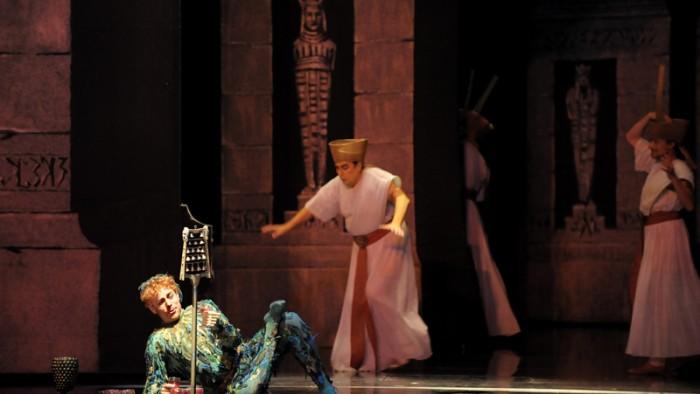
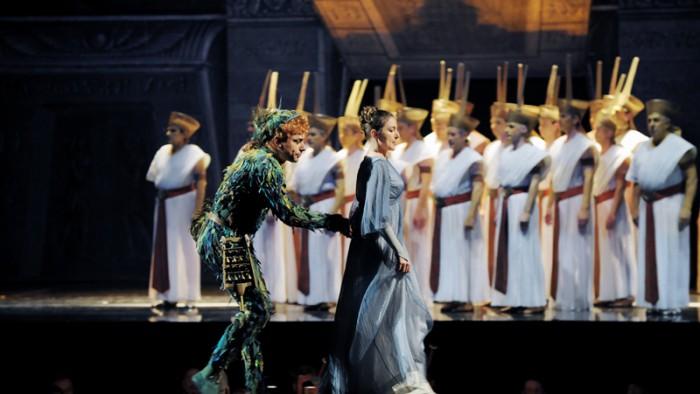
The mighty city of Babylon becomes the setting for a transformation of civilisation at the moment when two cultures collide: Whilst the Babylonians are still practicing human sacrifice, the Jews, who have settled here in exile, have already abolished it. The opera follows this conflict through the love of the exile Tammu for the Babylonian Inanna, a priestess in the Temple of Free Love. When the gods unleash chaos in the universe, life on earth also becomes confused, meteorite storms threaten humankind, the Euphrates leaves its bed, and the Flood comes. The priest-king promises that peace and order will be achieved between heaven and earth through a human sacrifice, and the Babylonians carry this out in a frenzied celebration. But Inanna descends into the underworld to bring the sacrificed Tammu back to life and to be reunited with him. In the end, love wins the day and reconciliation between heaven and humankind replaces the old sacrifice. A contractual agreement forms the basis for a new world order, in which we will live today: the 7-day week, based on an orderly cycle of life.

The composer Jörg Widmann carried the idea of an opera about Babylon in him for a long time. His original fascination was aroused by the completely different concept of love, almost unimaginable for us, in Ancient Mesopotamia. The love between Tammu and Inanna has its origins in one of the most legendary mythological couples of Babylonian Antiquity, who had already inspired Mozart’s Magic Flute librettist Schikaneder: that between the hero Tammuzi and Inanna, goddess of love and war. 

In German with German surtitles

Commissioned work by the Bavarian State Opera

Partner of the world premières of the Bavarian State Opera

Playing time: 3 hours, 25 minutes (1 intermission)
6.00 p.m. : Introductory event
Saturday, 25 January 2014
Nationaltheater
7.00 p.m. – app. 10.25 p.m.

Cast

Musikalische Leitung Kent Nagano
Musik Jörg Widmann
Text Peter Sloterdijk
Inszenierung Carlus Padrissa – La Fura dels Baus
Bühne Roland Olbeter
Kostüme Chu Uroz
Video welovecode
Tigrelab
Licht Urs Schönebaum
Szenische Mitarbeit Tine Buyse
Dramaturgie Miron Hakenbeck
Moritz Gagern
Chor Sören Eckhoff

Seele Claron McFadden
Inanna Anna Prohaska
Tammu Jussi Myllys
Priesterkönig / Tod Willard White
Euphrat Gabriele Schnaut
Skorpionmensch Kai Wessel
Ezechiel August Zirner
Septette Kenneth Roberson
Dean Power
Silvia Hauer
Elsa Benoit
Iulia Maria Dan
Septette / Pförtner 1 Tim Kuypers
Septette / Der Schreiber / Pförtner 2 Tareq Nazmi
Ein Bote / Das Kind Tölzer Knabenchor
Priester Joshua Stewart

Bayerisches Staatsorchester
The Chorus of Bayerische Staatsoper


Posted in Music, OPera | Tagged , , , , , , , , | Leave a comment

“DARK SISTERS” in Pittsburgh

PITTSBUGH OPERA PRESENTS:Dark Sisters

DARK SISTERS

January 25, 28, 31; February 2, 2014
CAPA Theater

Music by Nico Muhly • Libretto by Stephen Karam

DARK SISTERS is part of Pittsburgh Opera’s 2014 American Opera Series

RIPPED FROM THE HEADLINES: MEDIA FRENZY PROMPTS SISTER-WIFE’S SELF-DISCOVERY
NEW PRODUCTION! After a raid on her family’s compound, sister-wife Eliza embarks on a quest for self-discovery. Her journey is burdened by tragedy and strife, in a work that “evokes the jittery buzz of reality television” (New York Times).

The Cast

Resident Artist Jasmine Muhammad Resident Artist Meredith Lustig
 
Resident Artist Nicole Rodin Resident Artist Samantha Korbey
Jasmine Muhammad *
Eliza
Meredith Lustig *
Zina
Nicole Rodin *
Ruth
Samantha Korbey *
Presendia
Resident Artist Joseph Barron  Alexandra Loutsion Rebecca Belczyk  
Joseph Barron *
The Prophet/King
Alexandra Loutsion **
Almera
 Rebecca Belczyk
Lucinda


Creative Team 

Conductor
Glenn Lewis
Stage Director George Cederquist *
Set Designer(s) Dan Daly
Costume Designer Antonia West
Lighting Designer Robert Figueira
   
Assistant Conductor James Lesniak
Chorus Master Mark Trawka
 Associate Coach/Pianist James Lesniak
 Hair & Makeup Designer James D. Geier

 + Pittsburgh Opera debut
* Pittsburgh Opera Resident Artist
** Pittsburgh Opera Resident Artist alumni

SYNOPSIS

ACT I
A lunar eclipse. Against the severe landscape – red earth, sharp cliffs and endless sky – that surrounds a polygamist compound in the American Southwest, five mothers cry out in despair. State officials have just raided their homes and removed all of their children, under the suspicion that minors are being abused and forced to marry by members of the sect.
The husband of the five women, a professed Prophet of God, discloses that he has received a Revelation. He must journey into the desert, where he will receive guidance: holy words that will ensure the return of their children. The Prophet instructs his wives to “keep sweet” while he is away, explaining that total obedience is necessary to ensure their salvation and the safe return of their children.

Eliza (the fourth wife) has visions of her only daughter, Lucinda. A room decorated with scripture and looming portraits of past Prophets triggers a memory: the day of her wedding. She was 16, afraid, an unwilling bride. Eliza does not want her daughter to suffer the same fate, but cannot imagine how they could ever leave this life. She has no friends or knowledge of the outside world. She has no way of making money or affording a place to live.
As night slowly turns to day, Eliza passes the time with her other sister-wives. Almera is haunted by dreams of her mother and grandmother, while Presendia and Zina work diligently to pass the time, longing for their husband’s return. Ruth is tormented by mental illness and the memory of her two sons, both of whom died tragically.

Ruth discovers a letter in the Prophet’s study and gives it to Eliza. The letter voices Lucinda’s concerns about being promised to a man so much older, almost 60. Eliza is shocked to learn that her daughter would be promised so soon. She resolves to leave the compound and hatches a plan to escape. The Prophet returns, and Eliza convinces him to spend the night with her. She needs his full trust so that she can travel with him the next day and enact a plan to share her own message with the world. Alone and forgotten in their bedrooms, the other women seethe with jealousy, sadness and longing.

ACT II
Split scene: the women sit in front of a TV camera in their large meeting room, while in Los Angeles a TV personality, King, interviews the women via satellite. The women are careful to stay on message. Afraid and distraught, Ruth suffers a breakdown during the interview and leaves the room. The women, paralyzed with fear and the intrusion of the media, continue with the show.

Eliza, nervous that she may not have the courage to speak out, suddenly explodes with the announcement that she was, indeed, married underage. She also seizes the opportunity to speak to her daughter – she looks directly into the camera and begs Lucinda to have faith, and to know that she, Eliza, has received her own divine message: “Say goodbye to men who encourage silent suffering – only a false Prophet would ask such things of you. Don’t be afraid of what lies beyond the sharp cliffs, the red earth – blaze a trail beyond the canyons, past the forests and gorges. This is my hope for you, Sisters of Zion! Hope and pray! I promise you, kind hearts beat for all of us in the outside world!”

Chaos erupts. Eliza’s sister-wives cannot believe she would betray them.
Later that night Ruth sits atop the mesa near the compound, under a starlit sky. She has been hiking all day. Praying for relief from her pain, and longing to be with her two children in heaven, she jumps off the cliff to her death.

Back at the compound, a few days later: Ruth’s funeral. The children have been returned to the ranch. Eliza arrives at the gate of the compound and is shunned by the other women. Lucinda approaches her mother, furious – she is sickened that Eliza lost her faith and will not gain eternal salvation. She would have preferred Eliza’s death to the course she is taking. Lucinda has no desire to leave the compound.

Eliza, watching Lucinda join the other women, realizes she cannot force her daughter to leave. She hopes that she will see her daughter again, and pledges that she will always be waiting for her, and will always love her. Heartbroken, she walks away from the compound and into the unknown.

Posted in Music, OPera | Tagged , , , , , , , | Leave a comment

“La traviata” in Munich

Bayerische Staatsoper

PRESENTS:

La traviata

La traviata: Piotr Beczala, Ermonela Jaho La traviata: Fabio Maria Capitanucci, Ermonela Jaho

Giuseppe Verdi

Libretto by Francesco Maria Piave

Men don’t fall in love with courtesans! That’s the opinion of Alfredo’s father after his son moves in with the mortally ill Violetta Valéry. In her love for Alfredo Violetta even agrees. She leaves him, dies poor, ill – still dreaming of the happiness of true love. One of Verdi’s most beloved operas continues to hold the mirror up to society and its hypocritical morality. An exemplary production! See it!

In Italian with German surtitles

Nationaltheater

Performances:
Tuesday, 31 December 2013, 6.00 p.m.
Friday, 3 January 2014, 7.00 p.m.
Monday, 6 January 2014, 6.00 p.m.
Tuesday, 15 April 2014, 7.00 p.m.
Saturday, 19 April 2014, 7.00 p.m.
Friday, 25 April 2014, 7.00 p.m.
Friday, 4 July 2014, 7.00 p.m.
Monday, 7 July 2014, 7.00 p.m.
Thursday, 10 July 2014, 7.00 p.m.

 SYNOPSIS

Scene One

Alfredo Germont, a young man from Provence, is introduced by Gaston, Vicomte de Letorieres, to Violetta Valery, a famous courtesan. She is giving a soiree in her house in Paris. Gaston knows how much Alfredo admires Valery, but initially she pays hardly any attention to Germont.

When Baron Douphol, with whom Violetta is having an affair, refuses to propose a toast in celebration of the evening, Alfredo, urged on by Violetta, declares his willingness to do so. He sings a passionate song in praise of love with Violetta and the party guests joining in.

As the guests go off to dance, Violetta suddenly feels faint and has to remain behind. Alfredo makes a declaration of love. Violetta turns him down with gentle scorn. Touched however by Alfredo’s candid overtures, she presents him with a camellia: he may return when the flower has withered, that is, within a day. At dawn the guests depart.

Alone, Violetta reflects on the senselessness of her past life. But still she refues to accept that she is falling in love with Alfredo.

Scene Two

Violetta has retreated to a country-house with Alfredo. Far away from Paris, she wants to enjoy some happiness with her beloved.

Alfredo learns from the servant Annina that Violetta intends to sell her valuables in order to support them.

After Alfredo has left the house in order to procure the necessary money himself, his father pays Violetta an unexpected visit. He asks that she break off the relationship with his son. Giorgio Germont demands this sacrifice because a liaison between his son and a courtesan would compromise his family and endanger his daughter’s proposed marriage.

Violetta is prepared to make the sacrifice and leave Alfredo on condition that Giorgio Germont reveal to his son after her death the true reasons behind her actions.

Violetta sends Annina with a message to her friend Flora Bervoix in Paris that she will attend her soiree that evening. Then she writes Alfredo a farewell letter. On the pretext of wanting to prepare for his father’s visit, Violetta leaves the unsuspecting Alfredo and returns secretly to Paris.

A few moments later a messenger brings Alfredo Violetta’s letter. She informs him that she has decided to return to her former life.

Alfredo’s father tries in vain to persuade his son to return to the family. Alfredo rushes off to Paris to Flora’s salon.

Scene Three

There is dancing, singing and gambling at the courtesan Flora Bervoix’s soiree. Alfredo is looking for Violetta. He appears to be desinterested when asked about his mistress. The guests invite him to take a seat at the gambling table.

Soon after Violetta enters the room on the arm of her former lover, Baron Douphol. At the gambling table Alfredo provokes not only the Baron but also Violetta with his remarks.

After the guests have sat down to dinner, Alfredo is able to speak with Violetta alone. She pretends to be in love with the Baron and implores Alfredo to leave at once, as she is afraid he might lose his life in a duel with Douphol.

In a state of extreme agitation Alfredo summons the guests. In front of the assembled people he throws the money he has won at Violetta’s feet. Alfredo’s father enters at this moment and rebukes his son for his lack of self-control. The emotional upheaval has drained Violetta. Rejected by the others, she slowly leaves the room.

Scene Four

Some time later. Besides her deteriorating health Violetta is now financially ruined. Doctor Grenvil consoles the dying woman.

In a letterfrom Giorgio Germont,Violetta learns that there has been a duel between Alfredo and Douphol. Germont announces furthermore that his son will be arriving.

Violetta feels that death is imminent. Outside a carnival procession passes by. Annina prepares Violetta to meet Alfredo who has returned.

The lovers embrace passionately. Alfredo pleads with Violetta for forgiveness. Violetta experiences one last surge of life, then succumbs. Doctor Grenvil and Giorgio Germont find a dying woman.

Translation: Christopher Balme
© Bayerische Staatsoper

CAST AND CREATIVE TEAM

Conductor

Paolo Carignani (c) Barbara Aumüller

<!–

–>


Production

Günter Krämer

<!–

–>


Set

Andreas Reinhardt
Geboren in Meißen; Ausbildung an der Hochschule für Bildende Künste in Dresden und an der Deutschen Akademie der Künste Berlin. 1965 Bühnenbildner am Berliner Ensemble; 1977 Bühnenbildner an den Staatlichen Schauspielbühnen Berlin; seit 1978 freier Bühnenbildner in München. Ausstattungen an allen großen europäischen Opernhäusern – u.a. Der Ring des Nibelungen in Hamburg – sowie bei den Festspielen von Bayreuth, Salzburg und Spoleto. An der Bayerischen Staatsoper schuf er das Bühnenbild zu La traviata, die Gesamtausstattung zu Il barbiere di Siviglia (Inszenierung: Ruth Berghaus), zu Henzes Der junge Lord und zu Lohengrin.

<!–

–>


Costumes

Carlo Diappi

<!–

–>


Lighting

Wolfgang Goebbel
Wolfgang Göbbel
Geboren in Ulm. Zahlreiche Arbeiten an verschiedenen renommierten europäischen Bühnen wie z.B. an der English National Opera (Tristan und Isolde, Un ballo in maschera, Béatrice et Bénédict), am Châtelet Paris (King Arthur) oder bei den Salzburger Festspielen (Der Kirschgarten). An der Bayerischen Staatsoper entwarf er das Licht-Design zu Lucia di Lammermoor, Un ballo in maschera und La traviata.

<!–

–>


<!–

–>


Violetta Valéry

Ailyn Pérez © Paul Mitchell

<!–

–>


Flora Bervoix

Tara Erraught (© Christian Kaufmann)

<!–

–>


<!–

–>


Alfredo Germont

Ivan Magrì

<!–

–>


<!–

–>


<!–

–>


Baron Douphol

Christian Rieger

<!–

–>


Marquis d’Obigny

Tareq Nazmi

<!–

–>


<!–

–>


Giuseppe

Matthew Grills

<!–

–>


Ein Diener Floras

Leonard Bernad

<!–

–>


Ein Gärtner

Rafał Pawnuk
Posted in Music, OPera | Tagged , , , , , , , , | Leave a comment

“Hänsel und Gretel” in Munich

Bayerische Staatsoper 

PRESENTS:

Hänsel und Gretel

Hänsel und Gretel: Tara Erraught (Hänsel), Hanna-Elisabeth Müller (Gretel) Hänsel und Gretel: Tara Erraught (Hänsel), Hanna-Elisabeth Müller (Gretel)

Engelbert Humperdinck

Libretto by Adelheid Wette

Fairy Tale Opera in three pictures

Since its first performance in 1893, Humperdinck’s most famous opera Hansel and Gretel has remained constantly popular, becoming over the generations almost synonymous with the first family visit to the opera. “Brother come and dance with me!“ – “Susie, dear Susie” – a dancing brother and sister, the Dew Fairy and the Sandman, the Witch and the parents: a collection of all the fairy tale elements of the 19th century. And yet this is also a tale of hardship, hunger and the desire for abundance with a clear moral: “When the need is greatest, God the Lord puts out His hand!“
And, in Richard Jones’ opulent, brilliant setting, it’s a real must!

In German

In cooperation with the Welsh National Opera, Cardiff

Ausstattungspartner der Bayerischen Staatsoper
Performances:
Sunday, 29 December 2013, 2.00 p.m.
Sunday, 29 December 2013, 7.00 p.m.
 

SYNOPSIS

Act One

Hansel and Gretel are alone at home and do not want to do any work. They are hungry and sad about the fact that there is scarcely anything to eat in their home most of the time. Gretel shows her brother the freshly-filled jug of milk with which their mother plans to make a rice pudding in the evening. Both children take several sips of the milk, the level drops increasingly. They are dashing around and dancing when their mother comes home. She is angry and wants to punish the children and while doing so she accidentally knocks the milk jug over and sends the two of them off to collect berries. In despair she bemoans the fact that the family is so poor.

Their father comes home in a good mood. He has had a successful day for once, he is slighty drunk and brings home a bag full of food. He is worried about his children and tells his wife about the witch who bakes children in her oven, turning them into gingerbread children which she then eats. The parents set out to search for their children.

Act Two

Hansel has picked berries and Gretel has woven a wreath of flowers. Hungry still, and acting more wildly, they eat all the berries. They cannot find their way home again. They wander around, lost and frightened. A strange being appears: the sandman, who strews sand in their eyes. Drunk with sleep they say their evening prayer and lie down. They dream.

Act Three

Next morning the children are awoken by another unknown being, who introduces herself as the little dew fairy. They realize that they have both had the same dream. They suddenly come across huge sweets and stuff them in their mouths greedily. With every bite a mysterious voice is heard, Hansel and Gretel think they have just imagined it and continue to eat. They are taken prisoner by the witch, who overpowers them with ever more to eat, Hansel is tied up. The witch plans to bake the children in a huge oven. The children craftily trick the witch and push her into the hot oven. Suddenly numerous children, who have been turned into gingerbread children by the witch, come alive again. The worried parents rush in and everyone is pleased to see each other again and glad about the fact that the witch is dead.

CAST AND CREATIVE TEAM

Conductor

Tomáš Hanus (© Jakub Świetlik)
<!–


–>


Production

Richard Jones
<!–


–>


Set and Costumes

<!–


–>


Revival director

 
<!–


–>


Lichtkonzept

<!–


–>


Lighting

Michael Bauer
<!–


–>


Choreography

 
<!–


–>


Einstudierung Choreographie

 
<!–


–>


Einstudierung Kinderchor

Stellario Fagone
<!–


–>


<!–


–>


<!–


–>


<!–


–>


<!–


–>


Die Knusperhexe

Kammersänger Kevin Conners
<!–


–>


Sandmännchen / Echo IV

Yulia Sokolik
<!–


–>


Taumännchen / Echo I

Elsa Benoit
<!–


–>


<!–


–>


Echo III

 
<!–


–>


Posted in Music, OPera | Tagged , , , , , , , , , | Leave a comment

“La forza del destino” in Munich

Bayerische Staatsoper 

PRESENTS:

La forza del destino

La forza del destino: Jonas Kaufmann, Anja Harteros La forza del destino: Jonas Kaufmann, Ludovic Tézier La forza del destino: Anja Harteros
Giuseppe Verdi
Libretto after Duque de Rivas’ drama Don Álvaro o La fuerza del sino by Francesco Maria Piave (1862),adapted by Antonio Ghislanzoni (1869)Opers in four acts
Second version adapted 1869
La forza del destino – what is the meaning of the destiny that Verdi uses so forcefully for the title of this family tale of various outlaws in his opera of 1862, revised in 1869? Who forces Leonora, and Alvaro as the murderer of her father, to enter the hermitage of a monastery – and confronts them there, in a mighty showdown, with the brother who is full of hatred and cannot forgive? Is it a declaration of war against God’s promise of redemption? The heavenly cantilena of a solo violin rises at the end of the opera – in the face of the death of the hero’s lover and brother. Those who withdraw into the consoling twilight of a divine peace here are only trying to deny one thing: the force of destiny.In Italian with German surtitles

New production

This performance will be broadcast live on STAATSOPER.TV.
 

Performance Dates:

Wednesday, 25 December 2013, 6.00 p.m.
Saturday, 28 December 2013, 6.00 p.m.
Thursday, 2 January 2014, 7.00 p.m.
Sunday, 5 January 2014, 6.00 p.m.
Wednesday, 8 January 2014, 7.00 p.m.
Saturday, 11 January 2014, 7.00 p.m.
Friday, 25 July 2014, 6.00 p.m.
Monday, 28 July 2014, 6.00 p.m.
Thursday, 31 July 2014, 6.00 p.m.

SYNOPSIS

Act One

Leonora di Vargas is in love with Alvaro. Her father, the Marchese di Calatrava, refuses to accept the relationship on the grounds of Alvaro’s  background. Together with her confidante, Curra, Leonora is waiting for her beloved, with whom she plans to elope. The Marchese enters the room and discovers them. Alvaro is armed and throws down his pistol as a token of  his surrender. At that moment the pistol goes off and the shot fatally wounds the Marchese. As he dies, the father curses his daughter.  

Act Two

Assuming that Alvaro has deliberately killed his father, Leonora’s brother Carlo is seeking revenge. Disguised as a student he scours the land in search of the murderer of his father. Leonora has lost sight of Alvaro and believes him to be dead. Dressed in men’s clothing, she overhears her brother in an inn saying that Alvaro is on the way to America. Preziosilla stirs up enthusiasm for war and prophesies a dreadful end for the student, the appearance of whom she does not trust.

Leonora wishes to devote herself to God in a solitary environment. Seeking sanctuary in a monastery, she begs Fra Melitone to be allowed to speak to Padre Guardiano. At the suggestion of her father confessor she hopes he will allow her to live the life of a  hermit in a cell. She is prepared for a secluded life by the monks.

Act Three

Alvaro has joined the army under a new name. He saves an officer’s life during a violent altercation. This officer is none other than Carlo, who is also serving under an assumed name. The two men swear eternal friendship – without recognizing each other. When Alvaro is wounded he gets Carlo to promise to destroy his personal papers if he dies. This awakens Carlo’s suspicions and he opens the papers, finds a picture of his sister and recognizes in Alvaro the presumed murderer of his father. He decides to kill his „friend“.

In the soldiers‘ camp, Preziosilla extols the liberal way of life in wartime. Fra Melitone reproaches the celebrating soldiers for their godlessness and is driven out.

Carlo makes sure that Alvaro has recovered and challenges him to a duel. The fighting men are separated. Alvaro decides to enter a monastery.

Act Four

Fra Melitone is distributing meals to the needy. Alvaro now lives in a monastery under the name of Padre Raffael. Carlo nevertheless recognizes him as his father’s murderer. They fight a duel. In her loneliness Leonora calls on God and begs for salvation in death. Carlo is wounded in the duel. Alvaro seeks help – in Leonora’s cell of all places. The two of them recognize each other. Leonora wants to stand by Carlo as he dies but he kills her. Alvaro is left alone in his despair.

Conductor

Asher Fisch
<!–


–>


Production

Martin Kusej (c) Karin Rocholl
<!–


–>


<!–


–>


Costumes

 
<!–


–>


Lighting

Reinhard Traub
<!–


–>


Dramaturgy

 
<!–


–>


Dramaturgy

 
<!–


–>


<!–


–>


Il Marchese di Calatrava / Padre Guardiano

Vitalij Kowaljow
<!–


–>


Donna Leonora

Anja Harteros (c) Marco Borggreve
<!–


–>


Don Carlo di Vargas

Ludovic Tézier
<!–


–>


<!–


–>


Preziosilla

Nadia Krasteva
<!–


–>


<!–


–>


<!–


–>


<!–


–>


Mastro Trabuco

Francesco Petrozzi
<!–


–>


Un chirurgo

Rafał PawnukRafal Pawnuck

Bayerisches Staatsorchester
The Chorus of Bayerische Staatsoper

Posted in OPera | Leave a comment

La sonnambula in Barcelona

logoliceu 

Presents:

La sonnambula

Vincenzo Bellini

27, 28 and 30 January and 1, 2, 4, 5, 8, 9, 11, 14 and 17 February 2014


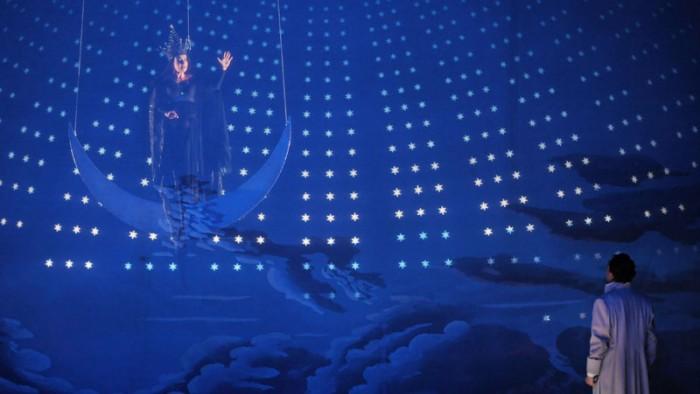
Bel canto in the spirit of ballet blanc

If there is one title that occupies a unique place in Barcelona’s nearly two centuries of operatic history, it is unquestionably Bellini’s La sonnambula. Its Barcelona premiere, at the Teatre de la Santa Creu, went down in history as veritable apotheosis, an unqualified success, which was repeated when it came to the Gran Teatre del Liceu. An opera season without this masterpiece of bel canto was virtually unthinkable. Its unwittingly Freudian fascination with the loss of consciousness and its implicit fondness for the dreamlike create a truly Romantic ecstasy comparable to the ballets blancs then fashionable in imperial courts: Amina’s emotional fragility is on a par with Giselle’s. Marco Arturo Marelli’s production is perfectly in tune with the notion of semi-serious opera, striking a delicate balance between humour and Romantic pathos.  


Opera semiseria in two acts. Libretto by Felice Romani based on La Somnambule by Eugène Scribe and Germain Delavigne and  La Somnambule ou L’arrivée d’un nouveau seigneur by Eugène Scribe and Pierre Aumer. Music by Vincenzo Bellini. Premiered on 6 March 1831 at the Teatro Carcano in Milan. First Barcelona performance at the Teatre de la Santa Creu on 21 April 1836. First staged at the Gran Teatre del Liceu on 5 August 1848. Most recent performance at the Gran Teatre del Liceu: 29 January 1987.

Conductor
Daniel Oren

Stage direction
Marco Arturo Marelli

Scenography and Lighting
Marco Arturo Marelli

Costume
Dagmar Niefind

Co-production
Wiener Staatsoper (Viena) / Royal Opera House Covent Garden (London)

Symphony Orchestra and Chorus of the Gran Teatre del Liceu

CAST

<:section>

 
Amina Diana Damrau 27 and 30 Jan, 2, 5, 8, 11, 14 and 17 Feb
Patrizia Ciofi 28 Jan, 1, 4 and 9 Feb
Elvino Juan Diego Flórez 27 and 30 Jan, 2, 5, 8, 11 and 14 Feb
Celso Albelo 28 Jan, 1, 4, 9 and 17 Feb
Comte Rodolfo Nicola Ulivieri 27 and 30 Jan, 2, 5, 8, 11, 14 and 17 Feb
Michele Pertusi 28 Jan, 1, 4 and 9 Feb
Lisa Eleonora Buratto 27 and 30 Jan, 2, 5, 8, 11, 14 and 17 Feb
Sabina Puertolas 28 Jan, 1, 4 and 9 Feb
Teresa Gemma Coma-Alabert  
Alessio Alex Sanmartí  
Un notari Jordi Casanova


sonambula_cg_8_02 sonambula_cg_1_02 sonambula_cg_2_02 sonambula_cg_3_02 sonambula_cg_4_02 sonambula_cg_5_02 sonambula_cg_6_02 sonambula_cg_7_02

Photos: RHO / Bill Cooper

Posted in Music, OPera | Tagged , , , , | Leave a comment