

Saturday, November 2, 2013
The National Opera of Ukraine
Presents:
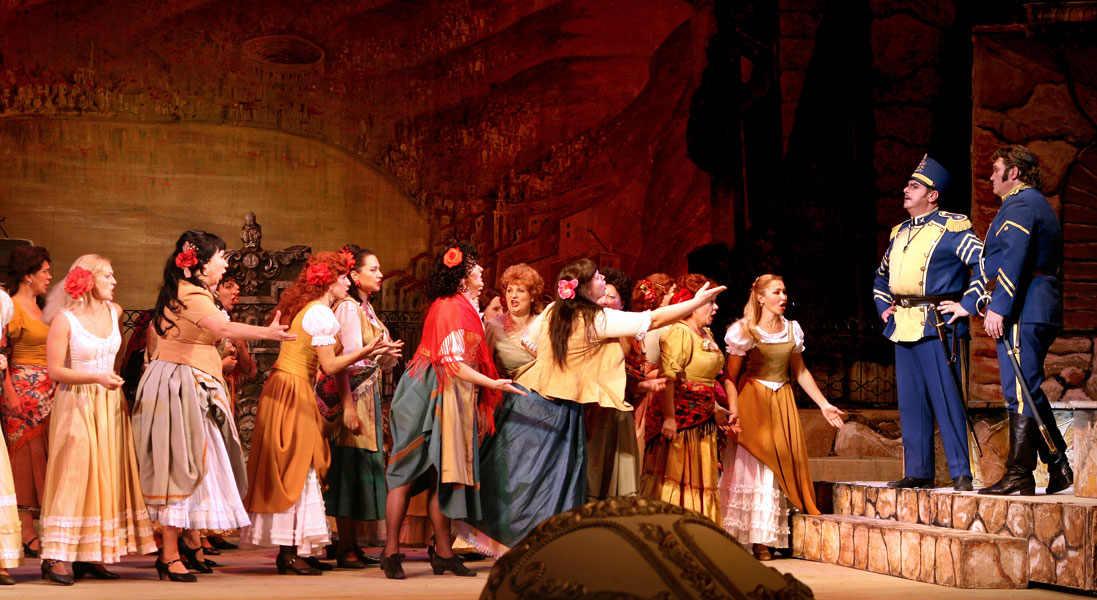
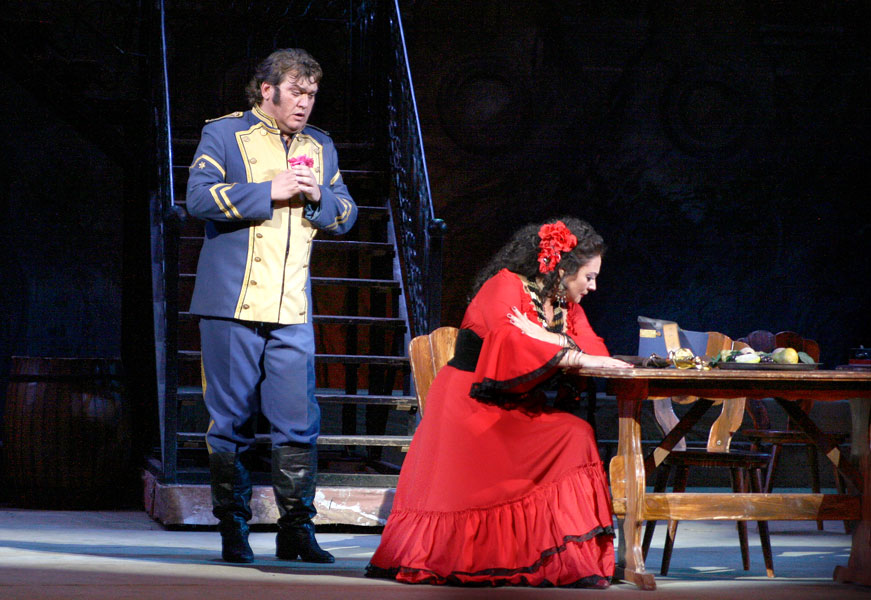
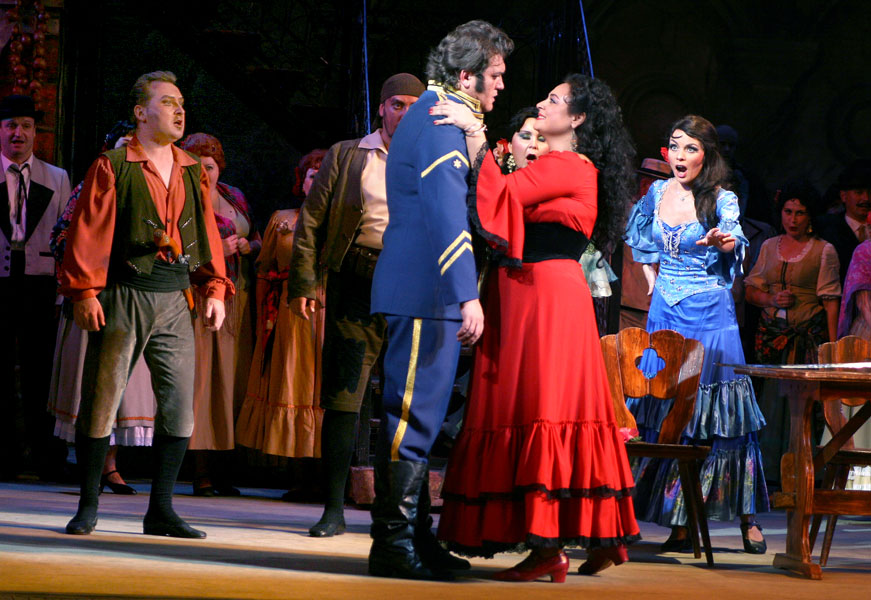
G. Bizet
CARMEN
Opera in 3 acts






Music Director: Ira Levin
Stage Director: Alex Ollé
Stage Direction Assistant: Valentina Carrasco
Scenic Design: Alfons Flores
Costume Design: Lluc Castells
Lighting Design: Urs Schönebaum
Lighting Assistant: Georg Veit
A co-production of Sydney Opera House, Australia, Teatro Real de la Monnaie, Brussels, Oslo Opera House and the Teatro Colón of Buenos Aires
CAST:
Virginia Tola / Lianna Haroutounian (Amelia)
Giuseppe Gipali / Marcelo Puente (Gustavo III / Riccardo)
Fabián Veloz / Douglas Hahn (Johan Ankerstrom/Renato)
Susanna Andersson / Marisú Pavón (Oscar / Page)
Marianne Cornetti / Alejandra Malvino (Ulrica)
Carlos Esquivel / Emiliano Bulacios, Fernando Radó / Lucas Debevec Meyer, Leonardo Estévez / Alejandro Meerapfel, Pablo Sánchez
TEATRO COLÓN
Cerrito 628
Ciudad Autónoma de Buenos Aires
República Argentina
+5411 4378 7100
info@teatrocolon.org.ar
http://www.teatrocolon.org.ar
 The Ukranian State Opera Presents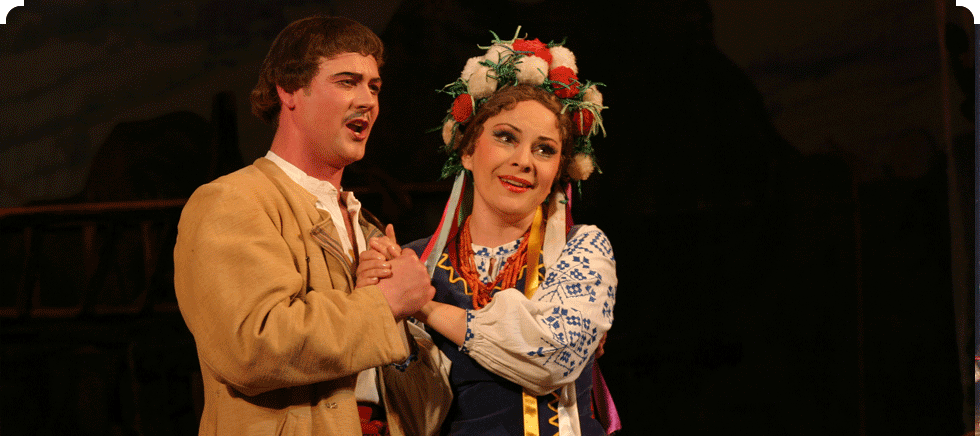
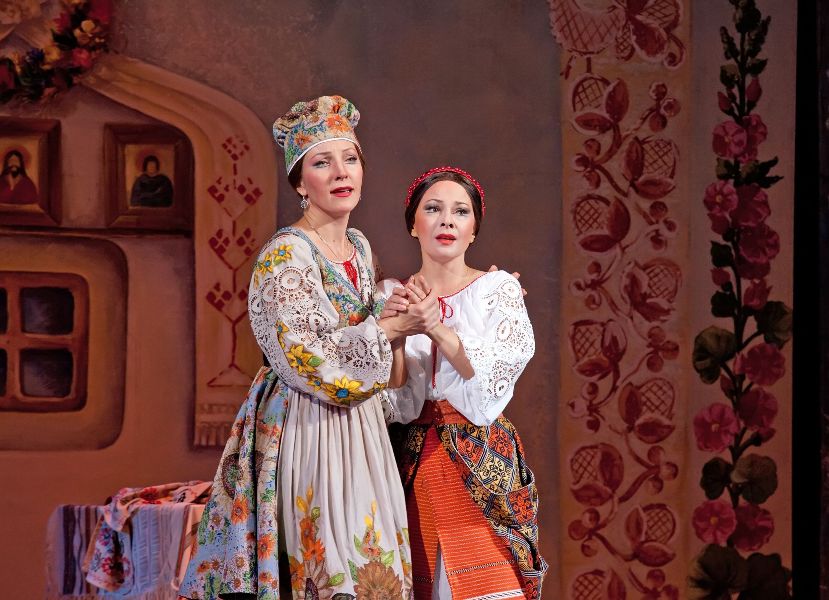
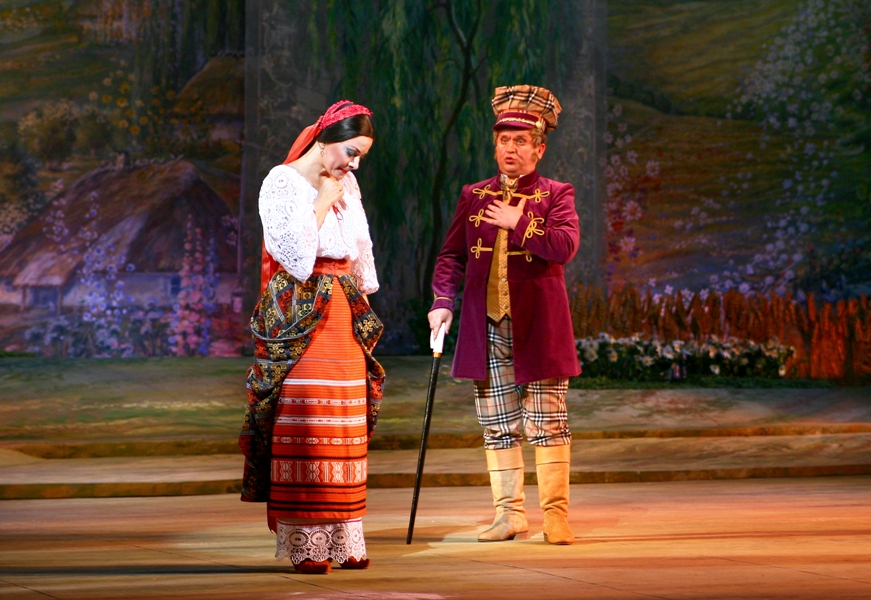
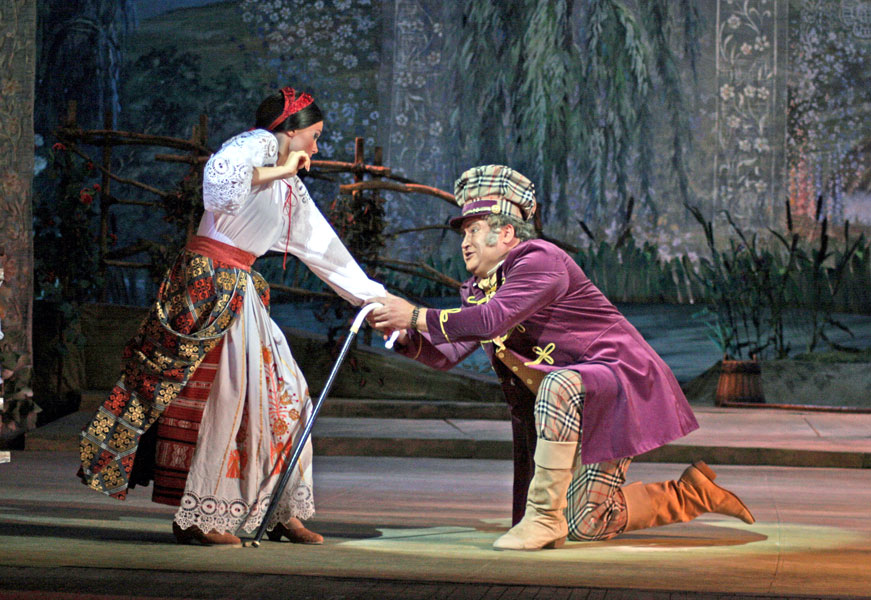


 Teatro Regio, Thursday 7 November 2013 – Sunday 17 November 2013
| Characters | Cast |
| Count d’Almaviva tenor | Antonino Siragusa Francesco Marsiglia (9, 12, 16) |
| Don Bartolo, doctor of medicine, Rosina’s guardian bass |
Paolo Bordogna Marco Filippo Romano (9, 12, 16) |
| Rosina, rich Don Bartolo’s ward mezzosoprano |
Laura Polverelli Chiara Amarù (9, 12, 16) |
| Figaro, a barber baritone | Vito Priante Domenico Balzani (9, 12, 16) |
| Don Basilio, music Rosina’s teacher; hypocrite bass |
Nicola Ulivieri Abramo Rosalen (9, 12, 16) |
| Fiorello, servant to the count d’Almaviva baritone |
Ryan Milstead |
| Berta, old servant to Don Bartolo mezzosoprano |
Giovanna Donadini |
| An Officer baritone | Franco Rizzo / Riccardo Mattiotto |
| Ambrogio, Don Bartolo’s servant mime |
Antonio Sarasso |
| Conductor | Alessandro De Marchi |
| Director | Vittorio Borrelli |
| Sets and costumes | Luisa Spinatelli |
| Luci | Andrea Anfossi |
| Chorus Master | Claudio Fenoglio |
Orchestra & Chorus Teatro Regio Torino
Staging by Teatro Regio
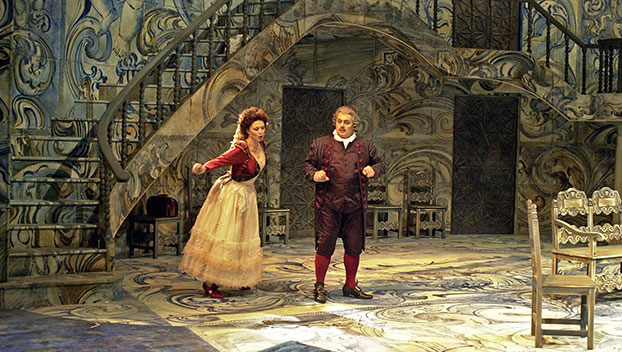

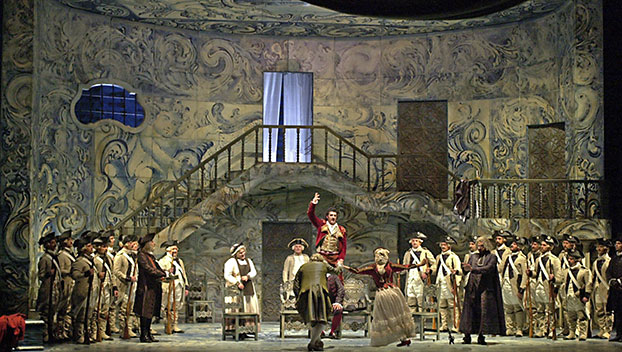




| November 28 | December 1 | December 4 | December 7 | December 10 |
|---|---|---|---|---|
| Thu | Sun | Wed | Sat | Tue |
| 2:00 * |
2:00 * |
2:00 | ||
| 6:30 * |
6:30 |
The NNTT presents the Philippe Arlaud production of this fantastic love story. Les Contes d’Hoffmann is composer Jacques Offenbach’s only opera. It features the well-known song “Barcarolle”, while Olympia’s aria “Les oiseaux dans la charmille” (“The Doll Song”) for coloratura soprano is a highlight of the opera. This was the first Arlaud production to be mounted at NNTT, and it really explores the depths of the source material. The costumes exhibit great wit and humor, and day-glo colors are used to great effect in the dark stage space to bring out the fantastic elements of the original work. On the podium will be Paris-born conductor Frédéric Chaslin. In his NNTT debut, Arturo Chacón-Cruz will sing the role of Hoffmann. The three women Hoffman loves will be played by Kouda Hiroko, Hamada Rie, and Yokoyama Keiko; their appearance together on a single stage is something audiences won’t want to miss.
Conductor : Frederic Chaslin
Production, Scenery, Lighting Design : Philippe Arlaud
Costume Design : Andrea Uhmann
Choreographer : Ueda Haruka
 (Conductor) Frederic Chaslin |
 (Production, Scenery, Lighting Design) Philippe Arlaud |
Hoffmann : Arturo Chacon-Cruz
Nicklausse, La Muse : Angela Brower
Olympia : Kouda Hiroko
Antonia : Hamada Rie
Giulietta : Yokoyama Keiko
Lindorf, Coppelius, Miracle, Dapertutto : Mark S. Doss
Andres, Cochenille, Frantz, Pitichinaccio : Takahashi Jun
Luther, Crespel : Osawa Ken
Spalanzani : Shibayama Masanobu
Schlemil : Aoyama Takashi
La voix de la mere, Stella : Yamashita Makiko
Chorus : New National Theatre Chorus
Orchestra : Tokyo Philharmonic Orchestra

|

|

|

|
|
|

|

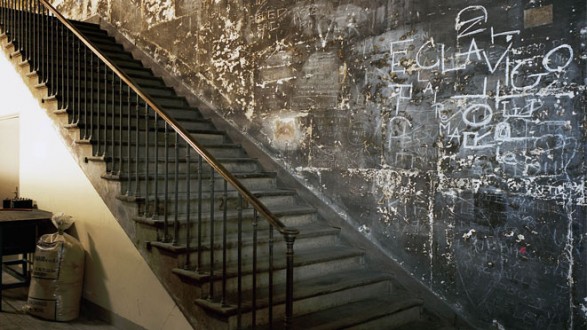
Concert performance of Charles Gounod’s opera on November 28, 2013 at the Estonia Concert Hall
 Libretto by Jules Barbier and Michel Carré after William Shakespeare’s play of the same name
World premiere on April 27, 1867 (Théâtre-Lyrique)
The success of “Faust” in 1859 had motivated theatre director Léon Carvalho to commission a subsequent opera from Gounod. The road to “Roméo et Juliette” was not a smooth one. The lead tenor role, with its extreme high tessitura (as exemplified in the difficult “Salut, Demeure” from “Faust”), proved difficult to cast, and according to rumour Gounod felt compelled to write the last act twice.
Nevertheless, Gounod’s splendid version of Shakespeare’s tragic story is graceful, dramatic, and supremely melodic. It is famous for its deeply emotional love duets, its beautiful orchestral colours and its heart-stirring choruses. Shakespeare’s tragedy of the same name, about the forbidden love between two young people who belong to warring families, has inspired many operas, none of which have followed the original as faithfully as that of Gounod. This work was justifiably almost as popular as “Faust” and one of the huge hits of 19th century French opera. “Je veux vivre” or “Juliet’s Waltz” is one of the famous arias in this operatic masterpiece.
Conductor: Vello Pähn
Thursday, November 28, 2013

 25 November 2013 at 19:30
30 November 2013 at 19:30
03 December 2013 at 19:30
06 December 2013 at 19:30
09 December 2013 at 19:30
12 December 2013 at 19:30
14 December 2013 at 19:30
17 December 2013 at 19:30
19 December 2013 at 19:30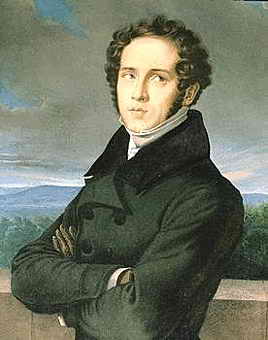
In 1835, when all Europe was obsessed by Romanticism, the vogue for Bellini’s final masterpiece, I Puritani, a tale of impossible love and vengeance set in 17th century England swept all before it, including the composer himself.
At a time when the whole of Europe was obsessed by Romanticism, what nation did not dream of Italy? Goethe’s Mignon sings of the Sicilian countryside where an orange tree in full bloom can be seen silhouetted against the sky; Stendhal and Heine led their readers down Florentine lanes or beside Roman fountains; Glinka, the first thoroughly Russian composer, went there to learn about singing, an art that could be nothing if not thoroughly Italian. The dilettantes agreed with him and flocked to Italy from as far afield as London and Paris, Vienna and Saint Petersburg to hear the exponents of bel canto. The only country to escape this furore was Italy itself. Its romanticism, which, like all romanticism is an expression of dissatisfaction and yearning, could hardly fly its own colours. Its artists dreamed of mist and rain and sought the dismal shores of Shakespeare and Schiller and the simple melodies written for the blue sea and the sky. At the beginning of 1835, Bellini’s I Puritani, performed by four of the most celebrated singers of the time, La Grisi, Rubini, Tamburini and Lablache, enjoyed unprecedented success with its story of hopeless love and revenge set in 17th century England and conveyed by some of the most beautiful vocal writing ever. In Act II, Elvira appears, seized by madness and singing a melody of such heartrending purity that it might well have inspired Chopin in the writing of a nocturne. The vogue for I Puritani swept all before it, including Bellini himself, who died a few months later in a villa in Puteaux, in the throes of melancholia.
| Michele Mariotti | Conductor |
| Laurent Pelly | Stage director and costumes |
| Chantal Thomas | Sets |
| Joël Adam | Lighting |
| Patrick Marie Aubert | Chorus master |
Wojtek Smilek Lord Gualtiero Valton
Michele Pertusi Sir Giorgio
Dmitry Korchak / René Barbera (17, 19 déc.) Lord Arturo Talbot
Mariusz Kwiecien Sir Riccardo Forth
Luca Lombardo Sir Bruno Roberton
Andreea Soare Enrichetta di Francia
Maria Agresta Elvira
Paris Opera Orchestra and Chorus


 Mécène des retransmissions audiovisuelles de l’Opéra national de Paris
 Distributeur TV international d’Opéra de Paris Production

EN DIRECT AU CINÉMA LE LUNDI 9 DÉCEMBRE 2013
Diffusion en différé sur France télévisions


The Vienna State Opera, indisputably one of the most prestigious institutions in the world of classical music, presents Mozart’s beloved The Marriage of Figaro. This same opera premiered in Vienna in 1786 and has been a longstanding and widely celebrated part of the Vienna State Opera’s repertoire as well as a perennial favourite at opera houses around the world. A brilliantly timed comedy and one of Mozart’s crowning achievements as a composer, The Marriage of Figaro is set in the manor of the Count and Countess Almaviva, who have been married for several years and find that their initial passion has faded. Figaro – a friend and former servant of the Count – is about to marry the Countess’s servant, Susanna, but the Count has his own lecherous designs on the young woman. From this premise, chaos breaks forth via the many pleasant confusions of romantic farce: cross-dressing, mistaken identity and co-conspirators getting tangled in the twists of their own plots.
The artful Figaro sprang from the pages of playwright Pierre Beaumarchais’s “Figaro” trilogy to inspire numerous operas, including Rossini’s The Barber of Seville (staged here in September 2013) and this famed collaboration between Mozart and the librettist Lorenzo Da Ponte. This production by the world renowned Vienna State Opera with its great singers and its exceptional orchestra – the musicians are simultaneously members of the famous Vienna Philharmonic Orchestra – is nothing short of an operatic delight.
| Original Creative Team | |
| Director | Jeanne-Pierre Ponnelle |
CAST:
The Marriage of Figaro (Le nozze di Figaro) is based on Beaumarchais’s 1784 play “La Folle Journée, ou Le Mariage de Figaro”, a sequel to his earlier play, “Le Barbier de Séville” (The Barber of Seville), familiar to opera audiences through Rossini’s great opera, also staged at Royal Opera House Muscat this season by Naples’ Teatro di San Carlo in September 2013. (Mozart’s opera premiered in 1786; Rossini’s premiered in 1816). In Le Barbier, Count Almaviva, with substantial help from Figaro, wooed and won the lovely Rosina away from her crusty old ward and would-be husband, Dr Bartolo.
In The Marriage of Figaro, Beaumarchais continued their story. The Count has married Rosina but their marriage has gone sour because of his philandering. Figaro has quit barbering and is now the Count’s major-domo. He is engaged to Suzanne, who is Countess Rosina’s maid — and the Count’s intended conquest. Old Bartolo is back to seek revenge on Figaro for taking Rosina away from him, with the help of the slimy music-master, Don Bazile. Adding to the fun are an amorous teenager, a scheming old maid, a drunken gardener, and a silly young girl. Much happens on a single “folle journée” — a crazy day.
ACT 1
Count Almaviva’s country estate near Seville, late 18th century. The servants Figaro and Susanna are preparing for their wedding. Figaro is furious when his bride tells him that the count has made advances toward her and vows to outwit his master. The scheming Dr Bartolo appears with his housekeeper, Marcellina, who wants Figaro to marry her. When she runs into Susanna, the two women trade insults. The page Cherubino enters; finding Susanna alone, he explains to her that he is in love with all women. He hides when the count—who is angry because he caught Cherubino flirting with Barbarina, the gardener’s daughter—shows up. The count again pursues Susanna, but conceals himself when the music master, Basilio, approaches. When Basilio tells Susanna that Cherubino has a crush on the countess, the count furiously steps forward. He becomes further enraged when he discovers the page in the room. Figaro returns with a group of peasants who praise the count for renouncing the traditional feudal right of a nobleman to take the place of a manservant on his wedding night. The count orders Cherubino to join his regiment in Seville and leaves Figaro to cheer up the unhappy adolescent.
ACT 2
The countess laments that her husband no longer loves her. Encouraged by Figaro and Susanna, she agrees to set a trap for him: they will send Cherubino, disguised as Susanna, to a rendezvous with the count. The page sings a song he has written in honor of the countess, after which Susanna begins to dress him in girls’ clothes. When she goes off to find a ribbon, the count knocks and is annoyed to find the door locked. Cherubino hides in the closet. The countess admits her husband, who, when he hears a noise, is skeptical of her story that Susanna is in the closet. Taking his wife with him, he leaves to get tools to force the door. Meanwhile, Susanna, who has reentered unseen and observed everything, helps Cherubino escape through the window before taking his place in the closet. When the count and countess return, both are stunned to find Susanna inside. All seems well until the gardener Antonio appears, complaining that someone has jumped from the window, ruining his flowers. Figaro, who has rushed in to announce that everything is ready for the wedding, pretends that it was he who jumped. When Bartolo, Marcellina, and Basilio appear, waving a court summons for Figaro, the delighted count declares the wedding postponed.
ACT 3
Susanna leads the count on with promises of a rendezvous, but he grows doubtful when he overhears her conspiring with Figaro. He vows revenge. The countess recalls her past happiness. Marcellina wins her case but then, noticing a birthmark on Figaro’s arm, is astonished to discover that he is her long lost son, fathered by Bartolo. The joyful parents agree to marry as well. Susanna and the countess continue their conspiracy against the count and compose a letter to him confirming the rendezvous with Susanna that evening in the garden. Later, during Figaro and Susanna’s wedding ceremony, the bride slips the letter to the count.
ACT 4
In the garden, Barbarina tells Figaro and Marcellina about the planned rendezvous between the count and Susanna. Thinking that his bride is unfaithful, Figaro rages against all women. He leaves, just missing Susanna and the countess, who are dressed for their masquerade. Alone, Susanna sings a love song. Figaro, hidden nearby, thinks she is speaking to the count. Susanna conceals herself in time to see Cherubino declare his love to the disguised countess—until the count chases him away to be alone with “Susanna.” Soon Figaro understands what is going on and, joining in the fun, makes exaggerated advances towards Susanna in her countess disguise. The count returns, finding Figaro with his wife, or so he thinks. Outraged, he calls everyone to witness his verdict. At that moment, the real countess reveals her identity. Realizing the truth, the count asks for his wife’s forgiveness. The couples are reunited, and so ends this mad day.
 The Opera National de Paris Presents: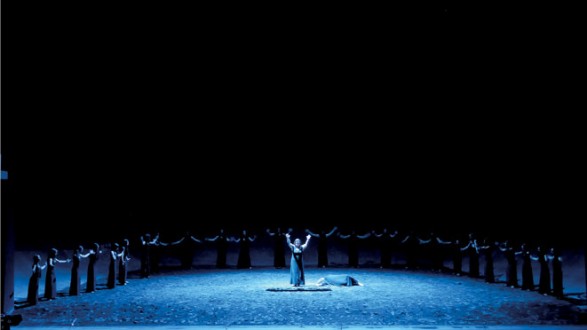
It was Elektra that in 1906 brought together Richard Strauss and Hugo von Hofmannsthal. With its huge orchestra and vocal writing that pushed singing technique to its limits, Elektra, a one-act tragedy of unprecedented darkness and violence, brought Post-Wagnerianism to a blazing apotheosis.
| Philippe Jordan | Conductor |
| Robert Carsen | Stage director |
| Michael Levine | Sets |
| Vazul Matusz | Costumes |
| Robert Carsen, Peter Van Praet | Lighting |
| Philippe Giraudeau | Choreography |
| Patrick Marie Aubert | Chorus master |
Waltraud Meier Klytämnestra
Irene Theorin Elektra
Ricarda Merbeth Chrysothemis
Kim Begley Aegisth
Evgeny Nikitin Orest
miranda Keys Die Aufseherin
Nn, Susanna Kreusch, Heike Wessels, Barbara Morihien, Eva Oltivanyi Fünf Mägde
Paris Opera Orchestra and Chorus
ORIGINAL PRODUCTION BY THE TEATRO DEL MAGGIO MUSICALE FIORENTINO FOUNDATION, COPRODUCED WITH THE SPRING FESTIVAL IN TOKYO-TOKYO OPERA NOMORI WITH THE EXCEPTIONAL SUPPORT OF DOCTOR LÉONE NOËLLE MEYER
 en différé sur France Musique le 20/11 à 20h
Avec le soutien exceptionnel du docteur Léone Noëlle Meyer
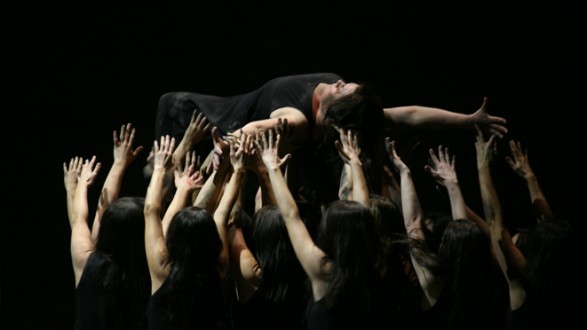
The time taken by a slow sunset. This is Hofmannsthal’s stage direction for the performance of Elektra, a one-act tragedy of unimaginable darkness and violence. The same term is often applied to the dying flames of the Austro-Hungarian Empire and indeed all cosmopolitan Europe at the beginning of the 20th century. It was Elektra that, in 1906, brought together those two acclaimed heirs of the grand German tradition, both celebrated and in the prime of life, Richard Strauss and Hugo von Hofmannsthal. With its huge orchestra and musical writing that pushed vocal technique to its limits, Elektra brought Post-Wagnerianism to a blazing apotheosis. However, unlike Salome, the ashes of Elektra were to prove fertile ground and Elektra can be seen as a perfect and well-prepared introduction to Strauss’s future works from Rosenkavalier to Arabella. “To cling to what is lost, eternally persisting until death – or to survive, to go on living, to adapt and sacrifice the integrity of one’s soul whilst remaining oneself in the midst of change, always to remain human without debasing oneself to the level of an animal deprived of memory, that is the fundamental theme of Elektra: the voice of Elektra against that of Chrysothemis, the voice of the hero against that of the human being.” (Hofmannsthal)
The composer
Richard Strauss was born in Munich in 1864 and died in Garmisch-Partenkirchen in 1949.
The son of a celebrated horn player from Munich, Richard Strauss initially established his reputation as a composer of symphony music. In 1894, he conducted Tannhäuser in Bayreuth and his first operas, Guntram and Feuersnot, were strongly influenced by the music of Wagner. His adaptation of Oscar Wilde’s play Salome in 1905 earned him a degree of notoriety that was due as much to the innovative character of the music as the scandalous nature of the subject. Elektra, in 1909, marked the debut of a long period of collaboration with the Austrian poet Hugo von Hofmannsthal and displays a level of violence rarely attained in the domain of opera. With Der Rosenkavalier (1911), Strauss seemed to “settle down” returning to the Viennese tradition of the character opera. Numerous works followed, including Ariadne Auf Naxos (1912), Die Frau ohne Schatten (1919), Intermezzo (1924), Die ägyptische Helena (1928), Arabella (1933), Die Schweigsame Frau (1935), Friedenstag (1938), Daphne (1938), Die Liebe der Danae (1938-1940), and Capriccio (1942).
A few months prior to his death, he composed the Four Last Songs for soprano and orchestra.
The work
Elektra was the first fruit of Strauss and Hofmannsthal’s collaboration. The composer had seen the play, based on Sophocles’ work, at the Deutsche Theater in Berlin and had immediately realised that it corresponded exactly to what he sought to express. However, fearing that it might appear too similar in nature to his previous opera, Salome, he hesitated for two years before making his decision. Hofmannsthal managed to convince him by arguing that “whilst the heavy and turbid atmosphere of Salome plays with purple and violet, Elektra is a blend of light and night, of darkness and brightness.”
Women play a predominant role in the work which is, of course, dominated by the eponymous main character who seems to possess a sole aim: to await the return of her brother Orestes to avenge the murder of her father Agamemnon by her mother Clytemnestra and the latter’s lover Aegisth. The role is a gruelling one – Electra is on stage nearly all the time – and one of the repertoire’s most intense. Although “scorched within” by both hatred and a thirst for vengeance, Electra shows herself to be capable of extraordinary tenderness when her brother returns. Clytemnestra, haunted and paralysed by her harrowing dreams, is emblematic of the growing influence of Freudian theories at that time. The third female figure, Chrysothemis, Electra’s sister, is the drama’s only truly human character. She prefers life to death and warns her sister of what awaits her. Indeed, by doing so, she reveals the opera’s deeper message: “In order to live we must forget”.
From a musical point of view, Elektra, like Salome, is composed of a single block. However, the work contains even more violence. Although based on tonal language, the score explores the limits of harmony, in particular during Clytemnestra’s dream. The most well-known passages are Electra’s first aria, the confrontations between the two sisters and between mother and daughter and, of course, the moment when Elektra recognises her brother, which prompted Romain Rolland to say: “the scene touches all that is sublime in the heart”.
The first performance
Elektra was first performed on January 15th 1909 at the Königliches Opernhaus in Dresden.
The work at the Paris Opera
Elektra was first performed at the Palais Garnier in 1932, with Germaine Lubin in the title role in a production directed by Jacques Rouché. In 1974 a new production conducted by Karl Böhm was staged in the same theatre by August Everding, with Birgit Nilsson (Electra), Christa Ludwig (Clytemnestra), Leonie Rysanek (Chrysothemis) and Tom Krause (Orestes). Revivals of the production for the following seasons were performed by Ursula Schröder-Feinen (Electra), Astrid Varnay (Clytemnestra) and Hans Sotin (Orestes). In 1992 the work entered the Opera Bastille’s repertoire, staged by David Poutney and conducted by Michael Schoenwandt, with Gwyneth Jones (Electra), Leonie Rysanek (Clytemnestra), Sabine Hass (Chrysothemis) and Philippe Rouillon (Orestes). In 2005, a new production staged by Matthias Hatmann was presented with Deborah Polaski, Felicity Palmer, Eva Maria Westbroek and Markus Brück, conducted by Christoph von Dohnányi.
| Mon | Tue | Wed | Thu | Fri | Sat | Sun |
|---|---|---|---|---|---|---|
| 1 | 2 | 3 | 4 | 5 | 6 | |
| 7 | 8 | 9 | 10 | 11 | 12 | 13 |
| 14 | 15 | 16 | 17 | 18 | 19 | 20 |
| 21 | 22 | 23 | 24 | 25 | 26 | 27 |
| 28 | 29 | 30 | 31* |
|
November 2013
|
||||||
| Mon | Tue | Wed | Thu | Fri | Sat | Sun |
|---|---|---|---|---|---|---|
| 1 | 2 | 3 | ||||
| 4* | 5 | 6 | 7* | 8 | 9 | 10 |
| 11* | 12 | 13 | 14 | 15 | 16 | 17 |
| 18* | 19 | 20 | 21 | 22 | 23 | 24 |
| 25 | 26 | 27 | 28 | 29 | 30 | |
|
December 2013
|
||||||
| Mon | Tue | Wed | Thu | Fri | Sat | Sun |
|---|---|---|---|---|---|---|
| 1 | ||||||
| 2 | 3 | 4 | 5 | 6 | 7 | 8 |
| 9 | 10 | 11 | 12 | 13 | 14 | 15 |
| 16 | 17 | 18 | 19 | 20 | 21 | 22 |
| 23 | 24 | 25 | 26 | 27 | 28 | 29 |
| 30 | 31 | |||||


Performance Dates
Thur 2013-11-21
Fri 2013-11-22
Sat 2013-11-23
Sun 2013-11-24
Mon 2013-11-25
Tue 2013-11-26
Wed 2013-11-27
Thur 2013-11-28
Fri 2013-11-29
Sat 2013-11-30
Sun 2013-12-01
Mon 2013-12-02
Tue 2013-12-03
Wed 2013-12-04
Thur 2013-12-05
Fri 2013-12-06
Sat 2013-12-07
Sun 2013-12-08
Mon 2013-12-09

Giancarlo del Monaco Director
Giancarlo del Monaco, the son of the famous tenor Mario del Monaco. He made his debut as a stage director in 1964 in Siracusa (Italy) with Samson et Dalila (starring Mario del Monaco).
He started his career in Germany as assistant to Wieland Wagner, Günther Rennert and Walter Felsenstein before assuming the post of principal stage director in Ulm from 1970 to 1973 where he staged some 15 productions.He was General Manager of the Macerata Festival (Italy) from 1986 to 1988 and the General Manager of the Opera der Bundesstadt Bonn from 1992 to 1995. From 1997 to 2001, Giancarlo del Monaco was the General Director of the Opera House of Nice (France).
Contemporaneous with his career as General director, Giancarlo del Monaco becomes one of the most important and sought after stage directors of his generation.He has staged productions in renowned theatres in major cities around the world and collaborated with the most important conductors and stage designers of the operatic world. Fluently speaking 5 languages, his operatic repertoire contains more than 100 operas, staged in their original language.
In 1991, he was invited to stage La Fanciulla del West at the Metropolitan Opera. This was followed by Stiffelio, Madama Butterfly, Simon Boccanegra and La Forza del Destino (for which he was honored by the American Institute of Verdi Studies). All of these Met productions were filmed and internationally broadcast.Giancarlo del Monaco has been the recipient of numerous honors. From 2009, he is the artistic director of the Tenerife Opera Festival.
 William Orlandi Set Design William Orlandi Set DesignAfter studying at the Academy of Belle Arti of Brera in Milan, William Orlandi designed sets and costumes for Il Trovatore directed by Alberto Fassini at the Theater San Carlo in Naples, Don Carlos, Don Giovanni directed by Lorenzo Mariani in Parma and numerous other operettas. He worked with Alberto Fassini in various operas, such as Romeo et Juliette in Palermo, Il Trovatore and Werther at the New National Theater in Tokyo and Norma at the Regal Theater in Turin.Since 1987 he has worked regularly with Gilbert Deflo, Liebermann’s La Foret at the Grand Theater Geneva is the beginning of this collaboration, followed by Aida, The Coronation of Poppea, Carmen etc. And in the 2005-2006 season a new version of L’amour des trois oranges for the Opera Bastille in Paris.His design also can be seen in Cavalleria Rusticana by Mascagni, Massenet’s Therese, Rigoletto by Verdi and La Gioconda by Ponchielli in 2002 and 2003 seasons at Hopernhaus Zurich and Cavalleria Rusticana, Pagliacci for Arena of Verona in 2006 season. |
 Vinicio Cheli Lighting Design Vinicio Cheli Lighting DesignVinicio Cheli was the lighting designer for NCPA’s production of Tosca in May 2011, Der Fliegende Hollander in April 2012 and Un Ballo in Maschera in May 2012. From 1974 to 1979, Vinicio Cheli works at the ‘Maggio Musicale Fiorentino’ involved in all productions. Since 1979 he joined the ‘Piccolo Teatro’ of Milan and became the light collaborator of Giorgio Strehler , he making the entire production of Piccolo until 1989. Since 1987, for four years, he worked with the ‘Rossini Opera Festival’ to produce shows with several directors. At the same time since 1989 he worked at the Salzburg Festival, Theatre Champs-Elysees, Chalet Theatre in Paris with the set design by Pier Luigi Pizzi, then respondeed to the La Scala in Milan. Recollaborated some years with the Teatro La Fenice in Venice. The 90s of the last century saw him work in the Opera Bastille, National Theatre of Prague,Festival of Aix en Provance, Ravenna Festival, the Opera of Monte Carlo, Opera of Geneva, Maggio Musical Fiorentino, Baroque Festival of Versailles, Opera Garnier in Paris, Easter Festival in Salzburg, Teatro Liceu in Barcelona, Atticus Theater in Athens, Ginza Saison Theater in Tokyo, Theatre of the axes of Brussels, Amsterdam Opera, Teatro Comunale of Bologna, Teatro dell’Opera in Rome, Opera of Toulouse, National Theatre of Catalunya in Barcelona,Teatro Real Madrid, Metropolitain in New York, and collaborated with P.L.Pizzi,Ezio, Frigerio, Hugo de Ana, KM Gruber, Henning Brockaus, Claudio Abbado, Riccardo Muti, to name just a few. In the new miennium, Vinicio Cheli continued to expand his collaboration with Ezio Frigerio, Hugo de Ana, F. Zeffirelli, V. Gergiev, Claudio Abbado, Nicola Joel, Quirino Conti, Mario Gas, in productions covering a vast realm of the opera repertoire. In 2010, he set up La donna del lago of Rossini direqued by Luis Pasqual with scenes by Ezio Frigerio and costumes by Franca Squarciapino; Boris Godunojv directed by Andrei Konchalovsky In the beginning of 2011, he worked in Senso a new opera directed scenes and costumes by Hugo De Ana. July 2011 ‘Medea’ directed by Theodorakis in Syros Festival of the Aegean. In November of 2011, he worked in ‘The sleeping beauty’, first ballet of reopening of Bolshoi Theater. Vinicio Cheli also taught theatrical lighting at the New Academy of Fine Arts in Milan and at the Professional School of La Scala. 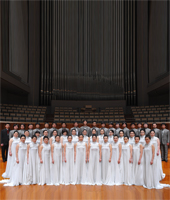 NCPA Chorus was established on December 8, 2009, whose members were carefully selected from famous music schools in and out of China. Now the Chorus has Wu Lingfen as the conductor, with many artists well-known in China and abroad giving instructions. Affiliated to NCPA, the highest palace of performing arts in China, the Chorus adheres to NCPA’s guiding principles of ‘for the people, for the arts, and for the world’. The Chorus mainly stages operas and concerts, and also takes part in kinds of cultural communication events.The Chorus presented its debut performance in NCPA Opera Festival 2010, and has taken part in and gained critical acclaim from the performances of NCPA’s Xi Shi, Carmen, La Traviata, L’elisir d’amore, Turandot, A Village Teacher, Tosca, Die Fledermaus, and The Chinese Orphan. As NCPA’s resident chorus, it took part in Turandot (NCPA version) on the tour to Seoul Arts Center in January 2011 and gained high praise. The Chorus has offered a great number of performances including Road to Revive, To the Music (debut), Roam About the Classics, To Our Motherland– NCPA Chorus Concert for the Army Day, Arias of Love, Beethoven’s ninth symphony, and Mahler’s second symphony. NCPA Chorus was established on December 8, 2009, whose members were carefully selected from famous music schools in and out of China. Now the Chorus has Wu Lingfen as the conductor, with many artists well-known in China and abroad giving instructions. Affiliated to NCPA, the highest palace of performing arts in China, the Chorus adheres to NCPA’s guiding principles of ‘for the people, for the arts, and for the world’. The Chorus mainly stages operas and concerts, and also takes part in kinds of cultural communication events.The Chorus presented its debut performance in NCPA Opera Festival 2010, and has taken part in and gained critical acclaim from the performances of NCPA’s Xi Shi, Carmen, La Traviata, L’elisir d’amore, Turandot, A Village Teacher, Tosca, Die Fledermaus, and The Chinese Orphan. As NCPA’s resident chorus, it took part in Turandot (NCPA version) on the tour to Seoul Arts Center in January 2011 and gained high praise. The Chorus has offered a great number of performances including Road to Revive, To the Music (debut), Roam About the Classics, To Our Motherland– NCPA Chorus Concert for the Army Day, Arias of Love, Beethoven’s ninth symphony, and Mahler’s second symphony.
The Chorus has cooperated with top artists like directors Francesca Zambello and Giancarlo del Monaco; conductors Lorin Maazel, Lu Jia, and Li Xincao; singers Inva Mula, Juan Pons,Brandon Jovanovich, Dai Yuqiang, Warren Mok, Zhang Yalun, Zhang Liping, Sun Xiuwei, and Liang Ning. Its over-one-hundred performances have taken an active role in the further development of NCPA.
In its first season of 2011, China NCPA Orchestra gained critical acclaim for its performances in NCPA’ new productions of Tosca (Directed by Giancarlo Del Monaco), Il Barbiere di Siviglia (co-produced with Castleton Festival), Die Fledermaus, and a new composed opera The Chinese Orphan. Apart from that, the orchestra was also deeply involved in NCPA’ 2011 Gustav Mahler Project. Under the batons of maestros including Christoph Eschenbach, Yoel Levi, Jun Maerkl and Chen Zuohuang, the orchestra completed Mahler’s Symphonies No. 1, 2, 3, 8 and 10. In the season of 2012, China NCPA Orchestra won a highly successful acclaim for two NCPA’s new productions: Der Fliegende Hollander and Lohengrin, both Wagner’s operas were Chinese premiere. It continually collaborates with prominent musicians around the world for concert programs, including Maestro Vladimir Ashkenazy, Yan Pascal Tortelier and the legendary pianist Rudolf Buchbinder. In addition to its extensive domestic performances, the NCPA Orchestra also received a widespread international praise in 2012. The orchestra was invited by Kissingen Summer Music Festival and Schleswig-Holstein Musik Festival in July 2012, and kicked off his first German tour in Nürnberg, Hamburg and Berlin under the baton of Christoph Eschenbach and Chen Zuohuang. This was followed by a successful concert at the Sydney Opera House with Maestro Chen Zuohuang in November. In the season of 2013, the NCPA orchestra presents colorful programs on the commemoration of Wagner, Verdi and Britten, highlighting the Ring without words with 12 principals from Berlin Philharmonic under the baton of Lorin Maazel. NCPA’s new opera productions that the orchestra is involved include Les Contes d’Hoffmann, Otello and Nabucco, which features her second successful collaboration with Placido Domingo. The NCPA orchestra aims to build up a world-class orchestra with operation and management conforming to global practices while incorporating Chinese characteristics. Devoted to educational and outreach activities, the Orchestra also has presented a series of Weekend Matinee Concerts since its establishment. With specially selected repertoire, performances of high quality and extremely low ticket prices, these concerts have won great acclaim from both audience and critics. The orchestra is now embarking on a similar path with the complete Beethoven symphonies with Maestro Lu Jia. |


The full vocal score of this magnificent composition is AVAILABLE FROM AMAZON.COM or BARNES & NOBLE
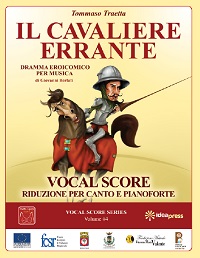
The full vocal score of this magnificent opera is AVAILABLE FOR THE FIRST TIME IN HISTORY FROM AMAZON.COM or BARNES & NOBLE
 The full vocal score is AVAILABLE FOR THE FIRST TIME IN HISTORY FROM AMAZON.COM or BARNES & NOBLE
The full vocal score of this magnificent opera is AVAILABLE NOW FROM AMAZON.COM


Presentata la 78a Stagione del Luglio Musicale Trapanese Ventuno appuntamenti da marzo a dicembre. Si apre domenica 29 marzo con il Requiem di Mozart in Cattedrale: ingresso libero per la città. È stata presentata nella Sala Grande del Complesso San Domenico, a Trapani, la 78ª Stagione dell’Ente Luglio Musicale Trapanese, Teatro di Tradizione riconosciuto dal […]

La Società Dante Alighieri e il Teatro dell’Opera di Roma presenteranno mercoledì prossimo, 4 febbraio, alle ore 17.30 a Palazzo Firenze (Roma), “Inferno”, l’opera, in chiave contemporanea composta da Lucia Ronchetti, è ispirata alla prima cantica della Commedia di Dante Alighieri.Durante la conferenza interverranno Alessandro Masi, Segretario generale della Società Dante Alighieri, Giuliano Danieli, Fondazione Teatro dell’Opera di Roma, Lucia Ronchetti, Compositrice, […]

Il cuore del melodramma italiano e il romanticismo europeo approdano al Cairo per una grande serata di cultura. Un quintetto di artisti d’eccezione guiderà il pubblico in un viaggio emozionante tra le arie, i duetti e i capolavori pianistici più amati di sempre con “Opera Concert – Recital for 4 voices and piano”, in programma il 5 febbraio alle […]

Recensione di Salvatore Margarone La ripresa al Teatro Filarmonico di Verona del Don Giovanni di Mozart, nell’allestimento firmato da Enrico Stinchelli e già presentato nella stagione 2019, conferma le perplessità emerse fin dal suo debutto. La regia, improntata a un sostanziale rispetto letterale del libretto, si colloca su un piano prevalentemente illustrativo, rinunciando a un’elaborazione […]

L’imponente Aida di Giuseppe Verdi, nel leggendario allestimento firmato da Franco Zeffirelli, sarà in Australia a febbraio 2027. Dopo il rinvio annunciato alcuni mesi fa, sono ora state definite le nuove date dell’evento: venerdì 26 e sabato 27 febbraio 2027. La Fondazione Arena di Verona porterà in scena all’Adelaide Oval l’opera regina, nell’ambito dell’Adelaide Festival 2027.A 25 anni esatti dal suo debutto in Arena, […]

Articolo di Gianluca Macovez Il Maestro di canto pronto ad inaugurare l’Accademia del Belcanto nel New Jersey Su questo sito qualche tempo fa avevamo pubblicato un’intervista a Massimo Iannone, Maestro di canto di valore internazionale. Ci piace parlare di nuovo di questo artista, perché da allora la sua attività ha avuto un deciso incremento: lasciata […]

Sala gremita e grande partecipazione di pubblico per “Un viaggio a Venezia”, il concerto di Natale dedicato ad Antonio Vivaldi che ha concluso la prima serie di quattro appuntamenti musicali di “L’anima italiana – I Maestri della Musica Classica”, progetto ideato e promosso dalla Società delle Associazioni Italiane di Ginevra (SAIG) che rende omaggio a otto tra i più celebri compositori italiani, […]

Venerdì 24 ottobre 2025, presso il Conservatorio di Musica “Giovan Battista Martini” di Bologna, è stato proclamato il vincitore del Premio Zucchelli per pianoforte 2025 – seconda edizione, realizzato con il contributo di Banca di Bologna. Il premio è finalizzato a sostenere la formazione artistica degli allievi e delle allieve delle classi di pianoforte del Conservatorio di Bologna, che si sono […]

Sabato 29 novembre 2025 presso l’Opificio Golinelli di Bologna è stata proclamata l’opera vincitrice tra le tre concorrenti al Premio Speciale Zucchelli 2025, ideate e interpretate da studentesse e studenti dell’Accademia di Belle Arti e del Conservatorio di Musica Giovan Battista Martini di Bologna con il il coordinamento del digital creator e tutor Simone Tacconelli e dei tutors delle due istituzioni Aurelio Zarrelli […]

Sabato 20 dicembre “Oratorio de Noël” di Camille Saint Saëns con “Concetto Armonico” – Festival “Vicenza in Lirica” La città di Vicenza si prepara ad accogliere un appuntamento che unisce storia, memoria e musica: l’inaugurazione dell’Olimpichetto, la straordinaria riproduzione in scala del Teatro Olimpico realizzata nel 1948, simbolo di rinascita culturale e orgoglio cittadino. A celebrarne il ritorno negli […]
Tiziano Thomas Dossena, Author & Editor
Di Raffaele Pisani
A memoir by Cav. Gilda Battaglia Rorro Baldassari
 China NCPA Orchestra


 Opera, My Love Magazine