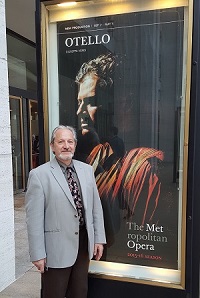
By Tiziano Thomas Dossena
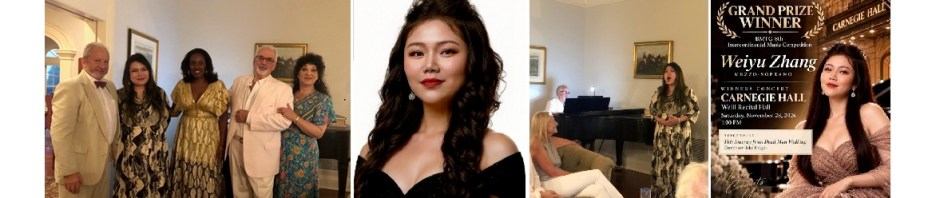
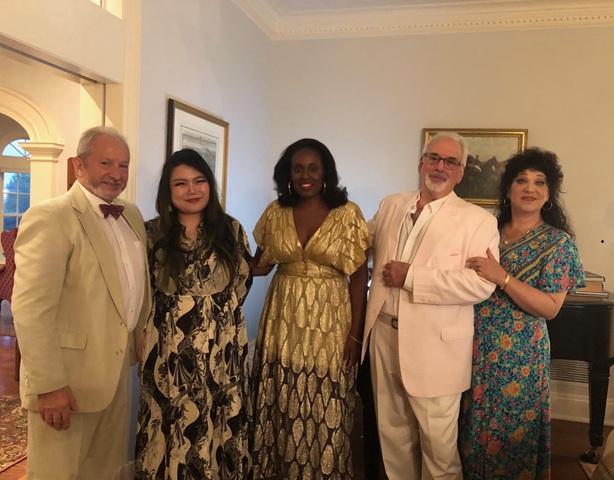
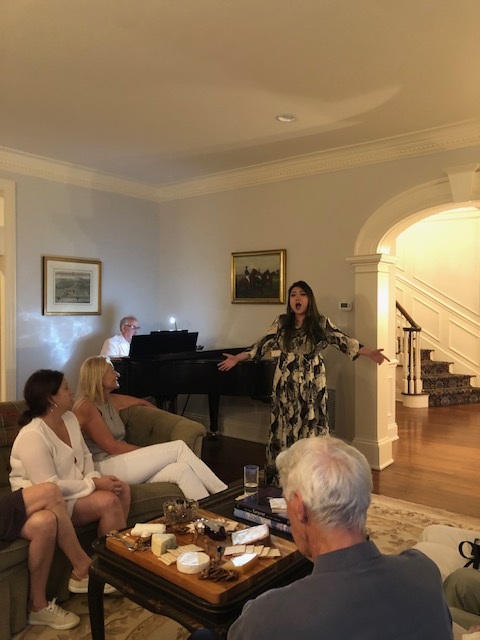
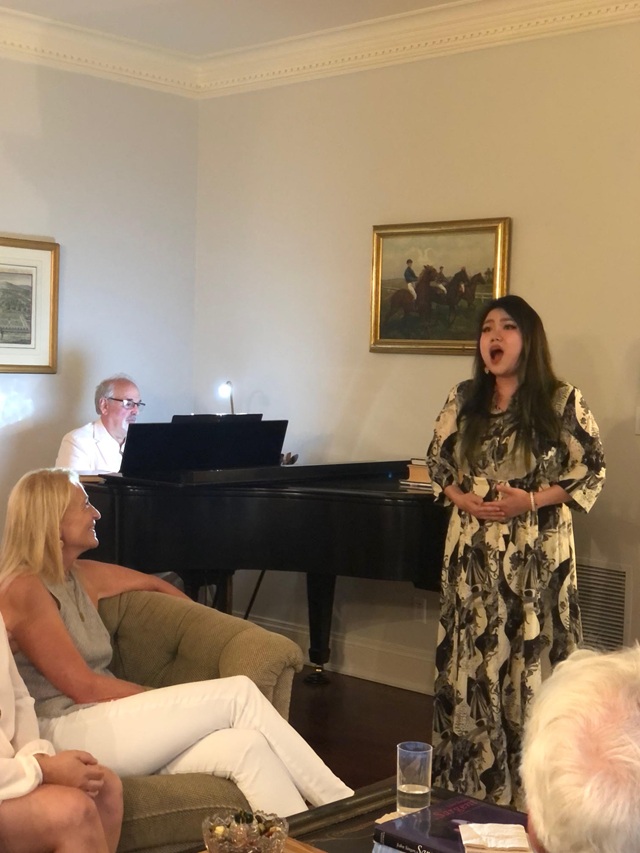
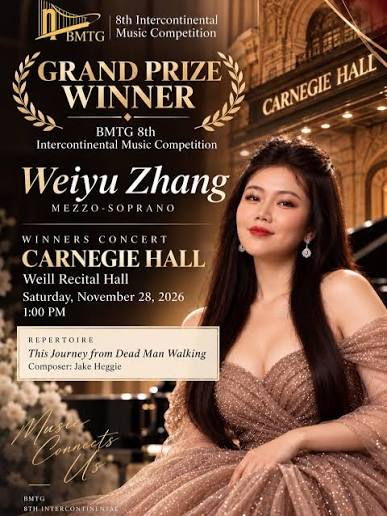
Most recently I was happy to attend a special event at Olgivie Farm. At the time, I was fortunate to be able to interview the mezzo-soprano Wiyu Zhang who, in the meantime, has won the BMTG 8th International Music Competition, and will perform at Carnegie Hall on November 28th:
OperaMyLove: Hello, Weiyu. Nice to meet you again. Your performance at the Ogilvie Farm was exceptional, and I was fascinated by your voice mastery and emotional representation. I am very thrilled to ask you a few questions about your life and musical experience for our magazine.
Weiyu Zhang: Thank you. I will be pleased to answer you.
OperaMyLove: Let’s talk about your childhood. You started studying piano when you were three years old. What made you decide to study voice as well? Do you feel singing, for you, has prevailed over being a pianist? If so, why?
Weiyu Zhang: I was born into a musical family, so music was part of my life from a very early age. My mother played the accordion and sang. My second aunt also sang and played the piano, my third aunt sang, and my uncle tuned pianos and taught music theory and ear training. My uncle by marriage was also a singer. I grew up surrounded by music, often sitting behind the piano and watching my family members perform.
As I grew older, I gradually discovered that I loved being on the other side of the piano as well: standing in front of an audience and singing. I especially enjoy the direct connection with the audience and the way a voice can communicate a story and convey emotion.
I would not say that singing has replaced the piano in my life. Piano remains an essential part of my musical foundation and continues to shape the way I understand music. However, singing has become a particularly direct and personal way for me to tell stories and connect with people emotionally. That is why it has taken such a prominent place in my artistic life.
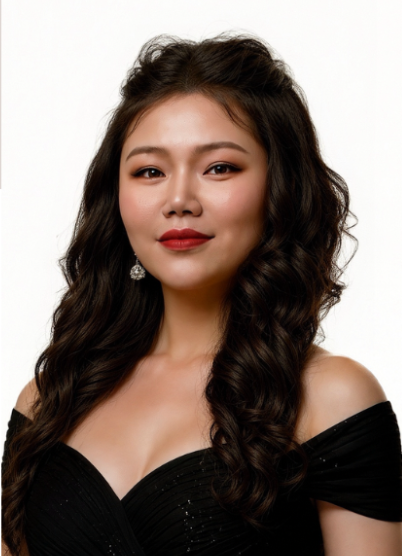
OperaMyLove: You completed your studies in the Vocal and Opera Department of the China Conservatory of Music. What were your performances during those years?
Weiyu Zhang: My years at the China Conservatory of Music were very active and formative. I took part in solo performances, opera and ensemble productions, choral concerts, and collaborative projects as both a singer and a pianist.
Among my solo appearances were:
• May 2012 — Soloist, Carnival Night of the Drama Club Concert, China Conservatory of Music.
• July 2013 — Soloist, a recital at Diaoyutai State Guesthouse.
• November 2013 — Soloist, Aboriginal Plan Indoor Cantata Concert, China Conservatory of Music.
• February 2014 — Soloist, Jasmine Chinese Songs Chorus Concert, Tianjin Concert Hall.
• July 2015 — Soloist, Le Château de la Voix Cabaret Soirée Program Concert, Smith Memorial Room, University of Illinois Urbana-Champaign.
• July 2015 — Soloist, United Methodist Church at the University of Illinois Urbana-Champaign.
• October 2015 — Soloist, Opera Ensemble Concert, China Conservatory of Music.
• April 2016 — Opening performer of the undergraduate recital, China Conservatory of Music.
I also participated in a number of major choral performances, including the Beijing TV Gold Microphone Ceremony in December 2013; YongLiao’s Music Compositions Concert at the Beijing Cultural Palace of Nationalities in May 2014; The Three Tenors of China concert at the Great Hall of the People in September 2014; the 25th Students A Cappella Concert of New Music Compositions; and a symphony concert celebrating the 65th anniversary of the founding of the People’s Republic of China with the China Philharmonic Orchestra. In June 2016, I took part in the Video Games Live: World of Warcraft video game symphony concert and the first sailing of Royal Caribbean International’s Ovation of the Seas. In December 2016, I participated in China’s Three Tenors Beijing New Year Gala Concert.
My work at the Conservatory also extended beyond singing. In June 2014, I performed as a pianist in “The Art of Cooperation,” a violin and piano concert. In June 2015, I served as piano accompanist for a violin concerto at the annual meeting of Daimler Financial Services. In June 2016, I conducted a Chinese chorus at a competition marking the 95th anniversary of the founding of the Communist Party of China, and the group placed second.
One especially valuable experience was performing in the opera Red River Valley. The school offered three opera productions, and I chose Red River Valley because I felt that its leading role, Danzhu, was well suited to my mezzo-soprano voice. I auditioned and was selected for the role. The production process was comprehensive: it included studying the libretto, individual coaching, ensemble rehearsals, costume fittings, character photographs, and full rehearsals in costume and makeup. We first presented the production internally and later gave a public, ticketed performance. I also took part in excerpts from theater and musical theater works and created promotional posters with friends for community performances. These experiences gave me a valuable understanding of what it takes to bring a complete stage production to life.
OperaMyLove: Your educational curriculum in the United States is impressive: a Master of Music degree from Hunter College, City University of New York, advanced studies at the John J. Cali School of Music at Montclair State University and an Artist Diploma, and you also studied at The Juilliard School. During those formative years, you have performed in many venues. Could you tell me in what theater and what kind of performance it was?
Weiyu Zhang: My studies in the United States gave me opportunities to explore different musical styles, develop my stagecraft, and gain experience in a variety of performance settings.
At Hunter College, CUNY, where I earned my Master of Music degree, I participated in vocal masterclasses, vocal ensembles, opera, and musical-theater productions. I also worked on Spanish opera and contemporary stage works. In 2019, I performed in Patience and Sarah at the Kaye Playhouse. I played a mother with a baby, which was an interesting acting challenge because I had never really considered how a mother holds or interacts with a baby before preparing for the role. The production also gave me the opportunity to work with professional costume designers and stylists on custom costumes, character styling, and production photographs.
During my time at Hunter, I also took part in two new musical-theater works by contemporary composers, Operabbit and Marshawn. Those experiences helped me discover how much I enjoy musical theater.
One of the most unforgettable moments of my time at Hunter came in May 2019, when I sang the United States national anthem solo and unaccompanied at the college’s graduation ceremony at Madison Square Garden. The school had invited students to submit audition recordings by email. I went straight to a practice room, prepared the song, recorded it, and submitted the video. At the time, I did not know the venue’s scale or that Hillary Rodham Clinton would be attending as a special guest. I only learned those details later, when I saw the promotional screens on campus.
I subsequently pursued an Artist Diploma at the John J. Cali School of Music at Montclair State University. Much of that period coincided with the pandemic, and for about a year my classes were online. The school sent students a stage backdrop and a ring light and taught us how to work with lighting, record ourselves, find free stock resources, edit video, and synchronize microphone audio with video. It was a very different kind of training, but it gave me practical skills that remain useful.
In 2020, I performed in the English-language opera Naomi in the Living Room, playing Naomi. Some of the aria sections lasted more than ten minutes, and I had to interact with two imagined characters. We used changes in camera angles to help create those interactions.
Later, at the Alexander Kasser Theater, I performed as Zita in Puccini’s Gianni Schicchi and Michael Ching’s Buoso’s Ghost. The preparation involved individual coaching, ensemble rehearsals, blocking, acting and movement classes, and full rehearsals in costume and makeup. We also worked with custom costumes, styling, and character photographs. Having already experienced a full production in Red River Valley, I felt more confident and comfortable in the rehearsal and performance process.
I also completed Professional Vocal Studies at The Juilliard School. The diction classes helped me refine my pronunciation in German, French, and Italian. The program culminated in a recital, and I also had the opportunity to audit masterclasses and attend concerts at Juilliard.
OperaMyLove: In those years, you also distinguished yourself by winning Third Prize in the Concert Artist Division of the Chicago International Music Competition and Third Prize in the Bel Canto Division of the International Arts Festival Vocal Competition in Singapore. You also advanced to the semifinals of the Petrichor International Music Competition, the finals of the Venetian Opera & New York Music Productions Singing Competition, and the semifinals of the Premiere Opera Foundation International Vocal Competition and Professional Casting Auditions. Now, that’s a stunning series of achievements. Which one of these competitions has left a mark on you? What was the aria you sang, and what were the emotions that made that competition special?
Weiyu Zhang: Of the competitions mentioned, the Chicago International Music Competition left the strongest impression on me. For that competition, I prepared four arias:
- “Entweihte Götter,” Ortrud’s aria from Wagner’s Lohengrin.
- “Amour, viens aider ma faiblesse,” Dalila’s aria from Saint-Saëns’s Samson et Dalila.
- “Voi lo sapete, o mamma,” Santuzza’s aria from Mascagni’s Cavalleria rusticana.
- “Sein wir wieder gut,” the Composer’s aria from Richard Strauss’s Ariadne auf Naxos.
The experience became memorable because of an unexpected problem on the day of the competition. My accompanist arrived about fifteen minutes late due to an access issue at the venue’s main entrance. We had to enter through another entrance, and my accompanist got lost while trying to find the performance room. After preparing so much, I was worried that this situation—something completely outside my control—might cost me the opportunity to compete.
At first, it was difficult to concentrate, but I managed to regain my focus fairly quickly because I had been working on all four arias for a long time. The organizers were patient and waited for us; the judges showed no impatience. However, during the fourth aria, my accompanist made a mistake and rushed the beat, so the performance was not at the level I had hoped for. I was not so much concerned about the score as I was focused on doing my best, but I knew the performance had been affected by the circumstances.
When I learned that I had received Third Prize, I was genuinely happy and surprised. After making the judges wait and experiencing those difficulties, I had not expected to receive an award.
The experience taught me an important lesson about competitions and performances: unexpected situations can happen, and I need to learn to manage my emotions, remain focused, and maintain my professionalism and resilience. It also taught me a practical lesson: in the future, my accompanist and I should make sure that we arrive and enter the venue together.
OperaMyLove: Just this past month, you entered the “Starlight Summer” International Competition in three different vocal categories: the Classical Group, which emphasizes traditional vocal technique; the Microphone Group, which tests a singer’s coordination with sound amplification; and the Symphony Orchestra Performance Group, which places greater emphasis on a singer’s ability to work with a large ensemble.
Three categories, three first-place awards. What arias did you sing in each category, and why did you choose them?
Weiyu Zhang: I initially thought I had entered three categories, but when I arrived at the competition venue, I realized that I had actually entered four. I was very pleased to receive First Place in all four categories.
The four categories and selections were:
1. Orchestra Group — “Parto, parto, ma tu, ben mio” from Mozart’s La clemenza di Tito.
2. Italian Opera Group — “Voi lo sapete, o mamma” from Mascagni’s Cavalleria rusticana.
3. Classical Opera Group — “Entweihte Götter” from Wagner’s Lohengrin.
4. Pop Group — “Something’s Got a Hold on Me.”
I chose Mozart’s “Parto, parto” because coloratura repertoire is one of the areas that feels especially distinctive among the works I have studied. I also wanted to experience singing with an orchestra and explore how the voice can blend and communicate with a large ensemble. It was both an exciting musical experience and a challenge.
I chose Santuzza’s aria because I personally love the character. I am drawn to her tragic nature and to the distinctly Italian atmosphere of the story. The aria gives me an opportunity to explore the character’s emotions and tell her story.
After choosing Mozart and Mascagni, I felt that I also wanted to include a more dramatic work. Ortrud’s aria from Lohengrin was the right choice for that purpose.
For the pop category, I chose “Something’s Got a Hold on Me” because I love the song’s theme in the film. Whenever I sing it, I feel that being on stage is one of the most beautiful experiences in my life.
OperaMyLove: You played Danzhu, the lead role, in the opera “Red River Valley”, and Zita in “Gianni Schicchi”. What major differences did you notice in the use of voice in these two operas?
Weiyu Zhang: For me, the main difference between Danzhu in Red River Valley and Zita in Gianni Schicchi is not a change in my vocal timbre. My basic vocal color remains the same. The distinction comes primarily through acting, posture, body language, and speaking tone. Danzhu is a teenager and the only daughter of a chieftain on the grassland. She has grown up somewhat like a spoiled princess, so she can be willful and capricious. At the same time, she has a charming, even lovable, side. She tries to force her enslaved servant to love her, but she is not evil at heart. There is a certain innocence and childishness in the way she approaches the world.
Zita, by contrast, is a much older woman and a relative of the male protagonist. Her main concern is the division of the inheritance. She has a pettier, calculating side, and the character is presented with strong satirical and comic qualities.
I therefore approach the two roles differently on stage. Danzhu’s physicality and manner of speaking reflect her youth and princess-like temperament, while Zita’s posture, gestures, and tone are more playful, sharp, and comedic. The vocal timbre itself does not change; it is the character work and stage behavior that help distinguish them.
OperaMyLove: You completed a vast repertoire of mezzo-soprano arias, from Mascagni to Wagner, to Verdi, Mozart, and Strauss, just to name a few. Which aria did you find most challenging, and why? Which aria did you find the most stress-free, if not easiest to learn?
Weiyu Zhang: I find it difficult to name just one aria as the most challenging, because each work presents a different kind of technical and musical challenge.
Wagner requires strong breath support and extremely precise control of detail, while the singer must remain completely relaxed. In Verdi’s “O don fatale,” the challenge lies in shaping subtle emotional contrasts. In Saint-Saëns’s “Amour, viens aider ma faiblesse,” I have to pay particular attention to the long French phrases and maintain a beautiful legato line. Richard Strauss’s “Sein wir wieder gut” features significant rhythmic and emotional shifts from one phrase to the next, and the German pronunciation requires a different approach than the flowing legato of the French repertoire. Mascagni’s “Voi lo sapete, o mamma” calls for a strong understanding of the traditional Italian style and atmosphere.
In general, I feel less pressure when singing art songs, including German Lieder and French mélodies. My state of mind when singing art songs is different from when I sing operatic arias. I am not entirely sure why, but the dramatic and theatrical demands of an aria can make me approach the performance differently. By contrast, repertoire with a more peaceful and reflective character gives me a sense of calm.
I also particularly love the vocal writing throughout Aida. Compared with some of the other works I have studied, I find much of that repertoire relatively comfortable from a technical perspective.
OperaMyLove: Which composer do you find most intriguing in his arias for mezzo-soprano?
Weiyu Zhang: Verdi is probably my favorite composer for mezzo-soprano arias. His music brings together power, delicate emotion, rhythmic variety, and dramatic conflict in a way that I find especially satisfying. The balance feels just right to me: the music is intense and expressive without feeling unnecessarily burdensome to sing. I feel very comfortable and connected when performing his works.
I also enjoy Berlioz very much. His long French phrases make me feel relaxed. Singing that repertoire can feel almost like doing spiritual yoga.
OperaMyLove: You also perform as a pianist. Which composer would be your first choice as a solo performer and why?
Weiyu Zhang: I love listening to Debussy, but when I sit down to play, I tend to choose Chopin and Rachmaninoff. I am drawn to music with strong emotional layers and dramatic tension, and both composers offer an enormous expressive range. Their works allow me to explore a wide spectrum of emotions and build a compelling musical narrative.
So, although Debussy is one of my favorite composers to listen to, Chopin and Rachmaninoff are the composers I most naturally turn to when I want to perform at the piano.
OperaMyLove: Which theater gave you the biggest emotion while performing there?
Weiyu Zhang: The performance that gave me the strongest emotional experience was singing the United States national anthem at Madison Square Garden during Hunter College’s graduation ceremony in May 2019.
It was my third year in the United States. One day, I received an email from the school inviting students to submit a video audition for the graduation ceremony. I went to a practice room, as I did on an ordinary day, worked on the song, recorded a video, and emailed it to the school. Then I put the audition out of my mind. As music students, we were used to recording videos and submitting auditions, so I did not think it was anything extraordinary.
I did not know where the ceremony would take place, who the special guest would be, or even that I had been selected to sing the solo. About a month later, I saw a promotional screen on campus showing the venue and the special guest information. When I realized that it was Madison Square Garden and that Hillary Rodham Clinton would be there, I could hardly believe my eyes. My heart was practically jumping out of my chest.
Even when I arrived at the venue with my special performer credential and went backstage, where journalists were conducting interviews, the whole experience still felt unreal. I later sat in the front row on stage with distinguished graduating students, next to the university president and Hillary Clinton. I still could not quite believe that I was there.
Then I stood before the cheers of tens of thousands of people and sang the national anthem. At that moment, I felt genuinely grateful—to music, to myself for having fallen in love with music, and to music for giving something so meaningful back to me.
I have performed in many places, but this experience was exceptionally special. It is one of those moments I will remember for the rest of my life.
OperaMyLove: You are not only a competitor on the stage but also serve on judging panels. You served as a vocal judge for the New York regional round of the “Water Cube Cup” Chinese Song Contest, as a judge for the New York regional round of the Prokofiev International Music Competition, and as a vocal judge for the Rutgers University Voice Competition. Do you find it challenging to judge other performers? What is the most difficult part of this process for you?
Weiyu Zhang: I have served as a vocal judge for the New York regional round of the Water Cube Cup Chinese Song Contest, as a judge for the New York regional round of the Prokofiev International Music Competition, and as a vocal judge for the Rutgers University Voice Competition.
I do find judging challenging, because the standards and priorities need to be adjusted according to the discipline, whether singing or piano, and also according to the age and experience of the participants. The most important thing is to understand the purpose and level of each competition.
For example, the Rutgers University Voice Competition featured amateur participants, including young students just beginning their university studies. Each of them was there because of a genuine love of music. In that setting, I believe it is important to provide constructive, appropriate technical feedback so that every student can take something useful away from the experience.
The Prokofiev International Music Competition, on the other hand, involved professional performers. The standards were much stricter, and I needed to examine the details of each performance carefully while also considering and discussing the perspectives of the other judges.
The Water Cube Cup Chinese Song Contest brought together people who love singing Chinese songs, and its atmosphere was comparatively relaxed.
For me, being a judge is not simply about assigning a score. It is about understanding each participant’s background and the purpose of the competition, then offering an assessment that is fair, appropriate, and useful.
OperaMyLove: In music education, you received the Outstanding Teacher Award from the New York Golden Melody Classical Music Competition and the Outstanding Teacher Award from the 6th UK-China International Arts Competition in 2023. You also serve as the Music Director of Wesley United Methodist Church in the United States and as an advisor to the Greater Bay Area International Vocalists Association. Furthermore, your teaching activities are offered free of charge and on a voluntary basis. Do you feel teaching is as rewarding as performing?
Weiyu Zhang: Throughout my musical journey, sharing music with people of all ages who genuinely love it—both children and adults—has always been something I have especially enjoyed. To me, teaching is not simply a one-way process of passing on knowledge and technique. It is an experience in which the teacher and student learn from one another and grow together.
At the beginning, a student and I need time to understand and adjust to each other. That includes getting to know one another’s personalities, communication styles, and ways of understanding music. Every student is different, so I have to keep adapting my teaching approach.
When I teach vocal technique, I need to explain each detail as clearly and specifically as possible so that students can understand how to use their voices. This process also makes me reconsider and organize my own ideas about singing. Sometimes, when I try to explain a technical point to a student, I gain a deeper understanding of my own technique.
When my students make progress, perform successfully, or achieve something they have been working toward, I feel a very special kind of happiness and pride. It is almost as if they were my own children. I feel like a parent watching flowers I have nurtured finally bloom and bear fruit. Their smiles are the greatest reward I could ask for.
The fulfillment I receive from teaching is different from what I experience on stage, but it is just as meaningful. Performing allows me to express myself through music; teaching gives me the opportunity to help others discover their potential, grow, and find their own musical voices.
OperaMyLove: You are a talented musician and performer. I am sure more success awaits you in the years ahead. On my part, I am looking forward to attending your performance at the Metropolitan Opera. Let’s make it happen. Good luck and keep us posted.
Weiyu Zhang: Thank you. I will keep you informed.