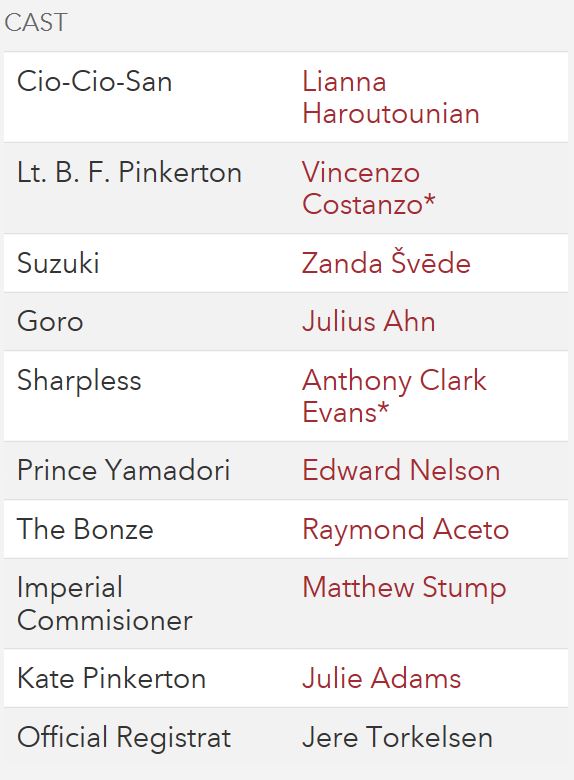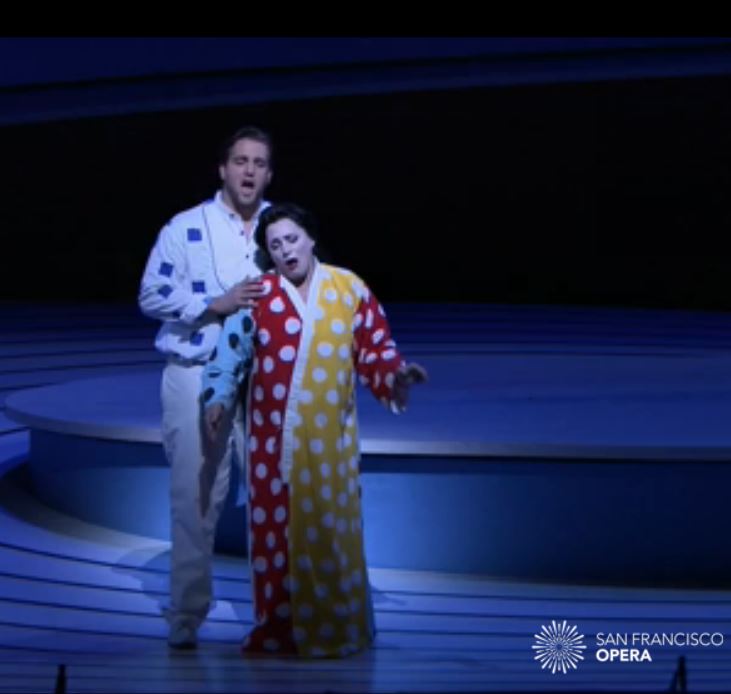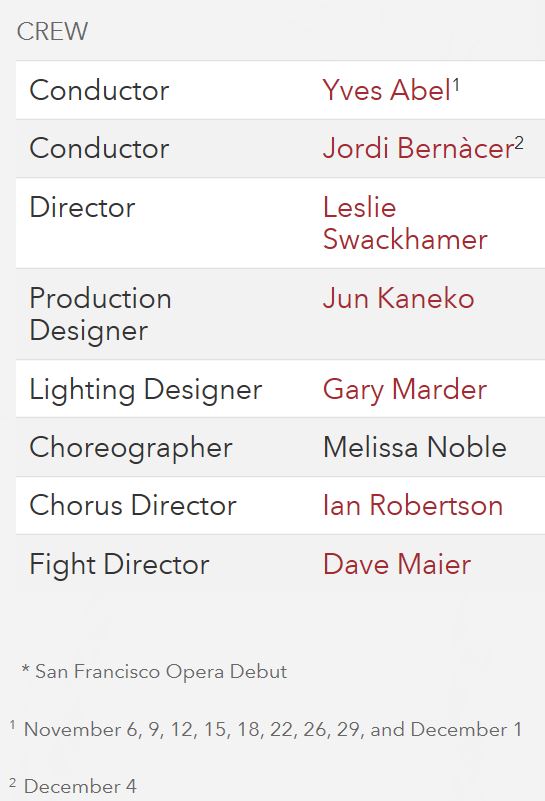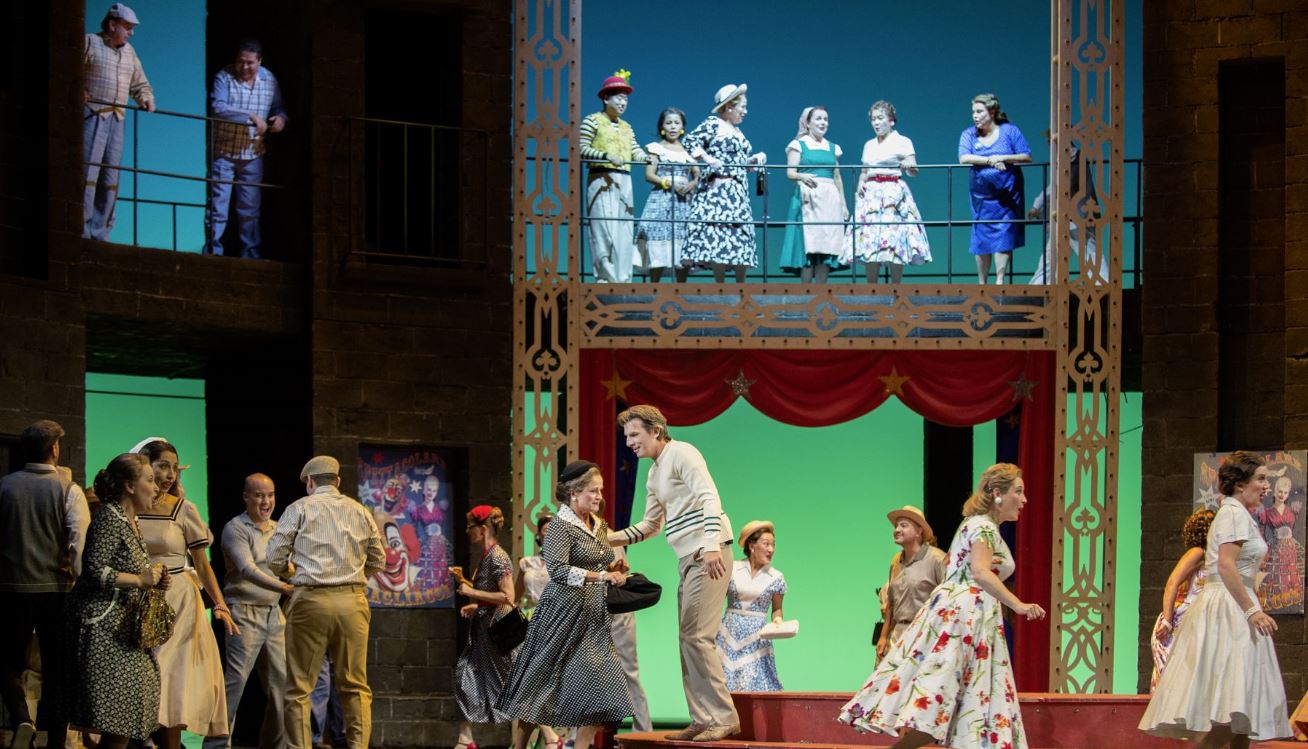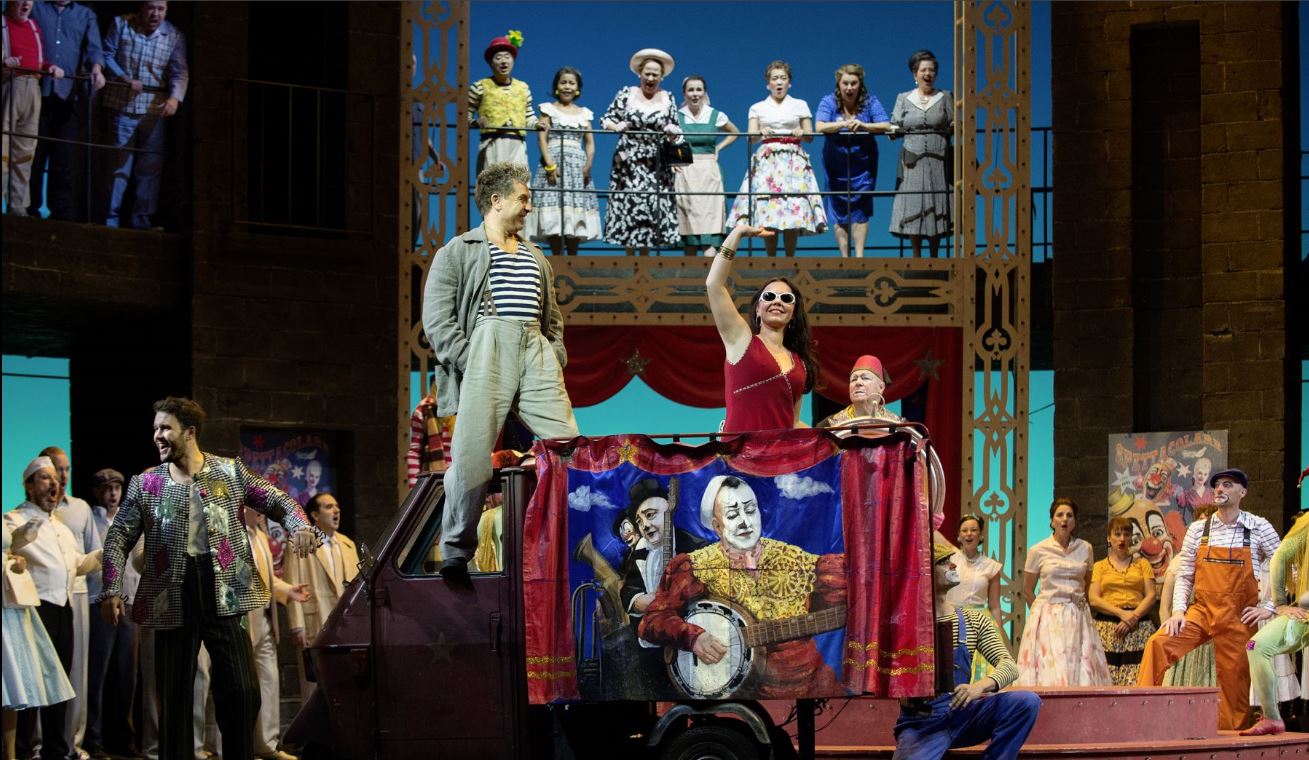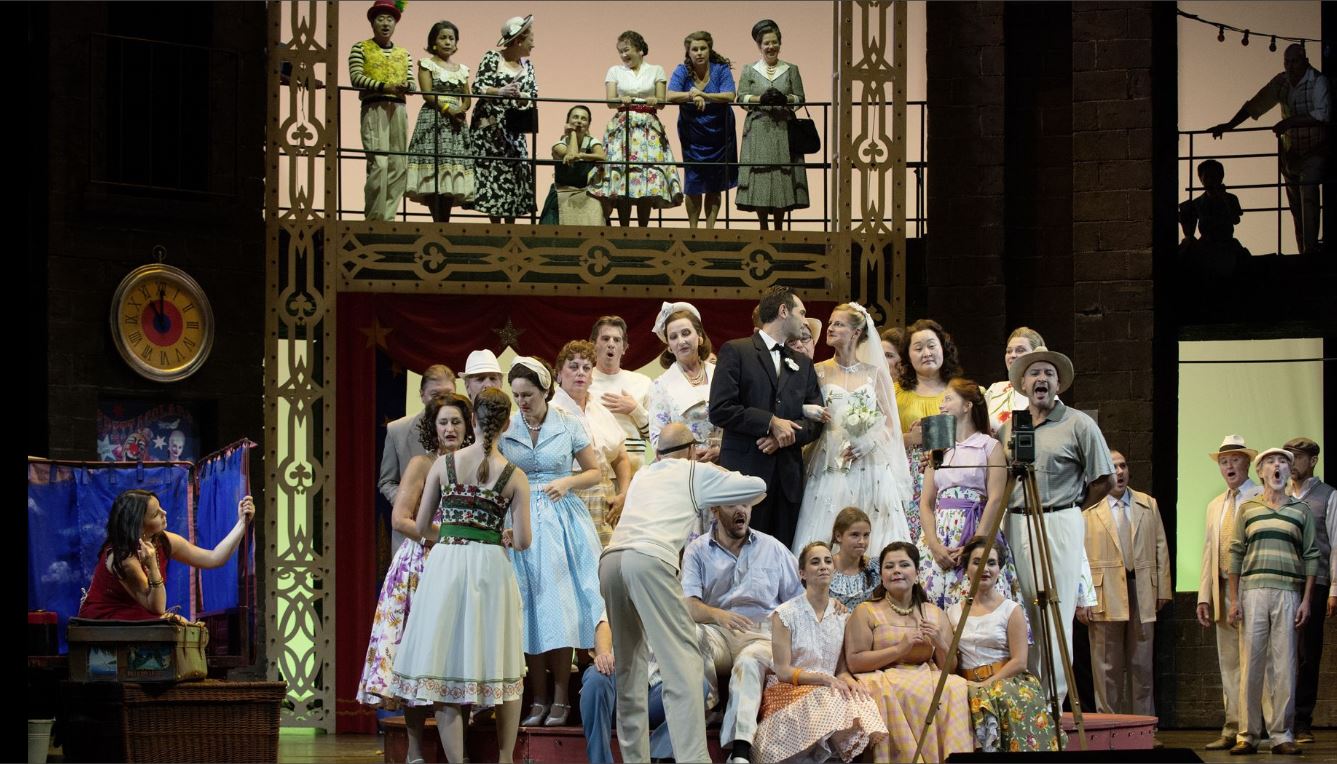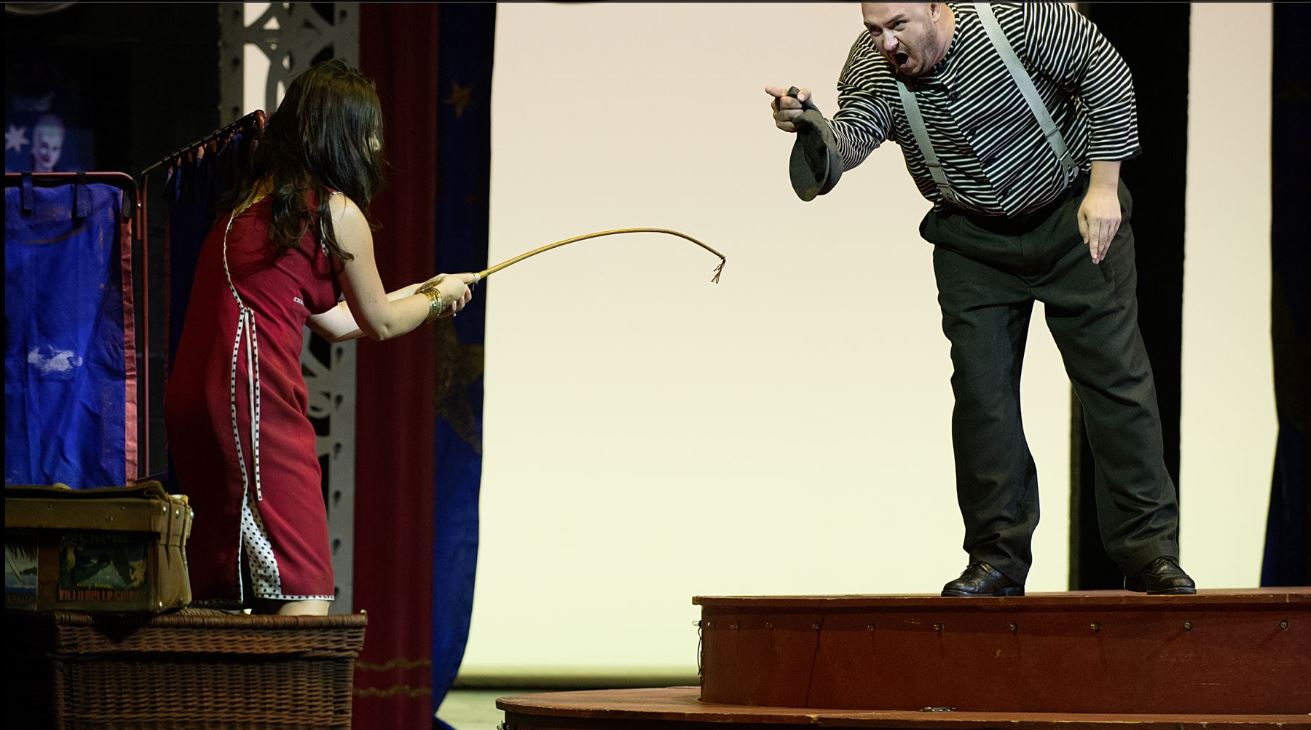
Madame Butterfly at the San Francisco Opera

sanfranciscologoMadame Butterfly

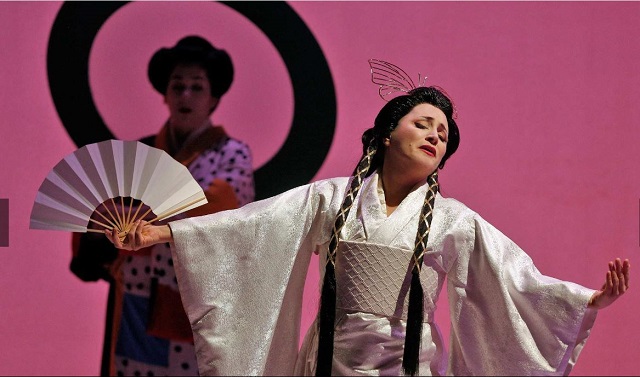
Cultures clash when a trusting young woman marries an American naval officer stationed in Nagasaki. Puccini’s gut-wrenching music takes the audience on an emotionally charged journey through innocence, betrayal and sacrifice towards a heartbreaking finale.

Music by Giacomo Puccini | Libretto by Luigi Illica and Giuseppe Giacosa

Sung in Italian with English supertitles

schedulebut1cast
but2artistic_team

GALLERY

SYNOPSIS

ACT I

The marriage broker Goro shows Lt. Pinkerton, USN, the house that Pinkerton has rented to occupy with his bride-to-be, the geisha Cio-Cio-San (Butterfly). Soon they are joined by the U.S. Consul at Nagasaki, Sharpless, who is surprised by the marriage contract Pinkerton is about to sign: It is valid for 999 years but can be annulled at the end of each month. Sharpless tries to make the carefree lieutenant seriously consider the step he is about to take. Pinkerton asks Sharpless to join him in a series of toasts, among them one to the real wedding and the real American wife he will surely have one day. Just then, the voice of Butterfly is heard as she and her geisha friends ascend the hill. She is the happiest girl in Japan and comes to answer the summons of love. Butterfly talks of her unhappy family and tells Sharpless that at fifteen, a geisha is already an old woman. She shows Pinkerton some of her possessions, among them the dagger with which her father had committed hara-kiri at the Mikado’s orders. Butterfly tells Pinkerton that she is willing to give up her own gods and to adopt his religion. The Imperial Commissioner and Official Registrar then perform the civil wedding ceremony. Sharpless leaves with a word of caution that he believes Butterfly is seriously in love, but Pinkerton has already turned to his new relatives, urging them to celebrate his happiness. Butterfly’s uncle, the Bonze, arrives. He has heard that Butterfly has renounced her religion, and he calls all her relatives to renounce her. Pinkerton orders them away and then tries to comfort the weeping Butterfly. Smiling through her tears, she tells him that although everyone else has rejected her, she is happy only with Pinkerton. As night falls, Pinkerton realizes how much he loves Butterfly.

ACT II

Pinkerton has sailed away and three years have passed. Butterfly and her maid Suzuki are living in utter poverty in the house on the hill. Butterfly still believes that Pinkerton will return to her, as he promised, but Suzuki doubts it. Goro brings Sharpless to Butterfly to read her a letter from Pinkerton, but she insists on receiving him as an honored guest. Her hospitality interferes with his efforts to read the letter. They are joined by Goro’s client, Prince Yamadori, who hopes to marry Butterfly. She brushes aside his offer, insisting that she is already married. Yamadori leaves and Sharpless at last produces his letter, but Butterfly is so carried away by the thought that Pinkerton has written she fails to grasp the meaning of his words. Sharpless asks her what she would do if Pinkerton never came back. Become a geisha again, she answers—or better, die. Sharpless suggests she reconsider Yamadori’s proposal, at which Butterfly goes out and returns with Pinkerton’s child. She assures Sharpless that Pinkerton would never abandon such a beautiful child. Moved, Sharpless promises to inform Pinkerton of his son and leaves. Suzuki shouts at Goro, who has been saying that nobody knows who the child’s real father is. Butterfly threatens him with a dagger and drives him away. A cannon shot is heard and Butterfly takes up the telescope and recognizes Pinkerton’s ship. Sure that her faith will be rewarded, Butterfly prepares for Pinkerton’s arrival and she and Suzuki decorate the house with flowers. Butterfly, Suzuki and the child wait and watch overnight for Pinkerton’s return.

Morning comes and Butterfly carries the sleeping child off. Sharpless, Pinkerton, and an unknown American woman arrive in the garden, and Sharpless tells Suzuki that the woman is Pinkerton’s new wife. He hurries off leaving Sharpless and Kate to confront Butterfly, who enters quickly and realizes the reason for Pinkerton’s visit: the couple has come to take the child away. Butterfly instructs them to return for the child in half an hour. She takes her father’s dagger and is determined to end her life when Suzuki, in an attempt to stop Butterfly, pushes the child into the room. Butterfly hugs him close and then sends him out to play. Left alone, Butterfly performs ritual suicide. Pinkerton learns of Butterfly’s devotion for him and is struck with remorse, but he decides to continue with his American marriage.

FOCUS ON:

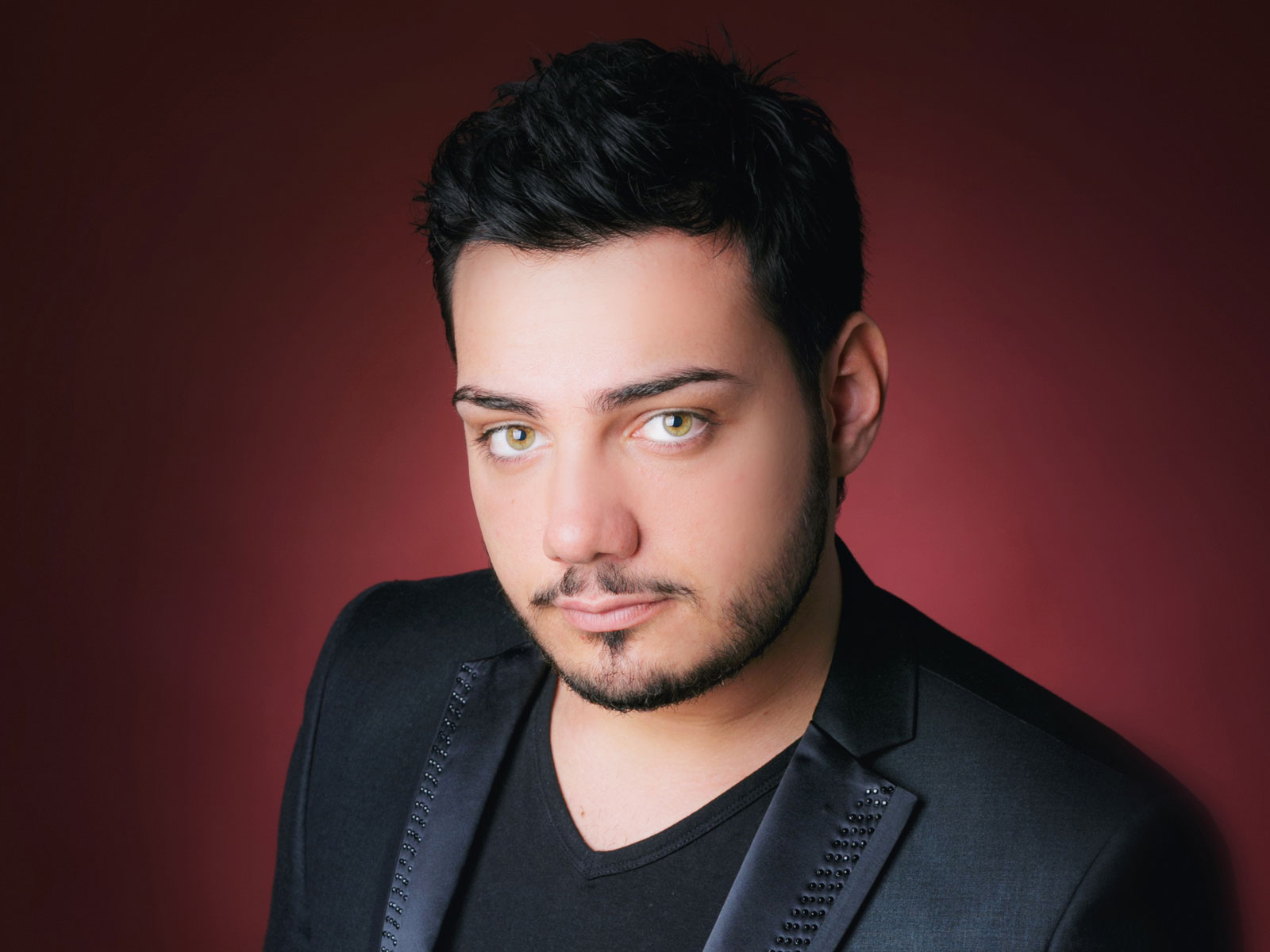
costanzoVINCENZO COSTANZO

(Naples, Italy)

2016–17 Season: Lt. B. F. Pinkerton in Madama Butterfly

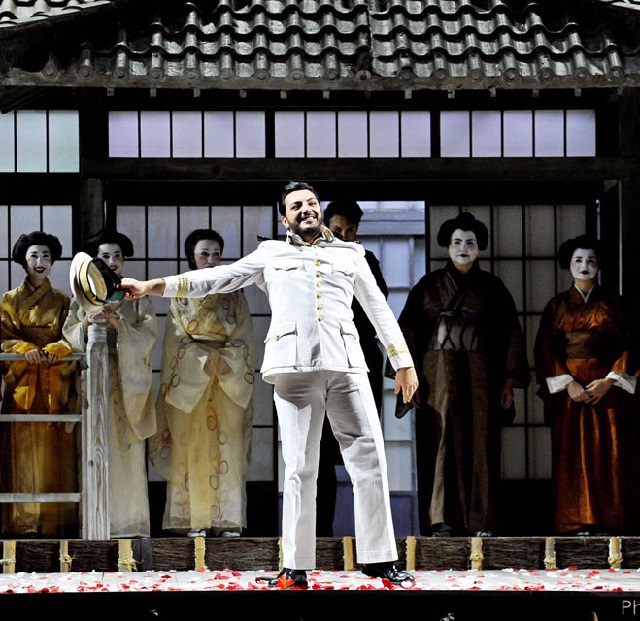
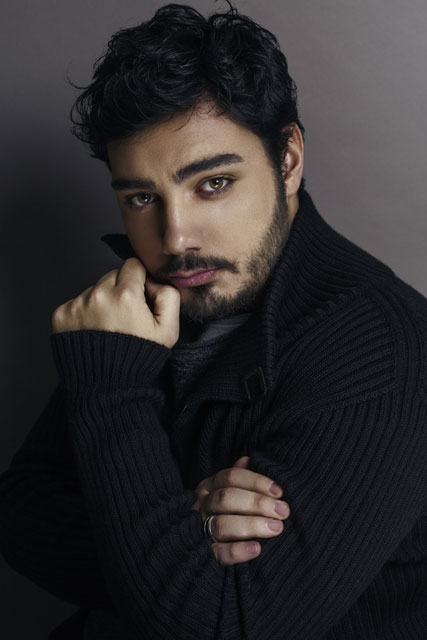
Making his U.S. and San Francisco Opera debuts as Lt. B. F. Pinkerton in Madama Butterfly, Italian tenor Vincenzo Costanzo has had a fast rising international career. costanzo_scena-1

Vincenzo Costanzo is one of the youngest Italian tenors of the opera scene, winner of the “Oscar Della Lirica” Award (New Generation Tenor Award), in Doha (Qatar) in December 2014. Born in 1991, he began his musical studies at the age of six years old, singing in the children choir of Teatro San Carlo in Naples. At the age of 11 years old, he made his debut as a soloist. He studied piano and music theory privately then graduated at the conservatory.costanzo_scena-6
In parallel he took Degree in Computer Engineering. He began to study singing with M°Marcello Ferrara, son of the famous violinist M° Aldo Ferraresi; later studied with M° Marco Berti.
Despite his young age, Costanzo has already had the opportunity to know and work with internationally renowned conductors and directorssuch as M° Daniel Oren, M° Franco Zeffirelli at the Arena di Verona, Liliana Cavani at the Liceu in Barcelona.costanzo_scena-8

In December 2012 he made his debut in MACBETH at Teatro Carlo Felice in Genoa, under the baton of M° Andrea Battistoni; in July 2013, on the occasion of the Verdi Bicentennial, he debuted in Busseto in the role of Rodolfo in LUISA MILLER under the conduction of M° Donato Renzetti and with the extraordinary collaboration for the theatrical staging of the baritone Leo Nucci.
Then he sang the same role at Teatro Comunale di Piacenza,
Teatro Comunale of Ferrara and the Teatro Dante Alighieri in Ravenna, with great success by the public and critics; in September of the same year he made his debut in the role of Alfredo Germont in LA TRAVIATA conducted by M° Daniel Oren at the Guangzhou Opera House, in a production of the Royal Opera House Covent Garden of London. After the experience in China, he takes part in setting of LA TRAVIATA at La Scala in Milan for the opening of the 2013/2014 season.costanzo_scena-11
In February 2014 he debuted the role of Pinkerton in MADAMA BUTTERFLY at Maggio Musicale Fiorentino under the baton of M° Juraj Valcuha and later took part in the production of SIMON BOCCANEGRA at the Municipal Theater in Piacenza directed by Riccardo Canessa. In the spring of 2014 he made his debut as Pinkerton at the Teatro la Fenice in Venice, with the conduction of M° Bisanti; role then also debuted at Teatro San Carlo in Naples.

Subsequently he collected new successes in the role of Alfredo (LA TRAVIATA) in Novara with M° A. Battistoni and in Astana (Kazakhstan) with M° Francesco Ciampa Ivan.
Costanzo ended 2014 by taking part in New Year concerts at Guangzhou Opera and Shanghai (China).costanzo_studio-3

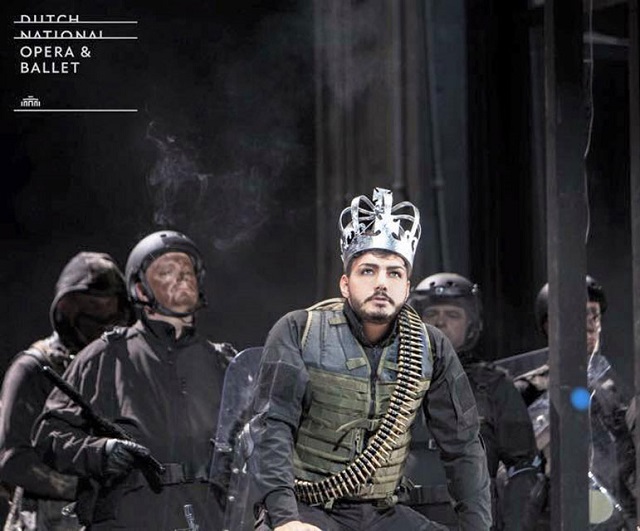
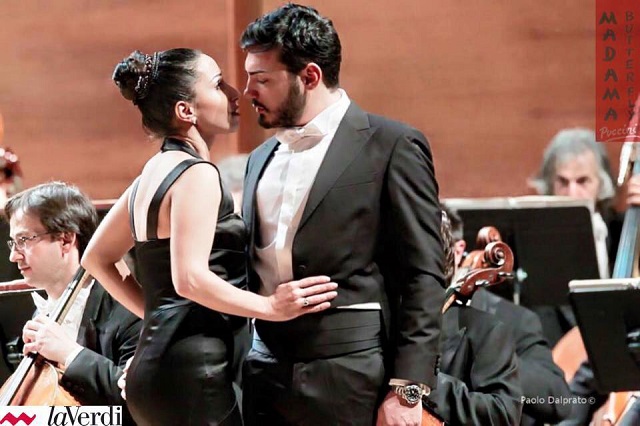
Recently he performed in MADAMA BUTTERFLY with La Verdi Orchestra in Milan and with MACBETH at the Dutch Opera Theatre in Amsterdam.

His upcoming engagements include BOHÈME to Ascoli Piceno, Fano and Fermo, LA TRAVIATA to Berlino and Firenze, MADAMA BUTTERFLY Venezia/Madrid, LA RONDINE to Berlino, MACBETH to Madrid.

© Vincenzo Costanzo

Posted in OPera | Leave a comment

A great Cavalleria Rusticana / Pagliacci at the Zurich Opernhaus with Roberto Alagna

zurich_logoCavalleria Rusticana / Pagliacci

Short operas by Pietro Mascagni and Ruggero Leoncavallo

Cast, dates

Conductor Daniele Rustioni

Production Grischa Asagaroff

Sets and Costumes Luigi Perego

Lights Hans-Rudolf Kunz

Choir DirectorJürg Hämmerli


CAVALLERIA RUSTICANA

Santuzza Catherine Naglestad
Turiddu Roberto Alagna
Lucia Irène Friedli
Alfio Roman Burdenko
Lola Yulia Mennibaeva


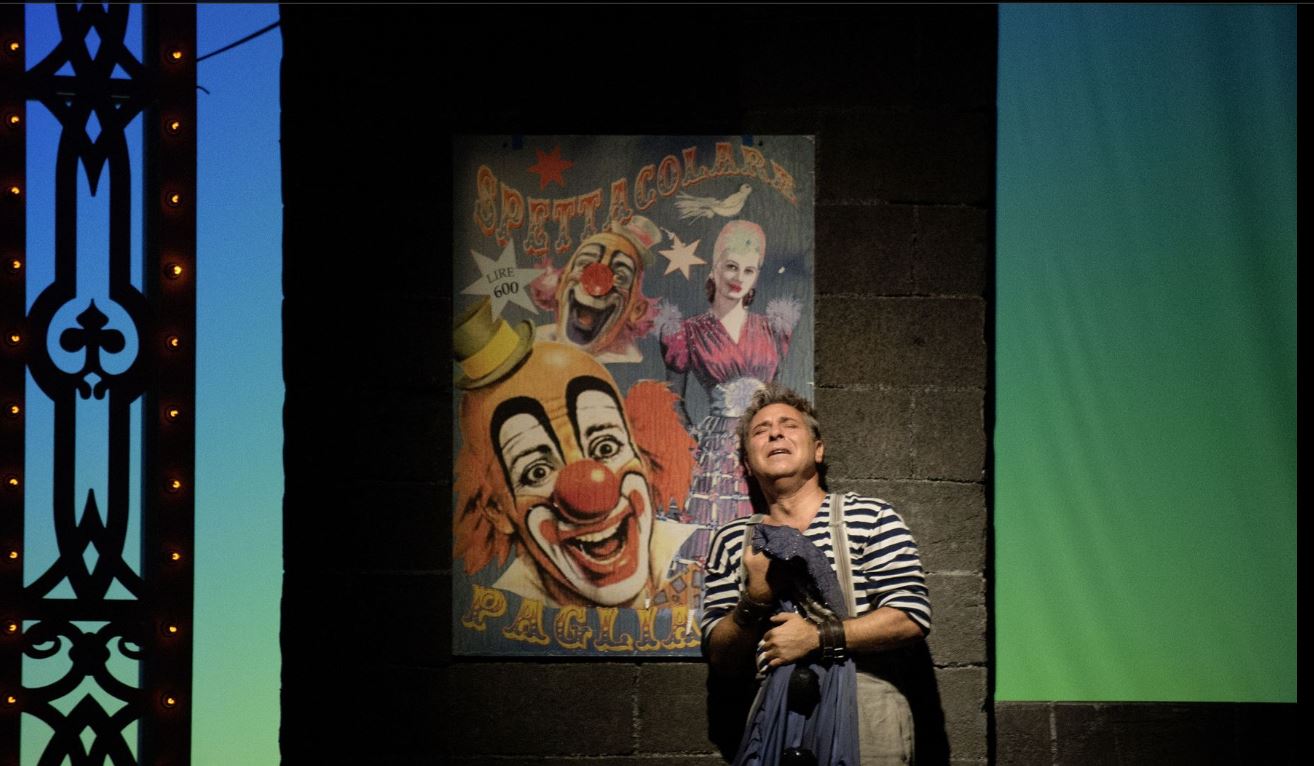
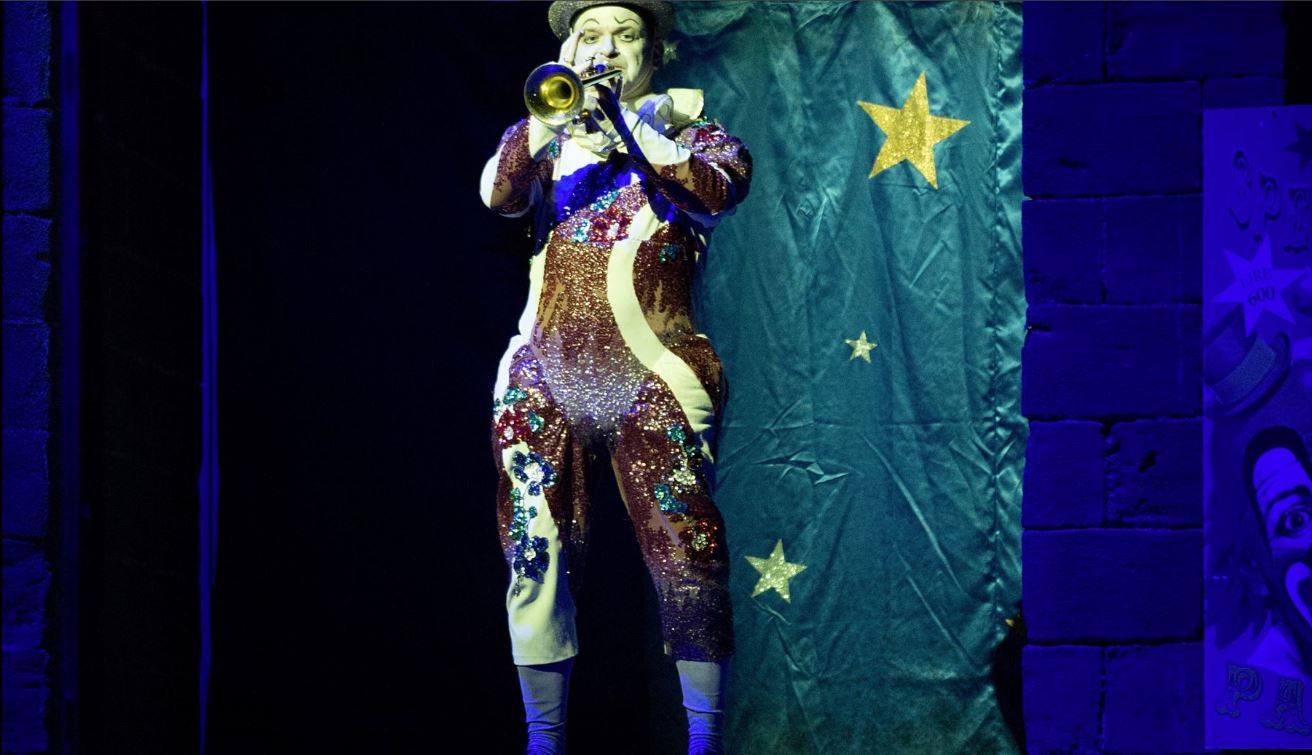
PAGLIACCI

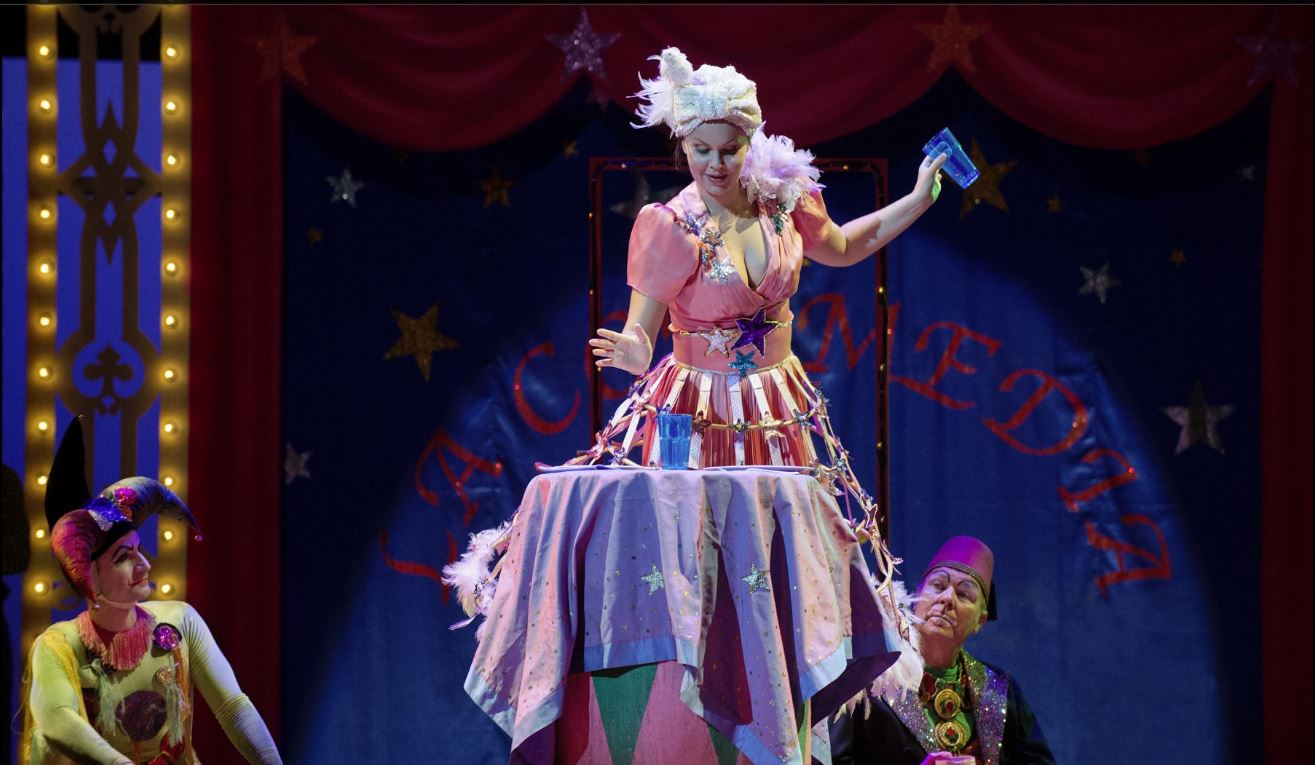
Nedda Aleksandra Kurzak
Canio Roberto Alagna
Tonio Roman Burdenko
Beppe Trystan Llŷr Griffiths
Silvio Alexey Lavrov


Philharmonia Zürich
Chor, Zusatzchor und Kinderchor der Oper Zürich
Statistenverein am Opernhaus Zürich


In Italian
with German and English surtitles
Playing duration 3 hrs.
Break After the 1st part after approx. 1 hrs. 15 min.
Introduction 45 min before the performance
Dates 24 Sep 2016, 19:00
Revival  

28 Sep 2016, 19:00

04 Oct 2016, 20:00

09 Oct 2016, 14:00 AMAG people’s performance

12 Oct 2016, 19:00LocationHauptbühne Opernhaus

Cavalleria Rusticana: melodrama in one act by Pietro Mascagni (1863-1945)
Libretto by Giovanni Targioni-Torzetti and Guido Menasci

Pagliacci: drama in two acts and a prologue by Ruggero Leoncavallo (1857-1919)
Libretto by the composer

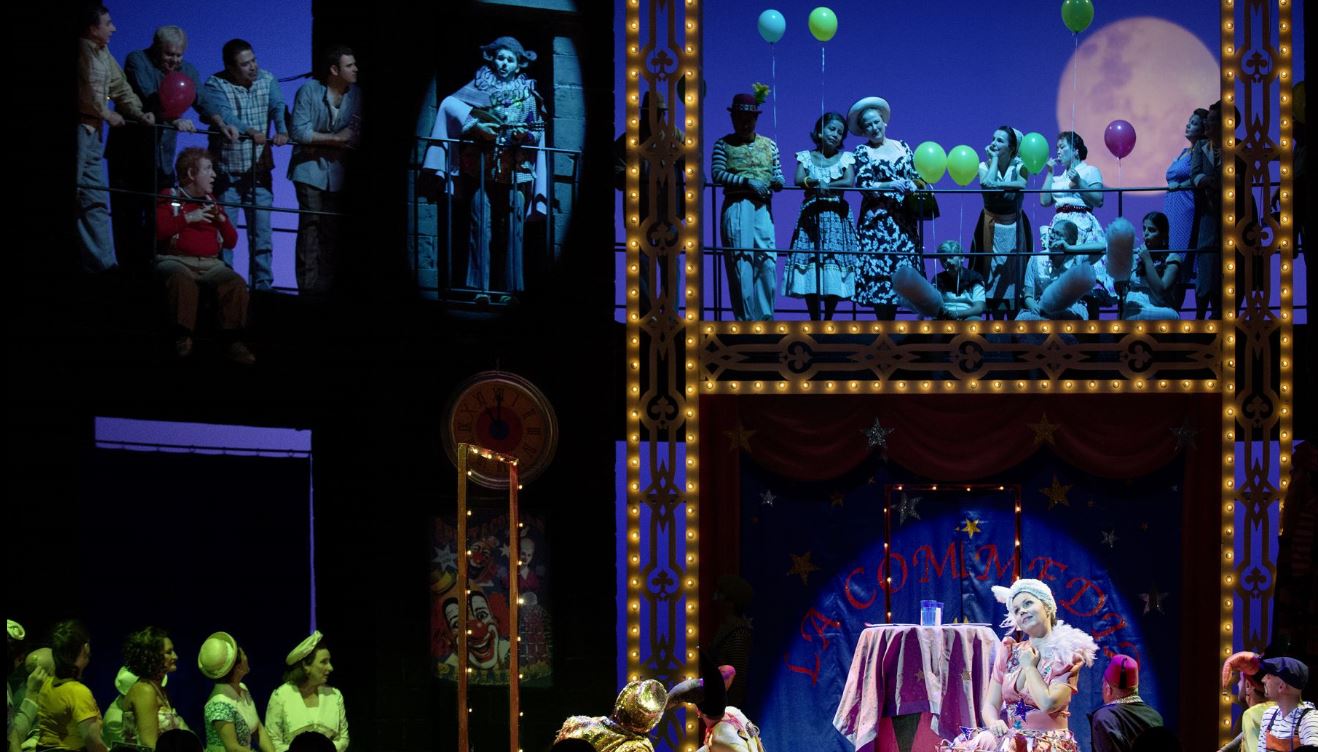
These two short veristic operas, Cavalleria rusticana and Pagliacci, have always been like inseparable twins. It all began with a competition to promote young Italian composers. Pietro Mascagni, still an unsuccessful composer at the time, chose a contemporary subject matter and wrote dramatically gripping music for the story of Santuzza, who is rejected by the village community and out of jealousy reveals the affair between Turiddu and Lola to the latter’s husband Alfio. Mascagni won the competition and became famous over night. Impressed by this success, Ruggero Leoncavallo decided he would also try writing a short opera. Leoncavallo was inspired by a murder trial and the play by Catulle Mendès entitled La Femme de Tabarin: a drama of jealousy in a troupe of commedia dell’arte actors involving the beautiful Nedda, which ends with the murder of Nedda and her lover. The cast of this revival promises to give world-class performances: the star tenor Roberto Alagna can be heard both as Turiddu and as Canio; his partners are Catherine Naglestad (Santuzza) and Aleksandra Kurzak (Nedda).

GALLERIES (photos by Judith Schlosser)

CAVALLERIA RUSTICANA

PAGLIACCI

This slideshow requires JavaScript.

Posted in OPera | Tagged , , , , , | Leave a comment

Don Giovanni at the Met

dongtitle

Three charismatic singers, Simon Keenlyside, Ildar Abdrazakov, and Mariusz Kwiecien, share the role of the title hero, who goes to hell in a dazzling coup de théâtre. The ensemble of great Mozartean singers includes Angela Meade, Marina Rebeka, Isabel Leonard, Matthew Polenzani, Erwin Schrott, and Paul Appleby. Fabio Luisi and Plácido Domingo conduct.

Sung In Italian   Met Titles In English, German, Italian, Spanish

dongcalendar

World premiere: National Theater (now Estates Theater), Prague, 1787. Aided by his ingenious librettist, Lorenzo Da Ponte, Mozart approached his operatic retelling of the Don Juan myth from a point of view that is neither tragic nor entirely comic, but rather lighthearted, urbane, and ironic. We follow the title character and his earthy comic sidekick, Leporello, through a series of encounters that begins with a fatal duel, moves back and forth between the humorous and the sentimental, and ends with the protagonist being dragged down to hell.don_giovanni_1

ARTISTIC TEAM

Production Michael Grandage

Set & Costume Designer Christopher Oram

Lighting Designer Paule Constable

Choreographer Ben Wright

Revival Stage Director Louisa Muller

SETTING

don_giovanni_setting

The city of Seville in southern Spain, where Mozart originally set his opera, was already famous in his time as a mythical world of winding streets, hot-blooded young men, and exotically beautiful women sequestered behind latticed windows. The Met’s production places the action in an unnamed Spanish city in the mid-18th century.

CAST

cast1 cast2 cast3

GALLERY (Photos from Metopera.org)

SYNOPSIS

Act I

Spain, mid-18th century. Leporello, servant to the nobleman Don Giovanni, keeps watch outside the Commendatore’s home at night. Suddenly, the Commendatore’s daughter, Donna Anna, rushes out, struggling with the masked Giovanni and followed by her father. The Commendatore challenges Giovanni to a duel and is killed. Giovanni and Leporello escape. Anna asks her fiancé, Don Ottavio, to avenge her father’s death.

In the morning, Giovanni and Leporello encounter one of Giovanni’s former conquests, Donna Elvira, who is devastated by his betrayal. Leporello tells her she is neither the first nor the last woman to fall victim to Giovanni and shows her his catalogue with the name of every woman Giovanni has seduced.

Peasants celebrate the marriage of Masetto and Zerlina. Giovanni flirts with the bride, telling her she is destined for a better life. But Elvira urges Zerlina to flee her suitor. She also warns Anna, who is still unaware of the identity of her father’s murderer and has asked Giovanni for help in finding the man. Giovanni, for his part, insists that Elvira is mad, and Anna and Ottavio wonder what to believe. As Giovanni leaves, Anna suddenly recognizes his voice as that of the murderer. Devastated but determined, she once more asks Ottavio to avenge her. He wonders how to restore her peace of mind. Giovanni, who has invited the entire wedding party to his home, looks forward to an evening of drinking and dancing.

Outside Giovanni’s home, Zerlina asks Masetto to forgive her. Giovanni enters and leads them both inside. Anna, Elvira, and Ottavio appear masked and are invited in by Leporello. In the ballroom, Giovanni dances with Zerlina, then tries to drag her into the adjoining room. When she cries for help, Giovanni blames Leporello. Anna, Elvira, and Ottavio take off their masks and, along with Zerlina and Masetto, accuse Giovanni, who is momentarily surprised but manages to slip away.

Act II

Having exchanged clothes with Giovanni, Leporello takes Elvira on a nighttime walk, leaving his master free to serenade her maid. When Masetto arrives with a band of peasants to hunt down Giovanni, the disguised Don sends them off in various directions, then beats up Masetto. Zerlina finds her bruised fiancé and comforts him.

Later that night, Leporello—still believed by Elvira to be Giovanni—is surprised by Anna, Ottavio, Zerlina, and Masetto, who all denounce the supposed Don. Fearing for his life, Leporello reveals his true identity before making his escape. Ottavio proclaims that he will take revenge on Giovanni and asks the others to look after Anna. Elvira thinks about Giovanni, whom she still loves in spite of everything.

In a cemetery, Giovanni and Leporello meet the statue of the Commendatore, who warns Giovanni that by morning he will laugh no longer. Giovanni forces the terrified Leporello to invite the statue to dinner. The statue accepts.

Once again, Ottavio asks Anna to marry him, but she replies that she will not until her father’s death has been avenged.

Elvira arrives at Giovanni’s home. She makes a last desperate attempt to persuade him to change his life, but he only laughs at her. The figure of the Commendatore enters and asks Giovanni to repent. When he boldly refuses he is consumed by flames. Elvira, Anna, Ottavio, Zerlina, Masetto, and Leporello appear, contemplating their futures and the fate of an immoral man.

FOCUS ON:

polenzani_operanewsMATTHEW POLENZANI

Tenor Matthew Polenzani is one of the most gifted and distinguished lyric tenors of his generation. His elegant musicianship, innate sense of style and dramatic commitment find him at virtually every leading operatic, concert and recital venue in the world.

Mr. Polenzani’s 2015/2016 season opens with his return to the Opéra National de Paris as Ottavio in Michael Haneke’s acclaimed Don Giovanni. The tenor is Werther at the Bayerische Staatsoper in Munich and again in Vienna, at the Vienna Staatsoper.

Photo by Dario Acosta

Photo © Dario Acosta


The Metropolitan Opera in New York has been, and continues to be his artistic home, and he returns there to star in two new productions. He will sing Nadir, in Le Pêcheurs de Perles, and sings the title role in Roberto Devereux, in a production by Sir David McVicar, with both operas being featured on the Met’s Live in HD series, broadcast to more than 2000 movie theaters worldwide. Mr Polenzani also makes his debut at the Gran Teatre del Liceu Barcelona singing Rodolfo in Puccini’s La Bohème. In concert, Mr Polenzani essays Die Schöne Müllerin at Northwestern University, as part of the opening season in the brand new Mary B. Galvin Recital Hall, with Alan Darling at the piano. He will reprise the work with Julius Drake, in a Liederabend in Frankfurt at Oper Frankfurt.

Title role, Werther, Lyric Opera of Chicago Photo © Dan Rest

Title role, Werther, Lyric Opera of Chicago
Photo © Dan Rest

In the 14/15 season, the tenor was Idomeneo in a new production of Mozart’s masterpiece at London’s Royal Opera. He sang Hoffmann in Les Contes d’Hoffmann, under the baton of James Levine at the Metropolitan Opera. Mr. Polenzani reprised his Nemorino in L’elisir d’amore, and added Tamino in Die Zauberflöte, to his repertory at the Bayerische Staatsoper. He also made his debut at the Opernhaus Zürich, as Alfredo in Verdi’s La Traviata. Concert appearances included Beethoven’s Ninth Symphony, with the Chicago Symphony Orchestra, conducted by Riccardo Muti, and Verdi’s Requiem, at Teatro alla Scala in Milan, with Riccardo Chailly conducting, and a New Year’s Eve Gala Concert in Venezia, with Maria Agresta, and Daniel Harding conducting. Mr. Polenzani also returned to the Festival Musique et Vin au Clos Vougeot, in a duo concert with Soprano Marlis Petersen, under Maurizio Benini’s baton. Pianist Julius Drake accompanied the tenor in a widely acclaimed 10 city recital tour, culminating at London’s famed Wigmore Hall.

Title role, The Tales of Hoffmann, San Francisco Opera Photo © Cory Weaver

Title role, The Tales of Hoffmann, San Francisco Opera
Photo © Cory Weaver

Among the many highlights from recent Metropolitan Opera seasons are the premieres of Bartlett Sher’s production of L’elisir d’amore, which opened the 2012 season, and Sir David McVicar’s production of Maria Stuarda (issued on DVD by Erato), Willy Decker’s production of La traviata, Julie Taymor’s legendary Die Zauberflöte (DVD available from the Metropolitan Opera),  and revivals of Rigoletto, Don Pasquale (issued on DVD by Deutsche Grammophon), Don Giovanni, Roméo et Juliette, Il barbiere di Siviglia, Così fan tutte, Falstaff, Die Meistersinger von Nürnberg (DVD available from Deutsche Grammophon) and L’Italiana in Algeri. To date, he has sung over 300 performances at the Met, many conducted by his musical mentor, James Levine. Across America, he has sung with Lyric Opera Chicago, San Francisco Opera, Seattle Opera and the Los Angeles Opera, among others, in repertory that includes Clemenza di Tito, Werther, Les Contes d’Hoffmann, La traviata, Roméo et Juliette, Die Entführung aus dem Serail, Don Giovanni, Don Pasquale, Il barbiere di Siviglia and Die Zauberflöte.

As Leicester in Maria Stuarda, Metropolitan Opera Photo © Ken Howard

As Leicester in Maria Stuarda, Metropolitan Opera
Photo © Ken Howard

Following Matthew Polenzani’s debut as Gérald in Delibes’s Lakmé with Opéra National de Bordeaux in France in 1998, appearances in other major European theaters include productions of Don Pasquale and La Traviata at the Teatro Comunale in Florence, the Aix-en-Provence Festival (DVD available on Bel Air Classiques) and on a tour of Japan with Torino’s Teatro Regio; I Capuleti e I Montecchi at the Paris Opera and Bayerische Staatsoper; L’elisir d’amore at the Vienna Staatsoper, Bavarian Staatsoper, Teatro San Carlo and Teatro dell’Opera di Roma; Così fan tutte at Covent Garden with Sir Colin Davis and in Paris with Philippe Jordan; Lucia di Lammermoor in Paris, Vienna and Frankfurt; La Damnation de Faust at Frankfurt Opera and Berlin at the Deutsche Oper; Manon, in London, and on a tour of Japan with the Royal Opera House, Covent Garden; Idomeneo in Torino with Gianandrea Noseda, Manon with Fabio Luisi and La traviata at La Scala; Rigoletto at the Vienna State Opera conducted by Jesus Lopez-Cobos, and at the Salzburg Festival in Don Giovanni (DVD available on EuroArts).

polenzanicdMr. Polenzani is in great demand for symphonic work for the world’s most influential conductors including Pierre Boulez, James Conlon, Sir Colin Davis, Riccardo Frizza, Rafael Frühbeck de Burgos, Louis Langrée, James Levine, Jesús López-Cobos, Lorin Maazel, Riccardo Muti, Sir Antonio Pappano, Simon Rattle, Wolfgang Sawallisch, Leonard Slatkin, Sir Jeffrey Tate, Michael Tilson Thomas, Franz Welser-Möst and David Zinman, and with many major orchestras both in the United States and Europe, including the Berlin Philharmonic, Boston Symphony Orchestra, Chicago Symphony Orchestra, Cleveland Orchestra, Los Angeles Philharmonic, New York Philharmonic, San Francisco Symphony, Cincinnati Symphony, Minnesota Orchestra, Mostly Mozart Festival Orchestra, St. Louis Symphony, Orchestra del Santa Cecilia, Orchestre National de France, Orchestra Giovanile “L. Cherubini” at the Salzburg Whitsun Festival and the Ensemble Orchestra de Paris at the Saint Denis Festival.

In recital, Matthew Polenzani has appeared in numerous venues across America with Julius Drake, and at Wigmore Hall (available on CD from the Wigmore Hall label). He has also appeared with noted pianist Richard Goode in a presentation of Janáček’s The Diary of One Who Vanished at Carnegie’s Zankel Hall, and in recital at the Verbier Festival with pianist Roger Vignoles (commercially available on CD on VAI). Mr. Polenzani was honored to have sung on all three stages of Carnegie Hall in one season: in concert with the MET Chamber Ensemble at Zankel Hall; in solo recital with James Levine at the piano in Weill Hall; and in a Schubert Liederabend on the stage of Isaac Stern Auditorium with colleagues Renée Fleming, Anne Sofie Von Otter, and René Pape, again with James Levine as pianist.

Matthew Polenzani was the recipient of the 2004 Richard Tucker Award and Metropolitan Opera’s 2008 Beverly Sills Artist Award. An avid golfer, he makes his home in suburban New York with his wife, mezzo-soprano Rosa Maria Pascarella and their three sons.

© Matthew Polenzani

Posted in OPera | Tagged , , , , , , , , | Leave a comment

GUILLAUME TELL at the Met in NYC

telltitlecomposer

Rossini’s epic telling of the William Tell fable returns to the Met stage after an absence of more than 80 years, in a new production by Pierre Audi. Gerald Finley sings one of his signature roles as Tell, the revolutionary on a quest for freedom. Marina Rebeka is Mathilde and Bryan Hymel is her suitor, Arnold. Fabio Luisi conducts Rossini’s final, crowning operatic achievement.

Production a gift of The Fan Fox and Leslie R. Samuels Foundation, Inc.

Additional funding from The Walter and Leonore Annenberg Endowment Fund

Co-production of the Metropolitan Opera and Dutch National Opera

dates

commentary

creators

CAST

cast1 cast2 cast3 cast4

GALLERY (Courtesy Metropolitan Opera)

SYNOPSIS

Act I

In Bürglen, on the shore of Lake Lucerne, the townspeople are preparing to celebrate the wedding of three couples. While the fishermen Ruodi flirts with his sweetheart, Guillaume Tell muses on the political situation in his fatherland, which is suffering under the Habsburg occupation. Tell’s wife Hedwige and his son Jemmy greet the elder Melcthal, who is to bless the couples. His son Arnold cannot participate in the festivities, as he is in love with the Habsburg princess Mathilde, who is part of the cruel governor Gesler’s entourage. Arnold has saved her from an avalanche and is now torn between his budding love for Mathilde and loyalty to his fatherland. Tell notices his friend’s dilemma and tries to persuade him that fighting for his country’s freedom is the only true choice. As Gesler’s arrival is announced, Arnold is won over by Tell’s revolutionary élan and the two men swear to overthrow the tyrant. Melcthal presides over the marriage ceremony. For the villagers, this happy day is a welcome respite from their miserable existence. While Jemmy is hailed as the champion archer, Arnold slips away in search of Mathilde. The festive mood is disrupted by the entrance of Leuthold: he has killed an Austrian soldier who tried to abduct his daughter, and is now being pursued by Gesler’s troops. His only recourse is to flee to the far side of the lake, but Ruodi refuses to take him there, as a storm is brewing. But Tell, a skilled and intrepid oarsman, is willing to brave the storm and bring his compatriot to safety. Rodolphe, the captain of Gesler’s guard, looks on impotently. He presses the villagers to name Leuthold’s rescuer, threatening them with the death penalty. When Melcthal answers that there are no traitors amongst the Swiss, Rodolphe has him arrested and orders his men to raze the village.

Act II

In nature, too, various forces are at work. Austrian hunters have shot Swiss chamois on the Rütliberg; shepherds can be heard singing about the sunset. Mathilde leaves the Austrian hunting party behind: she knows that Arnold has followed her and she enjoys the solitude of dusk. She is happier here in the forest than in the sumptuous palaces. Arnold finally appears. He professes his love, but says he is prepared to give her up and to die far from his fatherland. Mathilde indicates that the feelings are mutual. By excelling in battle, he could overcome their social differences and conflicting political positions. A future together seems possible after all. The lovers must separate when Tell and Walter Furst approach, but they first agree to meet the next morning. Tell, of course, is aware that Arnold was not alone. He and Furst fear that Arnold will rejoin the enemy forces: Mathilde is, after all, a member of the rival camp. He appeals to Arnold’s patriotism. Does he want to be an accessory to Switzerland’s downfall? Tell and Furst then inform Arnold that Gesler has executed his father, and now, wracked by guilt, Arnold at once chooses the side of the Swiss. In the darkness, the three men take an oath of vengeance: independence or death. One by one, emissaries from the neighboring cantons Unterwald, Schwyz, and Uri join them. Together they plan to rise up against the overlords and avenge the murder of Arnold’s father.

Act III

Mathilde and Arnold keep their date in a chapel. But in light of the recent events, the impossibility of their love is evident. Arnold swears to avenge himself on Gesler, and Mathilde chooses seclusion, to cherish her beloved in her heart.

On the market square in Altdorf, Gesler forces the Swiss to commemorate their hundred-year occupation. The townsfolk are required to pay homage to his hat, raised up on a pole. They are ordered to dance until they collapse. Tell and his son Jemmy arrive but Tell refuses to bow to the hat. Rodolphe arrests them and recognizes Tell as Leuthold’s rescuer. Tell tries to dispatch Jemmy to his mother’s protection, so that the boy can give the signal for the uprising when the time comes. But Gesler intercedes and, incensed by Tell’s defiance, orders him to shoot an apple off Jemmy’s head with his crossbow. If he refuses, both father and son will die. Even when Tell does fall to his knees before Gesler, the governor is implacable. Jemmy speaks encouraging words to his father: he is confident of his marksmanship. And indeed, Tell shoots off the apple in a clean shot. Gesler discovers, however, a second arrow in Tell’s quiver. The archer plainly admits that it was intended for Gesler himself, should he have missed the apple and hit Jemmy. Furious, Gesler has his guards seize them both. But Mathilde rushes in and, in the name of the emperor, takes custody of the boy. Gesler intends to escort the archer himself to Küssnacht on the opposite shore of the lake, where he is to be thrown to wild animals in the dungeon. Rodolphe warns his superior of the hazardous conditions, but Gesler is not to be swayed. When their pleas for mercy go unheeded, the Swiss folk curse their oppressor. As Tell is taken away, Gesler’s army confronts the Swiss rebels.

Act IV

Beset by doubt, Arnold enters his late father’s house for the last time. There he passes out weapons, hidden by Melcthal and Tell, to his fellow freedom fighters. Now properly armed, they set out to liberate Tell.

A fierce storm erupts on the lakeshore. The Swiss womenfolk only just manage to restrain Hedwige in her determination to go after Gesler: it would mean certain death. But what, she argues, is the use of living without her husband and child? Both mother and son are overjoyed when Mathilde reunites Jemmy and Hedwige. Leuthold tells them that Tell’s shackles were unbound so he could steer the boat in the storm. They all rush to the shore and watch as Tell leaps onto a rocky outcrop. Gesler manages to quit the boat. Having removed the cache of weapons to a safe spot, Jemmy sets his family home alight as the signal for the rebellion to begin. He hands Tell his crossbow, and his father shoots the tyrant. The rebels arrive, joined by Arnold and Walter Furst: Altdorf is liberated! To his surprise, Arnold spots Mathilde. She has found a new cause at the side of the Swiss people, but their love affair is a closed book. The storm recedes and the clouds disperse, opening up a vista of the lake and the mountains. Switzerland is free. —Reprinted courtesy of Dutch National Opera

FOCUS ON:

Photo by Stefano Brianti

Photo by Stefano Brianti

MARCO SPOTTI, BASSO

Marco Spotti graduated at the Conservatory Arrigo Boito in Parma, his hometown. He has won numerous international singing competitions including the Riccardo Zandonai Competition in Riva del Garda, the competition Voci Verdiane in Busseto and the Viotti-Valsesia Competition.

He debuted on stage at Teatro Regio in Parma in Un Ballo in Maschera. After this production he was invited by many Italian and European theatres: LE NOZZE DI FIGARO at the Teatro La Fenice in Venice, Il Re/AIDA at the Opera Marseille, Gremin/EUGENE ONEGIN and DON CARLO at the Stadttheater in Klagenfurt, Timur/TURANDOT at the Teatro Regio in Parma, Sarastro/DIE ZAUBERFLÖTE, Orbazzano/TANCREDI and DON CARLO at the Opera in Rom,  Massimiliano /I MASNADIERI at Teatro Comunale in Bologna under Daniele Gatti, TOSCA at the Teatro Real in Madrid, Sparafucile/RIGOLETTO in Liege, Oroe/SEMIRAMIDE and Orbazzano/TANCREDI at the Rossini Opera Festival in Pesaro, Procida/I VESPRI SICILIANI at Teatro Massimo in Palermo, Alvise/LA GIOCONDA  at Teatro Bellini in Catania and the Opera of Athens, Colline/ LA BOHEME and ANNA BOLENA at the Teatro Filarmonico in Verona.

In Don Carlo at the Teatro dell'Opera of Rome

In Don Carlo at the Teatro dell’Opera of Rome

In 2003 Marco Spotti debuted at La Scala in Milan in the role of Arcas in IPHIGENIE EN AULIDE under Riccardo Muti. After this important debut he is regularly invited by the Scala  in many roles as Sparafucile/RIGOLETTO under James Conlon, ll Re/AIDA under Riccardo Chailly and Daniel Barenboim, Loredano/I DUE FOSCARI, Timur/TURANDOT under Valery Gergiev and the recent debut as Wurm/LUISA MILLER under Gianandrea Noseda.

As one of the most requested italian bass, he was invited as Orbazzano/TANCREDI and Commendatore/DON GIOVANNI under Zubin Mehta at Teatro Comunale Firenze, as Banquo/MACBETH and Massimiliano/I MASNADIERI al Teatro Perez Galdos di Las Palmas, Saint-Bris/LES HUGUENOTS at Teatro Real Madrid,  Sparafucile/RIGOLETTO at Fenice of Venezia under Myung-Whun Chung, in Bilbao, Festival Verdi Parma and Madrid, Colline/LA BOHEME at Opera Roma and Loredano/I DUE FOSCARI at Theatre Champs Elysees in Paris. As Ramfis/AIDA he performed at the Opera di Roma under Daniel Oren, at Arena Verona and at Palau des les artes in Valencia under Lorin Maazel and Omar Wellber, in Tel Aviv with the Israel Philharmonic Orchestra under Zubin Mehta.

In Enrico VIII at the OpernKoeln of  Koln

In Enrico VIII at the OpernKoeln of Koln

In the concert repertoire, he sung MESSA DA REQUIEM at the Opera Festival in Macerata and Beethoven’s 9th Symphony at the Opera di Roma under Gianluigi Gelmetti.

Since several years, he collaborates with the Festival Arena di Verona, where he appeared as Ramfis/AIDA, Alvise/LA GIOCONDA, Colline/LA BOHEME, Sparafucile/RIGOLETTO e Timur/TURANDOT.

Recently he has appeared in DON GIOVANNI at Covent Garden London, as Pimen/BORIS GODUNOV at Teatro Massimo Palermo, Colline/LA BOHEME and Timur/TURANDOT at Festival of Orange and Colline/LA BOHEME at the Scala. He gave debuts as Walther in GUILLAUME TELL at the Opera Amsterdam, as Inquisitore/DON CARLO at Teatro Regio Torino under Gianandrea Noseda and as Enrico VIII/ANNA BOLENA Oper Köln.

In addition he sung Ramfis/AIDA al Teatro alla Scala and in the Arena di Verona, Banqo/MACBETH at Maggio Musicale Fiorentino under James Conlon, Oroveso/NORMA at Teatro Massimo Palermo, Colline/LA BOHEME at Festival Puccini Torre del Lago and debuted Basilio/IL BARBIERE DI SIVIGLIA at the Teatro Colon in Buenos Aires.

In AIDA at the Palacio Euskalduna of Bilbao

In AIDA at the Palacio Euskalduna of Bilbao

Current and future projects include AIDA at the Arena di Verona, Seoul Center of Arts, Opera Bergen and with Orchestra Santa Cecilia in Rom under Antonio Pappano, Wurm/LUISA MILLER at Teatro San Carlo Napoli and at Spring Festival Budapest. In concert, he will sing Verdi MESSA DA REQUIEM with the Goteborg Symphonic Orchestra and Rossini STABAT MATER with the HR Symphony Orchestra at Rheingau Festival. In the coming season he will sing Timur/TURANDOT at the Festival Puccini Torre del Lago, AIDA at the Bayerische Staatsoper and he will debut as Walther/GUILLAUME TELL at the MET in New York.

Marco Spotti´s discography includes DVDs of MARIN FALIERO under Ottavio Dantone (Hardy Classic 2002), TOSCA under Maurizio Benini (BBC-OPUS ARTE) and Daniel Oren with Arena di Verona (DVD UNITEL CLASSICA), AIDA produced by the Scala Milan under Riccardo Chailly (UM 2007); audio CDs of LE NOZZE DI FIGARO (Mondo Musica 2001), SADKO by Rimsky-Korsakov with the Orchestra Teatro La Fenice under Isaac Karabtchevsky (Mondo Musica 2001), IL MITO DI CAINO (Bongiovanni 2003), DON GIOVANNI with the Israel Philharmonic Orchetra under Zubin Mehta (HELIKON 2011), AIDA and LA BOHEME recorded in the Arena di Verona under Daniel Oren and Lui Ja.

Information on Marco Spotti can be found on http://www.marcospotti.com

Posted in OPera | Tagged , , , , , , , , | Leave a comment

“TACEA LA NOTTE PLACIDA”, Exhibition of documents, photographs, posters, sketches related to historical productions of Il trovatore

RegioParmaLogoExhibition of documents, photographs, posters, sketches related to historical productions of Il trovatore, prepared by Carlo Mattioli in 1951 for the National Competition of Verdian Scenography and graciously granted by the Cariparma Foundation  Art Collections, coming from the Historical Archives of the Teatro Regio and set up at the Casa del Suono (House of Sound) and the Museo dell’Opera. The exhibition is enriched by a program of plays and guided tours.trov1

trov2The exhibition will be open until Sunday, November 27, 2016 with free admission.

Casa della Musica

Friday October 21, 2016  at 17.00, inauguration

“TACEA LA NOTTE PLACIDA”

Posted in Exhibits | 1 Comment

DINING WITH VERDI at the Academia Barilla in Parma

RegioParmaLogoAcademia Barilla offers some of the favorite dishes of the Maestro, using authentic family recipes.

DINING WITH VERDI | Academia Barilla, from Tuesday,

Academia Barilla, Largo Piero Calamandrei

October 04, 11, 18, 25, 2016     8:00 PM

barilla

“AND NOW… EVERYONE TO DINNER”

IN THE KITCHEN DURING VERDI’S YEARS…

Academia Barilla, on the occasion of the Verdi Festival, proposes some of his favorite dishes of the Master, using authentic family recipes handed down from the original recipe, in four themed dinners with Verdi’s intense flavor and combines a valuable historical menu display, contemporary of the composer, which can give us with their fascinating images the taste of an era. The exhibition, held in the Gastronomic Academy Library, will be open simultaneously to the dinners, which will be enriched by the presentation of each dish and the historical framework, following the same themes of exhibited menus: the cuisine of the early years, with strong influences of the Po river area; the ‘nineteenth century Milanese’ cuisine; the “patriotic”  cuisine ” and the ‘international’ cuisine.


Posted in Exhibits | Leave a comment

Live stream of Richard Wagner’s “Die Meistersinger von Nürnberg” with the Bayerische Staatsoper

bayerische_logobroadcatbayerRichard Wagner’s Die Meistersinger von Nürnberg conducted by Kirill Petrenko and produced by David Bösch will be broadcast on 8th of October 2016. Following the cancellation of “Oper für alle” in July on account of the memorial service for the victims of the Munich shooting taking place at the same time, the Bayerische Staatsoper of Munich, Germany, is proud to be able to present this free streaming event with their partner BMW Munich.diebayerische

Just as in the premiere run in May 2016, Wolfgang Koch will sing the role of Hans Sachs and Jonas Kaufmann that of Walther von Stolzing.

A broadcast to the Max-Joseph-Platz will take place again at the opera festival 2017. The Bayerische Staatsoper and BMW Munich then are going to present Richard Wagner’s Tannhäuser, conducted by Kirill Petrenko.

Live stream “Die Meistersinger von Nürnberg” on 8th October 2016, 4 PM
More information: http://www.staatsoper.de/tv

Posted in Article | Leave a comment

Lavish AIDA in Kiev

aidatitle
Opera in 4 acts
Beginning: 10.09.2016 – 19:00
Completion: 22:10
Sung in Italian

Libretto by A. Ghislanzoni and C. Du Locle based on A. Mariette’s scenario.
Premiered on the stage of the Kyiv Opera on February 15, 1998.

aida1

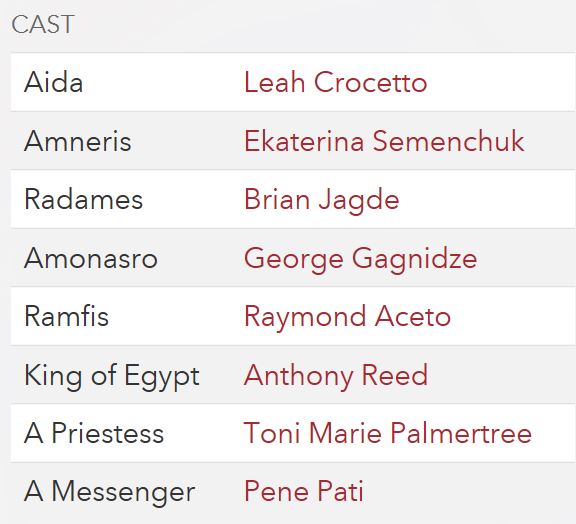
 CAST

GALLERY

SYNOPSIS
Act 1

Scene 1: A hall in the King’s palace; through the rear gate the pyramids and temples of Memphis are visible
Ramfis, the high priest of Egypt, tells Radamès, the young warrior, that war with the Nubians seems inevitable, and Radamès hopes that he will be chosen as the Egyptian commander.
Radamès dreams both of gaining victory on the battlefield and of Aida, the nubian slave, with whom he is secretly in love. Aida, who is also secretly in love with Radamès, is the captured daughter of the Nubian King Amonasro, but her Egyptian captors are unaware of her true identity. Her father has invaded Egypt to deliver her from servitude.
Amneris, the daughter of the Egyptian King, enters the hall. She too loves Radamès, but fears that his heart belongs to someone else. Aida appears and, when Radamès sees her, Amneris notices that he looks disturbed. She suspects that Aida could be her rival, but is able to hide her jealousy and approach Aida.
The King enters, along with the High Priest, Ramfis, and the whole palace court. A messenger announces that the Nubians, led by King Amonasro, are marching towards Thebes. The King declares war and proclaims that Radamès is the man chosen by the goddess Isis to be the leader of the army. Upon receiving this mandate from the King, Radamès proceeds to the temple of Vulcan to take up the sacred arms.
Alone in the hall, Aida feels torn between her love for her father, her country, and Radamès.

Scene 2: Inside the Temple of Vulcan
Solemn ceremonies and dances by the priestesses take place. This is followed by the installation of Radamès to the office of commander-in-chief. All present in the temple pray for the victory of Egypt and protection for their warriors.

Act 2

Scene 1: The chamber of Amneris
Dances and music to celebrate Radamès’ victory take. However, Amneris is still in doubt about Radamès’ love and wonders whether Aida is in love with him. She tries to forget her doubt, entertaining her worried heart with the dance of Moorish slaves.
When Aida enters the chamber, Amneris asks everyone to leave. By falsely telling Aida that Radamès has died in the battle, she tricks her into professing her love for him. In grief, and shocked by the news, Aida confesses that her heart belongs to Radamès eternally.
This confession fires Amneris with rage, and she plans on taking revenge on Aida. Ignoring Aida’s pleadings, Amneris leaves her alone in the chamber.

Scene 2: The grand gate of the city of Thebes
Radamès returns victorious and the troops march into the city. The Egyptian king decrees that on this day the triumphant Radamès may have anything he wishes. The Nubian captives are rounded up, and Amonasro appears among them. Aida immediately rushes to her father, but their true identities are still unknown to the Egyptians, save for the fact that they are father and daughter. Amonasro declares that the Nubian king (he himself) has been slain in battle. Aida, Amonasro, and the captured Ethiopians plead with the Egyptian King for mercy, but the Egyptians call for their death. Claiming the reward promised by the King, Radamès pleads with him to spare the lives of the prisoners and to set them free. Gratefully, the King of Egypt declares Radamès to be his successor and to be his daughter’s betrothed. Aida and Amonasro remain as hostages to ensure that the Ethiopians do not avenge their defeat.

Act 3

On the banks of the Nile, near the Temple of Isis
Prayers are said on the eve of Amneris and Radamès’ wedding in the Temple of Isis. Outside, Aida waits to meet with Radamès as they had planned.
Amonasro appears and makes Aida agree to find out the location of the Egyptian army from Radamès. When he arrives, Amonasro hides behind a rock and listens to their conversation.
Radamès affirms that he will marry Aida, and Aida convinces him to flee to the desert with her.
In order to make their escape easier, Radamès proposes that they use a safe route without any fear of discovery and reveals the location where his army has chosen to attack. Upon hearing this, Amonasro comes out of hiding and reveals his identity. Radamès feels dishonored. At the same time, Amneris and Ramfis leave the temple and, seeing Radamès with their enemy, call the guards. Amonasro and Aida try to convince Radamès to escape with them, but he refuses and surrenders to the imperial guards.

Act 4

Scene 1: A hall in the Temple of Justice. To one side is the door leading to Radamès’ prison cell
Amneris desires to save Radamès. She calls for the guard to bring him to her.
She asks Radamès to deny the accusations, but Radamès refuses. Certain that, as punishment, he will be condemned to death, Amneris implores him to defend himself, but Radamès firmly refuses. He is relieved to know Aida is still alive and hopes she has reached her own country. His decision hurts Amneris.
Radamès’ trial takes place offstage; he does not reply to Ramfis’ accusations and is condemned to death, while Amneris, who remains onstage, pleads with the priests to show him mercy. As he is sentenced to be buried alive, Amneris curses the priests while Radamès is taken away.

Scene 2: The lower portion of the stage shows the vault in the Temple of Vulcan; the upper portion represents the temple itself
Radamès has been taken into the lower floor of the temple and sealed up in a dark vault, where he thinks that he is alone. As he hopes that Aida is in a safer place, he hears a sigh and then sees Aida. She has hidden herself in the vault in order to die with Radamès. They accept their terrible and bid farewell to Earth and its sorrows. Above the vault in the temple of Vulcan, Amneris weeps and prays to the goddess Isis. In the vault below, Aida dies in Radamès’ arms.

Posted in OPera | Leave a comment

Hansel & Gretel at the Seattle Opera

hansel_title

By Engelbert Humperdinck

seattlelogoUNEXPECTED ADVENTURE. Not seen at Seattle Opera for 23 years, Humperdinck’s impressive adaptation of the iconic Grimm story has been an international favorite since its premiere. With refreshing humor and Wagnerian orchestration, this atmospheric fable explores universal themes of poverty, peril, and bravery, culminating in happiness for all – save for one very bad witch! Laurent Pelly’s “astonishing” (WhatsOnStage) production celebrates the richness of imagination and offers entertaining commentary on the pitfalls of consumerism in the modern world. Provocative, dreamy, and melodious, it’s unlike any fairytale you’ve ever seen.

In German with English subtitles | at McCaw Hall
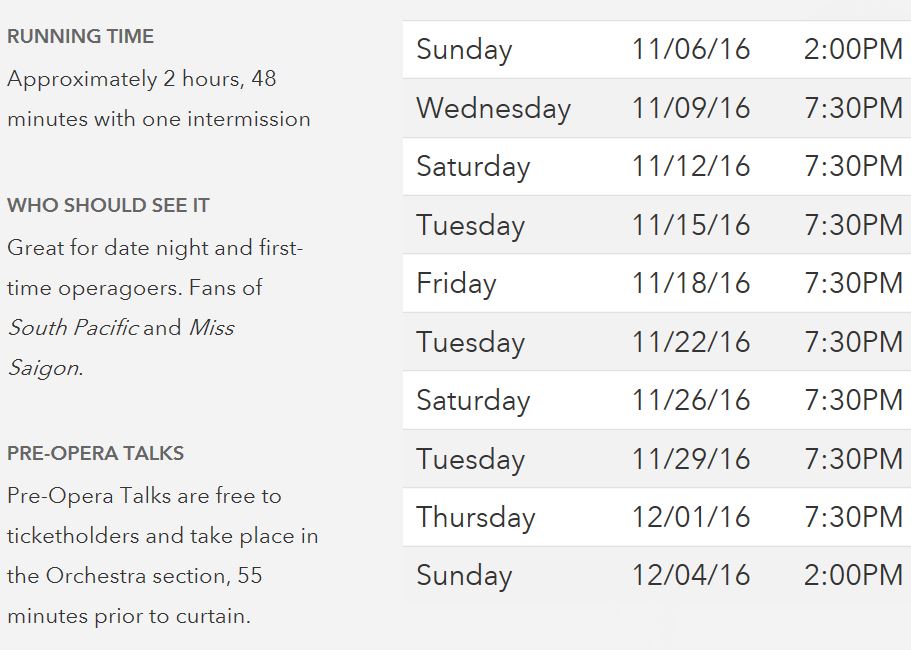
Approximate Running Time: 2 hours, 15 minutes, with 1 intermission
Evenings at 7:30 PM. Sunday matinees at 2:00 PM.

CAST

cast1

SYNOPSIS

ACT ONE

The broom-maker’s house
Hansel and Gretel are doing chores. Both are bored and hungry, and to cheer themselves up they start to dance. Their games are interrupted by their Mother, who is angry to find them playing instead of working. In her anger she knocks over the milk jug, losing what was to have been supper. She sends them into the forest to gather strawberries for their meal. Alone, the Mother laments their precarious existence, but is soon interrupted by the return of her husband. Irritated to find him tipsy, her mood brightens when he produces a sack full of food. When he enquires after Hansel and Gretel, he is alarmed to hear they are in the forest: he warns of the Witch who lives there, and both parents set out to search for their children.

ACT TWO

The wood
Hansel and Gretel pick and eat strawberries. When night falls they realise they are lost, and are frightened by the mysterious shapes in the mist, but a Sandman appears and settles them. Hansel and Gretel say their evening prayers and go to sleep. Angels appear to guard them from harm.

ACT THREE

The Witch’s house
At dawn the Dew Fairy wakes Hansel and Gretel. They notice a house not far away, but when they begin to tamper with it, the Witch emerges and captures them, casting a spell. She imprisons Hansel, telling Gretel that her brother needs to be fattened up. She also casts a spell on Gretel, in order that the girl may help her with the oven. Gretel makes clever use of the Witch’s spell to free Hansel. As the Witch demonstrates to Gretel how to check the oven, the children take advantage of the situation. At the Witch’s demise, the children she had previously captured are freed, and they thank Hansel and Gretel for saving them. The Mother and Father appear, and the family is reunited.

Synopsis provided by Glyndebourne Productions Ltd

listen

GALLERY

Posted in OPera | Tagged , , , , , , , , , | Leave a comment

Macbeth in Los Angeles with Placido Domingo

macbethtitle

macbeth1

laopera_logoPlácido Domingo and James Conlon unite again in a powerful adaptation of Shakespeare’s classic thriller.

Returning home from battle, a victorious general encounters a coven of witches who predict his future—he will become king of Scotland. Blinded by ambition, and spurred on by his power-hungry wife, Macbeth commits multiple murders to attain and keep the throne. Verdi’s score elevates the tragedy and horror through electrifying vocal lines and propulsive energy. Plácido Domingo takes on the title role with Ekaterina Semenchuk as the diabolical Lady Macbeth. Tony Award-winner Darko Tresnjak (director of our 2015 hit The Ghosts of Versailles) creates a striking new production. schedulemacbeth

kap_092pCast

  • Macbeth                  Plácido Domingo

  • Lady Macbeth        Ekaterina Semenchuk

  • Banquo                    Roberto Tagliavini

  • Banquo (Oct. 13-16) Ildebrando D’Arcangelo

  • Macduff (Sep. 17-25) Arturo Chacón-Cruz

  • Macduff (Oct. 5-16) Joshua Guerrero++

  • Malcolm                    Josh Wheeker+*

  • Lady-in-Waiting      Summer Hassan+

  • Doctor / First Apparition  Theo Hoffman+*

  • Second Apparition     Liv Redpath+*

  • Third Apparition       Isaiah Morgankap_125p

Creative Team

  • Conductor                   James Conlon

  • Director / Co-Scenic Designer  Darko Tresnjak

  • Co-Scenic Designer   Colin McGurk*

  • Costume Design         Suttirat Anne Larlarb*

  • Lighting Design          Matthew Richards*

  • Projection Design       Sean Nieuwenhuis*

  • Chorus Director          Grant Gershon

  • Fight Director              Steve Rankin*

  • Climbing Consultant  Daniel Lyons*

kap_048p

Synopsis

Act One
Macbeth and Banquo, generals in the army of King Duncan of Scotland, meet a band of witches, who hail Macbeth as Thane of Cawdor and future king, Banquo as father of kings thereafter. Messengers from Duncan approach, proclaiming Macbeth the new Thane of Cawdor, thus fulfilling the first prophecy. Amazed at this turn of events, Macbeth muses on his chances of achieving his ambition to be king.

Lady Macbeth reads a letter from her husband describing his meeting with the witches. Exulting in the prospect of power, she vows to add her own cunning and boldness to Macbeth’s ambition. When a servant brings word that the king will spend that night in the castle, she invokes powers of darkness to aid her aims. Macbeth enters, and his wife persuades him to murder Duncan that night. Duncan arrives, retiring at once. Macbeth, dreading his task, imagines a dagger before his eyes.

As a night bell sounds, he steals into the royal chamber. Lady Macbeth reenters a moment before her husband staggers from the room to tell her the deed is done. Seeing the dagger still in his hands, she coolly takes the weapon and goes to smear blood on the sleeping royal guards, thus incriminating them. There is a knock at the gate, and the couple withdraws. Macduff and Banquo enter, discover the murder and summon the entire court, which invokes God’s vengeance, led by the hypocritical couple.kap_179p

Act Two
Macbeth is now king. Duncan’s son Malcolm, whom many suspect of his father’s murder, has fled to England. Macbeth and his wife plot the murder of Banquo and his son, lest the latter gain the crown as the witches prophesied. When her husband leaves, Lady Macbeth reaffirms their pursuit of power.

A group of assassins awaits Banquo. Troubled by a foreboding of evil, he is set upon and killed, but his son Fleance escapes.

At a state banquet, Lady Macbeth toasts her guests in a drinking song. Macbeth, secretly informed the murder has been done, complains to the assembly of Banquo’s absence. Suddenly, to the guests’ astonishment, he imagines that he sees the general’s ghost. Lady Macbeth chides her husband, and he momentarily regains his calm as she sings a reprise of the drinking song. But the bloody specter continues to haunt him, and the guests comment on his guilty behavior.

Act Three
Macbeth visits the witches to learn his fate, and at his insistence they conjure up a series of apparitions. The first tells him to beware Macduff; the second assures him that no man born of woman can harm him; the third reveals that he will rule invincible until Birnham Wood marches against him. Somewhat reassured, Macbeth asks the witches if Banquo’s sons will ever reign in Scotland; in reply, they invoke a procession of future kings, followed by Banquo. As Macbeth faints in dread, the witches disappear. Lady Macbeth finds him, and the couple vows to kill all of their enemies.

Act Four
Near Birnham Wood, a band of Scottish refugees bewails its oppressed homeland, caught in the grip of Macbeth’s tyranny. Macduff joins them, grieving over his murdered wife and children. Duncan’s son Malcolm arrives at the head of an English army. Determined to liberate Scotland from tyranny, Malcolm instructs the soldiers to cut branches from the forest as camouflage for an attack on Macbeth’s castle. Malcolm and Macduff unite with the crowd in a call to arms.A doctor and lady-in-waiting observe the guilt-wracked Lady Macbeth as she wanders in her sleep, wiping imaginary blood from her hands.

During the siege of the castle, Macbeth clings to the hope he can withstand the forces of Malcolm and Macduff, but he is soul-weary and curses his fate. Word of his wife’s death reaches him. Messengers bring the astounding news that Birnam Wood is advancing. Macbeth leads his men to battle. Macduff seeks out Macbeth and, crying that he was not born of woman but torn prematurely from his mother’s womb, kills the tyrant. Macduff’s soldiers hail Malcolm as the new king.

 GALLERY

Posted in OPera | Tagged , , | Leave a comment