NORMA at the Edimburgh International Festival with Cecilia Bartoli

festivalnorma

5 – 9 August 2016
Festival Theatre

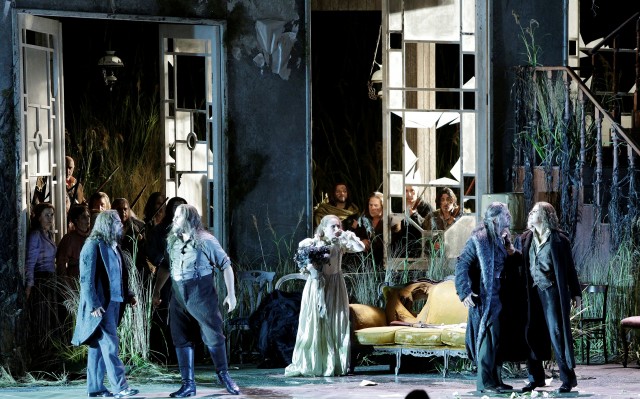
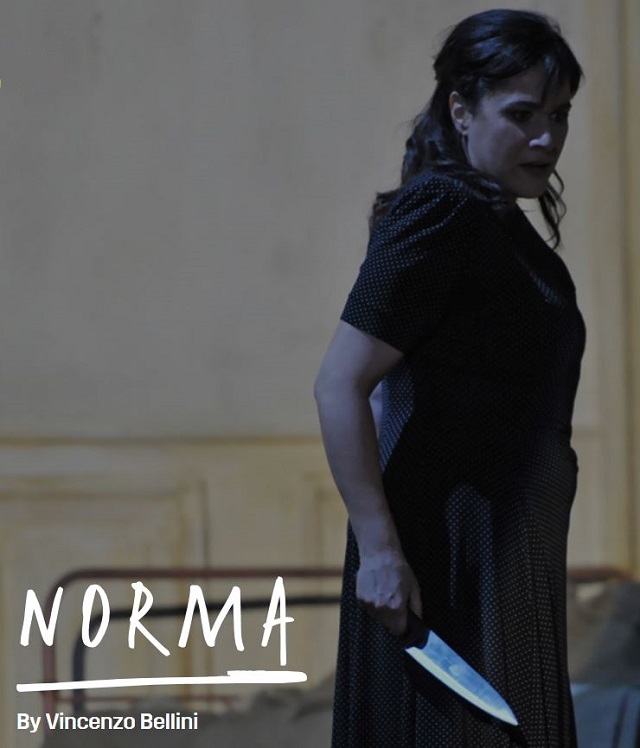
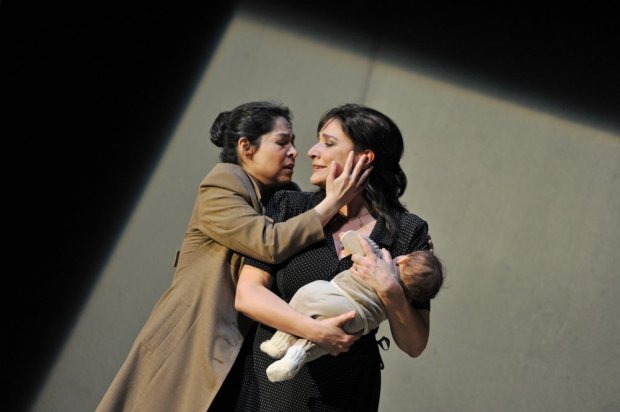
Cecilia Bartoli sang the title role in a powerful, passionate production of Bellini’s searing opera masterpiece on love, betrayal and revenge. Since its unveiling at the 2013 Salzburg Whitsun Festival, it has been acclaimed throughout Europe, winning that year’s International Opera Award for best new production.

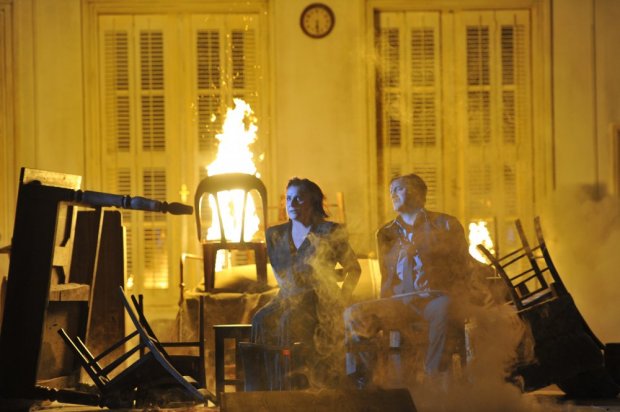
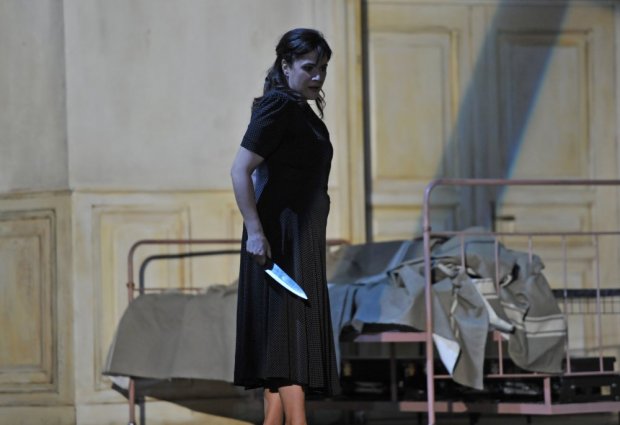
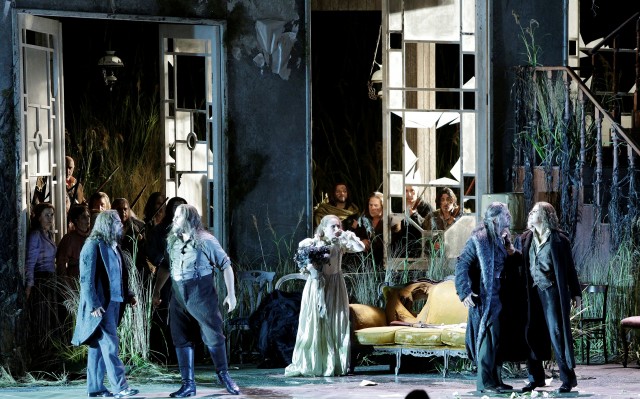
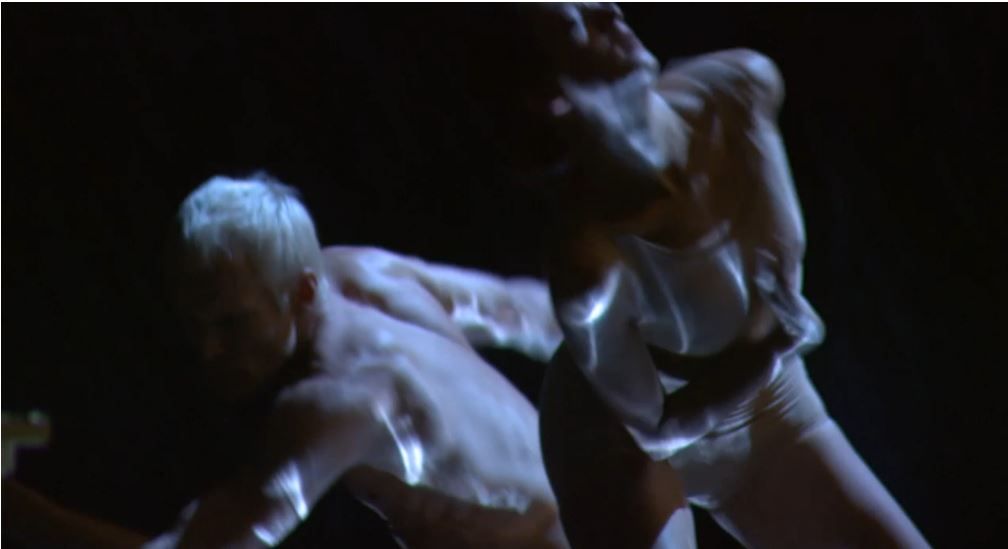
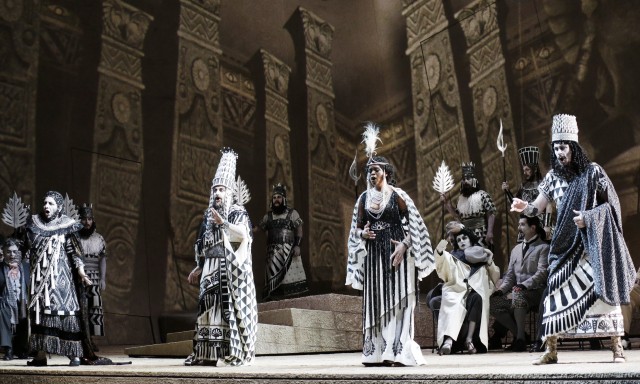
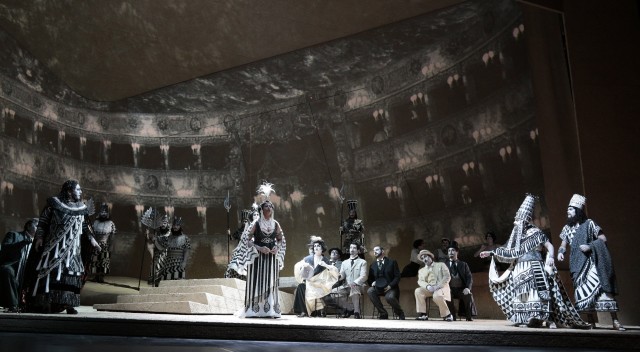
Eminent directors Moshe Leiser and Patrice Caurier have set Bellini and librettist Felice Romani’s tragic tale of ancient druids rebelling against Roman occupation in more modern times – Second World War France, where the French Resistance struggles against its Nazi oppressors. Bartoli’s Norma is torn between loyalty towards her community and her illicit love for Pollione, chief of the occupying forces (and the father of Norma’s two children), who has diverted his affections to the younger Adalgisa.normachansjorgmichel3_0

The iconic role of Norma featured one of the most famous arias in all opera – the prayer to the moon goddess ‘Casta diva’. Bartoli performed the role as Bellini originally envisioned it thanks to a newly prepared critical edition that restores the originally intended vocal colours.

‘Only in this way can we appreciate once more the true magic, the colour and emotion in this music,’ Bartoli has explained. ‘It was my wish to bring Bellini’s opera closer to the sound world of the bel canto period.’

Cecilia Bartoli is one of the world’s finest and most sought-after singers, celebrated internationally for her astonishingly versatile voice and her searching, enormously expressive interpretations. She is joined by a superb cast including US tenor John Osborn as Pollione and Mexican-born soprano Rebeca Olvera as Adalgisa, alongside Péter Kálmán, Liliana Nikiteanu and Reinaldo Macias. I Barocchisti will be playing on authentic instruments from the 19th century.norma_c_hans_jorg_michel_2


Opera in two acts by Vincenzo Bellini (1801–1835). Performance of the new critical edition by Maurizio Biondi and Riccardo Minasi

Libretto by Felice Romani (1788–1865) based on the tragedy Norma ou L’Infanticide (1831) by Alexandre Soumet (1788–1845).

A Salzburg Festival production in association with U-Live/Universal Music Arts and Entertainment, London

Cecilia Bartoli Norma
Rebeca Olvera Adalgisa
John Osborn Pollione
Péter Kálmán Oroveso
Liliana Nikiteanu Clotilde
Reinaldo Macias Flavio

Gianluca Capuano Conductor
Moshe Leiser, Patrice Caurier Directors

I Barocchisti
Swiss Radio and Television Chorus, Lugano

A Salzburg Festival production in association with U-Live/Universal Music Arts and Entertainment

norma_c_hans_jorg_michel_1


 REVIEWS

  The New York Times       April 14th 2016

…a triumph        Read the full review by George Loomis


The Telegraph             August 6th 2016

Cecilia Bartoli’s Norma is a furious triumph ★★★★

She conveyed Norma’s confusion and fragility as well as her superb fury, and she made the immortal Casta Diva aria tremulous with suppressed emotion

Read the full review by Ivan Hewett


The Herald                August 7th 2016

Rebeca Olvera’s Adalgisa is a gorgeous portrayal of corrupted innocence

Read the full review here


The Sunday Times        August 14th 2016

Bartoli can project Norma’s dilemma… with fierce and devastating intensity

Read full review


Posted in OPera | Tagged , , , , | 1 Comment

Natalka Poltavka in Kiev on September 9th

Natalka Poltavka

Mykola Lysenko

nationalOperaUkraineLogoOpera in 2 acts
Beginning: 9.09.2016 – 19:00
Completion: 20:50

Based on I.Kotliarevsky’s play.
Edited by M. Skoryk and A. Solovyanenko.
Premiered on the stage of the Kyiv Opera on July 5, 2012.

GALLERY


CAST

SYNOPSIS

Act I

Natalka awaits the return of her fiance Petro, who is working abroad. She is noted by the elderly landowner Vozniy, who persuades Viborniy to intercede with her on his behalf.

Act II

Viborniy persuades Natalka’s mother, Terpilikha, that her daughter should marry the wealthy Vozniy, rather than await the uncertain return of Petro. The village maidens prepare Natalka for her wedding, although she is in despair.

Act III

Petro returns: Mykola informs him of Natalka’s engagement. Natalka appears and tells Petro she loves only him. Terpilikha objects, and Petro undertakes to leave the village if it will prevent bad feeling. Touched by this gesture, Vozniy relents and all ends happily.

Posted in OPera | Leave a comment

Turandot in Vienna at the Wiener Staatsoper. Also on live streaming!!

logo_Vienna

Turandot

Giacomo Puccini

04. September 2016
19:00-21:30|1 Intermission

In his last, unfinished opera, Giacomo Puccini once again takes up the theme of love and death. On the one hand, Turandot, for whose love men have to die, on the other Liù, who dies for love, and between them Calaf, who solves the riddle and overcomes Turandot. Influenced by his own personal experiences, Puccini wrote a story that added a psychological level to Carlo Gozzi’s earlier fairytale – and that asks questions about the nature of true love. It was not by chance that he noted on a sketch for the final duet: “and then Tristan” – eternal desire, in other words, or fulfillment in transcendence?

LIVESTREAMING INFORMATION

GALLERY

This slideshow requires JavaScript.

CAST

  • Marco Armiliato | Conductor
  • Marco Arturo Marelli | Direction and Lights
  • Marco Arturo Marelli | Sets
  • Dagmar Niefind | Costumes
  • Aron Kitzig | Video
  • Lise Lindstrom | Turandot
  • Dan Paul Dumitrescu | Timur
  • Marcello Giordani | Calaf
  • Olga Bezsmertna | Liù
  • N.N. | Timur
  • N.N. | Mandarin
  • N.N. | Ping
  • N.N. | Pang
  • N.N. | Pong

SYNOPSIS

The mandarin proclaims the law: Turandot will only marry the man who can solve three riddles that she poses. But whoever fails must die – a fate that has befallen many, most recently a Persian prince. The “unknown” Prince Calaf, who has seen the beautiful but cruel Princess Turandot, is spellbound by her – and determines to take the risk. Before he can do so, he encounters his father, the banished Tartar King Timur, who is accompanied by Liù, a slave. She in turn is in love with Calaf…
Ping, Pang and Pong report on life in China and complain: since Turandot has been posing her riddles, their tranquil life has ended and they have been reduced to “ministers of the executioner”. Despite all advice to the contrary, Calaf accepts the challenge of answering Turandot’s questions. And he learns the reason for her inhumanity: once, in the dim and distant past, her ancestor Lou-Ling was robbed and raped – and these deeds must now be avenged and expiated. Calaf is able to solve the riddles; against her will, Turandot must now become his wife. But Calaf wishes win her affections, and so places himself at her mercy. So he now puts a riddle to her; if she can solve it, it will mean his death (and her freedom): What is his name?
In spite of all their efforts, no one can find out the name of the prince. Then Liù and Timur, who were seen talking to Calaf, are brought in. In order to protect Timur and out of love for Calaf, pretending to be the only person who knows the prince’s name, Liù kills herself. Love finally wins the day. Although Calaf has revealed his true name to her and placed his fate in her hands, Turandot declares that the name of the unknown prince is “Love”…

FOCUS ON:

Armiliato_M2013

Marco Armiliato

Marco Armiliato studied piano at the Paganini-Conservatoire in his hometown of Genova. In the 90s, he became intensely active in the big opera houses of the world. At the New York Met, he conducted Il trovatore, La Bohème, Stiffelio, Madama Butterfly, Sly, Aida, Turandot, La Fille du Ré­giment and Rigoletto, and at the San Francisco Opera La Bohème, Madama Butterfly, Turandot, La traviata, Tosca, Aida and Ca­valleria rusticana.

MarcoArmiliatoAt the Wiener Staatsoper, where he made his debut in 1996 with Andrea Chénier, he has conducted among others, Il barbiere di Siviglia, La Bohème, Carmen, Cavalleria rusticana, Don Carlo, L’elisir d’amore, Falstaff, La forza del de­stino, Lucia di Lammermoor, Manon, Manon Lescaut, Pagliacci, Simon Boccanegra, Stiffelio, Tosca, La traviata, Turandot and Werther.

armiliatoRecord1He received further engagements at the opera houses of Barcelona, Madrid, Zurich, Toronto, Pittsburgh, Baltimore, Turin, Rome, at the Deutsche Opera Berlin, the Bavarian State Opera, at the ROH Covent Garden, at the Théâtre du Châtelet and Opéra Bastille in Paris, at the Hamburg State Opera and Verona. He is also internationally successful as a concert conductor.

Posted in OPera | Tagged , , , , , | Leave a comment

Il Barbiere di Siviglia sung in Ukranian in Kiev

barbTitle

nationalOperaUkraineLogoLibretto by C. Sterbini based on Pierre Beaumarchais’s French comedy Le Barbier de Séville.

Translated into Ukrainian by M. Rylskyy.

Premiered on the stage of the Kyiv Opera on October 25, 1990.

Beginning: 7.09.2016 – 19:00
Completion: 21:35
Sung in Ukrainian
PERFORMERS

This slideshow requires JavaScript.

SYNOPSIS

Time: 18th century

Act 1

The square in front of Bartolo’s house

In a public square outside Bartolo’s house a band of musicians and a poor student named Lindoro are serenading, to no avail, the window of Rosina. Lindoro, who is really the young Count Almaviva in disguise, hopes to make the beautiful Rosina love him for himself—not his money. Almaviva pays off the musicians who then depart, leaving him to brood alone. Rosina is the young ward of the grumpy, elderly Bartolo and she is allowed very little freedom because Bartolo plans to marry her, and her not inconsiderable dowry, himself – once she is of age.

Figaro approaches singing. Since Figaro used to be a servant of the Count, the Count asks him for assistance in helping him meet Rosina, offering him money should he be successful in arranging this. Figaro advises the Count to disguise himself as a drunken soldier, ordered to be billeted with Bartolo, so as to gain entrance to the house. For this suggestion, Figaro is richly rewarded.

Act 2

A room in Bartolo’s house with four doors

The scene begins with Rosina’s cavatina. Knowing the Count only as Lindoro, Rosina writes to him. As she is leaving the room, Bartolo and Basilio enter. Bartolo is suspicious of the Count, and Basilio advises that he be put out of the way by creating false rumours about him. When the two have gone, Rosina and Figaro enter. Figaro asks Rosina to write a few encouraging words to Lindoro, which she has actually already written. Although surprised by Bartolo, Rosina manages to fool him, but he remains suspicious.

As Berta, the Bartolo housekeeper, attempts to leave the house, she is met by the Count disguised as an intoxicated soldier. In fear of the drunken man, she rushes to Bartolo for protection and he tries to remove the supposed soldier, but does not succeed. The Count manages to have a quick word with Rosina, whispering that he is Lindoro and passing her a letter. The watching Bartolo is suspicious and demands to know what is in the piece of paper in Rosina’s hands, but she fools him by handing over her laundry list. Bartolo and the Count start arguing and, when Basilio, Figaro and Berta appear, the noise attracts the attention of the Officer of the Watch and his men. Bartolo believes that the Count has been arrested, but Almaviva only has to whisper his name to the officer and is released right away. Bartolo and Basilio are astounded, and Rosina makes fun of them.

Act 3

A room in Bartolo’s house with a piano

Almaviva again appears at the doctor’s house, this time disguised as a singing tutor and pretending to act as substitute for the supposedly ailing Basilio, Rosina’s regular singing teacher. Initially, Bartolo is suspicious, but does allow Almaviva to enter when the Count gives him Rosina’s letter. He describes his plan to discredit Lindoro whom he believes to be one of the Count’s servants, intent on pursuing women for his master. Figaro arrives to shave Bartolo. Bartolo demurs, but Figaro makes such a scene he agrees, but in order not to leave the supposed music master alone with Rosina, the doctor has Figaro shave him right there in the music room. When Basilio suddenly appears, he is bribed by a full purse from Almaviva and persuaded to leave again, with much discussion of how ill he looks. Figaro begins to shave Bartolo, but Bartolo overhears the lovers conspiring. He drives everybody away.

The scene returns to the location of act 1 with a grill looking out onto the square. Bartolo orders Basilio to have the notary ready to marry him to Rosina that evening. He also explains his plot to come between the lovers. Basilio leaves and Rosina arrives. Bartolo shows Rosina the letter she wrote to “Lindoro”, and persuades her that this is evidence that Lindoro is merely a flunky of Almaviva. Rosina believes him and agrees to marry him.

The stage remains empty while the music creates a thunder storm to indicate the passage of time. The Count and Figaro climb up a ladder to the balcony and enter the room through a window. Rosina shows Almaviva the letter and expresses her feelings of betrayal and heartbreak. Almaviva reveals his identity and the two reconcile. While Almaviva and Rosina are enraptured by one another, Figaro keeps urging them to leave. Two people are heard approaching the front door, who later turn out to be Basilio and the notary. However, when the Count, Rosina, and Figaro attempt to leave by way of the ladder, they discover it has been removed. The Count quickly gives Basilio the choice of accepting a bribe and being a witness to his marriage or receiving two bullets in the head (an easy choice, Basilio says). He and Figaro witness the signatures to a marriage contract between the Count and Rosina. Bartolo barges in, but is too late. The befuddled Bartolo (who was the one who had removed the ladder) is pacified by being allowed to retain Rosina’s dowry.

Posted in OPera | Leave a comment

Better results than ever for the Rossini Opera Festival 2016

rossini16logofestivalRossiniUnprecedented success for the XXXVII edition of the Rossini Opera Festival. The box office registered an absolute record in takings (1.158.000 euro) and a number of patrons (17.250) never recorded in the recent history of the event. The percentage of foreigners has even reached 71%, showing the ever-growing interest of the public and the popularity of the Festival; the largest numbers came from France, Germany, Japan, England, the USA, Austria, Belgium, Switzerland, Spain and Holland. No fewer than 42 nations were represented, including newcomers such as Colombia, Mexico, Peru, Costa Rica and Turkey.

Many of the journalists also come from abroad. Articles on the Festival have been written by journalists from 24 countries throughout the world: Argentina, Austria, Belgium, the Vatican, France, Germany, Japan, Greece, England, Latvia, Luxembourg, Peru, the Czech Republic, Rumania, Russia, San Marino, Serbia, Slovakia, Spain, the USA, Sweden, Switzerland, South Africa, Hungary.

Rai Radio3 has broadcast live the operas presented in the Festival, repeated by the radio of 14 countries in 3 continents (Australia, Austria, Denmark, France, Germany, England, Latvia, Poland, Portugal,  Rumania, Serbia, Spain, the USA, Sweden). Furthermore, the three operas were heard live on line all over the world, and, for a week, on streaming on demand on the RAI Radio3 website.

On the 12th August Il viaggio a Reims was broadcast on live streaming on the Rossini Opera Festival’s website, Facebook page and YouTube channel.

Together with the big names of the international critical faculty, the Festival was visited by representatives of some of the most important opera houses and concert organizations: the Metropolitan Opera, the Japan Opera Foundation, the Theater an der Wien, De Vlaamse Opera, the Opera Vlandeeren, the Opéra Royal de Wallonie, the Dutch National Opera & Ballet, the Semperoper Dresden, Rossini in Wildbad, the Bayerische Staatsoper, the Opéra National de Paris, the Théâtre Châtelet de Paris, the Opéra de Rennes, the Opéra National du Rhin, the Royal Opera House of Muscate, the Teatro Comunale, Bologna, the Teatro Comunale, Ferrara, the Teatro Carlo Felice, Genoa, the Macerata Opera Festival, the Teatro San Carlo, Naples, the Teatro Massimo, Palermo, the Teatro Regio, Parma, the RAI International Orchestra.

The XXXVIII Rossini Opera Festival (10-22 August 2017) will propose two important musicological novelties, realized in collaboration with the Fondazione Rossini: Le siege de Corinthe (conducted by Roberto Abbado and staged by Fura dels Baus) and La pietra del paragone (conducted by Daniele Rustioni and staged by Pierluigi Pizzi).  Beside these, a revival of the very rarely performed Torvaldo e Dorliska (conducted by Francesco Lanzillotta and staged by Mario Martone).ROF2016_programma2
Ciro in Babilonia returns to the ROF 2016
ciro

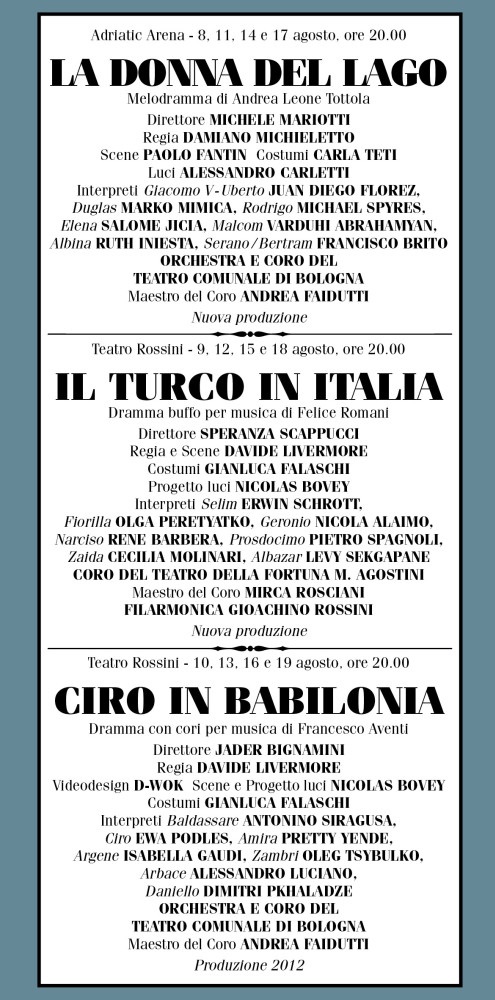
After the triumphant first performances in 2012, Ciro in Babilonia returned to the Rof (performances on the 10th, 13th, 16th and 20th August at 8.00 p.m. at the Teatro Rossini) as the third opera on the bill of the XXXVII Rossini Opera Festival. Jader Bignamini, a well-established conductor making his Pesaro début, conducted the Chorus and Orchestra of the Teatro Comunale, Bologna, and a cast led by the indispensable Ewa Podles in the title role; joined by Pretty Yende (another important début at the Rof), the confirmed Rossini specialist Antonino Siragusa, the promising Oleg Tsibulko and some of the promising singers issuing from the Accademia Rossiniana: Isabella Gaudì, Alessandro Luciano and Dimitri Pkhaladze.

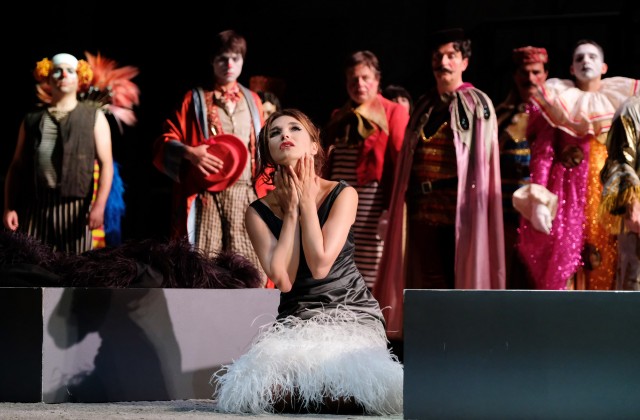
Davide Livermore, assisted by D-wok (video design), Nicolas Bovey (sets) and Gianluca Falaschi (costumes, for which he won the Abbiati Prize), have placed the action in the sets typical of the early cinema. Cuttings of silent films were used (among them the complete Babilonian scene from David W. Griffith’s celebrated film Intolerance), the projection of which forms a background to the intricate biblical story, which takes on all the colouring of a colossal historical film. The show has been realized in collaboration with the Museo Nazionale del Cinema of Turin.

CIRO IN BABILONIA

Dramma con cori per musica by Francesco Aventi

Conductor Jader Bignamini

Director Davide Livermore

Videodesign D-WOK 

Settings and Lighting designer Nicolas Bovey

Costumes Gianluca Falaschi

Interpreters Baldassare Antonino SiragusaCiro Ewa PodlesAmira Pretty YendeArgene Isabella GaudíZambri Oleg TsybulkoArbace Alessandro LucianoDaniello Dimitri Pkhaladze

Orchestra e Coro del Teatro Comunale di Bologna

Chorus Master Andrea Faidutticiro2
Il Turco in Italia second opera on the  programturco
The second opera on the bill at the XXXVII Rossini Opera Festival is Il Turco in Italia (to be performed on the 9th, 12th, 16th and 18th August at the Teatro Rossini at 8.00 p.m.). Speranza Scappucci will conduct the Filarmonica Gioachino Rossini, the Chorus of the Teatro della Fortuna, Fano, and a brilliant young cast: Erwin Schott, making his first appearance in Pesaro; welcome return appearances of true Rossini stars such as Olga Peretyatko, Nicola Alaimo, Rene Barbera, Pietro Spagnoli; young students from the Accademia Rossiniana like Cecilia Molinari and Pietro Adaini, the last a graduate of this year’s course. This is a co-production with the Palau de les Arts Reina Sofia, Valencia.

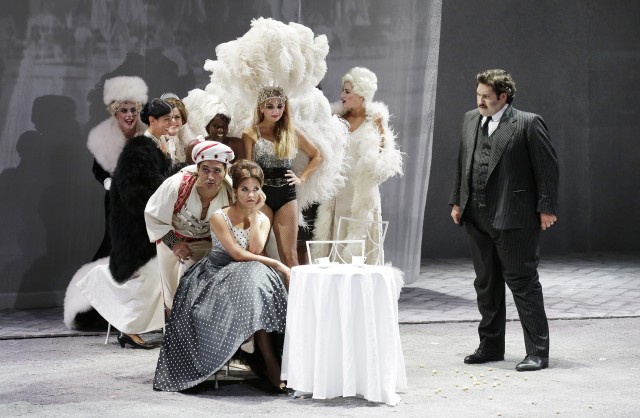
The production has been entrusted to the visionary liveliness of Davide Livermore, who has created such important productions for the Rof as Demetrio e Polibio, Ciro in Babilonia (revived this year) and L’Italiana in Algeri. Together with D-Wok (video design) and the costumist Gianluca Falaschi, Livermore has imagined the intricate love-passages between Selim, Fiorella, Geronio and Zaida in a setting typical of Fellini, full of references to 8½: the poet Prosdocimo is dressed as Marcello Mastroianni, Fiorilla as Claudia Cardinale, while Selim is the classic playboy.

Livermore explains: “Just as happens to Mastroianni in 8½, Prosdocimo is also always on the look-out for a story. The similarity between the two scripts was so appealing, for each has the same ferocious social criticism, that we wanted to pursue it as far as possible. Together with the revival of Ciro in Babilonia, it amuses me to create a kind of cinematic and musical diptych. Then, truth to tell, Rossini and Fellini are sons of the same soil.”

IL TURCO IN ITALIA

Dramma buffo per musica by Felice Romani

Conductor Speranza Scappucci

Director and Settings Davide Livermore

Videodesign D-WOK

Costumes Gianluca Falaschi

Lighting designer Nicolas Bovey

Interpreters Selim Erwin Schrott, Fiorilla Olga PeretyatkoGeronio Nicola AlaimoNarciso René BarberaProsdocimo Pietro SpagnoliZaida Cecilia MolinariAlbazar Pietro Adaini

Coro del Teatro della Fortuna M. Agostini

Chorus Master Mirca Rosciani

Filarmonica Gioachino Rossini

New coproduction with Palau de les Arts Reina Sofía, Valencia
turco2

La donna del lago  amazes the audiencelago

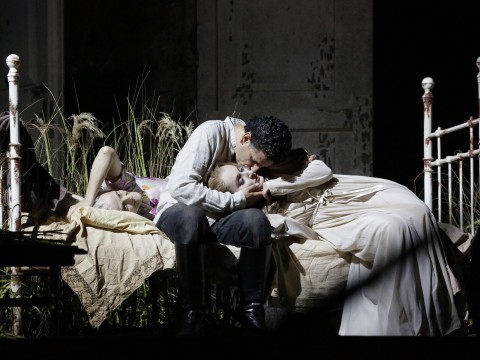
La donna del lago (performed on the 8th, 11th, 14th and 17th August at 8.00 p.m. at the Adriatic Arena) has been entrusted to Damiano Michieletto, assisted by Paolo Fantin and Klaus Bruns: his well-known talent enabled him to put on one of the operas most difficult to stage. This was a co-production with the Opéra Royal de Wallonie of Liège. The Chorus and Orchestra of the Teatro Comunale, Bologna, was led by Michele Mariotti, returning here fresh from his triumphs in conducting this opera at Covent Garden, London, and the Metropolitan, New York. The cast featured international stars who have already enjoyed spectacular successes at the Rof, like Juan Diego Flórez and Michael Spyres, and others coming from the Accademia Rossiniana, like the discovery of the 2015 edition, Salome Jicia, who undook the title rôle, and then Marko Mimica (the Podestà in La gazza ladra), Ruth Iniesta and Francisco Brito. The actors Giusi Merli and Alessandro Baldinotti also took part. The promising and rapidly progressing young mezzo-soprano Varduhi Abrahamyan sang Malcom for the first time. This is how Michieletto introduced his production: “This is an all-female story, in which the themes of nostalgia and memory play their part in creating an ambiguous atmosphere. The title itself does not tell us the name of the leading lady, but indicates a place, a liquid element from which all the story seems to originate. My dramaturgy brings back the day when Elena met the King: the elderly lady of the title is celebrating the anniversary of her wedding to Malcom and opens the gateway to the past through the filter of her memory. Thus nostalgia becomes the theme of a tale, dominated, as in Walter Scott’s poem, by rugged nature and ruins.”
lago2

LA DONNA DEL LAGO

Melodramma by Andrea Leone Tottola

Conductor Michele Mariotti

Director Damiano Michieletto

Settings Paolo Fantin

Costumes Klaus Bruns

Lighting designer Alessandro Carletti

Interpreters Giacomo V-Uberto Juan Diego FlórezDuglas Marko MimicaRodrigo Michael SpyresElena Salome JiciaMalcom Varduhi AbrahamyanAlbina Ruth IniestaSerano / Bertram Francisco Brito

Elder Elena Giusi Merli, Elder Malcom Alessandro Baldinotti

Orchestra e Coro del Teatro Comunale di Bologna

Chorus Master Andrea Faidutti

New coproduction with Opéra Royal de Wallonie-Liège 

This production is dedicated to the memory of Gae Aulentilago

Posted in OPera | Leave a comment

Il Barbiere di Siviglia at the Gran Teatre del Liceu in Barcelona

logoliceubarbieretitle

barbiereside

Opera buffa in two acts. Libretto by Cesare Sterbini based on the comedy of the same title by Pierre-Augustin de Beaumarchais. Music by Gioachino Rossini. Premiered on 20 February 1816 at the Teatro Argentina in Rome. First staged at the Gran Teatre del Liceu on 18 September 1847. Last performance as part of the Liceu season on 30 June 1997 (at the Teatre Victoria).

Despite being whistled on the first night, the most famous opera buffa of all time won undying fame for its composer, Gioachino Rossini. He wrote it in under two weeks, using materials from the overtures to two previous operas, a technique that often enabled him to work fast. It tells of the efforts of grumpy old Bartolo to keep Rosina away from all suitors except one: himself. Bartolo is the archetype of the old world battling against modernity, here embodied by Count Almaviva, assisted by Figaro, the barber. This version by Joan Font (of Comediants) uses devices from popular and street drama that are characteristic of that company’s style. In the end love triumphs over everything and everyone, as in any opera buffa. The characters and plot created by Beaumarchais in 1775 are magnificently set off by the lively, sophisticated music.

GALLERY

This slideshow requires JavaScript.

Conductor  Giuseppe Finzi

Stage Direction  Joan Font (Comediants)

Scenography and Costumes  Joan Guillén

Lighting  Albert Faura

Choreography  Xevi Dorca

New production
Houston Grand Opera, Canadian Company, Opéra National de Bordeaux and Opera Australia

Symphony Orchestra and Chorus of the Gran Teatre del Liceu

CAST
The Count of Almaviva Juan Francisco Gatell 14, 16, 18, 20 and 23 Sep
Bogdan Mihai 19, 22 and 25 Sep
Bartolo Carlos Chausson 14, 16, 18, 20 and 23 Sep
José Fardilha 19, 22 and 25 Sep
Rosina Annalisa Stroppa 14, 16, 18, 20 and 23 Sep
Ketevan Kemoklidze 19, 22 and 25 Sep
Figaro Mario Cassi 14, 16, 18, 20 and 23 Sep
Lionel Lhote 19, 22 and 25 Sep
Basilio John Relyea 14, 16, 18, 20 and 23 Sep
Dmitry Ulyanov 19, 22 and 25 Sep
Fiorello Manel Esteve
Berta Marisa Martins

Length of performance

Act I: 95 min.
Pause: 30 min.
Act II: 60 min.
Total time: 3 h 10 min.

FOCUS ON…

GIUSEPPE FINZI, CONDUCTOR

Conductor Giuseppe Finzi conducts the San Francisco Opera production of Giacomo Puccini's "Turandot," Friday, Nov. 18, 2011 at the War Memorial Opera House in San Francisco. (Photo by D. Ross Cameron)

Conductor Giuseppe Finzi conducts the San Francisco Opera production of Giacomo Puccini’s “Turandot,” Friday, Nov. 18, 2011 at the War Memorial Opera House in San Francisco. (Photo by D. Ross Cameron)

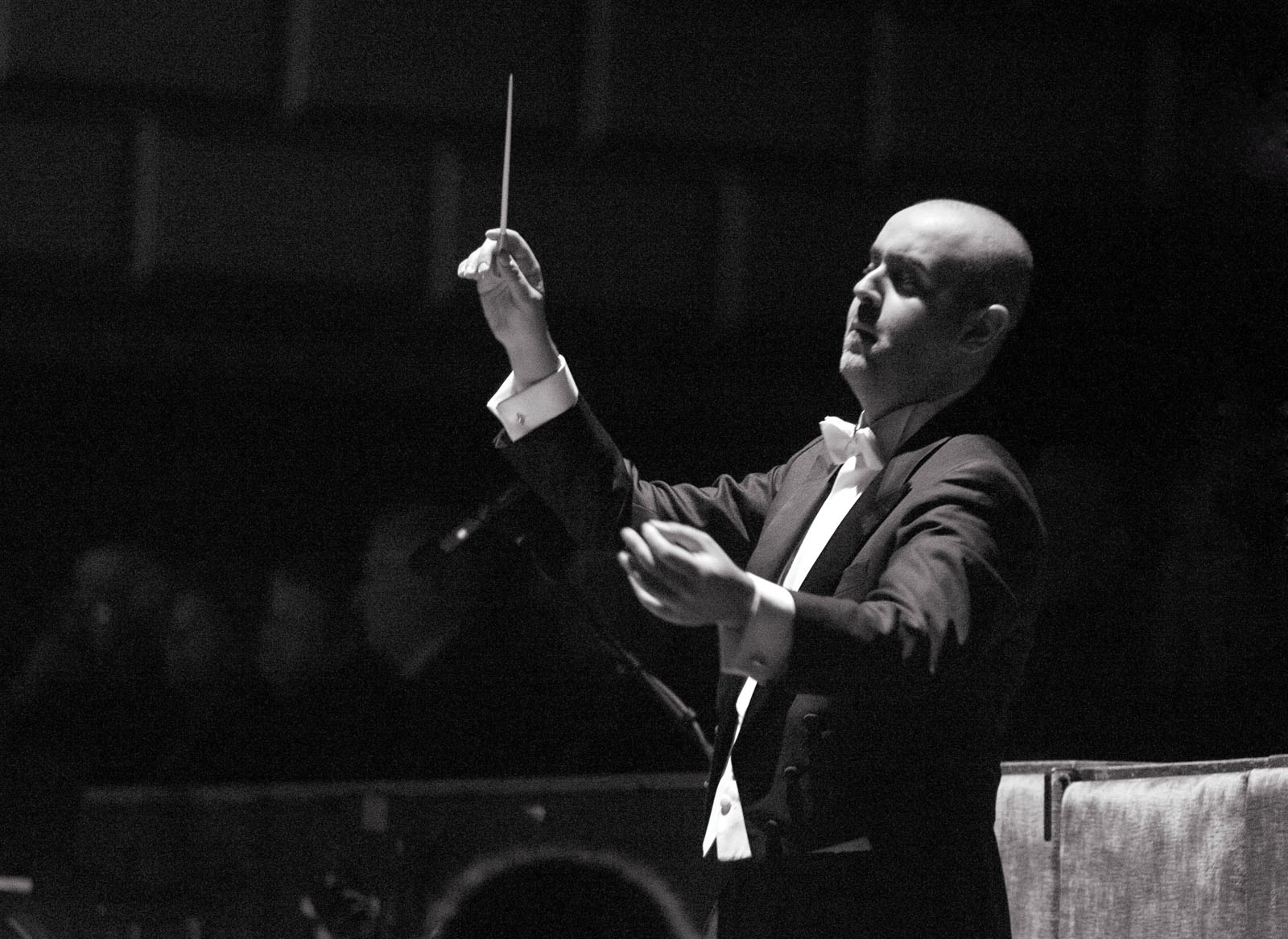
Giuseppe Finzi holds degrees in Piano from the Conservatorio N. Piccinni – Bari, in Orchestra conducting, Chamber vocal music at Conservatorio G. Verdi – Milano and a Master in conducting at the Accademia Chigiana – Siena.

After a long experience in the music staff of the Teatro alla Scala, where he worked alongside Riccardo Muti and the most important names of the international scene, he made his debut in 2003 with Tosca at the Teatro Rendano-Cosenza, which was followed by productions of La Traviata, L’Elisir d’amore, Madama Butterfly, Rigoletto, Carmen and Così fan tutte (the latter at the Piccolo Teatro-Milano with the soloists and the orchestra of the Accademia del Teatro alla Scala).
Since 2011 he is the Resident Conductor of the San Francisco Opera, where, after his debut with L’Elisir d’amore and La Bohème in 2008, he has conducted more than 70 performances of Aida, Turandot, Entführung aus dem Serail, Faust, La Fanciulla del West, Carmen, Tosca, Madama Butterfly, La Traviata, Rigoletto as well as new productions of Il Barbiere di Siviglia, La Bohème and symphonic concerts.Giuseppe Finzi2In 2012 Carmen at the Deutsche Oper Berlin marked his German debut and the beginning of an international career followed by The Nutcracker at the Teatro San Carlo-Naples, new productions of Idomeneo at the Theater Lübeck, Rigoletto at the Teatro Massimo-Palermo and Madama Butterfly at the Teatro Petruzzelli in Bari, the return to the Deutsche Oper Berlin with Carmen, that he also conducted in Menorca, Il Barbiere di Siviglia at the Liceu of Barcelona, L’elisir d’amore at Teatro San Carlo of Naples, , Turandot at the Bregenz Festival.

Among his recent and future engagements: the opening of the season at the Korea National Opera with a new production of Les pêcheurs de perles, Il barbiere di Siviglia at the Teatro de la Maestranza in Seville in occasion of the 200th anniversary of the premiere, La Traviata in Essen, his return in Bregenz with Turandot, a new production of Don Pasquale in San Francisco, as well as Nabucco at the Opéra Monte-Carlo and La fille du régiment in Barcelona.Giuseppe Finzi3

The conductor’s web site: http://giuseppefinzi.com/eng/index.php

Posted in OPera | Tagged , , , , , , , , | Leave a comment

Falstaff in Frankfurt on September 23, 2016

operfrankfurtlogoFalstaff

Giuseppe Verdi 1813-1901

Commedia lirica in three acts
Libretto by Arrigo Boito based on Shakespeare’s The Merry Wives of Windsor (1597) and King Henry IV (1597)
first performed February 9th 1893, Teatro alla Scala, Milan

Sung in Italian with German surtitles, c. 2hrs 45 mins, including one intervalfalstaff6

Sep 2016
Friday 23; Thursday 29.
Oct 2016
Sunday 02; Friday 07; Sunday 09; Saturday 15.

ARTISTIC TEAM

Conductor Julia Jones

Director Keith Warner

Revival rehearsed by Dorothea Kirschbaum

Stage Designer Boris Kudlička

Costume Designer Kaspar Glarner

Lighting Designer Davy Cunningham

Chorus Master Markus Ehmann

Dramaturge Norbert Abels

Cast

Sir John Falstaff Željko Lučić
Ford James Rutherford
Fenton Martin Mitterrutzner
Nannetta, Elizabeth Reiter/Kateryna Kasper
Alice Ford Jessica Strong
Meg Page Paula Murrihy / Claudia Mahnke
Mrs Quickly Anna Larsson
Dr Cajus Hans-Jürgen Schöpflin
Bardolfo, Falstaff’s servant Ralf Simon
Pistola, Falstaff’s servant Barnaby Rea

It is hard to believe: with his 28th, and last opera, 80 year old Verdi reinvented himself again. Leaving all 19th century Italian operatic conventions behind, he had fun with them and quotes from his own works and some of his antipode, Richard Wagner. Seven years earlier Verdi had allowed himself to be seduced by Arrigo Boito into composing another opera based on Shakespeare – Otello. Keith Warner directed the work with light hand in a versatile stage design based on the Globe Theatre on the banks of the Thames. In the end the fat knight Sir John, who was made to look a fool to pay him back for trying to court two married ladies in the hope of getting himself out of a tight financial corner, starts off the closing fugue: »Everything in the world is a joke.«

GALLERY

This slideshow requires JavaScript.

FOCUS ON:

zeljkoŽeljko Lučić

Željko Lučić, a native of Serbia, continues to garner acclaim for his performances of the dramatic baritone repertoire in the world’s leading opera houses, including the Metropolitan Opera, Royal Opera House in Covent Garden, San Francisco Opera, and L’Opéra National de Paris. For his appearance in La forza del destino with San Francisco Opera, the Financial Times declared, “with this Don Carlo, Željko Lučić served notice that he is one of today’s pre-eminent Verdi baritones.” In the 2015-16 season Lyric Opera of Chicago audiences will hear him in the title role of Nabucco, and he returns to the Metropolitan Opera as Scarpia in Tosca, Iago in Otello (also HD broadcast) and the title role of Rigoletto. In summer 2015 he sang Scarpia at Teatro alla Scala.  zeljko1

In season 2014-15 he reprised the title role of Macbeth and sang Amonasro in Aida at the Met; reprised the role of Gérard in David McVicar’s new production of Andrea Chénier at the Royal Opera House, broadcast cinematically worldwide; and stepped into the title role of Nabucco with Wiener Staatsoper. His 2013-14 season engagements included Germont in La traviata with Diana Damrau, also Amonasro in Aida in returns to Teatro alla Scala; and his return to the Metropolitan Opera as Gerard in Giordano’s Andrea Chénier. Other European engagements included Scarpia in Tosca and the title role in Nabucco with Wiener Staatsoper; Iago in Otello with Opernhaus Zurich; the title role in Falstaff with Stadtische Bühnen Frankfurt; the title role in Simon Boccanegra with Semperoper Dresden; and Scarpia with Bayerische Staatsoper. In 2012-13 he sang the title role in Rigoletto for the Metropolitan Opera’s new production, for San Francisco Opera, Lyric Opera of Chicago and Teatro all Scala, title roles in Simon Boccanegra and Macbeth in returns to Bayerische Staatsoper, and Renato in Un Ballo in Maschera in a return to Teatro alla Scala.

In Otello at the Metropolitan Opera. Photo by Ken Howard

In Otello at the Metropolitan Opera. Photo by Ken Howard

Recent successes include Rigoletto with the Los Angeles Philharmonic, under Gustavo Dudamel, his return to the Metropolitan Opera in the title role of Nabucco; to Stadtische Bühnen Frankfurt as Scarpia in Tosca and Iago in Otello; to Opéra de Paris in the title role of Rigoletto, also to Oper Köln in the same role; to Bayerische Staatsoper (Munich) as Miller in Luisa Miller; to Wiener Staatsoper as Germont in La traviata and Scarpia in Tosca; and making his Salzburger Festspiele debut in the title role of Macbeth in a new production directed by Peter Stein, conducted by Riccardo Muti. After his monumental success as the title role in the Metropolitan Opera’s live, international HD broadcast production of Macbeth, Željko Lučić returned to sing the title role in Rigoletto, Germont in La traviata, Di Luna in Il trovatore, the title role in Rigoletto, Enrico in the company’s Japan tour of Lucia di Lammermoor,and Michele in Il tabarro.

Internationally, he has performed the role of Scarpia in Tosca at Teatro alla Scala, Don Carlos in La forza del destino with Wiener Staatsoper, Miller in Luisa Miller with Bayerische Staatsoper, the title role in Nabucco with both Wiener Staatsoper and Oper Frankfurt; Don Carlo in Ernani with Asociacíon Bilbaína de Amigos de la Opera; the title role in Simon Boccanegra with Oper Frankfurt; Iago in Otello with Deutsche Oper Berlin; and Germont in La traviata with Royal Opera House: Covent Garden. Other successes include the title role in Macbeth, Miller in Luisa Miller, and Germont in La traviata with the Bayerische Staatsoper; a return to Oper Frankfurt to perform as Rodrigo in Don Carlo in a gala concert, as well as Zurga in Les Pêcheurs de perles; and the title role in Rigoletto for Teatro Real in Madrid. He has also performed at the annual Richard Tucker Gala in New York City.

Mr. Lučić’s many return engagements in recent seasons included the Wiener Staatsoper to sing the role of Germont; Staatsoper Dresden as the title role in Rigoletto; and Oper Frankfurt as the title roles in Simon Boccanegra and Macbeth, Iago in concert performances of Otello, Michele in Il tabarro, and the title role in Gianni Schicchi. He also performed the title role in Macbeth at both Bayerische Staatsoper and Amigos de la Opera in Coruña, Spain and performed the title role in Nabucco in Zagreb.zeljko2

Other successes include his Metropolitan Opera debut as Barnaba in La Gioconda, his performance with Dallas Opera as the title role in Nabucco, with Bayerische Staatsoper as Don Carlo in La forza del destino and with Wiener Staatsoper as Germont in La traviata. He appeared with Oper Frankfurt as the title role in Simon Boccanegra, Renato in Un ballo in maschera, and Yeletsky in Pique Dame. In the summer of 2007, he made his Boston Symphony Orchestra debut at Tanglewood as Rodrigo in a concert performance of Don Carlo under James Levine, and sang Amonasro in Aida for Staatsoper Dresden.

Mr. Lučić made an unscheduled debut with L’Opéra National de Paris singing Count di Luna for the opening of the new Francesca Zambello production of Il trovatore. He has also sung at Bregenz Festival, Hamburgische Staatsoper, and with Oper Frankfurt. He returned to San Francisco Opera to sing Don Carlo in La forza del destino after his debut with the company as Germont in La traviata – a role he has also sung at the Royal Opera House in Covent Garden, the Deutsche Staatsoper Berlin, the Grand Théâtre de la Ville de Luxembourg, and the Festival d’Aix-en-Provence.  zeljko-lucic

Željko Lučić’s extensive performance repertoire also includes Lescaut in Manon Lescaut with Bayerische Staatsoper; Guy de Montfort in Les Vêpres siciliennes with Radio Filharmonisch Orkest at Amsterdam’s Concertgebouw; Sharpless in Madama Butterfly at the Royal Opera House in Covent Garden, Semperoper Dresden, and Oper Frankfurt; and both the title role in Eugene Onegin, and Graf von Nevers in Les Huguenots with Oper Frankfurt. He has also appeared with many orchestras, including the Hessischer Rundfunk Symphony Orchestra, Belgrade Filharmony, and RTB Symphony Orchestra.

(Biography by Barrett Artists)

Posted in OPera | Tagged , , , , , , , | Leave a comment

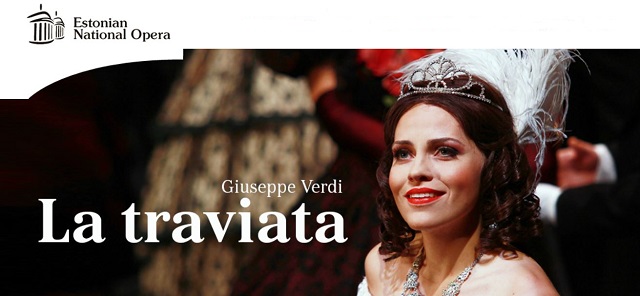
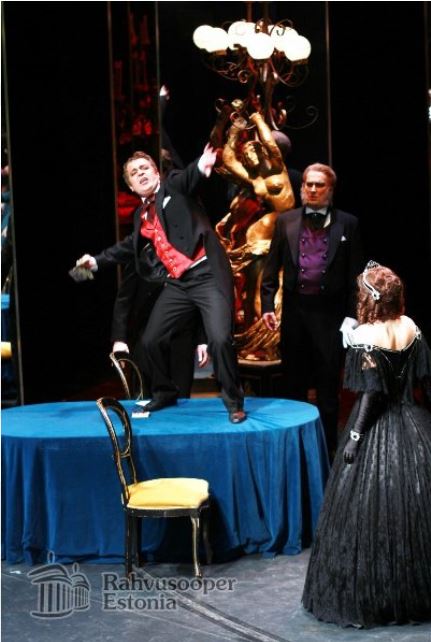
La Traviata at the Estonian National Opera on September 10, 2016

traviataEstonia

An opera by Giuseppe Verdi

Libretto by Francesco Maria Piave, based on the play by Alexandre Dumas fils La dame aux camélias
Revival on October 29, 2009

traviataEstonia1The timeless opera classics La traviata has become one of the most beloved operas in the whole world. It is also one of the most frequently performed operas at the Estonian National Opera to which the audience has applauded in seven premieres within nearly a hundred years.

The play by Dumas fils was published in 1849 and staged in 1852. Giuseppe Verdi, who attended the premiere, was so fascinated by the play that he based his opera La traviata on it. La traviata premiered the next year. It is a moving love story haunted by the morality of society and Violetta’s past. Ephemeral happiness ends in tragedy.

  • Sung in Italian with subtitles in Estonian and English (available in the Estonia Theatre Hall)
  • Approx. running time 3 h, two intermissionstraviataEstonia2

Staging team

Conductors:conductors

Stage Director: Neeme Kuningas

Designer: Anna Kontek (Finland)

Lighting Designer: Esko Suhonen (Finland)traviataEstonia3

DATES

10 September 2016 / 19:00
 2 October 2016 / 17:00
3 November 2016 / 19:00
7 June 2017 / 19:00
20 June 2017 / 19:00

Synopsis

ACT ONE

In the Salon in the house of Violetta Valéry, a fascinating and much-wooed courtesan in fashionable Parisian society, a sumptuous reception is in progress. Among the last guests to arrive, after gambling at cards in the house of Flora Bervoix, Viscount Gaston de Letorières introduces Violetta to Alfredo Germont, who is a fervent admirer of hers: so deeply in love, confides Gaston, that when she was recently ill he came each day to enquire secretly after her health. Violetta, touched by this unusual devotion, amiably dispels the young man’s shyness. Encouraged by his friends, Alfredo improvises a toast to beauty and to the joy of life. After supper, as the guests move off towards the ballroom, Violetta has a sudden fit of coughing. Alfredo, who is alone with her, begs her fondly to take more care of her health, assuring her that he would know how to look after her jealously. And tenderly he declares his love to her. Violetta is surprised and feigns indifference, replying that he will receive only friendship from her. Inwardly, however, she is perturbed by this confession. Plucking a flower from her bosom, she offers it to Alfredo for him to bring back when it has withered. Exultantly he takes it to mean an invitation to return the following day. Dawn has risen and the guests take their leave after the dancing. In solitude, Violetta ponders over Alfredo’s words of love. For the first time, someone has expressed a sincere affection for her. Accustomed to spend her life among fleeting joys and worldly pleasures, should she take him seriously, and change her way of life? No, she resolves not to pursue this foolish illusion. Though deep in her heart she feels that their love must be true.

Caramba (Luigi Sapelli, 1865-1936), figurini (Violetta, Alfredo) per la ripresa scaligera del 1906, la prima in costumi moderni. Cantavano Rosina Storchio (Violetta; 1876-1945; la prima Mimì e Zazà per Leoncavallo, e la prima Butterfly), Leonida Sobinov (Alfredo; 1872-1934), Riccardo Stracciari (Germont; 1875-1955).

Caramba (Luigi Sapelli, 1865-1936), costumes (Violetta, Alfredo) for the Verona premiere of 1906, the first one with modern costumes. The performers were Leonida Sobinov (Alfredo; 1872-1934), Riccardo Stracciari (Germont; 1875-1955), and Rosina Storchio (Violetta; 1876-1945), who was the first Mimì, but also the first Zazà for Leoncavallo, and the first Butterfly.

ACT TWO

Scene one

In a country house near Paris Violetta and Alfredo are spending an idyllic life together, far from the social whirl of the capital. Alfredo expresses the fullness of his joy at this delightful situation, which has lasted now for three months. But the spell is unexpectedly broken by Annina, the maid, who tells him she has been to Paris upon Violetta’s orders, to sell jewels, horses and property to pay for the expenses of their stay in the country. Alfredo’s pride is hurted and he decides to leave at once in order to settle these affairs personally. Violetta enters. She is reading a letter from Flora, who has discovered the lovers’ retreat and invites her friend to a reception that same evening. Let her wait in vain, smiles Violetta. In the meantime a visit is announced. Giorgio Germont, Alfredo’s father, introduces himself to Violetta with a contemptuous air, convinced that the woman is being kept by his son. Proudly Violetta shows Germont the deed of sale of her estate. Germont is favourably impressed by this gesture. However he asks her on the strength of her affection, to renounce Alfredo in order not to ruin the happiness of another member of his family, his daughter, whose marriage with a young man «of good family» is liable to fall through unless her brother’s scandalous liaison is broken off. Violetta claims the rights of her love, telling Germont of her serious state of health, and desperately resists his pressing requests. But in the end she yields. In resignation she agrees to sacrifice her own happiness for the sake of Alfredo and his loved ones. She promises Germont, who is deeply moved, to face her immense sorrow alone and never to reveal to Alfredo why she has deserted him so precipitately. She is on the point of writing him a farewell letter when Alfredo himself appears and asks the reason for her strange uneasiness. Violetta answers with a heartrending cry of love, before hastening away. Later she sends him a note saying that she has decided to return to her former society life and old friends. Alfredo is deeply shaken. Germont arrives, but his fond words of consolation are of no avail, even though he reminds his son of the peaceful times spent in their native Provence, where he invites him to savour once again the warmth of family affection.

Scene two

In a hall in the house of Flora Bervoix. A masked ball is in full swing. Violetta is in attendanceon the arm of Baron Douphol, her former protector. Not expecting to find Alfredo there,she is upset on seeing him, but he pretends to take no notice. He makes for the card tables, wherehe wins with shameless luck, while provoking Douphol’s resentment with vague allusions. The announcementof dinner prevents a quarrel, and the guests move into the dining room. Alfredo re-entersimmediately, having received an invitation from Violetta to talk with her. She implores him to leave and not to incur the baron’s wrath. Also, she confesses, if he would but realize, she fears most of all for his own life. But Alfredo replies that he will leave only if she will follow him. Violetta is compelled to reveal that she has sworn never to see him again. But since Alfredo insists on knowing who has had the right to impose this oath upon her, she allows him to understand that it was the Baron. Beside himself with jealousy and despair, Alfredo summons the guests. Confessing his shame at having allowed a woman to squander her fortune for him, he flings at Violetta’s feet a purse full of money, proclaiming that he has thus repaid her. Violetta faints, while Alfredo’s gesture is received with general indignation. Germont, who is arrived in the meantime, reproaches his already humiliated and repentant son, and drags him away, followed by Douphol who demands satisfaction for the insult to his partner.

ACT THREE

Violetta, whose illness is by now beyond hope, is being looked after by the faithful Annina. It is a grey winter’s morning. Doctor Grenvil arrives and tries so instil hope and courage into his patient, but confesses to Annina that the end is near. Violetta once again re-reads the affectionate letter received from Germont, in which he thanks her for having kept her promise. He also informs her that the Baron was wounded in the duel and that he has at last revealed the truth to Alfredo, who is now on his way to visit her to beg forgiveness. A echo of carnival music and revelry rise from the street, Violetta gazes mournfully her pale image in the looking-glass and her heart breaks when she remembers the happy months spent with her lover. But now Annina enters to prepare her for a great emotion, followed at once by Alfredo, who throws himself into Violetta’s arms. Together they dream once again of a radiant future. Blissfully happy, Violetta would like to get dressed and go out into the festive city. But her strength fails her and she realizes she has not much longer to live. As Germont, who has joined his son, now clasps her to his heart like a daughter, she gives Alfredo a portrait of their happy years, begging him to keep it in memory of her who has loved him so deeply, and to offer it one day to the young woman who will be his future wife: on the stage Annina and Doctor Grenvil too. Suddenly she feels lifted by a mysterious force. Rising in one last longing for life, she falls back dead in Alfredo’s arms.

GALLERY

FOCUS ON:

velloVello Pähn,   Conductor

Estonian-born conductor Vello Pähn studied at the Tallinn Conservatory in St. Petersburg. During that time he was also engaged at the Estonian State Theatre where he conducted a broad range of operatic repertoire including Carmen, Madame Butterfly, La Traviata, Hovanštšina, L’Elisir d’amore, Duenja, Eugene Onegin  and  Le  Nozze  di Figaro, before launching an international career.
Vello Pähn’s collaboration with the legendary dancer Rudolf Nureyev and the choreographer John Neumeier led to invitations from the world’s leading theatres and ballet companies. His command of the standard ballet repertoire, Cinderella, Le sacre du printemps, Othello, Swan Lake, Nutcracker, Onegin, and so on, has made him a house favourite at the Paris National Opera and Hamburg Ballet for over  two  decades.  In  autumn  2010,  he  conducted  Swan Lake at the Royal Danish Opera in Copenhagen and Finnish National Opera in Helsinki. In Copenhagen he returned with the opera Carmen in autumn 2012. Equally in demand as an opera conductor, Mr.  Pähn  made  his  debut  at  the  Savonlinna Opera Festival in Finland with Flying Dutchman and went on tour with this production in Spain. Vello Pähn returned to Savonlinna to conduct Gounod’s opera Faust. He has recently worked at the Berlin State Opera with Puccini’s opera Madame Butterfly, Donizetti’s Elisir d’Amore and in Yekaterinburg with a rare Rimsky-Korsakov opera Snow Maiden.

For many years Maestro Pähn has been frequently  invited to many major German opera houses, including the Dresden Semperoper, Berlin State Opera, Stuttgart and Leipzig opera houses and of course not excluding elsewhere in Europe – the Vienna State Opera and La Scala in Milan. His engagements included performances in St. Petersburg with the Hamburg Ballet as well as a production based on Sergei Prokofiev’s Ivan le Terrible in Paris. He also led the revival of Savonlinna Opera Festival’s Flying Dutchman on a tour to the Hedeland Festival in Denmark and was invited back to Vienna for Manon.

Maestro Pähn started as the Chief Conductor and Artistic Director of the Estonian National Opera in fall 2012, where his first engagement was Faust by Charles Gounod followed by Wagner’s Tannhäuser.
In autumn 2013, he conducted the world premiere of Butterfly by the Estonian  composer  Tönu  Körvits,  in  Tallinn.  His  recent  work  in  Tallinn  include Gounod’s Romeo  et  Juliette, Cardillac by  Paul  Hindemith  and  Mozart’s The   Magic Flute and this season he will  conduct Arabella and Aida at  the  Estonian  National  Opera. This season at the Paris National Opera he will conduct over 30 performances of La nuit transfiguree and Le Sacre du printempts. His work as a ballet conductor will continue withsome new projects at the Zurich, Vienna and Paris opera houses.                 [www.opera-connection.com]


Posted in OPera | Leave a comment

La Scala’s production of Simon Boccanegra at the Bolshoi


Simon Boccanegra

Opera in three acts with a prologue
Teatro alla Scala scala_logo
International Chereshnevy Les Open-Art Festival presents

Historic Stage
September 10, 13, 16
Teatro alla Scala and Staatsoper, Berlin co-productionPremiered at theTeatro alla Scala on October 31, 2014Running time: 3 hours General Sponsor of the Tour

Libretto by Francesco Maria Piave and Arrigo Boito

Conductor: Myung-Whun Chung
Director: Federico Tiezzi
Sets: Pier Paolo Bisleri
Costumes: Giovanna Buzzi
Lights: Marco Filibeck
Chorus Master: Bruno Casoni

Simon Boccanegra – Leo Nucci
Jacopo Fiesco – Mikhail Petrenko
Paolo Albiani tba
Pietro – Ernesto Panariello
Maria Boccanegra – Carmen Giannattasio
Gabriele Adorno – Fabio Sartori
Captain of the Crossbowmen – Luigi Albani
Amelia’s maid – Barbara Lavarian

Chorus and Orchestra of Teatro alla Scalasimon2

SYNOPSIS

Prologue

A square in Genoa, near the palace of Jacopo Fiesco and the Church of San Lorenzo. Around 1339.

The silversmith Paolo Albiani obtains support from Pietro for the election of the pirate Simon Boccanegra as the new doge, in exchange for some kind of recompense. Reluctantly Boccanegra accepts this position, hoping it will enable him to become reconciled with his enemy Jacopo Fiesco, as he is in love with his daughter Maria. The couple has a daughter, whom old Fiesco intends to bring up.

Simon runs into Fiesco and tries to convince him that they should forget the confrontations they have had in the past. Fiesco, visibly mourning Maria’s sudden death (which he hides from his rival), is inflexible to any reconciliation. Only if Simon gives him his granddaughter will he agree to it. The pirate explains that the little girl has disappeared and therefore he cannot do as he asks. Fiesco leaves and Simon enters the palace to meet Maria. He is horrified when he discovers Maria’s body. Dawn breaks. The crowd proclaims Simon Boccanegra doge of Genoa.

Act I, Scene I

Twenty-five years have passed. Jacopo Fiesco has changed his name to Andrea Grimaldi to hide his identity, and has brought up and adopted an orphaned girl -of unknown origin- with the name of Amelia Grimaldi. The girl is really Maria Boccanegra, the daughter of Simon Boccanegra and Jacopo Fiesco’s granddaughter.

In the gardens of the Grimaldi Palace, overlooking the sea, Amelia has an amorous rendezvous with the nobleman Gabriele Adorno. She tells him that the doge is about to arrive at the palace to ask for her hand in marriage on behalf of Paolo Albiani, a man trusted by the doge who finds Amelia attractive. So Gabriele gets in before the doge and asks Fiesco for permission to marry Amelia, to which the old man agrees. The doge arrives with Albiani. During his conversation with Amelia, Simon discovers to his surprise that she is his daughter, and that she is in love with Gabriele. He understands the young girl’s feelings and decides not to go ahead with the marriage proposal he had in mind. Albiani is not at all pleased and begins to plot to kidnap Amelia.
Scene II
A chamber in the doge’s Palace in Genoa. The doge, sitting on his throne, presides over a meeting attended by advisers, consuls and condestables from the military. Gabriele bursts into the room, accuses the doge of being responsible for Amelia being kidnapped, and confronts him. But the young girl has managed to escape and she interrupts the meeting to tell her side of the story, clearly proving that Simon has had nothing to do with the matter. All eyes turn to Albiani.

The doge brings order to the disrupted meeting and orders for Fiesco and Gabriele to be sent to prison. At the same time, he exhorts Albiani, who has been his right-hand man up until then, to curse the person guilty of kidnapping Amelia (who is none other than himself).

Act II

A chamber in the doge’s Palace. Albiani, who is planning to kill Simon, offers to set Fiesco and Gabriele free from prison if they help him commit the crime. Fiesco refuses and goes back to prison. Albiani pours poison into the doge’s drink in case his initial plan fails. Really, he wants Gabriele to kill the doge, so he locks him in the chamber so that he will surprise Simon when he enters and kill him. He has previously led Gabriele to believe that Amelia and Simon are lovers. Amelia enters and tries to convince her sweetheart that his suspicions are unfounded. The doge is heard approaching and Gabriele hides on the balcony. Amelia begs her father to forgive Gabriele, the man she loves. The doge agrees and, feeling tired, drinks from the poisoned bottle and falls asleep. Gabriele takes advantage of the situation and tries to kill him. But Amelia stops him, telling him that Simon is her father. The doge forgives his future son-in-law and they go out together to calm the rebellious mob that is gathering at the palace gates.

Act III

The doge has managed to calm the mob and forgives all the conspirators, except for Paolo Albiani, who is sentenced to death. Albiani tells Fiesco that the doge will die within a few hours because he has poisoned him. Simon enters weak and ill. Fiesco reveals his identity and is pleased he can get his revenge at last. When the doge tells him that Amelia Grimaldi is his granddaughter, Fiesco becomes emotional and is reconciled with him. The poison has taken effect, however, and the doge dies, but first he is able to bless the union between his daughter Amelia and Gabriele, and name his son-in-law as the new doge of Genoa. Fiesco goes onto the balcony and tells the crowd that Gabriele Adorno is the new doge, while they all join in prayer for the death of Simon Boccanegra.

GALLERY

This slideshow requires JavaScript.

FOCUS ON…:

nucci3


nuccimagazine1


nucci_traviata


nucci_boccanegra

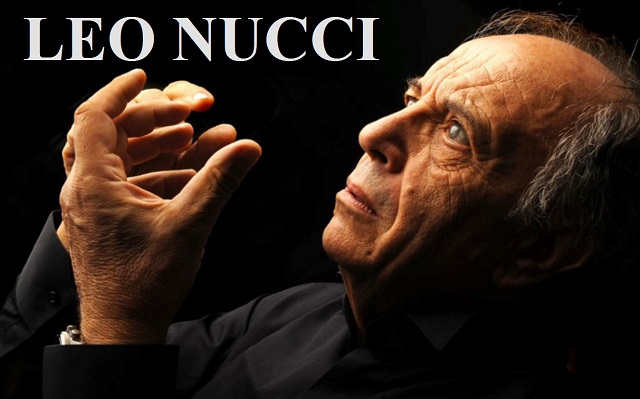
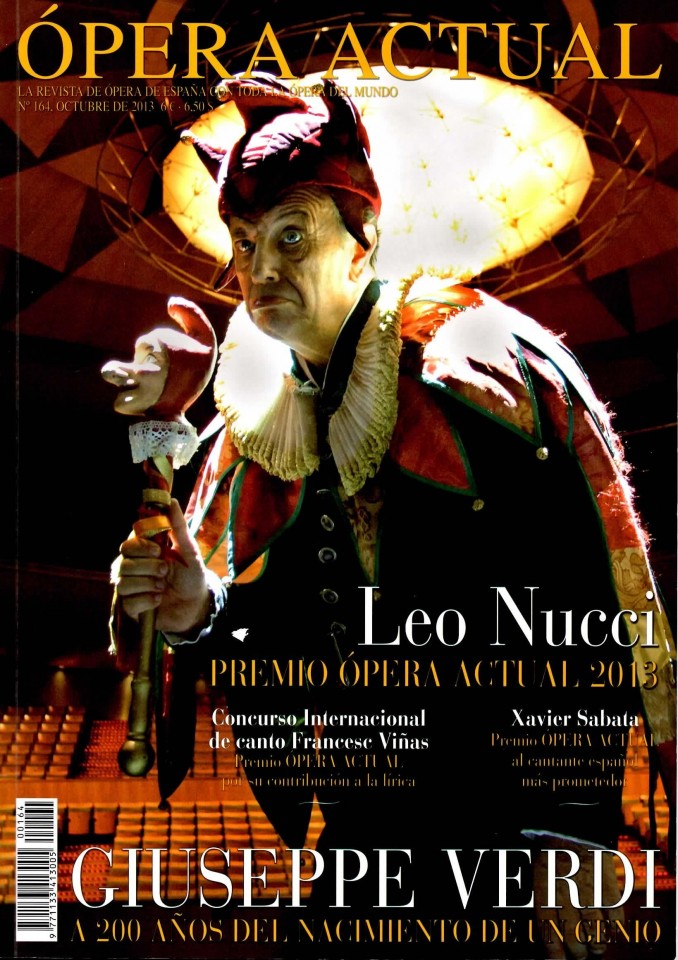
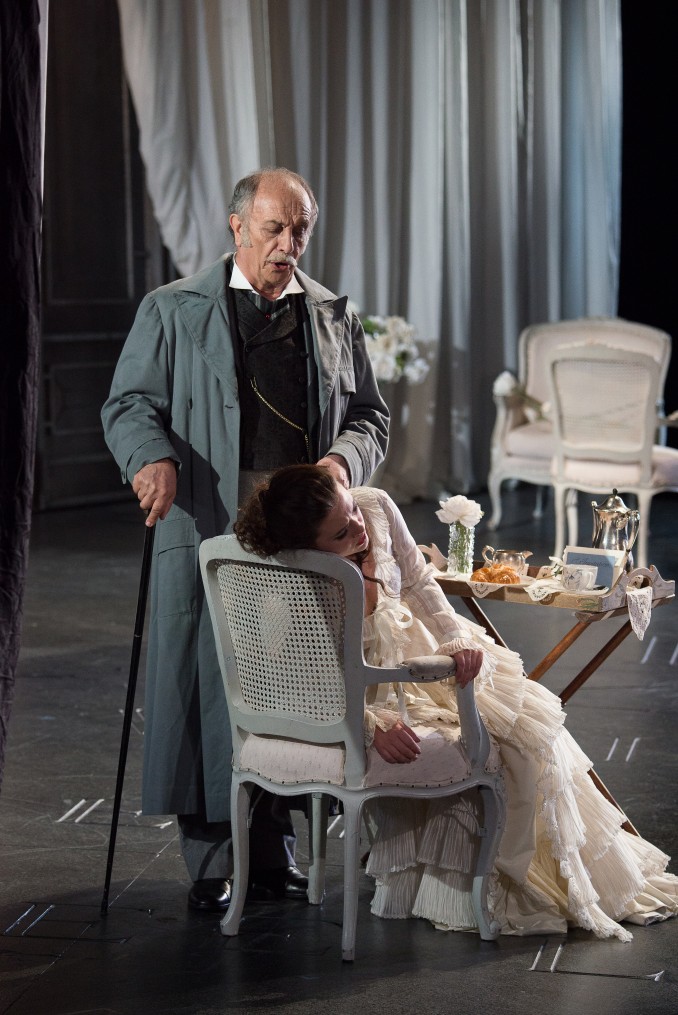
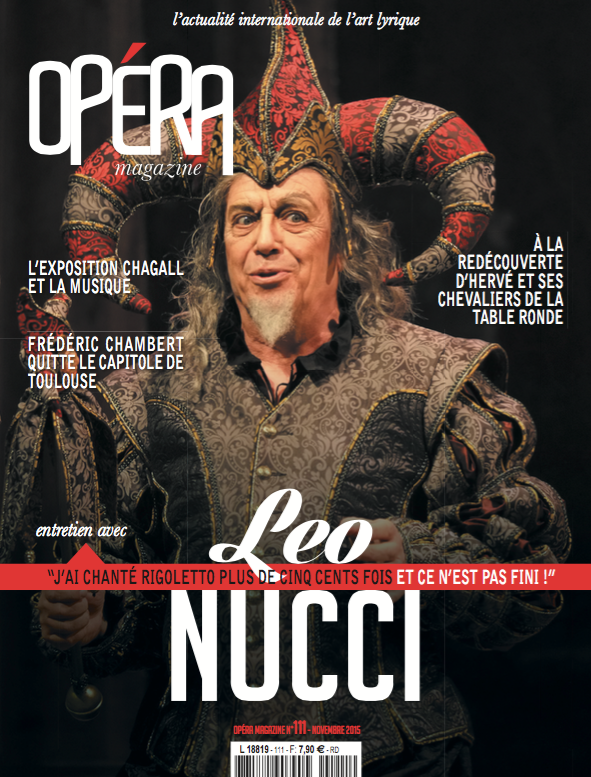
Leo Nucci is an Italian operatic baritone, particularly suited to Verdi roles. Born at Castiglione dei Pepoli, near Bologna, he studied with Giuseppe Marchese and made his stage debut in Spoleto, as Figaro in Il barbiere di Siviglia, in 1967, he then joined the chorus of La Scala in Milan, and made his solo debut there in 1975, again as Figaro.

He is also a movie actor, known for Macbeth (1987), La traviata (1994) and I vespri siciliani (1986).


nucci_magazine1

Posted in OPera | Tagged , , , , , , , , , , , , , | Leave a comment

Gluck’s Orpheus and Eurydice at the Norwegian National Opera

Irpheus_titleOrpheus_TOrpheus

logonorway2 hours and 30 minutes/ 1 intermission

  • Performed in Italian/ Texted in English and Norwegian
  • 8 productions / From August 27. to October 9.
  • Premier August 27. 2016 / Main House / Opera


Choreographer Jo Strømgren debuted as an opera director in 2013 with Christoph Willibald Gluck’s beautiful version of the myth of giving everything for love. “An exceptionally expressive and beautiful combination of opera and ballet – give us more!” exclaimed VG’s reviewer.

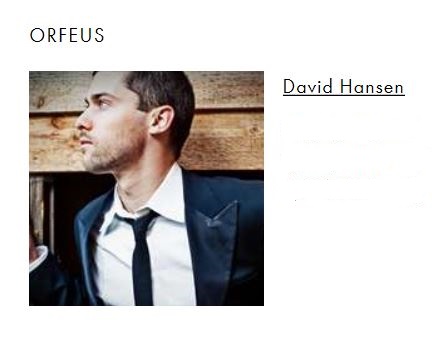
In the autumn of 2016 the successful collaboration between the Norwegian National Opera and Norwegian National Ballet returns, along with conductor and baroque specialist Rinaldo Alessandrini. The role of Orpheus is sung by countertenor David Hansen, who with his crystal-clear and bright male voice pulls Eurydice back from the realm of the dead.

“Simply put, Orpheus is a guy who is truly in love,” says Jo Strømgren. “It’s about making a choice; about going for something.” Orpheus refuses to compromise and dares to give everything.

Life, death and love take concrete forms in Strømgren’s production, in which we join Orpheus on a journey that is simultaneously mental and physical – and which includes a full size Boeing 737.orpheus2

The art of the impossible

The myth of Orpheus has been used by countless composers throughout musical history, from Monteverdi to Terje Rypdal. It is therefore no surprise that this is the opera genre’s favourite story; the myth of Orpheus, who goes to the underworld in order to save his love Eurydice, is about music and the transgressive power of love – about singing so beautifully that the impossible becomes possible.

Christoph Willibald Gluck’s Orpheus and Eurydice premiered in Vienna in 1762, as part of the composer’s persistent attempts to reform the opera genre, which he felt had become more about putting on a show and less about true drama. Gluck wanted to get back to the core of what he felt the opera should be – the art of telling stories through music. One of his methods of achieving this was to allow this story of the power of song to be supplemented by dance. The bodies of the dancers are thereby dressed in the music, and the music becomes a narrative in movement. This demonstrates the similarities between opera and ballet – as art forms that we hear with our eyes and see with our ears.orpheus1

CAST

cast1 cast2

cast3

SYNOPSIS

Act 1

Orfeo grieves before the tomb of his wife, Euridice, as a group of mourners place tributes on her grave. Orfeo is touched by their laments, but his sorrow is acute and he asks to be left alone. He calls on the spirit of his beloved wife to hear his despair; then, cursing the gods for having taken Euridice from him, he resolves to descend to Hades and brave the Furies to find her.

As he speaks, Amor, the god of love, appears and announces that the other gods, moved by Orfeo’s despair, will allow him to reclaim his wife from the underworld. There is one condition, however: He must not look at her until they have returned to the upper world. Alone once more, Orfeo can scarcely believe what has happened, but, conquering his fears, he sets out for the infernal regions.Orpheus3

Act 2

At the entrance to the underworld, the Furies who stand guard demand to know the identity of the bold intruder. Orfeo begs them to take pity on his tears. At first they refuse and try to frighten him away. But the Furies at last respond to his eloquent song; when Orfeo repeats his request, they recede, allowing him to approach the gates of hell.

In the Elysian Fields, a group of blessed spirits dances serenely. They depart, and Orfeo enters searching for his wife. Though he pauses to delight in the scene, he says that only the sight of Euridice can ease his grief. The Shades, hearing his plea, lead in Euridice. Orfeo grasps her hand and, taking care not to look at her, begins the journey back to the upper world. Orpheus4

Act 3

Orfeo urges his wife to hurry as he leads her toward the upper world. He has obeyed the gods’ injunction that he must not look at her throughout their journey. Euridice, stopping for a moment to celebrate her reunion with her husband, soon becomes anxious. Why will Orfeo not look at her? Has death faded her beauty? With difficulty Orfeo keeps his face turned away and exhorts his wife to have faith and continue their ascent. Euridice laments that she has been liberated from death only to face the colder fate of unrequited love.

Unable to resist her anguished pleas, Orfeo defies the gods’ command and turns to embrace his wife, who at once breathes a farewell and dies. Overcome with grief and remorse, the Orfeo cries that life has no meaning for him without Euridice. Preparing to take his own life, he resolves to join his wife in death. Before he can do so Amor appears and announces that Orfeo has passed the tests of faith and constancy and restores Euridice to life. The happy couple returns to the upper world, where they are greeted by friends, who perform dances of celebration. Orfeo, Amor and Euridice praise the power of love.

Posted in OPera | Leave a comment