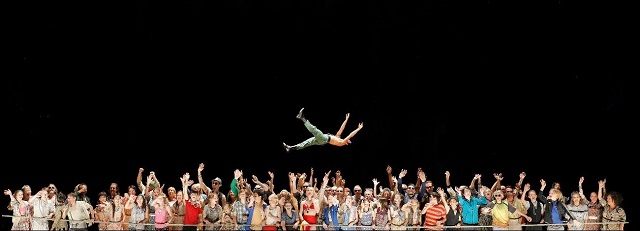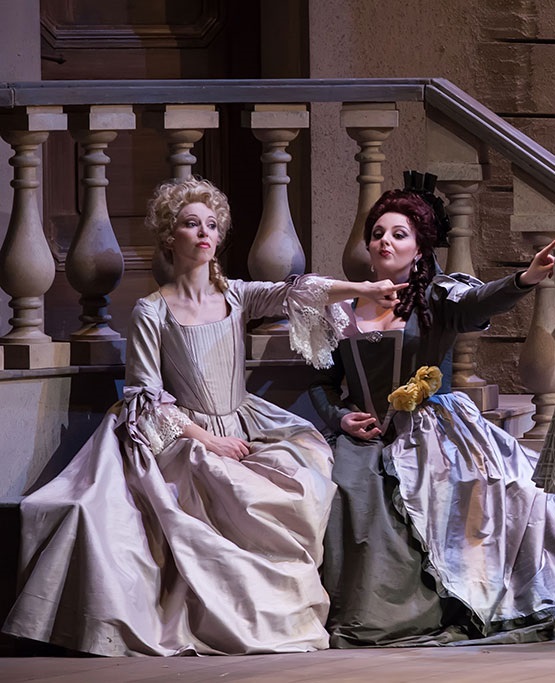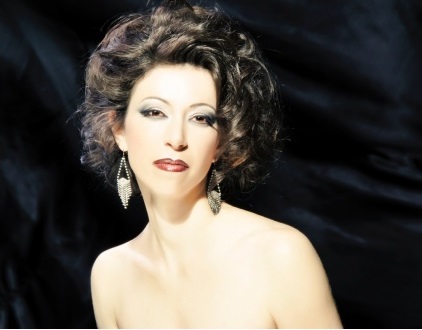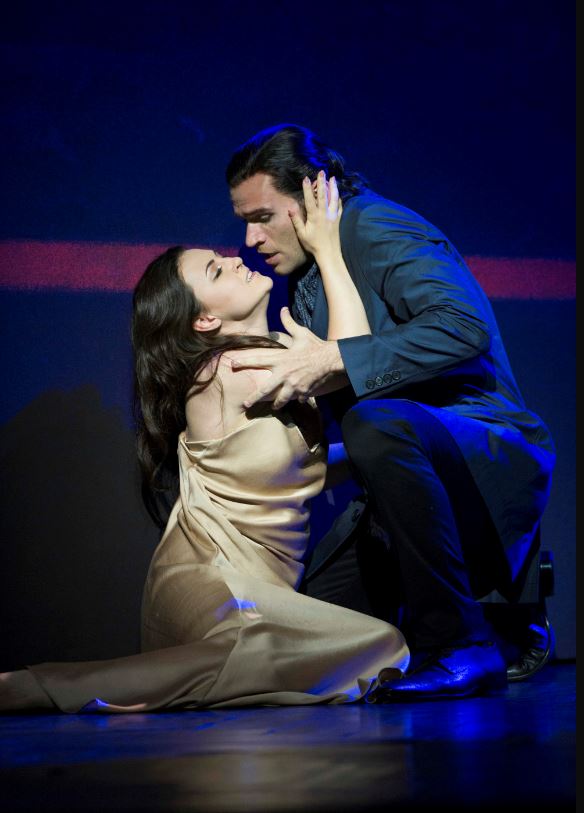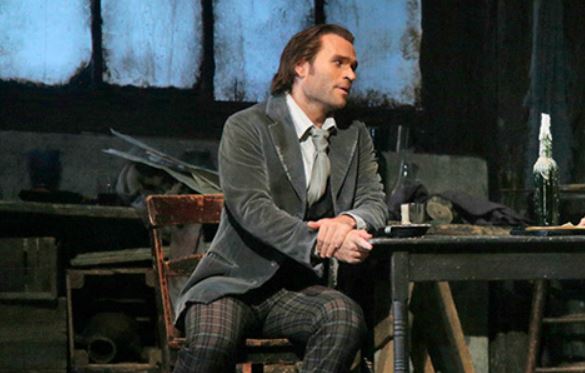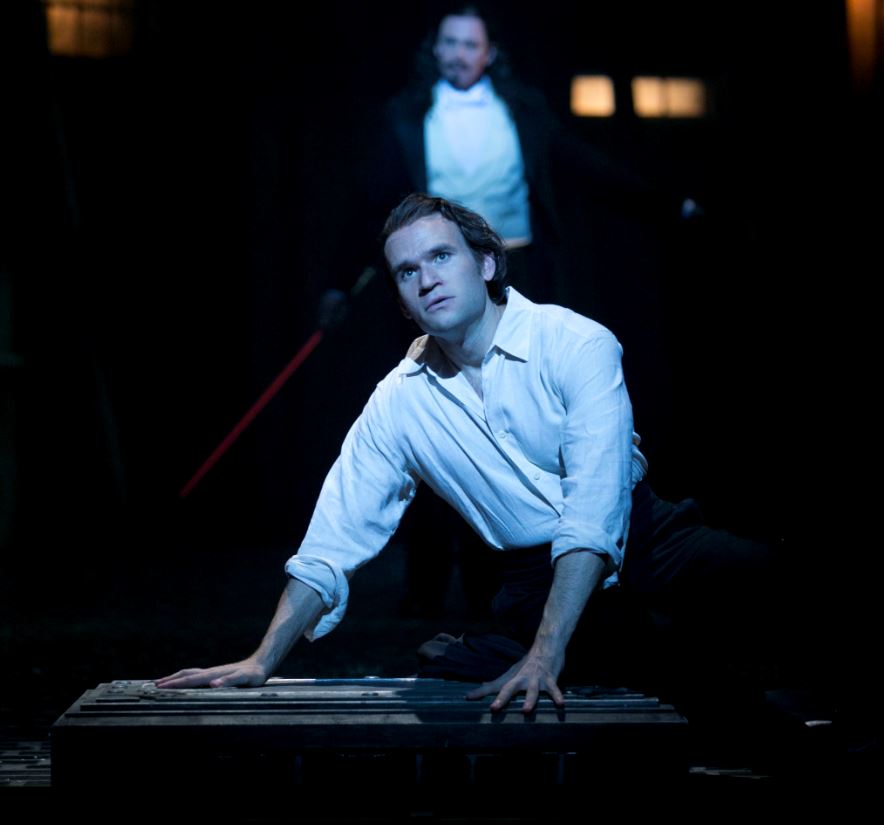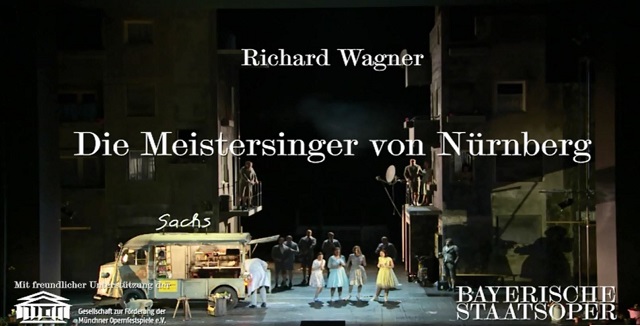
The Mastersingers of Nuremberg at the Munich Opera Festival

nur_title1

Opera in three acts

Composer Richard Wagner · Libretto by the composer
In German with German surtitles | New Production

Munich Opernfestspiele (Munich Opera Festival)
Thursday, 28. July 2016
05:00 pm – 10:30 pm
Nationaltheater

Duration est. 5 hours 30 minutes · Intervals between Act 1 and Act 2 (estimated 06:15 pm – 06:55 pm ) between Act 2 and Act 3 (estimated 07:50 pm – 08:30 pm )

Introductory Event: 04:00 PM

Premiere on May 16, 2016

Musical Direction Kirill Petrenko

Production David Bösch

Stage Direction Patrick Bannwart

Costumes Meentje Nielsen

Video Falko Herold

Lights Michael Bauer

Dramaturgy Rainer Karlitschek

Choir Sören Eckhoff

nur7


Hans Sachs
Wolfgang Koch
Veit Pogner
Christof Fischesser
Kunz Vogelgesang
Kevin Conners
Konrad Nachtigall
Christian Rieger
Sixtus Beckmesser
Martin Gantner
Fritz Kothner
Eike Wilm Schulte
Balthasar Zorn
Ulrich Reß
Ulrich Eißlinger
Stefan Heibach
Augustin Moser
Thorsten Scharnke
Hermann Ortel
Friedemann Röhlig
Hans Schwarz
Peter Lobert
Hans Foltz
Dennis Wilgenhof
Walther von Stolzing
Jonas Kaufmann
David
Benjamin Bruns
Eva
Sara Jakubiak
Magdalene
Okka von der Damerau
Nachtwächter
Tareq Nazmi
Extra-Chor
Extra Chor der Bayerischen Staatsoper
  • Bayerisches Staatsorchester
  • Chorus of the Bayerische Staatsoper

GALLERY 1 (Photo copyright Bayerische Opera)

This slideshow requires JavaScript.

SYNOPSIS

Act One

Eva, the daughter of Veit Pogner, a rich goldsmith, has fallen in love with the young knight Walther von Stolzing. The latter initially came to Nuremberg to do business with her father and has now also fallen deeply in love with her. At the moment, however, there seems to be no chance of them marrying: in order to be accepted into society in the town, Stolzing would have to becomea master in a guild. Without further ado he has therefore decided to join the mastersingers, the guild richest in tradition. However David, Hans Sachs’ apprentice, points out to him just how complicated it is to understand and apply all the rules of composition of a mastersong.
There is a conflict smouldering within the guild of the mastersingers,which has long since passed its heyday: Sachs has been pleading for sometime for the decision about the winner of the annual competition to rest with the people at the festival. This would promote the acceptance of the guild. The majority of the masters, however, led by Fritz Kothner and Sixtus Beckmesser, fear that the strict rules would then be of little value and oppose Sachs’ suggestion.
Pogner suggests another way in which to make the mastersingers more popular: he has decided that his only daughter, Eva, will marry the winner ofthis year’s competition. Beckmesser, the town clerk, already sees himself as the winner – thinking that he will be the only participant in the competition. Stolzing, however, now becomes a further candidate. In order to be allowed to marry Eva, he wants to audition to become a member of the guild by performinga song. It is, however, up to Beckmesser, the mastersingers’ marker,to judge Stolzing’s song and thus decide whether he should be allowed to join the guild. Before the knight has even finished singing, Beckmesser, obviously biassed, has convinced the other mastersingers that Stolzing’s song has been faulty. Stolzing’s singing is completely lost against the background of the commotion caused by Beckmesser’s strict insistence on abiding by the rules. Only Hans Sachs, the cobbler, supports Stolzing’s song. He points out that Stolzing has sung in accordance with new rules, entirely his own, but that his song was by no means faulty. Stolzing is nevertheless rejected.

Act Two

In the evening, Hans Sachs reflects on the song Stolzing sang – he does not knowof any rules in accordance with which he could have assessed the song. He doesnot only recognise what is new in Stolzing’s singing but also the love which exists between him and Eva. Sachs himself feels he is too old to marry Eva.
Pogner is also brooding over the muddled situation. Although he would have nothing against the knight as a son-in-law, he cannot grant his daughter her wish. He is bound by his own promise in connection with the competition. He hopes that Sachs will come up with a way out of the dilemma. Eva and Stolzing, meanwhile, are considering how they can make a future together at all possible.
Supposedly their only chance is to elope.
Sixtus Beckmesser still has hopes of marrying into the goldsmith’s family.He comes to Eva’s window to sing to her the song he will be performing at the competition. But the woman he thinks is young Eva is in fact Eva’s companion Magdalene in disguise. Whilst the town clerk falls into raptures to the accompaniment of his lute, his song is interrupted by Hans Sachs at his cobbling. In return for Beckmesser’s behaviour towards Stolzing at the audition, Sachs now comments on Beckmesser’s verses by beating the soles of the shoes with a hammer. The sound of the lute, the singing and the beating of the hammer bring people on to the scene who begin to quarrel. It soon turns into a general melée in which Hans Sachs is able to prevent Eva and Stolzing from eloping and Beckmesser is beaten by the apprentice David, Magdalene’s suitor. Only when the nightwatchman’s call is heard is order restored to the town.

Act Three

Next morning, Sachs is reflecting on the ‘madness’ of the world. During the night he has rescued Stolzing, of whose talent he is convinced, from the fightingand taken him home. When Stolzing tells him about his dream, Sachs encourages him to use it to create a mastersong which will stand firm against the rules of the mastersingers. After some initial hesitation, Stolzing begins to sing and, as if by itself, the right form emerges. Sachs is delighted and writes the notes down immediately, seeing straight away that the song is in accordance with the rules.
Beckmesser, however, coming to complain to the cobbler about hisshoes, discovers the pages in Sachs’ handwriting and accuses Sachs of being his rival for Eva’s hand. Sachs assures him that this is not the case and lets Beckmesser have the song. The marker leaves, delighted, as he thinks that he can no longer lose with a song by Hans Sachs.
Eva also comes to see the cobbler and asks him for advice. Although Sachs has feelings for her he renounces them in favour of the love that binds Eva and Stolzing. When the knight also comes in and performs yet another verse of his mastersong, Sachs organizes a symbolic christening of it. In a peaceful moment Sachs, Eva, Stolzing, David, who has quickly been named a journeyman, and his future bride Magdalene give voice to their happiness in song.
Meanwhile the people have gathered for the competition on St John’s Day. Beckmesser starts to sing the song Sachs gave him but is unable to read Sachs’ handwriting. He mangles the words, alters the meaning, imposes his own melody on the song and thus becomes a figure of fun for everyone. He throws the paper down angrily and explains that Sachs is the composer ofthe song. The cobbler rejects the reproach and calls for Walther von Stolzing, who will show by singing it correctly that he is the composer of the song. Stolzing’s performance wins the approval of both the people and the mastersingers. The latter solemnly announce that the knight has been accepted as a member of the guild, but he wants to decline the offer. Sachs urges the young poet not to forget the importance of tradition and to respect the experience of the masters. The scene ends with all the people and the mastersingers acclaiming Hans Sachs.

GALLERY 2 (Photo copyright Bayerische Opera)

FOCUS ON….:
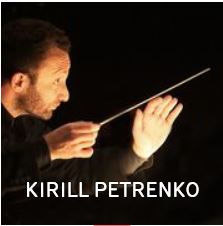
krillKirill Petrenko was born in Omsk in 1972 where he studied piano at the College of Music. At the age of eleven he gave his first public performance as a pianist with the Omsk Symphony Orchestra. In 1990 his family (his father a violinist and his mother a musicologist) relocated to Vorarlberg where his father worked as an orchestra musician and music teacher. Petrenko first continued his studies in Feldkirch before moving to Vienna to study conducting at the Academy of Music and Performing Arts.

His first job after graduation took him directly to the Vienna Volksoper where he was hired by Nikolaus Bachler as Kapellmeister. From 1999 until 2002 Kirill Petrenko was General Music Director at the Meininger Theater. It was in 2001 in his role as conductor of Wagner’s Der Ring des Nibelungen, in the production by Christine Mielitz and with scenery by Alfred Hrdlicka, that he first achieved international acclaim. In 2002 Kirill Petrenko became General Music Director of the Komische Oper Berlin where, until 2007, he was credited with a series of highly significant productions.Kirill-Petrenko1

During his time in Meiningen and Berlin his international career also began to flourish. In 2000 Kirill Petrenko made his debut at the Maggio Musicale Fiorentino, in 2001 at the Vienna Staatsoper and the Dresden Semperoper, in 2003 at the Gran Teatre del Liceu in Barcelona, the Opéra National de Paris, the Royal Opera House Covent Garden in London, the Bayerische Staatsoper, the New York Metropolitan Opera and in 2005 at the Oper Frankfurt. In Lyon, in collaboration with Peter Stein, he conducted all three Pushkin-inspired operas by Tchaikovsky (Mazeppa, Eugene Onegin and Pique Dame) from 2006 until 2008, which were also performed as a cycle in early 2010.krill2

After moving on from the Komische Oper Berlin Kirill Petrenko worked as a freelance conductor. During this period his projects included conducting a new production of Leoš Janáček’s Jenůfa (Production: Barbara Frey) at the Bayerische Staatsoper in 2009. In Frankfurt he conducted Pfitzner’s Palestrina (Production: Harry Kupfer) and Puccini’s Tosca (Production: Andreas Kriegenburg). In 2011 he worked on two new productions of Tristan and Isolde at the Opéra National de Lyon and at the Ruhrtriennale.
krill3To date, the most important orchestras Kirill Petrenko has been invited to conduct include the Berlin Philharmonic, the Dresden Staatskapelle, the BR Symphony Orchestra, the Bayerische Staatsorchester, the WDR Cologne Symphony Orchestra, the Hamburg Philharmonic and the NDR Hamburg Symphony Orchestra, the Frankfurt Opern- und Museumsorchester, the Amsterdam Concertgebouworkest, the Vienna Radio Symphony Orchestra, the Vienna Symphony, the Cleveland Orchestra, the Chicago Symphony Orchestra, the London Philharmonic Orchestra, the Oslo Philharmonic Orchestra, the Santa Cecilia Orchestra in Rome, the RAI National Symphony Orchestra in Turin and the Israel Philharmonic Orchestra. Kirill Petrenko has also conducted concerts at the Bregenz and Salzburg Festivals. From 2013 to 2015 he swung his baton for the new production of Richard Wagner’s Der Ring des Nibelungen during the Bayreuth Festival.

Since September 2013 Kirill Petrenko has been General Music Director at the Bayerische Staatsoper. He will be working in this position until the end of the 2019/20 season. Since 2013, he has taken to the rostrum for premieres of Die Frau ohne Schatten, La clemenza di Tito, Die Soldaten, Lucia di Lammermoor and Lulu as well as a revival of Wagner’s Der Ring des Nibelungen among other works. In June 2015, Kirill Petrenko was named future Chief Conductor of the Berlin Philharmonic, starting this position in autumn 2019.

In the current season at the Bayerische Staatsoper Kirill Petrenko led the world premiere of Miroslav Srnka’s South Pole, next up is a new production of Wagner’s Die Meistersinger von Nürnberg in May 2016. Furthermore, Kirill Petrenko conducts revivals of Lulu, Tosca, Ariadne auf Naxos, Die Fledermaus and Der Rosenkavalier, as well as three Academy Concerts with the Bayerische Staatsorchester.

Posted in OPera | Tagged | Leave a comment

Carmen at the Hungarian State Opera with Rinat Shaham

Hungarian_logocarmentitle

carmen20Opera in two parts, four acts, in French with Hungarian prose and surtitles

“Her eyes were obliquely set, but large and full; her lips rather thick, but well cut, and permitted the teeth – white as blanched almonds – to be seen. Her hair was perhaps a trifle coarse, but had a blue sheen running through it, like that one sees in a raven’s wings, and was long and luxuriant. She was of a strange and savage beauty – a face which at first surprised you, but it was one you could never forget. Her eyes especially had an expression at once voluptuous and fierce…I stabbed her twice. She fell at the second thrust without a cry. I can still fancy I see her splendid black eyes regarding me steadily; then they became troubled and closed.”

Details

Location:  Veszprém Aréna
Date: July 9, 2016
Start time: 20:00
End time: 23:00

Cast

Conductor Gergely Kesselyák
Don José Zoltán Nyári
Escamillo Károly Szemerédy
Dancer Zoltán Bátki Fazekas
Remendado József Mukk
Zuniga Géza Gábor
Moralès András Káldi Kiss
Carmen Rinat Shaham
Micaëla Gabriella Létay Kiss
Mercédès Éva Várhelyi
Frasquita Ildikó Szakács

ARTISTIC TEAM

Director
Pál Oberfrank
Set designer
László Székely
Costume designer
Márta Pilinyi
Choreographer
Marianna Venekei
Head of the Children’s Chorus
Gyöngyvér Gupcsó
Chorus director
Kálmán Strausz
Featuring
Honvéd Male Choir

GALLERY (Photos by Rákossy Péter)

SYNOPSIS

Act I
On a square in Seville, a troop of dragoons are keeping watch next to the tobacco factory, where they pass the time by watching the passers-by and chatting. A pretty girl named Micaëla appears, clearly searching for someone. Morales and the other soldiers address her: she reveals that she is looking for a corporal named Don José. Morales informs her that the corporal will be coming to the square when the guard changes. The soldiers urge the girl to wait for Don José there with them, but she shyly tells them she will come back later.
Presently, the new guard arrives, with Lieutenant Zuniga and Don José among them. The latter is informed by Morales that a pretty girl has been looking for him, and that she said she would return shortly. Based on the description of the young woman, Don José immediately realises that they are talking about Micaëla, the young orphan girl his own mother has been raising in the countryside. The bells of the tobacco factory ring out, and the men of Seville gather to admire the beautiful young women from the factory as they come out to the square – especially the sensuous Gypsy girl, Carmen, who appears last of all, singing a song of love. All eyes cling to her, except for Don José’s. Carmen tosses him a flower, and laughingly returns to work. Without knowing why, Don José pockets the flower in his tunic. Micaëla returns, and before quickly departing gives the corporal a letter and money – and a kiss – sent from his mother. Don José is overcome by homesickness.
Suddenly, a fracas breaks out in the factory. Lieutenant Zuniga sends Don José in to find out what is going on. The factory girls rush out and, forming opposing sides, relate to Zuniga two different versions of what happened: Carmen and another girl had got into an argument. Knives came out, and Carmen slashed the other girl’s face. Don José takes Carmen out to the square, but she refuses to say anything about the matter. Zuniga orders that Carmen be taken to the gaol, and Carmen, finding herself alone with Don José, attempts to convince him to let her free. She sings an erotic Seguidilla to him, offering her love in exchange for freedom. As Zuniga returns with the warrant, Carmen knocks Don José down and runs off.

Act II
At Lillas Pastia’s inn in Seville, Carmen and her compatriots are enjoying themselves in the company of Lieutenant Zuniga and the other officers. The girls perform a dance for the soldiers. Lillas Pastia is preparing to close the establishment for the night, but Zuniga is still flirting with Carmen. It emerges that Don José has been demoted and locked up in the stockade for allowing Carmen to escape. From outside, the sounds of a festive crowd grow louder and louder. A growing clamour is heard from outside: Escamillo, the famous toreador from Granada is being cheered by the crowd on the street. The bullfighter and his companions enter the inn, where his audience is delighted to hear a true celebrity describe the matador’s life. His eyes fall on Carmen, who returns the attention. Escamillo departs with the crowd in tow, leaving only Carmen, Frasquita and Mercédes. Finally, it emerges why Lillas Pastia was in such a hurry to close for the night: the inn is a secret base for smugglers, and Dancaire and Remendado are coming to recruit girls for their smuggling operation. Frasquita and Mercédes agree to the task, but Carmen, prevented by love, is unwilling to go along… Don José’s singing is heard in the distance. The smugglers withdraw, leaving Carmen alone with the corporal. José had been freed earlier that day and had immediately set out to find Carmen. The girl begins to dance for him, but soon a bugle sounds calling the soldiers back to the barracks for the night: Don José must leave if he’s not to wind up in even more trouble. Carmen grows angry and mocks him. The man professes his love for her, revealing the flower that she had thrown to him, which he has guarded ever since their first encounter. For the gypsy girl, however, his words are not enough: she wants José to desert and choose the life of freedom, to become one of them. Don José rejects this, and Carmen sends him away. Just then there’s a banging at the door: it’s Zuniga, who has slipped back to see Carmen. The two men start to fight, until Dancaire and Remendado pull them apart. José now has no other choice than to join Carmen and the smugglers.

Act III
The band of smugglers are encamped beside a mountain road. Carmen and José quarrel: the girl has started to grow tired of the man’s constant fits of jealousy. Frasquita and Mercédes draw from a deck and amuse themselves by contemplating what fate the cards have in store for them: one of them will have a handsome young lover, while the other’s will be old and rich. Carmen lays out her own cards: they prophesy death for her and José. Dancaire takes the three girls off with him to help him come to an arrangement with the customs officer to admit the goods into the city. Micaëla appears in the deserted camp. She has worked up her courage to confront the woman who has turned her beloved, José, into a villain. Hearing men’s voices suddenly cry out, she hides in fright. Don José, left to keep watch, has called out to an approaching stranger. It is Escamillo, who tells José that he has come to find a beautiful gypsy girl with whom he has fallen in love. When it turns out that he’s talking about Carmen, the two men go at each other. The returning smugglers separate them. Escamillo elegantly invites everyone to his next bullfight in Seville, and then departs. Micaëla emerges and begs José to return home, as his mother is dying. José agrees, but before he departs, he warns Carmen that they will meet again.

Act IV
Before the bullfight in Seville, the throng cheers the procession of picadors and toreadors. Arriving on Escamillo’s arm is Carmen, whose girlfriends warn her to take care, as they’ve spotted Don José in the crowd. The girl, however, is not deterred. The crowd makes its way into the arena, but Carmen remains outside the entrance to await Don José. He soon appears and starts pleading with Carmen to come back to him, since he cannot live without her. The gypsy girl calmly replies that everything is over between them, and she now loves someone else. Inside, the crowd cheers Escamillo. José attempts to convince the girl, but she cannot be swayed, exclaiming that she “was born free, and free she’ll die.” She returns the ring that José had given her earlier. José draws a knife and stabs his beloved.

FOCUS ON:

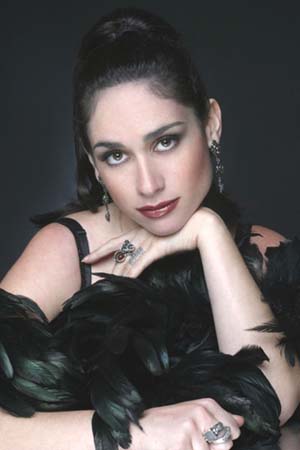
rinat_shaham2Rinat Shaham

Opera Singer
mezzo-soprano
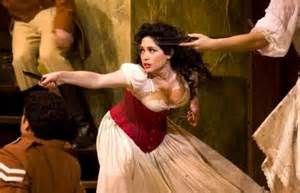
Israeli born mezzo-soprano Rinat Shaham is internationally recognized as one of today’s finest interpreters of Bizet’s Carmen, she first performed the role at the 2004 Glyndebourne Festival. She has since portrayed Carmen in Vienna, Rome, Berlin, Munich, Hamburg, Stuttgart, Cologne, Baden Baden, Lisbon, Toronto, Vancouver, Montreal, Tel Aviv, Hong Kong, and the United States. Born in Haifa, Rinat Shaham completed her musical studies in the United States at the Curtis Institute of Music. While still in school, Shaham was invited to make her professional operatic debut as Zerlina with the Opera Company of Philadelphia, the same role she performed for her debut in New York City and Pittsburgh.

rinat1Shaham made her European operatic debut as Dido in Purcell’s Dido and Aeneas at the Aix en Provence Festival. She sang the title role of Massenet’s Cendrillon in Brussels, Mélisande in Pelléas et Mélisande in Berlin under Michael Gielen, and Rosina in Il Barbiere di Siviglia for the National Theatre in Tokyo and the Teatro La Fenice in Venice.

carmen-handa-opera-on-sydney-harbour-rinat-shahamrinat-shahamEqually acclaimed as an orchestral soloist and recitalist, Rinat Shaham has collaborated with some of the most eminent conductors of our day, including Simon Rattle, Andre Previn, Christoph Eschenbach, Leonard Slatkin, William Christie, and David Robertson. Rinat Shaham has recorded excerpts from operas by Lully under William Christie for Erato as well as a solo CD of Gershwin and Purcell. She made her feature film debut as the ‘Jazz Singer’ in the István Szabó film, ‘Taking Sides‘, with Harvey Keitel. Her performance as Carmen from the Australian Opera has also been released on DVD.


Posted in OPera | Tagged , , , , , , , , , , | Leave a comment

Conductor, TV Presenter, writer…: Exclusive Interview with Matthieu Mantanus

Mantanus3

INTERVIEW BY SALVATORE MARGARONE (as translated by Tiziano Thomas Dossena)

Tell us a little about yourself. When did your passion for music born?
My passion for music was born when I was a little kid: I was fascinated by the sound of the organ, but I was only five years old and my mother explained to me that I was not tall enough to reach the pedals! So, I started with the piano, and later on I also studied the cello with it for over ten years. And maybe it’s this instrument, instead, which opened up for me the door to the orchestra.

Which one was the turning point of your career?
My pivotal points were the meetings with various important maestros. First it was with Aprea, then with Sinopoli, Gelmetti, Panula and last with Maazel: important milestones in an artistic growth that, however, never ends. Life for me it’s like a hike in the mountains. While you walk you don’t realize how much you are climbing; it’s only when you stop to rest and you look down that you realize of the long path you walked. And anyhow, when you look upward, the peak never looks any closer.MM_portrait-480x320

copertina_libroMMAs a young conductor, tell us what you feel when you direct and when you meet new talents.
To conduct an orchestra can be at times the most fulfilling experience ever lived, and at times the most frustrating, since it is now based more upon human relations than the technical and musical preparation. The conductor, and it’s something that I tried to explain in my book “Beethoven e la ragazza coi capelli blu” (Beethoven and the girl with the blue hair), does not have any divine power, but has foremost to create the conditions for the musicians who play with him to perform at their best. From that point on, if there is trust, he can give suggestions with his gestures. If there is no trust, the conductor is the most useless person in the orchestra.
Talents, instead, I meet plenty, and usually I am tempted to share with them special music moments, one way or the other, because musicality, the real one, unites; and as I see it, humanity in a musician matters a lot.

unagiornataHow are your relations with young musicians?
I think that in the next few years I will dedicate myself more to “young people”, also considering the fact that I am also getting older…. I believe it’s important to make them reflect upon their role in today’s society: what is the point to study music in 2016? What sense does music have in our society? They are questions that until ten years ago one could avoid easily asking oneself since the method was exact, the professional structure proven. Today, the patterns are evolving because society itself is evolving. It’s fundamental then, to get back to our roots and give ourselves some answers to make sense of the most beautiful profession in the world. Also for the reason that if in the course of our training we tend, correctly, to act according to whoever is teaching us first and whoever judges us second, when we start the profession we have to turn around and look at the audience in the eyes and remember that it is for them that we perform, and it’s thanks to them that we are allowed to operate in this field.

Do you believe that in Italy, today, there is space for young people? Under what conditions?
Little; very little. From one standing point it’s normal, since in Italy, as in other countries, the “market” is shrinking visibly. It’s logical that being there fewer opportunities, young people are not capable to enter in a system that is not really working any more, but in my opinion this reaction is extremely dangerous because in a society evolving this rapidly, in which, being 38 I have a hard time understanding an 18 years old, what I would call the “generational contamination;” a correct amount of openness among generations would be useful to the evolution of musical offering…

What is your advice to young musicians?
First of all to study, study, and study again, because a real musician has to strive for perfection, then to play always with others, because music is sharing, and finally to travel around the world: courses, masterclasses, competitions, youth orchestras… to compare ourselves with others, since to find a job they will need to enlarge their horizons a lot and not expect to find it at home….

Let’s talk about your collaboration with channel Rai5. How do you stand in the shoes of a TV presenter? Do you like it? Do you believe it fits you?
I enjoyed myself a lot, since TV is a particular medium that I am discovering in the last few years, first with the program Che Tempo Fa, then with the live programs of Rai5… We really have to reflect on new ways of transmitting music to society: the TV is an important tool to which the music world compares with difficulty. I am working on so many ideas!Mantanus1

Among your projects we find “Jeans Music”. Could you explain how it was born and what it is about?
My “Jeans Music Lab” is a type of lab in which I experiment new formats to introduce the classic repertoire in live version. I believe the concert, in its current form, is functional for the public that follows it, but it does not have the capacity to attract new audiences. The first step, for me, is to call into question the formalism which reigns in the concert halls. The last project, for example, “Intimacy,” experiments the relationship with the video format: how to use the most recent art to which society is more sensitive, to transmit music.

Milano, Matthieu Mantanus © Cristian Castelnuovo

Milano, Matthieu Mantanus © Cristian Castelnuovo

Are there any limits, in your opinion, to the music world? As of today, should we dare more in our musical proposals? Or maybe we should stay within the limits, if any?
Limits in Art should not exist because the relationship between the artist and society is one of action-reaction. The artist has to be free to express himself and propose his thoughts, his sensibility. The only rule, which we often forget, is that the public has also to be free not to appreciate it and express that feeling. It’s this dialectic that allows art to assume all its importance in society.

What work did you want to do when you were a kid?
I used to tell my mom in the morning that I wanted to be a pilot and then at night to be a musician. I was always versatile; besides music, I loved physics, economics, diplomacy… Nevertheless, at the moment I had to really choose I asked myself whether I could live far from music, and since the answer was no, I chose this profession.

The strangest thing about you?
Paradoxically, maybe just my normality…

Are there any other projects at which you are working?
I am investing a lot in my lab Jeans Music and we have a lot of projects within it to be developed, all projects that aim to find broadcast techniques for the classic repertoire. Often, I hear cultural leaders who complain that to the activity of “approach to new audiences” is not followed by a growth in subscriptions, but it is very normal! If you change the format—let’s call it like that—and you can attract new audience, but you should not think that the same audience would love the preceding format: that usually means that it was that format they did not like! We have to look for different ways, sustainable through time, to do our cultural work; and upon that, my attention for the future concentrates.

The most embarrassing situation in which you found yourself?
Ahem, there are so many…. Usually given to the fact that I am not good at remembering faces, and there are so many instances in which I have long conversations with people I absolutely can’t remember, and then I discover that I met them quite a few times, and also with pleasure! I am a disaster!Mantanus2

Is there something that you want to say to our readers?
Yes. I hear too much, in my world, that society “does not understand music anymore,” that “it’s not like in the old times”, that “the government should…” or that “politics…”
I think, instead, that the time has come for us to realize that our society, paradoxically, is the one that has the most access to culture and knowledge that man could ever imagine in the past 10000 years, that our society is different from the one of our parents, and the one of our children is even more different from ours, but that different does not mean worse, and to complete our mission we have to have the courage to immerse ourselves in society, understand it, and place ourselves in a contemporary mode and without any prejudice. After all, society has a great need for music and especially of good music, and we can be the ones to bring it to it; wherever it is and with whatever means we can use, as long as we respect its substance.

Posted in Interview | Tagged , | Leave a comment

Rossini’sCount Ory premieres at the Seattle Opera

ory_title

seattlelogoBy Gioachino Rossini

A Seattle Opera Premiere!

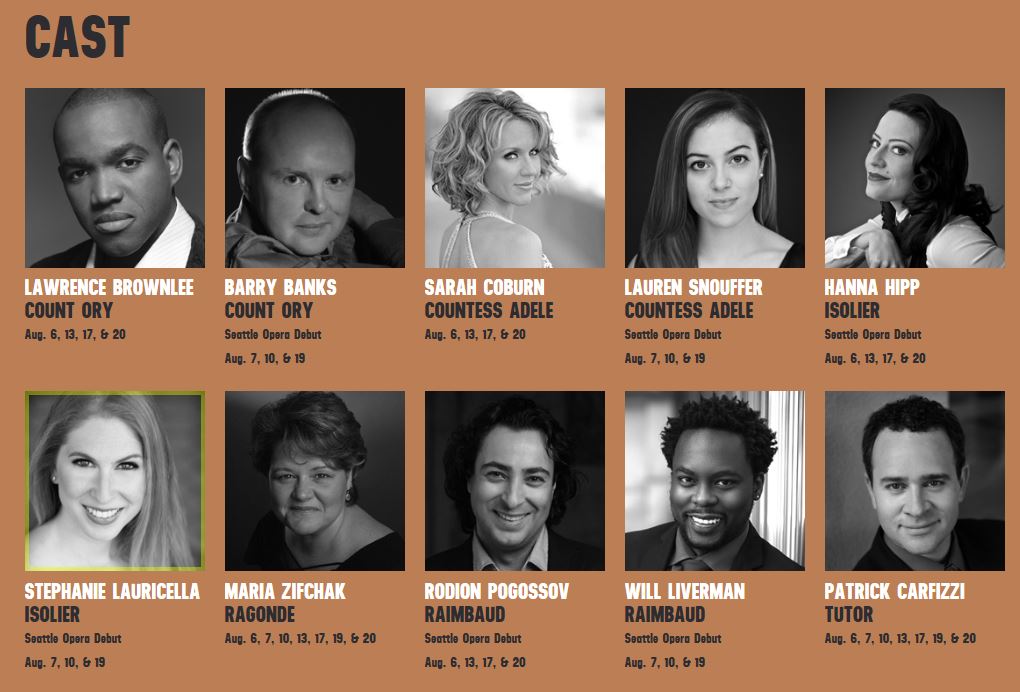
Aug. 6, 7, 10, 13, 17, 19, & 20, 2016

FARCE. In this madcap comedy from the composer of The Barber of Seville, a notorious skirt-chaser and his merry-making minions scheme their way into a medieval French castle by means of outrageous disguises and narrow escapes. An all-new “Pythonesque” production promises plenty of whimsy and vivid color to start the season with a bang.

In French with English subtitles | at McCaw Hall
Approximate Running Time: 2 hours, 35 minutes, with 1 intermission
Evenings at 7:30 PM. Sunday matinee at 2:00 PM.

ory1

SYNOPSIS

ory2Long Story Short Three’s a crowd when a randy playboy and a lovesick teenager both invade a chaste noblewoman’s bed.

The Story

The mice will play while the cat’s away, and in a small medieval French village whose men are all off fighting the Crusades, the ladies are easy prey for that notorious local bad boy, Count Ory. Hoping to encourage relaxed morals, Ory passes himself off as a guru who has come to town to help ease lonely women’s heartaches and dispense wise counsel on all questions of love. The women eagerly bare their souls to the ‘hermit’; even his own teenage page, Isolier, comes seeking advice for the lovelorn. Isolier confesses that he’s madly in love with Countess Adèle, who lives in a nearby castle; what’s more, the boy has invented a clever strategem for infiltrating her home.

ory3Ory’s ‘wise hermit’ disguise is spoiled by his own tutor, who promised Ory’s father he’d make his son behave. So Ory moves on to Isolier’s plan: that night, during a furious storm, he and his men disguise themselves as nuns and knock on Adèle’s door, begging her to offer them refuge from the wicked Count Ory, who, they say, is pursuing them. Isolier and Ory both inveigle themselves into Adèle’s bedroom; but in the ensuing love trio, between the darkness and the disguises, none of the three of them knows exactly whose body they’re embracing. Luckily for all concerned, as dawn comes up, the men of the village return home from the Crusades, and Isolier helps Ory escape.

ory_castcreative_ory

Posted in OPera | Tagged , , | Leave a comment

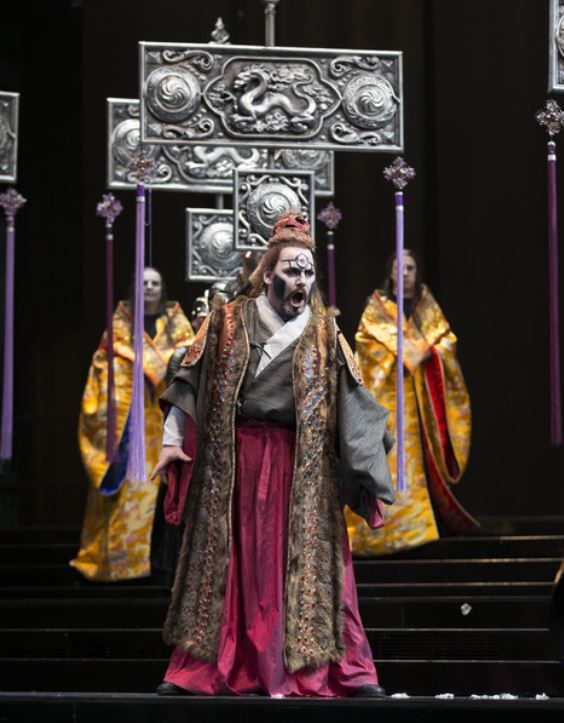
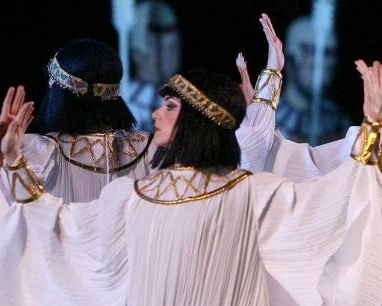
TURANDOT at the Opera in Piazza Giuseppe di Stefano

sloveneopera

turandot6turandot_title

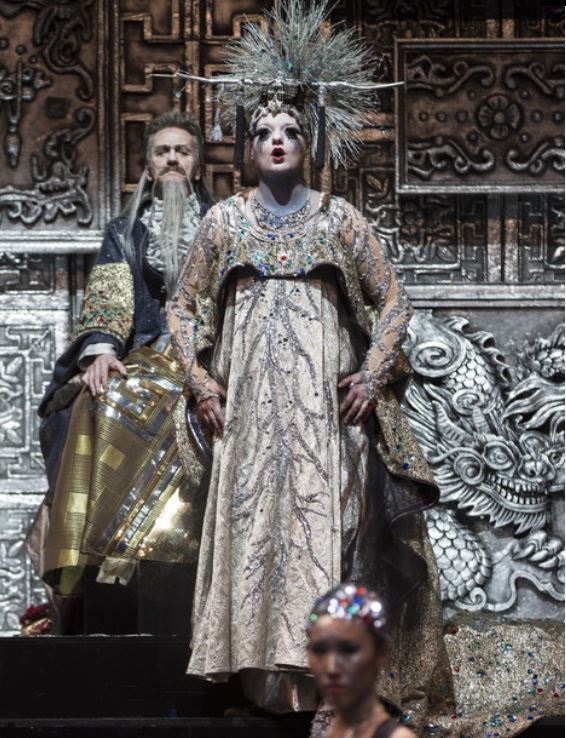
The opera Turandot (1924), which was unfinished at the time of Puccini’s and posthumously completed by Franco Alfano, is a thrilling fairy tale intensifying into myth. It is the story of the legendary ice-cold princess, Turandot, beautiful beyond compare, who puts her suitors to the test of three riddles and then has them beheaded when they cannot answer them. Finally (after murder and mayhem), she is bested by an unknown Prince (Calaf) and the power of love. Puccini, who knew that he was dying, wrote some of his most rapturous and urgent music for this opera of love, mystery and deceit. The battery of gongs, xylophones and chimes that he uses to portray a fabled China’s Imperial City, gives the orchestration an ominousness and a sumptuousness unlike anything else. The writing for chorus and small vocal ensembles is Puccini at his most accomplished and atmospheric. Among arias one can find the beloved Nessun dorma, one of the most famous tenor arias ever composed.

turandot8

CAST

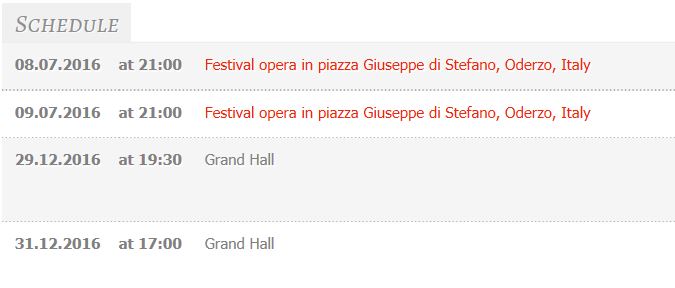
schedule

operainpiazza

CONDUCTOR Loris Voltolini
TURANDOT    Rebeka Lokar
LIU                     Sabina Cvilak   08.07.2016
LIU                    Andreja Zakonjšek Krt  09.07.2016
TIMUR             Valentin Pivovarov
KALAF             Renzo Zulian
PANG               Martin Sušnik
PANG               Dušan Topolovec
PONG               Darko Vidic
ALTOUM        Emil Baronik
MANDARIN  Jaki Jurgec
turandot_poster_opera_inPiazza

GALLERY (Photos by Tiberiu Marta)

FOCUS ON

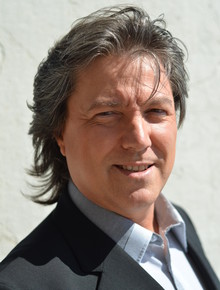
Renzo Zulian

zumianThe Italian tenor Renzo Zulian was born in Venice, where he began his musical training as a guitar player. Upon the advice of a professional vocal coach, he started to study singing. He perfected his vocal technique with a renowned Italian tenor Franco Corelli. His vast repertoire comprises of leading tenor roles in all major masterpieces of the staple operatic repertoire, such as Il trovatore, Tosca, Madama Butterfly, La bohème, Lucia di Lammermoor, La traviata, Un ballo in maschera, Turandot, Aida, Cavalleria rusticana, I pagliacci, Adriana Lecouvreur, Andrea Chénier, I vespri siciliani, La fanciulla del West, Conchita, Norma, San Francesco, and Rhea. He is a regular guest of prominent Italian opera theatres, among them being Teatro Regio of Parma, Teatro Verdi in Trieste, Teatro Bellini of Catania, Teatro Verdi in Salerno, Puccini Festival in Torre del Lago, Teatro Verdi in Busseto, Teatro Comunale of Ferrare, Ravenna, Piacenza, and Modena, Teatro Politeama in Lecce, and the opera house San Carlo in Naples. In 2000, he was a guest artist of the Music Festival in Wexford. In the same year, he performed in Hong Kong, Taiwan, and Salzburg. In addition, he toured in Spain (Teatro de la Maestranza in Seville), France (Opera Toulon), Japan (national tour, and a guest performance in the New National Theatre in Tokio), and Germany (Staatstheater Stuttgart). In the past seasons, he was a regular guest of SNG Opera Maribor, where he performed the roles of the Duke of Mantova (Rigoletto), Radames (Aida), Rodolfo (La bohème), and Don Alvaro (La forza del destino), Radamès (Aida), Dick Johnson (La fanciulla del West), etc.

Posted in OPera | Tagged , , , , , , | Leave a comment

Die Walküre at the Oper Frankfurt

operfrankfurtlogo

Die Walküre

Richard Wagner 1813-1883

Libretto by the composer
First performed June 26th 1870, Königliches Hof- und Nationaltheater, Munich
First performance as part of the Ring des Nibelungen August 14th 1876
Sung in German with surtitles
Duration: c. 5 hrs, including two intervals

Live recording and DVD available – OehmsClassics

Sunday 10th July 2016 Start5:00 pm Venue: Opera House

The world ash tree, from which Wotan broke his spear, is shown as a tree stump, a portent of things to come. The tree’s rings remind us of time that has past and the finite nature of all life. Finality or intermediate phase? Pause in war, armistice, lull before the storm? The Valkyries transform fallen heroes into machines of death. Brutalization has spread. Even the God becomes part of the atrocity, killing his own son and destroying his daughter’s existence. After the cool, mystic blue of the Rheingold set more natural colors now come into play, leading the way to more real, more human dimensions. The god created hardship, but he turns himself to those seeking help. Although the relationships are desolate and the situation dismal, it is not hopeless. A way out is hinted at…
FROM NOTES BY THE STAGE DESIGNER JENS KILIAN ABOUT DIE WALKÜRE

GALLERY


CAST

Conductor Sebastian Weigle

Director Vera Nemirova

Revival rehearsed by Hans Walter Richter

Stage Designer Jens Kilian

Costume Designer Ingeborg Bernerth

Lighting Designer Olaf Winter

Dramaturgy Malte Krasting

Video Bibi Abel

Siegmund
Frank van Aken
Hunding
Ain Anger
Wotan
James Rutherford
Sieglinde
Amber Wagner
Brünnhilde
Rebecca Teem
Fricka
Tanja Ariane Baumgartner
Gerhilde
Karen Vuong
Ortlinde
Britta Stallmeister
Waltraute
Jenny Carlstedt
Schwertleite
Bernadett Fodor
Helmwige
Hanna Herfurtner
Siegrune
Jessica Strong *
Grimgerde
Maria Pantiukhova
Rossweiße
Judita Nagyová

Frankfurt Opern- und Museumsorchester

* Member of the Opera Studio

SYNOPSIS

Wotan hopes that a hero, who is not answerable to the gods, will carry out what he is not allowed to do: win back Alberich’s Ring – which is now in Fafner’s possession. To this end he sired the twins Siegmund and Sieglinde with a mortal woman, and Erda bore him Brünnhilde, who is building an army of fallen heros with her eight half sisters, the Valkyries. An exhausted, wounded, unarmed man collapses in a stranger’s house and is tended by the woman who lives there. When her husband Hunding returns he realises that the man is the enemy he was seeking to kill. He grants him hospitality for the night but says they will fight in the morning. The wife gives her husband a sleeping draught. She and the stranger fall in love, although she realises that he must be her twin brother, from whom she became separated as a child. The stranger’s father had promised him that he would find a sword when he was in mortal danger. The sword is there, thrust into an oak tree by a stranger long ago. He pulls it out. Sieglinde reveals her name and calls him Siegmund. Wotan’s wife Fricka insists that Wotan punish the pair for their incest. The god must turn his back on Siegmund, his own son. Going against her father’s instructions Brünnhilde tries to help Siegmund in his battle with Hunding but Wotan’s spear shatters Siegmund’s sword. Wotan punishes Brünnhilde for her disobedience by depriving her of her divinity and putting her to sleep surrounded by a ring of fire until a hero is brave enough to wake her. Wotan was told by Brünnhilde that Sieglinde is expecting a child by Siegmund. So hope remains.

Posted in OPera | Tagged , | Leave a comment

AIDA at the Arena di Verona in its historical edition of 1913 under the direction of Gianfranco de Bosio

arenaveronalogo

aidatitleAida, the opera in the Arena par excellence, will be displayed in its historical edition of 1913 under the direction of Gianfranco de Bosio.

25 June – 28 August

Libretto by Antonio Ghislanzoni

Music by Giuseppe Verdi

Lasting 4 Hours approximately – Intervals included

arena-schede-spettacolo-aida-2016-aida-2-jpgProduction

Conductors
Julian Kovatchev (25, 30/6 – 3, 7, 14, 17, 24/7)
Andrea Battistoni (28, 31/7 – 7, 9, 28/8)
Daniel Oren (14, 18, 21, 24/8)

Director Gianfranco de Bosio

Coreographer Susanna Egri

Chorus Master Vito Lombardi

Ballet Coordinator Gaetano Petrosino

Director of Technical Operations and Stage Design Giuseppe De Filippi Venezia

arena-schede-spettacolo-aida-2016-aida-4-jpgCAST

The King
Carlo Cigni (25, 30/6 – 3, 7, 14, 17/7)
Roberto Tagliavini (24, 28, 31/7)
Romano Dal Zovo (7, 9, 14/8)
Gianluca Breda (18, 21, 24, 28/8)

Amneris
Ildico Komlosi (25, 30/6 – 3/7)
Sanja Anastasia (7, 24, 28/7 – 14/8)
Luciana D’Intino (14, 17/7)
Ekaterina Gubanova (31/7 – 7, 9/8)
Andrea Ulbrich (18, 24/8)
Anastasia Boldyreva (21, 28/8)

Aida
Hui He (25, 30/6 – 3, 7, 24/7)
Monica Zanettin (14, 17/7)
Susanna Branchini (28, 31/7 – 7/8)
Amarilli Nizza (9, 14, 18/8)
Maria José Siri (21, 24, 28/8)

Radamès
Yusif Eyvazov (25, 30/6)
Walter Fraccaro (3, 7/7)
Stefano La Colla (14, 17/7)
Carlo Ventre (24, 28, 31/7)
Dario Di Vietri (7, 21, 24, 28/8)
Fabio Sartori (9, 14, 18/8)

Ramfis
Rafal Siwek (25, 30/6 – 3/7)
Sergey Artamonov (7, 14, 17/7 – 7, 9, 14, 18, 21, 24, 28/8)
Gianluca Breda (24, 28, 31/7)

Amonasro
Ambrogio Maestri (25, 30/6 – 3, 7/7)
Alberto Mastromarino (14, 17, 24, 28, 31/7 – 7, 9/8)
Sebastian Catana (14, 18, 21, 24, 28/8)

A messenger
Antonello Ceron (25/6 – 7, 9, 14/8)
Francesco Pittari (30/6 – 3, 7, 14, 17, 24/7)
Paolo Antognetti (28, 31/7 – 18, 21, 24, 28/8)

High Priestess
Alice Marini (25, 30/6 – 3, 7, 14/7)
Elena Serra (17, 24, 28, 31/7 – 7, 9, 14, 28/8)
Elena Borin (18, 21, 24/8)

GALLERY

SYNOPSIS

ACT I

There is wind of war in Memphis. Ramfis, the High Priest and secret power of the State, informs Radames, captain of the guards, that the Ethiopians are about to invade Egypt. The idea of a war stimulates Radames, a man of ambition and courage. He hopes the god Isis will appoint him supreme commander of the army. He dreams of glory, and everything seems possible. War, for him, is also an occasion to appear valiant before the eyes of the woman he secretly loves: Aida, an Ethiopian slave in the service of Amneris, the Pharaoh’s daughter.

The Egyptian princess is also in love with Radames. Intuitive by nature, though, she immediately suspects she has a rival in this slave but prefers to conceal her jealousy with double cunning. Meanwhile, Aida’s heart is heavy with anxiety: her country is at war, yet at the same time, a love links her to a new world.

A fanfare sounds and a majestic choral scene overrides individual conflicts and aspirations. The leaders of the State meet to plan a war strategy. The King and Ramfis stand out as personalities who have no individual identity, personifying a power which crushes anyone who stands in their way.

After a messenger arrives to confirm that the Ethiopians have invaded under the leadership of King Amonasro, the Pharaoh announces that the Oracle has chosen Radames to be commander-in-chief.

Everyone is thrilled and urges him to return home victorious. Aida, in private, grieves: she hopes Radames will be victorious but at the same time, wants her father, Amonasro to destroy the Egyptian troops. Desperate, full of repressed anxiety, she prays to the gods for mercy.

The rite of investiture as commander-in-chief takes place in the Temple of Vulcan. Against a background of singing and dancing, a silver veil is placed on Radames’s head while Ramfis hands him the consecrated sword. The commander-in-chief has received a blessing, hence it is a just war albeit set on destruction.

ACT II

Amneris is in her apartment preparing for Radames’s triumphant return. Her double-cross with Aida proceeds astutely. She is friendly to her but leads their conversation to the issue most dear to her, putting the slave’s feelings to the test: Radames, she informs her with studied indifference, has been killed in battle. Aida’s desperation at hearing this news now confirms Amneris’s suspicions. She reveals the deception and admits the truth: Radames is alive, but she, too, is in love with him. Furious, the Pharaoh’s daughter threatens revenge.

In Scene 2 private fates are forgotten as marches, dances, hymns and fanfares welcome the victorious army at Thebes. Radames enters at the end of the triumphal procession. The King promises to grant all Radames’s wishes. The Ethiopian prisoners file past, too and Aida recognizes one of them, her father Amonasro dressed as a simple officer who speaks on behalf of all the hostages, asking for clemency. Ramfis invites the King to show no pity while Radames requests that the prisoners be granted life and freedom. The King reaches a compromise: Aida and Amonasro will remain hostages in Egypt as guarantors of peace, all the others will be released. The marriage of Amneris to the triumphant Radames is announced. In an atmosphere of general repudiation, Amonasro meditates revenge. Aida and Radames are desperate. With private sentiments and great collective emotions manipulated and organized according to a fanatical ritual, any kind of conciliation is impossible.

ACT III

At night, on the banks of the Nile, Amneris goes into the temple of Isis to pray. It is the eve of her wedding. Aida also arrives, secretly: she has an appointment with Radames. Filled with anxiety and nostalgia, Aida evokes the wide open spaces of her homeland, sings her love for her lost country, symbol of a promised happiness that has vanished.

Amonasro appears unexpectedly, and organizes an ambush against the Egyptian army. He has realised that Aida and Radames are linked and he takes advantage of his daughter’s feelings to work out a strategy. With deceptive sweetness, he promises her return home, glory and love but he poses a condition: her loved one must divulge the route of the Egyptian troops. Aida tries to oppose this but her father’s curse and her sense of guilt should her people be massacred lead her to giving in. Plagiarised, Aida faces the meeting with her loved one, explaining the reasons for which the only solution possible is her escape. She manages to convince him, using seduction and sensuality. Radames reveals the military plans she wants but Amonasro, inopportunely, appears and reveals his identity, frustrating everyone.

The situation worsens. Amneris, who has overheard the conversation, comes out of the temple, crying of betrayal. Amonasro hurls himself at her to kill her, but Radames blocks him, hands over his sword to Ramfis and has himself arrested. Aida flees with her father. Her dream of love is now shattered forever, on the banks of the Nile.


ACT IV

In a room of the King’s palace, Amneris is now in despair. Her pride hurt, she is torn between

anger and love, between her wish to save Radames or to ruin him. In the end she decides to save him. She has him brought before her and begs him to prove his innocence: she will ask the King for mercy.

Radames refuses, claiming he has betrayed unintentionally and, having lost Aida, says he would prefer to die. He resists Amneris’s flattery, even when she reveals that Aida is still alive and she promises to save him if he renounces his love for the slave girl.

Radames is taken back to prison. The priests come to give their verdict. Ramfis’s accusations can be heard in the distance, in contrast with the silence of the accused followed by the diatribe of the holy ministers. The sentence arrives quickly: Radames is guilty and will be buried alive. Amneris seeks to save him, but her intervention is of no use in the light of the cruelty of the priests, the real bearers of power. Not even the Pharaoh’s daughter can oppose the repressive apparatus of the State, the implacable mechanisms of military and religious organization.

In the Temple of Vulcan, the priests bury Radames under a tombstone. Aida, however, is already hiding there, having entered the crypt secretly, to die alongside her beloved. He is desperate; she sees the angel of death approaching and with it, eternal joy. The temple is now invaded by light and a defeated Amneris prays for peace. A single, sinister note sounds repeatedly. In the obscure underground where they are buried, Aida and Radames are immersed in a sea of musical light, heralding another world beyond this where they will enjoy the happiness that has been denied them on Earth.

Aida2016locandina

FOCUS ON…

RobertoTagliavini180ROBERTO TAGLIAVINI

Bass

Roberto Tagliavini was born in Parma, where he began to study singing with the baritone Romano Franceschetto. In 2005 he debuted at the Teatro Regio in Parma in Gluck’s Alceste. In 2009 he was voted as the best performer in the season of the Teatro Verdi in Trieste for his performance as Selim in The Turk in Italy and in 2010 he won the award for best young singer in the Verdi Festival in Parma for performances of Loredano in The Two Foscari and the Verdi Requiemm, conducted by Lorin Maazel.

Tagliavini (in the center) in Il barbiere di Siviglia...

Tagliavini (in the center) in Il barbiere di Siviglia…

In recent seasons he has appeared as Mustafà in L’Italiani in Algeri in Trieste, Lord Sydney in Il Viaggio a Reims at Teatro alla Scala, the Count in The Marriage of Figaro in Toulon, Raimondo in Lucia di Lammermoor at the Teatro Carlo Felice in Genoa, Lord Walton in I Puritani at Teatro Real in Madrid, the King in Aida and Ferrando in Il Trovatore at the Arena di Verona, Don Basilio in The Barber of Seville in Palermo and Zurich, Count Rodolfo in La Sonnambula in St. Gallen, Uberto in La Serva Padrona for Teatro San Carlo in Naples, the King in Aida for the opening of Maggio Musicale Fiorentino in 2011, Ludovico in Otello at the Opéra Bastille in Paris, Figaro in The Marriage of Figaro at Teatro Maestranza in Seville, and Frere Laurent in Romeo et Juliette at ABAO Bilbao.tagliavini1

Other notable performances include a return to Teatro alla Scala in the 2012 season as the King and Ramfis in Aida (also for a Japan tour), a concert version of The Pearl Fishers at Teatro Real in Madrid and of Giovanna d’Arco in Salzburg, the title role of Attila in Verona, Deutsche Oper Berlin, Shanghai Grand Theater, Mariinsky Theater in  St. Petersburg conducted by Valery Gergiev, Timur in Turandot and the title role in Maometto II at Teatro dell’Opera in Rome, and Loredano in The Two Foscari in Vienna with Placido Domingo. In the last few months he took part in the productions of Il Trovatore and Le Comte Ory in Milan, Aida at the Arena di Verona, and Il Trovatore in Venice.tagliavini

Posted in OPera | Tagged , , , , , , , , , , , , , , , , , | Leave a comment

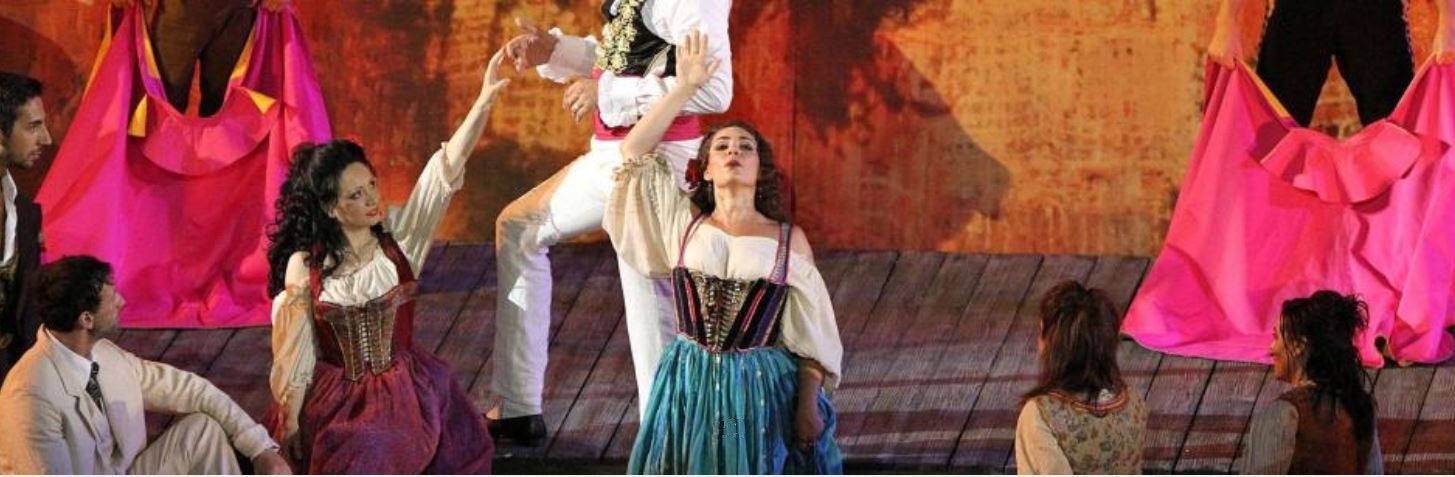
Carmen at the Arena di Verona, directed by Franco Zeffirelli

arenaveronalogocarmentitOn June 24th the Arena Opera Festival is starting with a great return: Carmen directed by Franco Zeffirelli. Special thanks to Silas Chou for his contribution

24 June – 27 August

Libretto by  Ludovic Halevy – Henri Meilhac
Music by Georges Bizet
Lasting 4 Hours approximately – Intervals includedcarmen1

Conductor
Xu Zhong (24/6 – 1, 6, 29/7 – 5, 11/8)
Julian Kovatchev (9, 13, 16/7 – 17, 20, 23, 27/8)

Director and Sets Franco Zeffirelli

Costume Anna Anni

Choreographer El Camborio
revival by Lucia Real

Chorus Master Vito Lombardi

Ballet Coordinator Gaetano Petrosino

Director of Technical Operations and Stage Design Giuseppe De Filippi Venezia

Children’s Choir A.LI.VE. conducted by Paolo Facincani

Arena di Verona Orchestra, Chorus, Corps de Ballet and Technical team

carmen2

Carmen
Luciana D’Intino (24/6 – 1, 6/7)
Carmen Topciu (9, 13, 16/7)
Anastasia Boldyreva (29/7 – 5, 11, 17/8)
Sanja Anastasia (20/8)
Agunda Kulaeva (23, 27/8)

Micaela
Ekaterina Bakanova (24/6 – 1, 6/7)
Irina Lungu (9, 13, 16, 29/7)
Alida Berti (5, 11/8)
Valeria Sepe (17, 20 ,23/8)
Francesca Sassu (27/8)

Frasquita
Madina Karbeli (24/6 – 1, 6, 9, 13, 16, 29/7)
Teona Dvali (5, 11, 17, 20, 23, 27/8)

Mercedes
Clarissa Leonardi (24/6 – 1, 6/7 – 20, 23, 27/8)
Alice Marini (9, 13, 16, 29/7 – 5, 11, 17/8)

Don José
Jorge De León (24/6 – 1, 6, 9, 13/7)
Dario Di Vietri (16, 29/7)
Carlo Ventre (5, 11/8)
Stefano Secco (17, 20, 23/8)
Mikheil Sheshaberidze (27/8)

Escamillo
Dalibor Jenis (24/6 – 1, 6, 9/7 – 11, 17, 20/8)
Gabriele Viviani (13, 16, 29/7 – 5/8)
Alexander Vinogradov (23, 27/8)

Dancairo
Gianfranco Montresor (24/6 – 1, 6, 9, 13, 16, 29/7 – 5/8)
Nicolò Ceriani (11, 17, 20, 23, 27/8)

Remendado
Paolo Antognetti (24/6 – 1, 6, 9, 13, 16/7)
Francesco Pittari (29/7 – 5, 11, 17, 20, 23, 27/8)

Zuniga
Gianluca Breda (24/6 – 1, 6, 9, 13, 16/7)
Paolo Battaglia (29/7 – 5, 11, 17, 20, 23, 27/8)

Morales
Marcello Rosiello (24/6 – 1, 6, 9, 13/7 – 5/8)
Alessio Verna (16, 29/7 – 11/8)
Gianfranco Montresor (17, 20, 23, 27/8)Carmen2016locandina

SYNOPSIS

ACT I

A tobacco factory and the barracks of the dragoons open out onto the main square of Seville. People are coming and going. A young girl makes her way through the crowd. She has an air of bewilderment and approaches the guards shyly, saying she is looking for Brigadier Don José. They tell her he will soon be here and invite her to wait with them. Intimidated, she declines and wanders away.

It is time for the changing of the guard. A new platoon arrives, followed by a group of young rogues who mimic the march of the soldiers. Don José is with them. His fellow soldiers tell him of the girl’s visit and, from their description, he deduces it was Micaela, an orphan who his mother has welcomed into their home.

A bell rings and everyone’s eyes turn to the cigarette-makers as they walk out of the tobacco factory. The men rush to the entrance to admire them close-up. The girls enjoy flirting. Among them is Carmen, a beautiful and sensual gypsy. Well-aware of her charm, she sings a song which is full of allusions and from which it is clear that she does not believe in the constancy of love. Don José pays no attention to her. Carmen notes his indifference and so she provocatively throws him a flower, much to the delight of the crowd. Shocked by such brazenness, but also disturbed by it, he picks up the flower and instinctively hides it under his coat.

Micaela returns. She hands Don José a letter with money enclosed and a kiss to give him, a kiss from his mother. He is moved and when she leaves, he opens the letter. His mother, he reads, wants to see him married, to that fine girl. He swears he will follow his mother’s advice and is about to throw away the flower when a fight breaks out among the cigarette-makers. Carmen has wounded a fellow worker with a knife. Don José is ordered to arrest her and escort her to prison. But on the way, Carmen, a consummate seducer, starts tricking him. She promises a meeting at the tavern of Lillas Pastia, near the walls of the city. By now bewitched, Don José succumbs: he frees her wrists, pretends to be pushed and falls to the ground. Carmen laughs and escapes.

ACT II

In the tavern of Lillas Pastia, an infamous place and a smugglers’ inn where soldiers and gypsies meet. Carmen sings and dances a hypnotic and exotic love song in the company of her friends, Mercedes and Frasquita. Lieutenant Zuniga informs her that Don José, having spent time in prison for helping her to escape, has just been released. However, Zuniga, too is captivated by the gypsy and starts flirting with her, but is interrupted by the arrival of Escamillo. All the people present acclaim the young toreador as he recounts his prowess in the bullfighting arena, and he, too is struck by Carmen’s beauty.

When the regulars leave, the innkeeper allows Dancairo and Remendado to come in. They are two smugglers who are preparing to strike that night and want Carmen and her friends to help. This time, however, the gypsy has no intention of going with them: she is waiting for her man to return. Shortly afterwards, Don José arrives, manifesting all his love. Carmen starts dancing sensually for him but the moment the trumpet sounds the retreat, José (who has now been demoted to the rank of simple soldier) starts to head back to the barracks. This infuriates Carmen. She derides and insults him for this is not her idea of love. Just before leaving, he pauses and pours out his heart to her. Despite their differences, he says, he loves her and cannot live without her. Carmen then invites him to join the smugglers. She proposes a life free of constraints, but José rules out the idea of deserting. Faced with the umpteenth misunderstanding between them, he decides to leave her. In the meantime, Zuniga arrives, returning in the hope of seducing Carmen. As soon as he sees Don José, he orders him to return to the barracks, but Don José refuses and a violent fight breaks out. At this point, José, guilty of insubordination, has no choice but to join the smugglers and take up the life of an outlaw.

ACT III

Having arrived at their hideout in the mountains, the smugglers sit and rest. Carmen and Don José exchange a few words but it is clear that their relationship is deteriorating. She is already tired of him and wants to be free; he is full of remorse over having betrayed his mother. Above all, though, he is obsessed by jealousy. Frasquita and Mercedes read tarot cards and see a bright future ahead for them. Carmen then comes over and consults the cards. She looks and sees death, both for her and Don José. She is agitated for she knows that her man is exasperated and could even kill her, but she is not afraid. She resigns herself to her fate.

Micaela unexpectedly arrives, accompanied by a guide. These places scare her, but in a desperate attempt to redeem the man she loves, she summons up the courage to go on. From afar, she sees Don José standing on a rock with a rifle, firing a warning shot at a stranger. Scared stiff, she quickly hides. Then Escamillo appears, having narrowly escaped Don José’s rifle shot. The toreador has come to track down the gypsy he is in love with. He and Don José exchange a few words and quickly realize they are rivals in love and prepare to fight a duel to have her. They unsheathe their swords and are about to rush at each other when Carmen and the smugglers appear and stop them.

Escamillo departs, but not before inviting them all to the bullfight in Seville. The band of smugglers is about to depart once more when they find Micaela. She pleads with José to go back home with him, but he refuses. (He knows Carmen would take advantage of his absence to start a relationship with the toreador.) However, when he learns that his mother is dying, overcome with a sense of guilt, he gives in and goes with her. But before leaving, he warns Carmen that they will meet again, soon.

ACT IV

In the square opposite the arena in Seville, the crowd is excitedly waiting for the toreador to arrive. When the team of toreadors arrive, preceded by the band, the crowd becomes euphoric. Escamillo arrives accompanied by Carmen, elegant and more radiant than ever. Before he enters the arena, she swears that she has never loved anyone as much as him. Don José is also in the crowd and Frasquita who has seen him, warns Carmen to be careful: it would be better if she went, she says. Carmen is not intimidated, however, and replies defiantly that she is not afraid of him; on the contrary, she wants to meet him.

Everyone goes into the arena, except Carmen. Don José arrives. He is deranged. He begs her to return to him. He humiliates himself by saying that he is ready to do anything in order to have her again. Carmen, though, is not moved by pity. She remains inflexible and haughty. She says she no longer loves him and will not change her mind. After all, free she was born and free she will die. The atmosphere becomes more and more tense and the words increasingly violent until, as a final provocation, she pulls off the ring he had given her, and throws it away.

While the crowd inside the arena is cheering and applauding Escamillo’s victory, Don José, by now out of his mind with anger and frustration, stabs Carmen mortally. Before the crowd who are now coming out of the arena, he throws himself on top of her lifeless body, calling her desperately by name.

GALLERY


FOCUS ON…

sassu1 FRANCESCA SASSU

Francesca Sassu was born in Sassari in 1984. She began studying singing at an early age at the Conservatorio of her hometown. She had masterclasses with Raina Kabaivanska, Renato Bruson, Natale De Carolis and Barbara Frittoli.

In 2005 she won the International Competition A. Belli at Teatro Lirico Sperimentale in Spoleto and she debuted the role of Leonora in Oberto Conte di San Bonifacio. In the same year she performed Oberto Conte di San Bonifacio at the New National Theatre in Tokyo. Other roles she debuted in Spoleto: Mimì in La bohème and Antonio in Cleopatra by Cimarosa. 

2006: La traviata (Violetta) – Beijing;  La donna del lago Edinburgh Festival, CD recording by Opera Rara. In Parma she performed La canzone dei ricordi by Martucci with Orchestra della Fondazione Toscanini conducted by P. Arrivabeni.

2007: Carmen (Micaela) – Landestheater Salzburg; Le nozze di Figaro (Contessa) – Menorca; Oberto Conte di San Bonifacio at Festival Verdi in Parma, directed by Pier’Alli and conducted by Allemandi, recorded by Decca.sassu2

2008: Suor Angelica and Gianni Schicchi at Teatro alla Scala, broadcasted by Sky Classica and RaiTrade; Il matrimonio inaspettato (Contessa di Sarzana) – Salzburg Festival and Pisa, conducted by Muti; Nabucco and Boris Godunov (Ksenja) – Teatro La Fenice in Venice; La bohème (Mimì) – Teatro Petruzzelli in Bari.

2009: Carmen (Micaela) – Modena, Piacenza, Ferrara, Ravenna and at Terme di Caracalla (Opera di Roma) with Elina Garanca and conducted by Chichon.

turandot

Valter Fraccaro (Principe Calaf) e Francesca Sassu (Liù) – Foto di Mario Finotti

2010/11: Carmen (Micaela) – Opéra Royal de Wallonie in Liege and Teatro San Carlo in Naples; L’elisir d’amore (Adina) – Sassari.

2012/13: La bohème (Musetta) – Teatro La Fenice; Così fan tutte (Fiordiligi) – Sassari.

2014: Die Zauberflöte (Papagena) – Cagliari; La rondine (Magda) – Livorno and Modena. 

2015: La rondine (Magda) – Pisa, Ravenna; Turandot (Liù) – Novara e Luglio Musicale Trapanese; Die Zauberflöte Verona.

Francesca Sassu (Leonora). © Roberto Ricci/Teatro Regio di Parma

Francesca Sassu (Leonora). © Roberto Ricci/Teatro Regio di Parma

2016: La donna serpente (Farzana) by Casella – Teatro Regio, Turin.

Repertoire: Don Giovanni (Donna Elvira), Così fan tutte (Fiordiligi), Idomeneo (Elettra), Le nozze di Figaro (Contessa), La sonnambula (Amina), Tancredi (Amenaide), La scala di seta (Giulia),  L’occasione fa il ladro (Berenice), Moise (Anais), L’elisir d’amore (Adina), Don Pasquale (Norina), Carmen (Micaela), Orfeo ed Euridice (Euridice), Falstaff (Nannetta), La traviata (Violetta).

AUDIO SAMPLE:

Je dis que rien ne m’épouvante / Micaela / Carmen

Posted in OPera | Tagged , , , , , , , , , , , , , , | Leave a comment

Carmen in San Francisco…

sanfranciscologoCarmenTitle

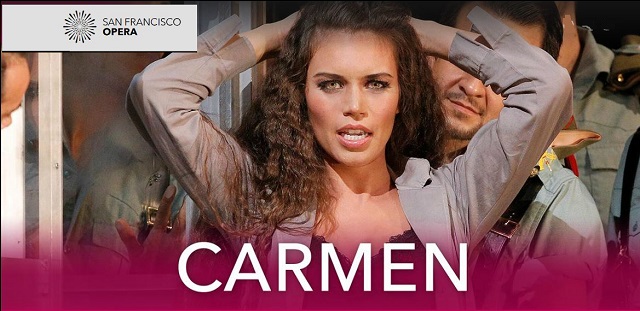
Carmenside1The ultimate femme fatale returns in a provocative staging by acclaimed director Calixto Bieito. His raw take on Carmen heightens the intense emotions pulsing through this tale of love, lust and murder. The result is a powerful account of a free-spirited woman and her obsessive lover. Be swept into Carmen’s deadly seduction as never before.

Music by Georges Bizet | Libretto by Henri Meilhac and Ludovic Halévy

Sung in French with English supertitles

See A Performance, Invite a Friend

Running Time 2 hours, 45 minutes including one intermission

Carmen10sidePre-Opera Talks Pre-Opera Talks are free to ticketholders and take place in the Orchestra section, 55 minutes prior to curtain.

Thursday 06/23/16 7:30PM *

Sunday 06/26/16 2:00PM

Thursday 06/30/16 7:30PM

Saturday 07/02/16 7:30PM

Sunday 07/03/16 2:00PM *

Please note: This production contains violence, nudity and sexual situations. Parental discretion advised.

*OperaVision, HD video projection screens featured in the Balcony level for this performance, is made possible by the Koret/Taube Media Suite.

GALLERY

Cast & Creative

Cast
Carmen Irene Roberts 1
Carmen Ginger Costa-Jackson 2
Don José Brian Jagde
Don José Adam Diegel *3
Micaëla Ellie Dehn 1
Micaëla Erika Grimaldi *2
Escamillo Zachary Nelson *1
Escamillo Michael Sumuel 2
Frasquita Amina Edris*
Mercédès Renée Rapier
Moralès Edward Nelson
Zuniga Brad Walker*
El Dancairo Daniel Cilli*
El Remendado Alex Boyer*

Performances

May 27, 28, 29, 31
June 1, 17, 23, 26, 30
July 2, 3

Creative
Conductor Carlo Montanaro *
Conductor Jordi Bernàcer *4
Production Calixto Bieito *
Revival Director Joan Anton Rechi *
Set Designer Alfons Flores *
Lighting Designer Gary Marder
Costume Designer Mercè Paloma *
Chorus Director Ian Robertson
Fight Director Dave Maier

1 May 27, 29, June 1, 23, 26, July 2
2 May 28, 31, June 17, 30, July 3
3 May 28    
4
 July 3
* San Francisco Opera Debut

Co-production with Boston Lyric Opera based on Bieito’s production which originated at El Festival de Peralada in Catalonia and Opera Zuid in the Netherlands.

– See more at: http://sfopera.com/discover-opera/1516-season/carmen/#sthash.l7bG6Lzq.dpuf

Synopsis

ACT I 
20th-century, Spain.
Corporal Moralès and his men are resting outside the guardhouse as Micaëla comes looking for Don José. The change of guard arrives, among them Corporal José and Lieutenant Zuniga. Zuniga questions José about the nearby cigarette factory and the girls who work there. The cigarette girls leave the factory for a break, and the men await a glimpse of Carmen. When she appears, Carmen flirts with them and gives a flower to José. Micaëla returns and gives José a letter from his mother. She leaves when he begins to read the letter that advises him to marry Micaëla and settle down. Screams are heard from the cigarette factory, and Zuniga sends José to find out the cause of the disturbance. José returns with Carmen and another girl, Manuelita, whose face has a knife wound allegedly inflicted by Carmen. When Carmen refuses to speak, Zuniga orders José to tie her hands and take her to prison and leaves to make out the warrant for Carmen’s arrest. Carmen hints to José about a rendezvous at her friend Lillas Pastia’s tavern, and José agrees to let her escape. When Zuniga returns with the warrant, Carmen breaks free as she is being led off to prison. José is demoted and arrested for his participation in Carmen’s escape.carmen1small

ACT II
Carmen and her Gypsy friends Frasquita and Mercédès sing and dance at Lillas Pastia’s tavern. Zuniga tells Carmen that José has been released from prison. A procession announces the arrival of the toreador, Escamillo. Attracted to Carmen, he invites her to attend his upcoming bullfight but she declines. As the soldiers leave, Zuniga promises to return to see Carmen. Dancaïre and Remendado come to ask the three Gypsy girls to join them in a smuggling expedition. José arrives and gives Carmen the gold piece she sent him along with a file while he was in prison. He explains that his soldier’s honor prevented him from trying to escape. Carmen dances for José, but when retreat sounds, he starts to leave for the barracks. She taunts him and challenges him to follow her to the mountains. Zuniga returns and José attacks him in a jealous rage, but the smugglers break up the fight and disarm José. José has no choice but to join the band of smugglers.

ACT III
The smugglers are at work in the mountains. After a brief period of happiness, Carmen has become fed up with José’s jealousy. Frasquita and Mercédès read their own good fortune in the cards. When Carmen takes her turn, she only finds death. Dancaïre asks the girls to distract the customs men on duty, leaving José on guard. Looking for José, Micaëla is led to the smuggler’s cove by a mountain guide who warns her of the perils she faces. She hides as Escamillo arrives unexpectedly. A jealous José challenges him to a knife fight, but Carmen and the smugglers separate them. Escamillo invites the band of smugglers to his next bullfight. Micaëla is discovered hiding, and she tells José that his mother is dying. He leaves with her, but warns Carmen that they will meet again.Carmen6small

ACT IV
The crowd gathers outside the arena for the bullfight. When Carmen and Escamillo appear, Frasquita and Mercédès warn her that José is in the crowd. Carmen declares she is not afraid of José and waits alone outside the arena. José confronts her and begs that she return to him. She coldly tells him all is over between them and returns the ring he had given her. José stabs Carmen and confesses to the murder.

FOCUS ON…

GRIMALDI-Erika2ERIKA GRIMALDI

Erika Grimaldi is one of the most sought after young sopranos in Europe today, having delivered critically acclaimed performances in nearly a dozen roles at the prestigious Teatro Regio di Torino. She is equally at home at such major opera houses as Teatro dell’Opera di Roma, Bayerische Staatsoper in Munich, Teatro di San Carlo in Naples, and Opéra National de Montpellier.

Ms. Grimaldi’s engagements for the 2015/16 season include the title role in Giovanna d’Arco at Teatro alla Scala in Milan, Armilla in La donna serpente at Teatro Regio, Alice Ford in Falstaff at the Verbier Festival in Switzerland, Mimi in La Boheme at Opera de Oviedo and the Savonlinna Festival in Finland, Amelia in Simon Boccanegra in Hong Kong, and Micaëla in Carmen for her debut at San Francisco Opera. Future engagements include Mimi in La Boheme and her debut as Nedda in Pagliacci at Teatro Regio, Mathilde in Guillaume Tell at Bayerische Staatsoper in Munich, Mimi at San Francisco Opera, and Verdi’s Requiem with the London Symphony Orchestra.matrimonio

In the 2014/15 season, Grimaldi sang Desdemona in Otello and the Countess in Le nozze di Figaro at Teatro Regio, Donna Anna in Don Giovanni at Opera de Bellas Artes in Mexico City, Donna Fiorilla in Il turco in Italia for her debut at Staatsoper Hamburg, and Mimi in La Boheme at Teatro di San Carlo. Her engagements from the 2013/14 season included Liu in Turandot, her first run of Mathilde in Guillaume Tell, and her first performances as Maria in Simon Boccanegra at Teatro Regio. She made her U.S. debut in the summer of 2014 as a soloist in Beethoven’s Symphony No.9 at the Mostly Mozart Festival in New York. In the 2012/13 season, Grimaldi sang three leading roles in Turin: Mimi in La Boheme, Micaëla in Carmen, and Elisetta in Cimarosa’s Il Matrimonio Segreto.grimaldiErika2

Ms. Grimaldi gave her first performance at Teatro dell’Opera di Roma in 2010, playing the role of Anaï in Rossini’s Moïse et Pharaon under the baton of Riccardo Muti. Later that season, she sang her first Micaëla in Carmen at Teatro Lirico di Cagliari. In 2009, Grimaldi made acclaimed debuts as Adina in Donizetti’s L’elisir d’amore at the Teatro Filarmonico in Verona, Pamina in Mozart’s Die Zauberflöte at the Teatro Massimo in Palermo, and Donna Anna in Don Giovanni at the Avenches Festival in Switzerland, staged by Giancarlo Del Monaco. Recently, she joined Jonas Kaufmann in a scene from Il Trovatore on the tenor’s recent all-Verdi album for SONY CLASSICAL.Erika-Grimaldi-al-Regio-nell-opera-di-Casella

Born in Asti, Italy, Erika Grimaldi graduated with distinction from the Conservatorio Giuseppe Verdi in Turin, eventually distinguishing herself at various vocal competitions. Her first of many successes came at the Crescentino International Competition in Vercelli and the International Giacomo Lauri-Volpi Competition in Spain. After winning First Prize at the Comunità Europea competition in 2008, Grimaldi was immediately offered the role of Mimi in La Boheme at the Teatro Regio in Turin.


Posted in OPera | Tagged , | Leave a comment

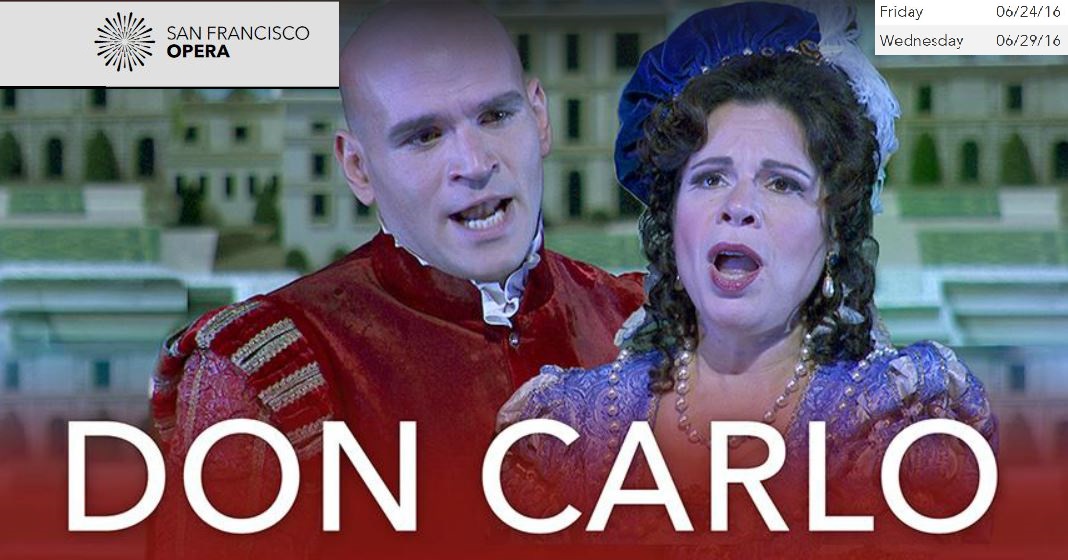
Don Carlo at the San Francisco Opera

sanfranciscologo

doncarlotitle

Don Carlo

At the time of Spain’s brutal Inquisition, the king of Spain marries the woman his son loves and sets into motion a tension-filled chain of events. Don’t miss this magnificent tale of romantic triangles, political idealism and life-and-death devotion.

Music by Giuseppe Verdi | Libretto by Joseph Méry and Camille du Locle

Sung in Italian with English supertitles

Running Time

4 hours, 27 minutes including two intermissions

Pre-Opera Talks

Pre-Opera Talks are free to ticketholders and take place in the Orchestra section, 55 minutes prior to curtain.

See the performance, invite a Friend…

Friday 06/24/16 7:00PM *
Wednesday 06/29/16 7:00PM
*OperaVision, HD video projection screens featured in the Balcony level for this performance, is made possible by the Koret/Taube Media Suite.

Cast & Creative

Don Carlo Michael Fabiano
Elisabetta Ana María Martínez
Princess Eboli Nadia Krasteva *
Rodrigo Mariusz Kwiecien
Philip II René Pape
Philip II Ferruccio Furlanetto 1
The Grand Inquisitor Andrea Silvestrelli
A Monk Matthew Stump
Tebaldo Nian Wang
A Heavenly Voice Toni Marie Palmertree*
Count Lerma Pene Pati*

Conductor Nicola Luisotti

Director Emilio Sagi

Designer Zack Brown

Lighting Designer Gary Marder

Chorus Director Ian Robertson

Fight Director Dave Maier

Synopsis

ACT I 1559-1568; France and Spain.

Against the wishes of the Spanish King Philip II, his son and heir, Don Carlo, has traveled incognito to Fontainebleau, where negotiations are under way for a peace treaty between Spain and France. He has seen his intended bride Elisabetta, daughter of the French king, and fallen in love with her on sight. When he meets Elisabetta and her page, who have been hunting and become lost in the forest, Carlo offers his protection without revealing his identity. Elisabetta questions him about her future husband, apprehensive over her marriage to a stranger. Carlo gives her a miniature portrait of himself, and she realizes that he is the prince. It is clear to them both that their feelings of love are mutual. Their happiness ends with news that the treaty arrangements have been altered and Elisabetta is to marry King Philip, Carlo’s father. Elisabetta reluctantly accepts. While all around them celebrate the end of the war, Elisabetta and Carlo are devastated.

ACT II

Carlo seeks peace at the monastery of St.-Just in Spain, where he prays at the tomb of his grandfather, Emperor Charles V. He is confronted by a monk who seems to be the emperor’s ghost. His friend Rodrigo, the Marquis of Posa, arrives to remind Carlo of his commitment to the cause of the Flemish people who are oppressed by Spanish rule. Both pledge themselves to the cause of liberty and swear eternal friendship. In a garden outside the monastery, Princess Eboli entertains the other ladies of the court with a song. Elisabetta—now queen—enters, followed by Posa, who hands her a secret letter from Carlo asking for a meeting. When he is admitted, Carlo asks the queen to obtain Philip’s permission for him to go to Flanders, then suddenly declares his continuing love. Elisabetta rejects him and Carlo rushes off. The king enters and, finding the queen unattended, banishes the Countess of Aremberg, who should have been present. Left alone with the king, Posa challenges Philip to end his oppression of the Flemish people. Philip refuses but is impressed by Posa’s courage. He warns him to beware of the Inquisition and tells Posa about his suspicions of his wife and Carlo, asking Posa to watch them. Posa accepts the assignment, knowing that being in the king’s confidence will help him in the future. 1

ACT III

Carlo has received a letter asking him to a secret meeting at midnight in the queen’s gardens in Madrid. He thinks the meeting is with Elisabetta, but it is Princess Eboli who appears. She is in love with him. When Carlo discovers her identity and rejects her advances, Eboli realizes where the prince’s true feelings lie and swears to expose him. Posa arrives in time to overhear Eboli and threatens to kill her but is stopped by Carlo. Eboli leaves. Posa persuades Carlo he is now in danger and Carlo hands over some secret papers to him for safekeeping. At a public burning of heretics in front of Madrid’s Basilica of Our Lady of Atocha, Carlo leads a group of Flemish deputies to Philip. The king rejects their pleas for freedom. When he also dismisses Carlo’s own request to rule Flanders, the prince draws his sword on his father. He is disarmed by Posa and arrested. In thanks, Philip makes Posa a duke. As a group of heretics is led to the stake, a celestial voice welcomes their souls into heaven.

ACT IV

In his study at night, the king reflects on his life with a wife who doesn’t love him. He consults with the old and blind Grand Inquisitor, who consents to the death sentence for Carlo: as God sacrificed his son to save mankind so Philip must stifle his love for his son for the sake of the faith. The Inquisitor also demands that Posa be handed over to him. As he leaves, Philip wonders if the throne must always yield to the altar. Elisabetta enters, having discovered that her jewel case has been stolen. Eboli, who knows that Elisabetta keeps a portrait of Carlo in it, had taken the box and given it to the king. Philip now shows the box to Elisabetta, takes out the portrait, and accuses her of adultery. Elisabetta collapses and the king calls for help. Eboli and Posa rush in, he to express amazement that a king who rules half the world cannot govern his own emotions, she to feel remorse at what her jealousy has brought about. Alone with Elisabetta, Eboli confesses that she not only falsely accused her but that she has been the king’s mistress. Elisabetta orders her from the court. Eboli laments her fatal beauty and swears to spend her final day in Spain trying to save Carlo. Posa visits Carlo in prison to tell him that he has used the secret papers to take upon himself the blame for the Flemish rebellion. He is now a marked man, so Carlo must take up the cause of liberty for Flanders. Posa is shot by agents of the Inquisition. As he dies, he tells Carlo that Elisabetta will meet him at the monastery of St.-Just and declares he is happy to have sacrificed his life for a man who will become Spain’s savior.

ACT V

Elisabetta has come to the monastery, wanting only her own death. When Carlo appears, she encourages him to continue Posa’s quest for freedom in Flanders and they hope for happiness in the next world. As they say goodbye, Philip and the Grand Inquisitor arrive. As the agents of the Inquisition move in on Carlo, the Emperor Charles V materializes out of the darkness to insist that suffering is unavoidable and ceases only in heaven.

Video of the Highlights

FOCUS ON…

MICHAEL FABIANO

michaelfabiano3

Of Michael Fabiano’s debut as Lensky in Tchaikovsky’s Eugene Onegin at the Royal Opera, The Sunday Times in London wrote: “I can’t think of a Lensky at Covent Garden who has held the audience so spellbound in 40 years of Onegin-going… a glorious debut.” The recipient of the 2014 Beverly Sills Artist Award and the 2014 Richard Tucker Award, Mr. Fabiano is the first singer to win both awards in the same year, and is considered one of the greatest tenors in the world today.

In the 2016/17 season, Mr. Fabiano will make his debuts at the Proms Concerts and with the Royal Danish Opera in the Verdi Requiem, will return to the San Francisco Symphony for a program of Italian masterworks, and will debut at Houston Grand Opera in the title role of Gounod’s Faust. He sings Jean in Massenet’s rarely performed Hérodiade with Washington Concert Opera, and returns to the Metropolitan Opera for performances as Rodolfo in La Bohème and Alfredo in La Traviata.  Mr. Fabiano will be the guest soloist for the Metropolitan Opera National Council Grand Finals Concert, perform in the Met’s 50th Anniversary Gala at Lincoln Center, and sing his first Don José in Carmen at Festival Aix-en-Provence. Additional performances include a series of solo recitals within the United States.michaelfabiano5

This season, he adds four new roles to his repertoire: Rodolfo in Luisa Miller, which he performed to open the San Francisco Opera season, Lenski in Eugene Onegin, which marked Mr.Fabiano’s Royal Opera debut, the title role in Don Carlo, at San Francisco Opera, and Jacopo in I due Foscari, in concert performances at the Teatro Real. He starred as Rodolfo in a new production of La Bohème at the Opernhaus Zurich and performed the Duke in a new production of Rigoletto at the Opéra National de Paris – Opéra Bastille. Mr. Fabiano will also be a guest artist on the Opera Gala at the Festival Napa Valley.michaelfabiano1

During the 2014/15 season, Mr. Fabiano returned to the San Francisco Opera and the Metropolitan Opera for performances as Rodolfo in La Bohème, and debuted at Opera Australia in the title role in a new production of Faust; a role he also sang to great acclaim at the Opéra National de Paris – Opéra Bastille, and the Dutch National Opera. He created a sensation at the Metropolitan Opera when he performed Edgardo in Lucia di Lammermoor, replacing an ailing colleague on seven hours’ notice, and opened the Glyndebourne Festival starring in the title role of Donizetti’s rarely-performed Poliuto in the first professionally staged production in the history of the United Kingdom. Mr. Fabiano sang Rodolfo in a special concert performance of La Bohème from Maschpark, Hannover, which was televised live throughout Germany over NDR.de, sang at the Richard Tucker Gala at Lincoln Center, and was featured in the Italian-Americans documentary, both of which aired on PBS. Additional performances include the Columbus Day Parade in New York City, and special Christmas Concerts with the Montreal Symphony under the direction of Kent Nagano.michaelfabiano4

Mr. Fabiano has performed at many of the world’s leading opera houses; a list that includes: the Metropolitan Opera, San Francisco Opera, Teatro Real, Opéra National de Paris, Dutch National Opera, La Scala, Asociacíon Bilbaina de Amigos de la Ópera, Dresden Semperoper, Deutsche Oper Berlin, English National Opera, and the Teatro San Carlo. In addition, he has graced concert stages with some of the world’s most acclaimed orchestras such as the Cleveland Orchestra, San Francisco Symphony, Los Angeles Philharmonic, Philadelphia Orchestra, Oslo Philharmonic, and the Vienna Symphony.

Mr. Fabiano can be heard on the “Prologue” to Shostakovich’s Orango, with the Los Angeles Philharmonic under the direction of Esa-Pekka Salonen on Deutsche Grammophon; on two recently-released DVDs: Alfredo in La Traviata from the Glyndebourne Festival on Opus Arte, and Cassio in Otello from the Metropolitan Opera on Decca, and Gennaro in Donizetti’s Lucrezia Borgia from the San Francisco Opera on EuroArts and Naxos of America.michaelfabiano6

Mr. Fabiano is the recipient of Australia’s prestigious Helpmann Award in the “Best Male Performance in an Opera” category, for his portrayal of the title role in Gounod’s Faust with Opera Australia. He is a member of the Metropolitan Opera Guild Artists’ Council. Mr. Fabiano is also a Brand Ambassador for Jeffrey Rudes, luxury Italian clothing.

Posted in OPera | Leave a comment