GUILLAUME TELL at the Met in NYC

telltitlecomposer

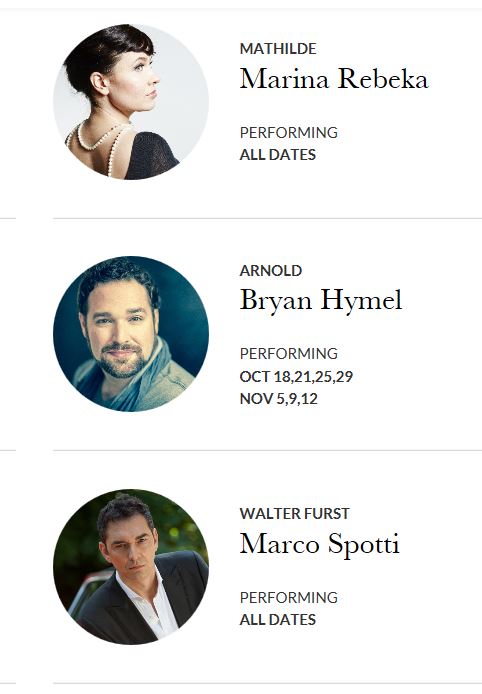
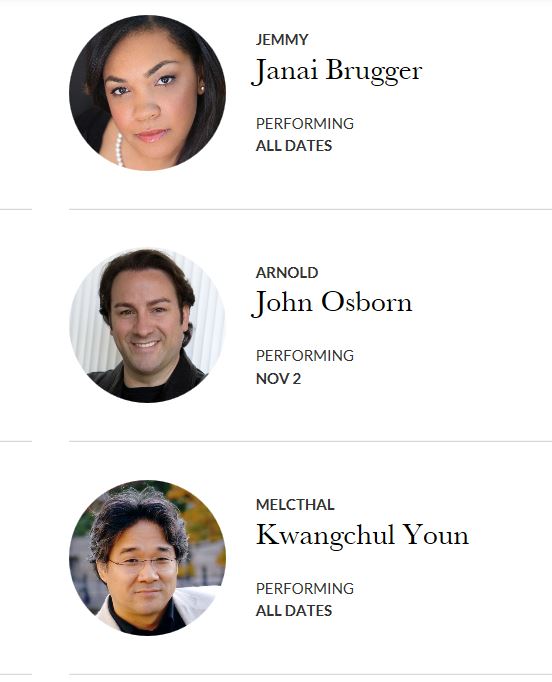
Rossini’s epic telling of the William Tell fable returns to the Met stage after an absence of more than 80 years, in a new production by Pierre Audi. Gerald Finley sings one of his signature roles as Tell, the revolutionary on a quest for freedom. Marina Rebeka is Mathilde and Bryan Hymel is her suitor, Arnold. Fabio Luisi conducts Rossini’s final, crowning operatic achievement.

Production a gift of The Fan Fox and Leslie R. Samuels Foundation, Inc.

Additional funding from The Walter and Leonore Annenberg Endowment Fund

Co-production of the Metropolitan Opera and Dutch National Opera

dates

commentary

creators

CAST

cast1 cast2 cast3 cast4

GALLERY (Courtesy Metropolitan Opera)

SYNOPSIS

Act I

In Bürglen, on the shore of Lake Lucerne, the townspeople are preparing to celebrate the wedding of three couples. While the fishermen Ruodi flirts with his sweetheart, Guillaume Tell muses on the political situation in his fatherland, which is suffering under the Habsburg occupation. Tell’s wife Hedwige and his son Jemmy greet the elder Melcthal, who is to bless the couples. His son Arnold cannot participate in the festivities, as he is in love with the Habsburg princess Mathilde, who is part of the cruel governor Gesler’s entourage. Arnold has saved her from an avalanche and is now torn between his budding love for Mathilde and loyalty to his fatherland. Tell notices his friend’s dilemma and tries to persuade him that fighting for his country’s freedom is the only true choice. As Gesler’s arrival is announced, Arnold is won over by Tell’s revolutionary élan and the two men swear to overthrow the tyrant. Melcthal presides over the marriage ceremony. For the villagers, this happy day is a welcome respite from their miserable existence. While Jemmy is hailed as the champion archer, Arnold slips away in search of Mathilde. The festive mood is disrupted by the entrance of Leuthold: he has killed an Austrian soldier who tried to abduct his daughter, and is now being pursued by Gesler’s troops. His only recourse is to flee to the far side of the lake, but Ruodi refuses to take him there, as a storm is brewing. But Tell, a skilled and intrepid oarsman, is willing to brave the storm and bring his compatriot to safety. Rodolphe, the captain of Gesler’s guard, looks on impotently. He presses the villagers to name Leuthold’s rescuer, threatening them with the death penalty. When Melcthal answers that there are no traitors amongst the Swiss, Rodolphe has him arrested and orders his men to raze the village.

Act II

In nature, too, various forces are at work. Austrian hunters have shot Swiss chamois on the Rütliberg; shepherds can be heard singing about the sunset. Mathilde leaves the Austrian hunting party behind: she knows that Arnold has followed her and she enjoys the solitude of dusk. She is happier here in the forest than in the sumptuous palaces. Arnold finally appears. He professes his love, but says he is prepared to give her up and to die far from his fatherland. Mathilde indicates that the feelings are mutual. By excelling in battle, he could overcome their social differences and conflicting political positions. A future together seems possible after all. The lovers must separate when Tell and Walter Furst approach, but they first agree to meet the next morning. Tell, of course, is aware that Arnold was not alone. He and Furst fear that Arnold will rejoin the enemy forces: Mathilde is, after all, a member of the rival camp. He appeals to Arnold’s patriotism. Does he want to be an accessory to Switzerland’s downfall? Tell and Furst then inform Arnold that Gesler has executed his father, and now, wracked by guilt, Arnold at once chooses the side of the Swiss. In the darkness, the three men take an oath of vengeance: independence or death. One by one, emissaries from the neighboring cantons Unterwald, Schwyz, and Uri join them. Together they plan to rise up against the overlords and avenge the murder of Arnold’s father.

Act III

Mathilde and Arnold keep their date in a chapel. But in light of the recent events, the impossibility of their love is evident. Arnold swears to avenge himself on Gesler, and Mathilde chooses seclusion, to cherish her beloved in her heart.

On the market square in Altdorf, Gesler forces the Swiss to commemorate their hundred-year occupation. The townsfolk are required to pay homage to his hat, raised up on a pole. They are ordered to dance until they collapse. Tell and his son Jemmy arrive but Tell refuses to bow to the hat. Rodolphe arrests them and recognizes Tell as Leuthold’s rescuer. Tell tries to dispatch Jemmy to his mother’s protection, so that the boy can give the signal for the uprising when the time comes. But Gesler intercedes and, incensed by Tell’s defiance, orders him to shoot an apple off Jemmy’s head with his crossbow. If he refuses, both father and son will die. Even when Tell does fall to his knees before Gesler, the governor is implacable. Jemmy speaks encouraging words to his father: he is confident of his marksmanship. And indeed, Tell shoots off the apple in a clean shot. Gesler discovers, however, a second arrow in Tell’s quiver. The archer plainly admits that it was intended for Gesler himself, should he have missed the apple and hit Jemmy. Furious, Gesler has his guards seize them both. But Mathilde rushes in and, in the name of the emperor, takes custody of the boy. Gesler intends to escort the archer himself to Küssnacht on the opposite shore of the lake, where he is to be thrown to wild animals in the dungeon. Rodolphe warns his superior of the hazardous conditions, but Gesler is not to be swayed. When their pleas for mercy go unheeded, the Swiss folk curse their oppressor. As Tell is taken away, Gesler’s army confronts the Swiss rebels.

Act IV

Beset by doubt, Arnold enters his late father’s house for the last time. There he passes out weapons, hidden by Melcthal and Tell, to his fellow freedom fighters. Now properly armed, they set out to liberate Tell.

A fierce storm erupts on the lakeshore. The Swiss womenfolk only just manage to restrain Hedwige in her determination to go after Gesler: it would mean certain death. But what, she argues, is the use of living without her husband and child? Both mother and son are overjoyed when Mathilde reunites Jemmy and Hedwige. Leuthold tells them that Tell’s shackles were unbound so he could steer the boat in the storm. They all rush to the shore and watch as Tell leaps onto a rocky outcrop. Gesler manages to quit the boat. Having removed the cache of weapons to a safe spot, Jemmy sets his family home alight as the signal for the rebellion to begin. He hands Tell his crossbow, and his father shoots the tyrant. The rebels arrive, joined by Arnold and Walter Furst: Altdorf is liberated! To his surprise, Arnold spots Mathilde. She has found a new cause at the side of the Swiss people, but their love affair is a closed book. The storm recedes and the clouds disperse, opening up a vista of the lake and the mountains. Switzerland is free. —Reprinted courtesy of Dutch National Opera

FOCUS ON:
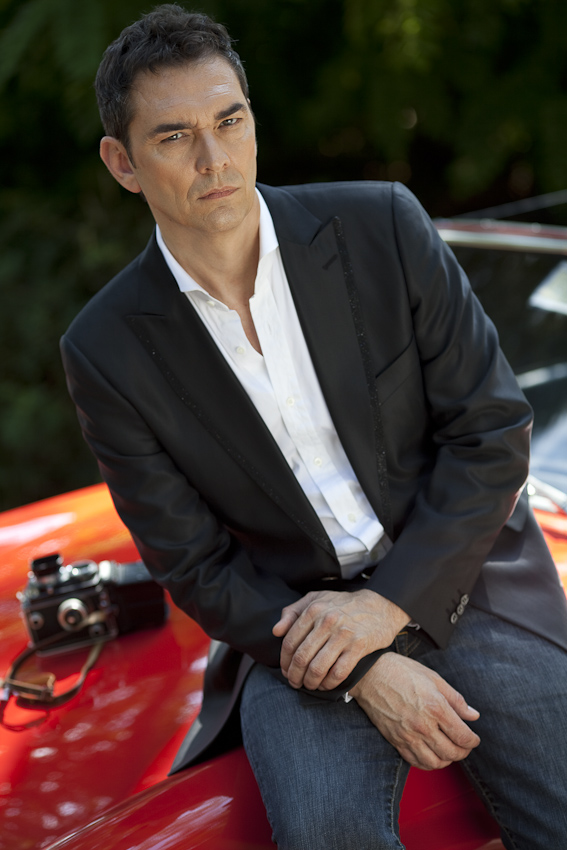
Photo by Stefano Brianti

Photo by Stefano Brianti

MARCO SPOTTI, BASSO

Marco Spotti graduated at the Conservatory Arrigo Boito in Parma, his hometown. He has won numerous international singing competitions including the Riccardo Zandonai Competition in Riva del Garda, the competition Voci Verdiane in Busseto and the Viotti-Valsesia Competition.

He debuted on stage at Teatro Regio in Parma in Un Ballo in Maschera. After this production he was invited by many Italian and European theatres: LE NOZZE DI FIGARO at the Teatro La Fenice in Venice, Il Re/AIDA at the Opera Marseille, Gremin/EUGENE ONEGIN and DON CARLO at the Stadttheater in Klagenfurt, Timur/TURANDOT at the Teatro Regio in Parma, Sarastro/DIE ZAUBERFLÖTE, Orbazzano/TANCREDI and DON CARLO at the Opera in Rom,  Massimiliano /I MASNADIERI at Teatro Comunale in Bologna under Daniele Gatti, TOSCA at the Teatro Real in Madrid, Sparafucile/RIGOLETTO in Liege, Oroe/SEMIRAMIDE and Orbazzano/TANCREDI at the Rossini Opera Festival in Pesaro, Procida/I VESPRI SICILIANI at Teatro Massimo in Palermo, Alvise/LA GIOCONDA  at Teatro Bellini in Catania and the Opera of Athens, Colline/ LA BOHEME and ANNA BOLENA at the Teatro Filarmonico in Verona.

In Don Carlo at the Teatro dell'Opera of Rome

In Don Carlo at the Teatro dell’Opera of Rome

In 2003 Marco Spotti debuted at La Scala in Milan in the role of Arcas in IPHIGENIE EN AULIDE under Riccardo Muti. After this important debut he is regularly invited by the Scala  in many roles as Sparafucile/RIGOLETTO under James Conlon, ll Re/AIDA under Riccardo Chailly and Daniel Barenboim, Loredano/I DUE FOSCARI, Timur/TURANDOT under Valery Gergiev and the recent debut as Wurm/LUISA MILLER under Gianandrea Noseda.

As one of the most requested italian bass, he was invited as Orbazzano/TANCREDI and Commendatore/DON GIOVANNI under Zubin Mehta at Teatro Comunale Firenze, as Banquo/MACBETH and Massimiliano/I MASNADIERI al Teatro Perez Galdos di Las Palmas, Saint-Bris/LES HUGUENOTS at Teatro Real Madrid,  Sparafucile/RIGOLETTO at Fenice of Venezia under Myung-Whun Chung, in Bilbao, Festival Verdi Parma and Madrid, Colline/LA BOHEME at Opera Roma and Loredano/I DUE FOSCARI at Theatre Champs Elysees in Paris. As Ramfis/AIDA he performed at the Opera di Roma under Daniel Oren, at Arena Verona and at Palau des les artes in Valencia under Lorin Maazel and Omar Wellber, in Tel Aviv with the Israel Philharmonic Orchestra under Zubin Mehta.
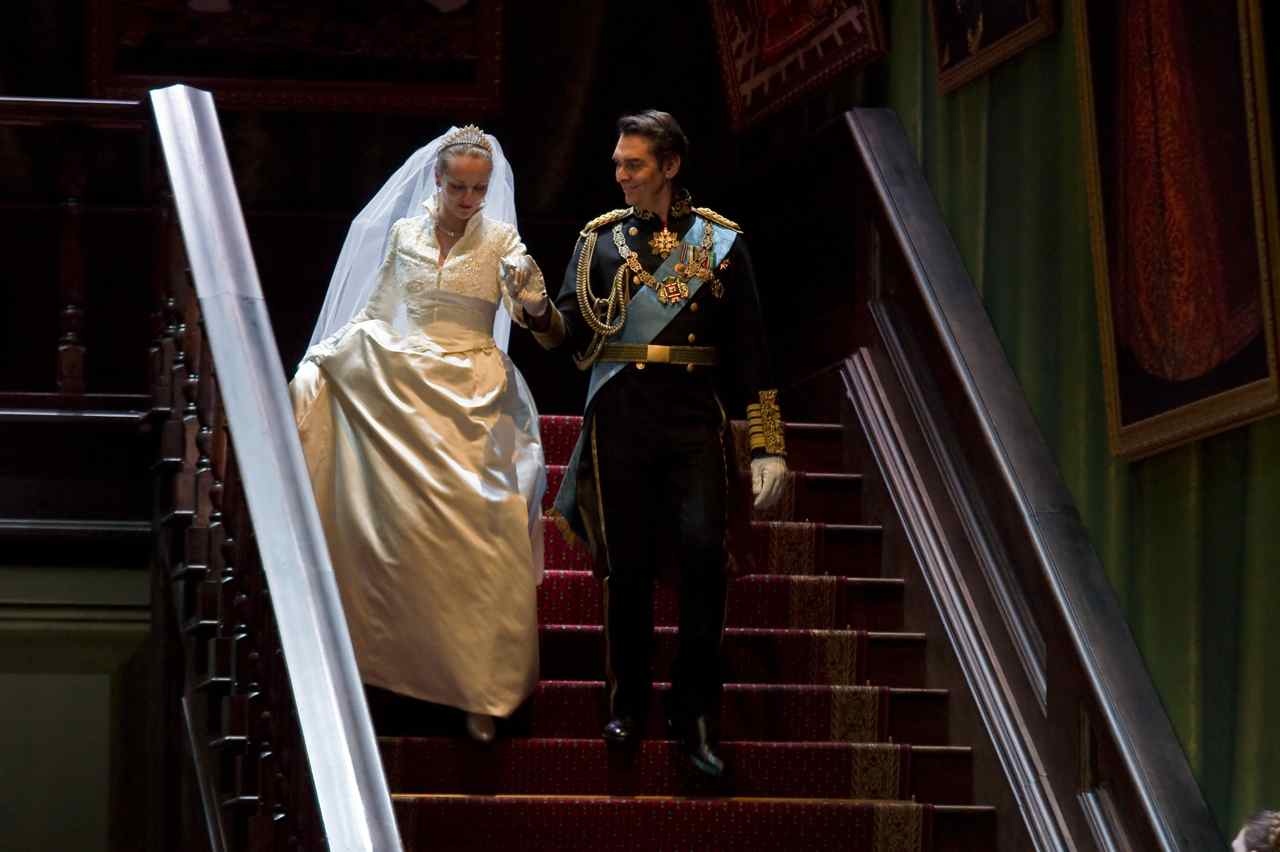
In Enrico VIII at the OpernKoeln of  Koln

In Enrico VIII at the OpernKoeln of Koln

In the concert repertoire, he sung MESSA DA REQUIEM at the Opera Festival in Macerata and Beethoven’s 9th Symphony at the Opera di Roma under Gianluigi Gelmetti.

Since several years, he collaborates with the Festival Arena di Verona, where he appeared as Ramfis/AIDA, Alvise/LA GIOCONDA, Colline/LA BOHEME, Sparafucile/RIGOLETTO e Timur/TURANDOT.

Recently he has appeared in DON GIOVANNI at Covent Garden London, as Pimen/BORIS GODUNOV at Teatro Massimo Palermo, Colline/LA BOHEME and Timur/TURANDOT at Festival of Orange and Colline/LA BOHEME at the Scala. He gave debuts as Walther in GUILLAUME TELL at the Opera Amsterdam, as Inquisitore/DON CARLO at Teatro Regio Torino under Gianandrea Noseda and as Enrico VIII/ANNA BOLENA Oper Köln.

In addition he sung Ramfis/AIDA al Teatro alla Scala and in the Arena di Verona, Banqo/MACBETH at Maggio Musicale Fiorentino under James Conlon, Oroveso/NORMA at Teatro Massimo Palermo, Colline/LA BOHEME at Festival Puccini Torre del Lago and debuted Basilio/IL BARBIERE DI SIVIGLIA at the Teatro Colon in Buenos Aires.

In AIDA at the Palacio Euskalduna of Bilbao

In AIDA at the Palacio Euskalduna of Bilbao

Current and future projects include AIDA at the Arena di Verona, Seoul Center of Arts, Opera Bergen and with Orchestra Santa Cecilia in Rom under Antonio Pappano, Wurm/LUISA MILLER at Teatro San Carlo Napoli and at Spring Festival Budapest. In concert, he will sing Verdi MESSA DA REQUIEM with the Goteborg Symphonic Orchestra and Rossini STABAT MATER with the HR Symphony Orchestra at Rheingau Festival. In the coming season he will sing Timur/TURANDOT at the Festival Puccini Torre del Lago, AIDA at the Bayerische Staatsoper and he will debut as Walther/GUILLAUME TELL at the MET in New York.

Marco Spotti´s discography includes DVDs of MARIN FALIERO under Ottavio Dantone (Hardy Classic 2002), TOSCA under Maurizio Benini (BBC-OPUS ARTE) and Daniel Oren with Arena di Verona (DVD UNITEL CLASSICA), AIDA produced by the Scala Milan under Riccardo Chailly (UM 2007); audio CDs of LE NOZZE DI FIGARO (Mondo Musica 2001), SADKO by Rimsky-Korsakov with the Orchestra Teatro La Fenice under Isaac Karabtchevsky (Mondo Musica 2001), IL MITO DI CAINO (Bongiovanni 2003), DON GIOVANNI with the Israel Philharmonic Orchetra under Zubin Mehta (HELIKON 2011), AIDA and LA BOHEME recorded in the Arena di Verona under Daniel Oren and Lui Ja.

Information on Marco Spotti can be found on http://www.marcospotti.com

Posted in OPera | Tagged , , , , , , , , | Leave a comment

“TACEA LA NOTTE PLACIDA”, Exhibition of documents, photographs, posters, sketches related to historical productions of Il trovatore

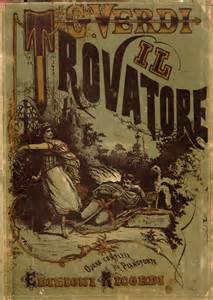
RegioParmaLogoExhibition of documents, photographs, posters, sketches related to historical productions of Il trovatore, prepared by Carlo Mattioli in 1951 for the National Competition of Verdian Scenography and graciously granted by the Cariparma Foundation  Art Collections, coming from the Historical Archives of the Teatro Regio and set up at the Casa del Suono (House of Sound) and the Museo dell’Opera. The exhibition is enriched by a program of plays and guided tours.trov1

trov2The exhibition will be open until Sunday, November 27, 2016 with free admission.

Casa della Musica

Friday October 21, 2016  at 17.00, inauguration

“TACEA LA NOTTE PLACIDA”

Posted in Exhibits | 1 Comment

DINING WITH VERDI at the Academia Barilla in Parma

RegioParmaLogoAcademia Barilla offers some of the favorite dishes of the Maestro, using authentic family recipes.

DINING WITH VERDI | Academia Barilla, from Tuesday,

Academia Barilla, Largo Piero Calamandrei

October 04, 11, 18, 25, 2016     8:00 PM

barilla

“AND NOW… EVERYONE TO DINNER”

IN THE KITCHEN DURING VERDI’S YEARS…

Academia Barilla, on the occasion of the Verdi Festival, proposes some of his favorite dishes of the Master, using authentic family recipes handed down from the original recipe, in four themed dinners with Verdi’s intense flavor and combines a valuable historical menu display, contemporary of the composer, which can give us with their fascinating images the taste of an era. The exhibition, held in the Gastronomic Academy Library, will be open simultaneously to the dinners, which will be enriched by the presentation of each dish and the historical framework, following the same themes of exhibited menus: the cuisine of the early years, with strong influences of the Po river area; the ‘nineteenth century Milanese’ cuisine; the “patriotic”  cuisine ” and the ‘international’ cuisine.


Posted in Exhibits | Leave a comment

Live stream of Richard Wagner’s “Die Meistersinger von Nürnberg” with the Bayerische Staatsoper

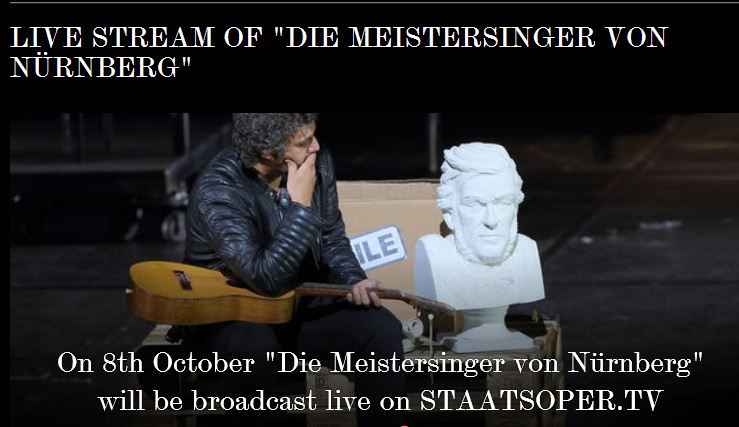
bayerische_logobroadcatbayerRichard Wagner’s Die Meistersinger von Nürnberg conducted by Kirill Petrenko and produced by David Bösch will be broadcast on 8th of October 2016. Following the cancellation of “Oper für alle” in July on account of the memorial service for the victims of the Munich shooting taking place at the same time, the Bayerische Staatsoper of Munich, Germany, is proud to be able to present this free streaming event with their partner BMW Munich.diebayerische

Just as in the premiere run in May 2016, Wolfgang Koch will sing the role of Hans Sachs and Jonas Kaufmann that of Walther von Stolzing.

A broadcast to the Max-Joseph-Platz will take place again at the opera festival 2017. The Bayerische Staatsoper and BMW Munich then are going to present Richard Wagner’s Tannhäuser, conducted by Kirill Petrenko.

Live stream “Die Meistersinger von Nürnberg” on 8th October 2016, 4 PM
More information: http://www.staatsoper.de/tv

Posted in Article | Leave a comment

Lavish AIDA in Kiev

aidatitle
Opera in 4 acts
Beginning: 10.09.2016 – 19:00
Completion: 22:10
Sung in Italian

Libretto by A. Ghislanzoni and C. Du Locle based on A. Mariette’s scenario.
Premiered on the stage of the Kyiv Opera on February 15, 1998.

aida1

 CAST

GALLERY

SYNOPSIS
Act 1

Scene 1: A hall in the King’s palace; through the rear gate the pyramids and temples of Memphis are visible
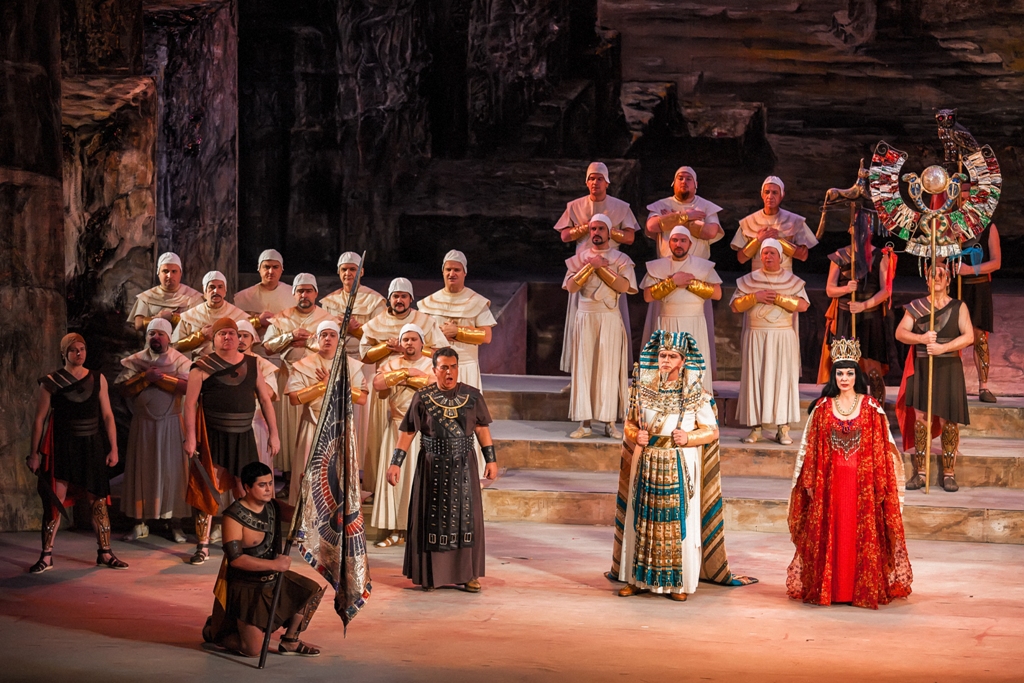
Ramfis, the high priest of Egypt, tells Radamès, the young warrior, that war with the Nubians seems inevitable, and Radamès hopes that he will be chosen as the Egyptian commander.
Radamès dreams both of gaining victory on the battlefield and of Aida, the nubian slave, with whom he is secretly in love. Aida, who is also secretly in love with Radamès, is the captured daughter of the Nubian King Amonasro, but her Egyptian captors are unaware of her true identity. Her father has invaded Egypt to deliver her from servitude.
Amneris, the daughter of the Egyptian King, enters the hall. She too loves Radamès, but fears that his heart belongs to someone else. Aida appears and, when Radamès sees her, Amneris notices that he looks disturbed. She suspects that Aida could be her rival, but is able to hide her jealousy and approach Aida.
The King enters, along with the High Priest, Ramfis, and the whole palace court. A messenger announces that the Nubians, led by King Amonasro, are marching towards Thebes. The King declares war and proclaims that Radamès is the man chosen by the goddess Isis to be the leader of the army. Upon receiving this mandate from the King, Radamès proceeds to the temple of Vulcan to take up the sacred arms.
Alone in the hall, Aida feels torn between her love for her father, her country, and Radamès.

Scene 2: Inside the Temple of Vulcan
Solemn ceremonies and dances by the priestesses take place. This is followed by the installation of Radamès to the office of commander-in-chief. All present in the temple pray for the victory of Egypt and protection for their warriors.

Act 2

Scene 1: The chamber of Amneris
Dances and music to celebrate Radamès’ victory take. However, Amneris is still in doubt about Radamès’ love and wonders whether Aida is in love with him. She tries to forget her doubt, entertaining her worried heart with the dance of Moorish slaves.
When Aida enters the chamber, Amneris asks everyone to leave. By falsely telling Aida that Radamès has died in the battle, she tricks her into professing her love for him. In grief, and shocked by the news, Aida confesses that her heart belongs to Radamès eternally.
This confession fires Amneris with rage, and she plans on taking revenge on Aida. Ignoring Aida’s pleadings, Amneris leaves her alone in the chamber.

Scene 2: The grand gate of the city of Thebes
Radamès returns victorious and the troops march into the city. The Egyptian king decrees that on this day the triumphant Radamès may have anything he wishes. The Nubian captives are rounded up, and Amonasro appears among them. Aida immediately rushes to her father, but their true identities are still unknown to the Egyptians, save for the fact that they are father and daughter. Amonasro declares that the Nubian king (he himself) has been slain in battle. Aida, Amonasro, and the captured Ethiopians plead with the Egyptian King for mercy, but the Egyptians call for their death. Claiming the reward promised by the King, Radamès pleads with him to spare the lives of the prisoners and to set them free. Gratefully, the King of Egypt declares Radamès to be his successor and to be his daughter’s betrothed. Aida and Amonasro remain as hostages to ensure that the Ethiopians do not avenge their defeat.

Act 3

On the banks of the Nile, near the Temple of Isis
Prayers are said on the eve of Amneris and Radamès’ wedding in the Temple of Isis. Outside, Aida waits to meet with Radamès as they had planned.
Amonasro appears and makes Aida agree to find out the location of the Egyptian army from Radamès. When he arrives, Amonasro hides behind a rock and listens to their conversation.
Radamès affirms that he will marry Aida, and Aida convinces him to flee to the desert with her.
In order to make their escape easier, Radamès proposes that they use a safe route without any fear of discovery and reveals the location where his army has chosen to attack. Upon hearing this, Amonasro comes out of hiding and reveals his identity. Radamès feels dishonored. At the same time, Amneris and Ramfis leave the temple and, seeing Radamès with their enemy, call the guards. Amonasro and Aida try to convince Radamès to escape with them, but he refuses and surrenders to the imperial guards.

Act 4

Scene 1: A hall in the Temple of Justice. To one side is the door leading to Radamès’ prison cell
Amneris desires to save Radamès. She calls for the guard to bring him to her.
She asks Radamès to deny the accusations, but Radamès refuses. Certain that, as punishment, he will be condemned to death, Amneris implores him to defend himself, but Radamès firmly refuses. He is relieved to know Aida is still alive and hopes she has reached her own country. His decision hurts Amneris.
Radamès’ trial takes place offstage; he does not reply to Ramfis’ accusations and is condemned to death, while Amneris, who remains onstage, pleads with the priests to show him mercy. As he is sentenced to be buried alive, Amneris curses the priests while Radamès is taken away.

Scene 2: The lower portion of the stage shows the vault in the Temple of Vulcan; the upper portion represents the temple itself
Radamès has been taken into the lower floor of the temple and sealed up in a dark vault, where he thinks that he is alone. As he hopes that Aida is in a safer place, he hears a sigh and then sees Aida. She has hidden herself in the vault in order to die with Radamès. They accept their terrible and bid farewell to Earth and its sorrows. Above the vault in the temple of Vulcan, Amneris weeps and prays to the goddess Isis. In the vault below, Aida dies in Radamès’ arms.

Posted in OPera | Leave a comment

Hansel & Gretel at the Seattle Opera

hansel_title

By Engelbert Humperdinck

seattlelogoUNEXPECTED ADVENTURE. Not seen at Seattle Opera for 23 years, Humperdinck’s impressive adaptation of the iconic Grimm story has been an international favorite since its premiere. With refreshing humor and Wagnerian orchestration, this atmospheric fable explores universal themes of poverty, peril, and bravery, culminating in happiness for all – save for one very bad witch! Laurent Pelly’s “astonishing” (WhatsOnStage) production celebrates the richness of imagination and offers entertaining commentary on the pitfalls of consumerism in the modern world. Provocative, dreamy, and melodious, it’s unlike any fairytale you’ve ever seen.

In German with English subtitles | at McCaw Hall
Approximate Running Time: 2 hours, 15 minutes, with 1 intermission
Evenings at 7:30 PM. Sunday matinees at 2:00 PM.

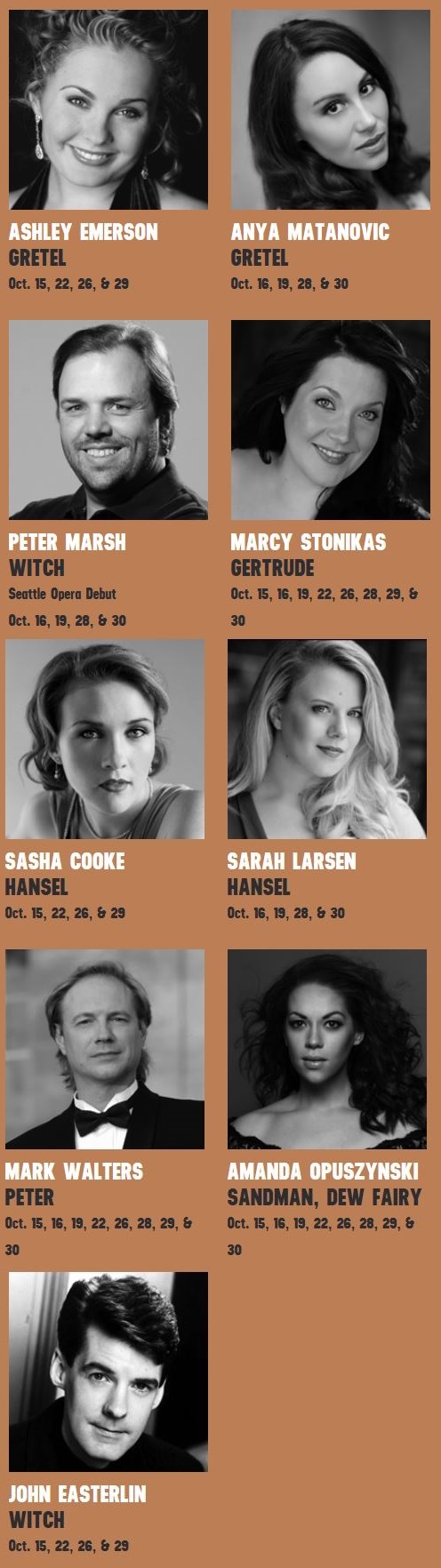
CAST

cast1

SYNOPSIS

ACT ONE

The broom-maker’s house
Hansel and Gretel are doing chores. Both are bored and hungry, and to cheer themselves up they start to dance. Their games are interrupted by their Mother, who is angry to find them playing instead of working. In her anger she knocks over the milk jug, losing what was to have been supper. She sends them into the forest to gather strawberries for their meal. Alone, the Mother laments their precarious existence, but is soon interrupted by the return of her husband. Irritated to find him tipsy, her mood brightens when he produces a sack full of food. When he enquires after Hansel and Gretel, he is alarmed to hear they are in the forest: he warns of the Witch who lives there, and both parents set out to search for their children.

ACT TWO

The wood
Hansel and Gretel pick and eat strawberries. When night falls they realise they are lost, and are frightened by the mysterious shapes in the mist, but a Sandman appears and settles them. Hansel and Gretel say their evening prayers and go to sleep. Angels appear to guard them from harm.

ACT THREE

The Witch’s house
At dawn the Dew Fairy wakes Hansel and Gretel. They notice a house not far away, but when they begin to tamper with it, the Witch emerges and captures them, casting a spell. She imprisons Hansel, telling Gretel that her brother needs to be fattened up. She also casts a spell on Gretel, in order that the girl may help her with the oven. Gretel makes clever use of the Witch’s spell to free Hansel. As the Witch demonstrates to Gretel how to check the oven, the children take advantage of the situation. At the Witch’s demise, the children she had previously captured are freed, and they thank Hansel and Gretel for saving them. The Mother and Father appear, and the family is reunited.

Synopsis provided by Glyndebourne Productions Ltd

listen

GALLERY

Posted in OPera | Tagged , , , , , , , , , | Leave a comment

Macbeth in Los Angeles with Placido Domingo

macbethtitle

macbeth1

laopera_logoPlácido Domingo and James Conlon unite again in a powerful adaptation of Shakespeare’s classic thriller.

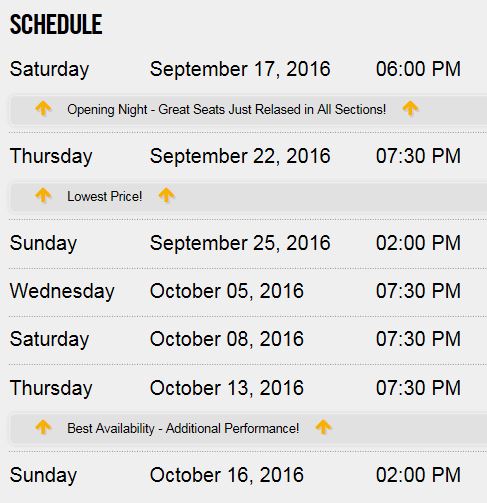
Returning home from battle, a victorious general encounters a coven of witches who predict his future—he will become king of Scotland. Blinded by ambition, and spurred on by his power-hungry wife, Macbeth commits multiple murders to attain and keep the throne. Verdi’s score elevates the tragedy and horror through electrifying vocal lines and propulsive energy. Plácido Domingo takes on the title role with Ekaterina Semenchuk as the diabolical Lady Macbeth. Tony Award-winner Darko Tresnjak (director of our 2015 hit The Ghosts of Versailles) creates a striking new production. schedulemacbeth

kap_092pCast

  • Macbeth                  Plácido Domingo

  • Lady Macbeth        Ekaterina Semenchuk

  • Banquo                    Roberto Tagliavini

  • Banquo (Oct. 13-16) Ildebrando D’Arcangelo

  • Macduff (Sep. 17-25) Arturo Chacón-Cruz

  • Macduff (Oct. 5-16) Joshua Guerrero++

  • Malcolm                    Josh Wheeker+*

  • Lady-in-Waiting      Summer Hassan+

  • Doctor / First Apparition  Theo Hoffman+*

  • Second Apparition     Liv Redpath+*

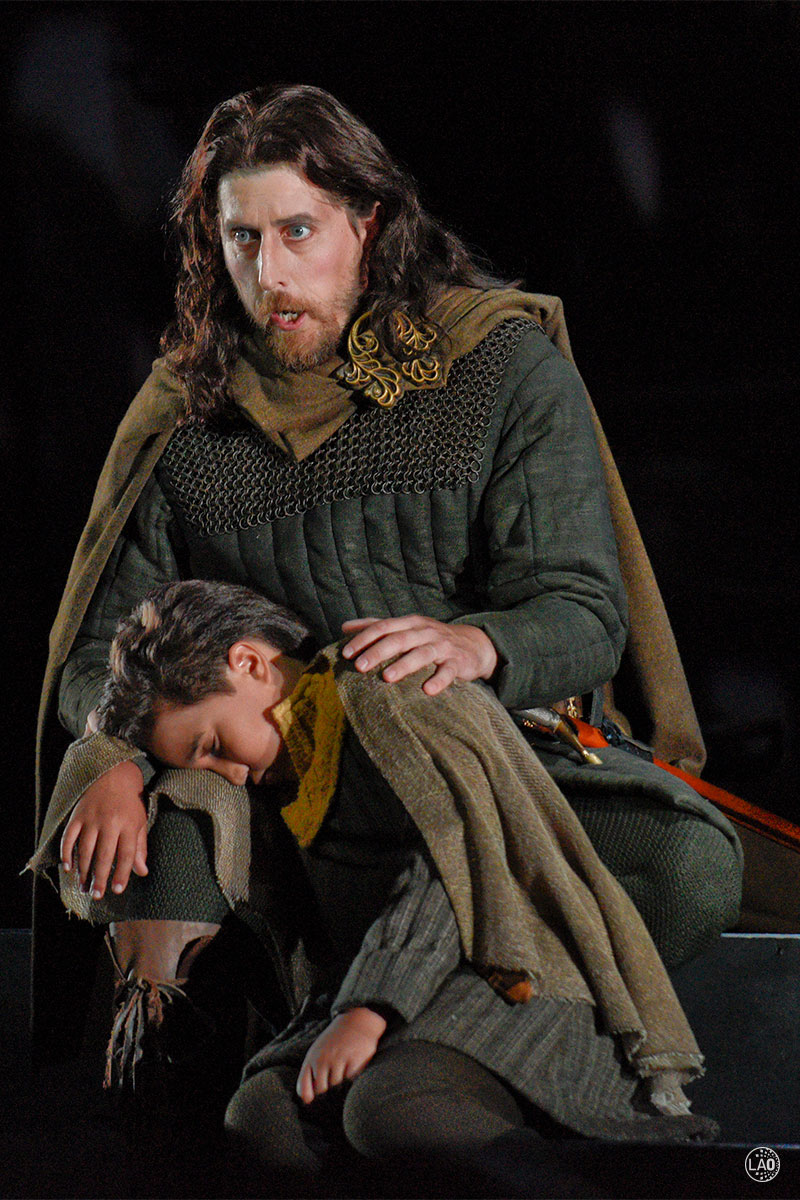
  • Third Apparition       Isaiah Morgankap_125p

Creative Team

  • Conductor                   James Conlon

  • Director / Co-Scenic Designer  Darko Tresnjak

  • Co-Scenic Designer   Colin McGurk*

  • Costume Design         Suttirat Anne Larlarb*

  • Lighting Design          Matthew Richards*

  • Projection Design       Sean Nieuwenhuis*

  • Chorus Director          Grant Gershon

  • Fight Director              Steve Rankin*

  • Climbing Consultant  Daniel Lyons*

kap_048p

Synopsis

Act One
Macbeth and Banquo, generals in the army of King Duncan of Scotland, meet a band of witches, who hail Macbeth as Thane of Cawdor and future king, Banquo as father of kings thereafter. Messengers from Duncan approach, proclaiming Macbeth the new Thane of Cawdor, thus fulfilling the first prophecy. Amazed at this turn of events, Macbeth muses on his chances of achieving his ambition to be king.

Lady Macbeth reads a letter from her husband describing his meeting with the witches. Exulting in the prospect of power, she vows to add her own cunning and boldness to Macbeth’s ambition. When a servant brings word that the king will spend that night in the castle, she invokes powers of darkness to aid her aims. Macbeth enters, and his wife persuades him to murder Duncan that night. Duncan arrives, retiring at once. Macbeth, dreading his task, imagines a dagger before his eyes.

As a night bell sounds, he steals into the royal chamber. Lady Macbeth reenters a moment before her husband staggers from the room to tell her the deed is done. Seeing the dagger still in his hands, she coolly takes the weapon and goes to smear blood on the sleeping royal guards, thus incriminating them. There is a knock at the gate, and the couple withdraws. Macduff and Banquo enter, discover the murder and summon the entire court, which invokes God’s vengeance, led by the hypocritical couple.kap_179p

Act Two
Macbeth is now king. Duncan’s son Malcolm, whom many suspect of his father’s murder, has fled to England. Macbeth and his wife plot the murder of Banquo and his son, lest the latter gain the crown as the witches prophesied. When her husband leaves, Lady Macbeth reaffirms their pursuit of power.

A group of assassins awaits Banquo. Troubled by a foreboding of evil, he is set upon and killed, but his son Fleance escapes.

At a state banquet, Lady Macbeth toasts her guests in a drinking song. Macbeth, secretly informed the murder has been done, complains to the assembly of Banquo’s absence. Suddenly, to the guests’ astonishment, he imagines that he sees the general’s ghost. Lady Macbeth chides her husband, and he momentarily regains his calm as she sings a reprise of the drinking song. But the bloody specter continues to haunt him, and the guests comment on his guilty behavior.

Act Three
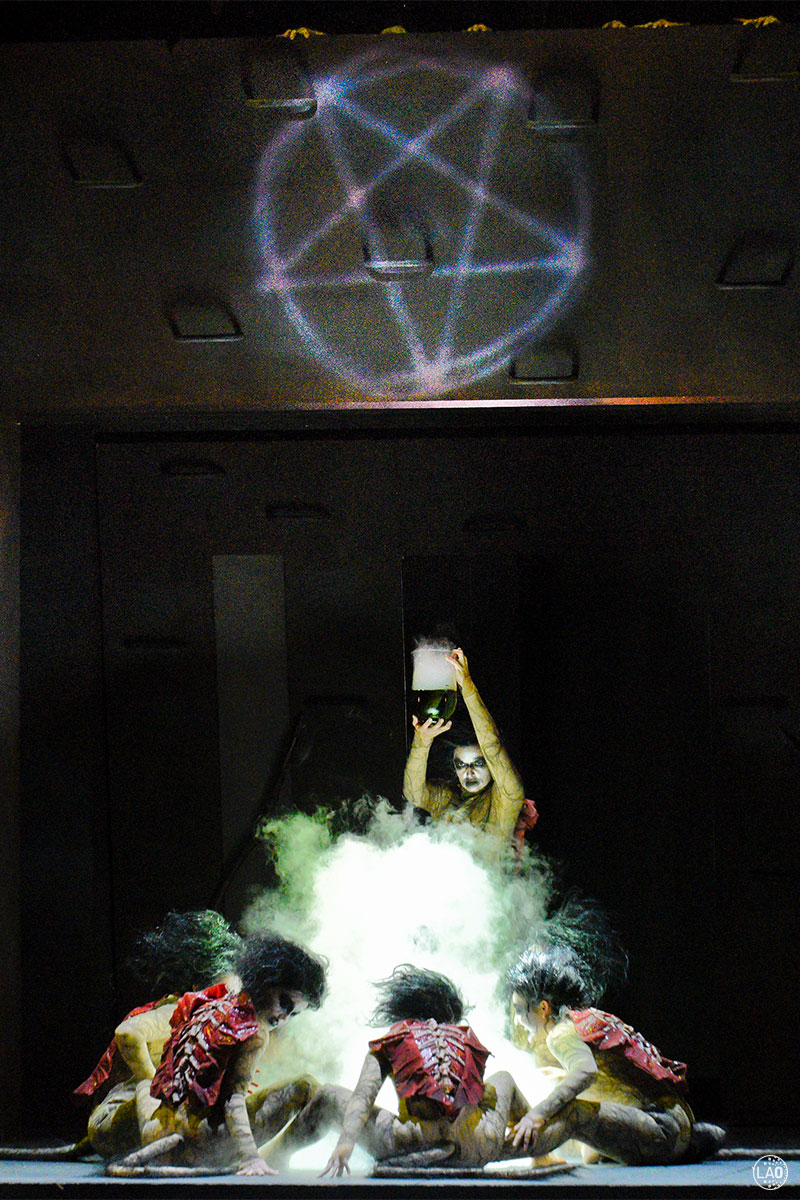
Macbeth visits the witches to learn his fate, and at his insistence they conjure up a series of apparitions. The first tells him to beware Macduff; the second assures him that no man born of woman can harm him; the third reveals that he will rule invincible until Birnham Wood marches against him. Somewhat reassured, Macbeth asks the witches if Banquo’s sons will ever reign in Scotland; in reply, they invoke a procession of future kings, followed by Banquo. As Macbeth faints in dread, the witches disappear. Lady Macbeth finds him, and the couple vows to kill all of their enemies.

Act Four
Near Birnham Wood, a band of Scottish refugees bewails its oppressed homeland, caught in the grip of Macbeth’s tyranny. Macduff joins them, grieving over his murdered wife and children. Duncan’s son Malcolm arrives at the head of an English army. Determined to liberate Scotland from tyranny, Malcolm instructs the soldiers to cut branches from the forest as camouflage for an attack on Macbeth’s castle. Malcolm and Macduff unite with the crowd in a call to arms.A doctor and lady-in-waiting observe the guilt-wracked Lady Macbeth as she wanders in her sleep, wiping imaginary blood from her hands.

During the siege of the castle, Macbeth clings to the hope he can withstand the forces of Malcolm and Macduff, but he is soul-weary and curses his fate. Word of his wife’s death reaches him. Messengers bring the astounding news that Birnam Wood is advancing. Macbeth leads his men to battle. Macduff seeks out Macbeth and, crying that he was not born of woman but torn prematurely from his mother’s womb, kills the tyrant. Macduff’s soldiers hail Malcolm as the new king.

 GALLERY

Posted in OPera | Tagged , , | Leave a comment

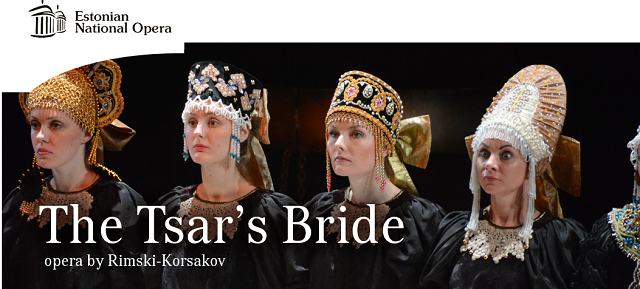
The Tsar’s Bride at the Estonian National Opera

tsartitle

Nikolai Rimsky-Korsakov’s opera in four acts
Libretto by Ilya Tyumenev based on the drama of the same name by Lev Mey

T, 13 October 2016 / 19:00             S, 15 October 2016 / 19:00

World premiere on November 2, 1899 at the Moscow theater of the Private Opera of S. I. Mamontov
Premiere at the Helikon-Opera on September 6, 1997

  • Approx. running time: 2 h (one intermission)
  • Performed in Russian, subtitles in Estonian

    The dreadful story telling of a beautiful fiancée of Ivan the Terrible, brutal rivalry, withering love and poisoned jealousy is based on the true events of the past. Not trying to recreate the colorful details of the way of life, the theatre is thoroughly recreating the spirit of those dark times, searching for psychological motives of the deeds, trying to answer eternal questions standing before a native Russian.


HISTORY
The plot of“The Tsar’s Bride” by Lev Aleksandrovich Mei provoked interest in Rimski-Korsakov yet in his young days. In “Chronicle of My Musical Life” Nikolai Andreevich wrote about the winter of 1867/68: “At Borodin’s we looked through the score of his symphony, talked about “Prince Igor” and “The Tsar’s Bride”, the wish to compose which had been first a Borodin’s fleeting dream of a composer and then mine some time ago”. He might be mistaken: the concept of “Prince Igor” relates to 1869. It is proven that Rimski-Korsakov turned to “The Tsar’s Bride” in February 1898. The script was developed by the composer himself, while the libretto was written by his student Ilya Fyodorovich Tyumenev.

Mei’s drama was inspired by true events. Among its sources is “The History of the Russian State” by Nikolay Mikhailovich Karamzin, who said about Ivan the Terrible: “Being bored with his widowerhood, though not celibate, he had already long been looking for a third wife… The brides from all the Russian cities both noble-born and simple of over two thousand were brought to the Alexandrov Kremlin: each one was personally introduced to him. First he chose a 24-year-old, then a 12-year-old… he was comparing their beauty, manners and intellect for a long while; finally he preferred Marfa Vasilyevna Sobakina to the others, a daughter of a Novgorod merchant, at the same time he chose the bride for the senior prince — Evdokia Bogdanovna Saburova. The fathers of the lucky beauties suddenly became boyars from nothing. Beside the titles they also got the wealth, opal mining, estates, taken away from the ancient knyaz and boyar families. But the tsar’s bride fell sick, began to thin and dry: people said she had been spoilt by the malefactors, who hated Ivan. A wicked slanderer doctor Yelisey Bomelius had offered the Tsar to poison the malefactors and composed, as people said, a poisonous philtre so craftily, that the poisoned person died exactly in a designated minute. Ivan executed one of his favorites Grigory Gryaznoy this way and many others, who were accused of the participation in the poisoning of the tsar’s bride…” The author completed the play in 1849 and it became ingrained in the repertoire of the Russian theatres. One of the outstanding performers of Marfa was Maria Nikolaevna Yermolova. But the popular drama was eclipsed by Rimski-Korsakov’s opera of the same name that premiere half-a-century later. There were no significant changes in the plot; many verses of the drama were included in the libretto. Two new episodes appeared: the scene, when Grozny meets with Marfa and the scene of the crapulence of the oprichniks in the second act. Tyumenev worked quickly alongside with the creation of the music, and the opera was completed within ten months.

“The Tsar’s Bride” premiered on 22 October (3 November) 1899 by efforts of private theatre company of Savva Mamontov, those time bearing the name “Winter Private Opera”. The part of Marfa was sung by Nadezhda Ivanovna Zabela-Vrubel, the sets were made by Mikhail Vrubel, and the conductor was Mikhail Ippolitov-Ivanov.

SUMMARY
The Feast
The Tsar’s oprichnik Grigory Gryaznoy is fatally in love for the first time in his life. He vainly sends the in-laws to the father of his beloved Marfa: the merchant Sobakin refuses him flatly, because Marfa has already been betrothed to the boyar Ivan Lykov.
The guests are arriving at Grigory’s. Among them are Malyuta Skuratov, Bomelius (the Tsar’s healer) and Ivan Lykov who just returned from overseas. Grayznoy secretly asks the healer to get the love philtre for the Marfa’s binding and promises to award him generously for his help. Their talk has been overheard by Gryaznoy’s lover Lyubasha. She won’t concede her happiness and will take revenge to her wicked rival in love.

The Love Philtre
A street in the Alexandrov Kremlin. Marfa is telling Dunyasha about her beloved groom Ivan Lykov. The conversation has been interrupted by a terrible ghost — Tsar Ivan has walked at a distance, looking at them. In the gloaming Lyubasha steals up to the Sobakin’s house. She is amazed with the Marfa’s beauty. Lyubasha decides to kill her rival, replacing the love philtre with poison. Bomelius is ready to carry out her wish, but demands her love in exchange for it. Lyubasha agrees to this shameful bargain.

The Best Man
There are wedding preparations in the Sobakin’s house. It is high time they celebrated, but everything has been interrupted by the Tsar’s request for the brides, for which the best beauties have been gathered at the palace. Lykov is worried as well as Grigory. Finally Marfa returns. Everybody is calmed down, congratulating the groom and the bride. Taking the opportunity, Gryaznoy pours the philtre into Marfa’s glass. Suddenly Malyuta and boyars appear: the Tsar has chosen not Dunyasha to be his wife as the couple has hoped, but Marfa.

The Bride
Sobakin is deeply saddened by his daughter’s incurable illness. Gryaznoy tells Marfa, that under torture Lykov confessed his intention to kill the Tsar’s bride with poison and has been executed for it. Marfa can’t bear the grief. In her insanity she sees not Gryaznoy beside her, but her beloved groom Vanya. She tells him about her strange dream. Gryaznoy is frightened by Marfa’s insanity: he has ruined her instead of binding to himself. Being unable to bear the sufferings Gryaznoy confesses the crime — he poisoned Marfa and maligned Lykov. Lubasha confesses that she has replaced the love philtre with the poison and Gryaznoy kills her in a bout of fury.

Staging team

Stage Director: Dmitry Bertman
Musical Director of the Production: Kirill Tikhonov
Conductor: Eugene Brazhnik
Set and Costume Designers: Igor Nezhny and Tatiana Tulubieva
Lighting Designer: Denis Yenyukov
Stage Movement Director: Yuri Ustyugov

Cast:

Grigory Gyaznoy, an oprichnik Alexey Isayev
Lyubasha, Grigory Gryaznoy’s lover Larisa Kostiuk
Marfa, Vasily Sobakin’s daughter Lidiya Svetozarova
Ivan Lїkov, boyar Igor Morozov
Yelisey Bomeliy, the Tsar’s physician Dmitry Khromov
Dunyasha, Domna Saburova’s daughter and Marfa’s friend Irina Reynard
Vasily Sobakin, Novgorodian merchant Mikhail Guzhov
Grigory Malyuta-Skuratov, an oprichnik Dmitry Skorikov
Domna Saburova, the merchant’s wife Elena Mikhailenko
The Tsar’s stoker Dmitry Korotkov
A maiden Ekaterina Myazina
A bell-ringer Andrey Orekhov

Helikon-Opera Chorus and Orchestra

Posted in OPera | Tagged , , | Leave a comment

Falstaff at the Landestheather in Linz, Austria

falstaff

Falstaff, a knight and libertine par excellence, just as hard-drinking as he is chronically bankrupt, has the ingeniously impertinent idea two write two identical love letters to two wives of wealthy citizens. Too bad that the two women know each other and swear to take revenge. In the course of this entertaining evening of opera, things become more and more complicated until finally no one knows exactly who is the joker and who is the butt of the joke.

Friday, 16. September 2016
Wednesday, 21. September 2016
Saturday, 24. September 2016
Tuesday, 27. September 2016
Friday, 07. October 2016
Wednesday, 12. October 2016
Friday, 14. October 2016
Monday, 17. October 2016
longhi2

Credits

Musical director                     Dennis Russell Davies
Director                                      Guy Montavon
Stage, costume designs       Hank Irwin Kittel
Choir conductor                     Georg Leopold
Dramaturgy                              Christoph Blitt

falstaff3Sir John Falstaff                   Federico Longhi
Ford, Alice’s husband         Martin Achrainer, Seho Chang                                                    
Fenton                                       Iurie Ciobanu, Jacques le Roux
Dr. Cajus                                  Hans-Günther Müller, Pedro Velázquez Díaz
Bardolfo, Falstaff’s servant Sven Hjörleifsson, Matthäus Schmidlechner
Pistola, Falstaff’s servant  Nikolai Galkin, Dominik Nekel
Mrs. Alice Ford                     Myung Joo Lee
Nannetta, Alice’s daughter Theresa Grabner, Fenja Lukas
Mrs. Quickly                          Christa Ratzenböck
Mrs. Meg Page                      Martha Hirschmann

Chor des Landestheaters Linz
Statisterie des Landestheaters Linz
Bruckner Orchester Linzlonghi3

FOCUS ON:

FEDERICO LONGHI

Federico Longhi began his musical studies as flautist at the Musical institute of Aosta. He then continues into singing studies under the guidance of G. Valdengo, A. Pola, Franca Mattiucci.B.M.Casoni and actually with Alida Ferrarini. He improves his voice techniques at the Accademia Musicale Catalani of Senigallia, at the Toscanini Foundation of Parma, at the Rossinian Accademy of Pesaro and at the International Accademy for Lyrics Katia Ricciarelli in Parma. Winner of numerous International Competitions, in 1995 Federico Longhi has started his professional career in Operas that in year 2000 has seen him in performing in multiple roles, singing with international celebrities such as Katia Ricciarelli, J.Cura, Francesca Patanè and Renato Bruson.

Copyright Federico Longhi 2016

Copyright Federico Longhi 2016

In Chamber Music, Federico Longhi has performed with the guitar-duo G.Rosetta, with the pianist Giulio Zappa in a vast repertoire of French vocal music. In year 2000 he participated at the production of opera “Tosca”, produced and broadcasted by the Italian State Television network RAI2. Performed with Katia Ricciarelli and the Choir “Emile Chanoux” at the concert “San Grato 2001” in Aosta. In 2002 Federico L. sung in Lecce in “Gianni Schicchi”, under director Pippo Baudo, and in “Tosca” with Daniela Dessì. Also during Summer 2002, he contributed at the “Concert du Printemps” in the Cathedral of Aosta, singing with Cecilia Gasdia and the “Choir Emile Chanoux”. He has also performed as Guest Singer at the Puccini’s Festival at Torre del Lago, singing in “Manon Lescaut” and, with Andrea Boccelli in “Madama Butterfly”, contribuiting afterward with the Theatre “La Scala di Milano” for a tournee of concerts in South Africa.

longhi7In September 2003 Federico Longhi has given Concerts in San José in Costarica, where he also gave a “Master Class” on vocality and on Italian Opera Lyrics at their State University. Among his most relevant is the “Christmas Concert” at the Teatro Regio di Torino. During the 2004’s Opera Lirica season, Federico Longhi has participated at “Madame Butterfly”, during the celebrations for the 50th Puccini’s Festival at Torre del Lago, in “Traviata” at the Arena of Verona and in a tournee with “The Barber of Seville” to continue with September in Japan as one of the main singers in the celebrations for the centenial of “Madama Butterfly” produced there by the Festival Pucciniano di Torre del Lago.

Among his most relevant performances that sustain his constant ascent as Opera Singer, also in 2005 is again “Guest of the Arena of Verona” in “La Bohème”, directed by D. Oren, at Torre del Lago with the new production of “La Fanciulla del West” of G. Puccini, performance that will be produced in DVD, and at the Teatro Comunale di Bologna where he debuts with “Malombra” of M.E.Bossi. At the Philarmonic Theatre of Verona, Federico Longhi is the main protagonist of the Opera “Una Notte nel Bosco” of A.Zanon. Outside his usual repertoire, Federico Longhi has produced a CD “Vos sos El Tango” latest success produced with the quintet “PenTan’go!”, where music from A.Piazzolla, C.Gardel and S.Palumbo are beautifully performed.

In 2006 Federico Longhi is the main artist at the Philarmonic Theatre of Verona on “Barbiere di Siviglia” of G. Rossini, on “Don Pasquale” by G.Donizetti, and “Via Crucis” by F. Listz.

During the actual Opera Season, has performed at “Pagliacci” by R. Leoncavallo, and on “Madame Butterfly” by G. Puccini, under the direction of F. Zeffirelli. Several are the concerts where Federico Longhi performances are acclaimed for his interpretations, not only in Italy, but also in Argentina, Brasil, again in Japan, and in many other European capitals.

After having produced and participated in the DVD production of Liszt’s “La Via Crucis” at Aosta under the direction of Daniele de Plano, in 2007 Federico Longhi performed the  “St. Mark Passion” by Perosi at the Festival of Sacred Music in Monte Carlo, with the Orchestra Sinfonica of Sanremo. He has also frequently performed Orff’s “Carmina Burana”, in Porto Cervo, Venice and Santa Dona. In the summer of 2007 he took part in the new productions of “La Bohème” and “Il barbiere di Siviglia” at the Arena di Verona.

longhi1

Federico Longhi appeared, alongside Arnoldo Foà, in a new production of “Maria de Buenos Aires”, by Piazzolla, at Casino de Saint-Vincent, and in “La Bohème” as Marcello at the Teatro Coccia in Novara and at the Teatro Sociale in Mantua, under the direction of Aldo Tarabella. In 2008 Longhi sang Verdi’s “Nabucco” at the Kiemsee Festival in Austria, and participated in “Rigoletto” at the Arena di Verona, sang the role of Silvio (Leoncavallo’s “I Pagliacci”) in Mantua, and various sacred concerts including Fauré’s Requiem. In 2009 there were again performances of “Maria di Buenos Aires” and “Carmina Burana” , as well as performances of Mercutio (Gounod’s “Roméo et Juliette”), directed by M. Rota, and “Maestro di Cappella” directed by G. Guida. In the summer Federico Longhi sang Schaunard (“La Bohème”) directed by M. Rota at the Puccini Festival in Torre di Lago. Later that year he participated in “Bianco Rosso e Verdi” directed by F. Villard, and in “Rigoletto” (directed K. L. Wilson) at the Teatro Massimo in Palermo. In November he sang the Duruflé’s “Requiem” , and sang in the new production of “Il vestito nuovo dell’Imperatore”, by Paolo Furlani at the Teatro Carlo Felice in Genoa, further performances of which took place in January 2010.

In 2010 Federico Longhi performed again the role of Silvio (“Pagliacci”), directed by E. Maschio, as well as Figaro (“Barbiere di Siviglia”), directed by Ratti. He also recently sang in “La Bohème” with the Puccini Festival company in Abu-Dhabi in the Emirates, under the direction of A. Veronesi.

2011 :

– Invited again in the Emirates for some lyrical-symphonic concerts in occasion of the “Festival Italia”  under the patronage of the italian Embassy

– Naples, San Carlo Theatre, G. Bizet’s Carmen

– Trieste, Teatro Verdi, G. Puccini’s Gianni Schicchi

– Alba, Music Festival-Italia&USA-primavera 2011 (8° ed.), J. Brahms’ “Deutches Requiem

-Trieste, 42° Festival dell’Operetta,  J.Offenbach’s “La metamorfosi di una gatta (La chatte metamorphsèe en femme– Torre del Lago, 57° Festival Puccini, in G. Puccini’s Bohème

– Aosta, Teatro Romano, in occasion of the event Aosta Classica, for the concert “Il Canto Intorno a Verdi

– Muscat (Oman), Royal Opera House, G. Verdi’s Rigoletto

Porto (Portugal), Coliseum Theatre, C. Saint-Saëns’s Sanson et Dalila

– Porto (Portugal), Amarante, lyric-Symphonic concert

– Palermo, Teatro Massimo, “Bianco Rosso e Verdi” of G.D’Aquila e F.Micheli

– Saronno, association “Giuditta Pasta”, chamber music concert with the harp player Stefania Saglietti

– Principality of Monaco – “Concert de Noel”

– Pisa, chamber music concert with the harp player Stefania Saglietti

– Novara, Teatro Coccia, New Year’s Eve Gala’, “La nuit des Chansonnier”

2012:

– Torgnon (AO) – Chamber music concert with the harp player Stefania Saglietti

– Torino, Teatro Regio, G. Puccini’s “La Tosca” – dir. J.L. Grindà, cond. G.A. Noseda

– Palermo, Teatro Massimo, G. Verdi’s “Traviata”, dir. H. Brockhaus, cond. A. Polastri

– Torino,  Sala Verdi, D. Cimarosa’s “Il Maestro di Cappella” dir. R. Rega

– Verona, Arena di Verona, G. Bizet’s “Carmen”, dir. F. Zeffirelli, cond. J. Kovatchev

– Palermo, Teatro Massimo, G. Puccini’s “Madama Buttefly”, dir. G. Ferrara, cond. M.Mottadelli

– Aosta, Cathedral, G. Rossini’s “Petite Messe Solennelle”, cond. Jeff Silberschlag

– Torino, Teatro Regio, G. Bizet’s “Carmen”, dir. C. Bieito, cond. Y. Sado

– Torino, Teatro Regio, C. Orff’s “Carmina Burana”, cond. G. Monte

2013:

– Torino, Teatro Regio, U. Giordano’s “Andrea Chenier”, dir. L. Puggelli, cond. R. Palumbo

– Torino, Teatro Regio, G. Puccini’s “La Bohème”, dir.V. Borrelli, cond. R. Palumbo – Torino, Teatro Regio, W.A. Mozart’s “Don Giovanni” dir. M. Placido, cond. C. Hogwood

– Torino, Auditorium Orpheus, chamber music concert (music by Fauré, Hahn, Gounod, Debussy, Tosti, Montanaro) – Danzica, G. Verdi’s “Rigoletto”, Baltic Philarmonic Orchestra, cond. M. Caldi

– Badia di Ganna (VR), chamber music concert with harp “Verso il Novecento”, music by Fauré, Hahn,    Gounod, Debussy –  Aosta, Teatro Splendor, “Buon Compleanno M. Verdi”, symphonic-lyric concert cond. S. Praduroux –  Istanbul – Concerto under the patronage of the Fondazione Arena di Verona –  Verona, Teatro Filarmonico, lyric concert – Aosta, chamber music concert “Suona Francese”, music by Fauré, Hahn, Gounod, Debussy, Tosti – Torino, Teatro Regio, G. Rossini’s “Italiana in Algeri”, dir. V. Borrelli, cond. D. Rustioni

–  Friuli Venezia-Giulia, Festival “Verdi200”      Sacile -PN-, Palazzo Regazzoni “Verdi a Palazzo”      Tricesimo -UD-, Castle “Verdi in Castello”      Duino -TS-, Castle “Verdi sul Lido” – Verona, Arena 19-23-26 luglio e 2-8 agosto, G. Verdi’s “Traviata”, dir. H. De Ana, cond. A.Battistoni –  Bergamo, Teatro Donizetti, G. Donizetti’s “Il Furioso nell’isola San Domingo”, dir. F. Esposito, cond.

  1. Di Stefano –  Savona, Teatro Chiabrera, G. Donizetti’s “Il Furioso all’isola di San Domingo”, dir. F. Esposito, cond.
  2. Di  Stefano

–  Bruxelles, Albert Hall, lyric concerto under the patronage of Arena di Verona –  Teatro Regio’s Tournèe in Japan: G. Puccini’s “Tosca” and  G. Verdi’s “Un ballo in maschera”, cond. G. Noseda –  Bari, Teatro Petruzzelli – sala Unione, lyric concert –  Principality of Monaco- Christmas Concert
2014
– Maribor, Drama Theatre, G. Verdi’s “La Traviata”, cond. F. Rosa, dir. H. de Ana – Rovigo, Teatro Sociale, G. Donizetti’s “Il Furioso all’Isola di San Domingo”, cond. G. Distefano, dir. F. Esposito – Verona, Teatro Filarmonico, G. Rossini’s “Italiana in Algeri”, cond. F. Lanzillotta, dir. P. L. Pizzi – Ravenna, Teatro Alighieri, G. Rossini’s “Il Furioso all’Isola di San Domingo”, cond. G. Distefano, dir. F. Esposito – Ivrea, Auditorium Olivetti, G. Rossini’s “Petite Messe”

– Venezia, Palazzo Albrizzi, J.Brahms’  “Ein Deutsches Requiem” – Aosta,   Teatro Splendor, concert “AVEC AMOUR”, tribute to Edith Piaf – Parigi, Chamber music concert – Salle de Pentemont – rue de Grenelle – Torino, Teatro Regio, F. Léhar’s “La Vedova Allegra”, cond. C. Campestrini dir. U. De Ana – Utrecht, Olanda –  Opera Concert – Palazzolo (Bs) – Opera Concert – Sofia, Bulgaria – Opera Concert

– Verona, Arena – G. Bizet’s “CARMEN” – cond. H. Nanasi dir. F. Zeffirelli – Torre del Lago – Festival Puccini Torre del Lago – “BOHEME” – cond. V. Galli dir. E. Scola – Verona, Arena – G. Puccini’s “Madama BUTTERFLY” cond. M. Armiliato dir. F. Zeffirelli – Novara – G. Rossini’s “BARBIERE DI SIVIGLIA”- cond. F. Omassini Zhuhau, Cina – G. Puccini’s “TURANDOT”- Tournèe Festival Pucciniano- cond. V. Galli dir. A. Bertini – Maribor- G. Verdi’s “TRAVIATA” – cond. F. Rosa dir. H. De Ana – Casale Monferrato – Duomo- J. Brahms “Requiem” – cond. dir. Y. Khutoretskaya – Berlino – Galà Liri – Arena di Verona Foundation – Rimini – Teatro Novelli – Sagra Musicale Malatestiana – Palazzolo (BS) – Opera Concert

– Chatillon (AO) – Sacred music Concert

– Roma – Opera Galà – Arena di Verona Foundation – Fivizzano (MS) – Opera concert – Ensemble Puccini

2015
– Firenze – Opera di Firenze – Maggio Musicale Fiorentino- V. Ullman’s “Der Kaiser von Atlantis”                                                                                 dir. P. Paolo Pacini cond. R. Misto – Reggio Emilia-Teatro Valli – G. Verdi’s “Falstaff” – cond. N. Paszkowsky dir. C. Mazzavillani Muti – Ferrara-Teatro Comunale – G. Verdi’s “Falstaff” – cond. N. Paszkowsky dir. C. Mazzavillani Muti -Trieste-Teatro Verdi – G. Donizetti’s “Don Pasquale” – cond. H. Yoshida dir. S. Vizioli -Verona-Arena – G. Puccini’s “Tosca” – cond. J. Kovatchev dir. U. De Ana -Ravenna-Teatro Alighieri – Ravenna Festival – G. Verdi’s “Falstaff” – cond. R. Muti   dir.   C.Mazzavillani Muti -Oviedo-(Spagna)- G. Verdi’s “Falstaff” – cond. R. Muti dir. C. Mazzavillani Muti -Lapedona-Fermo- Festival “Musica in Collina” recital with the pianist M. Cristina Pantaleoni -Verona-Arena -G. Puccini’s “Tosca”

-Helsinky-Finnish Nationale Theatre  – Matinée del Foyer – Classic Concert with harp player Stefania Saglietti -Ancona-Teatro delle Muse – G.Verdi’s “Falstaff” – cond. N. Paszkowsky dir. C.Mazzavillani Muti

Posted in OPera | Tagged , , , , | Leave a comment

The Barber of Seville at the Royal Swedish Opera

bar5

Music by Gioachino Rossini

bart2
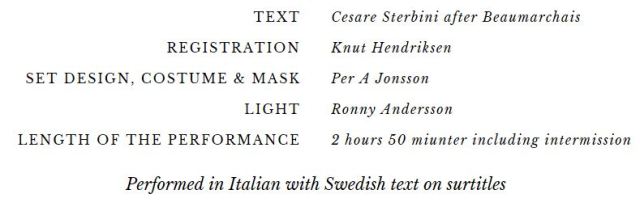
logooperanPerformed in Italian with Swedish text on surtitles

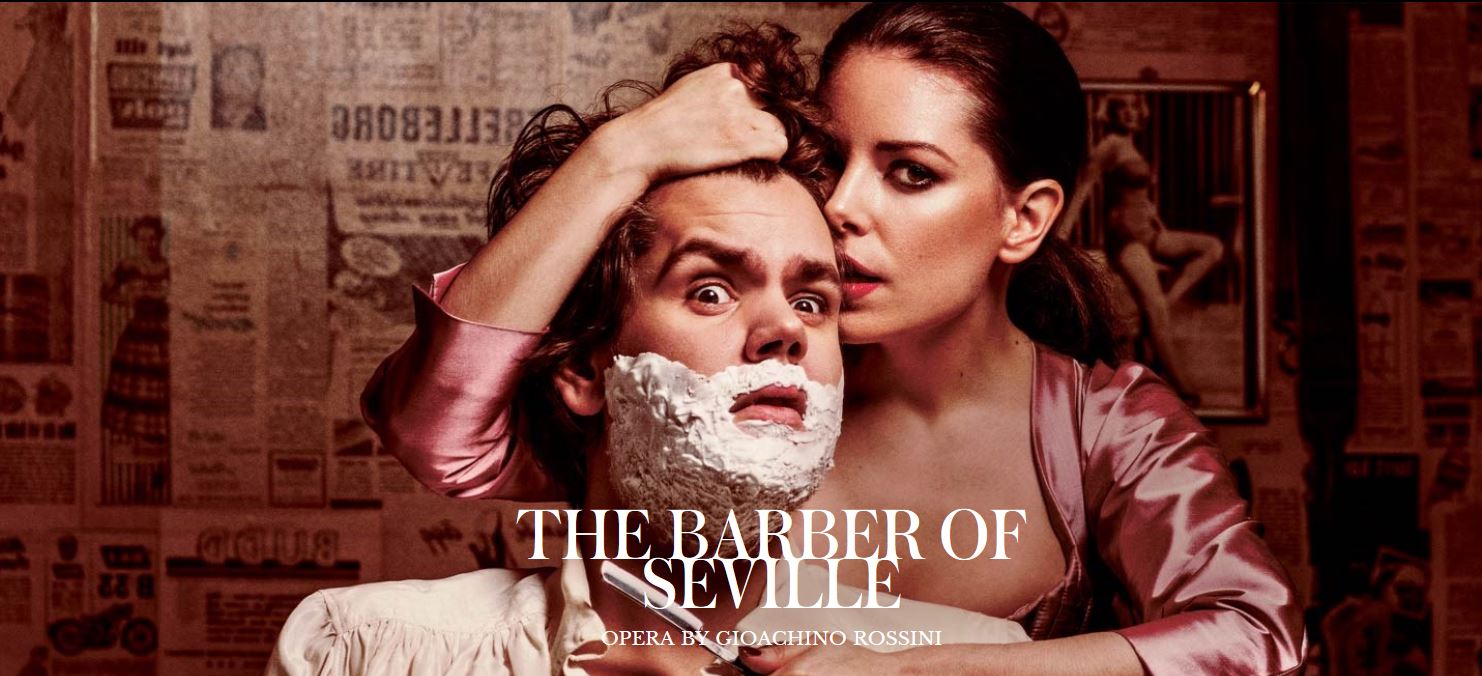
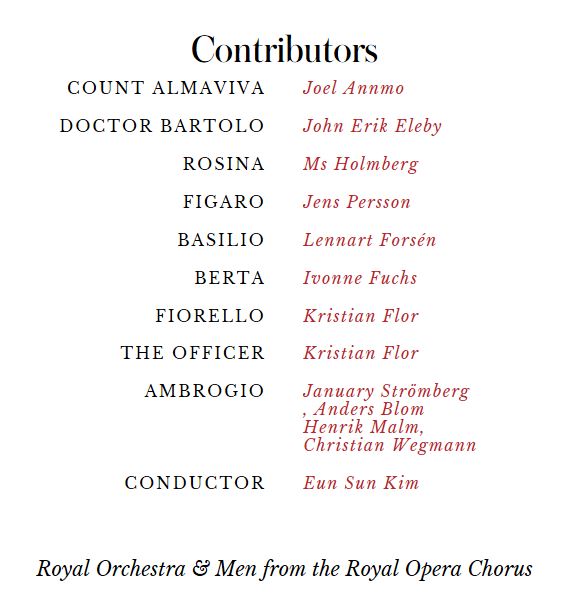
One of opera repertoires’ most witty comedy show with true carnival mood about youth and love down to old age and greed. Barber of Seville premiered in February 1816 and it is said that Gioachino Rossini wrote the music in just 19 days. The first night was a fiasco, but then came the successes and the opera is one of the most played. The director is the opera legend Knut Hendriksen and in some of the characters we see brilliant young singer Joel Annmo, Ms Holmberg, and Jens Persson.

Brief Synopsis: Count Almaviva is in love with Rosina. To ensure that she is not simply attracted by his money, he pretends to be the poor student Lindoro. However, he is not the only man fond of her. Rosina’s guardian, Doctor Bartolo, wishes to marry his protégée and keeps her under lock and key for this reason. In order that his advances might succeed, Count Almaviva employs the help of the town barber, the crafty fixer Figaro.

The Barber of Seville is Gioacchino Rossini’s exurberant comic opera based on Beaumarchais’ trilogy, which continues with the famous Mariage of Figaro. Even the overture is a miniature masterpiece.

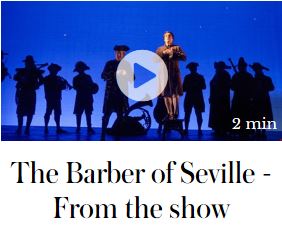
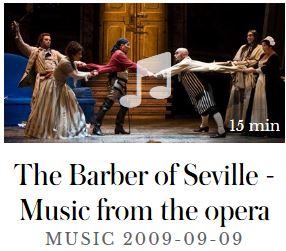
barber_videoBarberMusic

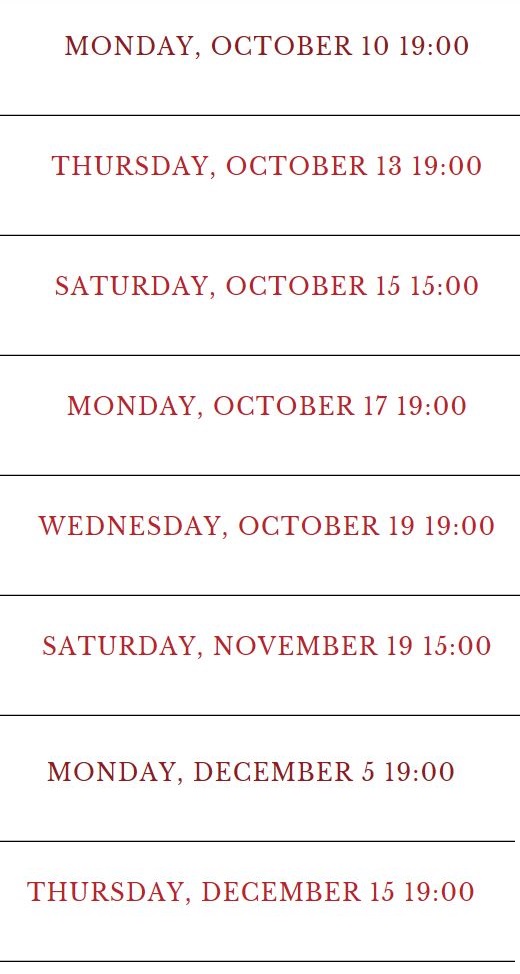
barCastdates

Posted in OPera | Leave a comment