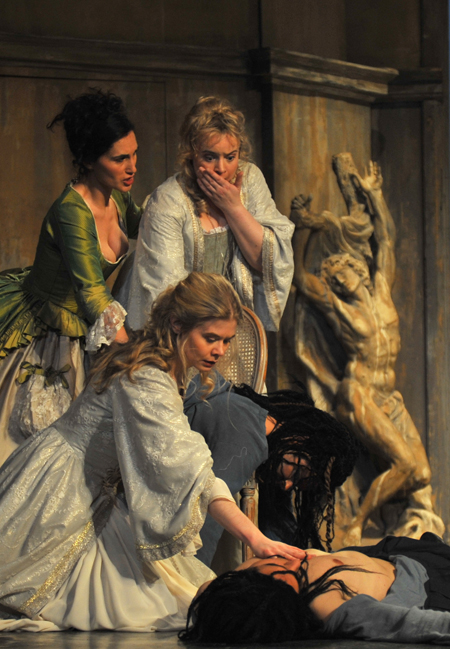
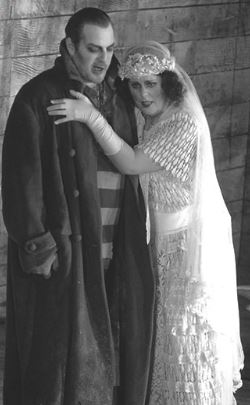
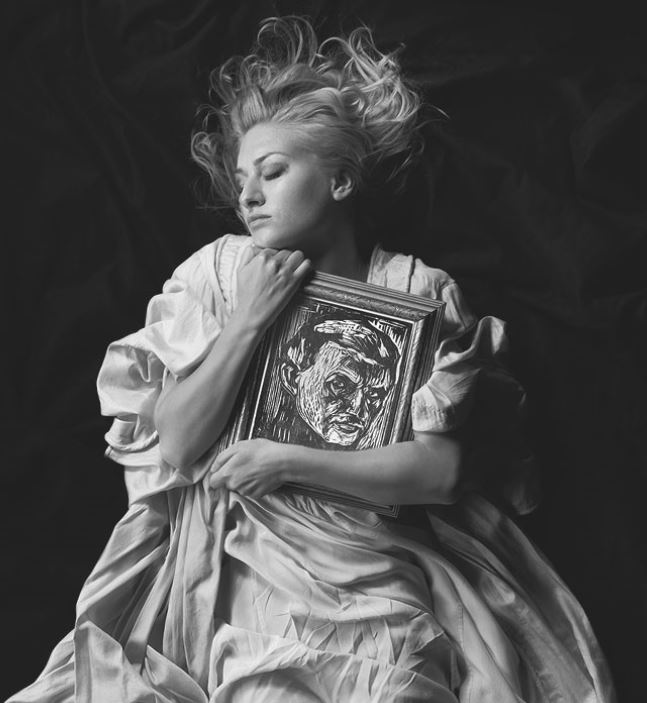
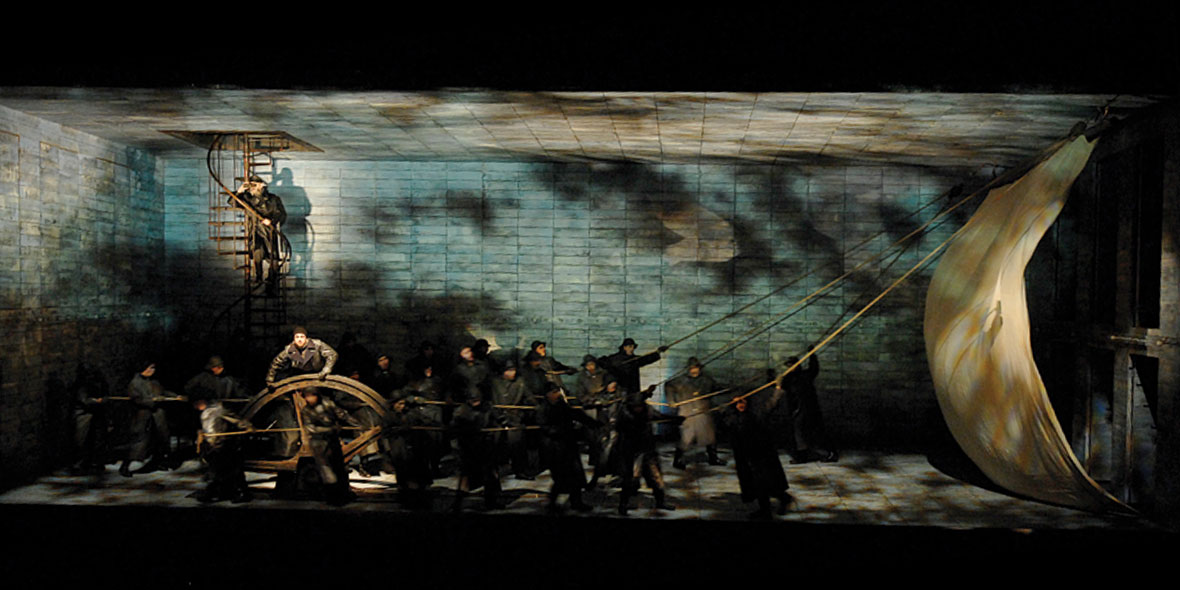
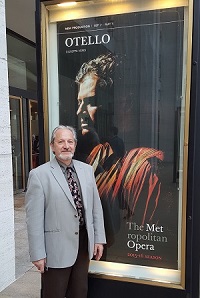
La Cena Delle Beffe at La Scala Theater in Milan

scala_logo
cenaTitle

From 3 April to 7 May 2016

Umberto Giordano

Teatro alla Scala Orchestra
New Teatro alla Scala Production

Running Time: 2 hours intermission included

Conductor Carlo Rizzi
Staging Mario Martone
Sets Margherita Palli
Costumes Ursula Patzak
Lights Pasquale Mari

CAST

Giannetto Malespini Marco Berti
Ginevra Kristin Lewis
Neri Chiaramantesi Nicola Alaimo
Gabriello Chiaramantesi Leonardo Caimi
Il Tornaquinci Luciano Di Pasquale
Il Calandra Giovanni Romeo*
Fazio Frano Lufi
Il Trinca Francesco Castoro
Il Dottore Bruno de Simone
Lapo, Un cantore Edoardo Milletti
Lisabetta Jessica Nuccio
Laldomine Chiara Tirotta*
Fiammetta Federica Lombardi*
Cintia Chiara Isotton

*Academy of Teatro alla Scala

Before each performance, Franco Pulcini will hold an introduction to the opera at the A. Toscanini Boxes Foyer. The meetings will start one hour before the beginning of each performance and the entrance is reserved to the audience with the ticket for the performance.

READ THE LIBRETTO

NOTES ON THE PERFORMANCES

With the return to La Scala of La Cena delle Beffe by Umberto Giordano, that was inaugurated in the same location by Toscanini in 1924, the project of bringing back to La Scala the main masterpieces of the Verismo repertoire gets underway. La cena della beffe, the musical version of a successful pièce by Sem Benelli (who is also the author of the adaptation of the libretto) that had a great many revivals throughout the world – in the early 1900s with protagonists like Sarah Bernhardt and even in the cinema in 1941, where it was directed by Alessandro Blasetti and featured Amedeo Nazzari – is an opera that maintains modernity and dramatic effectiveness. It is an ideal title for a director with theatrical, operatic and cinematographic experience like Mario Martone, who will be supported by one of the best loved scenographer of the La Scala audience, Margherita Palli. It is conducted by Carlo Rizzi, an expert of Italian repertoire, and the singers will be Kristin Lewis, Marco Berti and Nicola Alaimo.

 GALLERY

This slideshow requires JavaScript.

Synopsis

Act One

Florence, in the house of the Tornaquinci, at the time of Lorenzo de’ Medici.

Lorenzo de’ Medici has ordered Tornaquinci to hold a dinner in his home
with the aim of making pace between Giannetto Malespini and the Chiaramantesi
brothers, Neri and Gabriello. The first to arrive is Giannetto. He tells
Tornaquinci how Neri took his mistress, Ginevra, and then cruelly mocked
him: indeed, Neri and his brother, Gabriello, bound him in a sack, pricked
him in the backside with their daggers and threw him into the Arno. Giannetto
has only one obsession now: revenge. The Chiaramantesi brothers enter
with the exquisite Ginevra and the company sit at the table. During the
meal, it is apparent that, despite the love that unites the two brothers,
Gabriello is also in love with Ginevra. Giannetto convinces Neri, who has had
a little too much to drink, to remove his clothes and put on his armour to go
in search of a brawl in Vacchereccia, a disreputable area of Florence. Once
Neri has left fully armed, Giannetto, almost in a state of frenzy, takes Neri’s
clothes and gives them to his servant Fazio, telling him to take them home
and then go to Vacchereccia, spreading the rumour that Neri has lost his
senses.


Act One Two

Ginevra’s antechamber.

The next day, as Ginevra leaves her chamber the servants are talking of Neri
and of how the night before he has gone mad and been imprisoned.
Ginevra then tells them that that is impossible, as Neri is at that moment lying
in her bed after spending a passionate night of love with her. Suddenly,
Giannetto appears wearing a short tunic and carrying Neri’s cloak on his
arm. Pretending to be his rival, he has spent the night with Ginevra. On
learning the truth, she appears to be far from horrified, and the couple recall
their night of love. Some commotion is heard and Neri bursts in, in a fury,
cursing Giannetto. He calls Ginevra, who has locked herself in her room, but
soon the Medici men come to arrest the presumed madman and take him
away.


Act Three

In the Medici dungeon.

Giannetto and the Doctor enter. The latter says that, to bring the madman
to his senses, a meeting has been organised between Neri and the many
people he has offended in the past. Fazio then appears to put his master on
his guard against Gabriello, who is convinced that behind his brother’s presumed
madness there is the hand of Giannetto. He has also been to see
Ginevra, but to no avail: despite his insistence, she refused to open her door.
Giannetto considers how to proceed in his revenge. Servants then bring Neri
tied to a chair. During the exchange with his past victims, Neri is comforted
by Lisabetta, one of the women he seduced and betrayed. She realises that
Neri is not mad and, still in love with him, she tells him to act like an inoffensive
fool so that she can ask to take him into her custody. Giannetto enters,
sees the transformation in Neri and despairs, believing he has truly driven his
rival mad. He begs for his forgiveness, but Neri continues to behave like a
harmless idiot and ignores him. Giannetto grants Lisabetta custody of Neri,
who is unbound and consigned to her. As the couple leave the scene hand
in hand, Giannetto tells the feigned madman that he will once more spend
the night with Ginevra.

Act Four

The same scene as Act Two.

It is night and Ginevra is waiting for Giannetto; the latter has told Gabriello
that Ginevra loves him and is waiting for him in her house. Neri bursts onto
the scene. He tells Ginevra to go and wait for Giannetto in her chamber, because
he means to take the two lovers by surprise and to kill them. A sad
and mysterious song can be heard from the road. Neri enters Ginevra’s
chamber with his dagger drawn, and shortly afterwards two screams are
heard: one is that of a man, the other that of a woman. When he leaves the
chamber, Neri meets Giannetto who asks him who he thinks he has killed.
Horrified, Neri realises that, once again, he has been deceived by Giannetto,
who has tricked him into killing his beloved brother, Gabriello. The blow is
too much and this time, Neri really does become mad, leaving Giannetto
stunned and full of remorse.


Posted in OPera | Leave a comment

Second World Performance ever! “L’Oristeo” by Francesco Cavalli AT THE NATIONAL THEATRE OF MARSEILLE, LA CRIEE

operamarseillelogo

L’Oristeo

FRANCESCO CAVALLI

Friday March 11th, 2016 > 8:00PM
Sunday March 13th, 2016 > 3:00PM

With its oriental subject matter, Oristeo, when first written, launched a new form of typically Venetian-style freedom in the creative process. So it will be Marseille, the other port oriented to the East that will host the second world performance of this masterpiece, which has not been performed since the seventeenth century and its first modern re-interpretation

Oristeo visuel


L’ORISTEO
AT THE NATIONAL THEATRE OF MARSEILLE, LA CRIEE

Supported by Marseille Opera
Part of The March Baroque Festival

Libretto by Giovanni FAUSTINI
Written for the Teatro Sant’ Aponal, January 1651
SECOND WORLD PERFORMANCE

Conductor Jean-Marc AYMES
Scenic Designer Olivier LEXA

CAST

Diomeda / La Bellezza Francesca ASPROMONTE
Ermino / Amore Lieselot DE WILDE
Corinta – Penia Lucie ROCHE
Oristeo Romain DAYEZ
Oresde Dominique VISSE
Trasimede / Pluto / L’Interesse
Anicio Zorzi GIUSTINIANI
Euralio Lise VIRICEL

CONCERTO SOAVE
The Concerto Soave ensemble is commissioned by the Ministry of Culture and Communication – DRAC- (The Regional Directorate for Cultural Affairs) Provence Alpes Côte d’Azur, and by the Provence Alpes Côte d’Azur Region, and is subsidised by the Bouches-du-Rhône Département and the City of Marseille. The Mécénat Musical Société Générale is the main Patron of the Concerto Soave. Concerto Soave is a member of FEVIS (The Federation of Vocal and Specialised Instruments) PROFEDIM (The Association of Professional Producers, Festival Organisers, Ensembles and Independent Music Distributors) and REMA (The Early Music Network)

INFORMATION / BOOKINGS
Concerto Soave 04 91 90 93 75 / contact@concerto-soave.com
La Criée – Théâtre national de Marseille
04 91 54 70 54 / www.theatre-lacriee.com

Posted in OPera | Tagged , , , , | Leave a comment

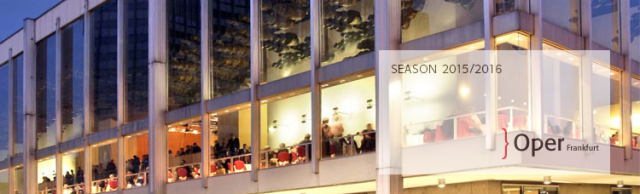
THE FLYING DUTCHMAN AT THE OPER FRANKFURT

Operfrankfurt2016logo

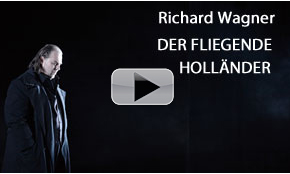
DER FLIEGENDE HOLLÄNDER
(The Flying Dutchman)
Richard Wagner 1813 – 1883
Romantic Opera in three acts
Libretto by the composer
First performed January 2nd 1843, Royal Hoftheater Dresden
Sung in German with German surtitles
Duration: c. 2 hrs. 15 min. without interval

23.04.2016    

ABOUT THE WORK

In 1838, fleeing from their creditors, Minna, Richard and their Newfoundland dog followed smugglers routes across the eastern Russian/Prussian border. This was followed by a journey by sea. Storms forced the crew of their ship to seek shelter near the coast, where Wagner heard the story about the Flying Dutchman from Norwegian sailors. With an excellent instinct for theatre, and inspired by the dangerous voyage and Heine’s writings, he wrote his own dramatic texts: his libretto is concise, every situation, character precise. The first edition of the work was a »dramatic ballade«, a unified whole with no interval.
The Dutchman was very important for Wagner’s later, musical dramaturgical train of thought, and the theme was one of the main reasons for this: the redeeming love for a banished, damned man who, like Odysseus and Ahasver, belongs to the wandering figures in sagas of the western world.

Video

 Cast

Conductor
Bertrand de Billy / Eun Sun Kim
Director
David Bösch
Stage Designer
Patrick Bannwart
Costume Designer
Meentje Nielsen
Lighting Designer
Olaf Winter
Dramaturge
Zsolt Horpácsy
Chorus and Extra Chorus Master
Tilman Michael

Der Holländer
Wolfgang Koch / James Rutherford
Senta
Erika Sunnegårdh
Amber Wagner
Erik
Daniel Behle / Vincent Wolfsteiner
Daland
Andreas Bauer
Mary
Tanja Ariane Baumgartner / Ewa Płonka
Steuermann
Michael Porter
Simon Bode

Opera Frankfurt’s Orchestra and Chorus

GALLERY

This slideshow requires JavaScript.

Synopsis

They were almost home when a violent storm drove Daland’s ship into a bay. He decides to wait for the tempest to pass. The helmsma
They were almost home when a violent storm drove Daland’s ship into a bay. He decides to wait for the tempest to pass. The helmsman keeps watch. Meanwhile a ship with the Dutchman’s Crew on board approaches. He is damned to sail the oceans for eternity. Every seven years he is allowed to go on land and try to find a woman whose fidelity can redeem him. The Dutchman meets Daland and discovers that he has a daughter, Senta. He asks Daland for her hand. Impressed by the Dutchman’s wealth, Daland consents. Women wait for Daland’s sailors to come home. Senta asks Mary to tell the story of the Flying Dutchman. She refuses, so Senta sings the ballad herself. She longs to be the woman to release him from the curse. Erik, a hunter, and Senta’s beloved, reports that the ship has arrived. He urges Senta to ask her father to agree to their marriage. Senta rejects him. Erik tells her of a dream, in which he saw Senta and a sinister seafarer vanish into the sea. Daland introduces his daughter to the stranger. Senta and the Dutchman realize that they belong together. He demands, and she promises, eternal fidelity. Daland’s sailors celebrate their homecoming, the women make preparations for the wedding. They invite the Dutchman’s crew to join them, but receive no answer. The sea gets rough. The ghosts’ song rings out. Erik reminds Senta that she had promised to be true to him. She denies everything. The Dutchman overhears their conversation. He thinks that Senta has betrayed him and flees. Senta follows him. They find one another in death.

Posted in OPera | Tagged , , , , | Leave a comment

“Lady Macbeth of Mtsensk vår 16″in Norway

ladyTitle
logonorway

lady1

lady5

Shostakovich’s Lady Macbeth of the Mtsensk District, directed by Ole Anders Tandberg, premiered at the Oslo Opera House in autumn 2014. “One of the rawest, most suggestive scenes my senses have ever encountered in an opera,” wrote the Morgenbladet critic. When the production moved to the Deutsche Oper Berlin, the German media used words like “triumph” and “sensation”.  In spring 2016 this critically acclaimed production returns to the Main House in Oslo’s Bjørvika.

Faced with a brutal, violent environment, the main character Katerina Izmailova is forced to kill. Her goal is to live with the passion for which she has so longed. Shostakovich’s music also helps to portray her as a human murderer with whom we can sympathise:

“This is the story of a strong woman’s rebellion in a male-dominated hell, which plays out against wonderful music,” says director Ole Anders Tandberg.

Katerina Lvovna Izmajlova_SVETLANA-SOZDATELEVA Sergej_ALEXEY-KOSAREV

Katerina Lvovna Izmajlova_SVETLANA-SOZDATELEVA
Sergej_ALEXEY-KOSAREV

As well as being lyrical and melodic, Shostakovich’s music is raw, direct, humorous and coarsely satirical.

The action is set on the Norwegian coast, with 800 kilograms of fish filling the stage.

“I wanted to create a world that’s closer to us,” explains the director. “And where in Norway are we as isolated and exposed as on the Russian steppes? Well, in a tiny house in a desolate enclave surrounded by a huge sea and slippery fish.

  • Free introduction one hour before the performance

GALLERY (Photos by Erik Berg)


CAST

cast1cast2cast3cast4


Posted in OPera | Leave a comment

Così Fan Tutte in Marseille

operamarseillelogo

Così Fan Tutte

WOLFGANG AMADEUS MOZART

Tuesday April 19th, 2016 > 8:00PM
Thursday April 21st, 2016 > 8:00PM
Sunday April 24th, 2016 > 2:30PM
Tuesday April 26th, 2016 > 8:00PM
Thursday April 28th, 2016 > 8:00PM

A malicious, cynical and indulgent Mozart plays on feminine weakness, with music that touches the soul, the creation of a pure masterpiece

Visu-cosifantutte


COSÌ FAN TUTTE

Opera-buffa in 2 acts
Libretto by Lorenzo DA PONTE
First performed in Vienna, Burgtheater, on January 26th, 1790
Last performed in Marseille opera, on April 9th, 2006
Production Atelier Lyrique de Tourcoing

Conductor Lawrence FOSTER
Director Pierre CONSTANT
Scenic Designer Roberto PLATÉ
Costume Designer Jacques SCHMIDT and Emmanuel PEDUZZI
Lighting Designer Jacques ROUVEYROLLIS

CAST

Fiordiligi Guanqun YU
Dorabella Marianne CREBASSA
Despina Ingrid PERRUCHE

Don Alfonso Marc BARRARD
Ferrando Frédéric ANTOUN
Guglielmo Josef WAGNER

Marseille Opera Orchestra and Chorus

Posted in OPera | Tagged , , , | Leave a comment

La Boheme in Los Angeles

laopera_logobohemeLaoperaboheme1

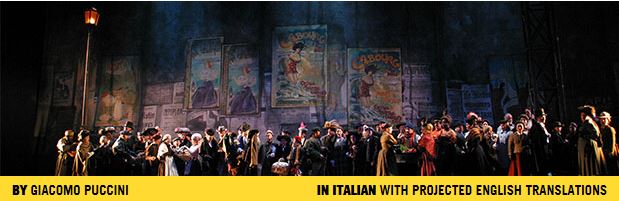
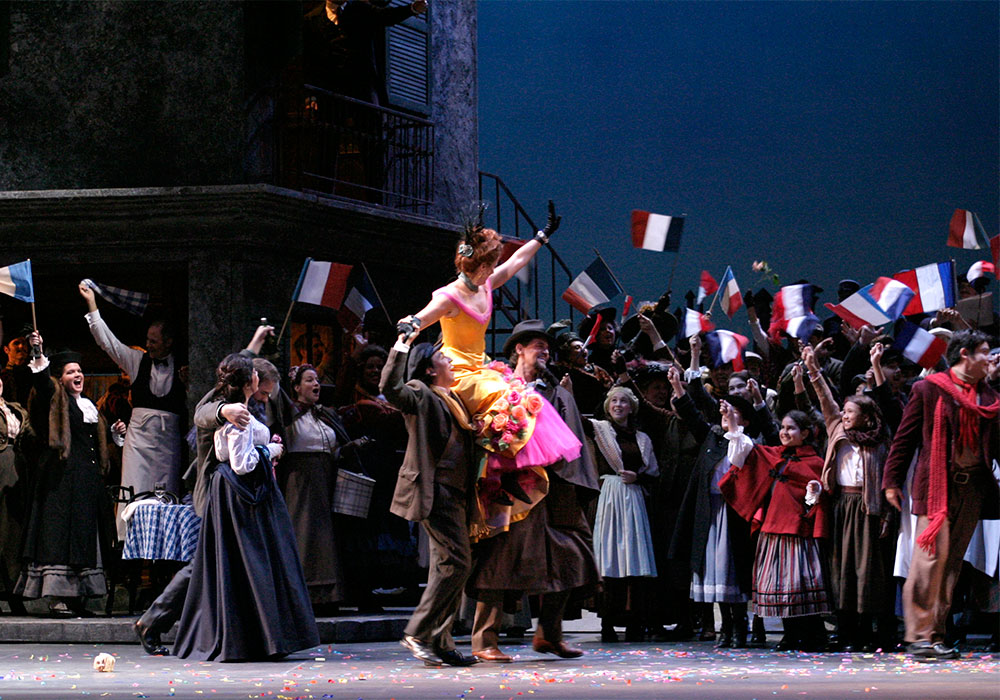
Our beloved production of a timeless classic, reveling in the cinematic romance of Paris, concludes our mainstage season of masterpieces. Fall in love again with La Bohème’s unforgettable blend of riveting theater and achingly beautiful music as we follow the tale of six impoverished young bohemians, surviving only on laughter and the promise of love.

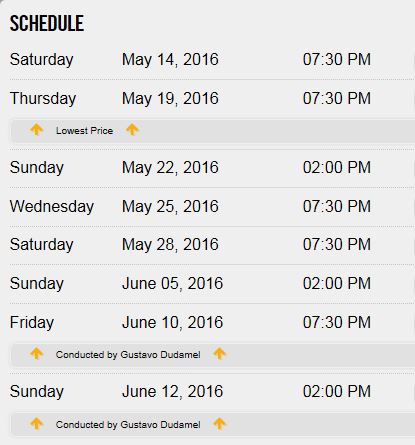
The dynamic Nino Machaidze returns in her role debut as Mimi, joined by a stellar cast. Gustavo Dudamel makes his LA Opera debut conducting the final two performances on June 10 and 12 only.

An original LA Opera production.

Boheme1pub

boheme_schedule

Cast

Creative Team

* LA Opera debut artist
+ Domingo-Colburn-Stein Young Artist Program member
++ Domingo-Colburn-Stein Young Artist Program alumnus

GALLERY (Photos by LAOpera)


Synopsis

Act I
Christmas Eve
A struggling young poet Rodolfo and his friend Marcello, a painter, are working in a Parisian garret. It is a bitterly cold Christmas Eve, and they have no money for food or firewood. Colline, a student of philosophy, arrives, also broke. Another friend, the musician Schaunard, enters bearing food, drink and firewood. He informs them he has just been paid by a patron. The four of them celebrate.

The landlord Benoit arrives demanding back rent. Unable to pay, the Bohemians distract him with wine. This loosens his tongue and he begins to boast about his extramarital affairs. The bohemians, feigning indignation, throw him out.

Marcello, Colline and Schaunard leave for celebrations at the Café Momus, but Rodolfo stays behind to finish an article he is writing. There is a knock at the door. It is Mimì, a young seamstress who lives upstairs. The wind blows out her candle. She drops her key and they search for it in the darkness. Finding it, Rodolfo tells her of his poetry; Mimì tells him of her life. They fall in love.

(scene change)

Act II
Later that night in the Latin Quarter
The four bohemians and Mimì, all in high spirits, join the throng. Hat sellers, toy sellers and vendors of all sorts crowd the streets. The bohemians take a table at the Café Momus and begin to celebrate. Marcello’s ex-girlfriend Musetta enters with Alcindoro, her wealthy and pompous “protector.” She becomes furious when Marcello pretends to ignore her. It is clear that Musetta and Marcello are still interested in each other. She sends Alcindoro away, insisting that he must buy her new shoes. Amid the excitement of a military parade, the lovers and their friends slip away, leaving Alcindoro to pay the bill.

INTERMISSION

Act III
A cold February dawn
Outside a tavern near one of the gates of Paris, a pale and worn Mimì is looking for Rodolfo. She finds Marcello, and tells him of Rodolfo’s insane jealousy. Mimì hides when Rodolfo comes out. Rodolfo tells Marcello that he isn’t jealous: he is terrified that he will be unable to provide for Mimì as her fragile health deteriorates. Mimì coughs, giving away the fact she has been listening. The two lovers embrace and pledge to stay together until spring, even though they both know a long-term relationship is not possible. Marcello and Musetta begin to quarrel and Musetta leaves in anger.

(scene change)

Act IV
A few months later
It is now spring and both couples have split up. Marcello and Rodolfo try to work, but the memories of happy times with their respective lovers fill them with sadness. Schaunard and Colline arrive to try to raise their spirits. Suddenly Musetta arrives with news: Mimì, desperately ill, has left the rich man she has been living with; she wants to return to Rodolfo for her last hours. Mimì arrives in a state of collapse. Rodolfo and the others attempt to make her comfortable. Musetta sends Marcello out to sell her earrings in order to buy medicine for Mimì. Musetta goes out herself to look for a muff to warm Mimì’s hands; Colline leaves to sell his old coat and thus obtain money for a physician.
Left alone, Rodolfo and Mimì recall their first meeting. The friends return and Colline says the doctor is on his way. Unnoticed by Rodolfo, Mimì dies. When he sees his friends’ faces and realizes the truth, he cries out in anguish.

RUNNING TIME

Two hours and 30 minutes, including one intermission

Posted in OPera | Tagged , , , | Leave a comment

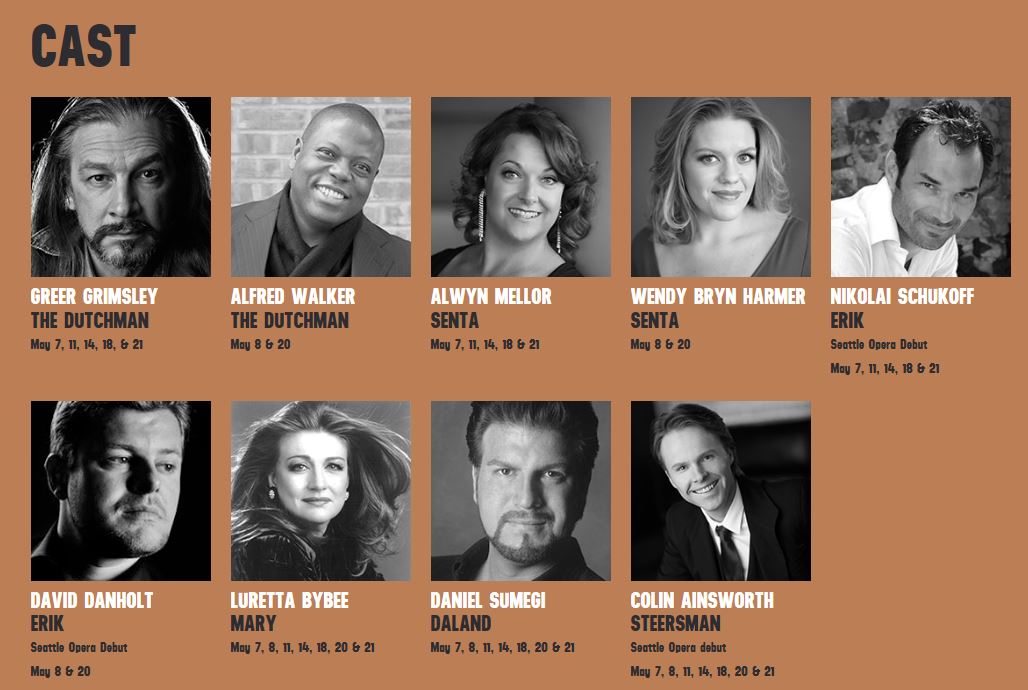
The Flying Dutchman at the Seattle Opera

dutchman_title

By Richard Wagner

seattlelogoMay 7, 8, 11, 14, 18, 20, & 21

ROMANTIC FABLE WITH STRIKING THEATRICALITY. A cursed ship captain, condemned to wander the seas for eternity, sets foot on land every seven years to search for a bride who can end his suffering. A young woman in a fishing village, obsessed with his legend, hopes to be the true love who can bring him peace. Wagner’s stormy, captivating tale takes on an arresting immediacy through a compelling and stylish production from a visionary creative team. Not to be missed.
In German with English subtitles | at McCaw Hall
Approximate Running Time: 2 hours, 30 minutes (no intermission)
Evenings at 7:30 PM. Sunday matinee at 2:00 PM.

SYNOPSIS

Sandwikke, a Norwegian fishing village

01_flying-dutchman_gallery

Photo by Gary Beechey

dutchman2Act 1
A violent storm has blown a Norwegian fishing boat miles beyond home. Daland, the captain, tells his crew to rest out the storm and leaves the watch in charge of a young steersman, who falls asleep singing of his sweetheart.

A red-sailed galleon suddenly appears. Its captain, alone on deck, ponders his fate. Cursed by the Devil when he vowed to sail around the Cape of Good Hope, he is doomed to sail the seas until he finds a woman who will be faithful to him till death. He is allowed to land once every seven years to search for her, and unless he finds her he must continue his wandering. He is the Flying Dutchman. When Daland meets the Dutchman, he learns that the stranger is willing to pay a large portion of his treasure for a safe harbor, but he learns nothing about the Dutchman’s true identity. The Dutchman offers to marry Daland’s daughter and give him all his considerable wealth in return. Daland accepts the offer happily. Daland and his crew prepare to lead the Dutchman home, and the two boats leave on calmer waters.

02_flying-dutchman_gallery

Act 2
The legend of the Flying Dutchman is well known. A picture of him hangs on the wall in Daland’s house, where the women of the town sew with Daland’s daughter, Senta, and housekeeper, Mary. The women sing of their boyfriends and tease Senta about her sweetheart, Erik. When Mary refuses to entertain the girls with a song telling the story of the wandering Dutchman, Senta sings the ballad instead, passionately declaring that she yearns to be the one to save him. Erik enters to announce that Daland’s ship has returned, and the women leave to welcome the sailors.

dutchman1

Erik anxiously detains Senta, declares his love for her, and tells her he dreamt that she embraced the Flying Dutchman and sailed off with him. Senta is excited by this dream. Erik leaves in despair. Daland arrives with the Dutchman, and there is an immediate connection between Senta and the stranger. Daland encounters no resistance when he asks if Senta would marry his guest. The Dutchman hopes his living hell will end; Senta expresses her compassion for him and rapturously accepts him; and Daland rejoices in their obvious commitment.

03_flying-dutchman_gallery

Act 3
Daland’s boat and the Dutchman’s ship are docked at the quay. The Norwegian women bring food and drink to the Dutch ship. Despite their teasing calls, no one answers them. Frightened, they give the food to the Norwegian men instead. But sailors suddenly appear on the Dutch ship, singing of their demon-cursed captain, and the villagers leave, horrified, chased by derisive laughter from the Dutch crew. Senta runs to the quay followed by Erik, who is despondent that she has forsaken him for the stranger. The Dutchman overhears some of their quarrel and believes himself betrayed. He bitterly renounces salvation and orders his crew to set sail. Senta pleads with him to stay, but the Dutchman replies that she need not fear the eternal damnation of those who betray him, since she did not say her vows to him before God. As the Flying Dutchman’s ship sails away, Senta throws herself into the sea. The Dutch ship and crew vanish. Senta and the Dutchman meet in transfiguration: at last he will find rest.

04_flying-dutchman_gallery05_flying-dutchman_gallerydutchman_castDutchman_team


Posted in OPera | Tagged , , | Leave a comment

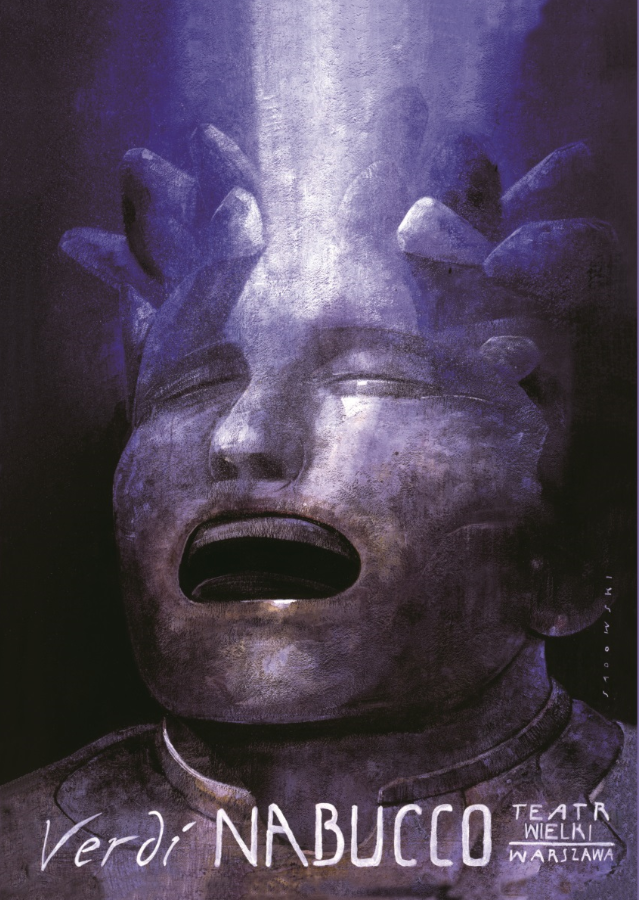
NABUCCO in Poland

nabuccotitle

polandlogoOpera in four acts
Libretto: Temistocle Solera after the drama by Auguste Anicet-Bourgeois and Francis Cornue
World premiere: 9 March 1842, Regio Teatro alla Scala, Milan
Warsaw premiere: 25 February 1854, Teatr Wielki
Premiere of this production: 26 June 1992
In the original Italian with Polish surtitles

04 May 2016 Wednesday 19:00 Moniuszko Auditorium

06 May 2016 Friday 19:00 Moniuszko Auditorium

08 May 2016 Sunday 18:00 Moniuszko Auditorium


nabucco12

Nabucco, one of the earliest operas by Verdi, has invariably enjoyed enormous popularity among audiences practically from its world premiere in 1842. Undoubtedly this success can be partly attributed to the four-minute chorus of Jewish slaves, Va, pensiero — one of the most famous pieces of choral operatic music of all time. Few people realize that it is a fragment loaded with momentous significance. The slaves sing in it of a hope of regaining their freedom in unison and not, as usual, divided into four voices. What is more, this unison becomes gradually and suggestively more and more powerful, symbolizing the cementing of solidarity of the Semitic community. This is why in mid-nineteenth century Va, pensiero was treated by Italians as an unofficial hymn of all the political powers striving towards the unification of Italy.

Marek Weiss-Grzesiński’s staging has been in Teatr Wielki’s repertoire for almost a quarter century. Is it not too long? Has the aesthetic of this show grown old? Even if indeed it is so, it should nevertheless be a compulsory show to view for every educated Pole.

GALLERY (Photos by Opera Narodowa)

 CAST

Carlos Almaguer
Nabucco

  • Dominik Sutowicz
    Ismaele
  • Rafał Siwek
    Zaccaria
  • Lilla Lee
    Abigaille

  • Agnieszka Rehlis
    Fenena

Creative Team

Andriy YurkevychConductor

  • Marek WeissDirector
  • Andrzej Kreutz MajewskiSet designer
  • Jacek MajewskiCostume designer

  • Emil WesołowskiChoreography
  • Jerzy Bojar Lighting designer

Posted in OPera | Tagged , , | Leave a comment

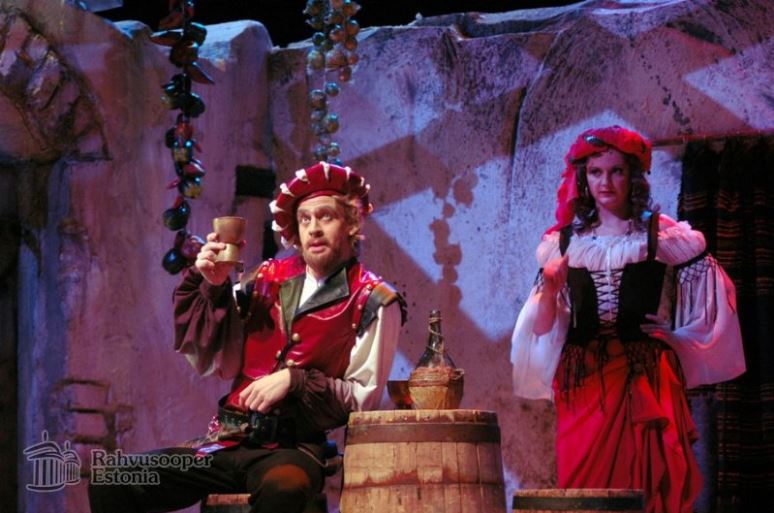
RIGOLETTO at the Estonian National Opera

rigtitle

Opera by Giuseppe Verdi
Premiere: 9 November 2007

T, 28 April 2016 / 19:00
S, 7 May 2016 / 19:00
W, 25 May 2016 / 19:00

rig5

Verdi’s opera is based on Victor Hugo’s play Le roi s’amuse. The opera retells of the court jester Rigoletto who is disliked for his scornful wit. Inside, Rigoletto is a loving father, who tries to bring up his daughter Gilda by protecting her from all evil of the world.

In Rigoletto two opera traditions meet – the traditional world of arias and the new world of continuous flow of music that leads to Wagner’s idea of music drama. The latter is supported by the fact that Verdi wrote an opera, which is almost entirely composed of duets and that lacks the accustomed grand finales, letting the dramatic action develop without interruption.
The opera is composed at a very difficult time for Verdi. In a few years he lost his two children and his wife. Due to his tragic experience, the plot of the opera moved him thoroughly and gave the opera exceptional musical depth.

Since its premiere in 1851, the opera has been followed by great success and it is the first of his famous “popular triad” – Rigoletto (1851), Il Trovatore (1853) and La Traviata (1853). It has been 40 years since Rigoletto was staged in the Estonian National Opera. The title role was sung by the unforgettable Georg Ots and Tiit Kuusik.

GALLERY

Staging team

  • Conductors: Jüri Alperten, Lauri Sirp
  • Stage Director: Neeme Kuningas
  • Designer: Kustav-Agu Püüman
  • Lighting Designer: Neeme Jõe
Posted in OPera | Tagged , , | Leave a comment

Turandot on Sidney Harbour

turandotSidneyTitle

A story of a death-marked love told with salt in the air, light on the sails and the city skyline reflected in your glass.

In 2016, Handa Opera on Sydney Harbour presents Turandot: a story of a death-marked love told with salt in the air, light on the sails and the city skyline reflected in your glass. It’s the best of Sydney in a single evening: singing, sunsets and sparkling wine, in perfect harmony. Join us at the water’s edge in a pop-up opera house with purpose-built bars, restaurants and a grandstand under the stars.
Chinese director Chen Shi-Zheng’s take on this Chinese fable will be one for the history books.As a child of the Cultural Revolution, Chen Shi-Zheng grew up in a China where cruelty and beauty coexisted. Taken in by a Chinese opera troupe, he grew up surrounded by music, but witnessed great suffering. It’s a duality he finds utterly compelling, and a juxtaposition that ties in perfectly with the ice-hearted, impossibly beautiful princess at the heart of Puccini’s Turandot.
As a director, his work forms a bridge between Chinese and Western artistic approaches, drawing on the Hollywood film tradition, theatrical acrobatics and traditional Chinese opera to create works that thrill visually and cut to the heart.
When the heroic top notes of ‘Nessun dorma’ ring out, your soul stirs. It’s impossible to resist – the climax of an exotic adventure, captured perfectly in music.

Performed in Italian with English & Chinese surtitles.
The site opens at 5pm, with five bar and restaurant venues on site.

Artist Information

Conductor Brian Castles-Onion
Director & Choreographer Chen Shi-Zheng
Set & Costume Designer Dan Potra
Lighting Designer Scott Zielinski
Video Designer Leigh Sachwitz / flora&faunavisions
Sound Designer Tony David Cray
Site Designer Adrienn Lord

Turandot  Dragana Radakovic / Daria Masiero
Calàf Riccardo Massi / Arnold Rawls
Liù Hyeseoung Kwon / Eva Kong
Timur Conal Coad
Pong John Longmuir
Pang Benjamin Rasheed
Ping Luke Gabbedy
Emperor David Lewis
Mandarin Gennadi Dubinsky
Prince of Persia Jin Tea Kim / Dean Bassett

Opera Australia Chorus
Australian Opera and Ballet Orchestra

GALLERY OF PAST EVENTS ON SIDNEY HARBOUR

This slideshow requires JavaScript.

Performance Dates

Running Time: Approximately 2 hours & 20 minutes including a 35 minute interval.

March

  1. Tue 29 Mar 16 7:30pm
  2. Wed 30 Mar 16 7:30pm
  3. Thu 31 Mar 16 7:30pm

April

  1. Fri 01 Apr 16 7:30pm
  2. Sat 02 Apr 16 7:30pm
  3. Sun 03 Apr 16 7:30pm
  4. Tue 05 Apr 16 7:30pm
  5. Wed 06 Apr 16 7:30pm
  6. Thu 07 Apr 16 7:30pm
  7. Fri 08 Apr 16 7:30pm
  8. Sat 09 Apr 16 7:30pm
  9. Sun 10 Apr 16 7:30pm
  10. Tue 12 Apr 16 7:30pm
  11. Wed 13 Apr 16 7:30pm
  12. Thu 14 Apr 16 7:30pm
  13. Fri 15 Apr 16 7:30pm
  14. Sat 16 Apr 16 7:30pm
  15. Sun 17 Apr 16 7:30pm
  16. Tue 19 Apr 16 7:30pm
  17. Wed 20 Apr 16 7:30pm
  18. Thu 21 Apr 16 7:30pm
  19. Fri 22 Apr 16 7:30pm
  20. Sat 23 Apr 16 7:30pm
  21. Sun 24 Apr 16 7:30pm
Posted in OPera | Tagged , , , , | Leave a comment