Rigoletto in Athens

logogreekopera 

Presents:

rigolettoGreece

Giuseppe Verdi

Rigoletto

Conductor: Lucas Karytinos
Director – Set – Costumes: Nikos S. Petropoulos

PREMIERE 6 DECEMBER 2013
6, 7, 8, 10, 11, 13, 14, 15 December 2013

Athens Concert Hall – Alexandra Trianti Hall
Performances begin at 20.00

Movement – choreography: Petros Gallias
Lighting: Nikos Ergazakis
Chorus master: Agathangelos Georgakatos

Duke of Mantua: Mario Zeffiri (6, 8, 11, 14/12)
Yannis Christopoulos (7, 10, 13, 15/12)
Rigoletto:
Carlos Almaguer (6, 8, 11, 14/12)
Nelson Martinez (7, 10, 13, 15/12)
Gilda:
Vassiliki Karagianni (6, 11, 14/12)
Maria Mitsopoulou (7, 10, 13/12)
Christina Poulitsi (8, 15/12)
Sparafucile:
Dimitri Kavrakos (6, 8, 11, 14/12)
Petros Magoulas (7, 10, 13, 15/12)
Maddalena:
Eleni Voudouraki (6, 8, 11, 14/12)
Marissia Papalexiou (7, 10, 13, 15/12)
Giovanna:
Maria Vlachopoulou (6, 8, 11, 14/12)

Alexandra Mattheodaki (7, 10, 13, 15/12)

Count Monterone:
Dimitris Kassioumis (6, 8, 11, 14/12)

Petros Salatas (7, 10, 13, 15/12)

Marullo:
Akis Laloussis (6, 8, 11, 14/12)

Dionyssis Tsantinis (7, 10, 13, 15/12)

Matteo Borsa:
Christos Kechris (6, 8, 11, 14/12)

Charalambos Alexadropoulos (7, 10, 13, 15/12)

Count Ceprano:
George Matheakakis (6, 8, 11, 14/12)

Costas Mavrogenis (7, 10, 13, 15/12)

Countess Ceprano:
Vaia Kofou (6, 8, 11, 14/12)

Elisaveta Klonovskaya (7, 10, 13, 15/12)

A court usher:
Christos Amvrazis (6, 8, 11, 14/12)

Theodore Moraitis (7, 10, 13, 15/12)

A page:
Irini Athanassiou (6, 8, 11, 14/12)

Thei Stavrou (7, 10, 13, 15/12)

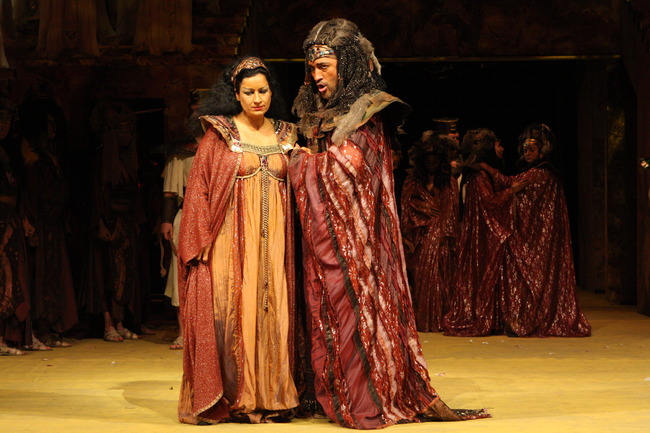
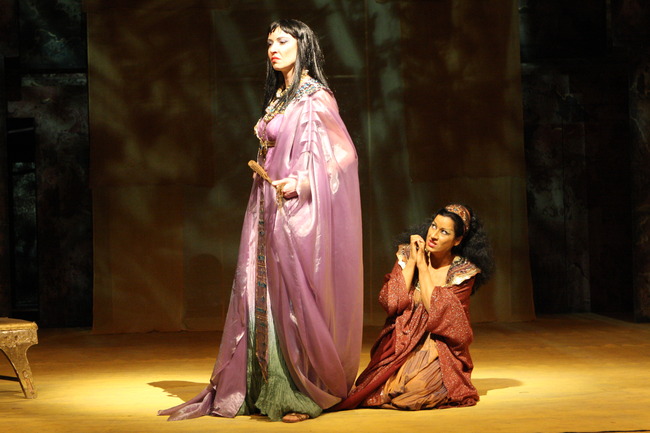
One of Verdi’s most popular operas, Rigoletto returns to the GNO in the successful production of director Nikos S. Petropoulos, who has also designed the sets and costumes. He transports the action from 16th century Mantua to Mussolini’s Italy just before the outbreak of the Second World War. The decadent environment of the wanton Duke of Mantua is a perfect match for this age of conspiracy and arrogance. Verdi’s intensely dramatic music ties into the atmosphere of a time when everyone and everything exists in the shadows.
The main roles are performed by: Carlos Almaguer, Nelson Martinez, Mario Zaffiri, Yiannis Christopoulos, Vassiliki Karayianni, Maria Mitsopoulou and Christina Poulitsi
With the participation of the GNO Orchestra and Choir

Posted in OPera | Tagged , , , , , , , , , , , , , , , , , | Leave a comment

VERDI’S 200TH ANNIVERSARY CELEBRATION: “Aida” at the Janacek Theathre in Brno

logobrnoAida

What is more important – love or duty to the homeland?

Giuseppe Verdi (1813-1901)

Janacek Theatre – Rooseveltova 1-7 |

2013: Saturday November 9, Sunday december 12

2014: Friday January 10, Friday February 21, Tuesday May 20

aidabrno6

Libretto: Antonio Ghislanzoni
Author: Giuseppe Verdi
Conductor: Jaroslav Kyzlink, Peter Feranec
Director: Václav Věžník
Set Design: Vladimír Soukenka
Costume Design: Josef Jelínek
Chorus Master: Josef Pančík
Choreographer: Zdeněk Prokeš
Assistant Conductor: Ondrej Olos
Assistant Stage Director: Otakar Blaha
Assistant Chorus Master: Pavel Koňárek

Cast 9.11.2013 17:00

Aida Louise Hudson
Radamès Rafael Álvarez
Amneris Monika Fabiánová
The King Jan Šťáva
Ramfis Jiří Sulženko
Amonasro Luis Cansino
High Priestess Daniela Straková-Šedrlová
Messenger Petr Levíček

Dirigent představení: Jakub Klecker

Janáček Opera Ensemble and Orchestra of the National Theatre Brno.

Premiere 12th January 2003, Janáček Theatre.

Revival 22nd January 2010, Janáček Theatre.

What is more important – love or duty to the homeland?

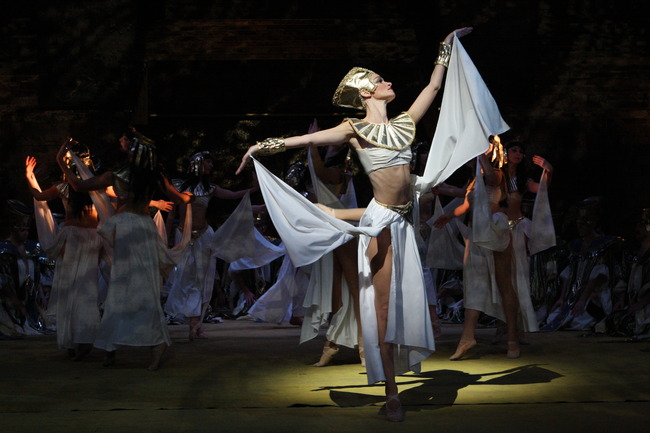
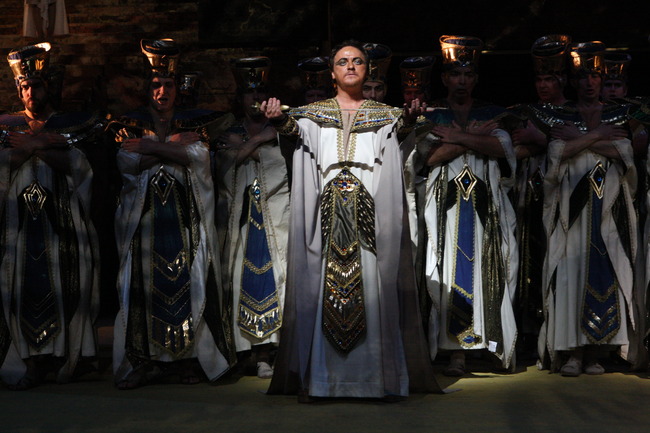
 The inspiration for the creation of one of the masterpieces from the operatic repertoire came from a scenario written by the French Egyptologist Auguste Mariette. Giuseppe Verdi provided the musical setting for the dramatic love story set against a backdrop of brutal warfare. Aida, an Ethiopian princess and Radamès, an Egyptian warrior, are on opposing sides of a bitter war and when they fall in love with each other, she must choose between her heart and her loyalty to her homeland. Verdi, the world-renowned composer, wrote the opera in an incredibly short time of just four months. At the time it was the culmination of his search for a new style that he had begun when he composed Don Carlos. Verdi’s Aida is a permanent fixture in all the major opera houses, Brno being no exception, where it has been continuously in the repertoire for more than ten years with the narrative production directed by Václav Věžník.

aidabrno1aidabrno7 aidabrno2 aidabrno3 aidabrno4 aidabrno5

Posted in Music, OPera | Tagged , , , , , , , , | Leave a comment

Pier Francesco Cavalli’s “EGISTO” in Luxembourg

 logoLuxembourg

EGISTO

Pier Francesco Cavalli (1602-1676)

Favola Drammatica musicale with a prologue and three acts 

 Libretto by Giovanni Faustini
Premiere in 1643 at the Teatro San Cassiano in Venice
In Italian, with subtitles in French and German

Pier Francesco Cavalli’s opera of love, intrigue and misadventure is part of an impressive repertoire written by the prolific Italian composer between 1639 and 1673. Unfortunately very few of his operas are preserved today. Some of his major works have been presented at the Grand Théâtre before – La Calisto in 2003 and more recently La Didone in 2011 with William Christie and his Arts Florissants. It reunites the same creative team that was behind Landi’s Sant’Alessio and Lully’s Cadmus et Hermione: director Benjamin Lazar, conductor Vincent Dumestre and his Poème Harmonique.

Direction artistique & musicale Vincent Dumestre
Mise en scène Benjamin Lazar
Scénographie Adeline Caron
Costumes Alain Blanchot
Lumières Christophe Naillet
Maquillage & coiffures Mathilde Benmoussa

Thursday 5 DÉCEMBER 2013 at 20h00

Sunday 7 DÉCEMBER 2013 at 20h00

DURÉE 2h25

Introduction à l’opéra par Stéphane Gilbart des Amis de l’Opéra et le metteur en scène Benjamin Lazar une demi-heure avant chaque représentation (en langue française)

Egisto Marc Mauillon
Lidio Reinoud Van Mechelen
Clori Claire Lefilliâtre
Climene Isabelle Druet
Hipparco Cyril Auvity
Aurora, Amore, Prima Hora Ana Quintans
Notte, Dema Serge Goubioud
Didone, Volupia Luciana Mancini
Bellezza, Hero Caroline Meng
Venere, Fedra Mélodie Ruvio
Semele, Cinea Hasnaa Bennani
Apollo David Tricou

Orchestre Le Poème Harmonique

Production Opéra Comique (Paris)
Coproduction Opéra de Rouen-Haute Normandie, Les Théâtres de la Ville de Luxembourg, Le Poème Harmonique

Posted in Music, OPera | Tagged , , , , | Leave a comment

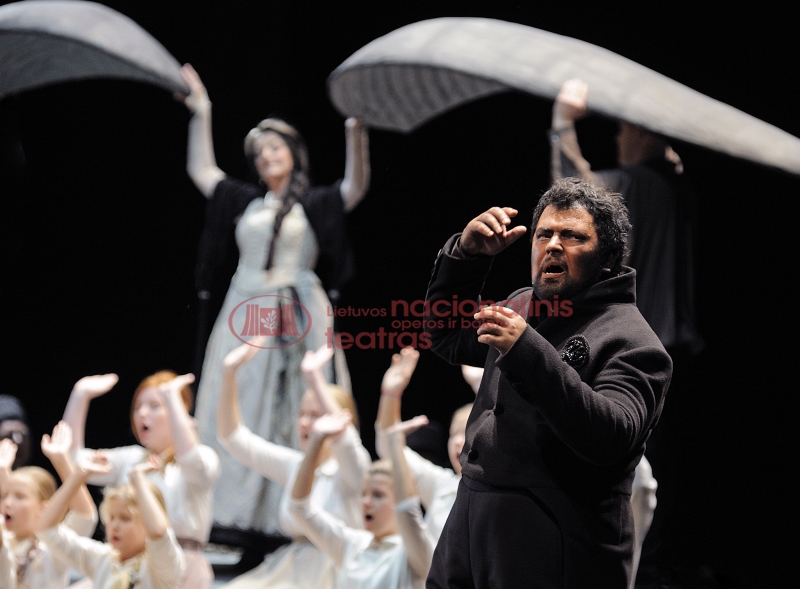
Otello at the Lithuanian National Opera

logolithuania

Giuseppe Verdi

OTELLO

an opera in 4 acts (2 parts), sung in Italian with Lithuanian and English surtitles

November 14, 2013
January 25, 2014
February 4, 2014
March 1, 2014
April 17, 2014

Music Director and Conductor Gintaras Rinkevičius
Conductor Martynas Staškus
Director Eimuntas Nekrošius
Set Designer Marius Nekrošius
Costume Designer Nadežda Gultiajeva
Lighting Designer Levas Kleinas
Chorus Master Česlovas Radžiūnas

Premiere: 18 March, 2011

G. Verdi's masterpiece “Otello” was presented to the public on 5 February, 1887, and immediately turned into an exclusive social event and national triumph of Italy. La Scala was overcrowded with people representing all classes of Milan society, including all the Italian notabilities in the city or who could get here. Journalists and critics from all quarters of Europe were in attendance, with the managers of the chief European theatres and opera houses. No more critical or intellectual audience was ever brought together in La Scala to approve or condemn a new opera.

Librettist Arrigo Boito remained faithful to Shakespeare’s text, however, his libretto is an independent drama, created according to all of the main principles of the Wagnerian reform. Boito omitted the first part of the tragedy and started with the second. The librettist also introduced a few potent changes – having sacrificed a few scenes for the sake of the musical flow, he replaced them with effective episodes of his own. The perfect libretto was a solid background for the birth of the unique opera.

The current LNOBT's production of “Otello” was prepared by masters of their craft – conductor Gintaras Rinkevičius, director Eimuntas Nekrošius, set designer Marius Nekrošius and costume designer Nadežda Gultiajeva. This most mature of all Verdi‘s creations is a jewel that enriches repertoires of the best theatres in the world, and it has been produced several times in our theatre.
“I hadn’t listened to the opera all the way through until I was asked to direct it. My first impression: this is the least interesting of all operas that Verdi wrote. Maybe it was because I knew his other operas better. After a while, however, I realised this is his most sublime creative achievement.”
~ Director Eimuntas Nekrošius

otellolithuania4 otellolithuania1 otellolithuania2 otellolithuania3

Posted in Music, OPera | Tagged , , , , | Leave a comment

“AIDA” at San Carlo Theater in Naples

testatamarroneSancarlo

aidaSan Carlo

The San Carlo entrust itself to the ‘pyrotechnics’ of Franco Dragone to open the opera and ballet season with Aida, which is chosen to celebrate, in 2013, the bicentenary of Giuseppe Verdi’s birth. The director,  inventor of the magical universe of the Cirque du Soleil, here at his first experience with opera, promises to amaze, in his typical style, with a show uniting visual virtuosity and the use of ‘avant guard’ technologies. Directed by Nicola Luisotti.

From December 5th to 17th 2013 San Carlo Theatre 

Under the patronage of the President of Italian Republic

AIDA

Giuseppe Verdi | Libretto by Antonio Ghislanzoni | 4 acts | Italian with Italian supertitles 

ARTISTIC DIRECTION:

Conductor: Nicola Luisotti

Choirmaster:  Salvatore Caputo

Director of the Ballet Company: Alessandra Panzavolta

Direction:  Franco Dragone

Scenes:  Benito Leonori

Costumes: Giusi Giustino

CAST: 

Aida: Lucrecia Garcia / Kristin Lewis


Radames: Jorge De Leòn / Fabio Sartori

Amneris: Ekaterina Semenchuk / Anna Smirnova

Amonasro: Marco Vratogna / Claudio Sgura

Ramfis: Ferruccio Furlanetto / Orlin Anastassov

King of Egypt: Roberto Tagliavini / Dario Russo

The Messenger: Massimiliano Chiarolla
Orchestra, Choir and Ballet Company of the San Carlo Theatre

Opera and Ballet Season 2013-2014

New setting in co-production with Astana Opera House

San Carlo Theatre

Thursday 5th  December 20:00 (Season Ticket – Turn  A)

Saturday 7th  December 18:00  (not part of the ‘season ticket’)

Tuesday 10th  December 18:00 (Season Ticket – Turn  B)

Wednesday 11th  December 20:00    (not part of the ‘season ticket’)

Thursday 12th  December 20:00  (Season Ticket – Turn  C)

Friday 13th  December 18:00  (not part of the ‘season ticket’)

Saturday 14th  December 20:00 (not part of the ‘season ticket’)

Sunday 15th  December 17:00 (Season Ticket – Turn  F)

Tuesday 17th  December 18:00  (Season Ticket – Turn   D)

Posted in Music, OPera | Tagged , , , | Leave a comment

La bohème in Estonia…


logoestoniaLa bohème

Opera by Giacomo Puccini in four acts

boheem_300x180pxLibretto by Luigi Illica and Giuseppe Giacosa based on Henri Murger’s novel Scènes de la vie de bohème
World premiere February 1, 1896 Teatro Regio (Turin)
Premiere at the Estonian National Opera on

October 29, 2010

Saturday, 30 November 2013

Sunday, 14 December 2013

Sunday, 5 January 2014

Friday, 10 January 2014

Young, cheerful, careless and passionate bohemians enjoy life and its intricate turns sparkled with love, hope, despair and wild Parisian life-rhythm to the fullest. Stage Director Ran Arthur Braun: “Bohemians are presented on stage with humour and tear as they exist together. There is no reason to ignore youth and its vivid charm as if we already knew how it is going to end!”

As one of the greatest 20th century melody masters, Puccini has created colourful and enticing musical portraits for his characters and has depicted a beautiful and romantic image of Paris, employing memorable melodies and bold orchestral colours. Claude Debussy has said: “No one has described the Paris of these days as aptly as Puccini in his La bohème.”

Rodolfo, the poet, and Marcello, the painter, are trying to work in their cold Latin Quarter garret. They are without money to relieve their hunger, without fuel for heating their flat and without money to pay their rent. Colline, the philosopher has tried and failed to pawn some books. The musician Schaunard has been more fortunate – he arrives with food, money firewood and cigarettes. Rodolfo wants to work and his friends depart for Café Momus to celebrate their good fortune. Rodolfo’s work is interrupted by a beautiful young woman living next door, who is searching for a means to light her candle. On her way to her room she realises that she has dropped her key in Rodolfo’s room. She returns but her candle is extinguished in the draft. Rodolfo falls in love with Mimi who is hopelessly ill but two months later he deserts her, unable to look helplessly on while Mimi’s illness worsens in his poor, cold hovel. Six months later Mimi is brought back to the poet’s lodgings, as it is her dying wish to be with her friends again…

Libretto by Luigi Illica and Giuseppe Giacosa based on Henri Murger’s novel Scènes de la vie de bohème
World premiere February 1, 1896 Teatro Regio (Turin)
Premiere at the Estonian National Opera on October 29, 2010

Young, cheerful, careless and passionate bohemians enjoy life and its intricate turns sparkled with love, hope, despair and wild Parisian life-rhythm to the fullest. Stage Director Ran Arthur Braun: “Bohemians are presented on stage with humour and tear as they exist together. There is no reason to ignore youth and its vivid charm as if we already knew how it is going to end!”

As one of the greatest 20th century melody masters, Puccini has created colourful and enticing musical portraits for his characters and has depicted a beautiful and romantic image of Paris, employing memorable melodies and bold orchestral colours. Claude Debussy has said: “No one has described the Paris of these days as aptly as Puccini in his La bohème.”

Rodolfo, the poet, and Marcello, the painter, are trying to work in their cold Latin Quarter garret. They are without money to relieve their hunger, without fuel for heating their flat and without money to pay their rent. Colline, the philosopher has tried and failed to pawn some books. The musician Schaunard has been more fortunate – he arrives with food, money firewood and cigarettes. Rodolfo wants to work and his friends depart for Café Momus to celebrate their good fortune. Rodolfo’s work is interrupted by a beautiful young woman living next door, who is searching for a means to light her candle. On her way to her room she realises that she has dropped her key in Rodolfo’s room. She returns but her candle is extinguished in the draft. Rodolfo falls in love with Mimi who is hopelessly ill but two months later he deserts her, unable to look helplessly on while Mimi’s illness worsens in his poor, cold hovel. Six months later Mimi is brought back to the poet’s lodgings, as it is her dying wish to be with her friends again…

Staging team

  • Music Director and Conductor: Arvo Volmer
  • Conductors: Risto Joost, Mihhail Gerts
  • Stage Director: Ran Arthur Braun (Israel)
  • Set Designers: Ran Arthur Braun and Riccardo Gallino (Italy)
  • Costumes Designer: Elo Soode
  • Lighting Designer: Neeme Jõe
  • Sung in Italian with subtitles in Estonian and English
  • Approx. running time 2 h 30 min, one intermission
Posted in Music, OPera | Tagged , , , , , , , , , , | Leave a comment

“Prometeo, Tragedia dell’Ascolto” in Argentina


prometeo_main

Prometeo, Tragedia dell’Ascolto

– Prometeo, Tragedia dell’Ascolto, by Luigi Nono (1985, 150 minutes-long, for 11 soloists, chorus, ensemble, and real-time processing)

Teatro Colón Main Hall

London Sinfonietta (United Kingdom)
Orquesta Juvenil del Bicentenario
Coro Diapasón Sur

Music Director

Baldur Brönnimann (Switzerland)

Associate Music Director

Detlef Heusinger (Germany)

Chorus Coach

Mariano Moruja

Artistic Production Director

André Richard (Switzerland)

Sound Direction

Michael Acker, Reinhold Braig, Joachim Haas

Live Electronic Performance

Experimentalstudio des SWR (Germany)

Prometeo (1985) is the last piece written by the Italian composer Luigi Nono. This monumental, 150-minute piece in nine cantatas tells the different versions of the Greek myth of Prometheus. Five vocal soloists, six instrumental soloists, a twelve-voice chorus, two percussionists, and four instrumental groups of 13 musicians each, two reciters, two directors, and electronic sounds surround the audience. Instruments and voices are electronically processed in real time to be played and relocated in different points of the hall. The piece will be directed by Baldur Brönnimann, the Freiburg Laboratory will be in charge of the electronic work, and the acclaimed London Sinfonietta will be performing together with an Argentine instrumental and vocal ensemble

The piece will be directed by Baldur Brönnimann and its artistic production will be under the direction of André Richard. Experimentalstudio des SWR will be in charge of the electronic work and the acclaimed London Sinfonietta will be performing with a large local instrumental and vocal ensemble, consisting of the Orquesta Juvenil del Bicentenario and Coro Diapasón Sur, under the direction of Mariano Moruja.

Listening to a live performance of this magnificent piece by Luigi Nono is a whole new experience that transcends the purely musical domain. This is an absolute premiere, not only in Argentina but also in Latin America, which makes it an unprecedented cultural event.

A music and architecture discussion will take place in Buenos Aires on the occasion of Luigi Nono’s important premiere. Well-known figures and some of Luigi Nono’s closest assistants will be guest attendees at the discussion, which will be supported by Fundación PROA.

Co-produced by Experimentalstudio des SWR and the London Sinfonietta. Supported by the British Council and Fundación PROA.

Performance schedule

11.16.2013 | 8:30 pm
11.17.2013 | 5:00 pm

 
Posted in Music, OPera | Tagged , , , , , , | Leave a comment

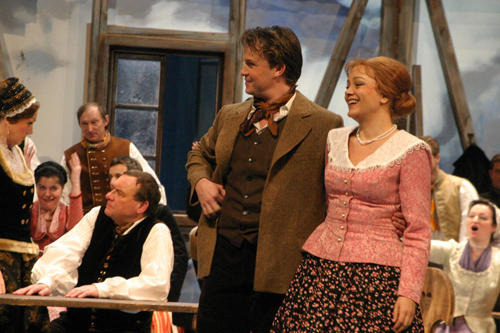
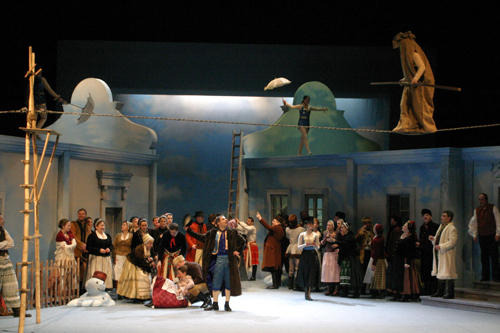
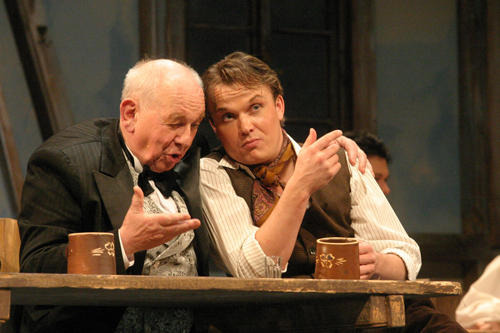
“The Bartered Bride”, the most famous Czech opera, performed in Brno

logobrno

The Bartered Bride

The most famous Czech opera about a beau who sold his sweetheart

Bedřich Smetana (1824-1884)

Janacek Theatre – Rooseveltova 1-7 |

2013: Wednesday November 6, Thursday December 19

2014: Tuesday February 11, Tuesday April 1, Tuesday June 17, Wednesday June 18

bartered1

Libretto: Karel Sabina

Conductor: Petr Vronský, Jaroslav Kyzlink
Director: Ondřej Havelka

Cast

Krušina,a peasant Pavel Kamas, Jiří Klecker
Ludmila, Krušina´s wife Natalia Romanová, Daniela Straková-Šedrlová, Jitka Zerhauová
Mařenka, Krušina´s daughter Eva Dřízgová-Jirušová, Daniela Straková-Šedrlová, Pavla Vykopalová
Mícha, a landowner Jan Hladík, Aleš Šťáva
Háta, Micha´s wife Adriana Hlavsová, Jana Iskrová
Vašek, Mícha´s son Zoltán Korda, Milan Rudolecký
Jeník, Mícha´s son from a former marriage Peter Berger, Aleš Briscein, Otokar Klein
Kecal, a marriage broker Martin Gurbal’, Richard Novák, Zdeněk Plech, Jiří Sulženko
Ringmaster Zdeněk Šmukař, Martin Zbrožek
Esmeralda, a dancer and comedienne Kateřina Kněžíková, Tereza Merklová, Andrea Priechodská
Indian, an Indian comedian Jiří Klecker, Jakub Tolaš
Tightrope Walker Ladislav Kaiser

Janáček Opera Ensemble and Orchestra of the National Theatre Brno

 Premiere 24th March 2006, Janáček Theatre

The most famous Czech opera about a beau who sold his sweetheart

After the successful premiere of Smetana’s first opera, a drama called The Brandenburgers in Bohemia, he decided to compose a contrasting comic work that was truly rooted in Czech tradition. Together with the writer Karel Sabina, they chose a rural theme with realistic characters and the opera premiered in Prague in 1866. The story takes place in a small Bohemian village where two young lovers live, Mařenka and Jeník. However Mařenka’s parents, along with the marriage broker, want her to marry the son of the rich landowner, Mícha, to whom her father owes a debt. With both Mařenka and Jeník disguising their identities, whilst comically deceiving several characters, true love prevails and the happy couple are united.   

As a musical picture of Czech life, The Bartered Bride has become arguably the most popular Czech opera of all time and is a mainstay in opera houses around the world. Smetana’s operas established him as a founding father of Czech, classical music. In The Bartered Bride he uses traditional Bohemian dance forms such as the polka and furiant making the work quintessentially Czech in spirit. Smetana’s light-hearted masterpiece provokes not only national pride when played in its homeland, but also strikes the same inspirational chords when played abroad. The Bartered Bride promises a delightful evening full of fun and entertainment for the whole family. 

The beer for the production is provided by the brewery Starobrno.

bartered6 bartered2 bartered3 bartered4 bartered5

Posted in Music, OPera | Tagged , , , , , , , | 1 Comment

Rossini’s Cinderella in Greece

logogreekopera Presents: Gioachino Rossini’s

cinderellagreeceCinderella

Conductors: George Petrou (25, 26, 30/10, 1, 3, 10, 13/11)
                    Konstantinos Diminakis
(2/11)
Director: Rodula Gaitanou

PREMIERE 25 OCTOBER 2013
25, 26, 30 October 2013
1, 2, 3, 10, 13 November 2013

Olympia Theatre
Performances begin at 20.00


Set design – Lighting: Simon Corder
Costumes: Alexia Theodoraki
Chorus master: Agathangelos Georgakatos

Don Ramiro: Antonis (Αnthony) Koroneos (25, 30/10, 2, 10, 13/11) 
  Vassilis Kavayas (26/10, 1, 3/11)
Dandini: David Menendez (25, 30/10, 2/11)
  Haris Andrianos (26/10, 1, 3, 10, 13/11)
Don Magnifico: Carlos Esquivez (25, 30/10, 2/11)
  Dimitris Kassioumis (26/10, 1, 3, 10, 13/11)
Clorinda: Myrsini Margariti (25/10, 2/11)
  Elpiniki Zervou (26/10, 1, 3/11)
  Georgia Eliopoulos (30/10, 10, 13/11)
Tisbe: Eleni Davou (25/10, 2/11)
  Angelica Cathariou (26/10, 1, 3/11)
  Eleni Voudouraki (30/10, 10, 13/11)
Cinderella (Angelina):    Mary-Ellen Nesi (25, 30/10, 10/11)
  Irini Karaianni(26/10, 1, 3/11)
  Artemis Bogri (2, 13/11)
Alidoro: Petros Magoulas (25, 30/10, 2, 10/11)
  Tassos Apostolou (26/10, 1, 3, 13/11)

One of Rossini’s most delightful comic operas, Cinderella is, of course, based on the famous tale by Charles Perrault, but this time with a few major differences that relate to the period in which the piece was written. For example, it was inconceivable at the time for the leading lady to display her legs on stage, so there is no little glass slipper in the opera. Instead, the prince found his beloved thanks to a bracelet.
The new production, which kicks off the season for the GNO this year, also presents a few variations of its own. The action is set in the 20th century in a place and time that correspond with the narrative but include references that are more familiar to a contemporary audience.
The production’s young director, Rodoula Gaitanou, will be making her debut at the Greek National Opera, though her resumé includes important collaborations with the Royal Opera House in London and other significant British opera companies.
The main roles are performed by: Mary-Ellen Nesi, Irene Karayianni, Artemis Bogri, Antonis Koroneos, Vassilis Kavagias, David Menendez, Haris Andrianos, Carlos Esquivel and Dimitris Kasioumis

Posted in Music, OPera | Tagged , , , | Leave a comment

“The tales of Hoffmann” at the Oslo Opera House

logonorway

December 4, 2013 to December 31, 2013

The tales of Hoffmann

Jacques Offenbach


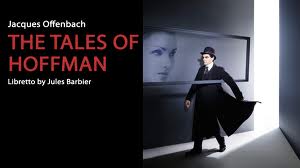
talesofhoffmanThe author and poet Hoffmann sits in a pub, quite inebriated, and telling stories from his life. So starts Jacques Offenbach’s only opera, The Tales of Hoffmann. Best known for his sharply satirical French operettas, Offenbach here takes as his point of departure three novels by the author E.T.A. Hoffmann, famous for his romantic, dark and bizarre stories. Offenbach intertwines these tales with Hoffmann’s own life to give a fascinating – and at times disturbing – fable about love, both of women and of art. I three dream sequences – or hallucinations – we meet Hoffmann’s three great loves: the doll Olympia, the singer Antonia and the courtesan Giulietta.

talesofHoffman2Offenbach died before the opera was finished, since when it has been presented in several different versions based on the outlines left by the composer. The Norwegian National Opera’s production is directed by Spain’s Calixto Bieito, known for his original and often controversial interpretations of both plays and operas. He has previously attracted attention with his productions of Ibsen’s Brand and Peer Gynt at the Bergen International Festival, which were both also performed at theNational Theatre in Oslo.

  • Music: Jacques Offenbach
  • Libretto: Jules Barbier
  • Conductor: Stefan Blunier
  • Direction: Calixto Bieito
  • Set Design: Rebecca Ringst
  • Costumes: Ingo Krügler
  • <:time datetime=”PT3H30M” itemprop=”duration”>3 hours and 30 minutes / 1 break
  • 7 productions / From December 4. to December 31.
  • Premier December 4. 2013 / Main House


Mainroles

  • Hoffmann

    Nils Harald Sødal
    Playing the following days
    • 12/4/2013
    • 12/9/2013
    • 12/12/2013
    • 12/17/2013
    • 12/27/2013
    • 12/29/2013
    • 12/31/2013
  • Lindorf/Dapertutto/Coppelius/Dr. Miracle

    Alex Esposito
    Playing the following days
    • 12/4/2013
    • 12/9/2013
    • 12/12/2013
    • 12/17/2013
    • 12/27/2013
    • 12/29/2013
    Simon Neal
    Playing the following days
    • 12/31/2013
  • Olympia

    Mari Eriksmoen
    Playing the following days
    • 12/4/2013
    • 12/9/2013
    • 12/12/2013
    • 12/17/2013
    • 12/27/2013
    • 12/29/2013
    • 12/31/2013
  • Antonia

    Marita Sølberg
    Playing the following days
    • 12/4/2013
    • 12/9/2013
    • 12/12/2013
    • 12/17/2013
    • 12/27/2013
    • 12/29/2013
    • 12/31/2013
  • Giulietta

    Randi Stene
    Playing the following days
    • 12/4/2013
    • 12/9/2013
    • 12/12/2013
    • 12/17/2013
    • 12/27/2013
    • 12/29/2013
    • 12/31/2013
  • Niklausse

    Ingeborg Gillebo
    Playing the following days
    • 12/4/2013
    • 12/9/2013
    • 12/12/2013
    • 12/17/2013
    • 12/27/2013
    • 12/29/2013
    • 12/31/2013

Other roles

December 4, 2013 Wed    Time   7:00 PM
December 9, 2013 Mon Time 7:00 PM
December 12, 2013 Thu Time 7:00 PM
December 17, 2013 Tue Time 7:00 PM
December 27, 2013 Fri Time 6:00 PM
December 29, 2013 Sun Time 6:00 PM
December 31, 2013 Tue Time 4:00 PM
Posted in Music, OPera | Tagged , , , , , , | Leave a comment