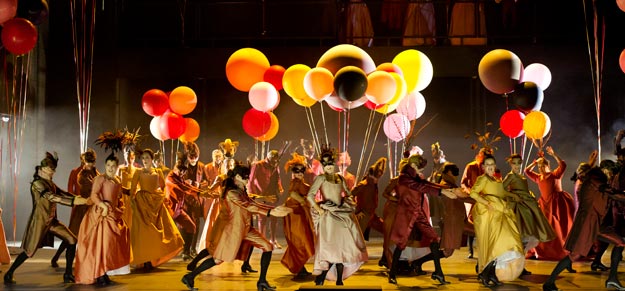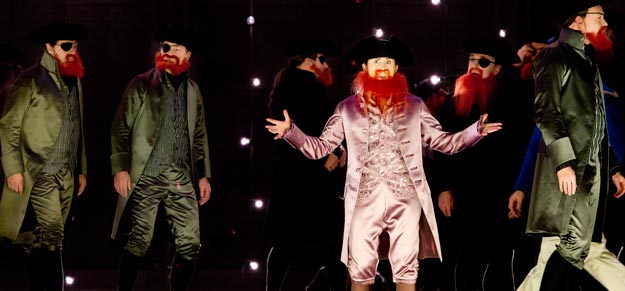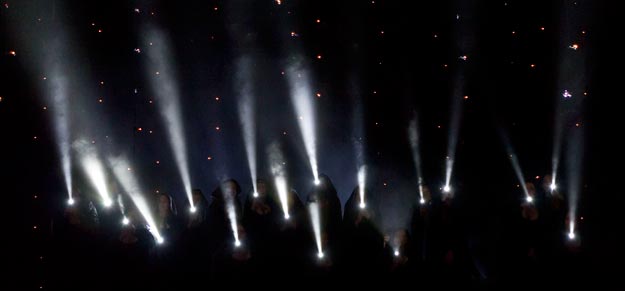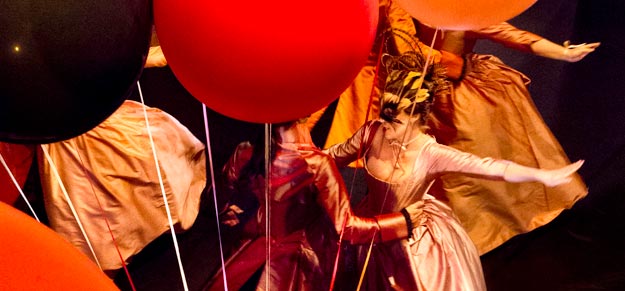
Bizet’s Carmen on tour in Ireland

logo-irelandtheatreBizet’s Carmen

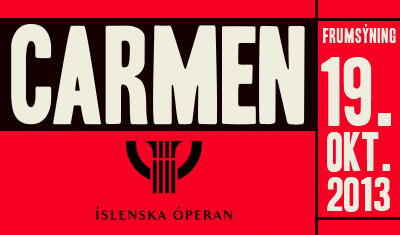
The initial success of Bizet’s Carmen depended more on people’s curiosity to see a piece that had been described as “immoral”, than on a public appreciation for the music and libretto. The first opera to have a working class anti-hero, this story of a regular Joe and his obsession with a woman who wouldn’t be accepted by polite society, was seen as shocking, with music that was too passionate, too novel, too…. Germanic! for the conservative French audiences of the time. Sadly, Bizet passed away before Carmen achieved the popular success it maintains to this day.

This production will be conducted by Andrew Synnott, directed by Gavin Quinn and designed by Aedín Cosgrove. With Imelda Drumm in the title role and Michael Wade-Lee as her smitten soldier, Don José, who has abandoned sweet Micaela, sung by Mairéad Buicke, and Owen Gilhooly taking the role of Escamillo, it is guaranteed that sparks will fly!

This production will also see new Young Associate Artist Maria Hughes taking on the role of Mercedes.

October 2013 tour continues….

Glór Ennis, Causeway Link, Ennis, Co. Clare – Tue Oct 15                                           Mermaid Arts Centre, Main Street, Bray, County Wicklow – Thu 17 Oct.17                 Siamsa Tíre, Town Park, Tralee, Co Kerry – Sat 19 Oct                                                     Samuel Beckett Theatre, Trinity College Dublin, College Green, Dublin 2 – Tue Oct. 22 Pavilion Theatre DUN LAOGHAIRE – Thu Oct. 24                                                          Theatre at the Mill, Mossley Mill, Carnmoney Road North, Newtownabbey– Sat 26 Oct – A

New Micaëla for CARMEN October Tour

Mairéad Buicke will not be rejoining the cast of CARMEN for our October tour, for the happy reason of maternity leave – we know that fans of OTC will join us in wishing her well with her new production!

Mairéad Buicke as Micaëla

And there is more good news: Sinéad Campbell-Wallace, a long-time friend to OTC, most recently singing the Countess in OTC’s immensely popular Irish and UK tour of The Marriage of Figaro (2010/11), will join the company for our performances in Ennis, Bray, Tralee, Dublin, Dun Laoghaire and Newtownabbey.

Sinéad Campbell-Wallace in the title role of OTC’s 2009/10 Irish & UK tour of ALCINA

Posted in Music, OPera | Tagged , , , , , , , | Leave a comment

“Die Fledermaus” at English National Opera in London

eno_diefledermausDie Fledermaus

September 30, 2013 – November 6, 2013

ENGLISH NATIONAL OPERA

Running time: 2hrs 35mins

Johann Strauss’s classic operetta, Die Fledermaus is a comic story of revenge, seduction and mistaken identity, centred on a high-society party thrown by Prince Orlofsky. Man-about-town Eisenstein is to be jailed, his wife is being seduced by an old flame, his friend Dr Falke has a plan to exact revenge for a past prank, and everybody wants to go to the party!

Light-hearted and colourful, yet sophisticated, this new production from Olivier Award-winning director Christopher Alden is re-imagined in an Art Deco-inspired fantasy world influenced by Freud and dream analysis. The staging offers the perfect complement to Viennese waltz-king Strauss’s sparkling melodies, including the joyous ‘Laughing Song’ and the memorable chorus in praise of champagne.
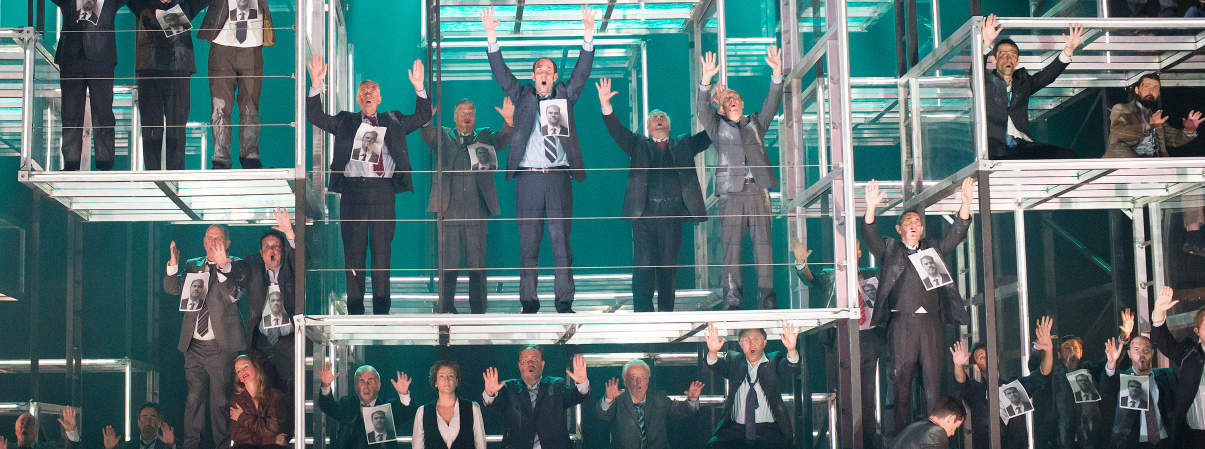
The cast of Die Fledermaus includes ENO favourite Tom Randle as Eisenstein, ENO Harewood Artists Julia Sporsén (who returns to the company following her much-lauded performance in the title role of Julietta in 2012) and Rhian Lois, and Olivier Award-nominated baritone Andrew Shore. Award-winning Korean conductor Eun Sun Kim makes her ENO debut.

New production supported by Lord and Lady Laidlaw.

Co-produced by ENO and the Canadian Opera Company.

Sung and surtitled in English.

All performances at 19:30

Signed performance October 24, 2013 Pre-performance talk October 9, 2013

Monday, September 30, 2013
Wednesday,  October 2, 2013
Saturday, October 5, 2013
Wednesday, October 9, 2013
Friday, October 11, 2013
Tuesday, October 15, 2013
Friday, October 18, 2013
Tuesday, October 22, 2013
Thursday, October 24, 2013
Thursday, October 31, 2013
Wednesday,  November 6, 2013

Cast

Gabriel von Eisenstein   Tom Randle 
Rosalinde   Julia Sporsén 
Frank   Andrew Shore 
Prince Orlofsky   Jennifer Holloway 
Alfred   Edgaras Montvidas 
Dr Falke   Richard Burkhard 
Adele   Rhian Lois 
Dr Blind   Simon Butteriss 
Ida   Lydia Marchione  
Frosch  Jan Pohl  

eno

London Coliseum
St Martin’s Lane
London
WC2N 4ES

Posted in Music, OPera | Tagged , , , | Leave a comment

“Madam Butterfly” at English National Opera in London

eno_sprite2Anthony Minghella’s Olivier Award–winning production returns to English National Opera in London…

enobutterflyMadam Butterfly

Oct. 14, 2013 – Dec. 1, 20 13

 
Running time: 2hrs 50mins

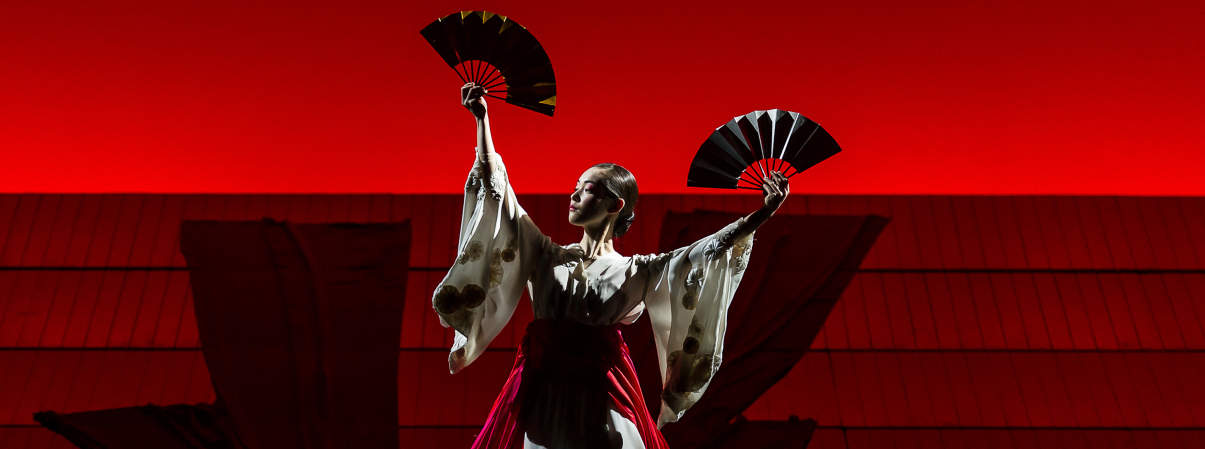
Puccini’s tragic love story tells of Butterfly, a young Japanese girl who falls in love with American naval officer Pinkerton. Shortly after their wedding, Pinkerton returns to America: Butterfly gives birth to a son and patiently awaits her husband’s return, never giving up hope.

Hailed by The Sunday Telegraph as ‘the most beautiful show of the year in operatic London’, Anthony Minghella’s award-winning Madam Butterfly returns to ENO. With its breathtaking mix of cinematic images and traditional Japanese theatre, riot of colourful costumes, stunning sets and unforgettable use of puppetry, Anthony Minghella’s sole opera production has developed into one of the most iconic stagings of the 21st century.

Madam Butterfly sees internationally renowned sopranos Dina Kuznetsova and Mary Plazas (Minghella’s original Butterfly) sharing the title role, alongside Welsh tenors Timothy Richards and Gwyn Hughes Jones as Pinkerton, Pamela Helen Stephen as Suzuki, and ENO Harewood Artist George von Bergen as Sharpless.

Co-produced by ENO with the Metropolitan Opera, New York and Lithuanian National Opera.

Original production supported by Lord and Lady Laidlaw.

Sung and surtitled in English.

Signed performance 13 Nov. Pre-performance talk October 16, 2013

Butterfly Dina Kuznetsova / Mary Plazas (21, 26 Oct, 2, 8 , 13 Nov)
F.B. Pinkerton Timothy Richards / Gwyn Hughes Jones (21 Nov, 29 Nov)
Sharpless George von Bergen
Suzuki Pamela Helen Stephen
Goro Alun Rhys-Jenkins
The Bonze Mark Richardson
Prince Yamadori Alexander Robin Baker
Kate Pinkerton Catherine Young
Conductors Gianluca Marciano / Martin Fitzpatrick
Original Director Anthony Minghella
Original Associate Director & Choreographer Carolyn Choa
Revival Director Sarah Tipple
Set Designer Michael Levine
Costume Designer Han Feng
Original Lighting Designer Peter Mumford
Revival Choreographer Anita Griffin
Puppetry Blind Summit
Translator David Parry 
eno

London Coliseum
St Martin’s Lane
London
WC2N 4ES

Posted in Music, OPera | Tagged , , , , | Leave a comment

Fidelio at English National Opera in London

eno_FidelioFidelio

25 Sep 13 – 17 Oct 13

Running time: 2hrs 40mins

In Fidelio, Political prisoner Florestan is unjustly held captive by Don Pizarro, the corrupt governor of a state prison. Florestan’s wife, Leonore, searches for him by assuming the disguise of a young man called Fidelio and joining the prison staff as a guard. Her rescue of Florestan offers a universal story of the power of marital love and fidelity triumphing over injustice and tyranny.

Two hundred years after its premiere, Beethoven’s Fidelio continues to thrill audiences with its many echoes of the composer’s symphonic works, powerful orchestral imagination and exquisite melodies. Calixto Bieito’s unique vision of Beethoven’s only opera explores the psychological prison of each character, in a production which is contemporary and yet abstract, and which always seeks to challenge our expectations and certainties about this much-admired opera.

Fidelio is conducted by ENO Music Director Edward Gardner. The cast of this ground-breaking new production is led by acclaimed soprano Emma Bell as Leonore and Stuart Skelton as Florestan.

Co-produced by ENO and the Bavarian State Opera, Munich.

Sung and surtitled in English. Strong flashing lights are used in parts of this production.

Signed performance October 3, 2013 Pre-performance talk September 27, 2013
Leonore   Emma Bell 
Florestan   Stuart Skelton* 
Don Pizarro   Philip Horst 
Rocco   James Creswell 
Marzelline   Sarah Tynan 
Jaquino   Adrian Dwyer 
Don Fernando   Roland Wood 

* excluding 1 & 3 October when Bryan Register will sing the role of Florestan
Conductor   Edward Gardner 
Director   Calixto Bieito 
Set Designer   Rebecca Ringst 
Costume Designer   Ingo Krügler 
Lighting Designer   Tim Mitchell 
Translator   David Pountney

Heath Quartet
Violin   Oliver Heath 
Violin   Cerys Jones 
Viola   Gary Pomeroy 
Cello   Christopher Murray

eno

London Coliseum
St Martin’s Lane
London
WC2N 4ES

Posted in Music, OPera | Tagged , , , , , , , | 1 Comment

“Der Rosenkavalier” will open soon at the Hungarian State Opera

Resize_of_A_rzsalovag1Der Rosenkavalier

Strauss, Richard

Hungarian State Opera, Budapest Opera House | 18:00-22:30

  • ComposerRichard Strauss
  • Librettist
  • Hungarian subtitles
  • Director: Adrejs Zagars 

  • Dramaturg: JOchen Breoholz 

  • Set Designer: Julia Muer 

  • Costume Designer: Kristine Pasternaka 

  • Light designer: Kevin Wyn-Jones 

  • Leader of Children’s Choir: Gyogyver Gupcso 

  • Choir Master: Mate` Szabo` Sipos 

  • Conductor: Stefan Soltesz 

  • FeldmarschallinN.N.
  • Baron OchsN.N.
  • Octavian: Viktoria Mester 

  • Faninal: N.N.
  • Sophie: Julia Hainoczy

  • Leitmetzerin: Cleo Mitilineou 

  • Valzacchi: Jozseph Mukk 

  • Annina: Andrea Ulbrich 

  • Polizeikommissar: Janos Toth 

  • Haushofmeister bei der Feldmarschallin: Laszlo Beothy-Kiss 

  • Haushofmeister bei Faninal: Peter Kiss 

  • Notar: Kazmer Sarkany 

  • Wirt: Árpád Szűcs
  • Sänger: Gergely Boncser 

Resize_of_A_rzsalovag2ACT I

The Marschallin, Princess von Werdenberg, has spent the night with her young lover, Octavian, Count Rofrano. He hides when a servant brings breakfast, then again when loud voices are heard in the antechamber. To avoid discovery, Octavian emerges from his hiding place disguised as a chambermaid. The unexpected visitor is the Marschallin’s country cousin, Baron Ochs auf Lerchenau, who instantly starts to make advances towards Mariandel. He brags about his amorous conquests and his upcoming marriage to Sophie von Faninal, the young daughter of a wealthy bourgeois. His attempts to grab Mariandel cause the Marschallin to remark that his engagement obviously has not cramped his style, and he boasts that he has no intention of curtailing his amorous exploits, adding that he keeps one of his bastard sons, Leopold, as his body servant. When he asks the Marschallin for advice as to which cavalier could present Sophie with the traditional silver engagement rose, she suggests Octavian. Mariandel quickly makes her escape as the room fills with the daily crowd of petitioners and salespeople. Among them is an Italian singer, whose aria is cut short by the baron’s wrangling with a lawyer over Sophie’s dowry. The baron hires a pair of Italian intriguers, Annina and Valzacchi, to locate the shy servant girl.

When the room is cleared, the Marschallin, appalled by the thought of the rude Ochs marrying the innocent young girl, muses on her own waning youth. The returning Octavian is surprised to find her in a distant and melancholy mood. He passionately declares his love but she can only think about the passing of time and tells him that one day he will leave her for a younger woman. Hurt, he rushes off. The Marschallin tries to call him back, but it is too late. She summons her servant Mohamed and sends Octavian the silver rose.

Resize_of_A_rzsalovag3ACT II

On the morning of her engagement, Sophie excitedly awaits the arrival of the cavalier of the rose. Octavian enters and presents her with the silver rose on behalf of the baron. Sophie accepts rapturously, and the two young people feel an instant attraction to each other. When Ochs, whom Sophie has never met, arrives, the girl is shocked by his crude manners. The baron goes off to discuss the wedding contract with Faninal, and Sophie asks Octavian for help. They end up embracing and are surprised by Annina and Valzacchi, who summon the baron. The outraged Octavian grazes the baron’s arm with his rapier and Ochs melodramatically calls for a doctor. In the ensuing confusion, Sophie tells her father that she will not marry the baron, while Octavian enlists Annina and Valzacchi to participate in an intrigue he is hatching. When Ochs is alone, nursing his wound with a glass of wine, Annina, sent by Octavian, appears with a letter from Mariandel, asking the baron to a rendezvous. Intoxicated with his own charm, Ochs is delighted at the prospect of a tète-à-tète.

Resize_of_A_rzsalovag8ACT III

At Octavian’s instigation, Annina and Valzacchi prepare the back room of a dingy inn for Ochs’s rendezvous. Before long, the baron and Mariandel arrive for a private supper. As she coyly leads him on, grotesque apparitions pop out of windows and secret panels, terrifying the baron. Annina, disguised as a widow, runs in crying that Ochs is the father of her many children. When the police appear, Ochs claims that Mariandel is his fiancée. The arriving Faninal, furious at his future son-in-law’s behavior, summons Sophie to set matters straight, then faints and is carried off. At the height of the confusion, the Marschallin enters. Octavian takes off his disguise and the Marschallin explains to Ochs that it was all a farce. The baron finally admits defeat and leaves, pursued by the innkeeper and various other people who all demand payment of their bills. Left alone with Octavian and Sophie, the Marschallin laments that she must lose her lover so soon, but nevertheless accepts the truth. She gives the bewildered Octavian to Sophie and quietly leaves the room. The young lovers realize that their dream has come true.

Resize_of_A_rzsalovag4  Resize_of_A_rzsalovag5  Resize_of_A_rzsalovag6  Resize_of_A_rzsalovag7

Posted in Music, OPera | Tagged , , , , , , , , | Leave a comment

VERDI’S 200TH ANNIVERSARY CELEBRATION: “La Traviata” opens at the Budapest opera House

5LA TRAVIATA

Opera in three Acts

Hungarian State Opera, Opera House | 19:00-21:45

  • Composer: Giuseppe Verdi
  • Librettist: Francesco Maria Piave
  • Hungarian subtitles: Agnes Romhanvi 

  • Director: Andreas Bekes 

  • Set Designer: Miklós Fehér
  • Costume Designer: Judit Schäffer
  • Choreographer: Jeno Locsei 

  • Choir Master: Mate` Szabo` Sipos 

  • Conductor: Janos Kovacs 

  • Violetta Valéry: Andrea Rost
  • Flora Bervoix: Katalin Gemes 

  • Annina: Eva Balatoni 

  • Alfredo Germont: Peter Balczo 

  • Giorgio Germont: Alexandru Agache 

  • Gastone: Tibor Szappanos 

  • Il barone Douphol: Lajos Geiger 

  • Il Marchese D’Obigny: Robert Rezsnyak 

  • Il dottor Grenvil: Sandor Egri 

  • GiuseppeN.N.
  • Un domesticoN.N.

1ACT I

In the salon of her house, Violetta Valéry, one of the stars of the Parisian demi-monde, receives guests for the evening. Alfredo Germont is announced, and is introduced to the lady of the house as an ardent admirer of hers. Baron Douphol, Violetta’s lover of the moment, sees the young man as a potential rival for Violetta’s affections. Alfredo proposes a toast to the power of love, and Violetta responds with a verse singing the praises of pleasure and amusement. While the guests proceed to the ballroom to begin dancing, Violetta has a dizzy spell, and stays behind. She suddenly finds herself face-to-face with Alfredo, who declares his sincere love for her without further ado. The young woman, who has hitherto only known love from its realistic, down-to-earth side, is surprised and confused by Alfredo’s selfless and passionate declaration of love, and says he would do better to forget her, since she can only offer him her friendship. However, she hands him one of the camelias from her decolleté and gives him permission to return when the flower has died. Alfredo understands this as her way of saying he may see her again tomorrow. Left alone, Violetta is assailed by conflicting feelings. She admits that she longs to give and receive love, but when she starts to think that these feeling are taking possession of her, she declares them to be mere silliness and tries to banish all thoughts of love from her mind. Alfredo’s voice, heard in the distance, makes her pause for a moment – but then she insists once more that she won’t give up the way of life that she knows so well, a life of endless pleasure and dissipation.2

ACT II

Several months later. Violetta and Alfredo have been living quietly on a country estate near Paris. Alfredo is overjoyed at his life together with his beloved, until he learns from the maid Annina that Violetta has gradually been selling all her property in Paris in order to pay for their carefree lifestyle. He is utterly shocked, and sets out for Paris, reproaching himself bitterly for his thoughtlessness, to set things to rights. Violetta has received an invitation from Flora to attend a masked ball, but she is not interested. A visitor is announced. Violetta tells her servant to bring him in, expecting it to be the estate agent – and is surprised when the visitor introduces himself as Giorgio Germont, Alfredo’s father.

9He starts to shower reproaches on her, for he believes that his son is wasting his fortune on a courtesan; but Violetta is able to prove that she is paying all the expenses herself. Giorgio explains that his daughter’s marriage will be at risk if Alfredo’s way of life continues to damage the family’s reputation, and asks her to give up Alfredo. At first, Violetta thinks that Giorgio just means a temporary separation; but then she realises that he wants her to give up Alfredo forever. Germont reminds her that she is living in sin, and foretells that as her beauty fades, so Alfredo’s love for her will fade too. He is moved to see her grief, while Violetta agrees to give up Alfredo. She now asks him to leave, and he does so, thanking her sincerely for the sacrifice she is willing to make. She writes a note to Flora accepting the invitation to the ball, then her farewell letter to Alfredo. At this point, Alfredo returns and announces his father’s visit. The distraught Violetta, laughing and crying at the same time, throws herself into his arms and assures him that she still loves him then she rushes out of the room. A messenger appears as soon as Violetta has gone and gives Alfredo her letter of farewell. Alfredo’s father attempts to console his son and asks him to return to the family. Alfredo is completely stunned by what has happened, and by the premonition that Violetta is going to resume her former way of life. Then he espies Flora’s invitation on the table, and hastens off in pursuit of the (as he believes) disloyal Violetta.

6In Flora’s house, the guests are already arriving. The news begins to spread that Violetta and Alfredo have broken up, when Alfredo himself appears and plunges into the activity of the masked ball. Asked about Violetta, he shrugs his shoulders and takes a seat at the gambling table. When Violetta appears on Baron Douphol’s arm, she observes how Alfredo – to the growing annoyance of the Baron – is making suggestive remarks in her direction. Douphol joins his rival at the card table, and soon loses a considerable sum of money to him. Before the tension between the two men escalates further, the guests are summoned into the dining room. Violetta returns, followed by Alfredo. She asks him to leave the ball before he starts to quarrel with the Baron. Alfredo cynically implies that she is afraid for her protector, but adds that he is prepared to leave if she accompanies him. Since she won’t agree Alfredo forces her to admit that she loves Douphol.

12He then recalls the guests and announces to the assembled company that Violetta squandered her fortune on him. To reward her for the favours he enjoyed, he flings his winnings from cards at her feet. The guests are indignant, and Violetta sinks unconscious into Flora’s arms.


8Father Germont arrives on the scene too late and criticizes his son’s behaviour. The Baron for his part demands satisfaction from Alfredo, who already regrets his vindictive action, while Violetta regains consciousness and laments that she cannot open her heart to her beloved. But she knows that he will forgive her one day.

ACT III

Violetta lies in bed in her Paris apartment; she is seriously ill, and Annina is looking after her. The doctor promises Violetta that she will get better soon, but he takes the maid to one side and admits that her mistress only has a few hours left to live. As the noise of the carnival is carried up to her ears from the street below, Violetta feels the end of her life approaching. A letter from Alfredo’s father informs her that Alfredo wounded the Baron in a duel, and was forced to flee the country for a while. He has told his son at last about the sacrifice Violetta made, and Alfredo and his father are now both on their way to her to ask her forgiveness.

TO_MG_9295A glance in the mirror tells Violetta that it is too late for any hope, and she bids farewell to the happy dreams she nurtured in the past. Alfredo rushes into the room and sinks into Violetta’s arms. For one brief moment, the two lovers forget their hopeless circumstances, and dream of a future together. Although the longing to cling on to life flares up in Violetta one last time, her strength finally deserts her as she tries to get out of bed. Violetta makes Alfredo a parting gift of a locket containing her picture. She says he should keep it to give to the girl who will love him one day, as a present from someone who will be praying for both of them. All of a sudden, Violetta seems to be miraculously cured of her pain, and sits up in bed with a last ray of hope – then she sinks back lifeless into Alfredo’s arms.

TO_MG_9434  TO_MG_9458

Posted in Music, OPera | Tagged , , , , , | 1 Comment

VERDI’S 200th ANNIVERSARY CELEBRATION: Falstaff in Hungary

Falstaff_webFalstaff

by Giuseppe Verdi

Magyar Allami Operahaz; Opera House, Budapest, Hungary | 19:00-22:00

  • Composer: Giuseppe Verdi
  • Director: Arnaud Bernard 

  • Set Designer: Arnaud Bernard 

  • Costume Designer: Arnaud Bernard 

  • Hungarian subtitles: Agnes Romhanvi 

  • Conductor: Peter Halasz 

  • Sir John Falstaff: Kiril Manolov 

  • FordN.N.
  • Fenton: Peter Balczo 

  • Dr. Caius: Zoltan Megvesi 

  • Pistola: Geza Gabor 

  • BardolfoN.N.
  • Mrs. Alice: Beatrix Fodor 

  • Nannetta: Emoke Barath 

  • Mrs. Quickly: Livia Budai 

  • Mrs. Page: Erika Gal 

1_resize  3_resize

4_resize  8_resize 11_resize  13_resize

14__resize  15_resize  18_resize  19_resize  23_resize  26_resize  27_resize  28_resize  32_resize

From the September Premiere:

PHP_4207    PHP_4571PHP_4259     PHP_4225  PHP_4463    PHP_4547  PHP_4749   falstaff_premier_65_resize  falstaff_premier_71_resize

Posted in Music, OPera | Tagged , , , , , | Leave a comment

VERDI’S 200th ANNIVERSARY CELEBRATION: “Aida” in Slovakia…

Giuseppe VerdiAida

aida3

logo-snd

Opera in four acts in the Italian language

Conductor: Rastislav ŠtúrPeter Valentovič
Directed by: Miroslav Fischer
Set Designer: Milan Ferenčík
Costumes Designer: Josef Jelínek
Chorusmaster: Pavol ProcházkaLadislav Kaprinay
Ján GallaMartin Malachovský
Amneris: Denisa HamarováMonika Fabianová
Aida: Iveta MatyášováLouise HudsonLiene Kinca
Radames: Michal LehotskýErnesto Grisales
Ramfis: Jozef BenciPeter Mikuláš
Amonasro: Daniel ČapkovičSergej Tolstov
Miriam MaťašováKatarína Polakovičová
Jozef KundlákJiří Zouhar

aida-2In the music of Aida the magnificence of state and military ceremonies meet tense moments of emotional conflicts of the leading characters, and the pomp of mass scenes with choirs, as well as ballet scenes with intimate passages of lyric personal confessions. Aida is not only a taking romantic story with capturing music, but also a monumental fresco with great stage setting, attracting both our vision and hearing.

Running time: 3 hrs with one interval

Plan of performances

Saturday, October 26, 2013 – 19:00    
Tuesday, November 19, 2013 – 19:00    
Saturday, March 29, 2014 – 17:00    
Tuesday, May 27, 2014 – 19:00    
Tuesday, June 17, 2014 – 19:00    

Premières:  June 19, 1998 SND Historical Building

aida-4  aida-5

aida-7  aida-6


Posted in Music, OPera | Tagged , | Leave a comment

Opera Houses in the World: Slovak National Theatre

logo-sndHistorical building of SND

At that time the townspeople with the contribution of Count Csáky built the first stone theatre (1776) in approximately the same place as today’s historical building of the SND. The importance of the city declines in the 19th century. The city theatre is rented by German and later Hungarian companies. However provincial circumstances cannot prevent dramaturgical readiness. Romanticism quickly triumphs here – Boieldieu’s ‘Jean de Paris’ within a year and Weber’s ‘Freischütz’ within four years after their Paris and Berlin premieres. Heinrich Marschner, working at that time as a teacher of music in Bratislava, has the premiere of his ‘Kyffhäuserberg’ (1816). In the 30’s the Italian pre-Verdi bel canto appears on the posters (Rossini’s ‘Semiramide’ and ‘Otello’, Donizetti’s ‘Lucrezia Borgia’, Bellini’s ‘Norma’ and ‘I Puritani’). ‘Lohengrin’ and ‘Tanhäuser’ are performed for the first time in Bratislava at approximately the same time when Boito and Faccio performed Wagner in Italy.

sH%20%20%2003In 1886 the new building of the City Theatre is opened. It is built in Neo-Renaissance style according to the design of Helmer and Fellner’s Vienna theatre architecture company. The opening performance is Erkel’s ’Bánk bán’ presented by the Budapest National Theatre Company. Verism quickly triumphs in this building, in the last year of the century Bruno Walter gains experience here as a teacher. At the beginning of the new century the Brno Opera presents a wide cross-section through the Czech classical opera and, for the first time in Bratislava, Tchaikovski’s ’Eugen Onegin’ and ’The Queen of Spades’.

salonik%20%202In 1919 Bratislava becomes a part of the Czechoslovak Republic. In 1920 the professional Slovak National Theatre starts to work in the building of the City Theatre. It has theatre and opera companies. It starts its activities with the premiere of Smetana’s ’The Kiss’ on March 1, 1920.


sHB%20exterier%20%20%2003  sHB%20exterier%20%20%2001

shladisko%20%2001shladisko%20%2003


slovaknew1The new building of SND

The new building of the Slovak National Theatre was designed by Slovak architects Martin Kusý, Pavol Paňák and Peter Bauer whose project was selected out of fifty three entries. The building has seven floors, over 2000 rooms and three main auditoriums (Opera and Ballet Hall, Drama Hall, Studio). In addition it has a restaurant that seats 120, a club, a café, a reading café and a kitchen.

 slovaknew3Several artworks are located in the interior and exterior spaces of the SND New Building, among them a fountain by Alexander Biľkovič, Iľja Skoček and Peter Bauer in front of the building. The front foyer features Spring by Pavel Bauer and the painter Dušan Buřil; Cascade by Peter Roller and Two Towers by the architect Peter Bauer are in front of the building. Apart from the artworks, which are an integral part of the premises, theatre costumes and exhibitions are on display in the corridors of the building.

slovaknew8The theatre building opened on 14 April 2007 in a ribbon-cutting ceremony attended by the President of the Slovak Republic Ivan Gasparovič and the Minister of Culture Marek Maďarič.


slovaknew7  slovaknew9

slovaknew4  slovaknew10

Posted in OPera | Tagged , , , , , , , | Leave a comment

“Opera is Fun” in Slovakia

Opera is funOpera is Fun!


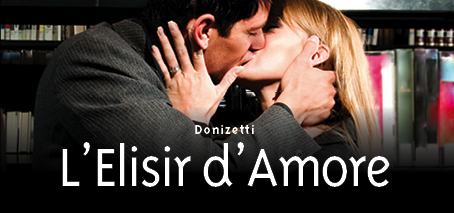
‘Walk’ through the opera L’elisir d’amore for the youngest visitors with comments


logo-sndHistorical building, Saturday,  November 16, 2013 – 11:00


Conductor: Peter Valentovič
Directed by: Pavol Smolík
Bühne: Vladimír Čáp
Kostüme: Ľudmila Várossová
 

Adina: Jana Bernáthová
Nemorino: Martin Gyimesi
Belcore: Daniel Čapkovič
Dulcamara: Gustáv Beláček
  Martin Vanek
 

A ‘walk’ through the opera of Gaetano Donizetti L’elisir d’amore for the youngest visitors accompanied by the popular actor Martin Vanek. A simple story: Nemorino, a young man in love believes the travelling quack doctor Dulcamara. He buys a magic elixir of love from him and it really works very well, of course when the person in love unconditionally believes in it. And as it is usual in a comic opera: the love wins and the tricky doctor becomes the subject of mockery.

Running time: 1 hour with no interval


Plan of performances

   
Saturday 16. November 2013 – 11:00    
Saturday 7. December 2013 – 11:00    
Monday 13. January 2014 – 11:00    
Tuesday 18. February 2014 – 11:00    
Saturday 22. February 2014 – 11:00    
Wednesday 7. May 2014 – 11:00
Posted in OPera | Leave a comment