Der Rosenkavalier

Strauss, Richard
Hungarian State Opera, Budapest Opera House | 18:00-22:30
- ComposerRichard Strauss
- Librettist
- Hungarian subtitles
- Director: Adrejs Zagars
- Dramaturg: JOchen Breoholz
- Set Designer: Julia Muer
- Costume Designer: Kristine Pasternaka
- Light designer: Kevin Wyn-Jones
- Leader of Children’s Choir: Gyogyver Gupcso
- Choir Master: Mate` Szabo` Sipos
- Conductor: Stefan Soltesz
- FeldmarschallinN.N.
- Baron OchsN.N.
- Octavian: Viktoria Mester
- Faninal: N.N.
- Sophie: Julia Hainoczy
- Leitmetzerin: Cleo Mitilineou
- Valzacchi: Jozseph Mukk
- Annina: Andrea Ulbrich
- Polizeikommissar: Janos Toth
- Haushofmeister bei der Feldmarschallin: Laszlo Beothy-Kiss
- Haushofmeister bei Faninal: Peter Kiss
- Notar: Kazmer Sarkany
- Wirt: Árpád Szűcs
- Sänger: Gergely Boncser
 ACT I
ACT I
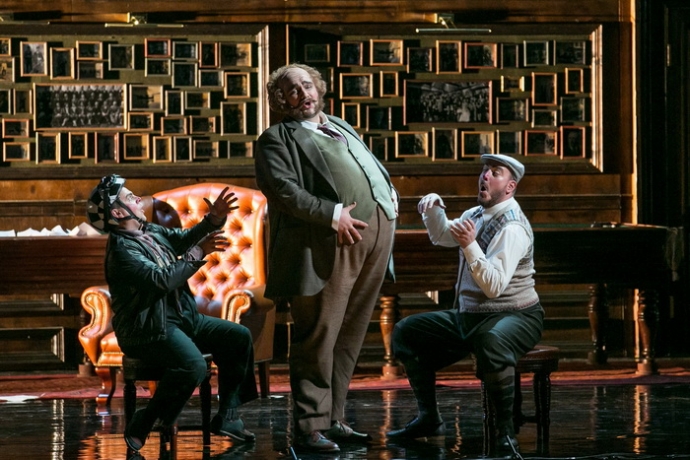
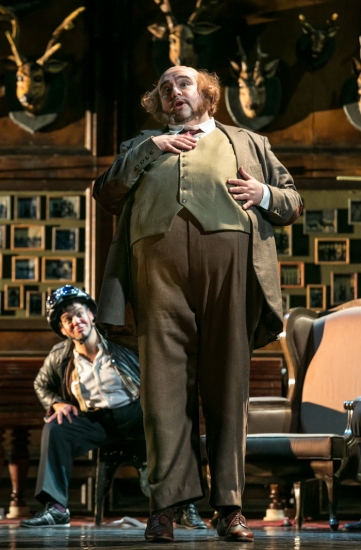
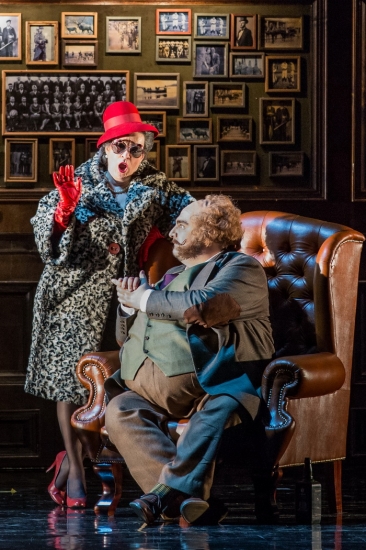
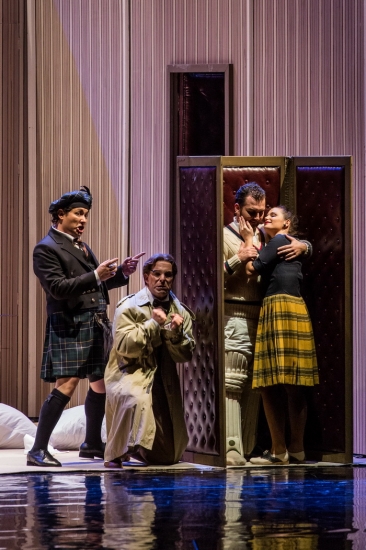
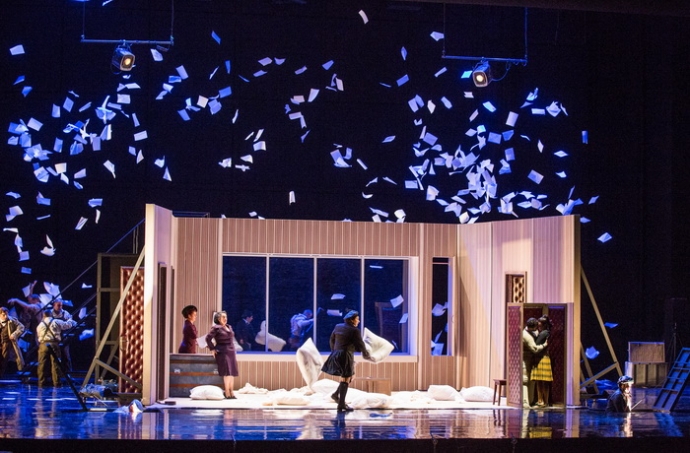
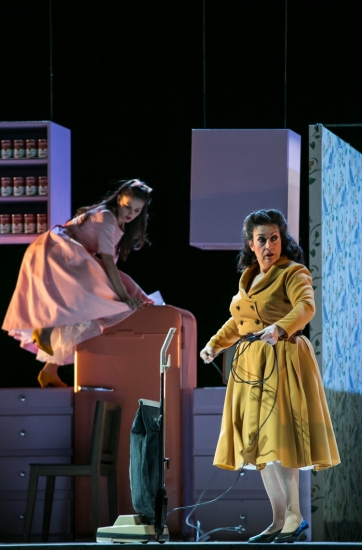
The Marschallin, Princess von Werdenberg, has spent the night with her young lover, Octavian, Count Rofrano. He hides when a servant brings breakfast, then again when loud voices are heard in the antechamber. To avoid discovery, Octavian emerges from his hiding place disguised as a chambermaid. The unexpected visitor is the Marschallin’s country cousin, Baron Ochs auf Lerchenau, who instantly starts to make advances towards Mariandel. He brags about his amorous conquests and his upcoming marriage to Sophie von Faninal, the young daughter of a wealthy bourgeois. His attempts to grab Mariandel cause the Marschallin to remark that his engagement obviously has not cramped his style, and he boasts that he has no intention of curtailing his amorous exploits, adding that he keeps one of his bastard sons, Leopold, as his body servant. When he asks the Marschallin for advice as to which cavalier could present Sophie with the traditional silver engagement rose, she suggests Octavian. Mariandel quickly makes her escape as the room fills with the daily crowd of petitioners and salespeople. Among them is an Italian singer, whose aria is cut short by the baron’s wrangling with a lawyer over Sophie’s dowry. The baron hires a pair of Italian intriguers, Annina and Valzacchi, to locate the shy servant girl.
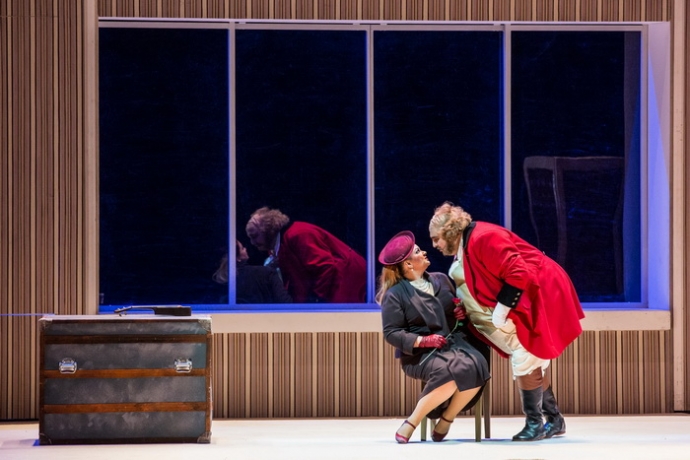
When the room is cleared, the Marschallin, appalled by the thought of the rude Ochs marrying the innocent young girl, muses on her own waning youth. The returning Octavian is surprised to find her in a distant and melancholy mood. He passionately declares his love but she can only think about the passing of time and tells him that one day he will leave her for a younger woman. Hurt, he rushes off. The Marschallin tries to call him back, but it is too late. She summons her servant Mohamed and sends Octavian the silver rose.
 ACT II
On the morning of her engagement, Sophie excitedly awaits the arrival of the cavalier of the rose. Octavian enters and presents her with the silver rose on behalf of the baron. Sophie accepts rapturously, and the two young people feel an instant attraction to each other. When Ochs, whom Sophie has never met, arrives, the girl is shocked by his crude manners. The baron goes off to discuss the wedding contract with Faninal, and Sophie asks Octavian for help. They end up embracing and are surprised by Annina and Valzacchi, who summon the baron. The outraged Octavian grazes the baron’s arm with his rapier and Ochs melodramatically calls for a doctor. In the ensuing confusion, Sophie tells her father that she will not marry the baron, while Octavian enlists Annina and Valzacchi to participate in an intrigue he is hatching. When Ochs is alone, nursing his wound with a glass of wine, Annina, sent by Octavian, appears with a letter from Mariandel, asking the baron to a rendezvous. Intoxicated with his own charm, Ochs is delighted at the prospect of a tète-à-tète.
 ACT III
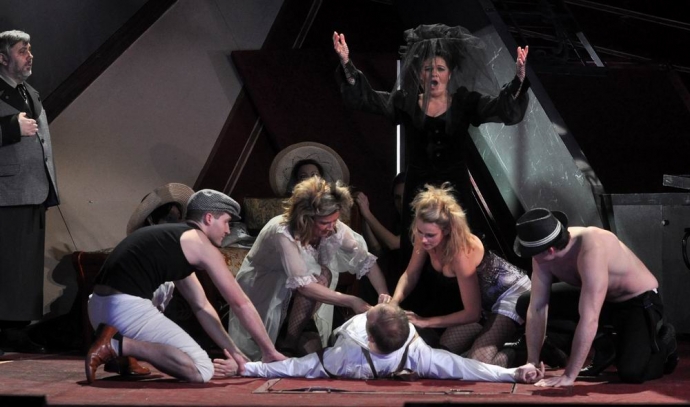
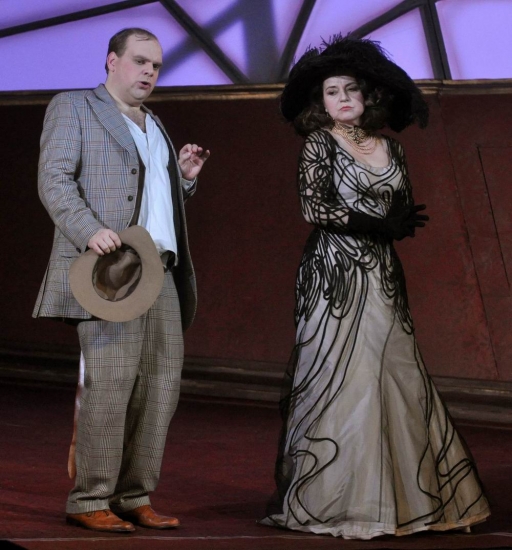
At Octavian’s instigation, Annina and Valzacchi prepare the back room of a dingy inn for Ochs’s rendezvous. Before long, the baron and Mariandel arrive for a private supper. As she coyly leads him on, grotesque apparitions pop out of windows and secret panels, terrifying the baron. Annina, disguised as a widow, runs in crying that Ochs is the father of her many children. When the police appear, Ochs claims that Mariandel is his fiancée. The arriving Faninal, furious at his future son-in-law’s behavior, summons Sophie to set matters straight, then faints and is carried off. At the height of the confusion, the Marschallin enters. Octavian takes off his disguise and the Marschallin explains to Ochs that it was all a farce. The baron finally admits defeat and leaves, pursued by the innkeeper and various other people who all demand payment of their bills. Left alone with Octavian and Sophie, the Marschallin laments that she must lose her lover so soon, but nevertheless accepts the truth. She gives the bewildered Octavian to Sophie and quietly leaves the room. The young lovers realize that their dream has come true.
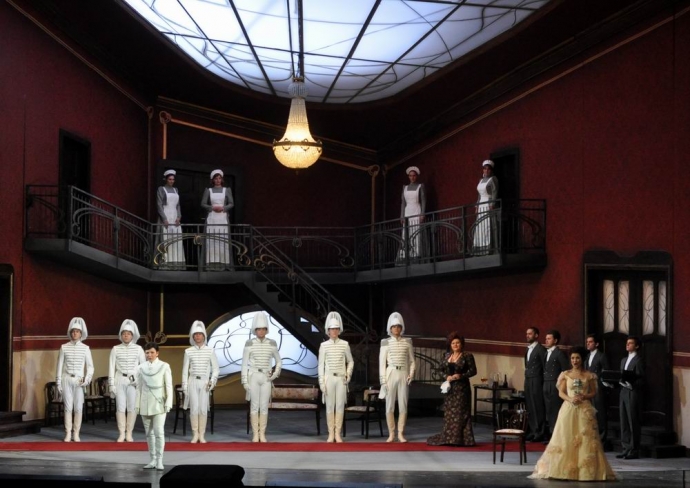


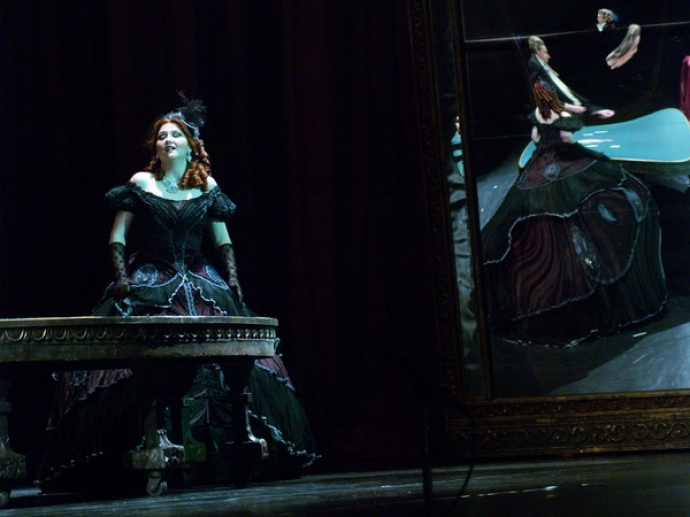

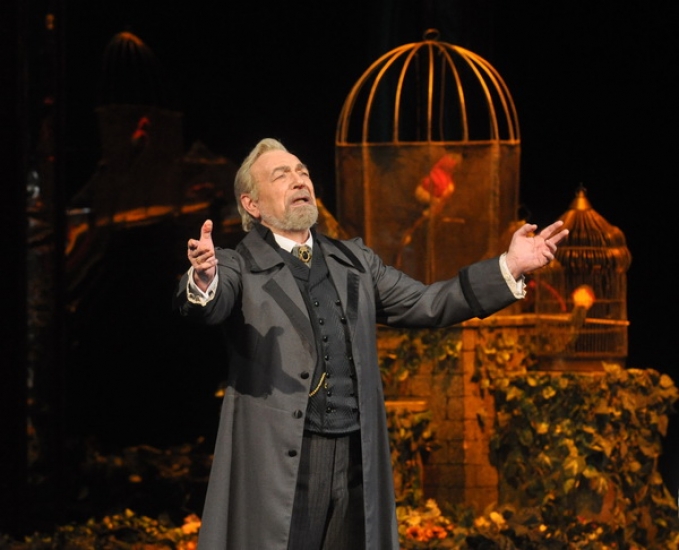


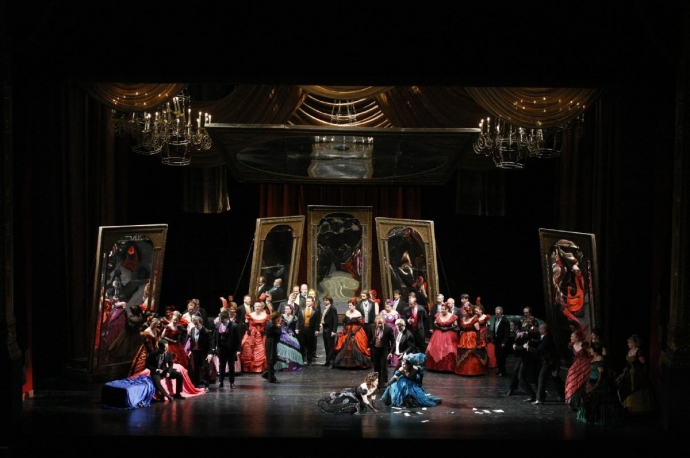










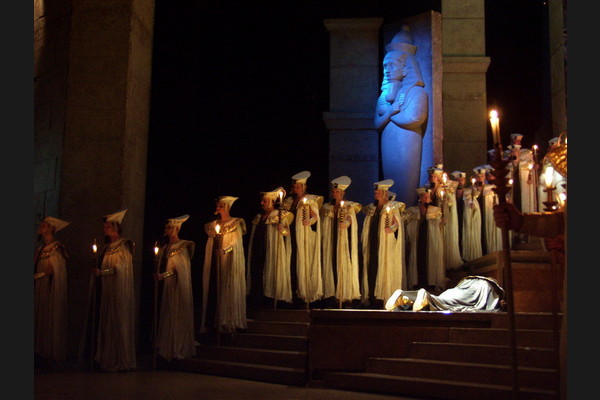
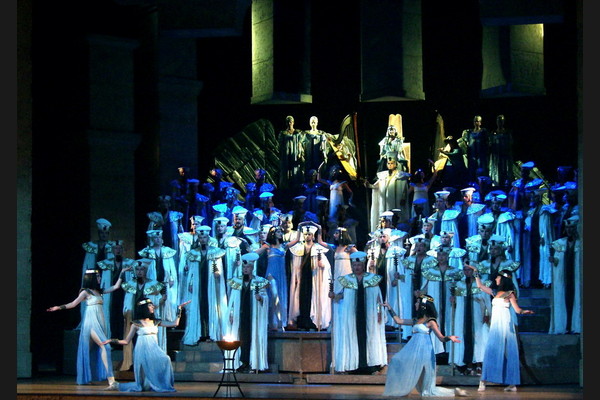
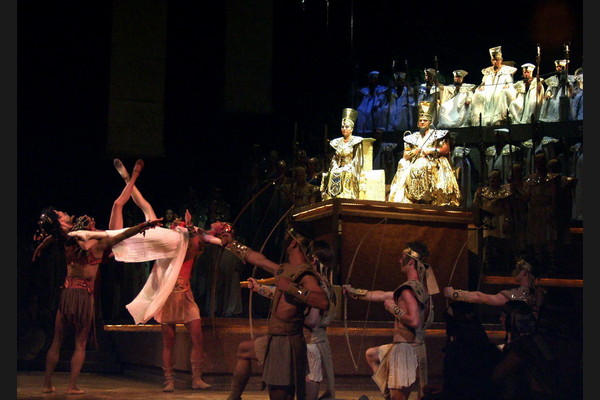

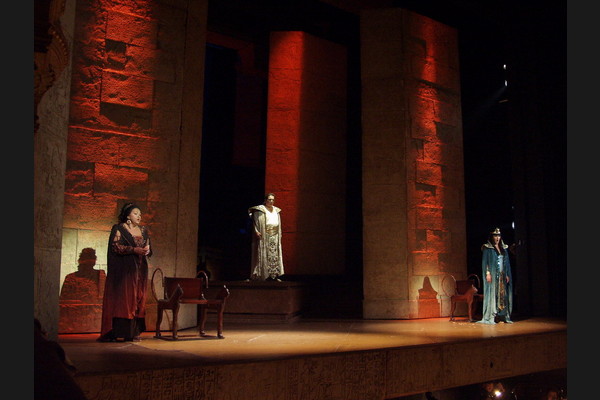


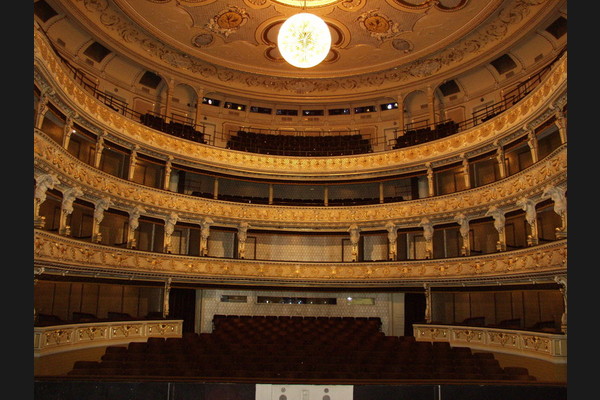
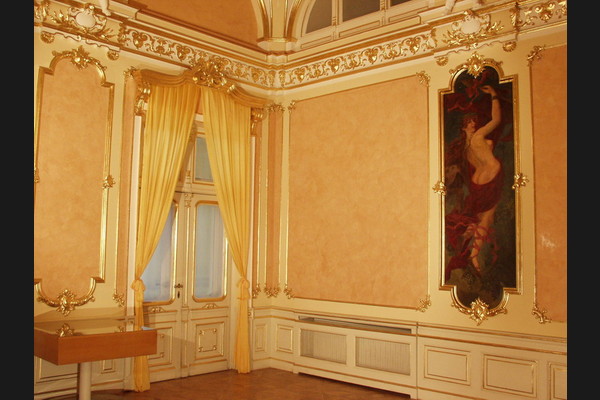
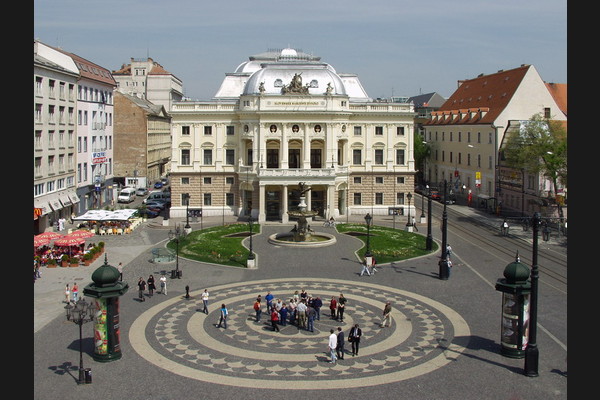
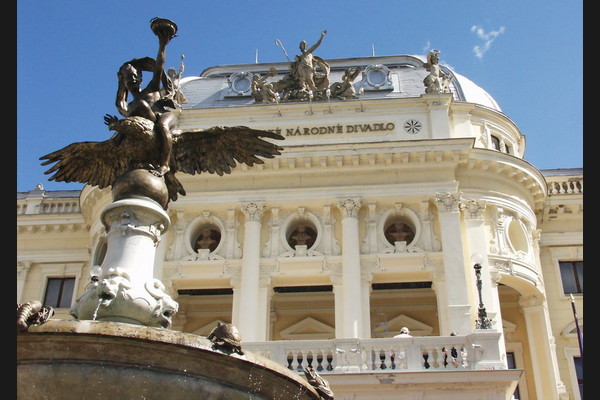
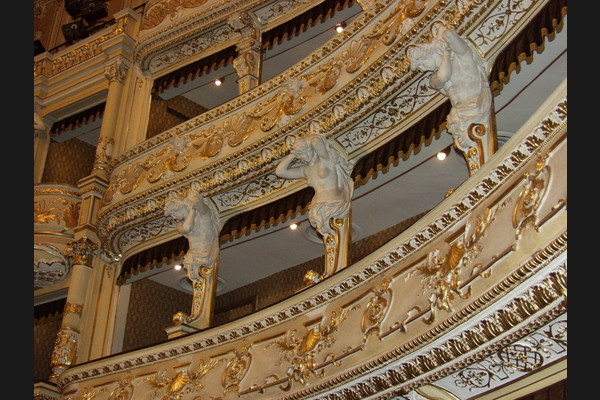
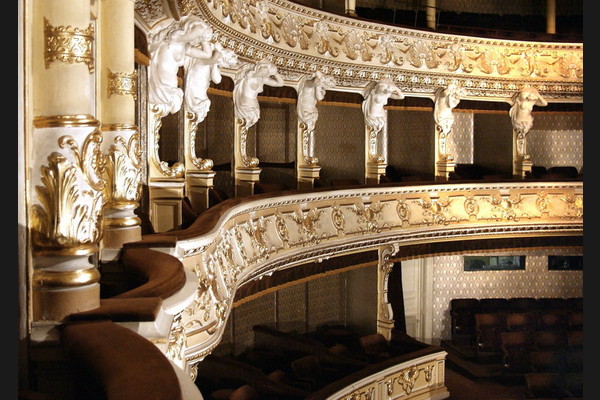

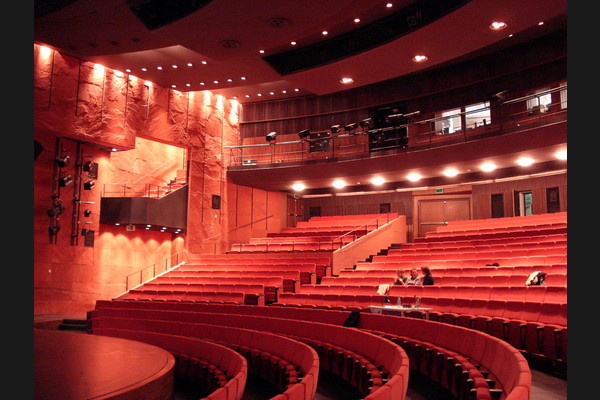
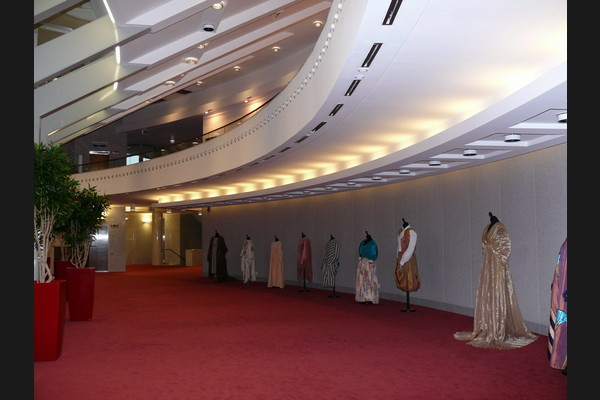
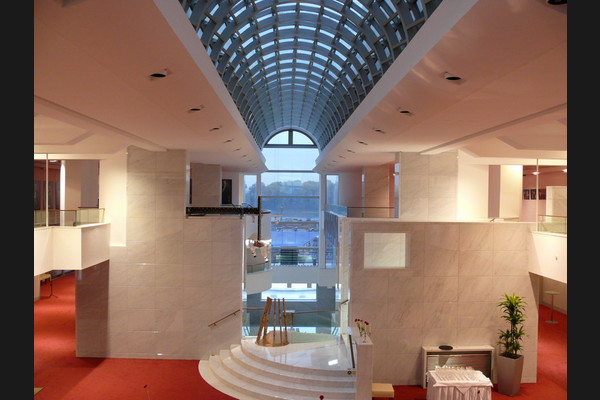
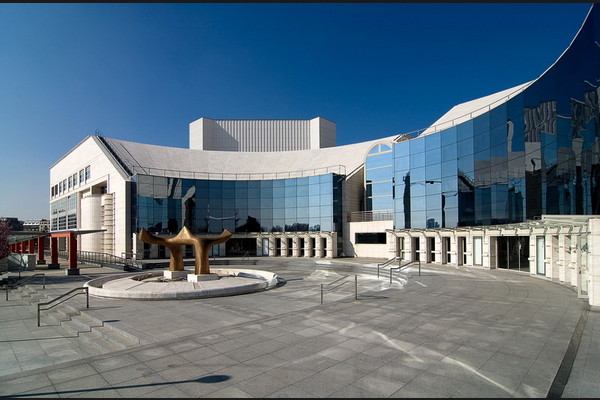
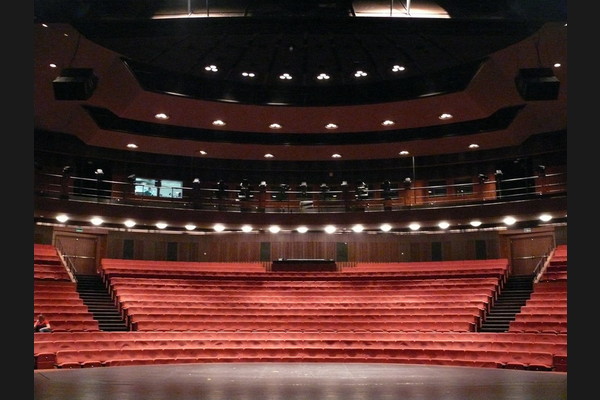


 The Theatre of the Estates is one of the most beautiful historic theatre buildings in Europe. The aristocrat František Antonín Count Nostitz Rieneck, fired by a desire to enhance the charm of his native city and the minds of his fellow citizens, had this edifice built. It took not quite two years to construct and the theatre was officially opened in 1783 with a first performance of the tragedy Emilia Galotti by Lessing. Originally the theatre was dubbed Count Nostitz’s Theatre. This exceptional project for Prague of the time corresponded to the prevailing spirit at the end of 18th century when national theatres were being built at European courts, in towns and cultural centres in keeping with the visions of enlightenment promoted by facilitating general access to theatres, considered to be moral institutions demonstrating the cultural standard of a nation. The inscription above the portal reads Patriae et Musis – To the Native Land and the Muses. This motto serves as a proof of the founder’s original intention and has lost none of its validity to this day. When this theatre was linked to the National Theatre, the latter’s motto “The Nation Unto Itself” became a natural complement to the former.
 The site chosen for the building of the Theatre of the Estates was a traditional place for theatre productions adjacent to Kotců and also to Charles University, for the university and theatre were perceived as one. The building is constructed in the classicist style and apart from the theatre in Leoven Styria it is the only theatre of its kind in Europe which has been preserved in its almost original state to this day. In 1798 the theatre was bought by the Czech Estates and as from then it was named the Royal Theatre of the Estates. As of 1862 when the Provisional Theatre was inaugurated as an explicitly and exclusively Czech stage, the Theatre of the Estates was dedicated to a German ensemble only and its name was changed to the Royal Provincial German Theatre. As from 1920 (with the exception of the years of the occupation during World War II) until 1948 the theatre was again called Theatre of the Estates and became an appendage of the National Theatre, especially for the drama company. In 1948 the theatre was renamed the Tyl Theatre and finally, after eight-year long reconstruction work it regained its historic name Theatre of the Estates in 1990.
 The founder Nostitz was a German born in Prague, an enthusiastic local patriot proud of the past Czech kingdom. He built the theatre with the intention of cultivating German dramas and Italian operas. Basically, however, he did not avoid productions in other languages. Productions in German were staged in the Theatre of the Estates until 1920, when the theatre was appropriated by Czechs and annexed to the National Theatre. In addition to German productions the Theatre of the Estates also presented plays in Czech soon after it was opened and this building is also associated with the beginnings of Czech professional drama. The first Czech performances were presented in 1785 randomly and sporadically (essentially for commercial reasons to increase proceeds by attracting the broad masses of the Czech public); as of 1812 this became a regular feature of Sundays and holiday matinees. In those days these performances were to a certain extent a matter of politics. This gave rise, following the difficult years after the defeat of the revolution of 1848 and the forced departure of J.K. Tyl, to the idea of establishing a National Theatre.
 There was a number of founding generations of Czech dramatists who were active on the stage of the Theatre of the Estates. Beginning with the pioneers the brothers Thám, J. N. Štěpánek through to Klicpera, J. K. Tyl, J. J. Kolár and many more. For instance K. H. Mácha appeared on this stage, the first Czech modern opera – Škroup’s The Tinker was presented here in 1826, it was here in 1834 that the song “Where Is My Home” (later to become the Czech National Anthem) was rendered for the first time. The Theatre of the Estate is permanently linked with the name of Wolfgang Amadeus Mozart. It was here that apart from other works that the world premieres of two of his operas were staged: the famous Don Giovanni on October 29, 1787 – which Mozart himself conducted) and the opera La Clemenza di Tito (1791, to mark the coronation of Leopold II). In the course of its history the Theatre of the Estates attracted some significant artists of European stature: Carl Maria von Weber was a conductor here, Angelica Catalani sang here, Nicolo Paganini gave concerts, there were conductors Rubinstein, Carl Goldmark, Gustav Mahler, the famous actors included W.A. Iffland, F. Raimund, J.N. Nestroy, Wenzl Scholze, the negro tragedian Ira Aldridge, the French tragedienne Rachel and many more.


 The National Theatre in Prague belongs to the most important Czech cultural institutions with a rich artistic tradition which was created and maintained by the most distinguished personalities in Czech society. This tradition helped to preserve and develop the most important features of the nation – the Czech language and a sense for a Czech musical and dramatic way of thinking. Today the National Theatre consists of three artistic ensembles – opera, ballet and drama – which alternate in their performances in the historic building of the National Theatre, in the Theatre of the Estates and in the Theatre Kolowrat. All three artistic ensembles select their repertoire not only from the rich classical heritage, but in addition to local authors they focus their attention on modern world output.
 The National Theatre is the embo-diment of the will of the Czech nation for its national identity and independence. Collections of money among the broad masses of the people facilitated its construction and so the ceremonious laying of the foundation stone on May 16, 1868 was tantamount to an all-state political demonstration. The idea of building a dignified edifice to serve as a theatre matured in the autumn of 1844 at the gatherings of patriots in Prague and began to by implement by an application submitted by František Palacký to the Provincial Committee of the Czech Assembly on January 29, 1845 having requested ’the privilege of constructing, furnishing, maintaining and managing’ of an independent Czech theatre. The privilege was granted already in April 1845. But it was not until six years later – in April 1851 – that the founding Society for the Establishment of a Czech National Theatre in Prague made the first public appeal to start a collection. A year later the proceeds went toward the purchase of land belonging to a former salt works covering an area of not quite 28 are which, fair enough, determined the magnificent site of the theatre on the banks of the river Vltava facing the panorama of Prague Castle, but at the same time the cramped area and trapezium shape posed challenging problems for the designers of the building.
 The era of Bach absolutism brought to a halt preparations for the envisaged theatre and supported the concept of a modest provisional building which was erected on the south side of the theatre parcel by architect Ignac Ullmann and opened on November 18, 1862. The building of the Provisional Theatre then became a constituent part of the final version of the National Theatre; its outside cladding is visible to this day in the elevated section of the rear part of the building and the interior layout was only obliterated following the latest reconstruction of the National Theatre in 1977 – 1983. Simultaneously with the realization of this minimal programme asserted by F.L. Rieger and the Provincial Committee the young progressive advocates of the original ambitious concept of the building (Sladkovský, Tyrš, Neruda, Hálek) launched an offensive. In 1865 these men attained leading positions on the Society and requested the thirty-three-year old professor of civil engineering at the Prague Technical College, architect Josef Zítek to draft a design for the National Theatre. He then came out on top in a later declared open competition and in 1867 actual construction work began. On May 16, 1868 the foundation stone was ceremoniously laid, and in November the foundations were completed, In 1875 the new building reached the full height and in 1877 the theatre was roofed over. As of 1873 there was an on-going competition for the interior decoration of the building whose scenario had been elaborated by a special commission under the leadership of Sladkovský: the themes were on the one hand in the spirit of the Neo-Renaissance concept of a classic building, on the other hand they were inspired by the current enthusiasm for Slavonic mythology and the stories of the Manuscripts – both these concepts were based on Mánes’ paintings and connected with the contemporary style of romantic landscape painting (also linked to Czech history), providing the fundamental ideology guiding artistic expression which to day is described as the art of the generation of the National Theatre.
 The National Theatre was opened for the first time on June 11, 1881 to honour the visit of crown prince Rudolf. Another 11 performances were presented after that. Then the theatre was closed down to enable the completion of the finishing touches. While this work was under way a fire broke out on August 12, 1881 which destroyed the copper dome, the auditorium and stage of the theatre. The fire was seen as a national catastrophe and met with a might wave of determination to set up a new collection: within 47 days a million guldens were collected. This national enthusiasm, however, did not correspond to the behind-the-scenes battles that flared up following the catastrophe. Architect Josef Zítek was no longer in the running and his pupil architect Josef Schulz was summoned to work on the reconstruction. He was the one to assert the expansion of the edifice to include the block of flats belonging to Dr Polák which was situated behind the building of the Provisional Theatre. He made this building a part of the National Theatre and simultaneously changed somewhat the area of the auditorium to improve visibility. He did, however, take into account with the utmost sensitivity the style of Zítek’s design and so he managed to merge three buildings by various architects to form an absolute unity of style.
 The Prague State Opera resides in the building which on January 5th, 1888 was opened as a Prague German stage with the performance of Wagner´s opera, The Mastersingers of Nürnberg. In the 19th century, Prague Germans performed in the Estate´s Theatre in alternation with a Czech company. Desire for their own Theatre led to negotiations in 1883 for the construction of a new Theatre building for the German Theatre Association. Over the next three years, a blueprint was drawn up and handed over to the Vienna atelier of Fellner and Hellmer. Also sharing in the design was the architect of the Vienna Municipal Theatre, Karl Hasenauer, while Prague architect Alfons Wertmüller took part in the construction. Financing came from private collections. With its spacious auditorium and neo-Rococo decoration, this Theatre building is among the most beautiful in Europe. The first director of the new German Theatre was Angelo Neumann, who acquired well known performers and soon brought the new Theatre to a high artistic level of international significance. Major figures which worked here included directors Carl Muck, Franz Schalk and Leo Blech, or singers such as alto V. Nigrini and tenor A. Wallnhöfer.
  After Neumann´s death in 1910, Alexander Zemlinsky became the director of the opera from 1911 – 1927. A great director and composer, Zemlinsky enriched Prague´s cultural life with his unrivalled interpretations of Mozart´s works and significant stagings of works by E. Křenek, P. Hindemith, E.W. Korngold, F. Schreker, as well as his own works. During his era, first-rate artists appeared here such as M. Müller, M. Huss, F. Schorr, L. Slezak, R. Tauber, L. Lehmann and others. Under his successor, Georg Szell, works by modern composers were also performed. The Theatre featured a remarkably wide repertoire, even including works from Prague German composers (F. Finke, T. Veidl, H. Krása). The company also had excellent singers at its disposal (R. Pauly, R. Stevens, K. Baum, H. Hotter etc.). The final performance in the Theatre took place on 25.9.1938, when the Theatre Association terminated all contracts and sold the Theatre building to the Czechoslovak state. During the occupation, the Theatre did not have any regular performances under the name of The Prague German Opera. There were only occasional guest performances by a few German companies. Among the exceptional artistic figures who performed here were directors Gustav Mahler, Richard Strauss, Felix Mottl, Arthur Nikisch and Felix Weingartner, as well as soloists Anna Bahr-Mildenburg, Berta Lauterer-Foerster, Maria Jeritza, Nellie Melba, Karl Burian, Enrico Caruso, Benjamino Gigli, Jan Kiepura, Richard Kubla, and Tino Pattiera. After liberation, the building was handed over to the May 5th Theatre, which later became part of the National Theatre. Since its inception in 1992, the Prague State Opera has celebrated the tradition of the New German Theatre, not only through the space in which it plays, but above all through the dramaturgy and establishment of its own documentation center, which would like to archive the activities of the Neues Deutsches Theater (New German Theatre), since the archive of this theatre has unfortunately been irretrievably lost